
Early Bronze Age II
Red Polished Ear-Lug Jar
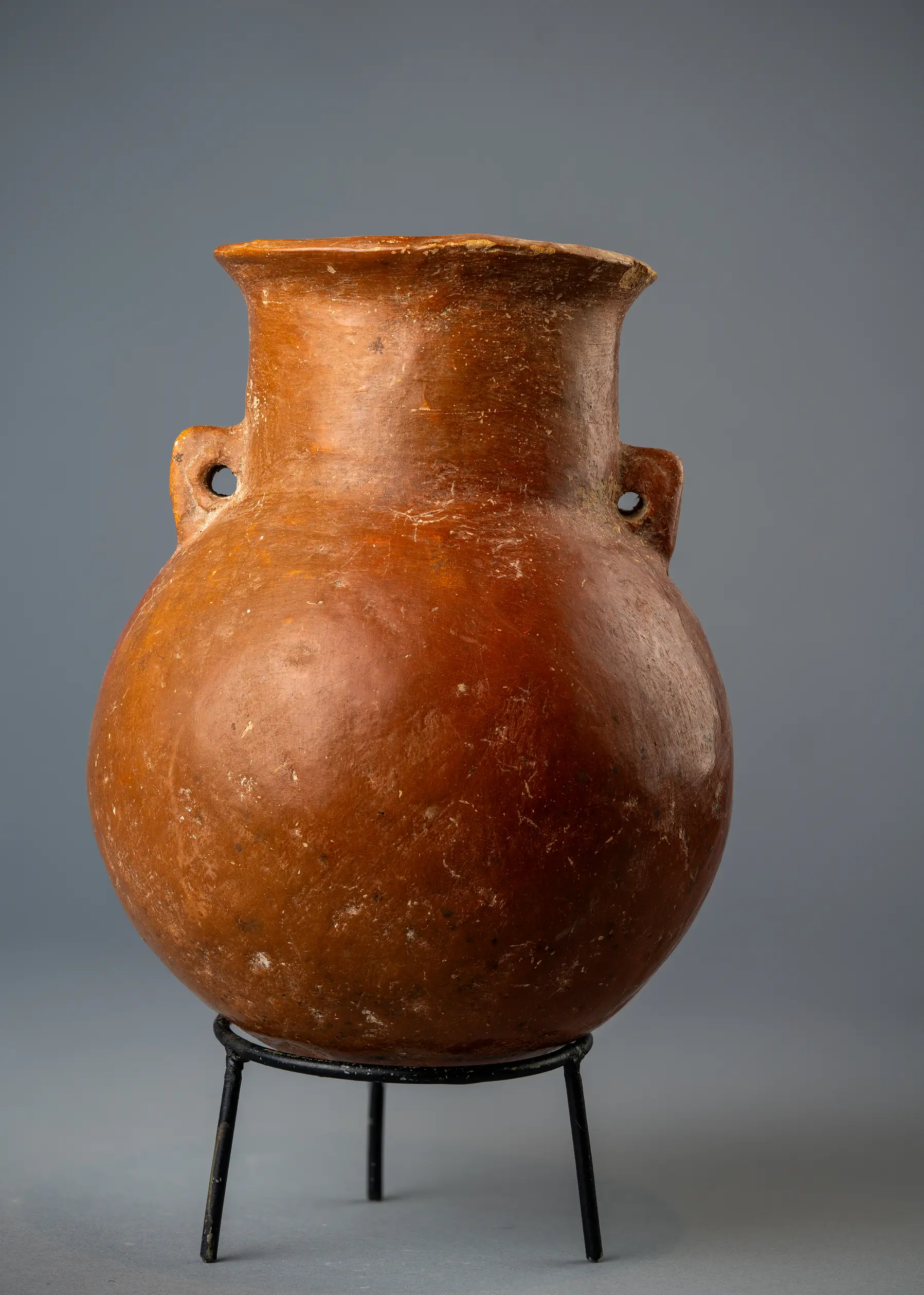
Plain burnished Red Polished ear-lug jar with a spherical round-based body, tall neck and two pierced lugs, Early to Middle Cypriot, c. 2200–1900 BCE.
Date
2200 - 1900 BC
Accession No.
JAR-BA-001
Collection
Alexis Drakopoulos
Provenance
- 1960s–2025, The Goodman Collection (acquired 1965–1969)
- 2025–present, Alexis Drakopoulos, London
Early to Middle Cypriot, c. 2200–1900 BCE · Red Polished ware · Handmade, burnished
A plain jar with a near-spherical body and a round base, now held on a modern stand. A tall, wide neck rises from the shoulder with a faint inward curve and ends in a slightly thickened everted rim. At the junction of neck and shoulder, on opposite sides, are two small vertical tab-lugs, each pierced horizontally by a round hole.
The whole surface is covered in an even orange-red slip, burnished to a soft sheen; faint facets from the burnishing tool show on the neck and upper body. There is no incised ornament and no black-topping or mottling. The rim is chipped on one side, and the body carries fine scratches, pale specks of encrustation and a few small spalls.
Commentary
This is an ear-lug pot, the Early Bronze Age Cypriot name for a small amphora-shaped jar with pierced lugs, or very small handles, in place of true handles [1][2]. The type is long-lived in Red Polished ware, and the examples from the settlement at Sotira-Kaminoudhia are all flat-based [1]. At Bellapais-Vounous, flat-based ear-lug pots were often black-topped and incised: British Museum 1939,0217.20 (H. 28 cm), catalogued as Early Cypriot I, and a pot in Cambridge (1951.1083 E, H. 28.1 cm) with trapezoidal pierced lugs on the shoulder are both of this kind [5][6].
This jar differs from them in its round base and plain, evenly red surface, features that fit later Early Cypriot work, when round bases became more common. Its closest parallel is a jar from Vounous Tomb 72 in the Louvre (AO 18823), described as having a spherical body, cylindrical neck and two small pierced handles; it is 23 cm high, plain, and dated by the museum to 2300–2000 BCE [3]. A smaller amphoriskos in Toronto (ROM 965.114.18, 11 cm), with string-holes through its neck lugs, is dated Early Cypriot III, 2000–1800 BCE [4]. Plain vessels like this change slowly and carry little dating evidence of their own, so a broad range of about 2200–1900 BCE is the most the form allows.
The lugs probably took a cord, either to hang the jar or to tie down a cover over its mouth. The shape suits storing and pouring liquids or dry foods. Most complete ear-lug pots come from tombs, where they were placed with the dead alongside bowls and jugs.
Because the surface is uniformly red, the jar gives no firing clue to separate north-coast from south-coast production, and we know of no recorded find-spot. The slip is clean and even, which may partly reflect cleaning in modern times. The jar's height and diameter have not been recorded.
References
- 1.Swiny, S., Rapp, G. and Herscher, E. (eds) (2003) Sotira Kaminoudhia: An Early Bronze Age Site in Cyprus. CAARI Monograph 4. Boston: American Schools of Oriental Research.
- 2.Stewart, J.R. (1992) Corpus of Cypriot Artefacts of the Early Bronze Age, Part 2. Studies in Mediterranean Archaeology 3:2. Jonsered: Paul Åströms Förlag, pp. 84–85.
- 3.Musée du Louvre, Paris, AO 18823, Red Polished jar with two pierced lugs from Bellapais-Vounous Tomb 72 (collection record).
- 4.Royal Ontario Museum, Toronto, 965.114.18, Red Polished amphoriskos (collection record).
- 5.British Museum, London, 1939,0217.20, Red Polished black-topped ear-lug pot from Bellapais-Vounous (collection record).
- 6.Museum of Archaeology and Anthropology, University of Cambridge, 1951.1083 E, Red Polished ear-lug pot from Bellapais-Vounous (collection record).
More from the Catalogue
Browse related objects
Amphora
Archaic II
Amphora
Geometric I
Amphora
Archaic II
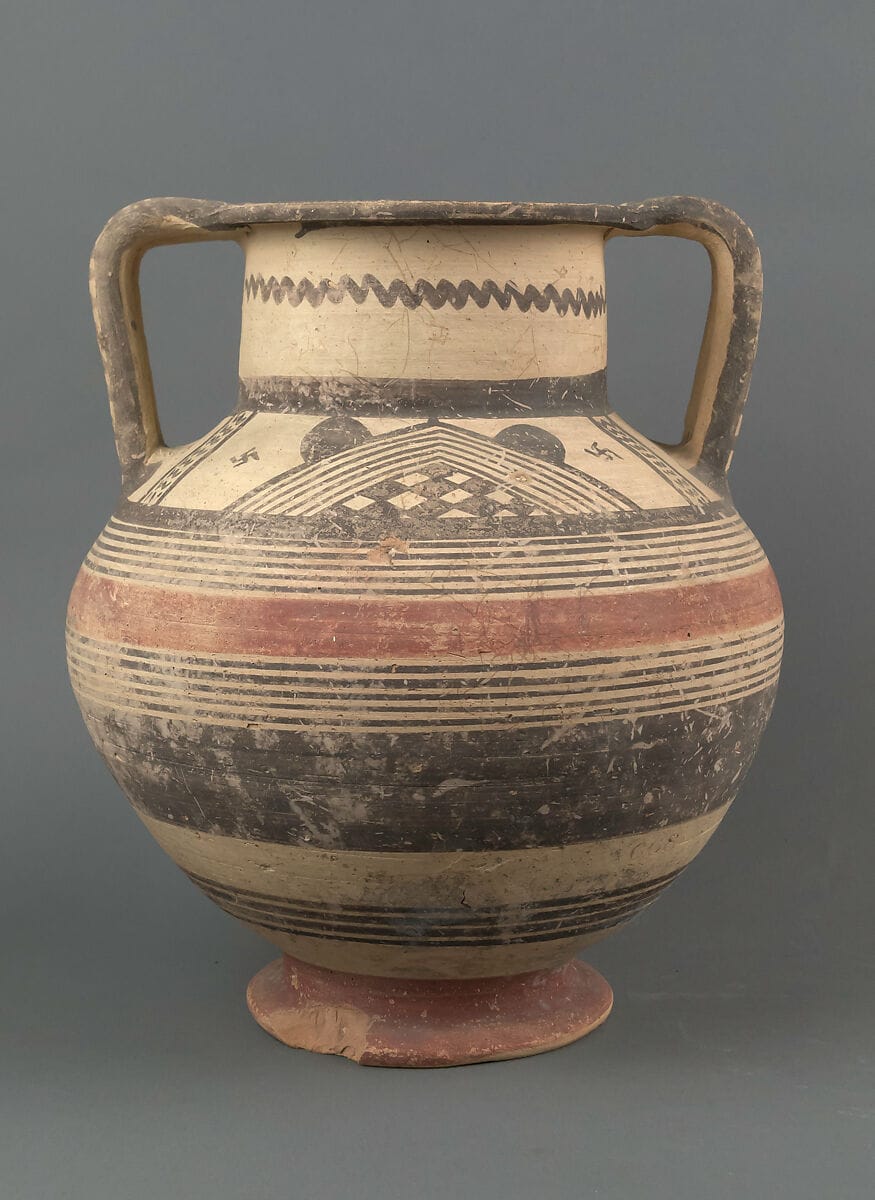
Amphora
Archaic I
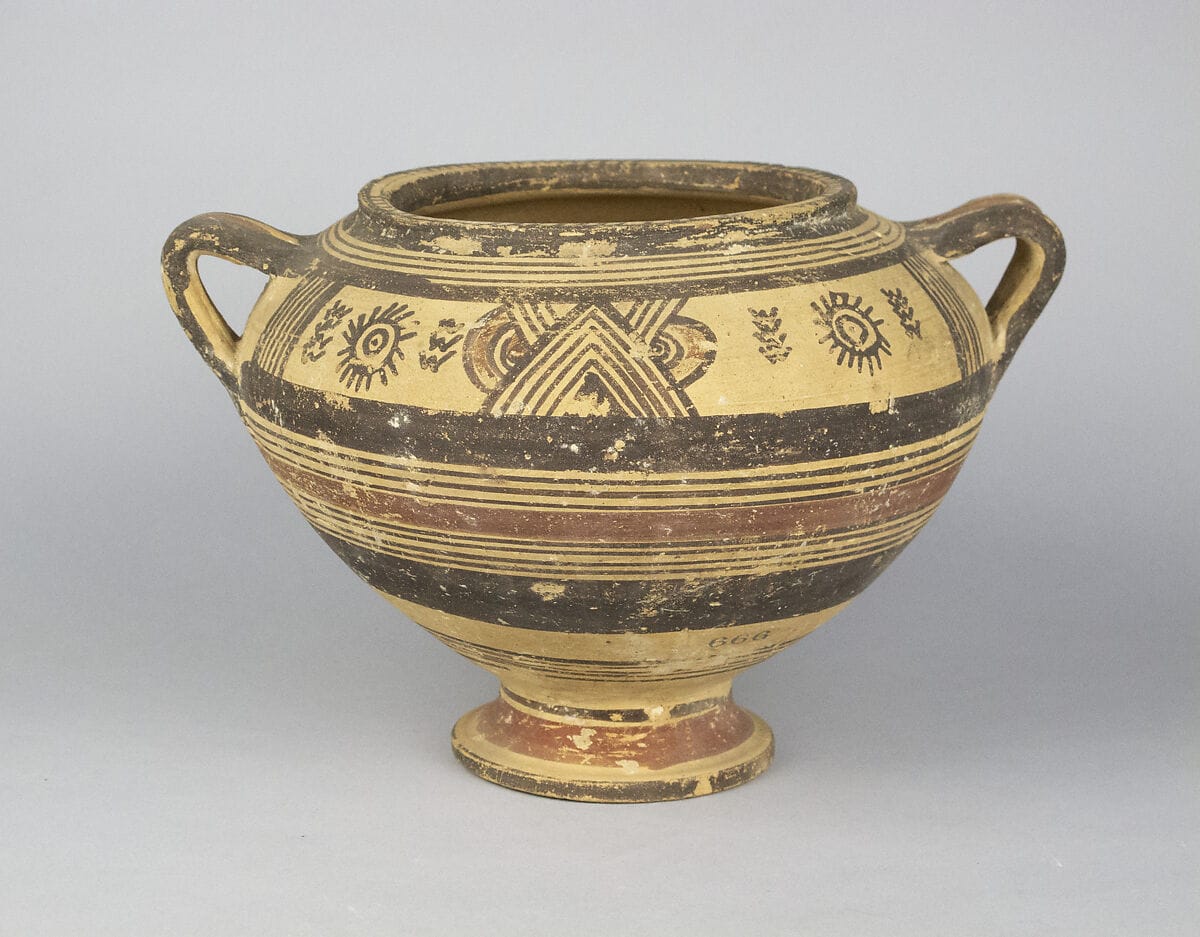
Dinos
Archaic I
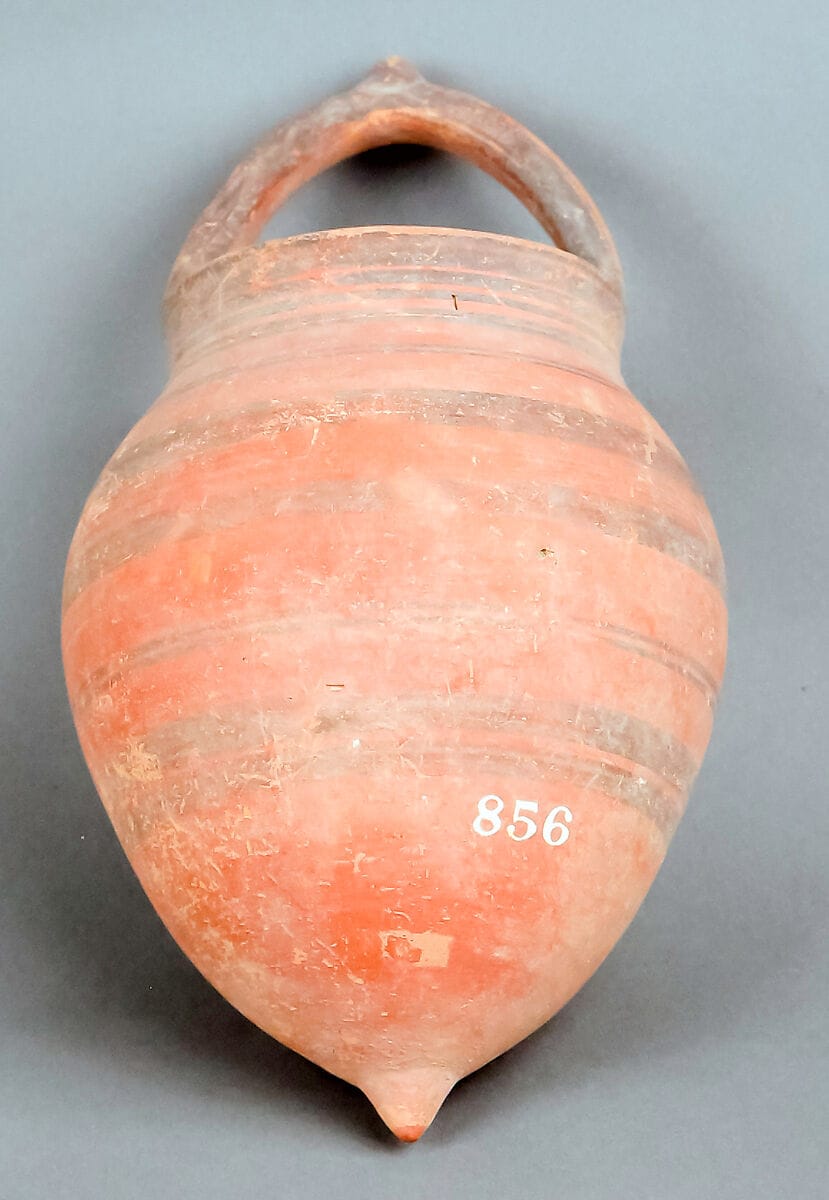
Amphoriskos
Geometric III
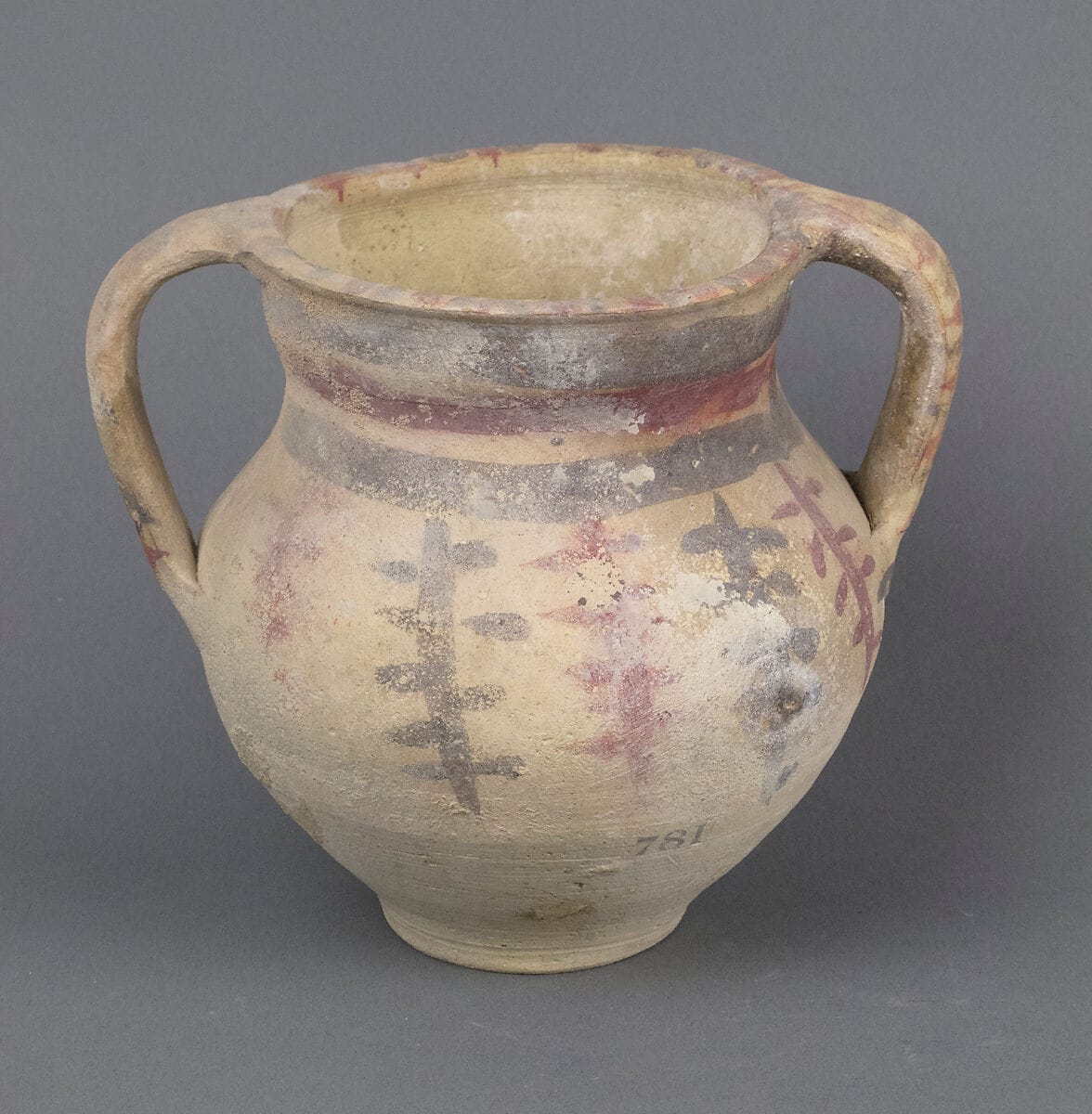
Amphoriskos
Archaic II
Limestone statuette of a boy holding an amphora
Hellenistic
Terracotta krater
Late Bronze Age III
Krater
Geometric I
Terracotta miniature amphora
Geometric III
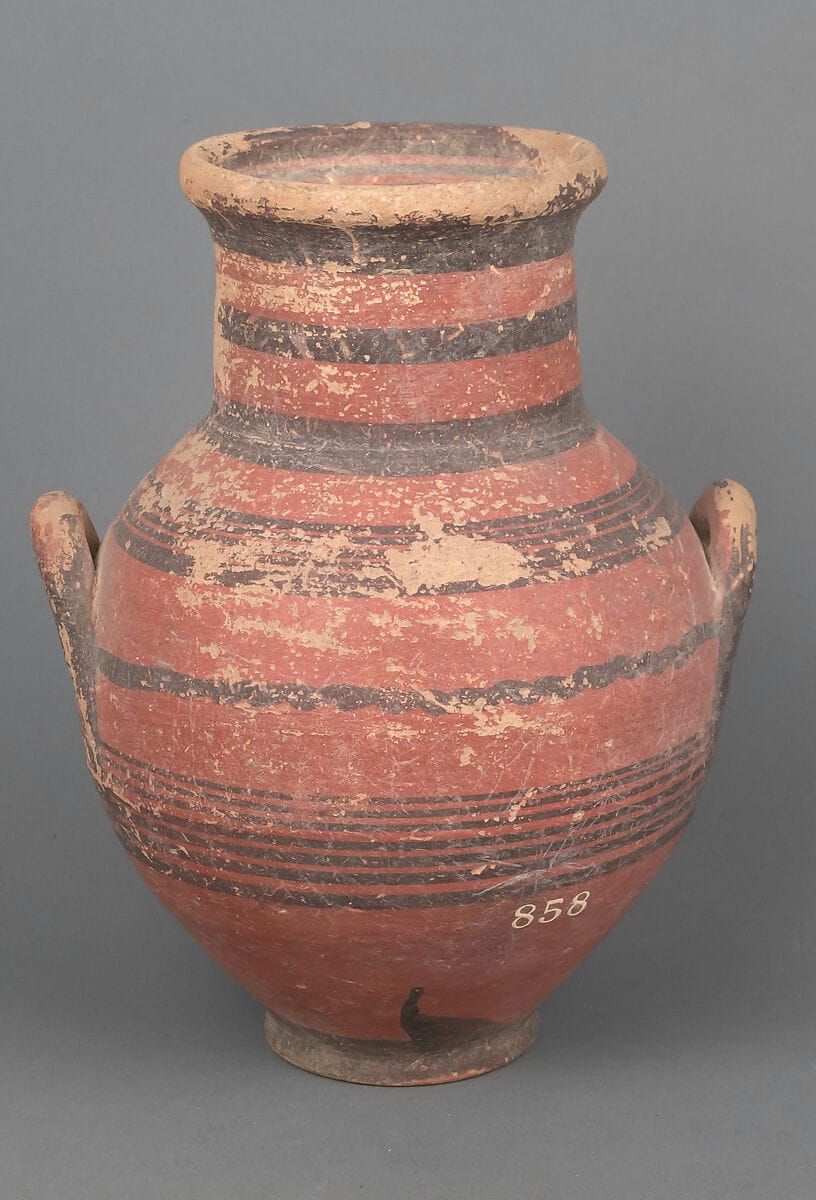
Amphora
Late Bronze Age III
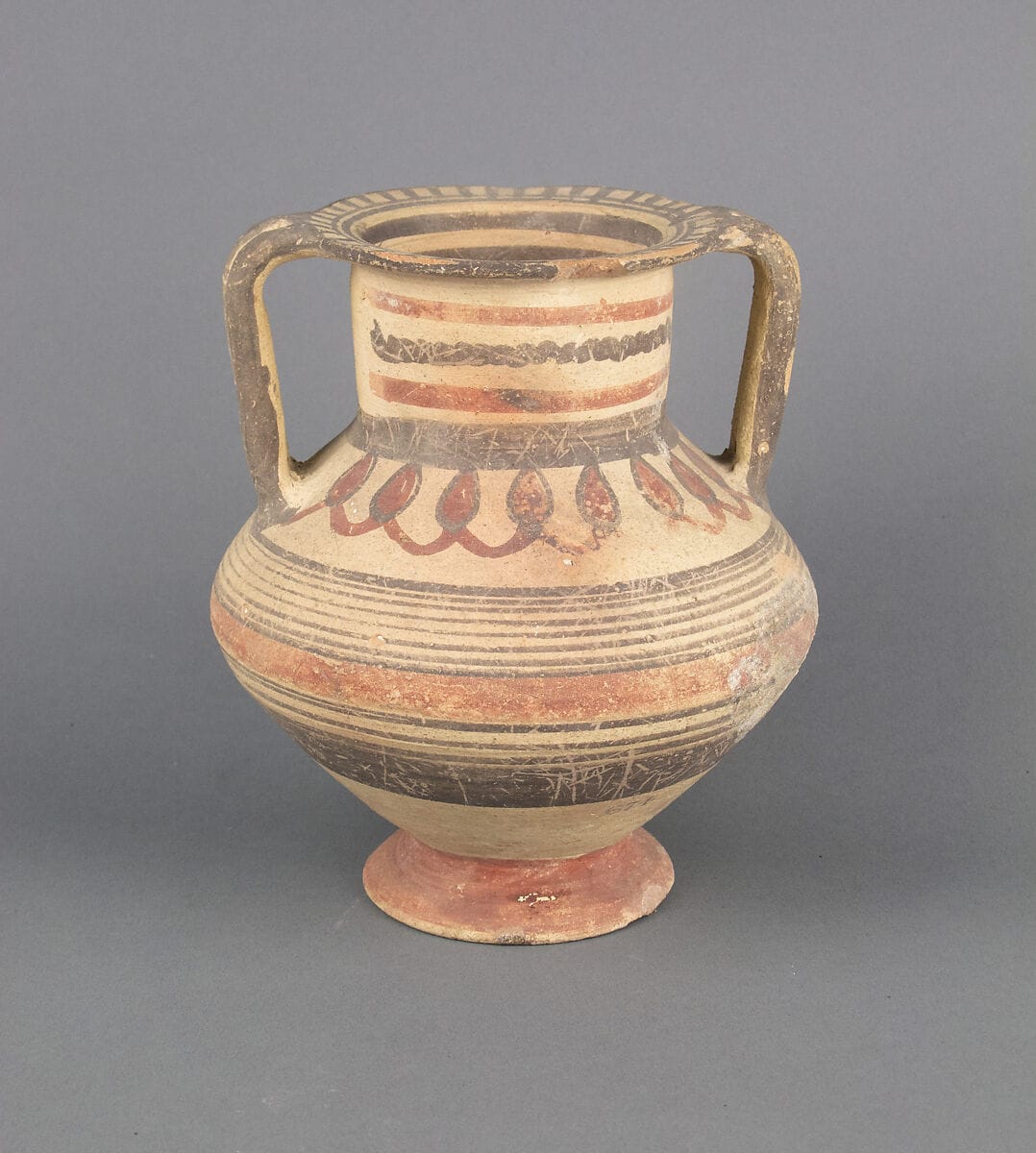
Amphora
Archaic II
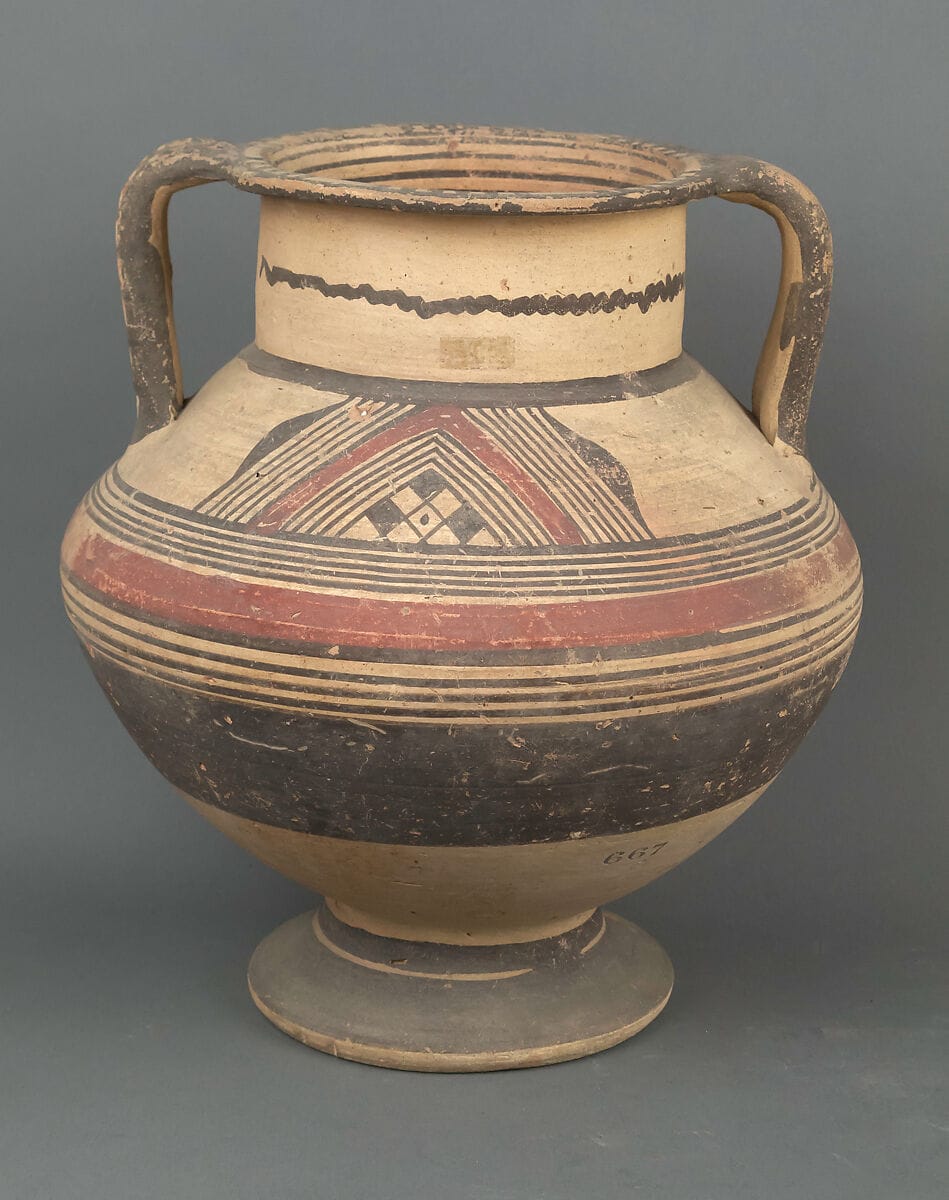
Krater
Late Bronze Age III
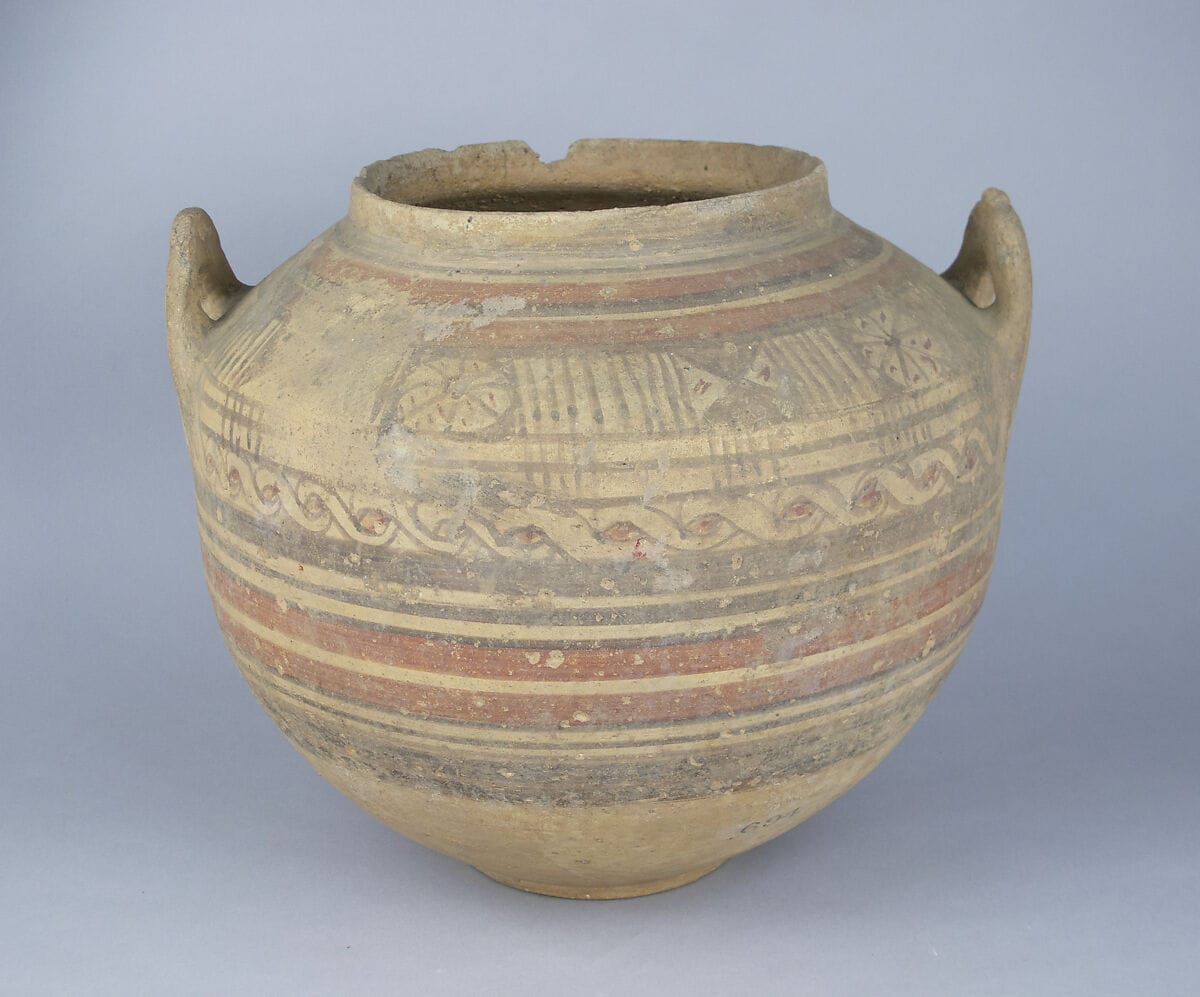
Dinos
Archaic I
Amphora
Archaic
Terracotta amphora
Middle Bronze Age II
Amphora
Bronze Age