
Early Bronze Age III
Red Polished Beak-Spouted Jug with Side-Spout
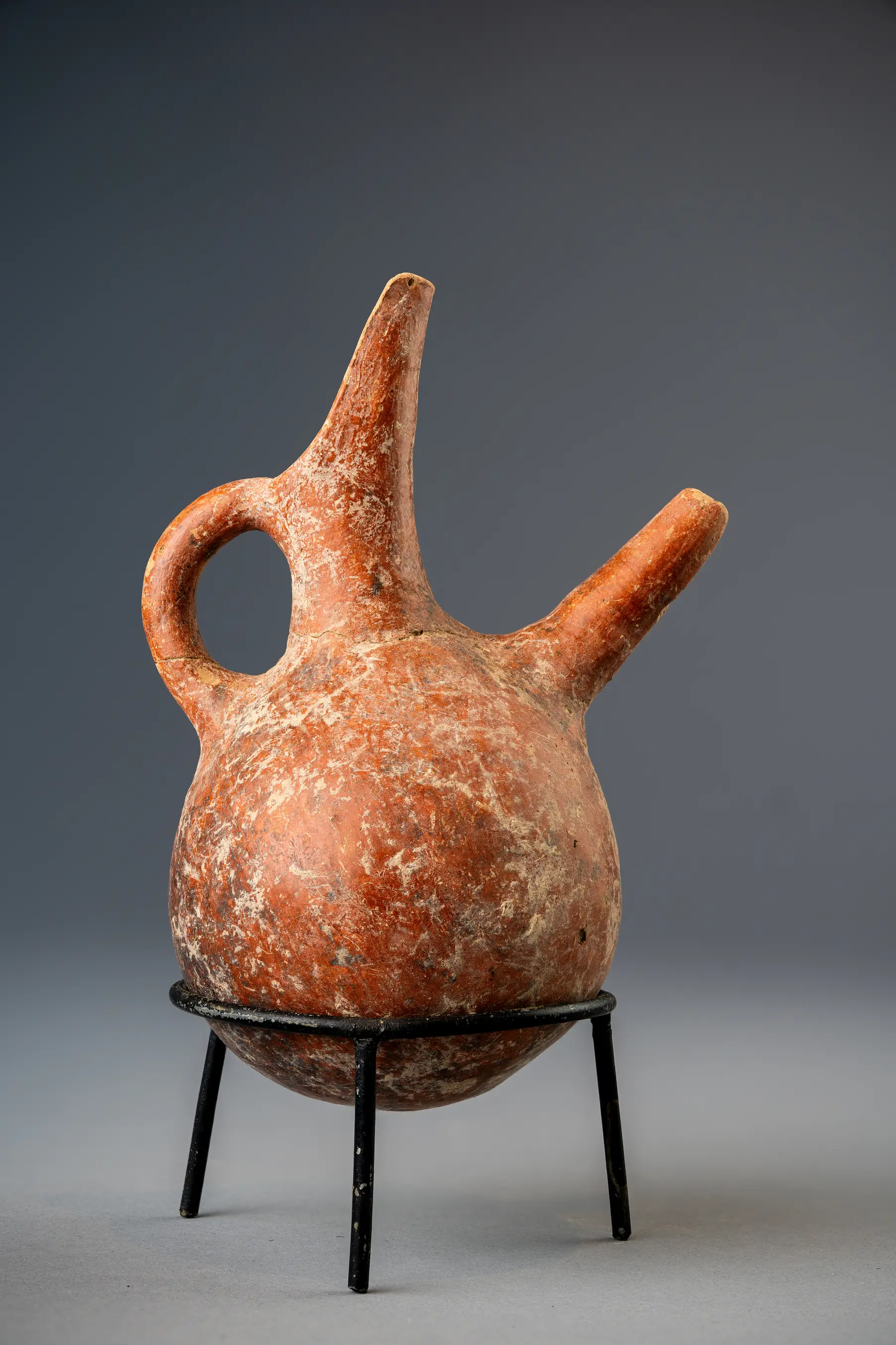
Plain Red Polished jug with a spherical body, tall cutaway beak neck and tubular side-spout on the shoulder. Cyprus, c. 2100–1850 BCE.
Date
2100 - 1850 BC
Accession No.
JUG-BA-008
Collection
Alexis Drakopoulos
Provenance
- 1965–2025, The Goodman Collection (acquired 1965–1969)
- 2025–present, Alexis Drakopoulos, London
Early Cypriot III to Middle Cypriot I, c. 2100–1850 BCE · Red Polished ware · Handmade
A plain jug with a spherical body and a rounded base. The neck narrows as it rises and ends in a tall beak, cut away obliquely to a point. A round-sectioned loop handle joins the neck to the shoulder. On the opposite shoulder a tubular side-spout, open at its end, projects upward at an angle, so that beak and spout together give the vessel a forked silhouette. The red slip is worn and patchy, veiled over much of the body by a whitish film of lime and burial deposit. Fine cracks run round the junction of neck and body and across the lower end of the handle, where the vessel appears to have been broken and rejoined.
Commentary
The jug is plain Red Polished ware, handmade and burnished, with no incised decoration. Its form combines two features of Early and Middle Cypriot pouring vessels: the cutaway beak mouth, which Morris describes as a Bronze Age fashion that did not continue into the Iron Age [3], and a separate tubular spout on the shoulder. The round base places it in Early Cypriot III or later [4], and on current radiocarbon reckoning a date of roughly 2100–1850 BCE is appropriate [6]. Stewart's typology of Early Cypriot pottery remains the framework for such shapes [5]. The vessel has no find-spot, and plain Red Polished cannot be dated closely on its own.
The best parallel is a jug excavated by James Stewart and now in the Museum of Archaeology and Anthropology in Cambridge (1951.2000 B). It is likewise undecorated, with a tall cut-away neck and a separate narrow spout, and also carries a string-hole lug, of which none is visible on this jug [1]. A Red Polished III beak jug from Lapithos Tomb 319C in Stockholm (Medelhavsmuseet L.319C:006), dated to Early Cypriot III, shows the beak neck on a jug of the same horizon [2]. Morris publishes a decorated version of the type, a jug with cutaway beak spout and side-spout carrying deeply incised circles in the manner of the Deneia region (pl. 10a) [3]; this jug shows the same design in its unornamented form.
The function of the double opening is not documented. The most economical reading is that the beak served for filling and the side-spout for pouring, or the reverse, allowing liquid to be dispensed in a thin stream without tilting the vessel far. Other possibilities, such as mixing or a ritual libation, have been suggested for spouted Bronze Age vessels in general but lack direct evidence. We know of no residue analysis for this form. Whole examples survive mainly from chamber tombs.
References
- 1.Museum of Archaeology and Anthropology, University of Cambridge, 1951.2000 B: undecorated Red Polished jug with cut-away neck, string-hole lug and separate side-spout.
- 2.Medelhavsmuseet, Stockholm, L.319C:006: Red Polished III beak jug, Lapithos Tomb 319C (Swedish Cyprus Expedition).
- 3.Morris, D. (1985) The Art of Ancient Cyprus. Oxford: Phaidon, p. 18, pl. 10a; p. 48.
- 4.Brown, A.C. and Catling, H.W. (1980) Ancient Cyprus. Oxford: Ashmolean Museum, p. 27.
- 5.Stewart, J.R. (1962) The Early Cypriote Bronze Age. Swedish Cyprus Expedition IV.1A. Lund.
- 6.Manning, S.W. (2013) 'A new radiocarbon chronology for prehistoric and protohistoric Cyprus', in Knapp, A.B. The Archaeology of Cyprus. Cambridge: Cambridge University Press, pp. 485–533.
More from the Catalogue
Browse related objects
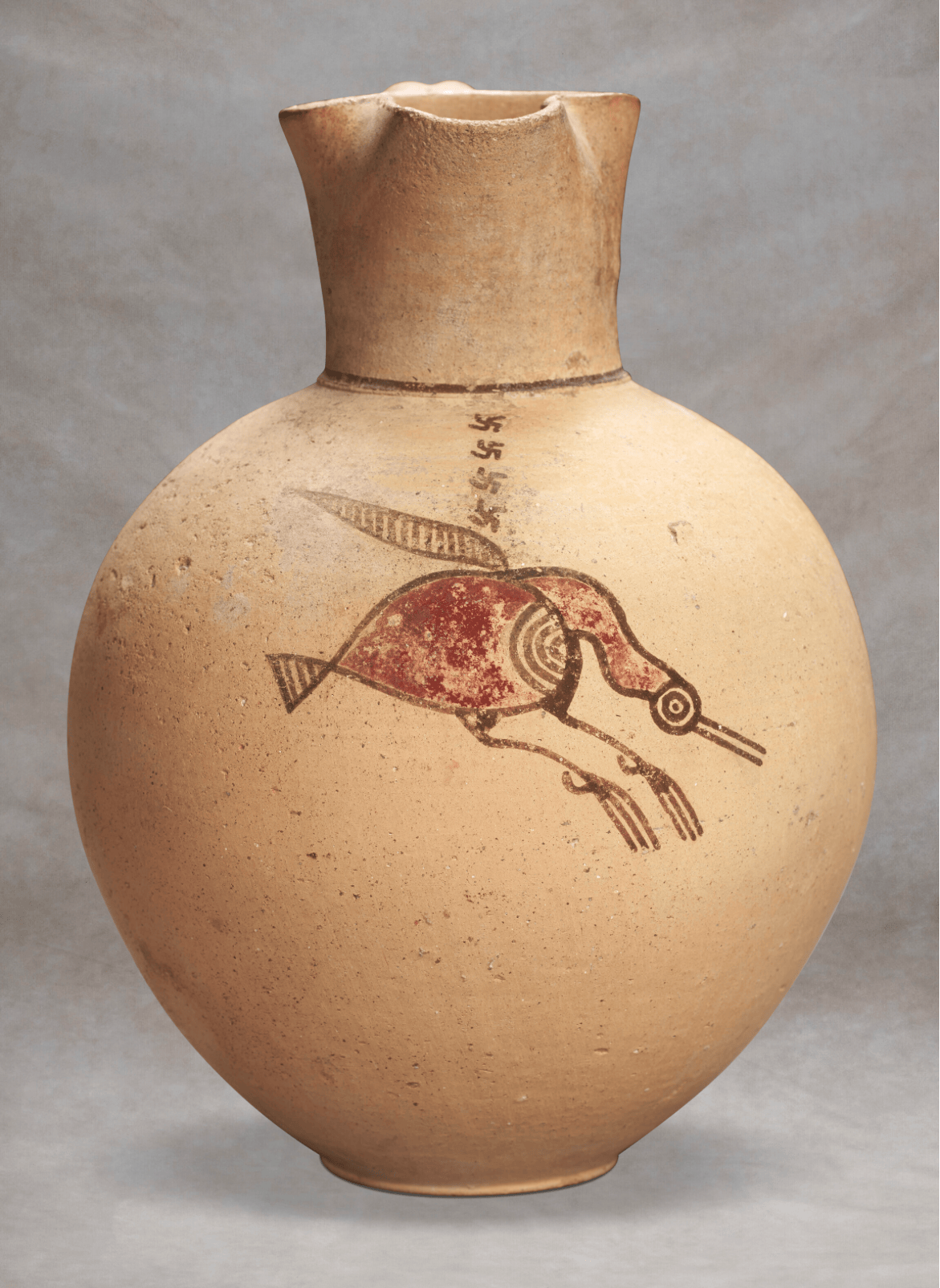
Bichrome Oinochoe
Archaic I
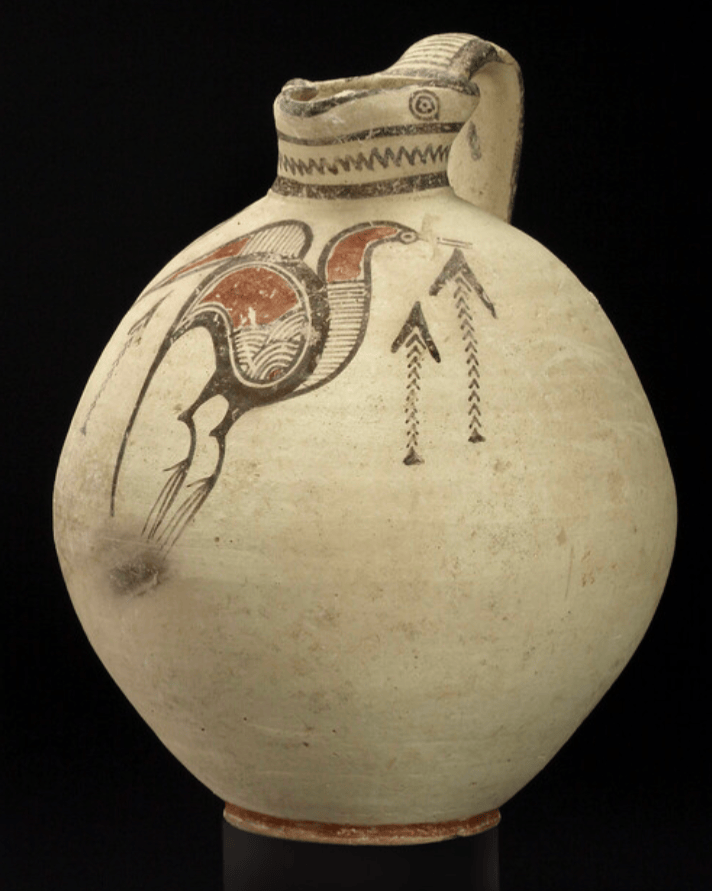
Free-field bichrome jug with image of an Ibis bird and reeds
Archaic
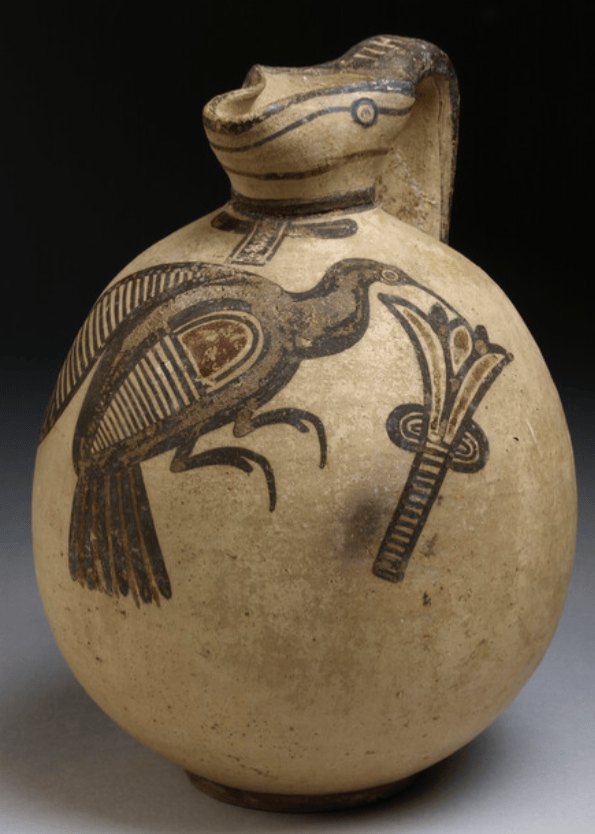
Squat bichrome jug in free-field style with image of bird picking a lotus flower
Archaic
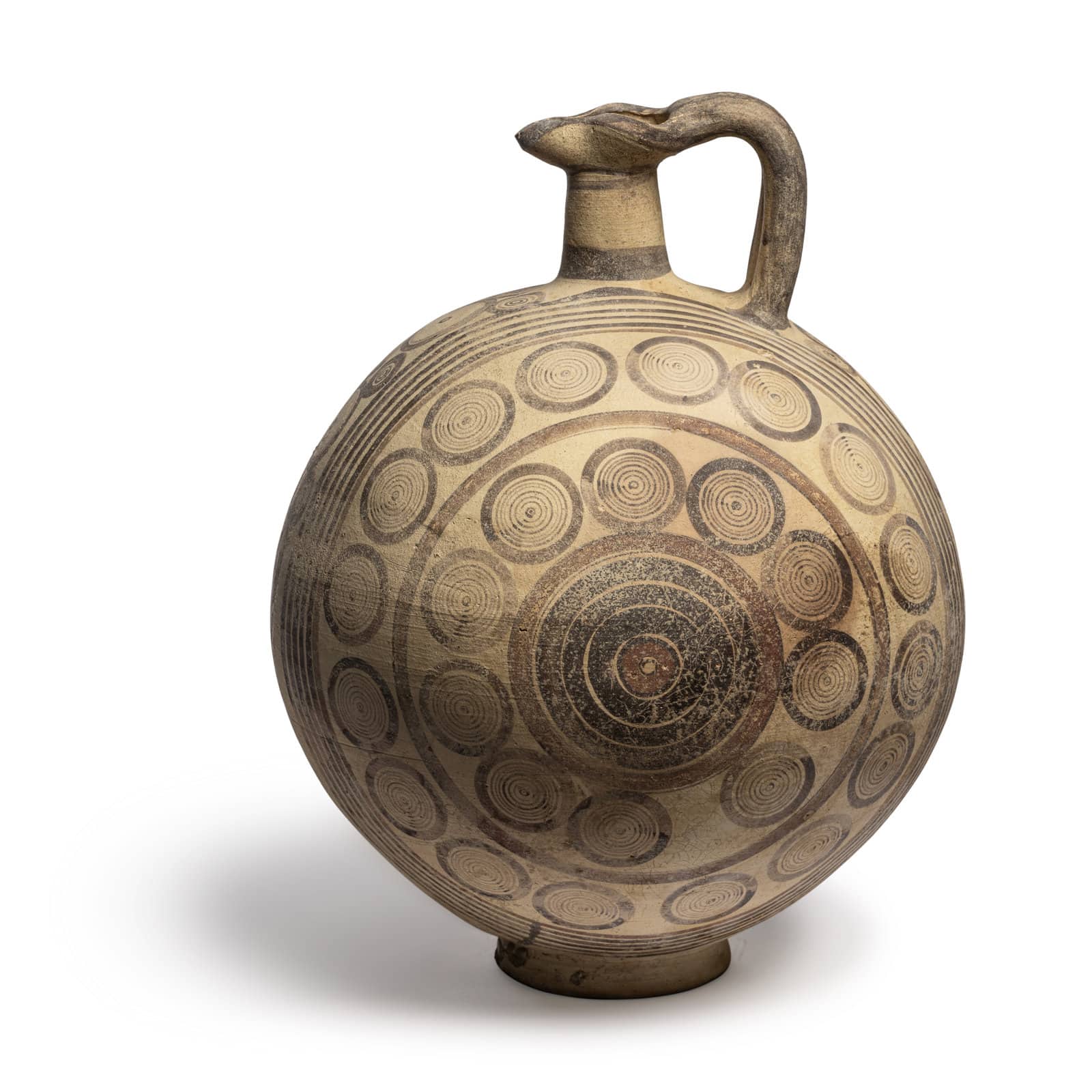
A Cypriot Bichrome-Ware Oinochoe Jug
Archaic I
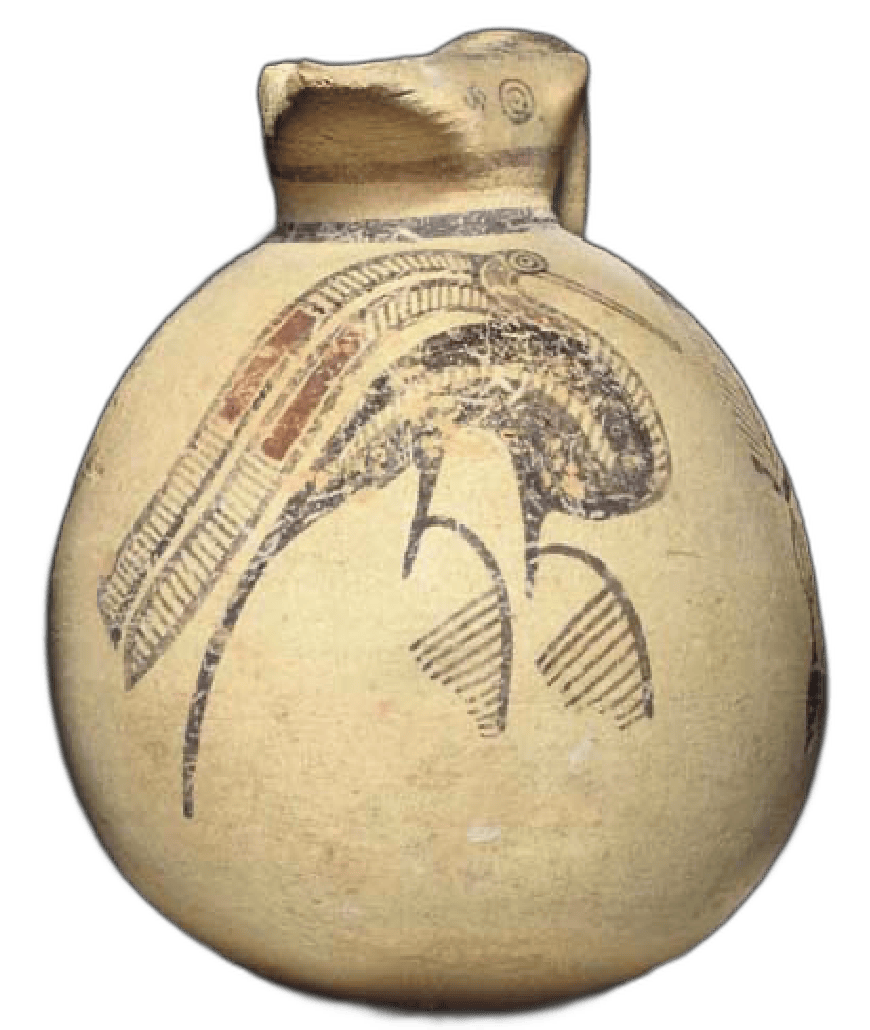
Oinochoe with Free Field Bird
Archaic I
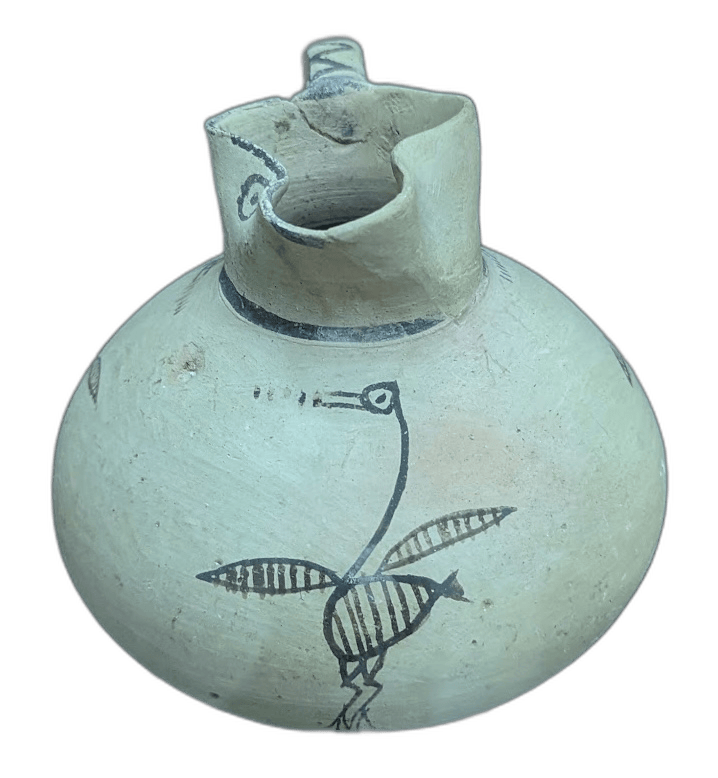
Small Oinochoe with Free Field Bird
Archaic I
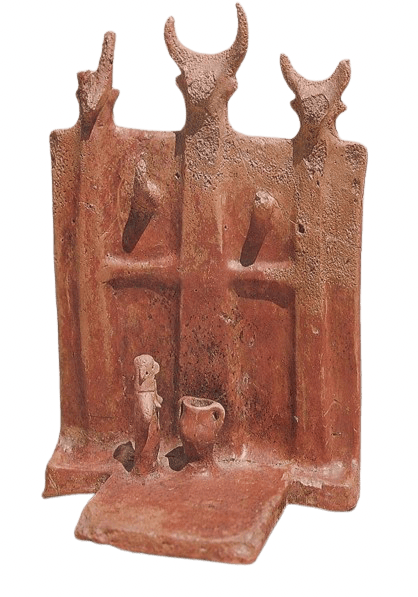
Red Polished Shrine
Middle Bronze Age I
Black-On-Red Geometric Jug Sherd
Geometric II
Bichrome Jug
Geometric
Bichrome Juglet
Geometric
Bichrome Oinochoe
Geometric
Juglet
Archaic II
Oinochoe
Geometric III
Jug
Archaic I
Juglet
Archaic I
Jug
Geometric I
Terracotta jug
Early Bronze Age I
Juglet
Geometric I