
Archaic II
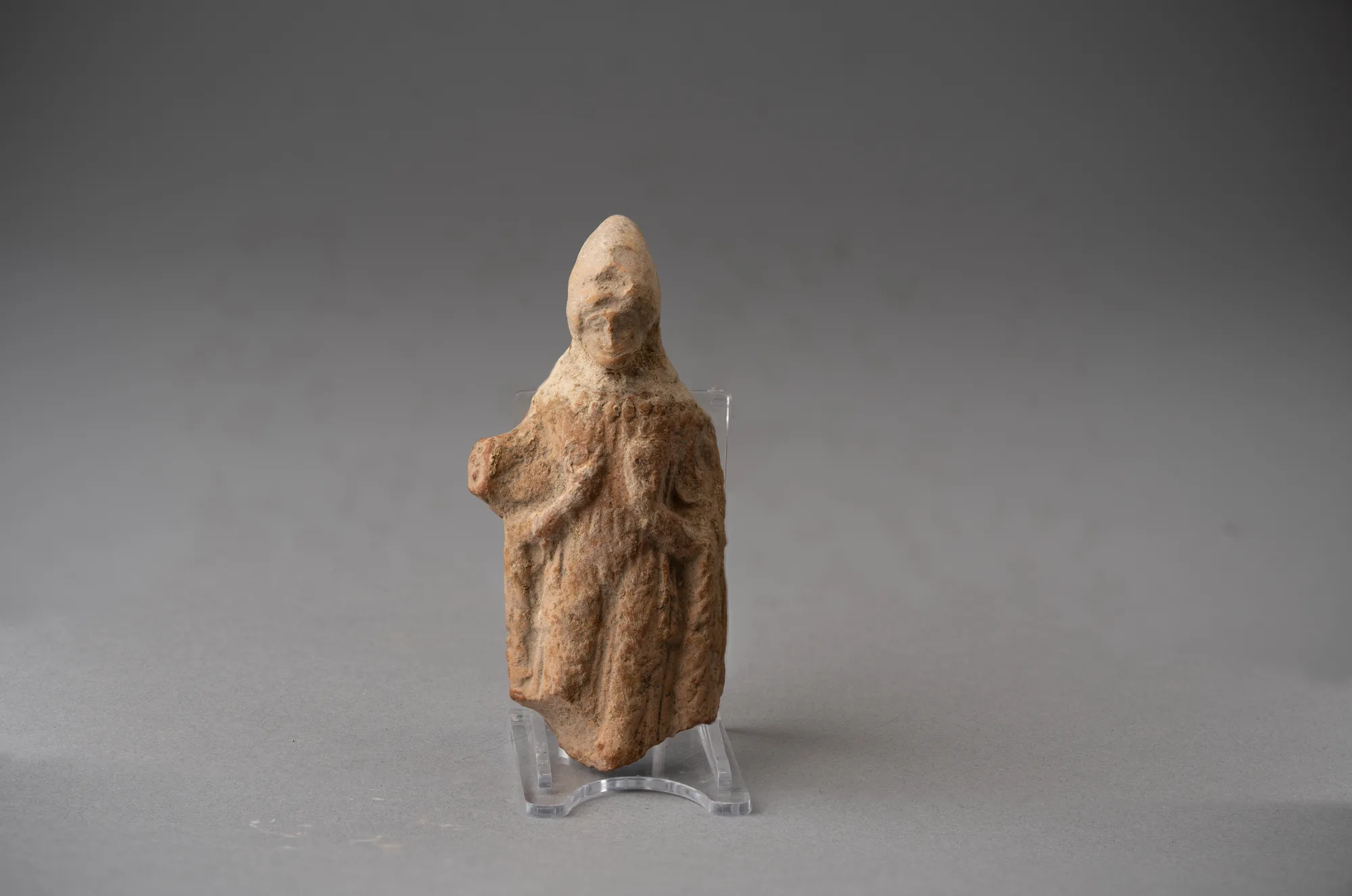
Mould-Made Figure of a Veiled Woman Holding a Flower
Small mould-made Cypriot terracotta of a woman in a tall pointed veil holding a flower to her chest, late Archaic or early Classical, c. 550–450 BCE.
Date
550 - 450 BC
Accession No.
STA-AR-013
Collection
Alexis Drakopoulos
Provenance
- 1965–1969, The Goodman Collection
- Alexis Drakopoulos, London
Cypro-Archaic II to Cypro-Classical I, c. 550–450 BCE · Terracotta · Mould-made
A small standing woman pressed from a single mould. A tall veil rises to a point above the head and falls in a smooth mantle over the shoulders, framing a small oval face. One arm is bent, the elbow projecting at the side, to bring the hand to the chest, where it holds a small rounded object, most probably a flower; the other arm hangs at the side against the garment. The long dress falls in shallow vertical folds to the break just above the feet. The orange-brown clay is worn and slightly blurred, with a pale deposit around the face and shoulders. The feet and base are lost, and the piece stands on a modern mount.
Commentary
The figure belongs to the mould-made female votaries that spread through Cypriot sanctuaries during the sixth century BCE, alongside the older handmade snowman figures. Jacqueline Karageorghis gathers the moulded women holding a flower to the breast as a recurrent type in her corpus of Cypro-Archaic female figurines [1]. The gesture is one of offering: the worshipper presents a flower to the deity, and the figure stood in the sanctuary as her lasting dedication.
The closest published parallels are small, solid, single-mould figures. Metropolitan 74.51.1567 (Cesnola Cat. 179, said to come from Amathus, H. 16.5 cm) is a standing woman made from a worn mould, flat-backed, grasping what may be a flower, and perhaps veiled; it is dated c. 600–480 BCE and compared with Karageorghis's type [2][1]. Louvre MNB 131, a woman holding a flower made in a single mould and retaining traces of red and black paint, is dated c. 525–475 BCE [3]. Metropolitan 74.51.1582 (Cesnola Cat. 213, said to come from Soli) is another worn-mould figure with the right arm against the chest, probably holding a flower [2]. A larger version from the sanctuary at Achna, British Museum 1883,0106.24, wears a veil and several necklaces and holds a possible flower to the breast [4].
The softness of the modelling here is typical of figures pressed from worn moulds, which were used for long runs of nearly identical votives [2]. The date follows the parallels: the moulded single-figure votary is established in the second half of the sixth century and continues into the fifth, so a range of c. 550–450 BCE, late Archaic or early Classical, is the most defensible; the type could run later.
Two points remain uncertain. The veil rising to a distinct point is less common than the rounded veils of most parallels, and the object in the hand is too worn to identify with certainty. The piece has no find-spot, and without a close study of the fabric it cannot be attributed to a particular kingdom's workshop; fabric has proved useful in separating the regional productions of Cypriot figurines [5].
References
- 1.Karageorghis, J. (1999) The Coroplastic Art of Ancient Cyprus V(B): The Cypro-Archaic Period, Small Female Figurines. Figurines moulées. Nicosia: A.G. Leventis Foundation, pp. 188–189.
- 2.Karageorghis, V., J.R. Mertens and M.E. Rose. The Cesnola Collection of Cypriot Art: Terracottas. New York: The Metropolitan Museum of Art, p. 108, Cat. 179, and p. 125, Cat. 213.
- 3.Musée du Louvre, Paris, MNB 131, woman holding a flower (femme tenant une fleur), Cypro-Archaic II to Cypro-Classical I, c. 525–475 BCE, H. 13.7 cm (collection record).
- 4.British Museum, London, 1883,0106.24, female figurine from the sanctuary at Achna, Cypro-Archaic II, H. 22.5 cm (collection record).
- 5.Kiely, T. (2015) 'Cypriot figures in terracotta', in Naukratis: Greeks in Egypt. London: British Museum (online research catalogue), pp. 21–23.
More from the Catalogue
Browse related objects
Horse and rider figurine
Archaic II
Seated female figurine of the dea gravida type
Archaic II
Terracotta rattle in the form of a pig
Hellenistic
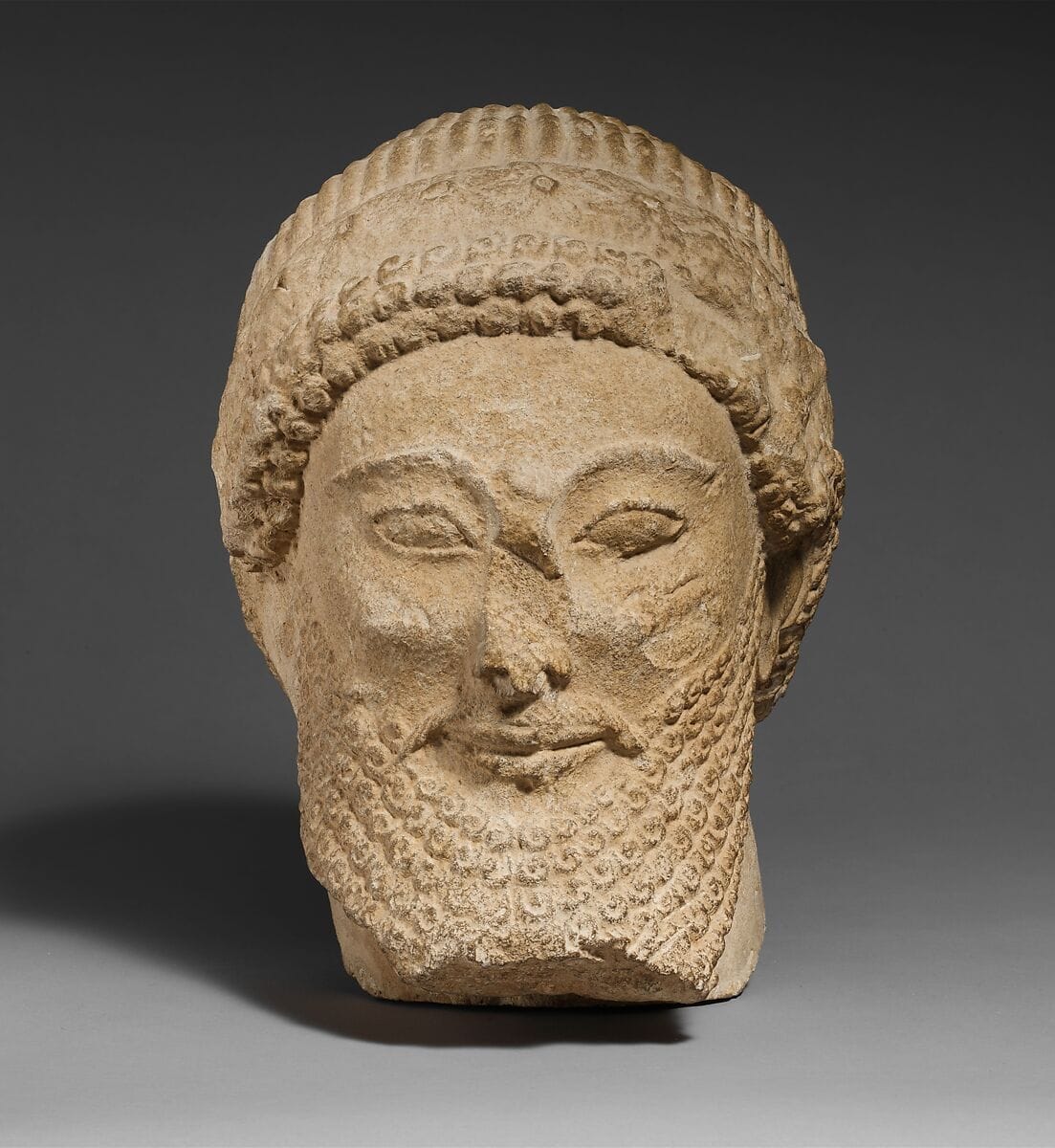
Limestone head of a bearded male with a wreath of flowers
Archaic II
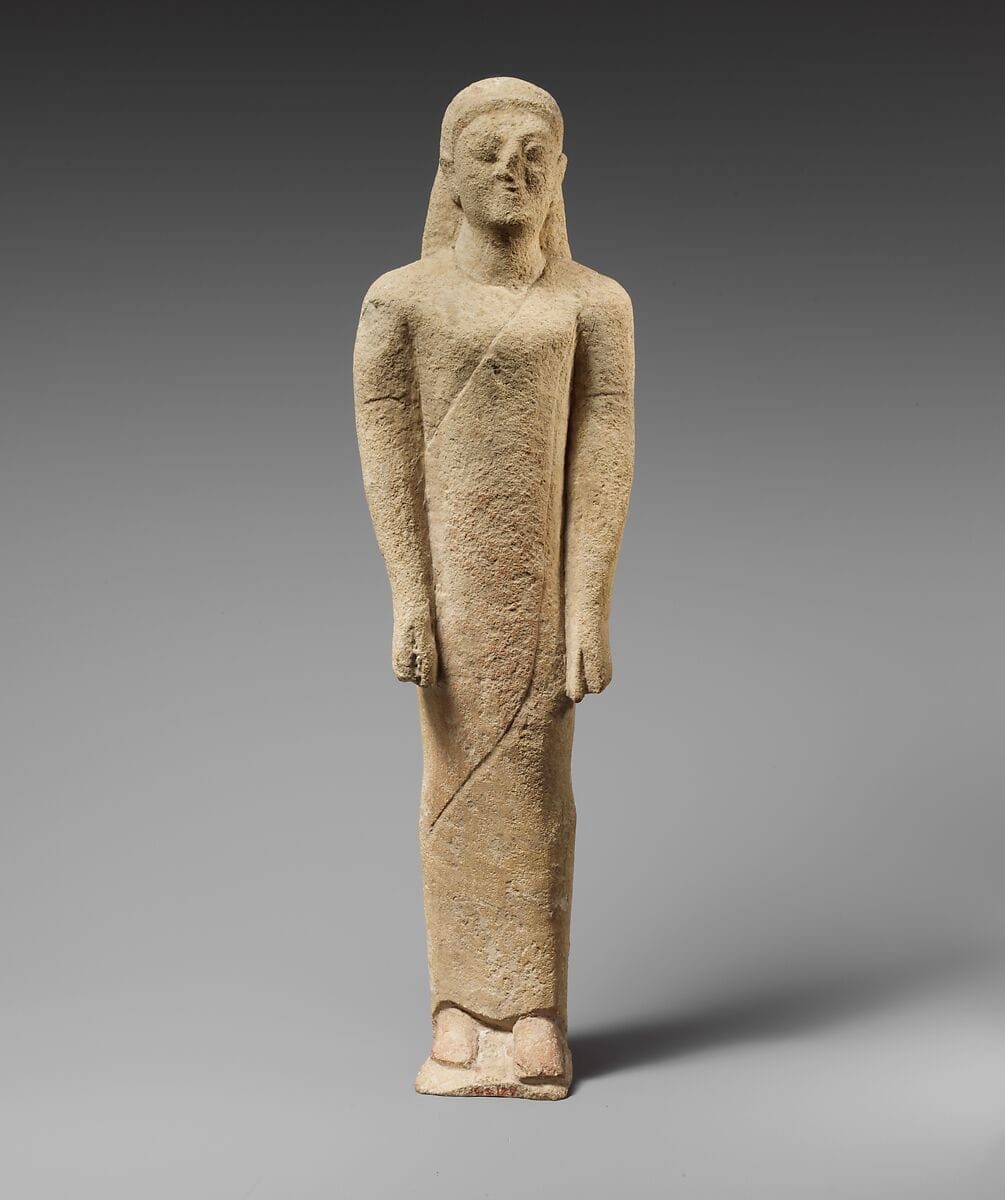
Limestone statuette of a beardless male votary in Greek dress
Archaic II
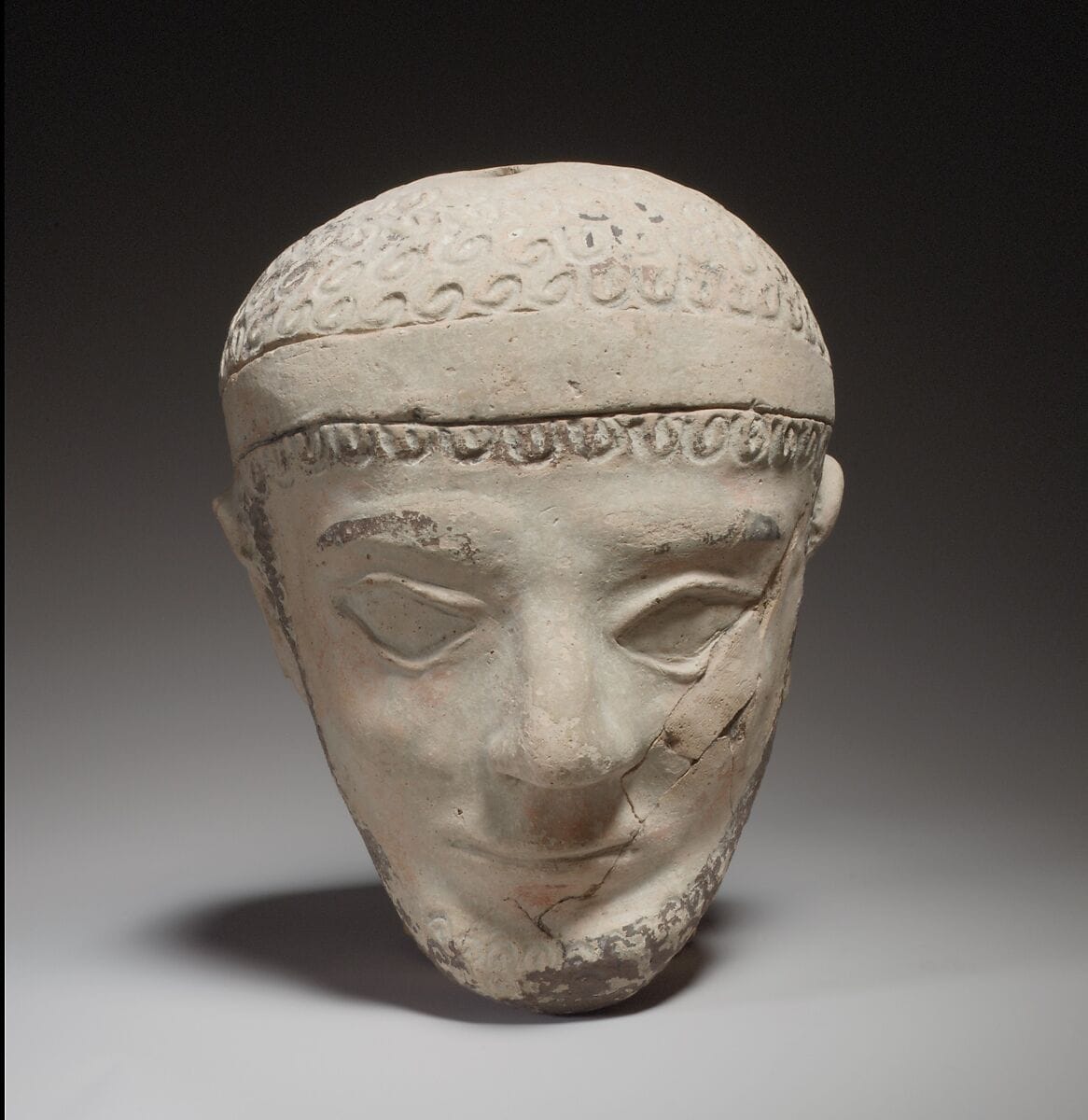
Terracotta head of a man
Archaic II
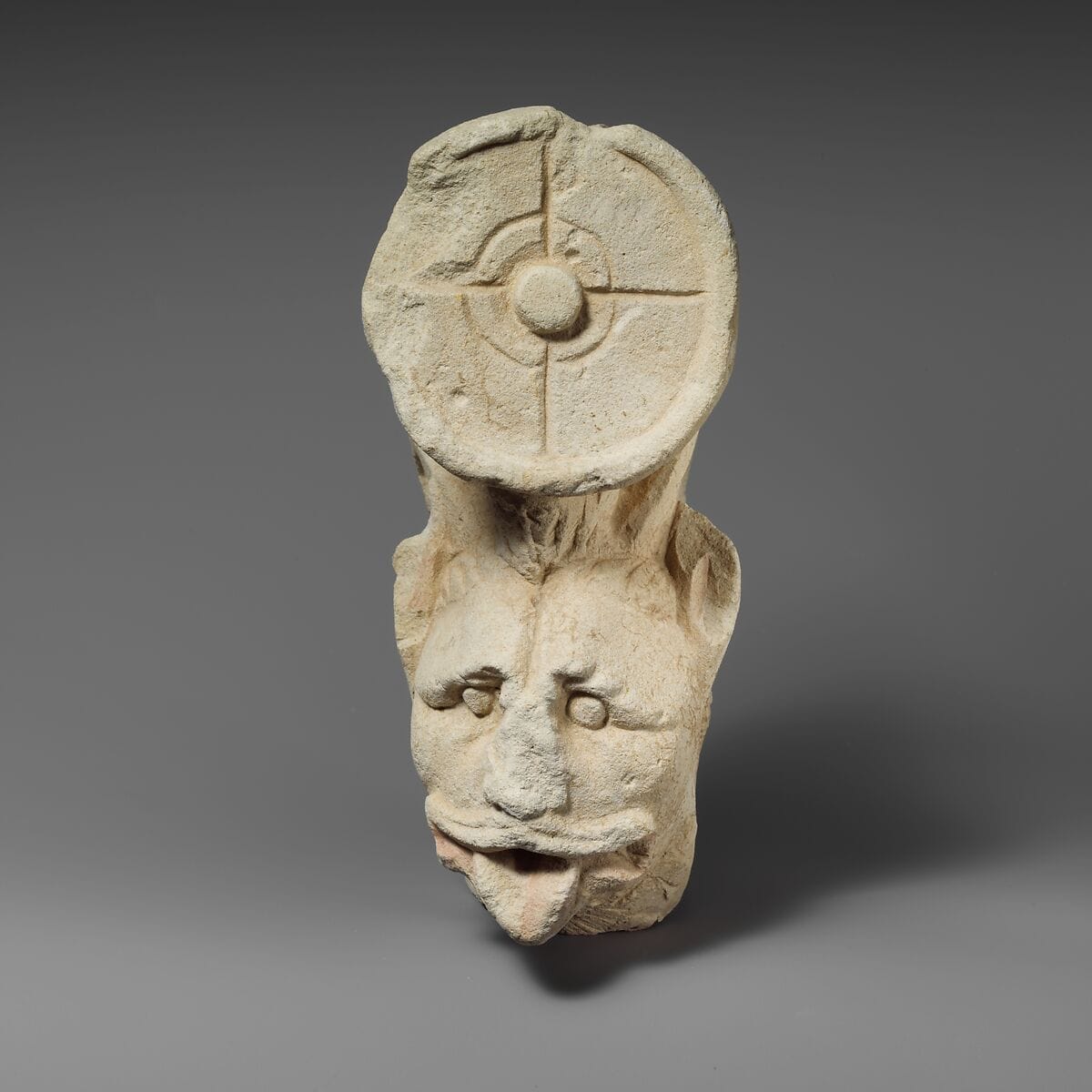
Fragment of a limestone throne (?) with the head of a horned lion
Roman
Head of a comic figurine
Hellenistic
Limestone statuette of a female votary of the kore type
Archaic II
Limestone head of Apollo
Hellenistic
Standing female flute player
Classical
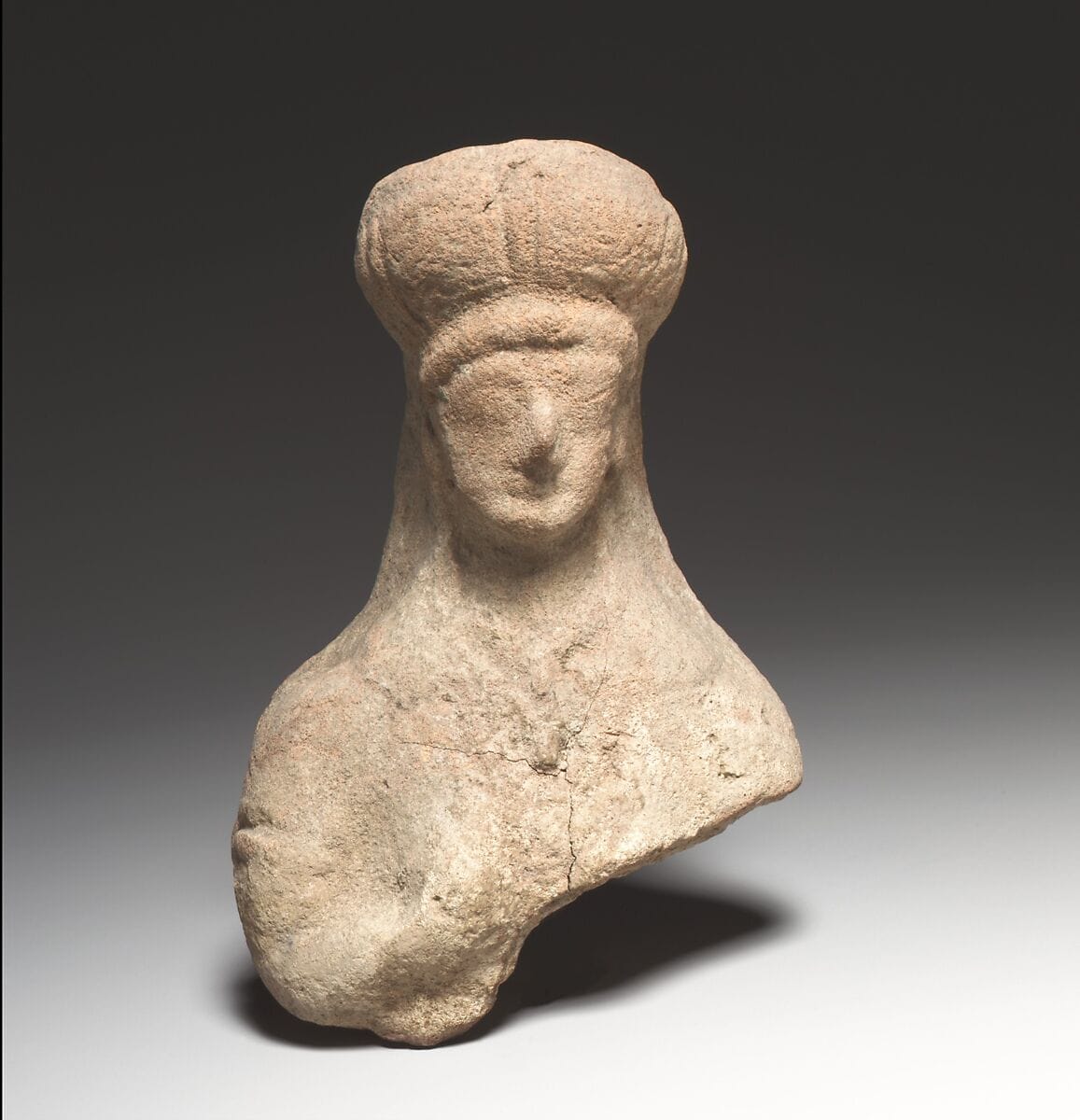
Standing female figurine
Archaic II
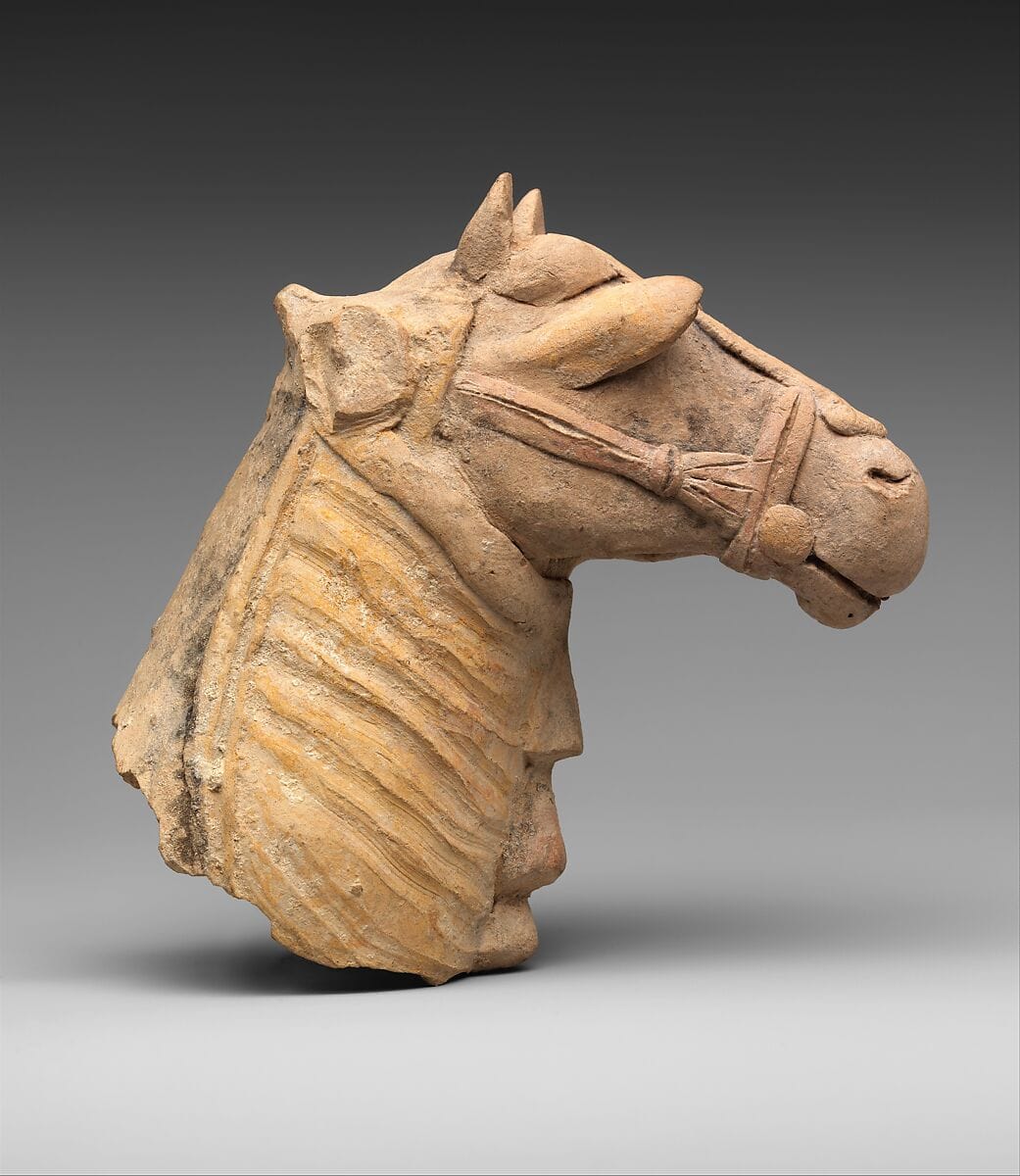
Horse's head with harness
Archaic II
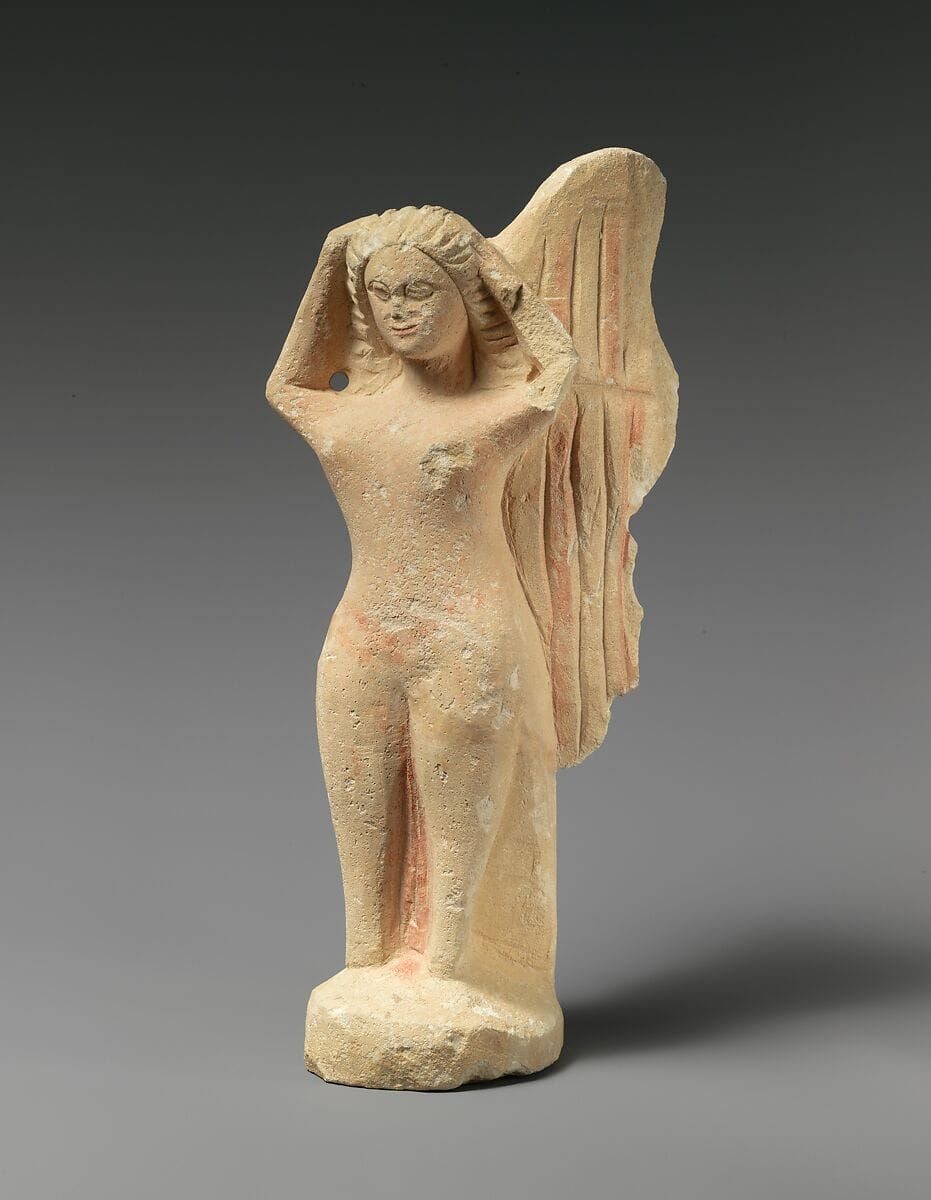
Limestone statuette of a mourning siren
Hellenistic
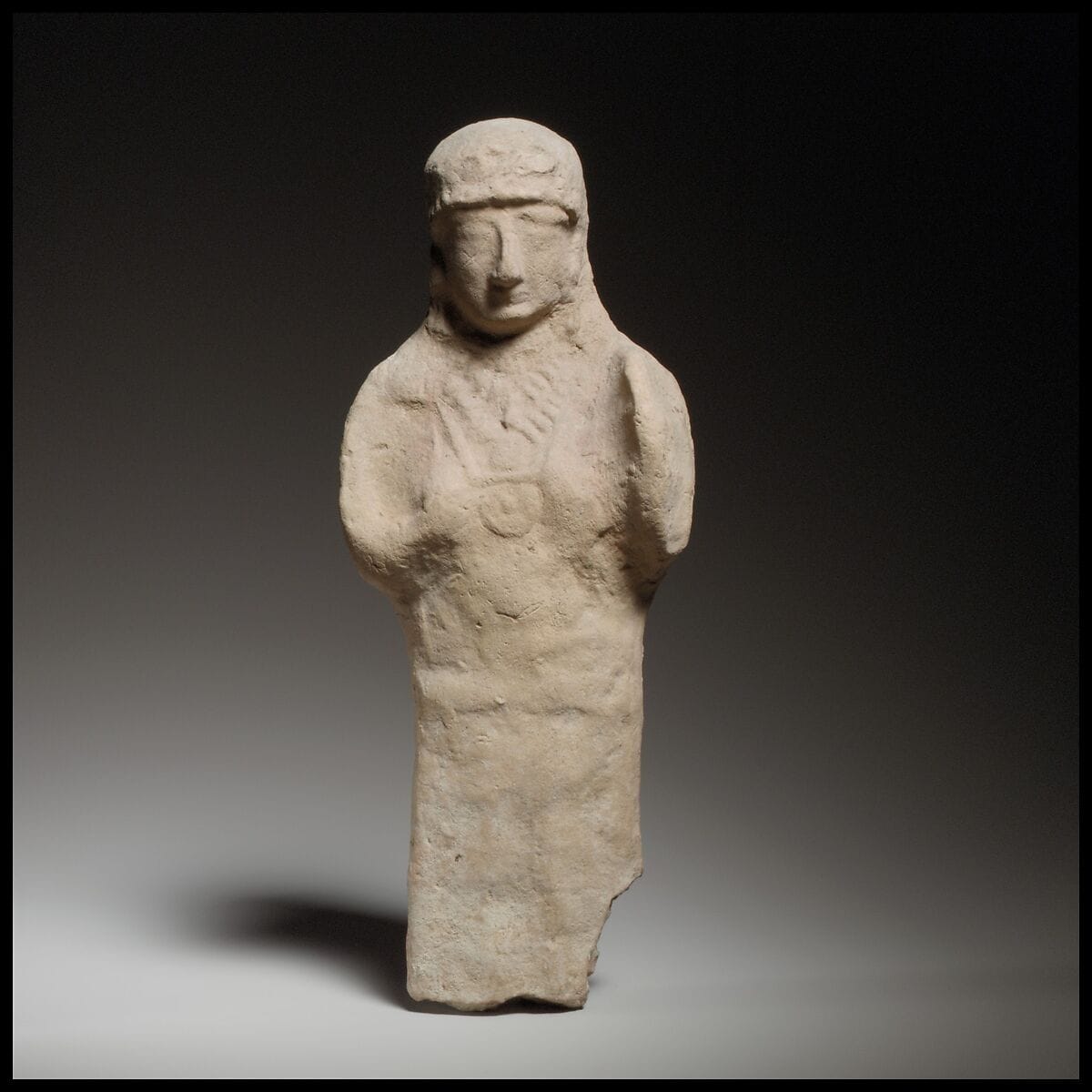
Standing female figurine
Archaic II
Terracotta statuette of Silenos (?) drinking
Hellenistic
Limestone head of beardless male votary with wreath of leaves
Hellenistic
Limestone statuette of a beardless male votary with a wreath of leaves
Classical