
Archaic I
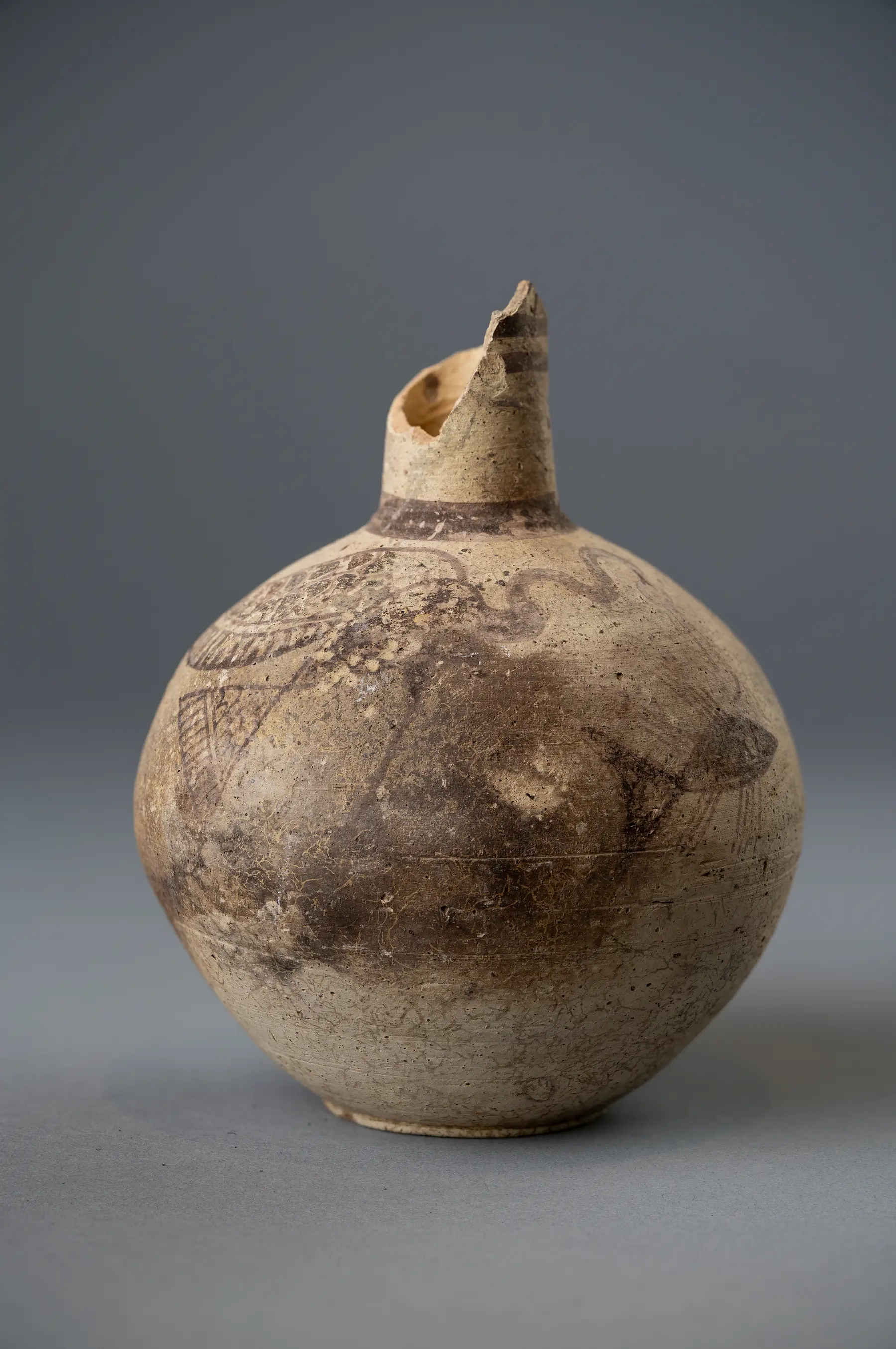
Bichrome IV Jug with a Waterfowl Catching a Fish
Small Cypro-Archaic Bichrome IV jug painted in the free-field style with a long-necked waterfowl reaching for a fish; mouth lost, modern smoke staining.
Classification
- Object type
- Pottery vessel
- Shape
- Jug
- Style
- Free-Field Style
- Decoration
- PaintedPainted in two colours
- Material
- Clay
- Period
- Iron AgeCypro-Archaic
- Date
- 750 - 600 BC
- Place of production
- Cyprus
Collection
Alexis Drakopoulos
Provenance
- Until September 2000, Galerie Samarcande, Paris
- Charles Ede Ltd, London (stock no. 5128)
- Private collection, Cambridgeshire
- 3 September 2024, TimeLine Auctions, lot 542
- 2024–present, Alexis Drakopoulos, London
Identifiers
- Inventory no.
- JUG-AR-002
Cypro-Archaic I, c. 750–600 BCE · Bichrome IV ware · Wheel-made · H. 15 cm
A small wheel-made jug with a nearly spherical body on a low ring base and a narrow cylindrical neck, now broken away at the mouth. Wheel ridges show on the lower body. A broad dark band circles the base of the neck and two narrower bands survive higher up.
The shoulder carries a single free-field scene. At left a waterfowl with a hatched and cross-hatched body and wing stretches a long neck across the shoulder in a series of tight S-bends, ending in a small head with a ringed eye whose beak drops toward the fish below. The fish, to the right, has a pointed head, a dark painted body and a forked tail, with fins drawn as bundles of parallel purple-red strokes. Grey-black smoke staining from a modern fire covers much of one side, and the red has faded to a ghost in places.
Commentary
The jug is Bichrome IV, the wheel-made Cypro-Archaic I ware painted in matt black and red on a light slip, and the leading carrier of free-field painting [1]. Its subject, a bird seizing or reaching for a fish, is among the best-known compositions of the style. The Metropolitan Museum's Cesnola jug 74.51.527 shows the same encounter; its catalogue notes that the scene was popular in Cypriot vase-painting, that such vessels may have come from one or two workshops in the east of the island, and that a Nilotic source for the subject is possible, adapted to Cypriot taste [2][3]. A jug in the Cyprus Museum (1981/V-4/5, H. 19 cm) reduces the same idea to a bird with a row of chevrons like fish bones before its beak [4].
The bird's neck is unusually long. It snakes across the whole shoulder before turning down, so that the bird's body and the fish sit far apart and the neck binds the scene together. The fish follows the construction Caubet described for Bichrome IV painters, who built bird and fish from the same pointed ovoid and added fins or legs [5]. Neither animal can be named as a species; the painters worked from a generic waterbird and a generic fish [5].
The date rests on the ware, the free-field composition and the close parallels, all of which belong to Cypro-Archaic I, c. 750–600 BCE [1][2]. Earlier descriptions of the jug as Cypro-Geometric are not supported. Because the mouth is lost, the rim form cannot be confirmed, though a pinched mouth is the usual form for figured jugs of this group [1].
Small figured jugs of this size were used for pouring and are known mainly from tombs. The discolouration is modern: the jug was caught in a fire that damaged the collection it belonged to, and the smoke staining should not be read as ancient burning.
References
- 1.Gjerstad, E. (1948) The Swedish Cyprus Expedition IV.2: The Cypro-Geometric, Cypro-Archaic and Cypro-Classical Periods. Stockholm: The Swedish Cyprus Expedition, Bichrome IV section.
- 2.Karageorghis, V., Mertens, J.R. and Rose, M.E. (2000) Ancient Art from Cyprus: The Cesnola Collection in The Metropolitan Museum of Art. New York: The Metropolitan Museum of Art, p. 116, no. 161.
- 3.Karageorghis, V. and des Gagniers, J. (1974) La céramique chypriote de style figuré: Âge du Fer (1050–500 av. J.-C.). Rome: Consiglio Nazionale delle Ricerche, vases XXIV.b.45–47.
- 4.Karageorghis, V. (1990) The A.G. Leventis Foundation and the Cultural Heritage of Cyprus. Athens: A.G. Leventis Foundation, p. 76, no. 39.
- 5.Caubet, A. (2005) 'Le lotus, le tilapia et le rouget barbet', Cahiers du Centre d'Études Chypriotes 35, pp. 89–97.
Corrections and additions
Do you know this object?
We are always looking for more of an object's history: who owned it, where it was sold or shown, and where it was published.
We would like to hear about
- Earlier owners, sales or exhibitions
- Publications that illustrate or mention it
- Where it is now, if it has moved
- Better photographs, or a close parallel
- A mistake in what we say about it
Messages are read by us alone and kept confidential, unless the law requires otherwise. Tell us if you would like to be thanked by name on the page.
Similar pieces
 Bichrome Bird OinochoeBritish Museum
 Bichrome IV Trefoil Jug with a Striding BirdDrakopoulos Collection
 Bichrome Bird JugBritish Museum
 Bichrome IV Jug with Wreathed Circle SystemsDrakopoulos Collection
 Bichrome IV jugSwedish Cyprus Expedition
 Bichrome IV Trefoil Jug with a Chequer PanelDrakopoulos Collection
 Bichrome IV jugSwedish Cyprus Expedition
 White Painted IV Trefoil Jug with a Wild Goat and a Composite Plant-like FigureDrakopoulos Collection
 Bichrome IV jugSwedish Cyprus Expedition
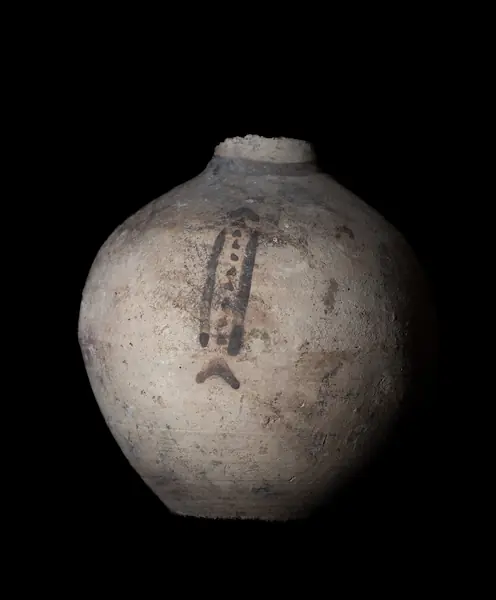 White Painted Juglet with a Dotted ArrowDrakopoulos Collection
 Bichrome Bird OinochoeBritish Museum
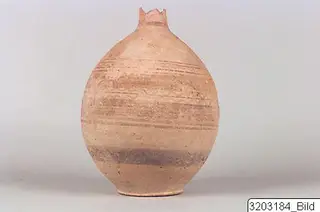 Bichrome IV oval jug with base-discMedelhavsmuseet (Museum of Mediterranean and Near Eastern Antiquities)
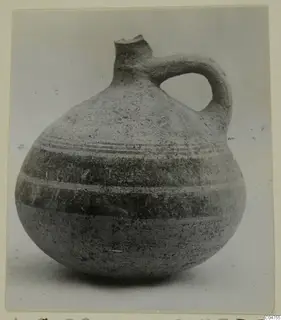 Bichrome IV depressed globular jugAmathus-Western Necropolis, SCE Tomb 8
 Terracotta jugMetropolitan Museum of Art
 JugMetropolitan Museum of Art
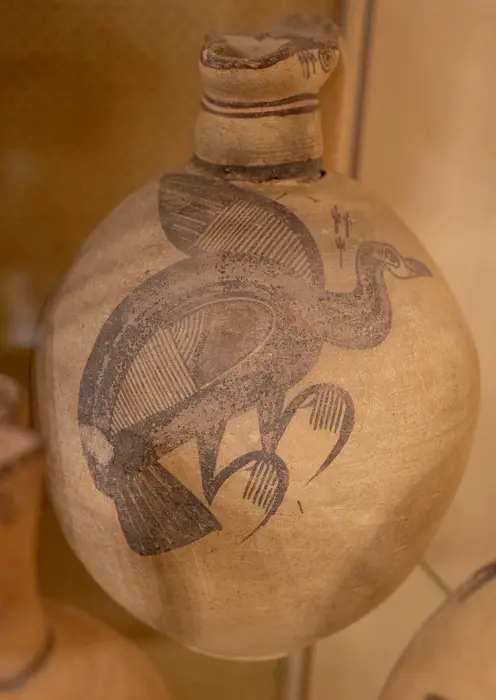 Free Field OinochoePierides Museum, Larnaca
 Terracotta jugMetropolitan Museum of Art
 Squat bichrome jug in free-field style with image of bird picking a lotus flowerAshmolean Museum
 Free Field OinochoePierides Museum, Larnaca
 White Painted IV depressed jug with birdsMedelhavsmuseet (Museum of Mediterranean and Near Eastern Antiquities)