
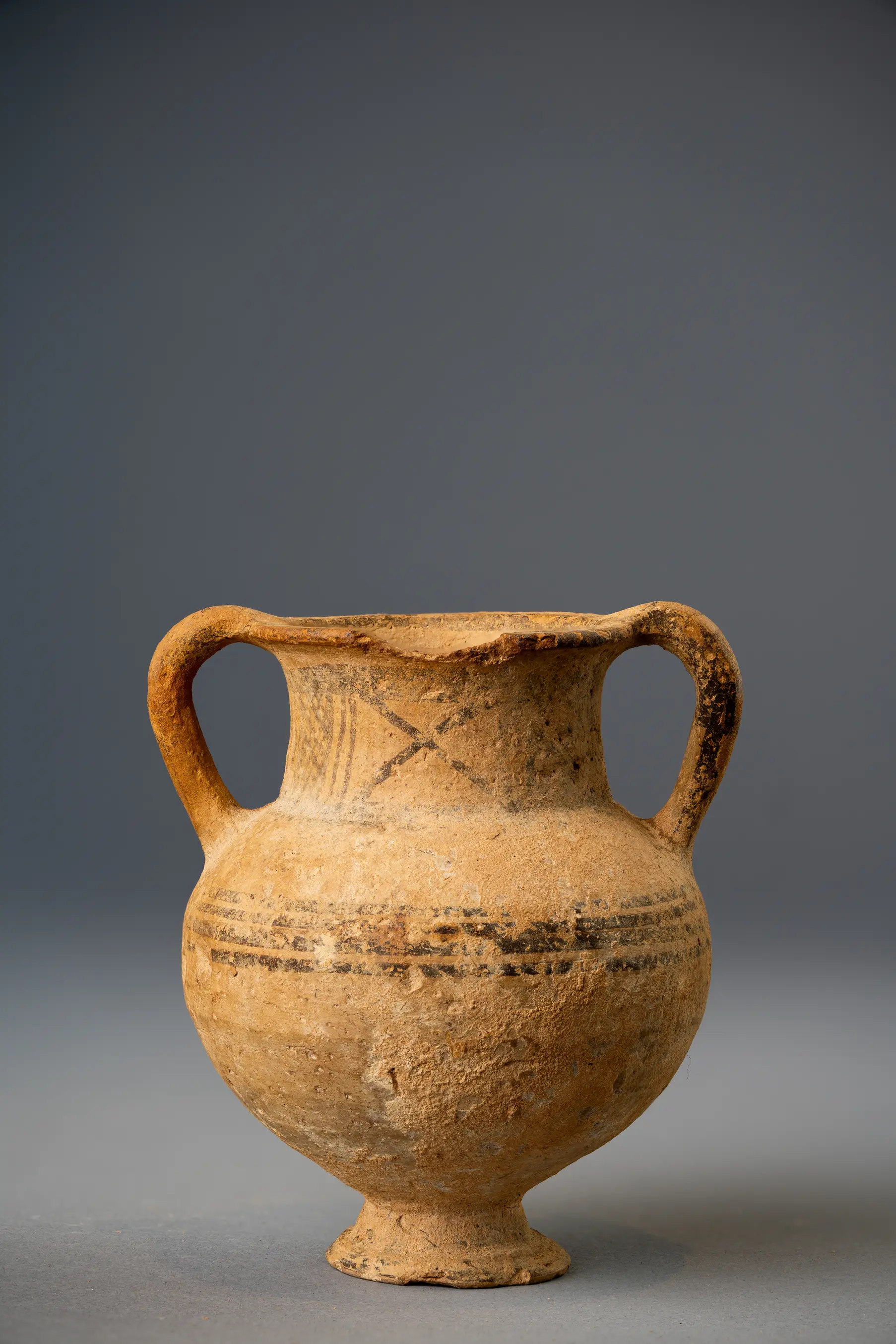
Geometric I
White Painted Amphoriskos on a Conical Foot
Small Cypriot White Painted amphoriskos with a globular body, flaring foot and rim-to-shoulder handles; a saltire and stroke groups on the neck. Cypro-Geometric I–II.
Date
1050 - 850 BC
Accession No.
JAR-GE-002
Collection
Alexis Drakopoulos
Provenance
- 1965–1969, The Goodman Collection
- 2025–present, Alexis Drakopoulos, London
Cypro-Geometric I–II, c. 1050–850 BCE, probably Cypro-Geometric I · White Painted ware · Wheel-made
A small two-handled jar with a squat, globular body raised on a short flaring foot. The neck is wide and concave and opens into a thin everted rim. Two strap handles spring from the rim, rise just above it, and come down onto the shoulder. The ground is a pale buff, dusty and powdery to the eye, painted in matt dark brown to black. On the neck a group of close vertical strokes stands beside a large saltire cross, drawn quickly in two strokes. Three or four bands, partly smudged, circle the shoulder, and traces of paint survive along the backs of the handles.
The rim is chipped around much of its circuit, with a larger loss on one side. The paint is worn and the surface pitted, with light burial deposit on the body and foot.
Commentary
The piece is an amphoriskos, a small amphora. Matt dark paint on a light ground makes it White Painted ware. Its handles run from rim to shoulder, one of the handle classes Gjerstad used to sort Cypro-Geometric amphorae [1].
The shape gives the date. A depressed globular body, a concave neck with an everted rim, handles from rim to shoulder and a raised conical foot together define the White Painted I amphoriskos of the earliest Iron Age. The type is well represented at Palaepaphos-Skales, where Tomb 43 produced a series of them (nos 93–104). They are catalogued as having a "depressed globular body, concave neck, flat everted rim, two opposed handles from rim to shoulder, high conical foot", at heights of 13.8–19.4 cm [2]. The tomb belongs to Cypro-Geometric I. No. 100 (H. 14.9 cm) is the nearest in proportion to this piece [2]. A second pair of comparisons comes from Kourion-Kaloriziki Tomb 33, now in the Penn Museum, Philadelphia (139410 and 38323). These are White Painted I footed amphorae of Cypro-Geometric I, 13.9 and 12.8 cm tall [3]. The first has wavy lines on the neck and vertical cross-hatched panels on the shoulder. Its painter worked in the same rectilinear idiom as the saltire and stroke groups on this neck. The form descends from the Proto-White Painted amphoriskos of the eleventh century.
The foot here is shorter than on the Skales series, and the neck decoration is sparer. Neither detail is diagnostic, and White Painted II potters kept the shape. A cautious range is therefore Cypro-Geometric I–II, c. 1050–850 BCE, with Cypro-Geometric I, c. 1050–950 BCE, the likelier stage. Vessels of this size are grave-offering and table scale, small containers for oil or another liquid. Almost every intact example comes from a chamber tomb.
References
- 1.Gjerstad, E. (1948) The Swedish Cyprus Expedition IV.2: The Cypro-Geometric, Cypro-Archaic and Cypro-Classical Periods. Stockholm: Swedish Cyprus Expedition, chapter on the pottery (White Painted and Bichrome wares).
- 2.Karageorghis, V. (1983) Palaepaphos-Skales: An Iron Age Cemetery in Cyprus. Konstanz: Universitätsverlag Konstanz, Tomb 43, nos 93–104.
- 3.Penn Museum, Philadelphia, 139410 and 38323, White Painted I amphorae from Kourion-Kaloriziki Tomb 33, Cypro-Geometric I, H. 13.9 and 12.8 cm, museum records.
More from the Catalogue
Browse related objects
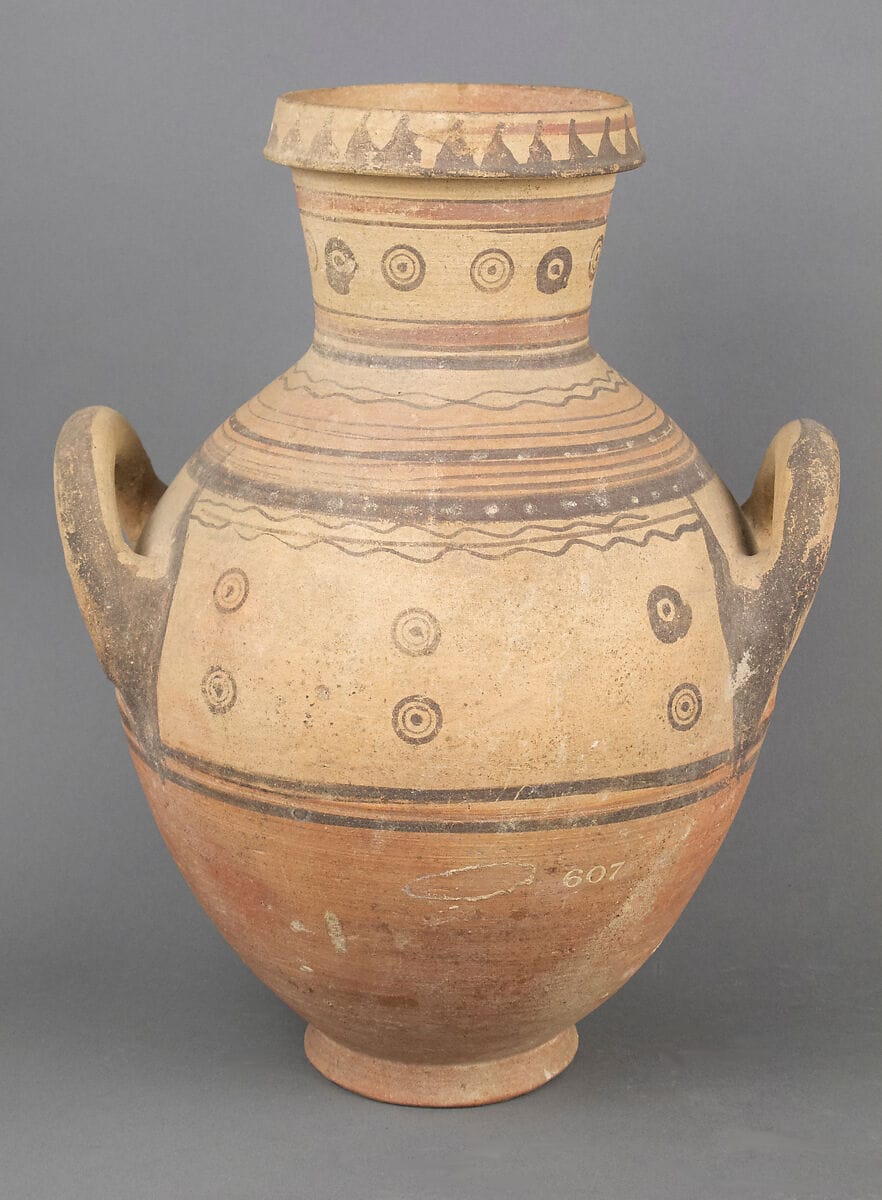
Amphora
Archaic II
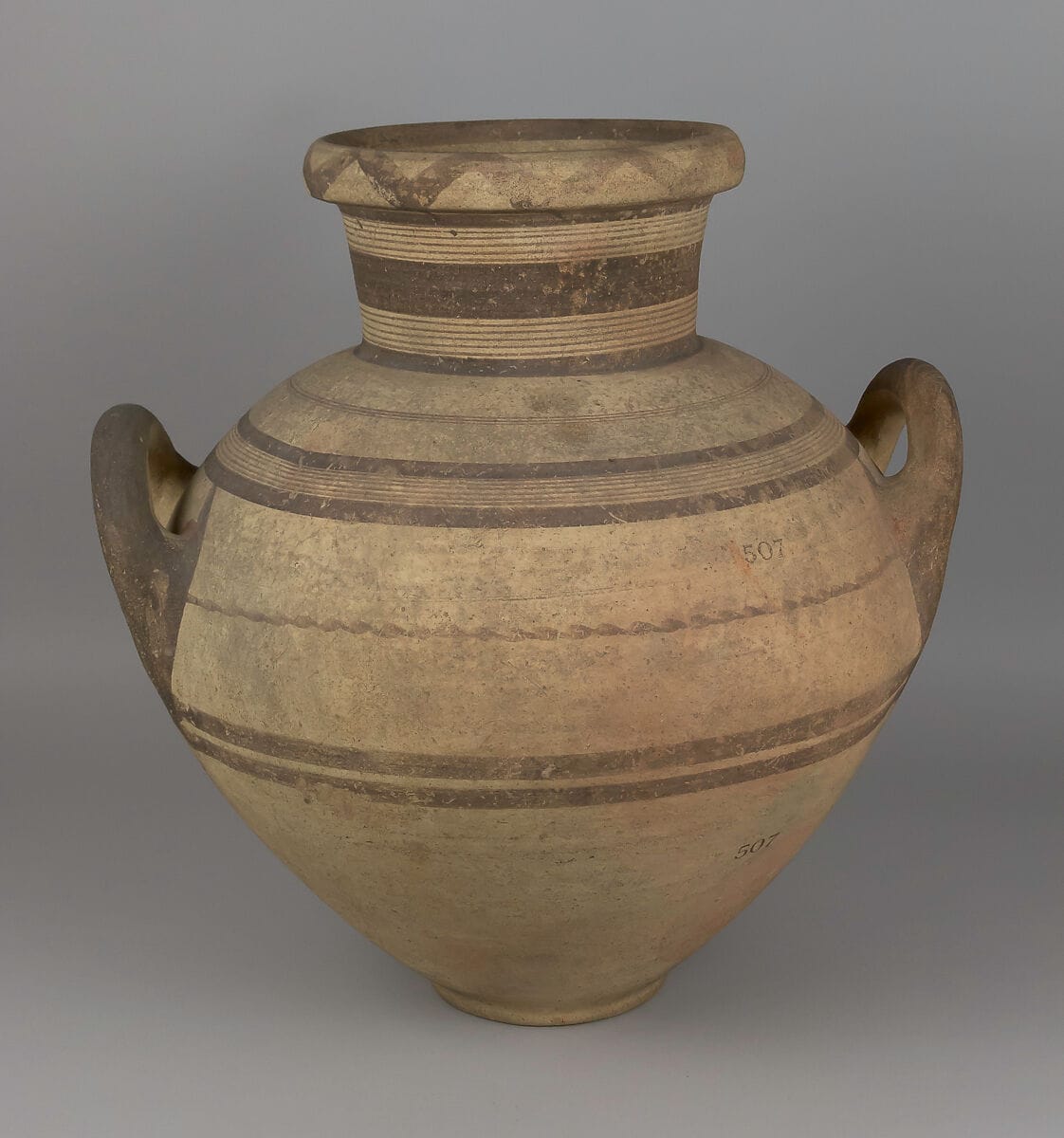
Amphora
Geometric I
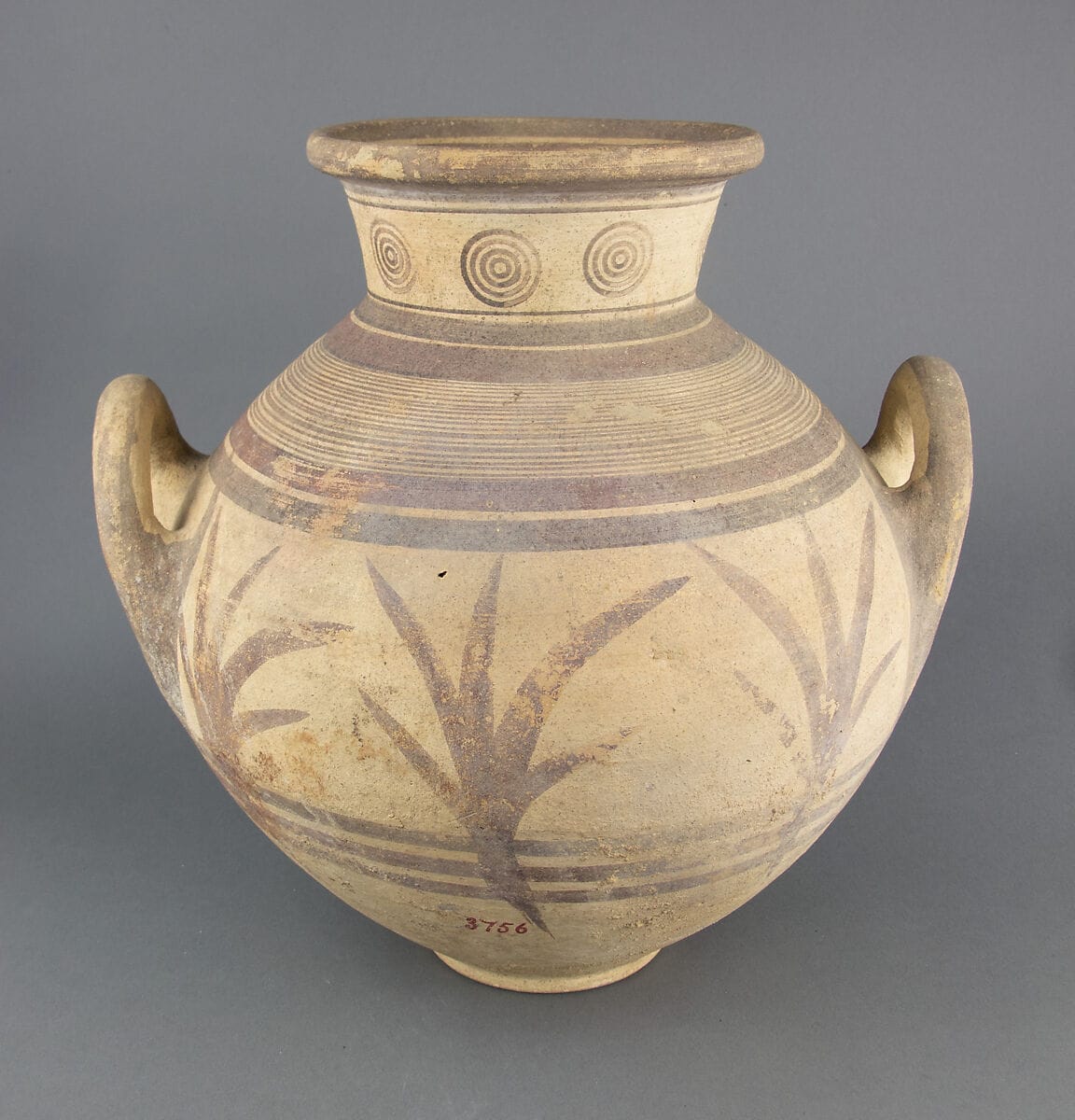
Amphora
Archaic II
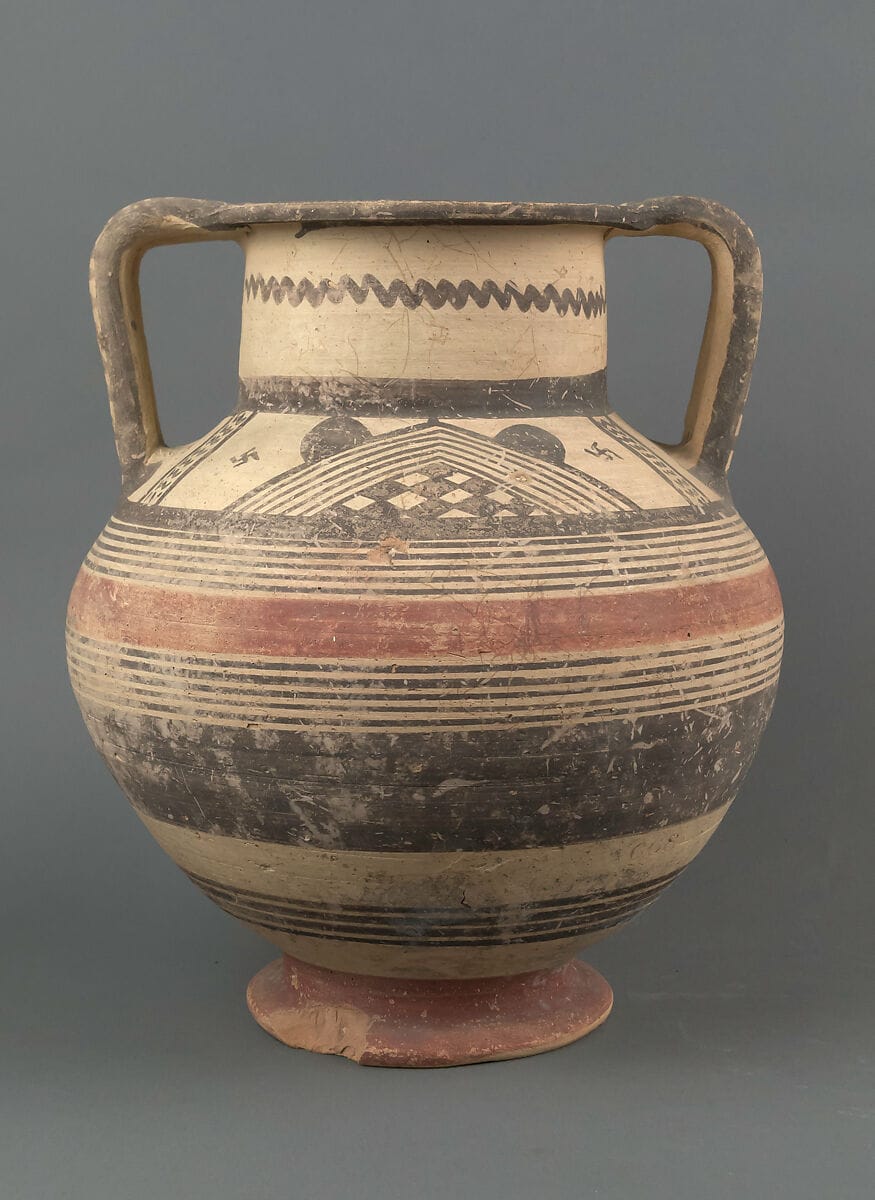
Amphora
Archaic I
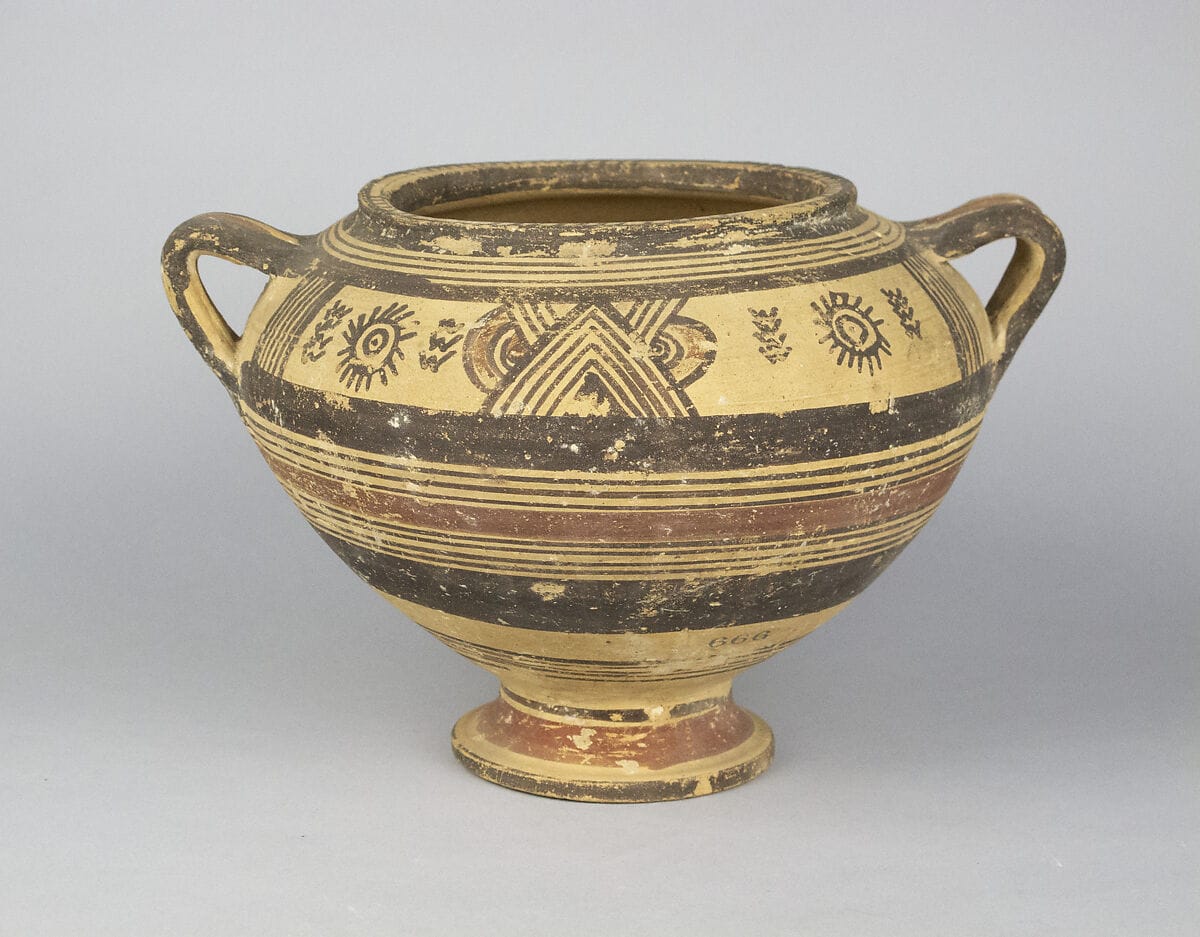
Dinos
Archaic I
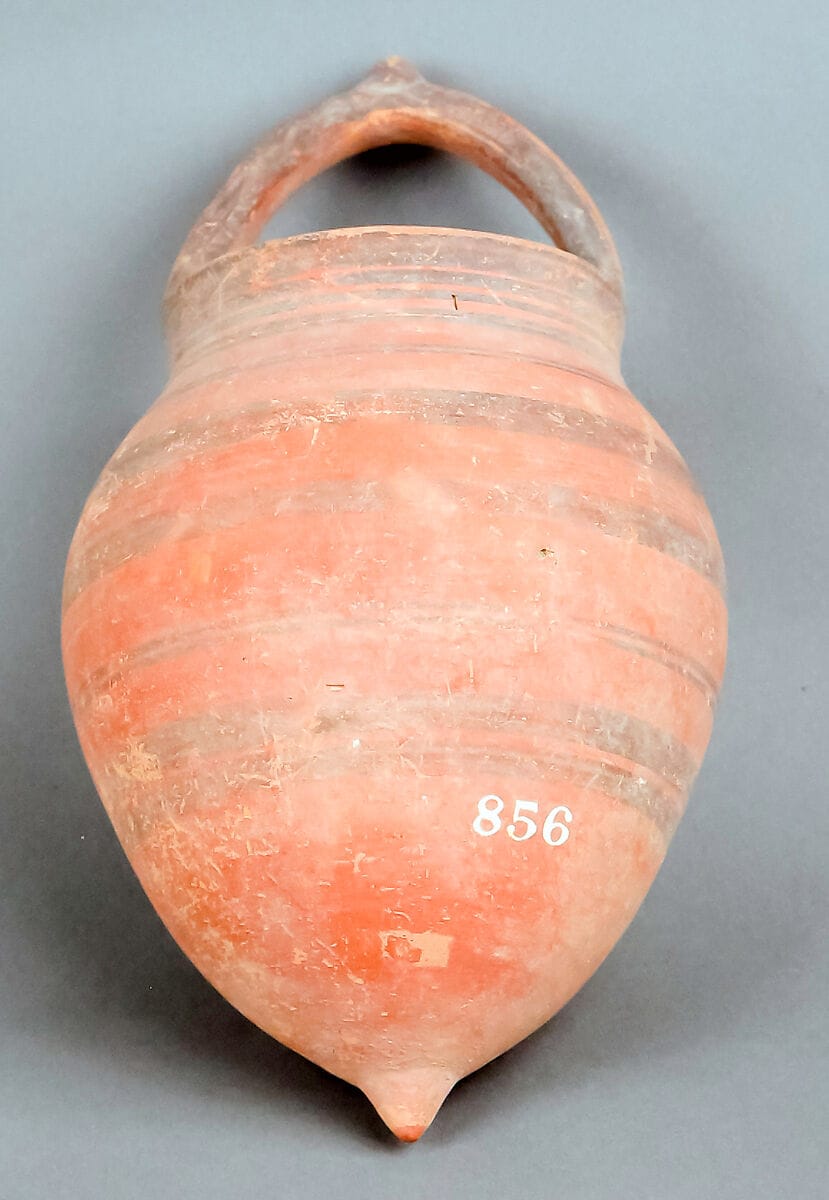
Amphoriskos
Geometric III
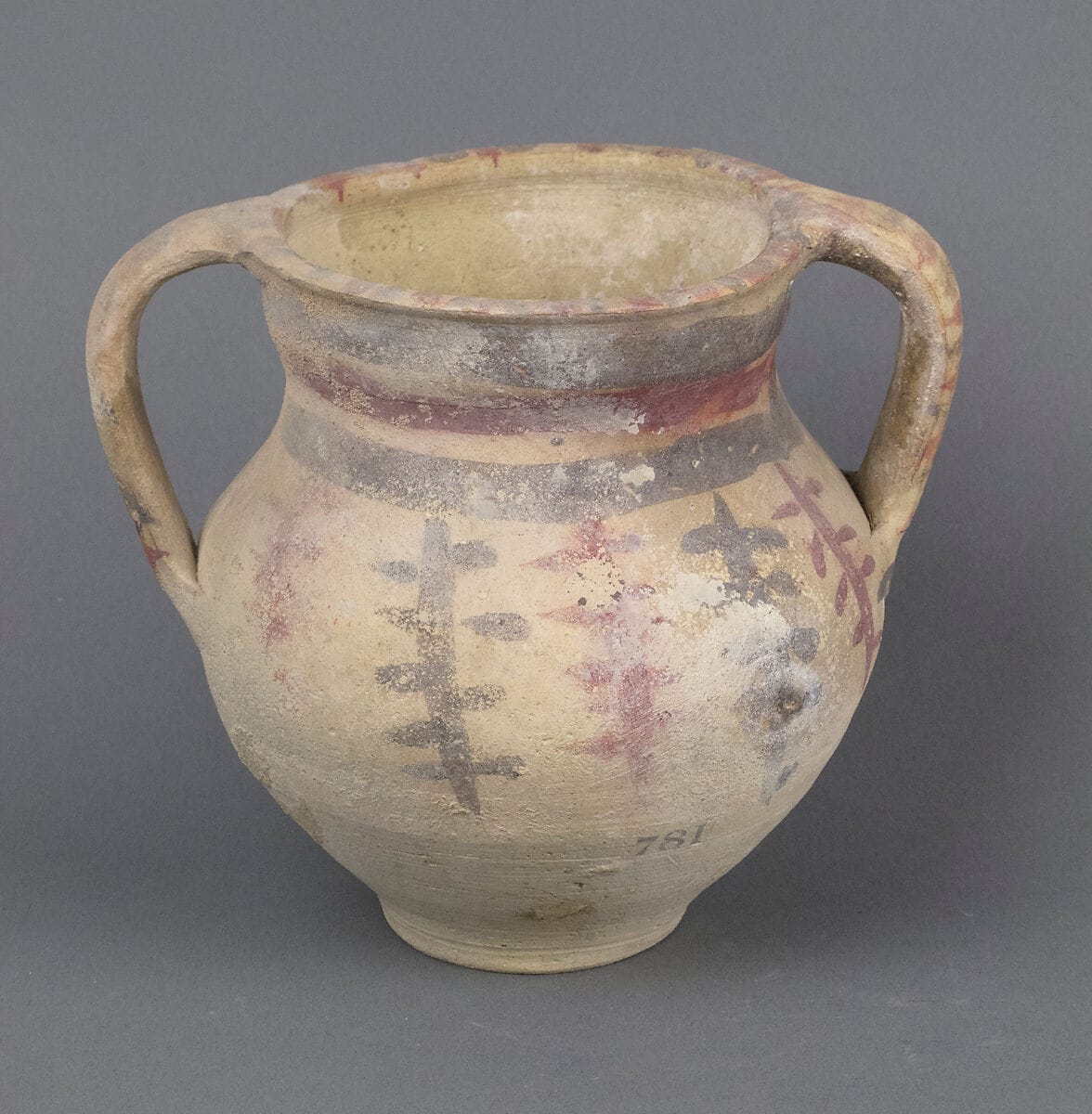
Amphoriskos
Archaic II
Limestone statuette of a boy holding an amphora
Hellenistic
Terracotta krater
Late Bronze Age III
Krater
Geometric I
Terracotta miniature amphora
Geometric III
Amphora
Late Bronze Age III
Amphora
Archaic II
Krater
Late Bronze Age III
Dinos
Archaic I
Amphora
Archaic
Terracotta amphora
Middle Bronze Age II
Amphora
Bronze Age