
Conference paper·Archaeological Research Unit - University of Cyprus·2017
Under the Mediterranean: Harbours at Amathus, Dreamer's Bay and Paphos, and the Carob and Copper Trades
Jean-Yves Empereur, Simon James, Lucy Blue, John Leonard, James D. Muhly and Łukasz Miszk
Chapters
About the video
This session of the 2017 Honor Frost Foundation conference on Mediterranean maritime archaeology presents three papers on ancient Cypriot harbours and two on the island's maritime export commodities.
Jean-Yves Empereur presents the final publication of the underwater excavation of the harbour at Amathus, conducted between 1984 and 1986 by the French School at Athens. Nineteen soundings along the three 150-metre moles revealed up to eight courses of bossed headers weighing one to three tons, quarried from the adjacent shore and joined with a 56-kilogram lead dovetail. Local pottery and coins of Demetrios Poliorketes identified by Olivier Picard date the construction to 305 BC, following Demetrios's naval victory at Salamis. With its five-metre-wide entrance, Empereur argues this was a military harbour that Ptolemy abandoned around 295 BC before it was ever finished or used.
Simon James and Lucy Blue report on work by the University of Leicester and the University of Southampton at Dreamer's Bay on the Akrotiri Peninsula. James describes shoreline storage and maintenance buildings arranged on an orthogonal plan. Complete amphorae and cooking pots crushed in situ suggest destruction in the mid-fourth century AD earthquake that hit Kourion, followed by late fourth-century rebuilding. Blue outlines geomorphological work with Ferréol Salomon examining the submerged breakwater, cliff quarries, and sediment cores from the Akrotiri Salt Lake, which indicate that the western tombolo was probably in place by the fourth millennium.
John Leonard examines how early twentieth-century British colonial archives on the carob trade can help locate unrecorded Roman local ports and reconstruct their hinterlands. Comparing ancient geographers such as Pseudo-Skylax and the Stadiasmus Maris Magni with the 67 coastal carob warehouses operating by 1940, he shows that pre-modern export points along the north coast, including Flamoudi and Akanthou, match Hellenistic and Roman sites recorded in pre-1974 surveys.
James D. Muhly reviews the Late Bronze Age trade in oxhide ingots and copper metallurgy. Lead isotope analysis shows that oxhide ingots found from Sardinia to the Uluburun and Cape Gelidonya shipwrecks between 1350 and 1200 BC were made of Cypriot copper, yet Aegean bronze artefacts mostly used Lavrion copper. Muhly accepts Noel and Zofia Stos-Gale's geological evidence for Lavrion copper, argues from Knossos and Pylos Linear B tablets that ka-ko na-wi-jo means "ship copper" rather than "temple bronze", and notes that twelfth-century Cypriot smiths pioneered carburised iron technology to export bimetallic knives.
Łukasz Miszk presents interdisciplinary research by the Paphos Agora Project testing whether Nea Paphos had a harbour on its northwestern bay, a question linked to the "triple harbour" mentioned in the Stadiasmus. Using historical maps, sediment analysis, ground-penetrating radar, drone photogrammetry, magnetometry, and two trial trenches, the team found pre-Roman quarrying, early Roman utility pottery, and late antique burials buried under sand, concluding that large harbour infrastructure on the northwest shore is unlikely.
From our collection
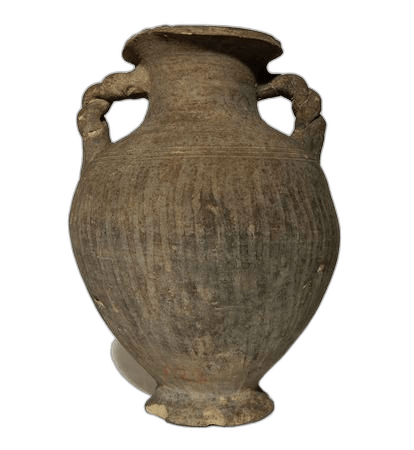
Pieces in the Drakopoulos collection of the kinds and periods this talk covers: Amphora, Late Cypriot (Late Bronze Age), Cypro-Geometric, Hellenistic.
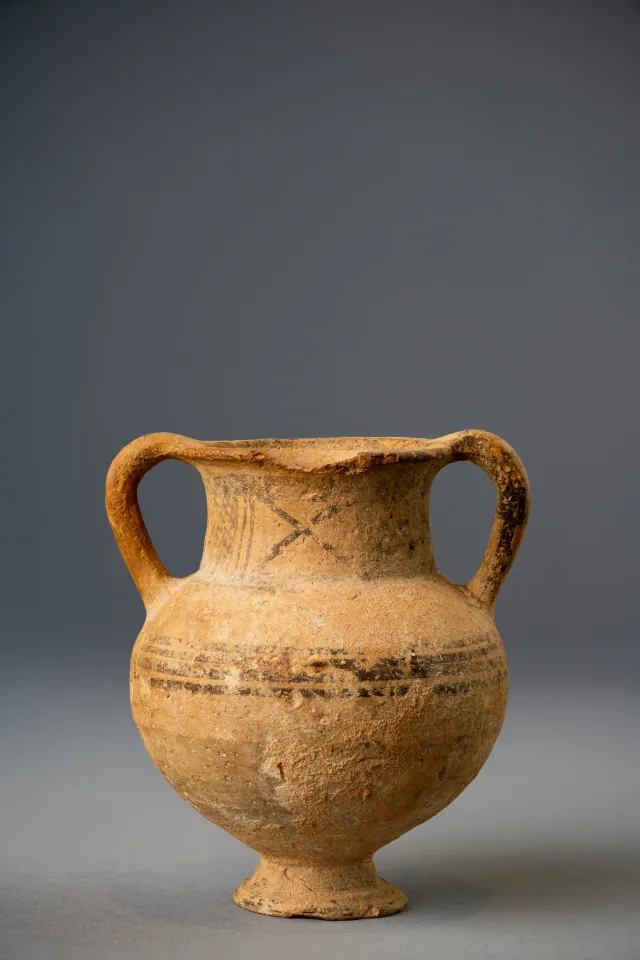
White Painted Amphoriskos on a Conical Foot
Amphora
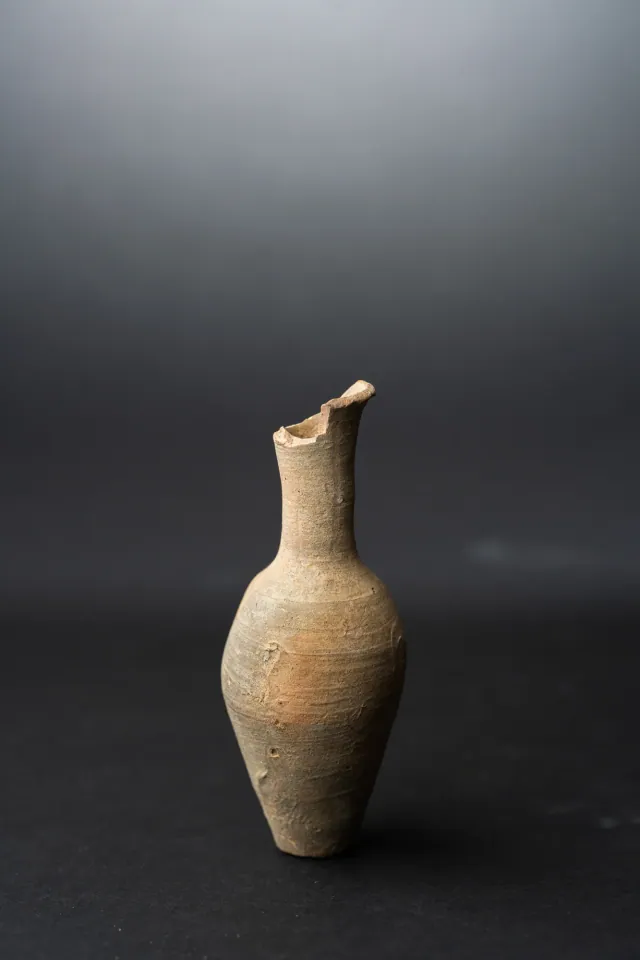
Fusiform Unguentarium
Hellenistic
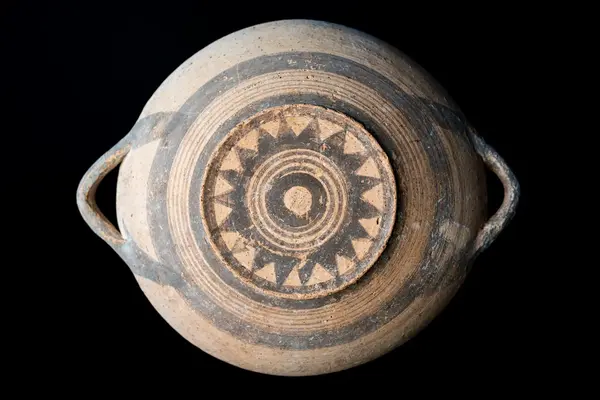
White Painted Plate with a Sawtooth Star on the Underside
Cypro-Geometric
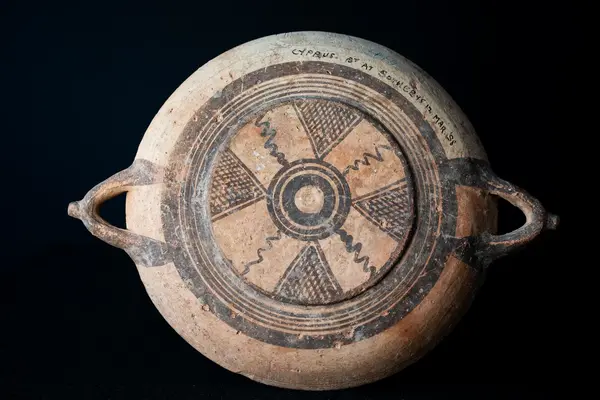
White Painted Plate with Latticed Triangles and Wavy Lines on the Underside
Cypro-Geometric
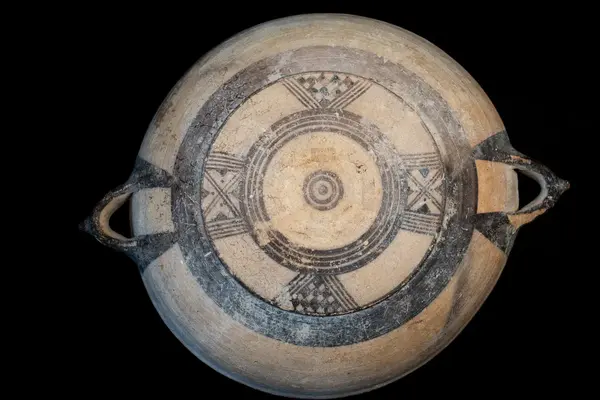
Large White Painted Plate with Knobbed Handles and a Four-Armed Cross on the Underside
Cypro-Geometric
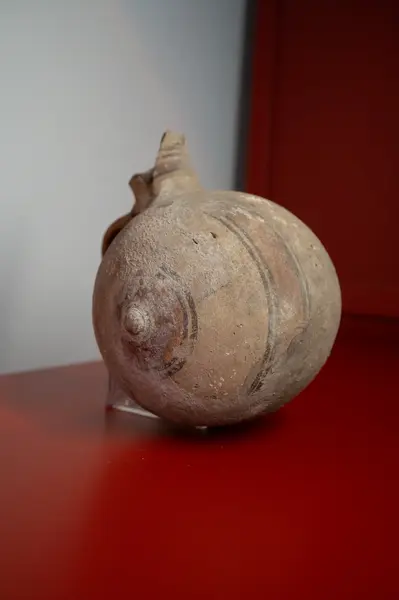
Bichrome Barrel Jug with Circled End-Knobs
Cypro-Geometric
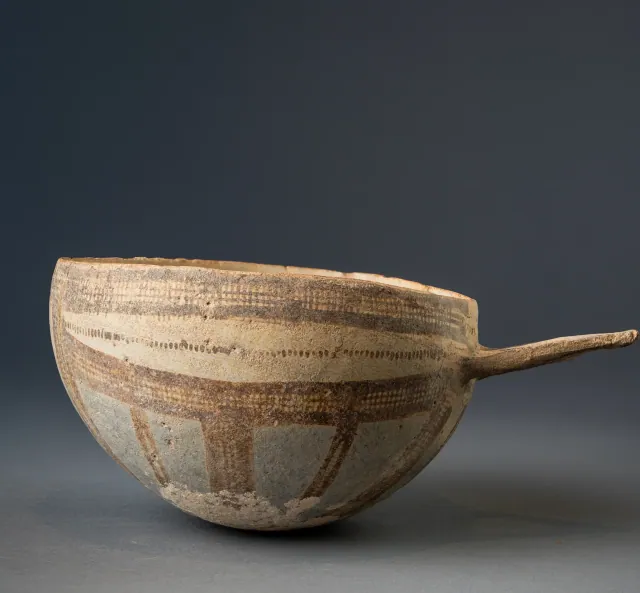
White Slip II Hemispherical Bowl with Wishbone Handle
Late Cypriot (Late Bronze Age)
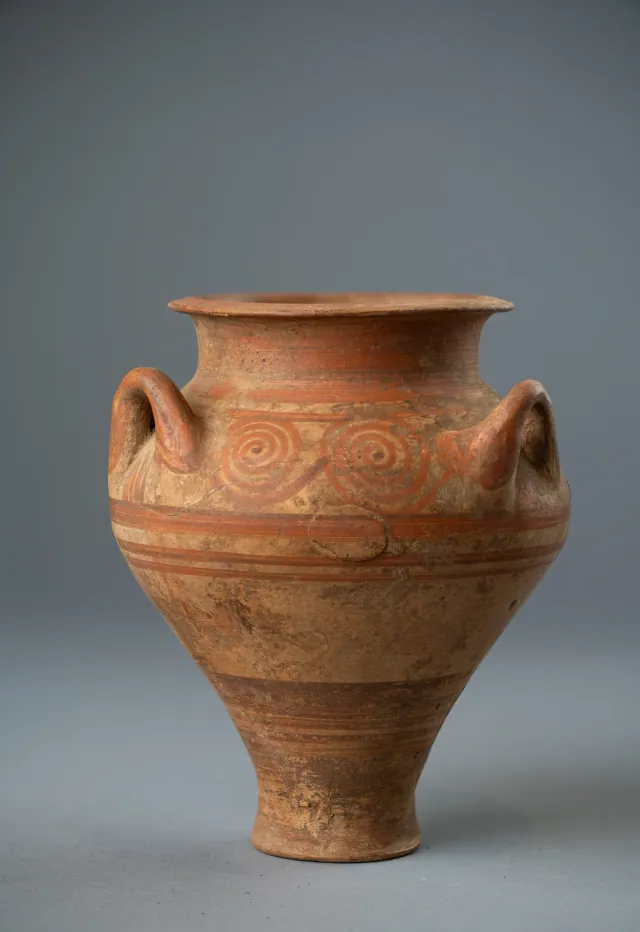
Cypriot Three-Handled Jar in the Mycenaean Style with Running Spirals
Late Cypriot (Late Bronze Age)
Found at the places discussed
Objects in our catalogue, in museum collections, recorded as found at these sites.



Background
Where to read more on this site before or after watching.
The site
Amathus
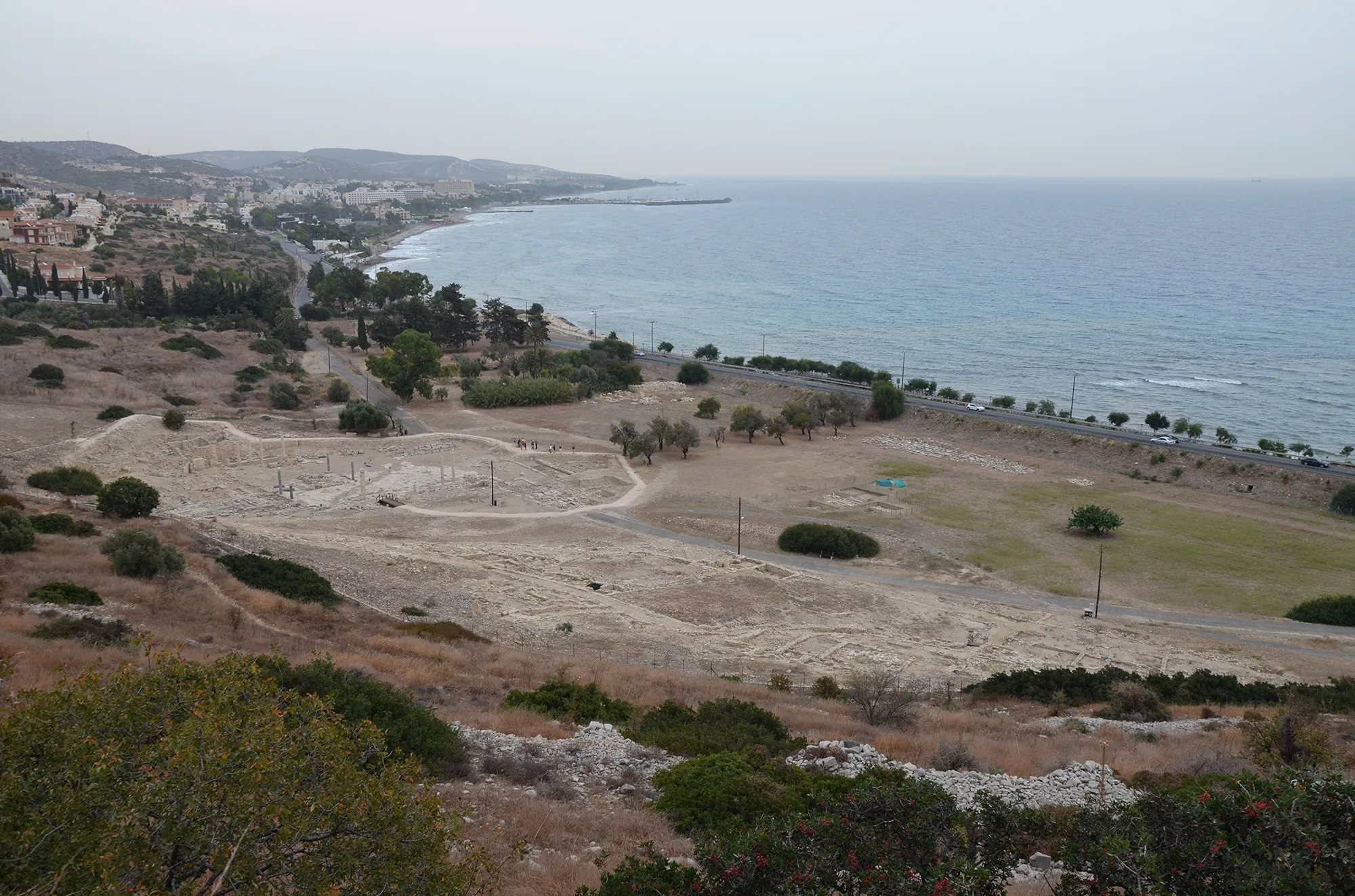
Amathus was the capital of one of the Iron Age kingdoms of Cyprus, on a coastal hill about 10 km east of Limassol. It was founded on an empty site in the 11th century BC and lived in until the end of the 7th century AD. Its acropolis carried a sanctuary of Aphrodite and the kings' palace; its people kept the island's old non-Greek language, Eteocypriot, at least until the time of Alexander.
In the compendium
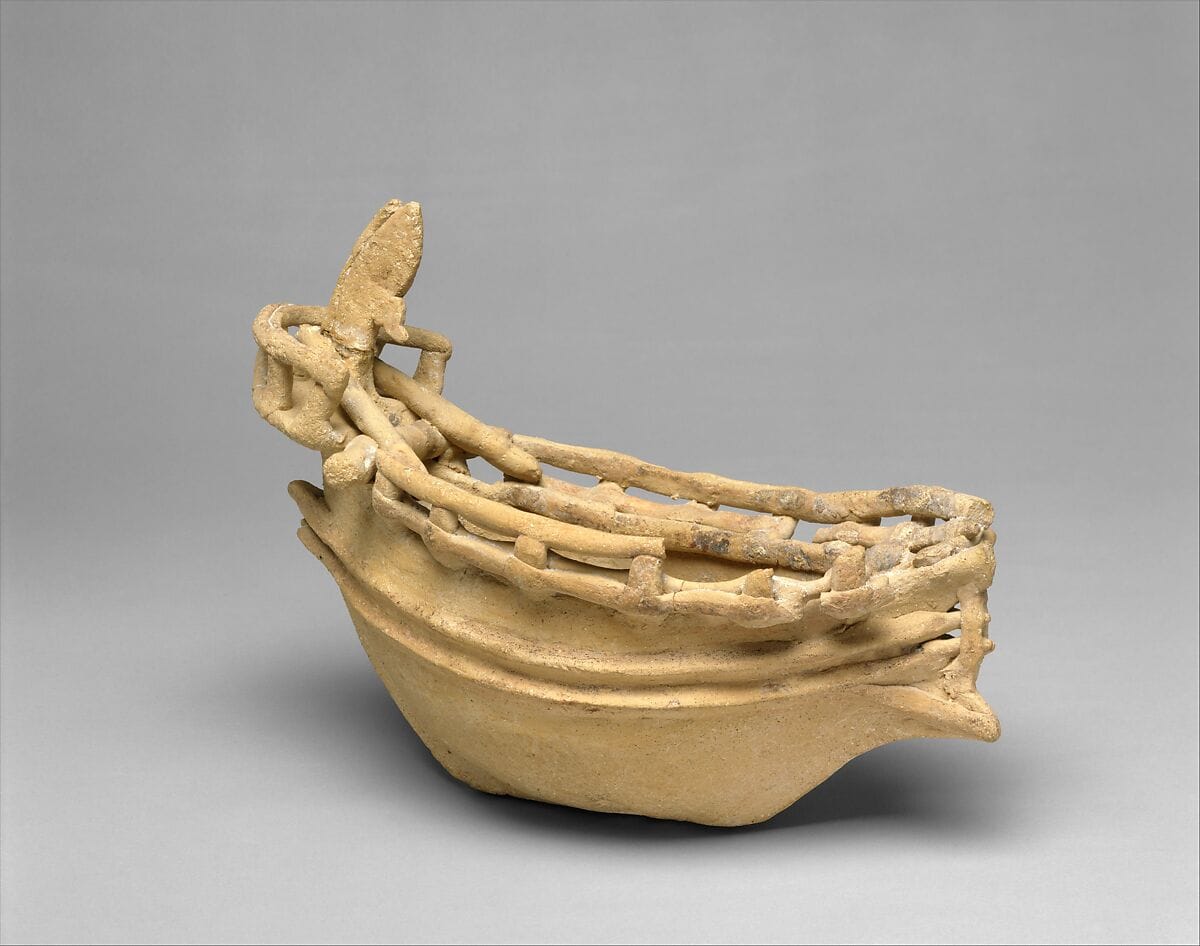
Seafaring and Ships in Ancient Cyprus
The evidence for boats and seafaring around Cyprus from the first crossings to the Classical period, from anchors, models and graffiti to wrecks and shipsheds.
In the compendium
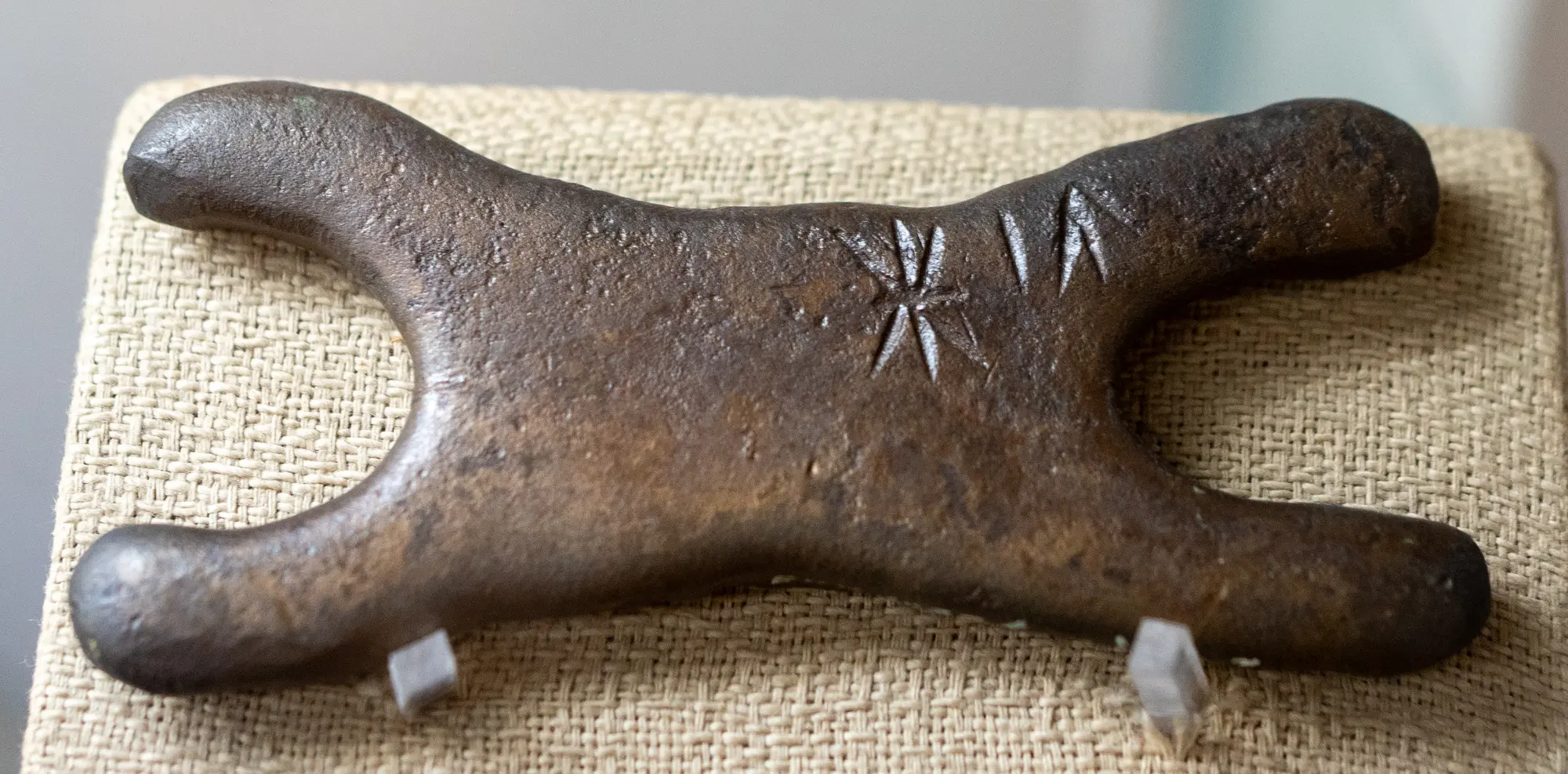
Copper Metallurgy in Ancient Cyprus
The mining, smelting and casting of the Troodos sulphide ores, from hammered Chalcolithic native copper to Late Bronze Age oxhide ingots and Archaic slag heaps.
In the compendium
Weights and Ingots
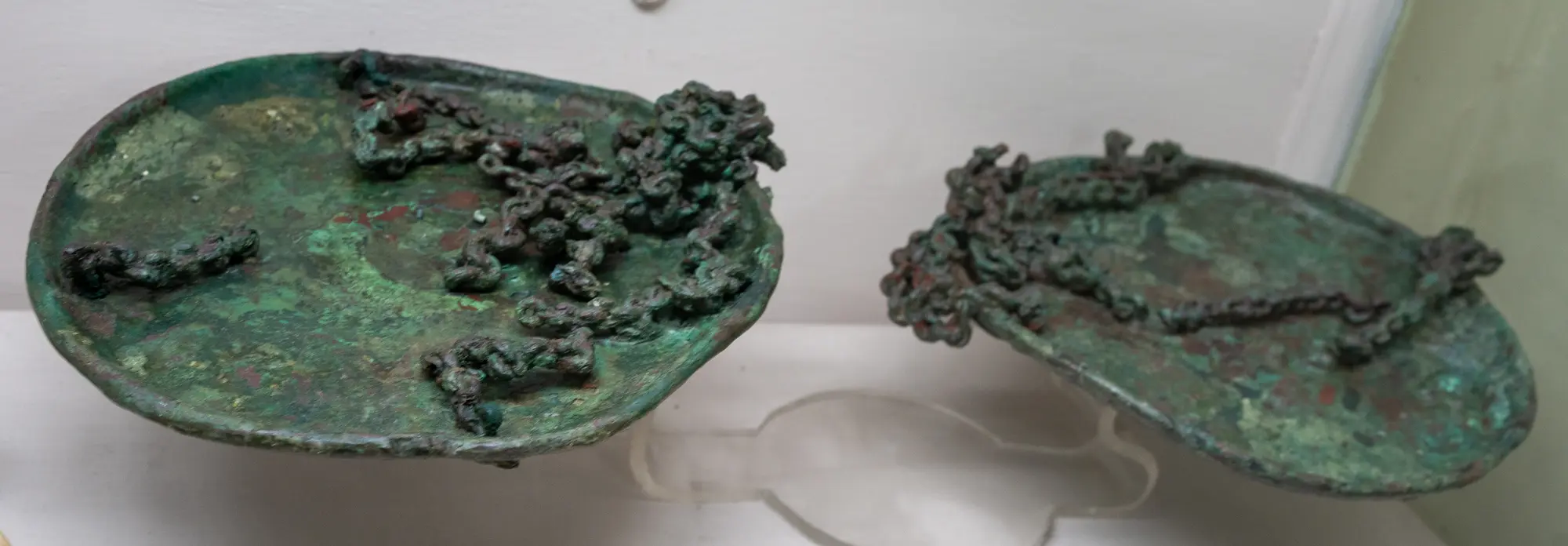
Copper ingots, miniature votive ingots, balance weights and scale pans in Cyprus, from the Late Bronze Age into the Cypro-Geometric and Cypro-Archaic periods.
Map of Cyprus
Places discussed in the talk
- Has a page on this site
- Other places
- Ground above 200, 500, 1,000 m