
Lecture·CAARI Cyprus·2021
Voices from the Grave: A Late Bronze Age Population from Kalavasos and Their Tombs
Chapters
About the lecture
Alison South presents the 21 Late Bronze Age chamber tombs excavated between 1979 and 1998 at Kalavasos-Ayios Dhimitrios by the Vasilikos Valley Project. Located within the eight-to-ten-hectare Late Cypriot IIA to IIC settlement, some tombs were salvaged during construction of the Nicosia-Limassol motorway while others were uncovered in stratigraphical excavations around the ashlar administrative complex, Building X. South examines how local geology, ranging from stable havara limestone to damp, collapsible conglomerate, affected tomb cutting and the preservation of bone and ivory.
Drawing on osteological studies by Jack Moyer and Sherry Fox, which combined the Ayios Dhimitrios remains with those from nearby Kalavasos-Mangia for a sample of 95 individuals, the lecture outlines demography and burial treatment. Infants and children are well represented, placed either in small dromos niches or inside main chambers, and several skulls show evidence of artificial head shaping. South contrasts smaller or disturbed tombs from the motorway and southeast areas, such as Tombs 1, 4 and the intact but modest Tomb 6, where White Slip or plain kraters were found with Base Ring cups inside them as drinking sets, with the large Tomb 18/19/20 complex in the northwest.
The core of the talk focuses on the wealthy tombs under the streets around Building X in the northeast area. Tomb 11, left sealed beneath a 13th-century BC wall, held three young women, a child and three infants accompanied by three matching White Slip bowls. Its grave goods included Mycenaean kraters, a high proportion of Red Lustrous Wheelmade ware spindle bottles, Base Ring bull rhyta, ivory cosmetic boxes and ducks, Egyptian glass, a silver-and-glass pyxis, gold jewellery of standardised weights studied by Elizabeth Goring, and two Cypro-Minoan signet rings. South then covers Tomb 13, built with an entrance ramp and looted at the end of the settlement's life, alongside its sealed subsidiary chamber holding a silver Hittite god figurine, and Tombs 14 and 21, which appear to have been cleared out in antiquity, leaving behind a 54.5-litre Mycenaean chariot krater and matched sets of Base Ring I jugs. She concludes by asking whether the town's international wealth came from olive oil rather than local copper, citing metallurgical and ore studies by Noel and Sophie Gale and Lente Van Brempt.
In the discussion, Peter Fischer compares recent multi-burial tombs and DNA sampling at Hala Sultan Tekke, and Louise Steel and another questioner discuss olive oil exports in Canaanite jars and funerary pottery sets.
From our collection
Pieces in the Drakopoulos collection of the kinds and periods this talk covers: Base Ring ware, Mycenaean pottery, Red Lustrous Wheelmade ware, White Slip ware, Late Cypriot (Late Bronze Age).
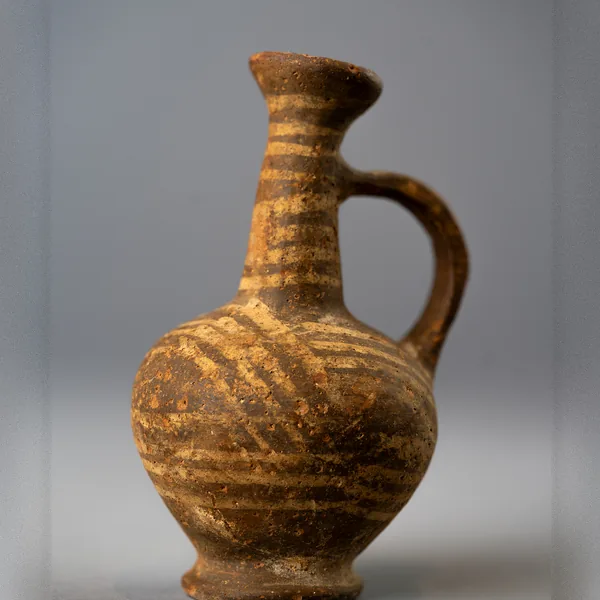
Base Ring II Bilbil Juglet with White-Painted Bands
Base Ring ware
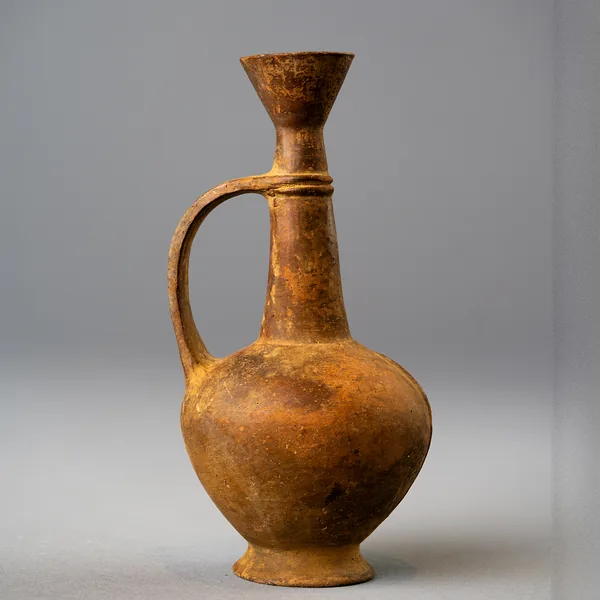
Base Ring Bilbil Juglet with Funnel Mouth and Neck Ridge
Base Ring ware
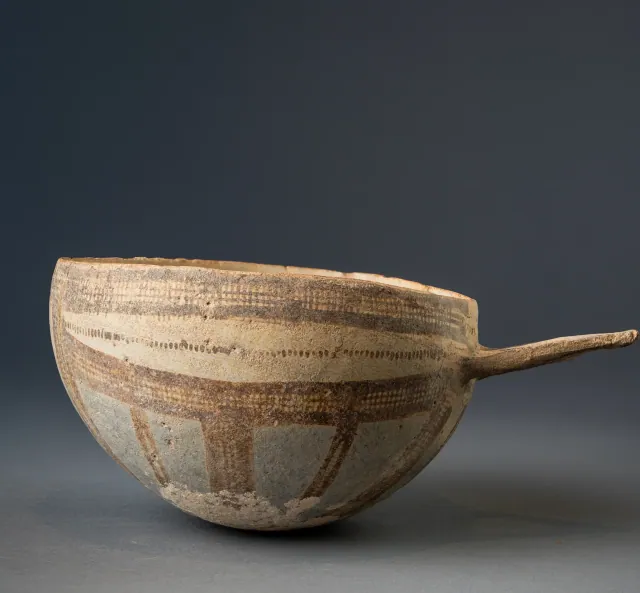
White Slip II Hemispherical Bowl with Wishbone Handle
White Slip ware
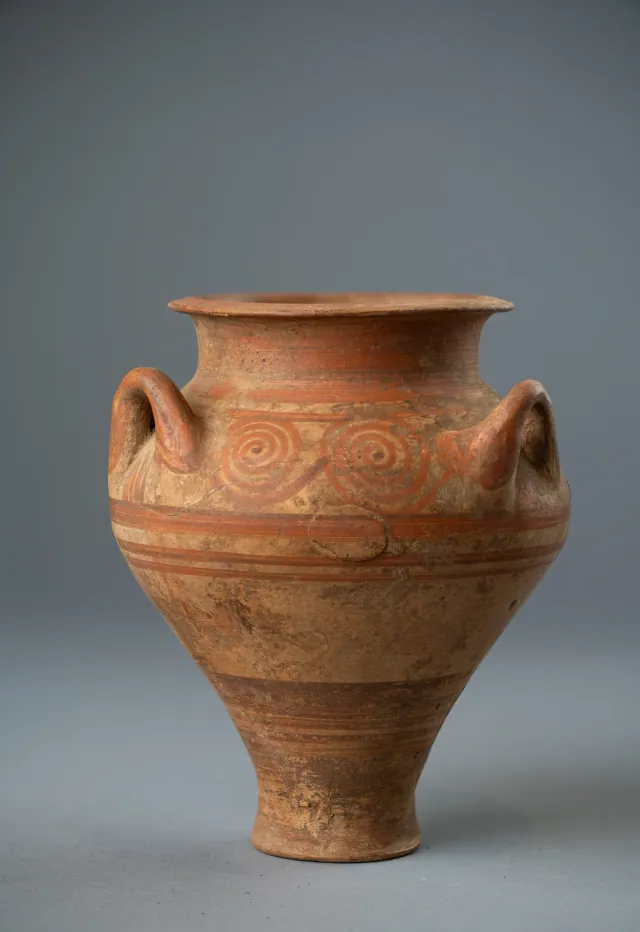
Cypriot Three-Handled Jar in the Mycenaean Style with Running Spirals
Mycenaean pottery
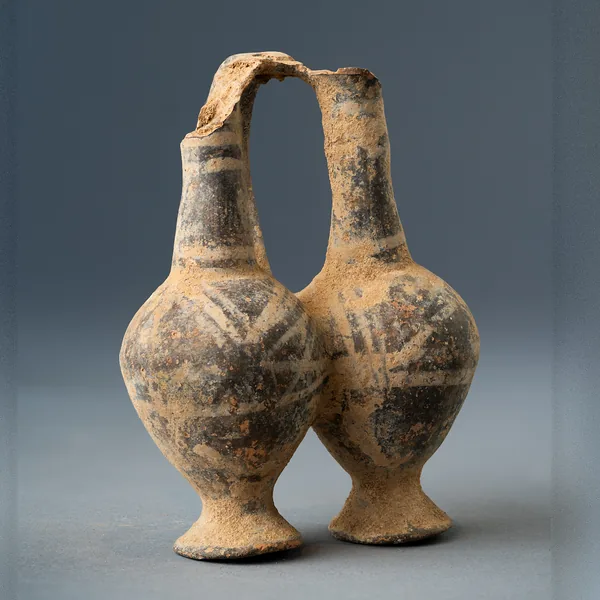
Base Ring II Double Juglet with White-Painted Decoration
Base Ring ware
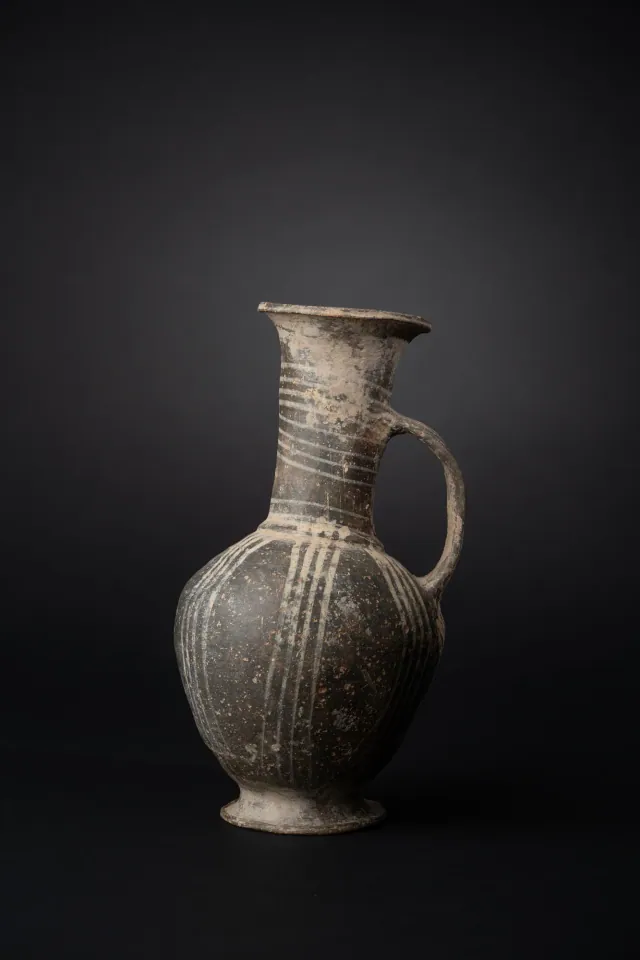
Base Ring II Jug with White-Painted Lattice Bands
Base Ring ware
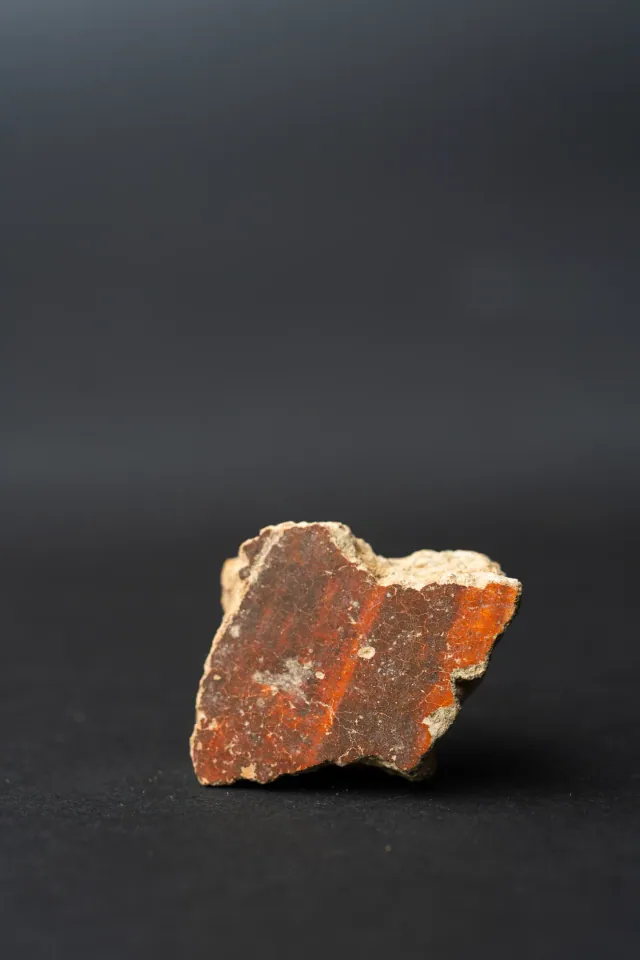
Red Lustrous Ware Body Sherd with Fire-Mottled Slip
Red Lustrous Wheelmade ware
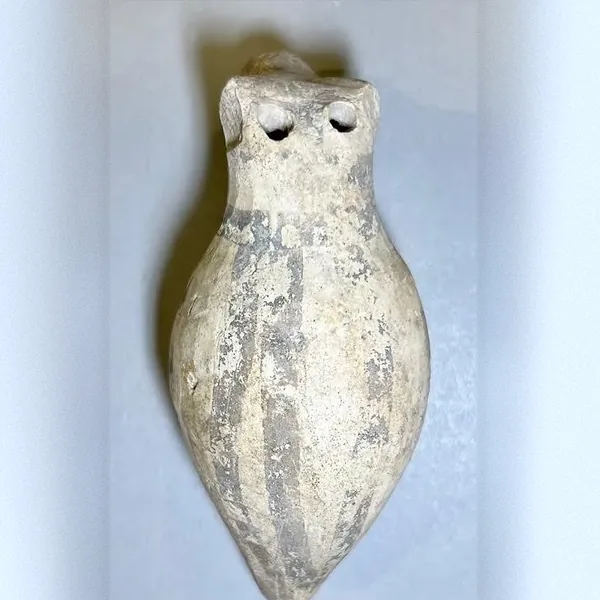
White Painted VI Owl-Headed Rattle
Late Cypriot (Late Bronze Age)
Found at the places discussed
Objects in our catalogue, in museum collections, recorded as found at these sites.


Background
Where to read more on this site before or after watching.
The site
Maroni
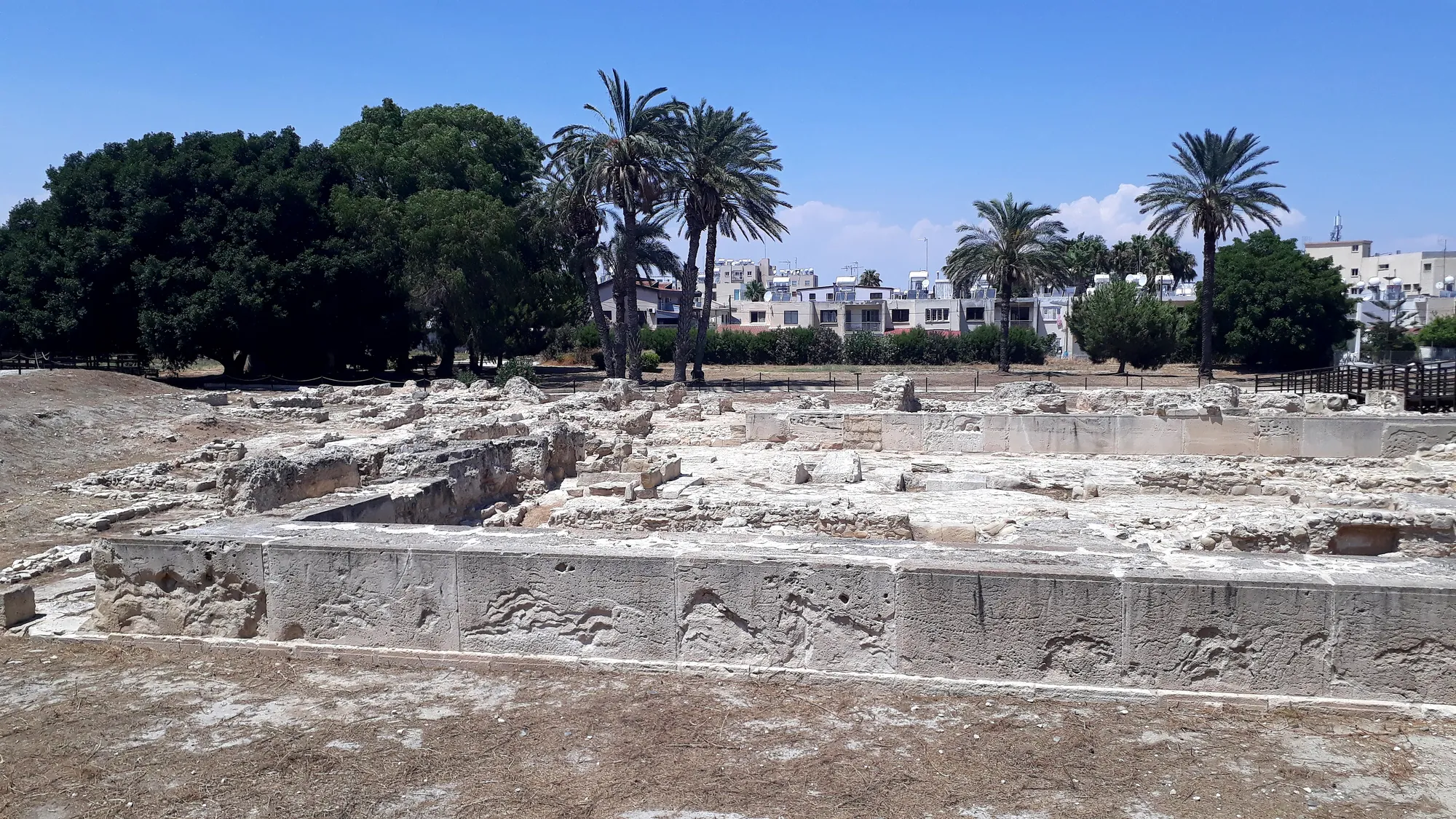
A Late Bronze Age centre of several parts in the lower Maroni valley: the Ashlar Building and West Building at Vournes, the tombs, buildings and anchorage at Tsaroukkas on the shore, and smaller localities around them. It was settled from about 1650 BC and abandoned around 1200 BC. From about 750 BC until about 200 BC the ruin of the Ashlar Building served as a rural sanctuary.
In the compendium
Ashlar Masonry
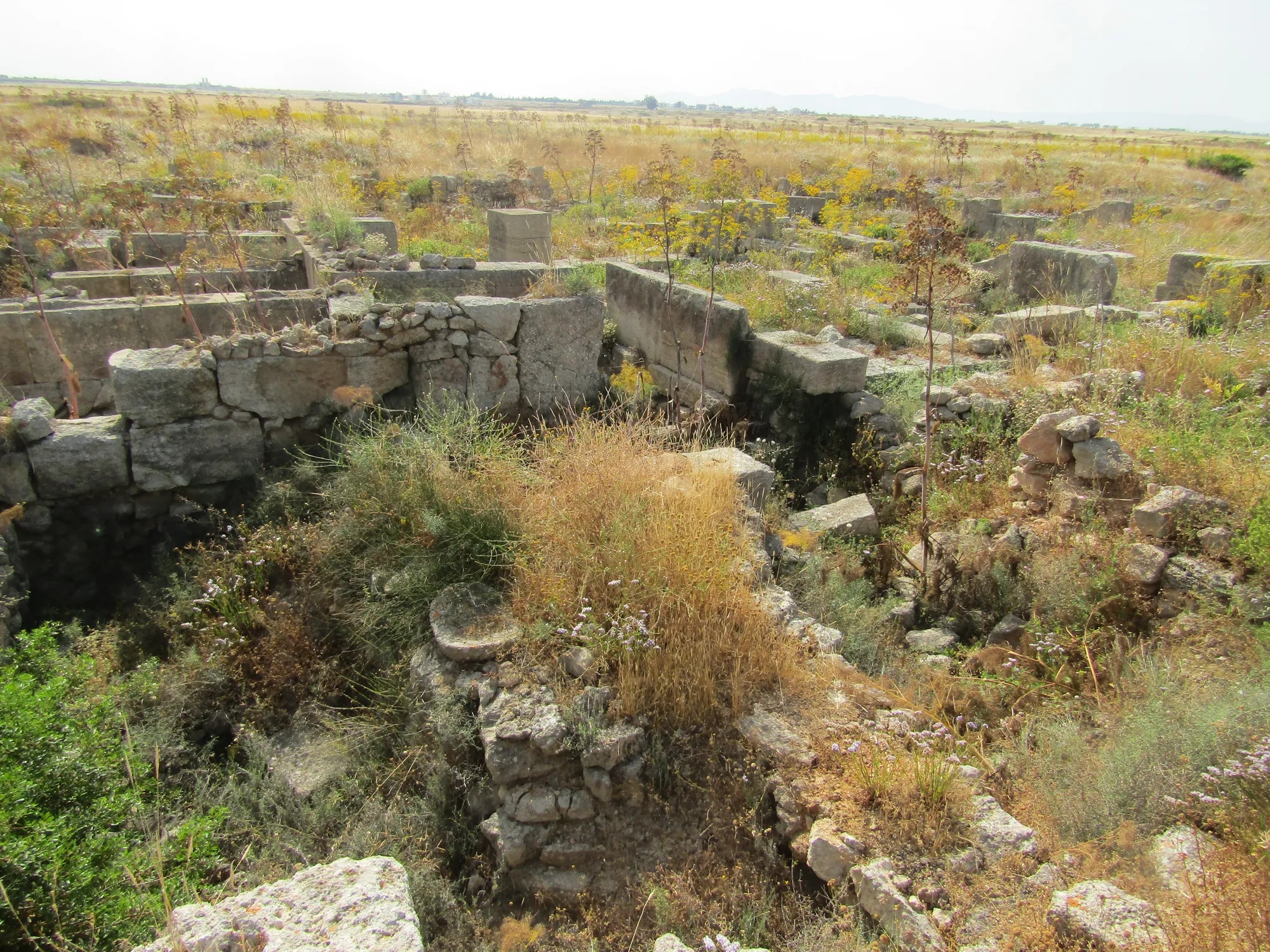
Squared, dressed stone used on Cyprus from about 1500 BC for gateways, tombs and the largest buildings of the Late Bronze Age towns, set below walls of mudbrick.
In the compendium
Late Bronze Age Towns and Buildings
How Late Bronze Age Cyprus built its first towns: street grids, large ashlar buildings with storage halls, courtyard houses, and the short-lived settlements of the twelfth century.
In the compendium
Mirrors, Combs and Toilet Objects
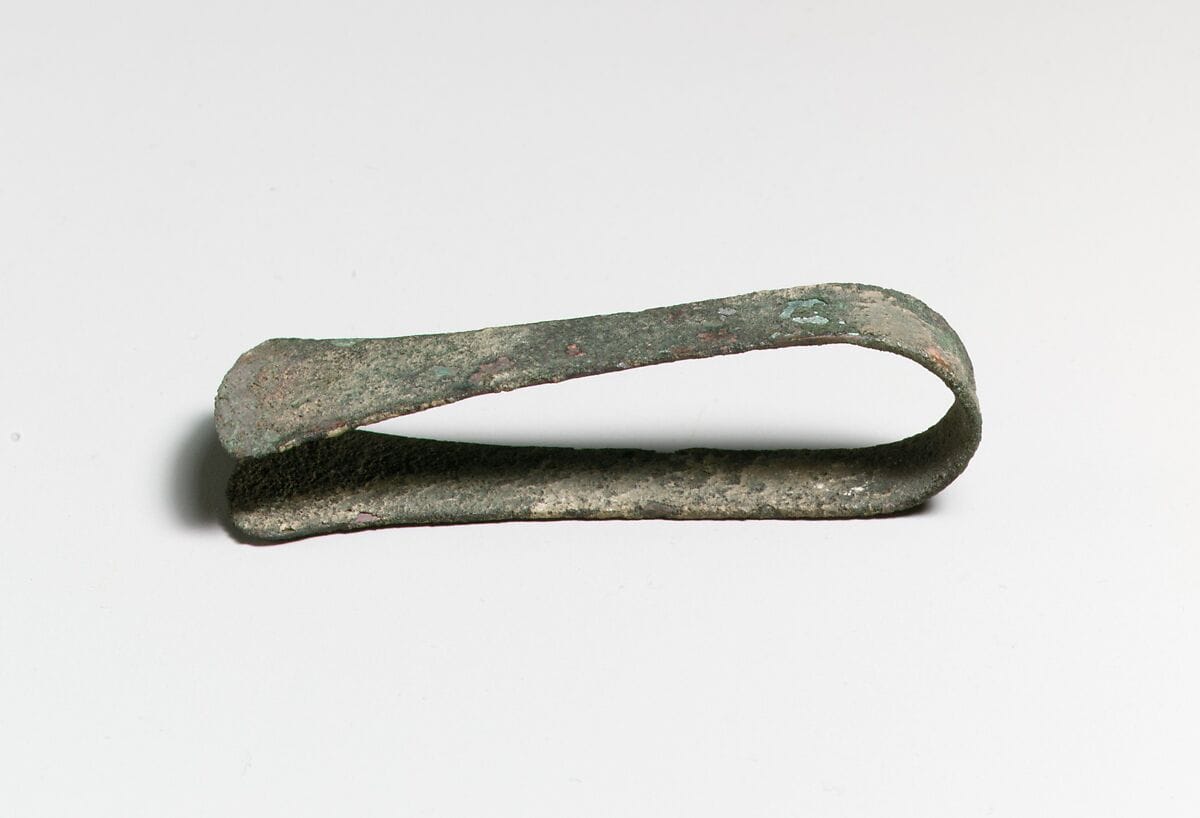
Grooming tools from ancient Cyprus, from Bronze Age razors, tweezers and pins to Late Cypriot mirrors and combs and the strigils of the Archaic to Roman periods.
Map of Cyprus
Places discussed in the talk
- Has a page on this site
- Other places
- Ground above 200, 500, 1,000 m