Contents
Four organic materials run through Cypriot craft from the first villages to the Archaic kingdoms, and they survive very unevenly. Bone, antler, ivory and shell are hard tissues, so needles, beads, pyxis lids and furniture inlays come out of the ground in good order. Wood almost never does. When the ivory-sheathed throne of Salamis Tomb 79 was excavated, its wooden frame "had completely decomposed but all of the ivory sheets were preserved", and the throne now in the Cyprus Museum stands on a new wooden frame [1, pp. 70–71]. That imbalance shapes everything on this page: what we can say about Cypriot organic crafts is mostly what the durable parts allow.
The catalogue groups these objects as organic materials. Most of them are ivory, the rest bone, with a single wooden object and, so far, no shell. Many ivory pieces were parts of something larger (lids, inlays, handles), so the relevant object types are boxes and caskets and fittings and inlays, both treated below.
| Material | Main periods of evidence | Typical products | Key sites |
|---|---|---|---|
| Bone and antler | Neolithic onward | Needles, awls, pins, whorls, handles, knucklebones | Khirokitia, Kalavasos-Tenta, Sotira |
| Shell | Neolithic and Chalcolithic | Dentalium beads, pendants, necklaces | Khirokitia, Kalavasos-Tenta, Sotira, Kissonerga, Souskiou |
| Ivory | Late Bronze Age and Cypro-Archaic | Pyxides and lids, mirror handles, plaques, disks, furniture veneer | Enkomi, Kition, Kouklia, Salamis |
| Wood | All periods, mostly as traces | Furniture frames, sheaths, ships | Salamis (Tomb 79) |
Bone and antler
Bone is the oldest worked organic material on the island and the most continuous. At Aceramic Neolithic Kalavasos-Tenta the excavators recovered 18 worked bone objects, 15 of them points ranging from heavy awls to fine pierced needles; the finest needle is 1.5 mm in diameter. The report notes the same predominance of points in the bone industry of Khirokitia [2]. The Ceramic Neolithic village at Sotira is different. Porphyrios Dikaios observed that the fine awls and bone pins characteristic of Khirokitia do not occur there, and that apart from the needles "the bone tools are generally of poor workmanship", one of the reasons he did not see the Sotira culture as a natural outgrowth of Khirokitia [3, p. 226]. Needles and spindle whorls together are the main evidence that Neolithic Cypriots were spinning and weaving [4, p. 30]; see spindle whorls and textile tools.
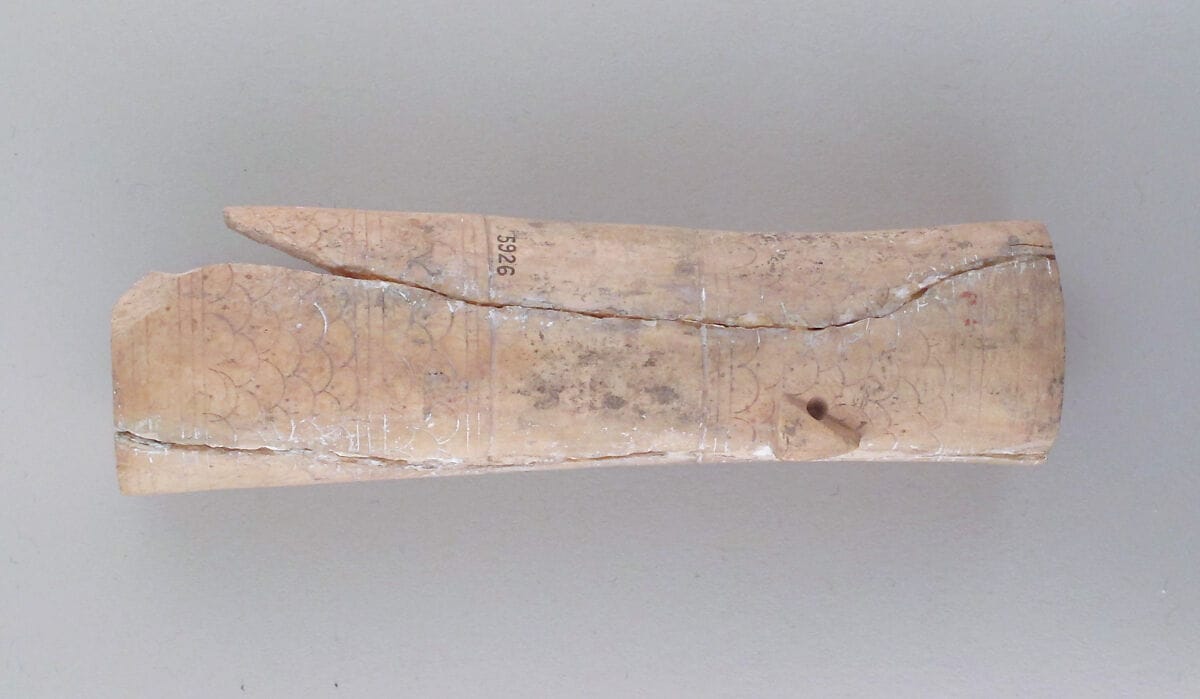
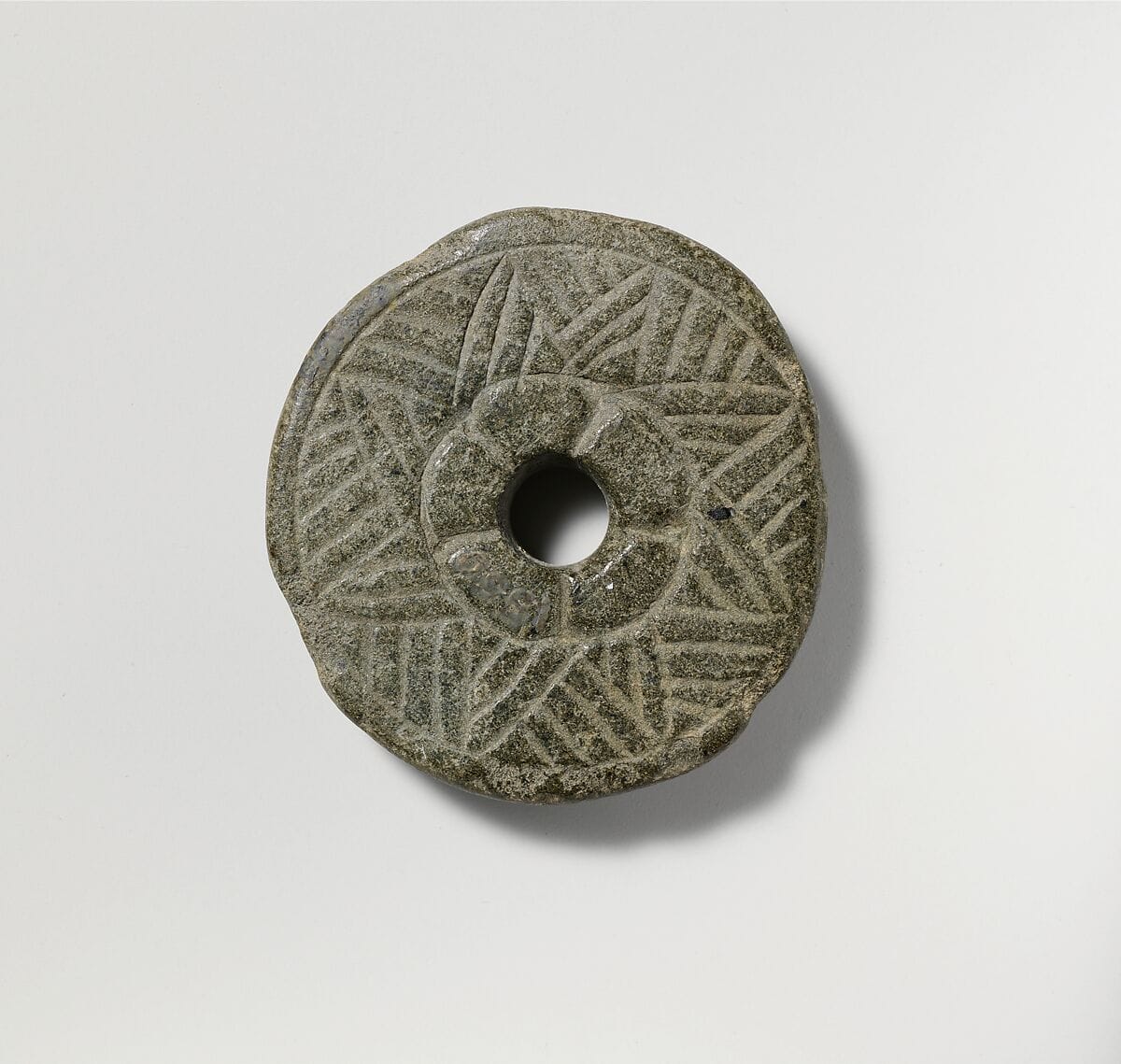
Museum holdings from the old excavations tend to be humble: the Medelhavsmuseet in Stockholm keeps a burnt bone fragment from Lapithos-Plakes, collected by the Swedish Cyprus Expedition in 1927 from a Neolithic context. Later bone objects in the catalogue are mostly small and practical: a Late Bronze Age bone spindle whorl decorated with circles (1.8 cm across), a bronze awl with a bone handle dated to the Middle Bronze Age, knife handles, and a set of knucklebones (astragali) catalogued as gaming pieces, such as this gaming knucklebone. The catalogue has no antler object yet.
see all bone and antler in the catalogue
Shell
Shell matters most in the Neolithic and Chalcolithic, when it was the main material for personal ornament. In a survey of the Neolithic shell evidence, Daniella Bar-Yosef Mayer found that Cypriot villagers chose much the same species as their contemporaries in the Levant and Anatolia. The difference is the presence of Charonia (triton) and Spondylus, which seem to have been collected as raw material for tools and utensils. Kalavasos-Tenta produced a wide range of Mediterranean and fossil shells, including dentalium; Columbella and Conus were holed as beads and the lips of Semicassis shells used as pendants. At Sotira about a third of the shells are perforated Semicassis granulata. Bar-Yosef Mayer argues that the familiarity with the shore that bead-collecting required also motivated and enabled seafaring [5].
The best-known shell ornaments are the dentalium necklaces from the round houses (tholoi) of Khirokitia. One from Tholos XVII strings 18 dentalium sections with 21 carnelian beads and is 52.6 cm long; another, from Tholos XIX, alternates groups of three or four dentalia with carnelian beads around a central picrolite link [6, p. 21]. In the Chalcolithic the same tubular shell was used as spacers: a necklace from Souskiou-Vathyrkakas Tomb 23 (c. 3000 BCE) combines dentalium spacers with ten picrolite pendants and is now in the Cyprus Museum [7, p. 216]. At Kissonerga, Edgar Peltenburg found that after the destruction of Building 3 "wasters were left behind by a shell carver" whose intended products were dentalium beads and spurred annular pendants, in a Late Chalcolithic deposit that also held copper ore [8]. That is the clearest evidence for a shell workshop on the island. For the picrolite side of these necklaces see Neolithic and picrolite figurines.
There are no shell objects in the catalogue at present; the examples above are all in the Cyprus Museum.
see all shell in the catalogue
Ivory
Cypriot ivory is overwhelmingly hippopotamus ivory, from the incisors and canines, with some elephant tusk, and it reached the island as raw material [9, p. 296 n. 55]. The evidence that it was worked on the island comes from Kition. Joanna Smith lists the Kition-Kathari finds: a chip from a plaque, a disk from the floor of Temple 2, a hippopotamus incisor with cut marks from a well in Temple 1, an unworked fragment with saw marks, a perforated unworked tusk and an unfinished attachment, alongside an unmodified elephant molar [9, p. 296 n. 55]. Raw tusk, sawn offcuts and an unfinished piece in the same sanctuary point to carving on site.
Most Late Bronze Age ivories come from tombs. Ivory pyxis lids engraved with sunflower or concentric-circle designs are, in Hector Catling's words, a "fairly common occurrence in Cyprus": the Swedish excavators recorded 27 from their Enkomi tombs, and most come from contexts dated to Late Cypriot IIB, with others from LC IIA and IIC [10, p. 209]. The figured pieces are rarer. Ioannis Voskos and Bernard Knapp discuss two ivory pyxis lids from Kouklia-Evreti, one carved with a lion attacking a bull and the other with a griffin before a tree; a fragmentary ivory plaque from Kition with a lion and bull; two mirror handles, from Evreti and Enkomi, with kilted warriors striking a lion or griffin; a mirror handle from Enkomi Swedish Tomb 19 in the form of a nude woman holding her breasts; and the Enkomi gaming box carved with a chariot hunt and animals in flying gallop. They read the whole group as a 12th-century BCE mixture of Aegean, Levantine and local elements, and see no reason to think the Enkomi female handle was made outside Cyprus [12]. Where these carvers were trained, and how far Cypriot workshops supplied ivories found elsewhere, remains debated. For the wider setting see the Late Bronze Age and Mycenaean pages.
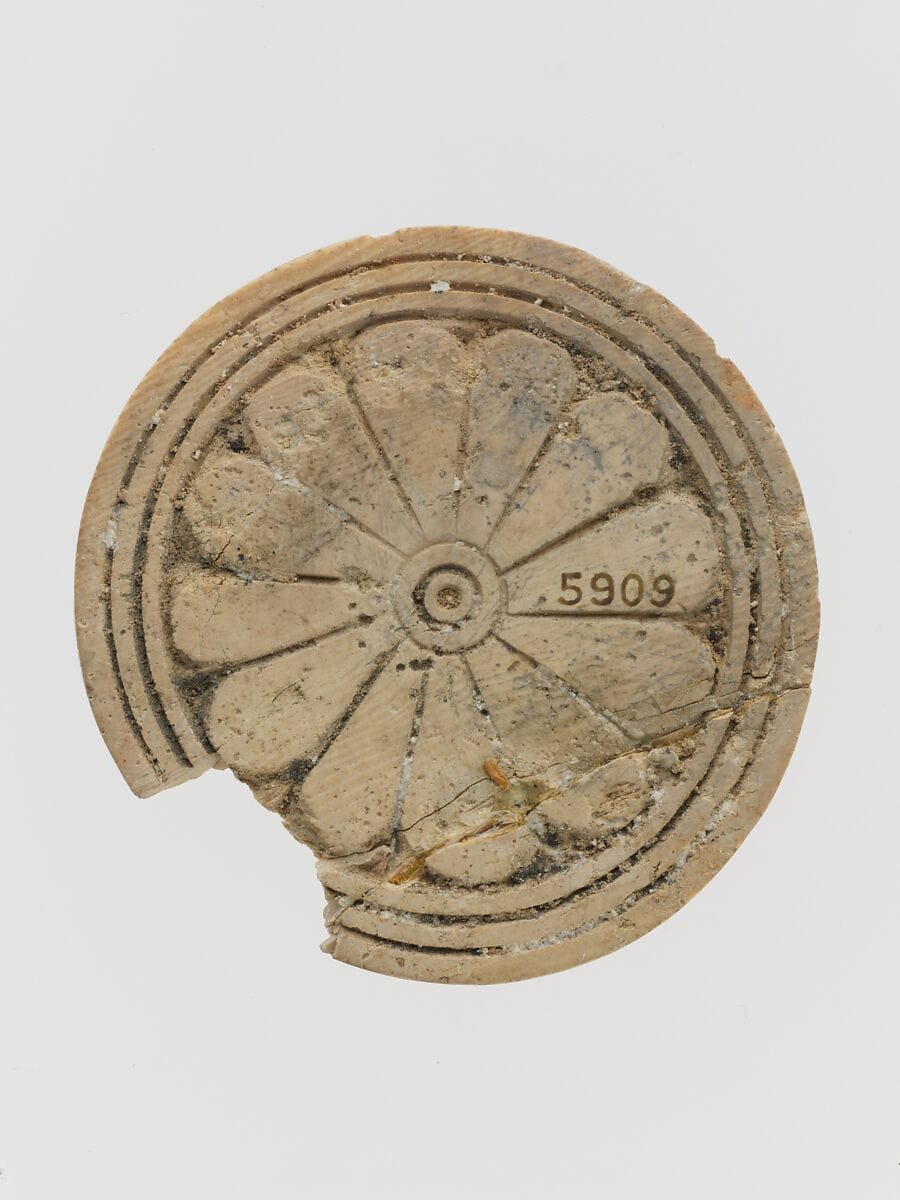
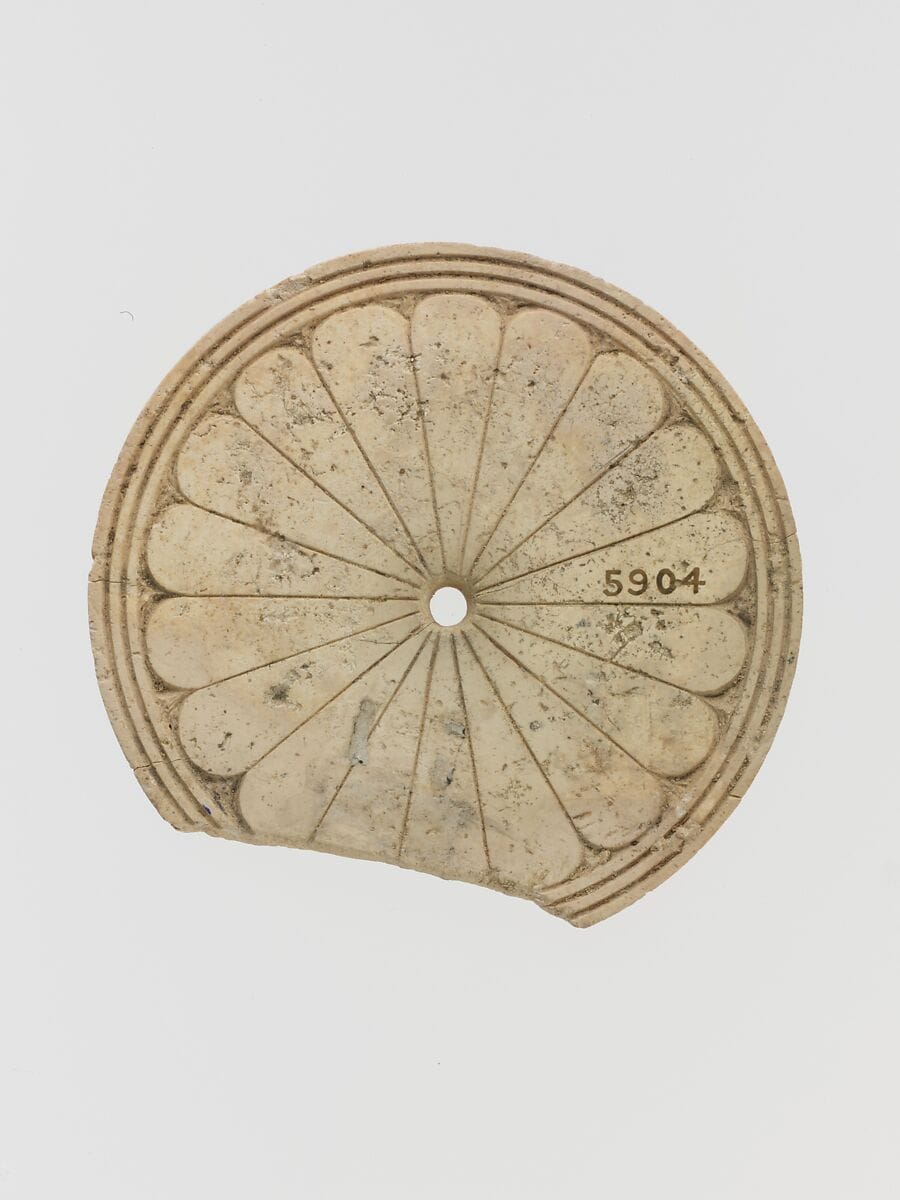
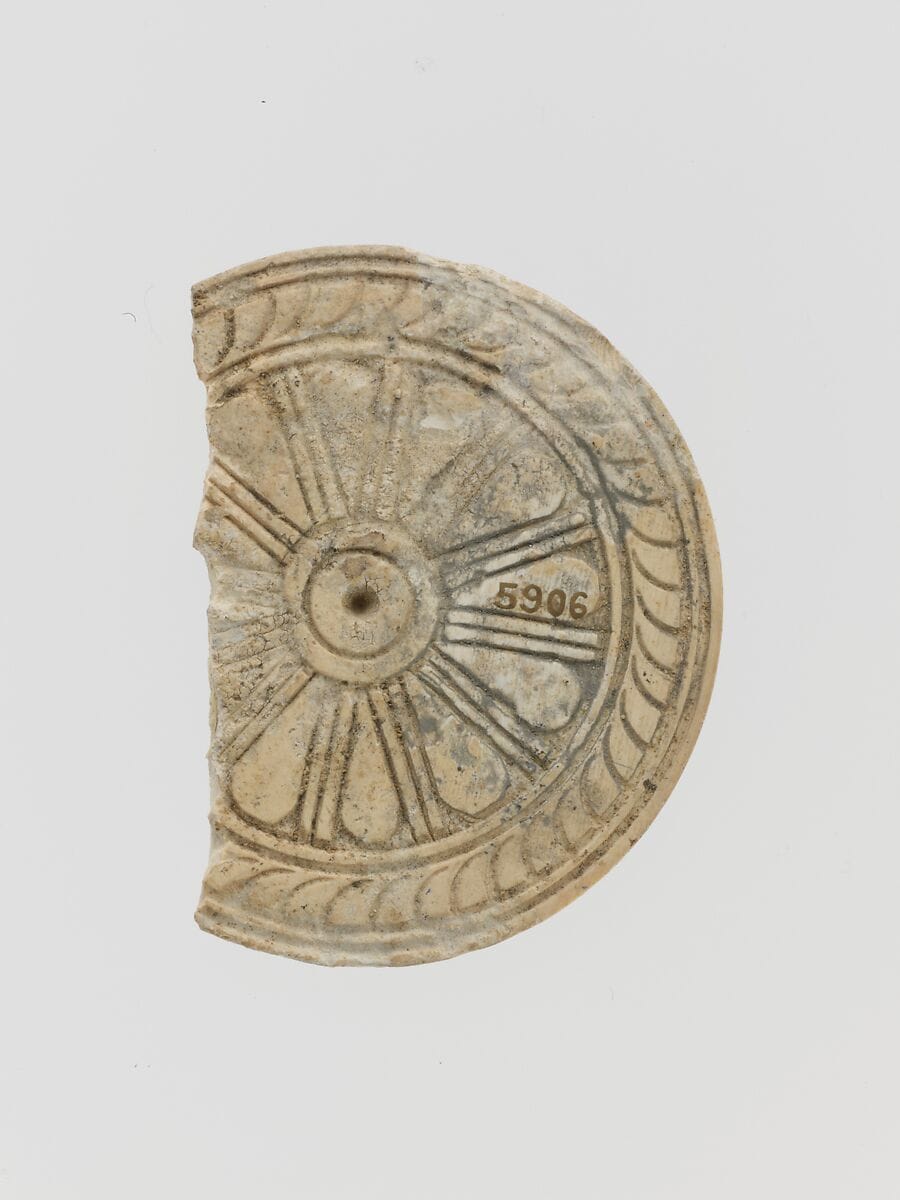
The catalogue's ivories are mainly small Late Bronze Age pieces from the Cesnola collection at the Metropolitan Museum. The commonest is the disk carved with a rosette: the Met dates this hippopotamus-ivory example (74.51.5216, 5.6 cm across) to c. 1600–1050 BCE (catalogue page). Others include an ivory pinhead of Late Cypriot II or III date and, from the Archaic period, a silver swivel ring set with an Egyptian ivory scarab bearing the cartouche of Men-kheper-ra. Ivory also appears on weapons: the tang of this Cypro-Archaic iron sword was edged with silver and faced with ivory held by silvered bronze rivets.
.](https://cdn.ancientcyprus.com/single-artifacts/74.51.5216.jpg)
The second great ivory group is Iron Age and royal. Tomb 79 at Salamis, of the end of the 8th or around 700 BCE, held three thrones and a bed. One throne was "made of wood entirely sheathed in ivory", its back decorated with bands of spirals and anthemia and with remains of gold leaf; carved ivory plaques with a sphinx and a composite lotus flower sat under the arms [1, pp. 70–71]. Vassos Karageorghis compared the throne to Penelope's in Homer; restored, it stands 90 cm high [4, p. 136]. The same tomb produced open-work ivory plaques with cloisons filled with blue and red frit, a winged sphinx in an Egyptian double crown, an ivory lamp stand carved from a single piece, and the S-shaped ivory leg of a table or couch ending in a lion's paw [6, p. 87]. Which workshops made them is still argued over; see Phoenicians and Cypro-Archaic.
see all ivory in the catalogue
Wood
Wood was the material of roofs, doors, furniture, tool hafts, boxes and ships, and it is the organic material we know least. In Cyprus it survives mainly as stains, impressions and the fittings once attached to it. The Salamis Tomb 79 throne is the classic case: its ivory and gold were recovered in position, but its timber had to be replaced [1, pp. 70–71]. Furniture before that is known chiefly through models and representations; the furniture page covers the evidence. For timber in boats see seafaring and ships.
The catalogue's one wooden object is an outlier: an icon of St Spyridon in the Royal Ontario Museum, catalogued as about 1700 CE.
Boxes and caskets
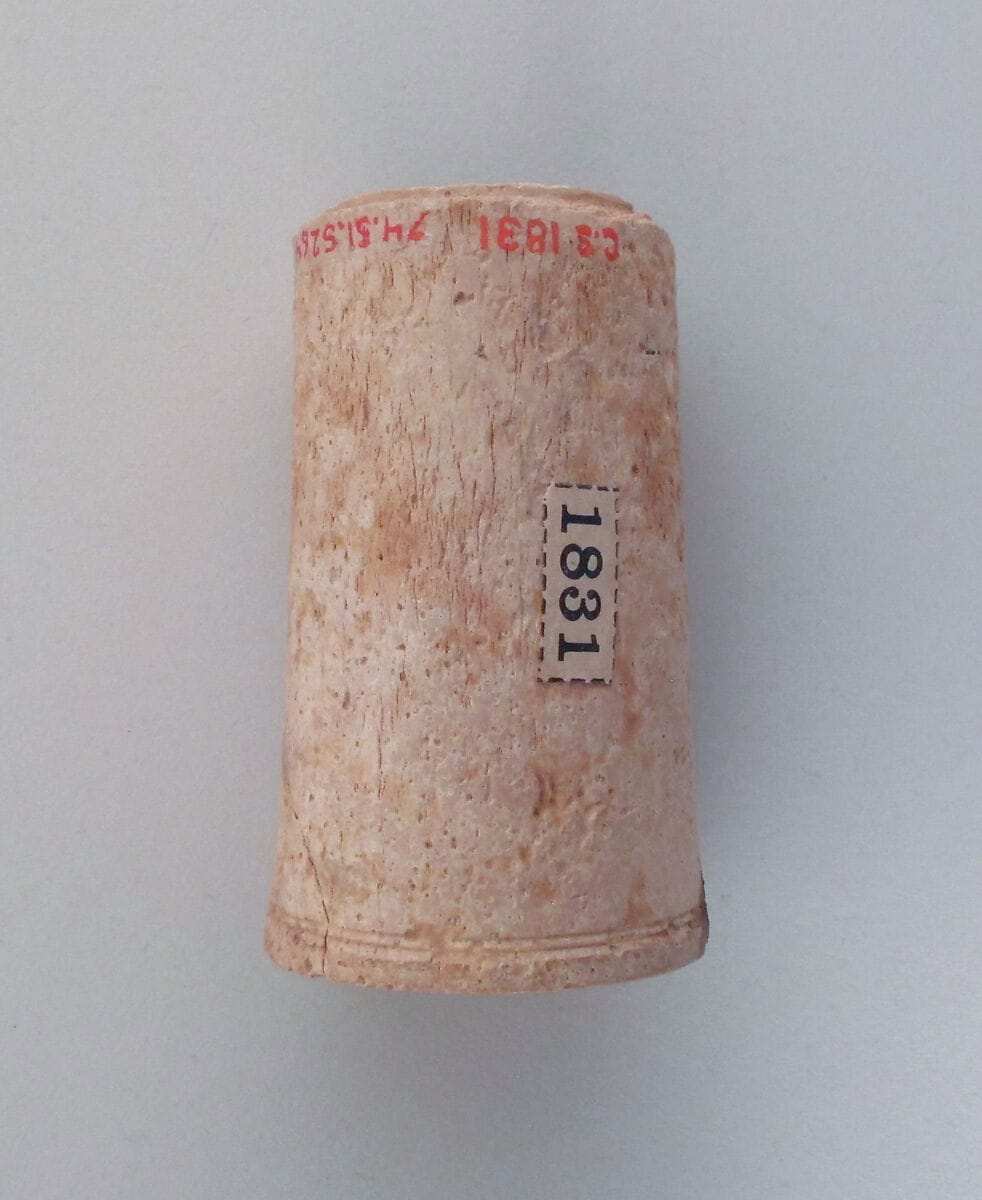
Small lidded boxes are the commonest ivory product of the Late Bronze Age. The Palaepaphos (Kouklia) tombs illustrate the range. The pyxis lids are recessed to fit the box and have a peg handle; lid EIIIA:60 is 13.7 cm across and carved with a 24-petalled sunflower. Tomb EVIII produced a rectangular box carved from a single block of ivory with a central partition (10.8 × 6.2 × 2.8 cm), a tubular toilet box with parallels in Enkomi tombs, and a cup in the form of lotus petals. Evreti Tomb EIIIA gave the largest group, probably of LC III date [10, p. 209]. Larger ivory boxes also occur: Buchholz and Karageorghis publish a tub-shaped ivory toilet box of LC II in the Cyprus Museum, 32 cm long, whose shape recalls Mycenaean tub coffins, and a cylindrical bone pyxis from Kition Tomb 3 [11, p. 173].
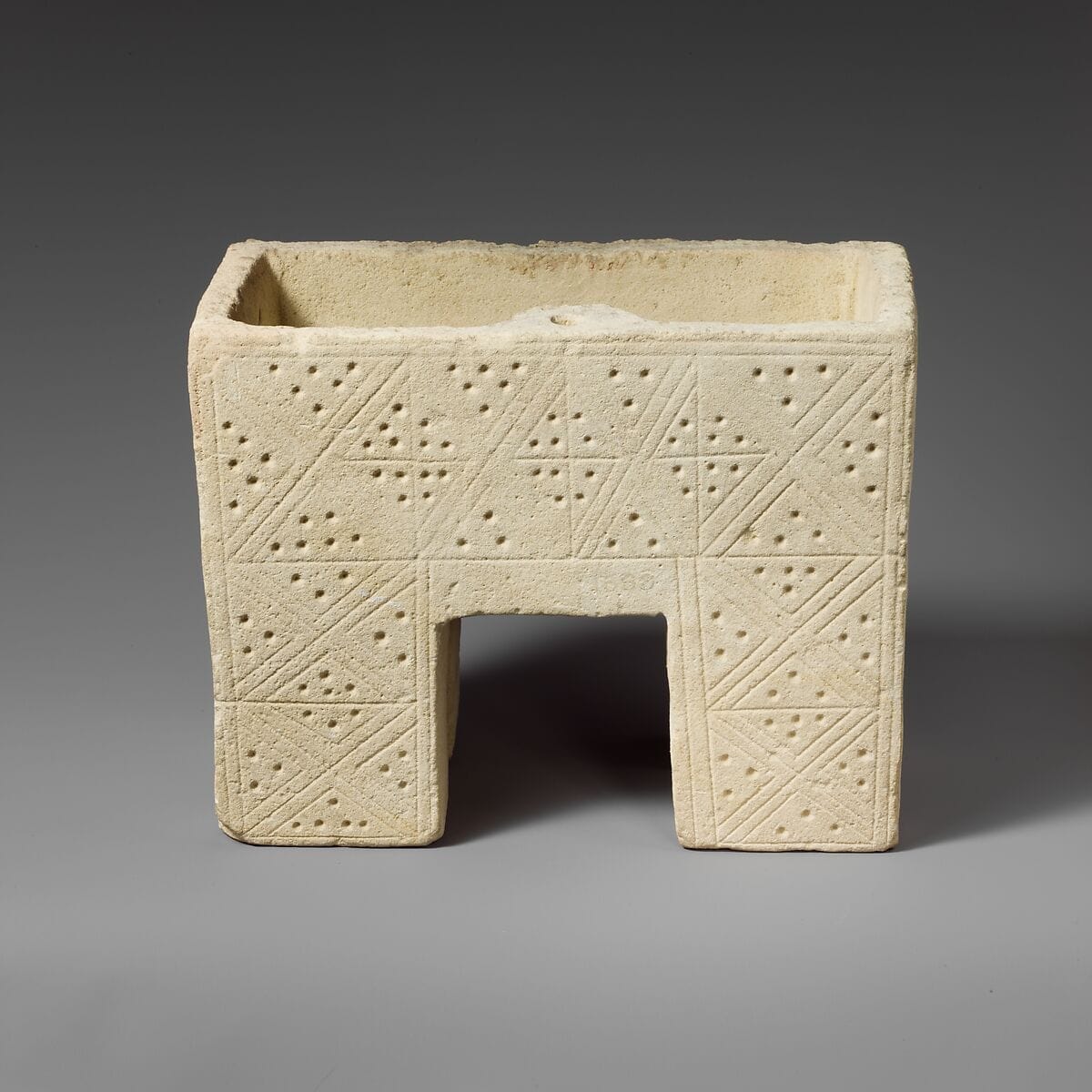
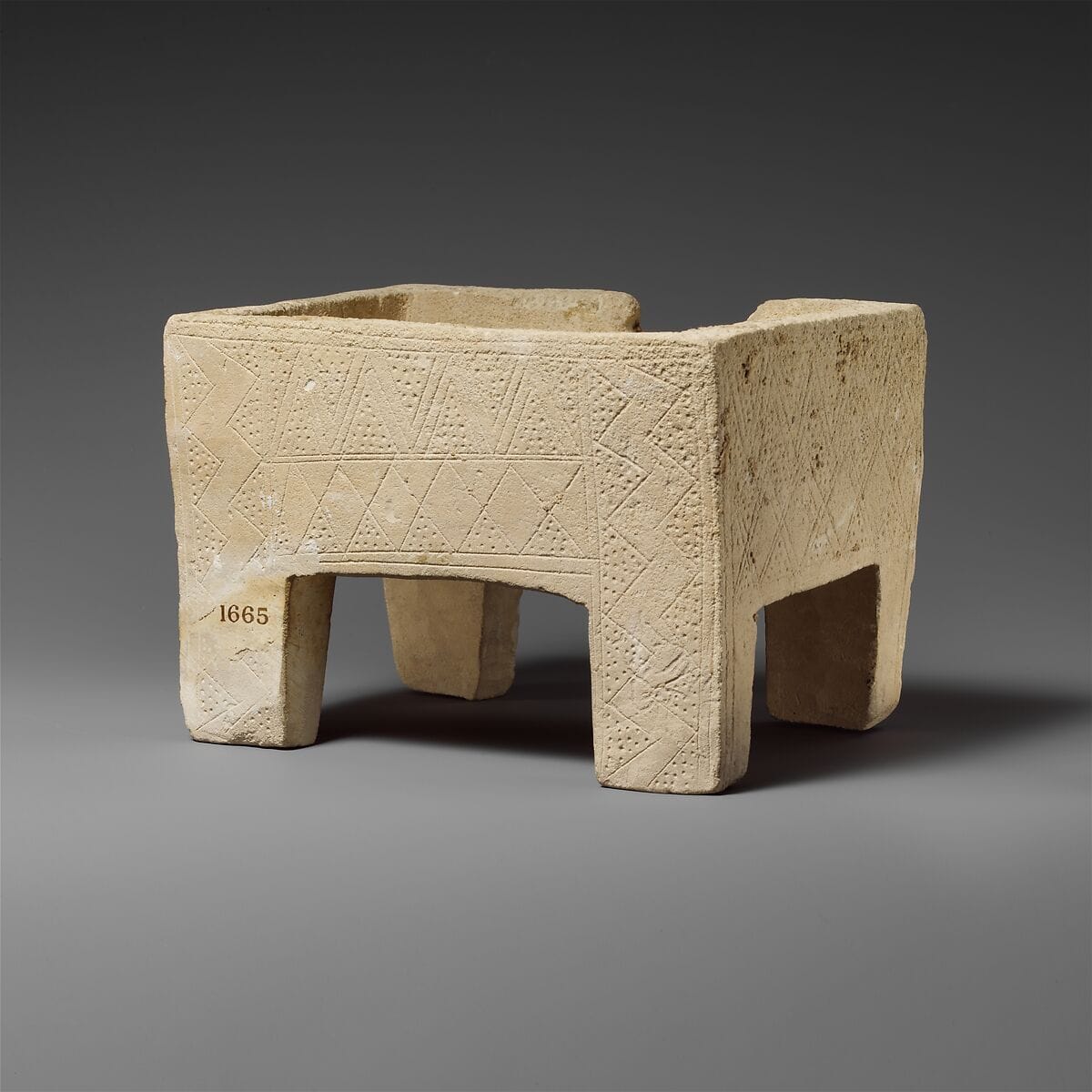
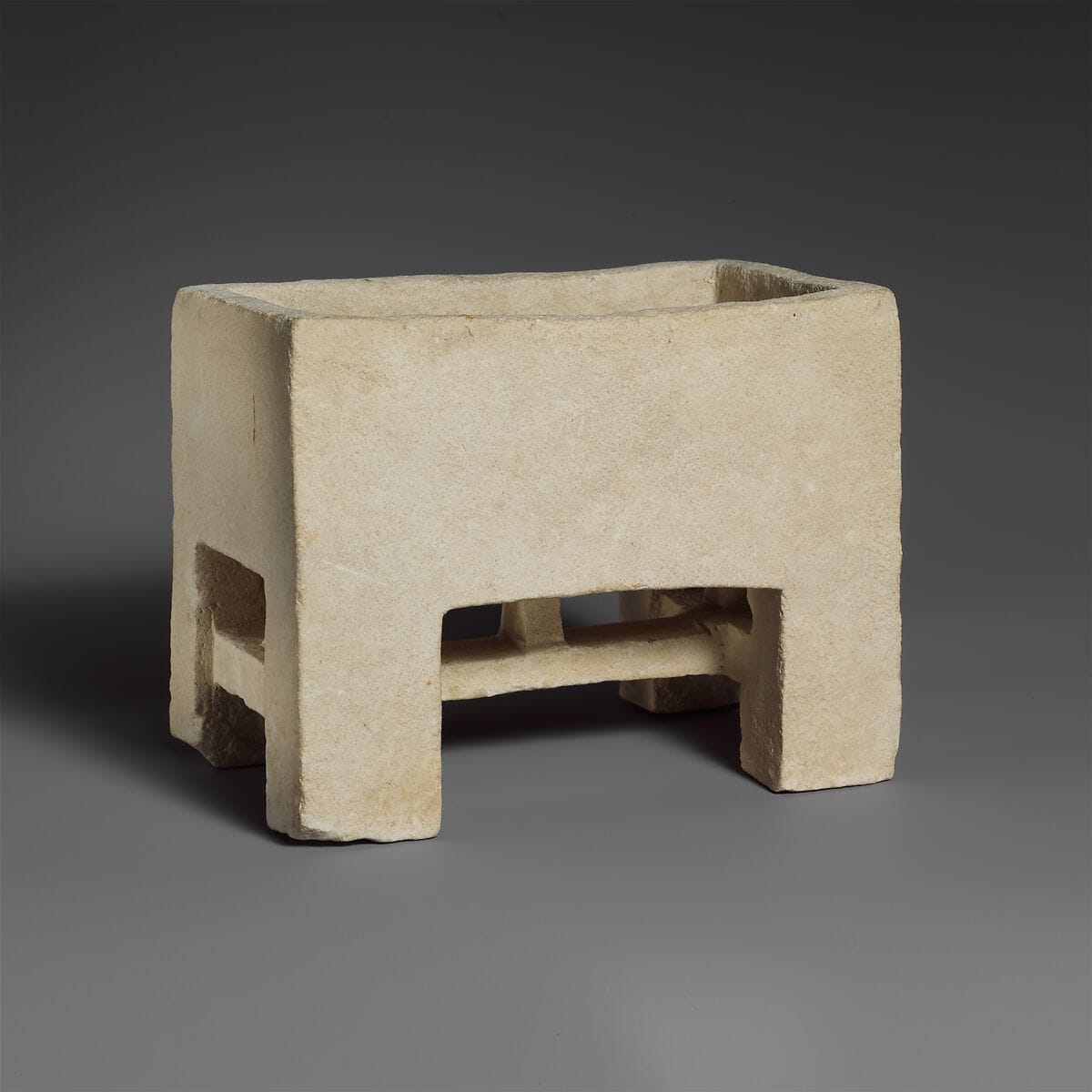
The British Museum holds two pieces of this kind: a thick ivory disk probably from the base of a circular box, with mouldings on both edges, and an ivory lid engraved with a twelve-petalled rosette, 5.8 cm across, with a central hole for the handle or pivot. The catalogue's box category also takes in limestone chests and chlorite lids, which belong with stone, while clay pyxides are treated as pottery.
see all boxes and caskets in the catalogue
Fittings and inlays
Many ivory and bone objects were made to be attached to something else: furniture veneers, box inlays, handles, studs and pins. The rosette disks are the hardest to place. The Met records do not say what they were, and Catling's term "pyxis lid" for similar sunflower medallions at Kouklia [10, p. 209] suggests lids or box inlays, but a role as furniture studs cannot be ruled out. The mirror handles from Enkomi and Evreti were made to be fitted to mirrors [12], and the Salamis plaques were set into the arms of a throne [6, p. 87].
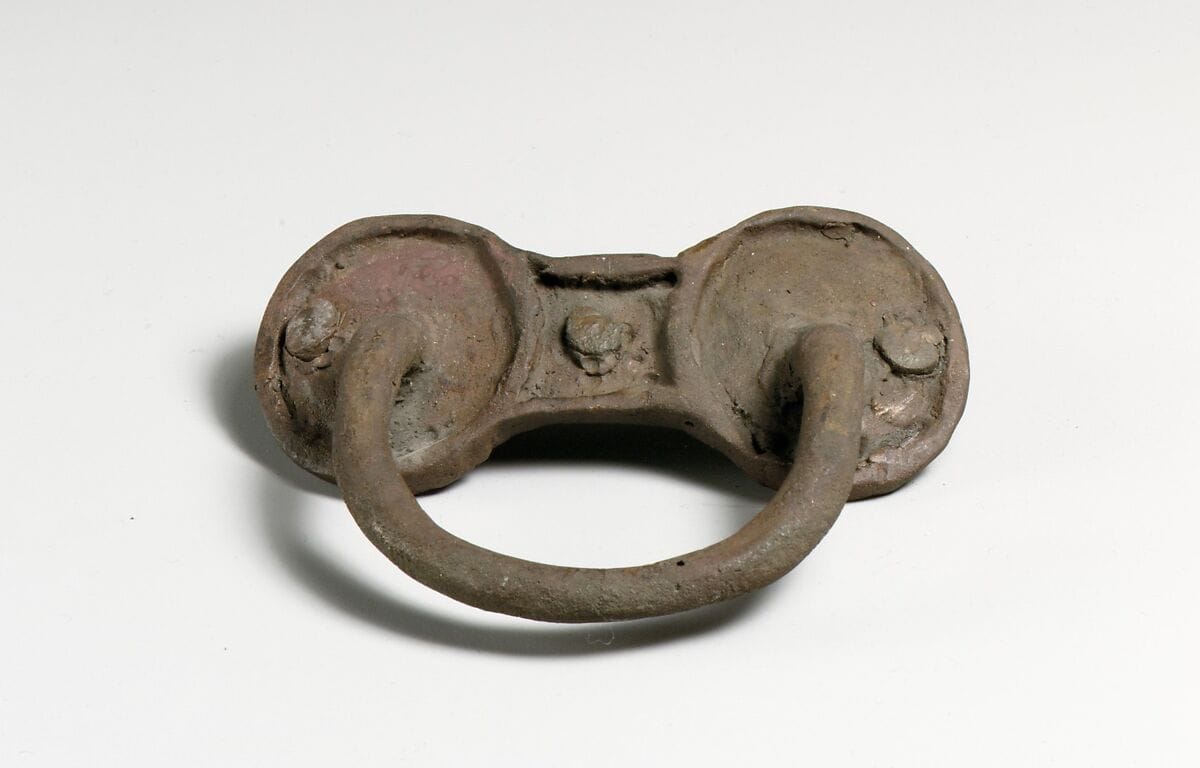
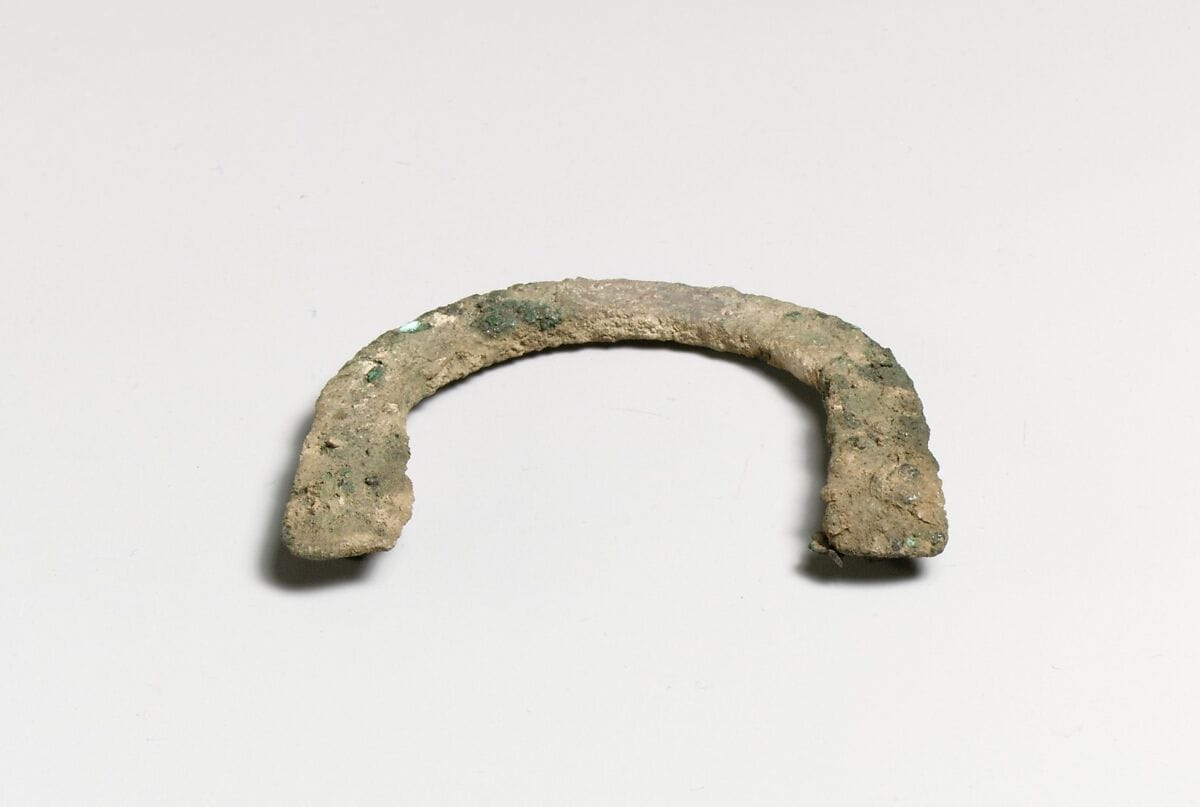
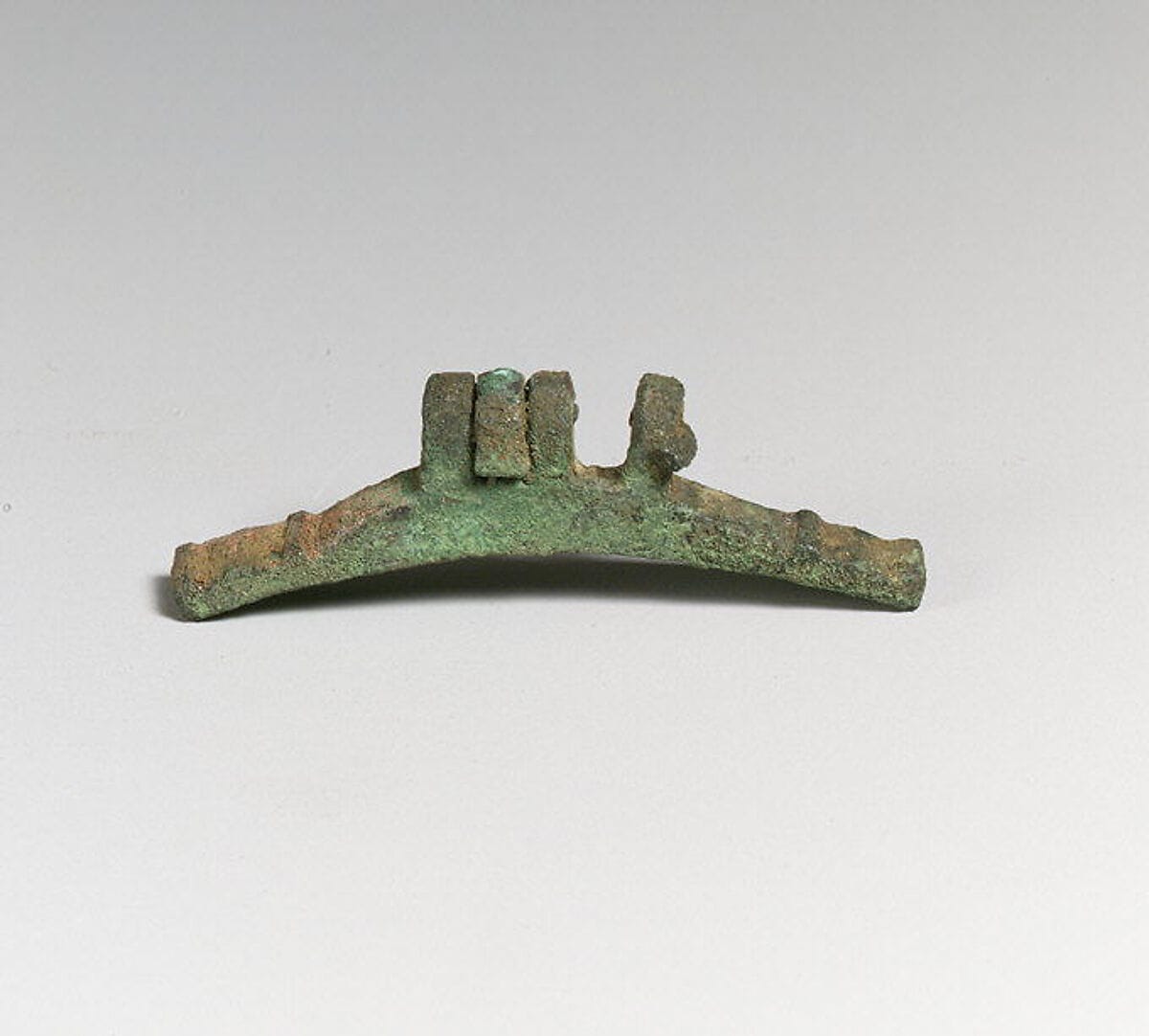
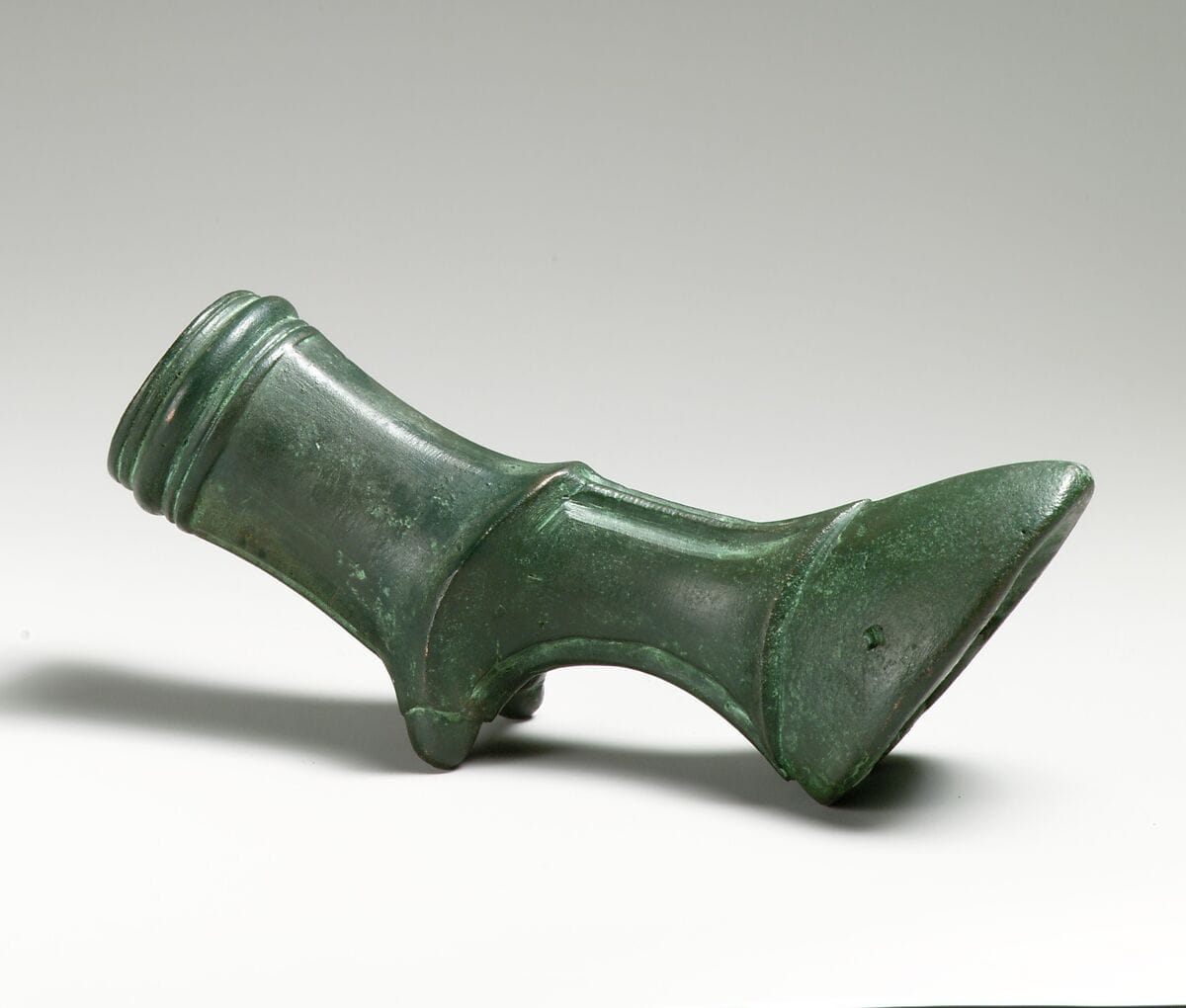
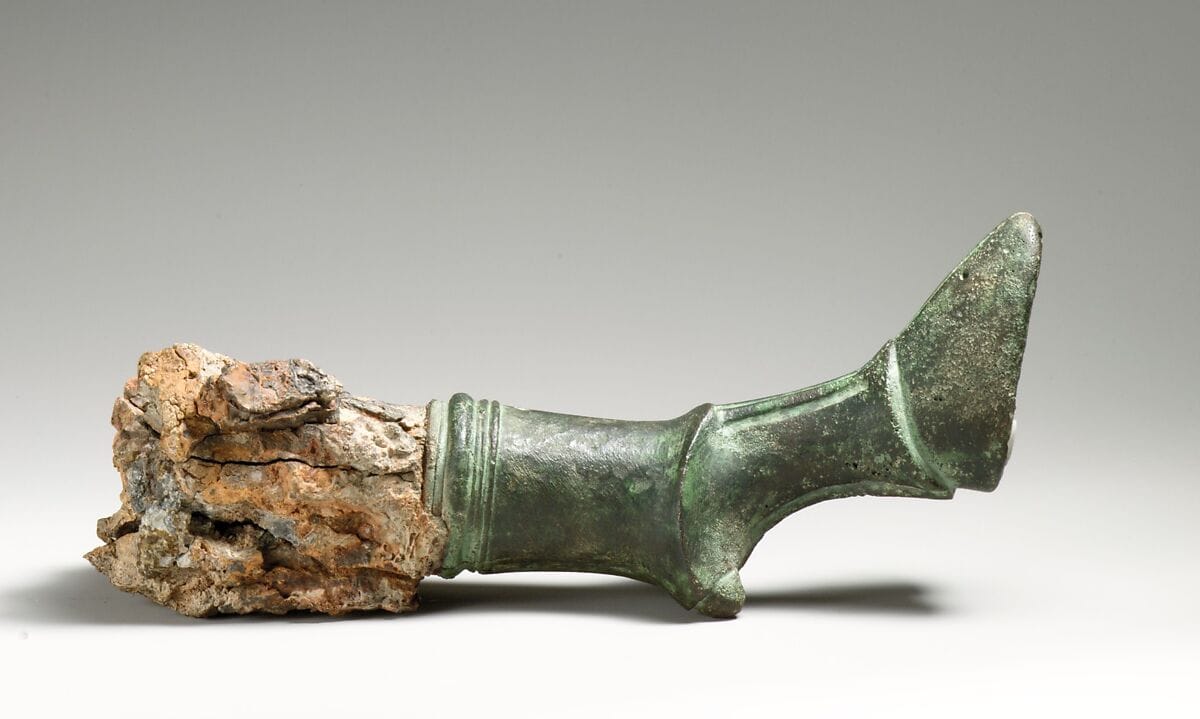
The fittings category in the catalogue is broader than ivory. It also includes bronze hinges, hasps, hoofs and handles from furniture and vessels, which are covered under copper metallurgy. Inlays in other materials, such as the frit and glass of the Salamis cloisons, are discussed on the faience and glass pages.
see all fittings and inlays in the catalogue
Survival and interpretation
The material picture is lopsided in a predictable way. Bone and shell dominate the prehistoric record because they were the everyday materials of villages that had little else to carve; ivory dominates the Late Bronze Age and Archaic record because it was buried with the rich in chamber tombs (see Bronze Age chamber tombs). Wood, probably the most heavily used of all four, is nearly invisible. Any count of "organic" objects, including the catalogue's, measures survival and excavation choices as much as ancient use.
Objects on this page
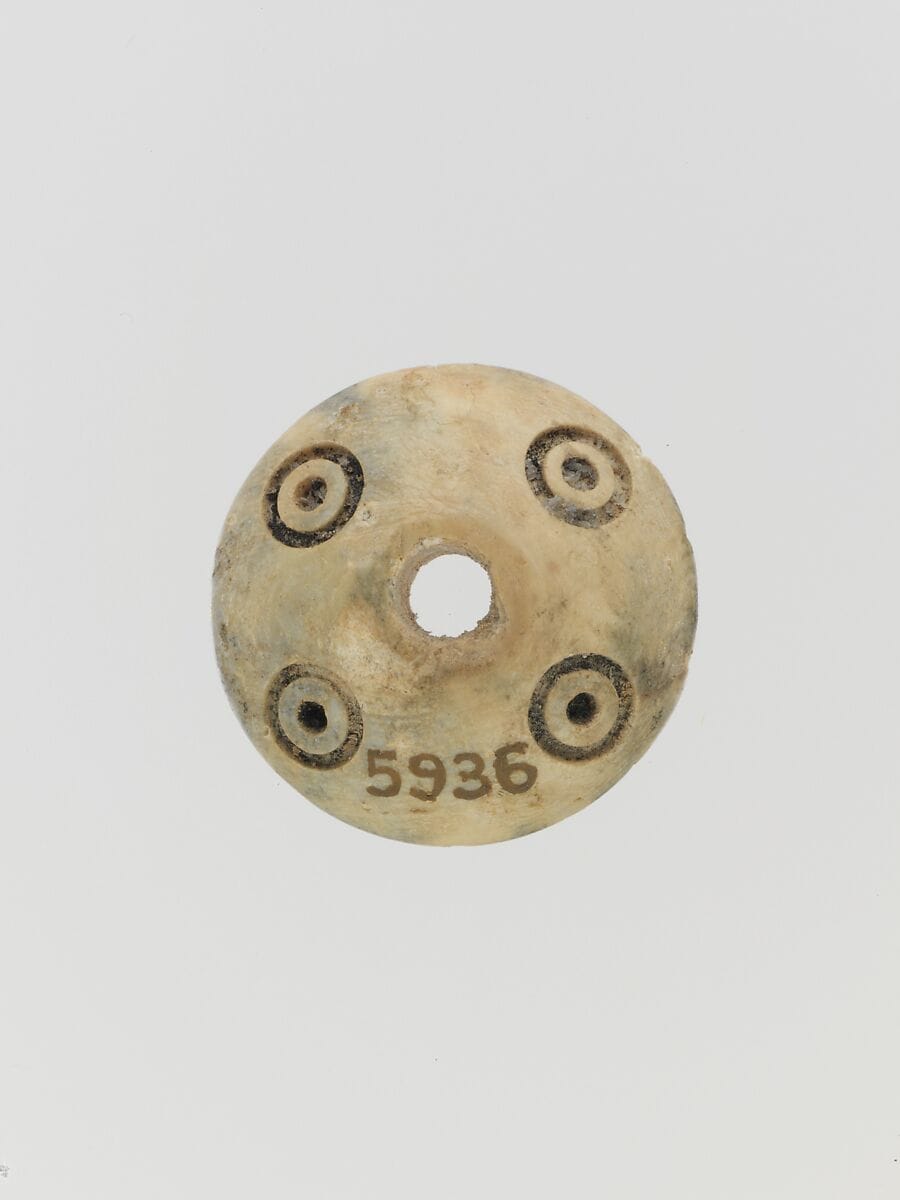 Bone spindle whorlLate Bronze Age II · 1600–1050 BC
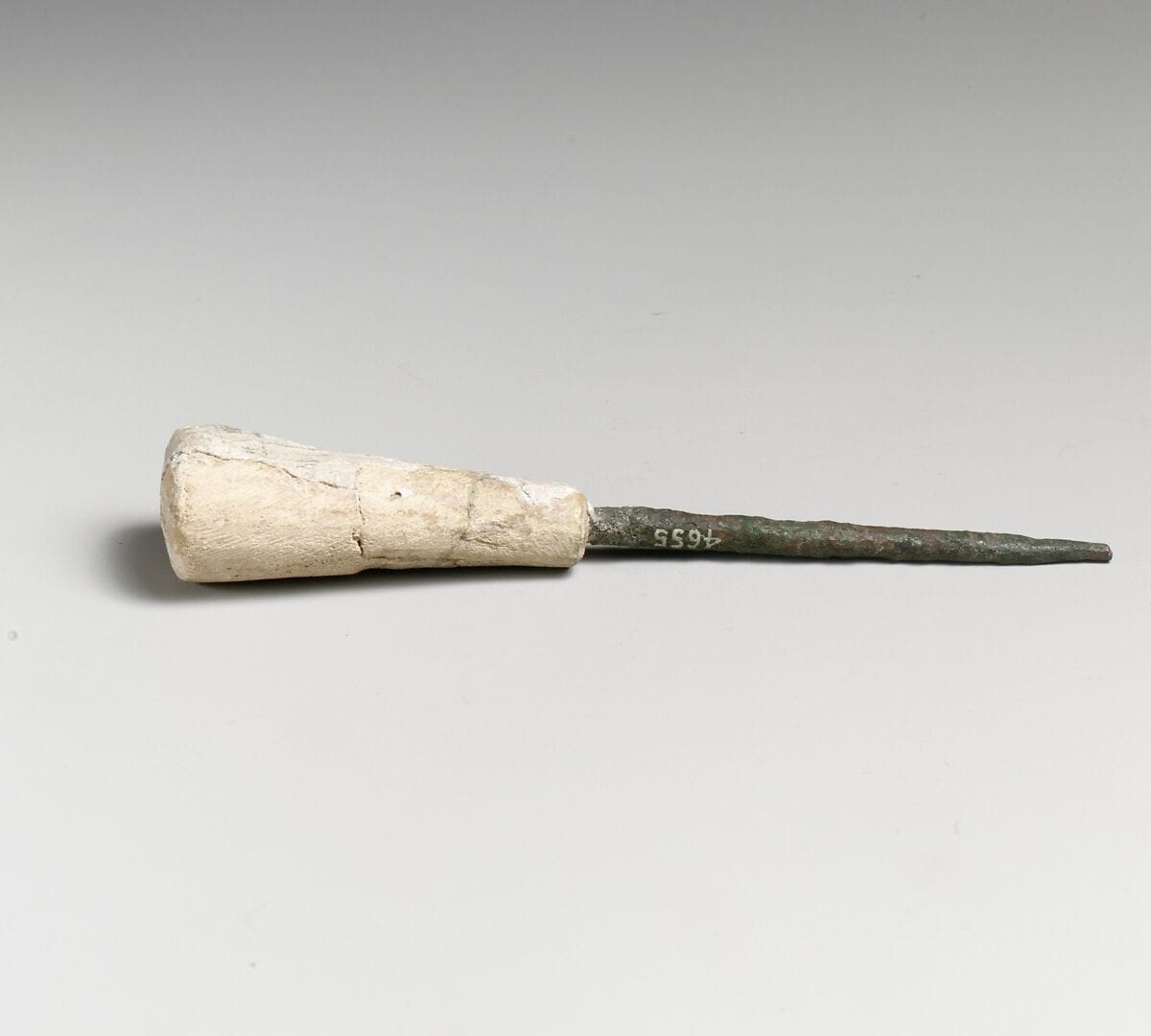 Bronze awl with bone handleMiddle Bronze Age II · 1900–1600 BC
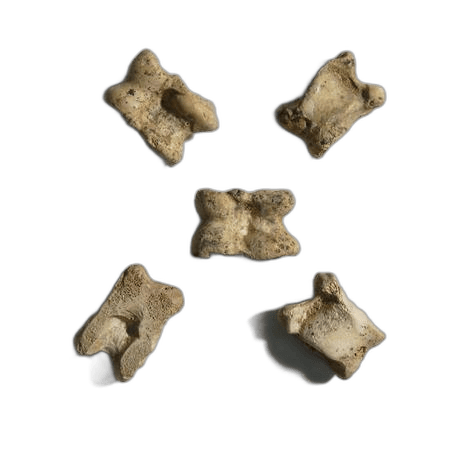 Gaming KnuckleboneArchaic II · 600–500 BC
- Ivory disk with rosetteLate Bronze Age II · 1600–1050 BC
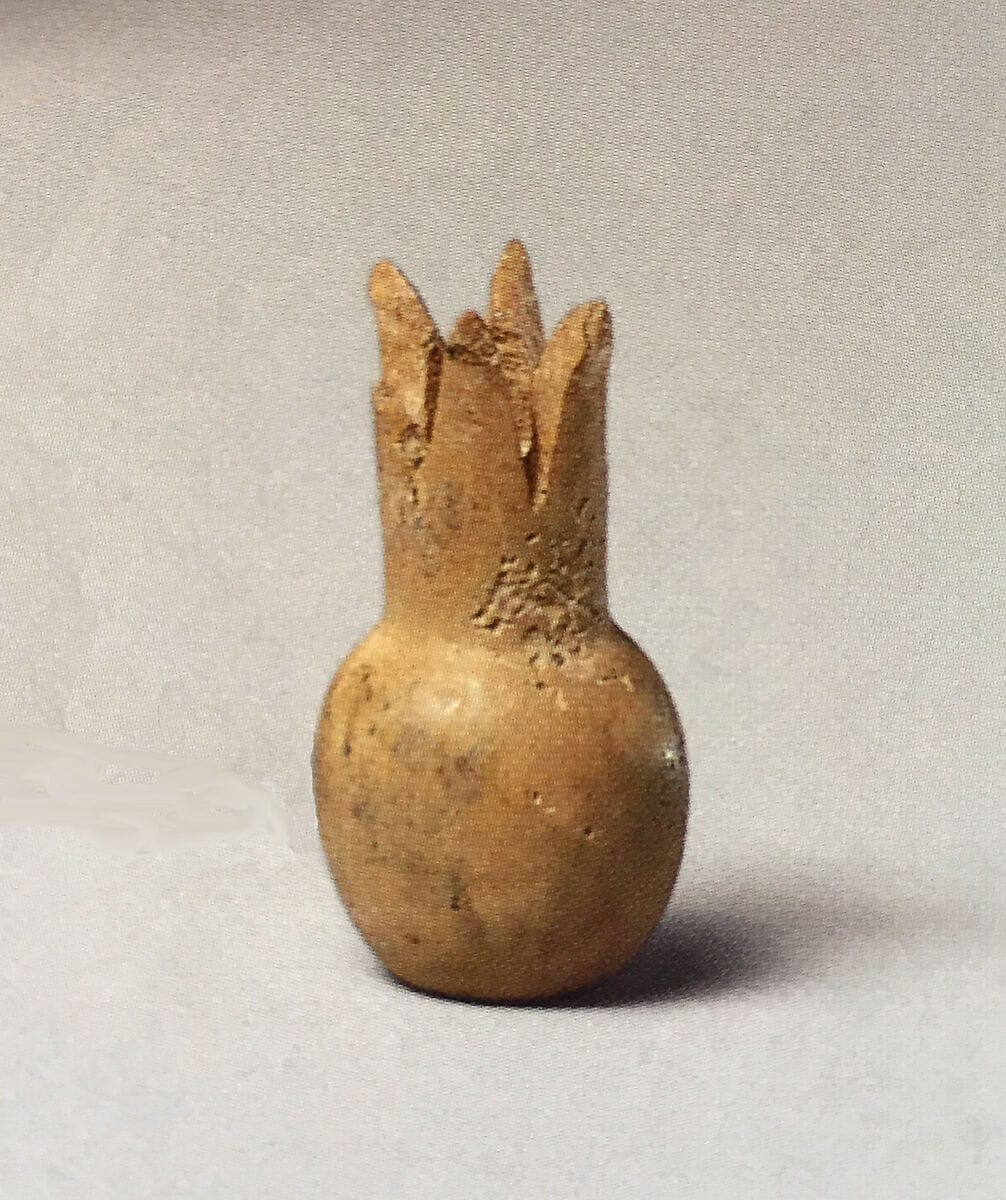 Ivory pinheadLate Bronze Age II · 1450–1050 BC
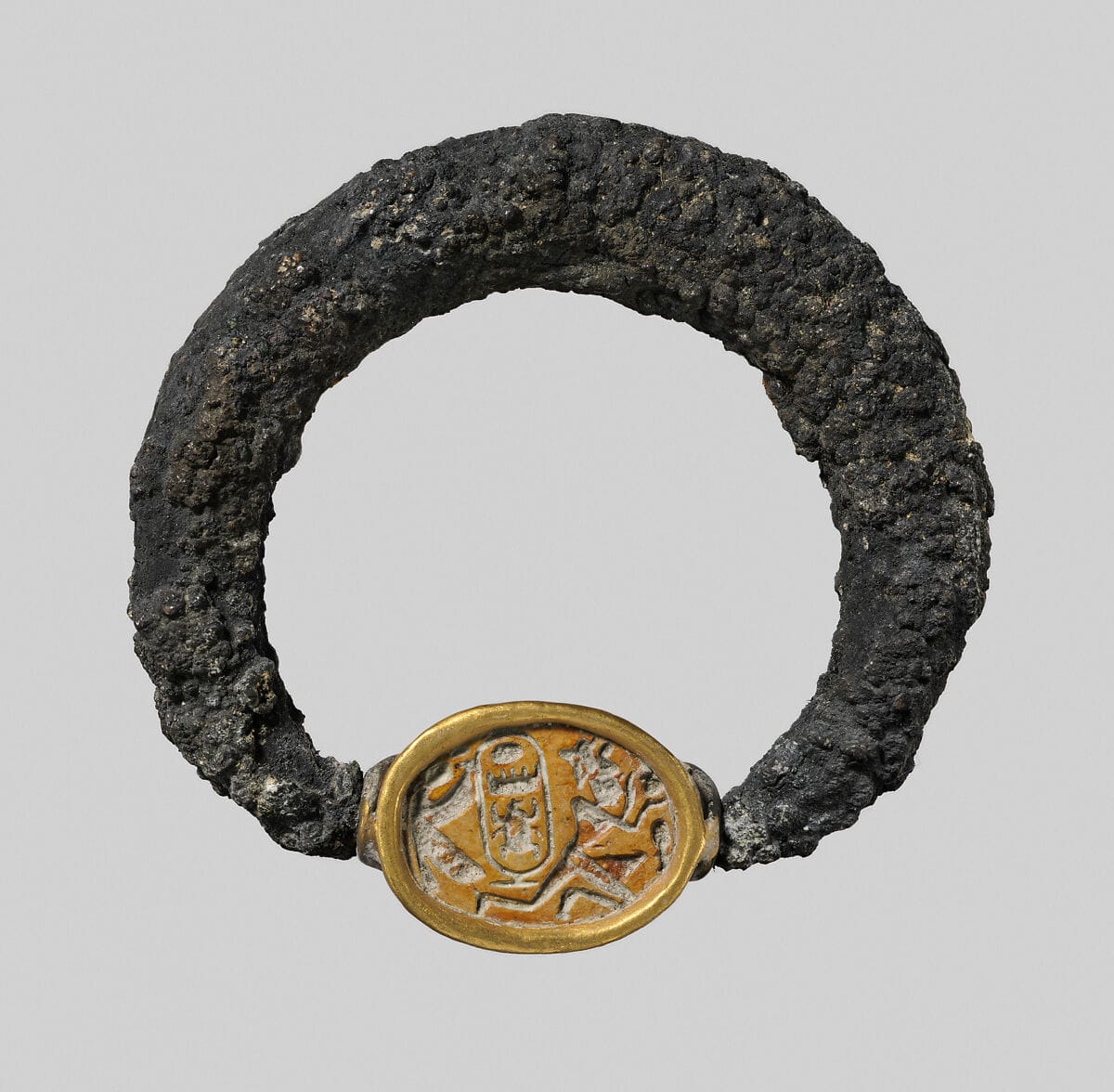 Silver swivel ring with ivory scarab in gold settingArchaic II · 699–480 BC
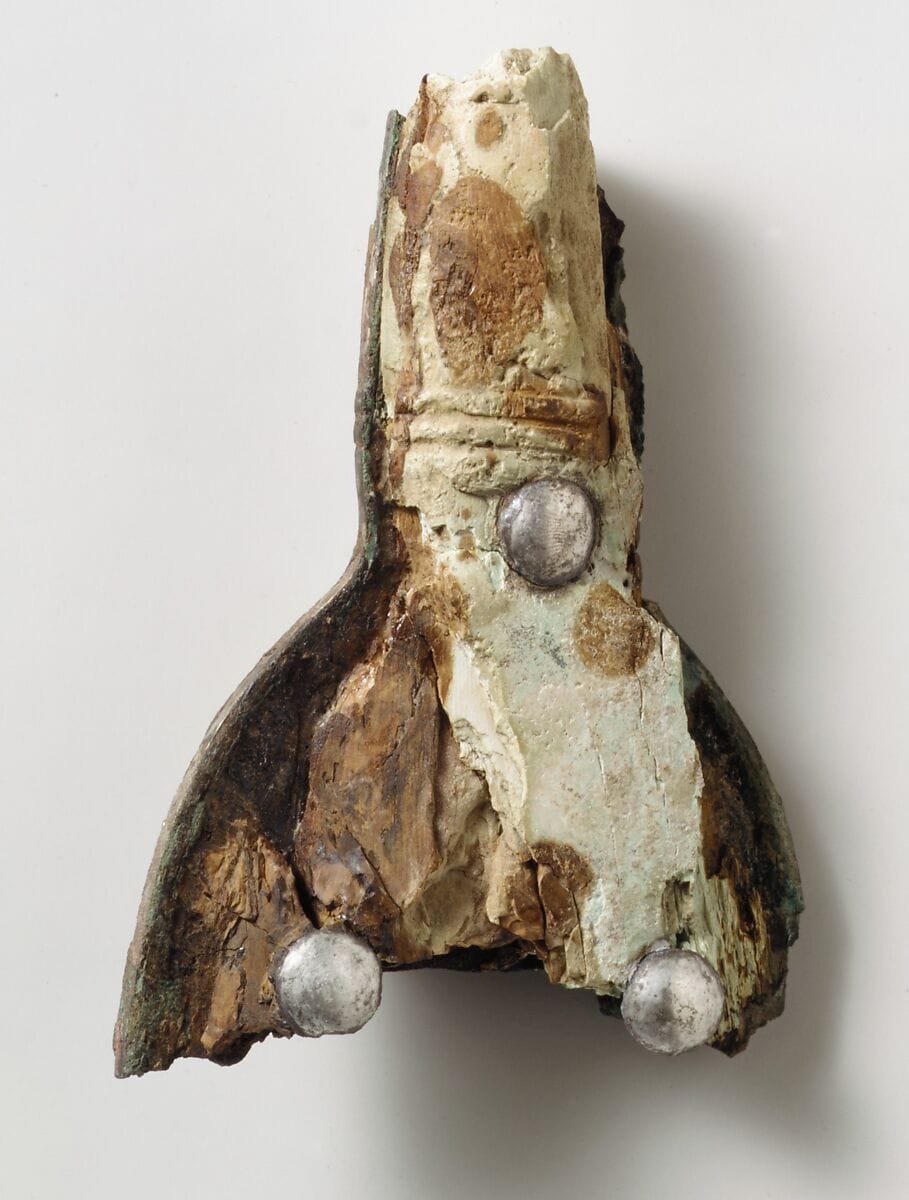 Fragment of an iron swordArchaic II · 599–500 BC
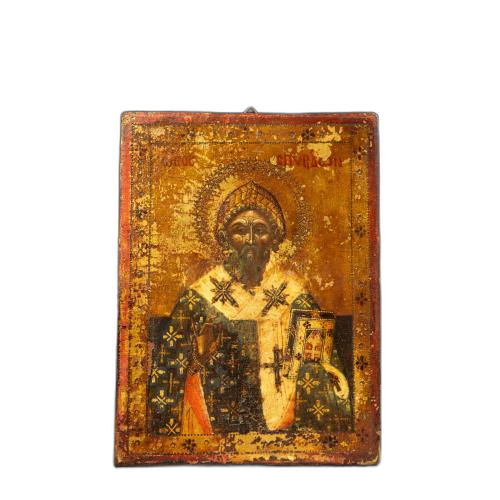 Icon of St Spyridon1700 AD
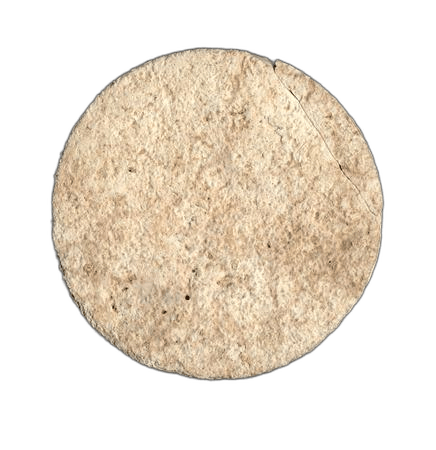 Ivory Circular Box BaseLate Bronze Age II · 1450–1050 BC
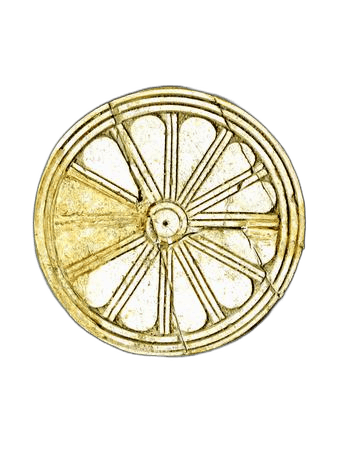 Ivory Rosette LidLate Bronze Age II · 1350–1200 BC
In the catalogue
References
- 1.Karageorghis, V. (1989). The Cyprus Museum Nicosia. Nicosia.
- 2.Todd, I. A. (1978). Excavations at Kalavasos-Tenta, Cyprus. Journal of Field Archaeology, 5.
- 3.Dikaios, P. (1961). Sotira. Philadelphia: The University Museum, University of Pennsylvania.
- 4.Karageorghis, V. (1982). Cyprus from the Stone Age to the Romans. Ancient Peoples and Places 101. London: Thames & Hudson.
- 5.Bar-Yosef Mayer, D. E. (2017). Shell ornaments and artifacts in Neolithic Cyprus and correlations with other Mediterranean regions. Quaternary International. https://doi.org/10.1016/j.quaint.2017.06.034
- 6.Cyprus BC: 7000 Years of History (1979). Exhibition catalogue of ancient Cypriot objects from the Cyprus Museum, Nicosia.
- 7.Pilides, D., & Papadimitriou, N. (Eds.). (2012). Ancient Cyprus: Cultures in Dialogue. Nicosia: Department of Antiquities, Cyprus.
- 8.Peltenburg, E. (1991). Kissonerga-Mosphilia: A Major Chalcolithic Site in Cyprus. Bulletin of the American Schools of Oriental Research, 282/283.
- 9.Smith, J. S. (2009). Art and Society in Cyprus from the Bronze Age into the Iron Age. Cambridge: Cambridge University Press.
- 10.Catling, H. W., Hughes-Brock, H., et al. (2020). Kouklia: Late Bronze Age and Early Iron Age Tombs at Palaepaphos 1951-1954, Volume I. Ed. R. W. V. Catling.
- 11.Buchholz, H.-G., & Karageorghis, V. (1973). Prehistoric Greece and Cyprus: An Archaeological Handbook. London: Phaidon.
- 12.Voskos, I., & Knapp, A. B. (2008). Cyprus at the End of the Late Bronze Age: Crisis and Colonization or Continuity and Hybridization? American Journal of Archaeology, 112(4).