
Lecture·Archaeological Research Unit - University of Cyprus·2022
Writing, marking and trade in Late Bronze Age Cyprus
Chapters
About the lecture
Cassandra Donnelly presents the inaugural seminar of the ERC-funded COMPAS (Commercial Patterns Across the Sea) project at the Archaeological Research Unit, introduced by project director Artemis Georgiou. The talk examines Cypro-Minoan writing, single-sign potmarks, and their relationship to overseas trade in the Late Bronze Age.
Donnelly begins with the history of the script, from its adaptation from Crete and Linear A in the 16th and 15th centuries BC to its expansion in the 13th century (LC IIC) and its survival past the collapse of centralized palace administrations into the Cypro-Geometric period, citing six post-Bronze Age inscriptions including a bronze bowl from Palaepaphos. Unlike Linear B or cuneiform, Cypro-Minoan rarely appears on standardized administrative tablets with logograms and numerals. Instead, it is found on objects associated with trade, including ceramic vessels, ingots, tools, and cylinder seals, with examples recovered outside Cyprus at Tiryns, Ugarit, Melos, and the Gelidonya and Hishuley Carmel shipwrecks.
A central problem is the boundary between multi-sign inscriptions and single-sign potmarks. The corpora of Jean-Pierre Olivier and Silvia Ferrara exclude single-sign marks, leaving over two thousand marked vessels outside the formal corpus. Building on the work of Nicole Hirschfeld, Donnelly argues that many single-sign marks on vessels, tools, and seals were produced in the same literate environments as multi-sign inscriptions, sharing formatting, incision methods, object types, and sign variants.
She then reviews current debates in Cypro-Minoan studies: the unfixed signary (ranging from Emilia Masson's over one hundred signs to Miguel Valério's sixty-six and Martina Polig's eighty-eight based on 3D laser scans), the rejection of Masson's division of the script into CM 1, CM 2 (the Enkomi tablets), and CM 3, and disputed texts such as a three-sign handle on a Canaanite jar from Mycenae. Donnelly concludes by outlining her role in the COMPAS database, classifying and examining marks on some four hundred imported maritime transport containers. An extensive discussion follows with Bernard Knapp, Jennifer Webb, Gloria London, Nicole Hirschfeld, Pippa Steele, and Maria Iacovou, covering the definition of mercantile contexts, Early Bronze Age marking traditions, pre- and post-firing incisions, inscribed clay balls, and Iron Age continuities.
From our collection
Pieces in the Drakopoulos collection of the kinds and periods this talk covers: Jar, Red Lustrous Wheelmade ware, Late Cypriot (Late Bronze Age), Cypro-Geometric.
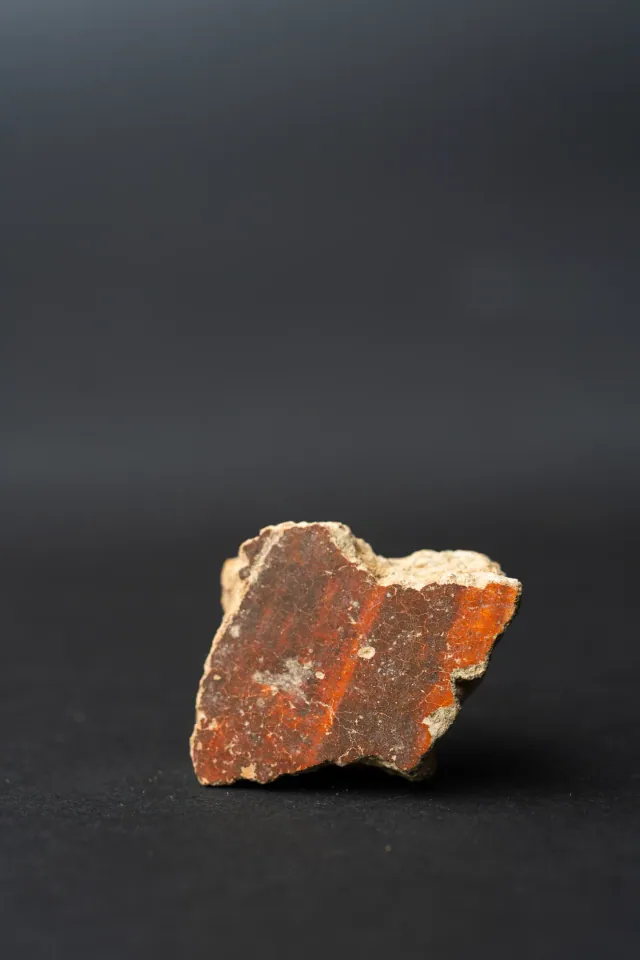
Red Lustrous Ware Body Sherd with Fire-Mottled Slip
Red Lustrous Wheelmade ware
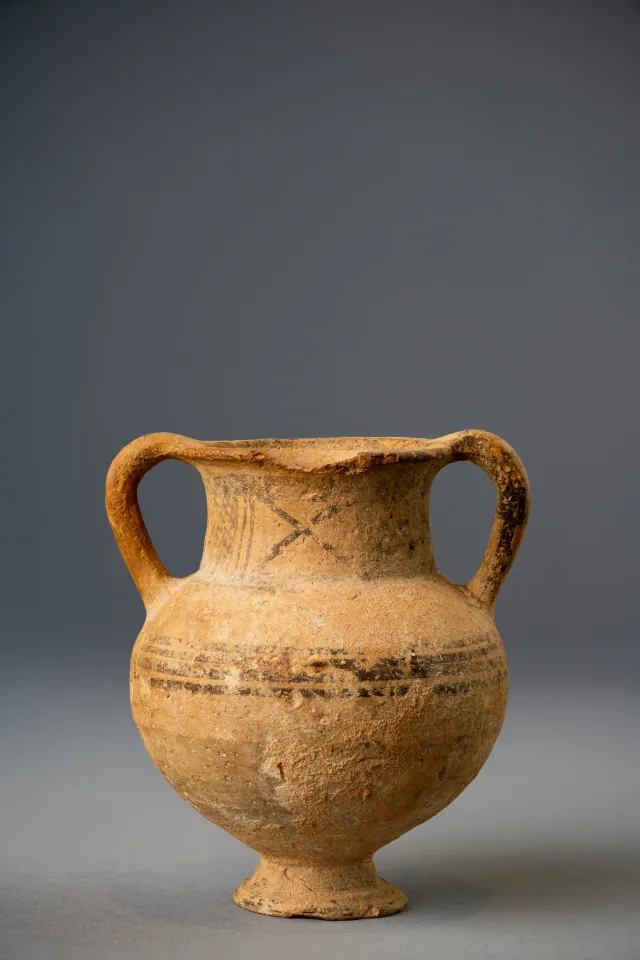
White Painted Amphoriskos on a Conical Foot
Jar
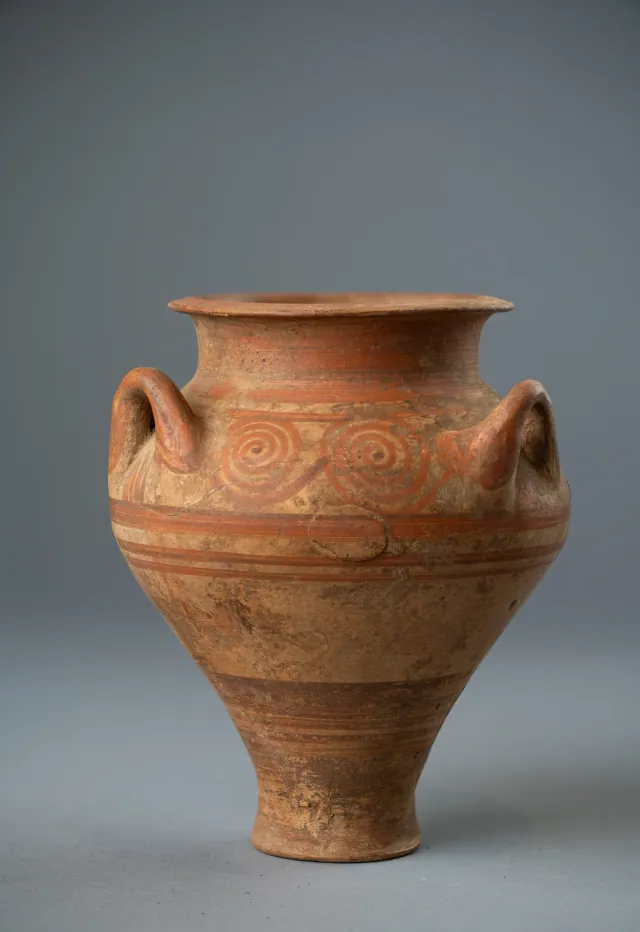
Cypriot Three-Handled Jar in the Mycenaean Style with Running Spirals
Jar
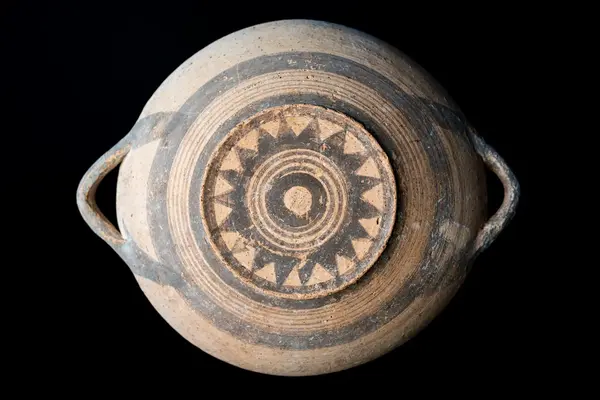
White Painted Plate with a Sawtooth Star on the Underside
Cypro-Geometric
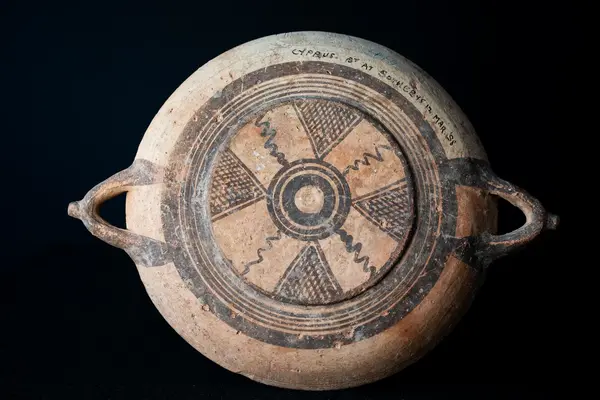
White Painted Plate with Latticed Triangles and Wavy Lines on the Underside
Cypro-Geometric
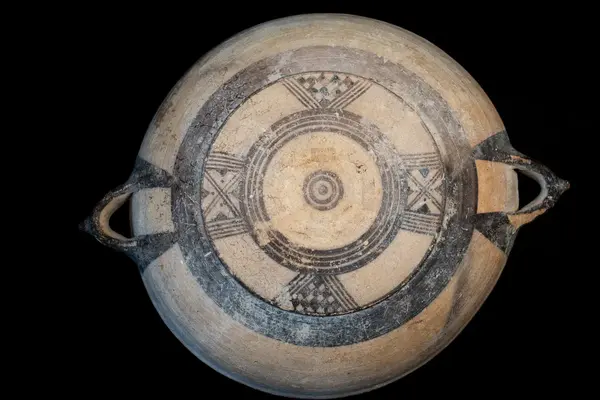
Large White Painted Plate with Knobbed Handles and a Four-Armed Cross on the Underside
Cypro-Geometric
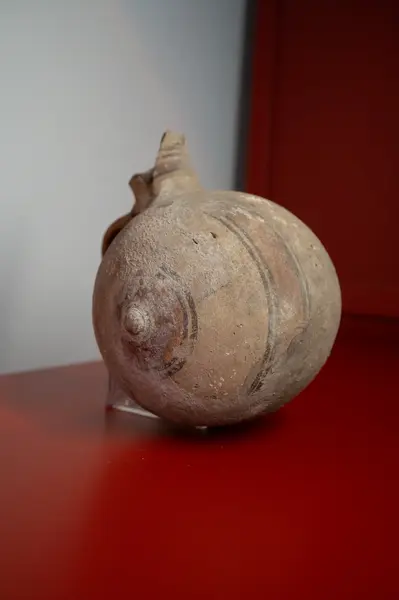
Bichrome Barrel Jug with Circled End-Knobs
Cypro-Geometric
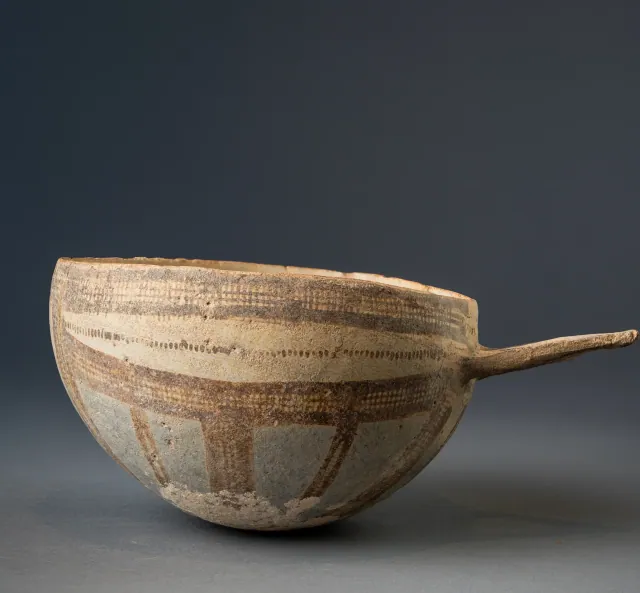
White Slip II Hemispherical Bowl with Wishbone Handle
Late Cypriot (Late Bronze Age)
Found at the places discussed
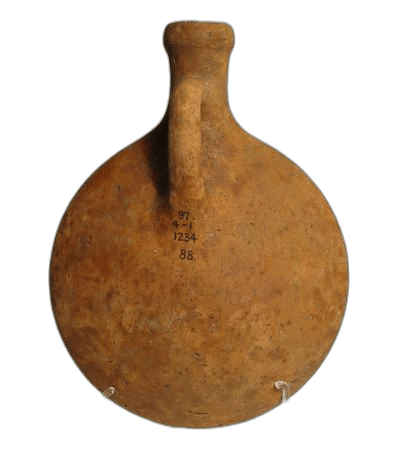
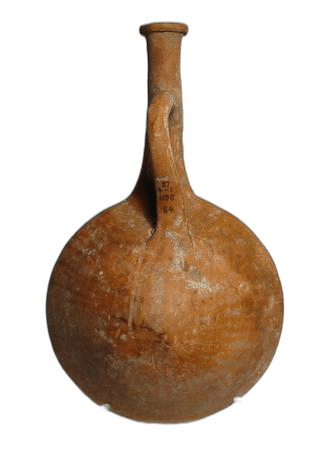
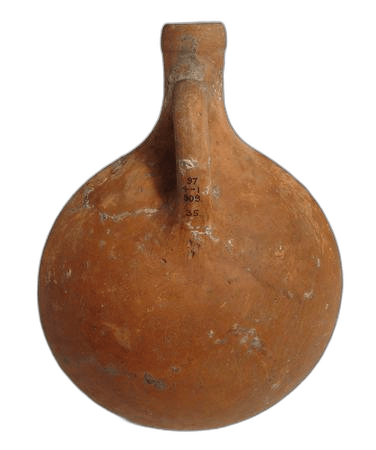
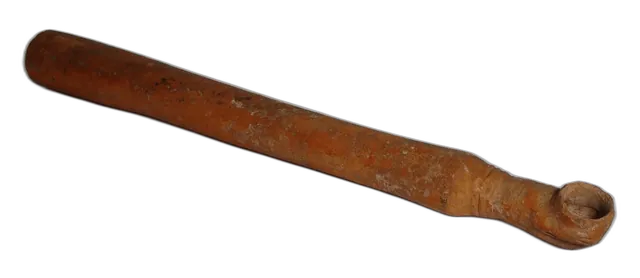
Objects in our catalogue, in museum collections, recorded as found at these sites.
Background
Where to read more on this site before or after watching.
The site
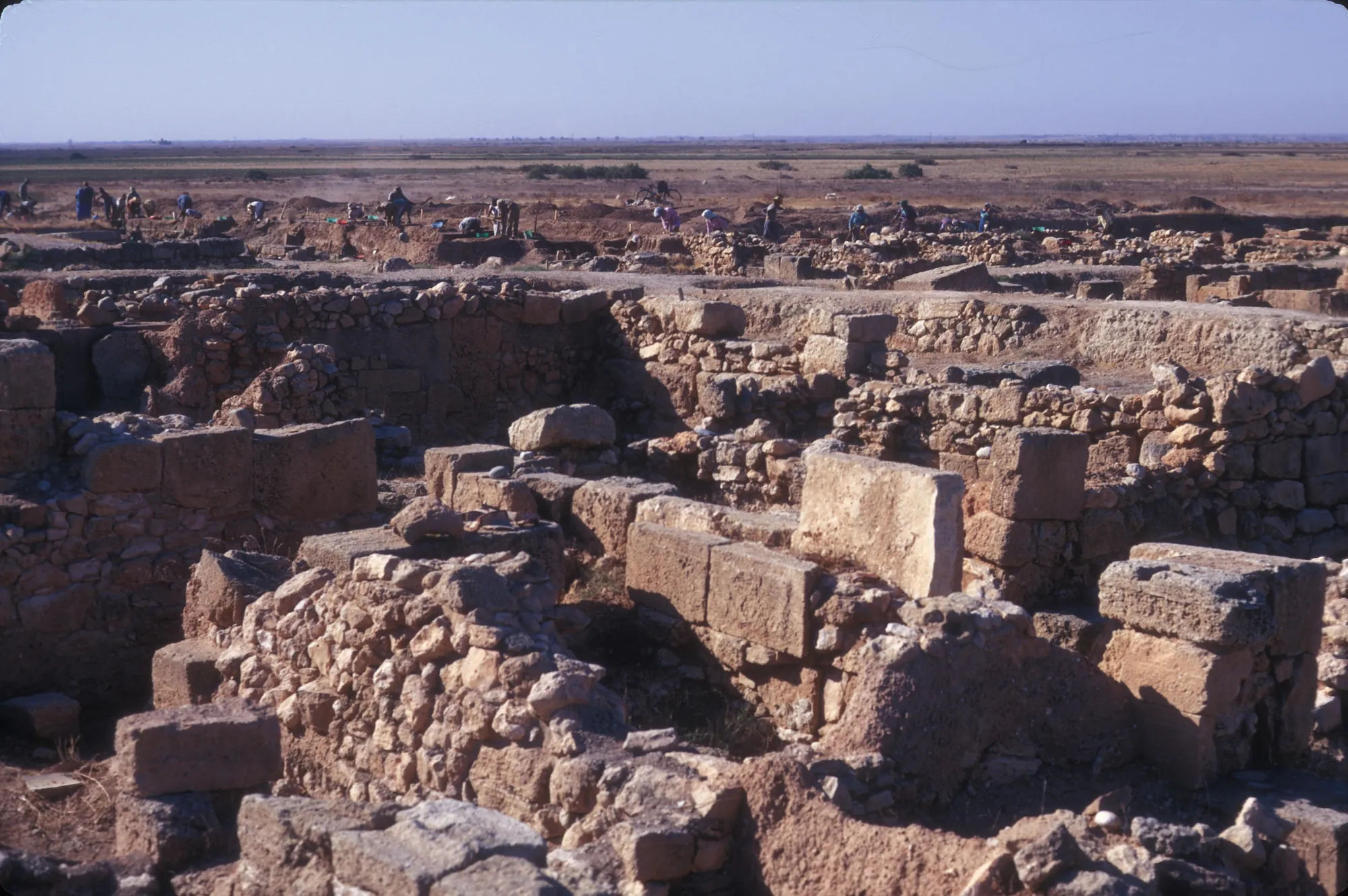
Enkomi
Enkomi is a walled Late Bronze Age town near the mouth of the Pedieos river on the bay of Famagusta, lived in from about 1650 BC until it was gradually abandoned for nearby Salamis. It was a port for Cypriot copper, and its excavations produced metal workshops, sanctuaries with bronze cult statues, rich tombs and the largest group of Cypro-Minoan inscriptions on the island.
In the compendium
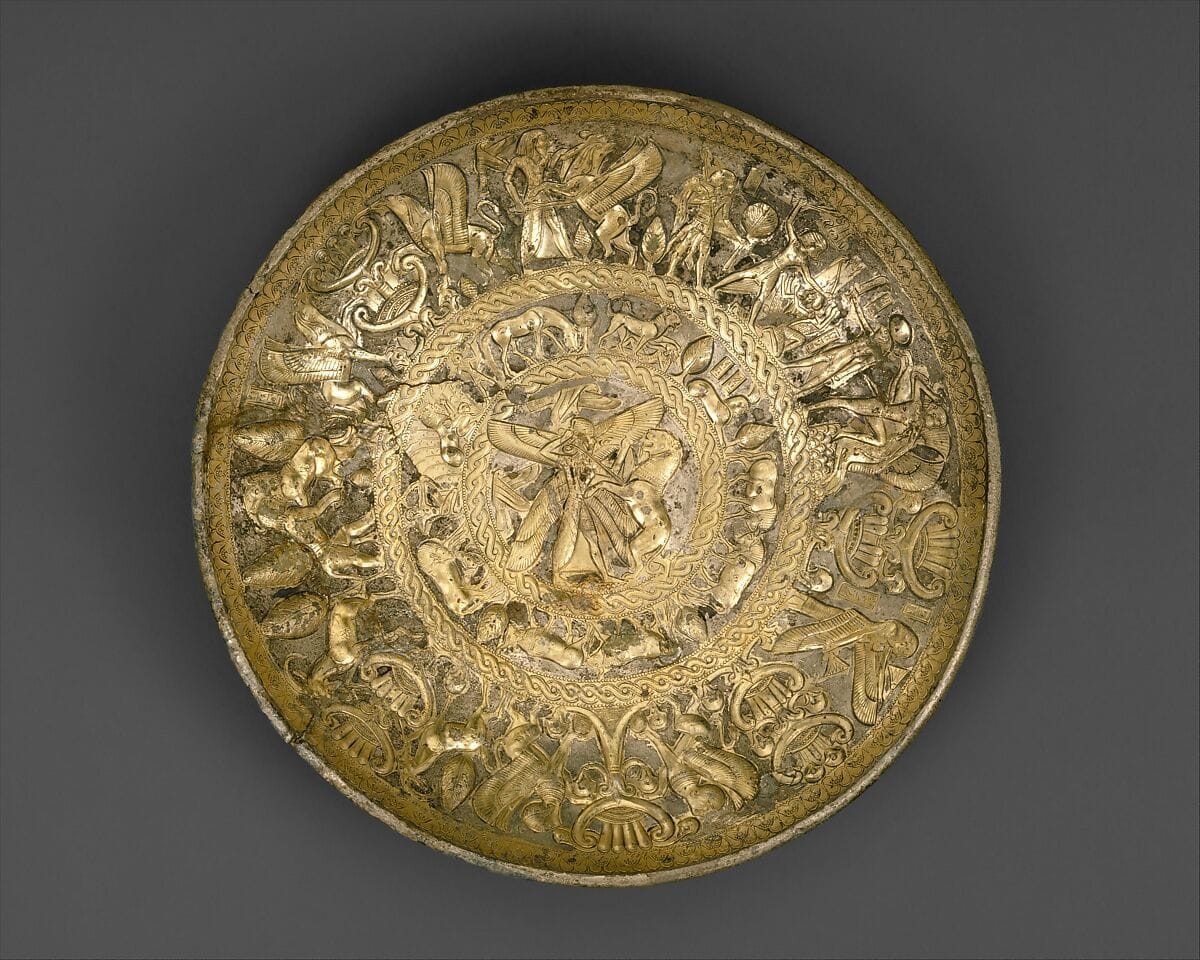
Writing and Literacy in Ancient Cyprus
The scripts of ancient Cyprus, from undeciphered Cypro-Minoan to the Cypriot Syllabary, Eteocypriot, Phoenician and the Greek alphabet, and who used them.
In the compendium
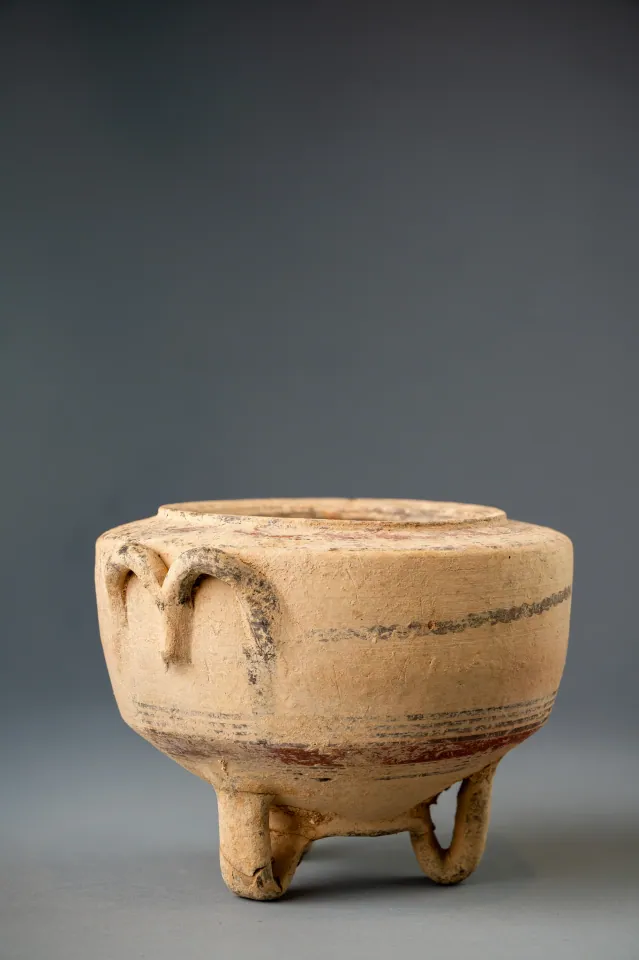
Jars and Pithoi
A symmetrical wide-necked vessel, the family of Cypriot storage and transport jars, pithoi and painted jars, including the amphora.
In the compendium
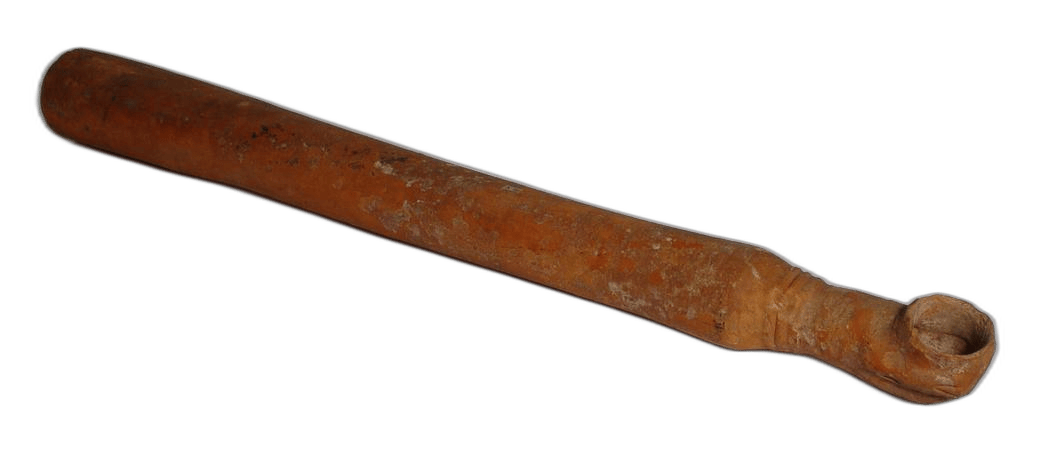
Red Lustrous Wheelmade Ware
A fine, wheel-thrown, red-burnished Late Bronze Age ware of spindle bottles, flasks and arm-shaped vessels, found in Cyprus, the Levant, Egypt and Anatolia.
Map of Cyprus
Places discussed in the talk
- Has a page on this site
- Other places
- Ground above 200, 500, 1,000 m
Places
- 1Enkomi
- 2Palaepaphos
- 3Hala Sultan Tekke
- 4Kition
- 5Kourion