
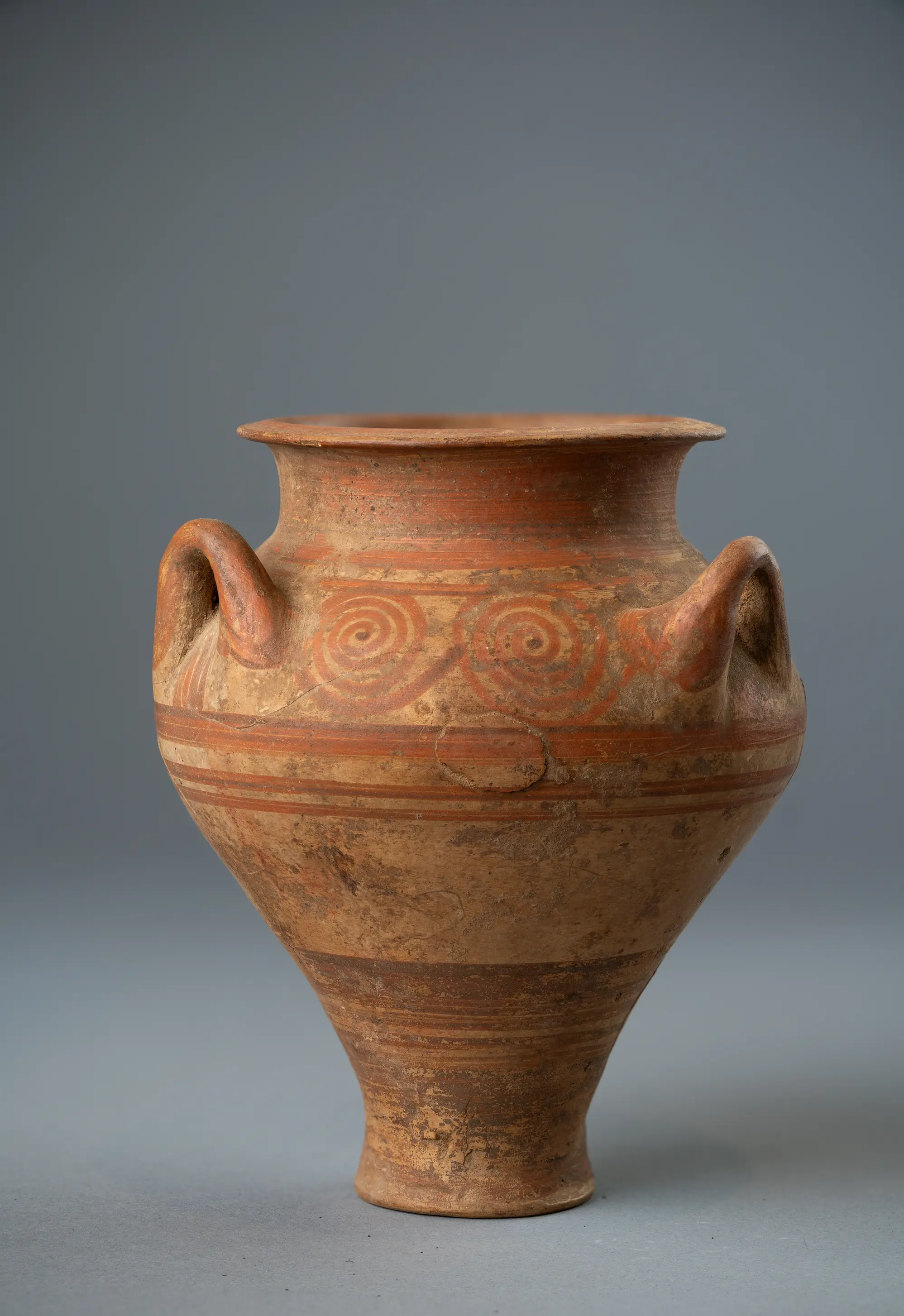
Late Bronze Age II
Cypriot Three-Handled Jar in the Mycenaean Style with Running Spirals
Small wheel-made three-handled jar made in Cyprus in imitation of Mycenaean piriform jars (FS 46/47), painted with a frieze of running spirals.
Date
1375 - 1300 BC
Accession No.
JAR-BA-004
Collection
Alexis Drakopoulos
Provenance
- 1965–1969, The Goodman Collection
- 2025–present, Alexis Drakopoulos, London
Late Cypriot IIA–IIB, c. 1375–1300 BCE · Aegean-type (Mycenaean-style) painted ware, made in Cyprus · Wheel-made
A small wheel-made jar with a conical-piriform body. The body swells to a rounded shoulder and tapers to a tall, narrow foot that splays at the base. A short concave neck carries a flat, out-turned rim. Three small horizontal loop handles are set high on the shoulder and project like points in profile. The fabric is buff to pinkish, painted in matt orange-red to brown. On the better-preserved side a frieze of linked spirals, each coil drawn in two or three concentric turns, runs between the handles. Below it are groups of horizontal bands, with further bands on the lower body. Neck, rim and foot are painted.
The surface on the other side has flaked badly across the shoulder, taking most of the spirals with it. Hairline cracks cross the lower body, and there is a small chip in the rim. On the banded zone below the frieze a small oval patch is outlined by a crack, with the painted bands running across it.
Commentary
This is a three-handled jar of the kind catalogued in Arne Furumark's Mycenaean system as Furumark Shape (FS) 46 or 47, the small conical members of his piriform jar family [2]. Furumark described FS 47 as a local variant of FS 46, and the class has since been shown to be Cypriot. Neutron activation analysis of an FS 47 jar from Hala Sultan Tekke found that it had been made on the island [3]. A pXRF programme on the whole class then separated these jars chemically from genuinely imported Mycenaean piriform jars [1]. Gianfranco Graziadio's 2017 monograph catalogues 122 examples. Almost all come from Cyprus, a few from the Levant and Egypt, and none from the Aegean [1]. On profile, with its conical-piriform body and tall, narrow, splaying foot, this jar fits Graziadio's Shape 47:b, the most numerous of his four sub-shapes. His sub-shapes are typological and carry no chronological weight [1].
The class began late in Late Helladic IIIA1 and was at its height in LH IIIA2. In Cypriot terms that is Late Cypriot IIA–IIB, the fourteenth century BCE, well before the Aegean-type White Painted Wheelmade III pottery of the late thirteenth and twelfth centuries [1]. Earlier descriptions of this jar as an import from the Aegean islands, dated 1400–1050 BCE, are superseded on both counts.
Graziadio identifies the running spiral as one of the main motifs of the class. Cypriot painters habitually drew the spirals in a "reversed" manner, linking each coil from its top to the bottom of the next, the opposite of Aegean practice [1]. The matt paint here is also typical of the Cypriot production, since imported Mycenaean jars carry a lustrous paint [1]. Whether this jar's surviving coils are linked in the reversed manner should be confirmed on the object, because so much of the frieze is damaged.
Close parallels come from the British Museum's 1896 excavations at Enkomi [5]. They include Walters C 471 (1897,0401.1153; Graziadio cat. 18, Enkomi Tomb 83, H. 12.5 cm) and C 467 (1897,0401.1027; cat. 15, Tomb 66, H. 11.7 cm), both of Graziadio's Shape 47:a, with reversed running spirals on conical feet. A jar in the State Historical Museum, Moscow (SHM 51) is published as one of the three-handled jars "made in Cyprus in imitation of Mycenaean jars" [4]. Like their imported models, the jars probably held scented oil or unguent. They were placed in tombs, often beside imported Mycenaean vessels [1].
The small oval patch on the banded zone could be a lifted flake reset in place or a filled and retouched repair. It should be examined under ultraviolet light before the condition is described as original.
References
- 1.Graziadio, G., with Pezzi, E., Dikomitou-Eliadou, M. and Georgiou, A. (2017) The Earliest Production of Aegean-Type Pottery in Cyprus. Pisa: Pisa University Press, pp. 16–18, 25, 27–40, 157–170.
- 2.Furumark, A. (1941) The Mycenaean Pottery: Analysis and Classification. Stockholm: Kungl. Vitterhets Historie och Antikvitets Akademien.
- 3.Mommsen, H., Beier, Th. and Åström, P. (2003) Neutron Activation Analysis Results of Six Mycenaean Sherds from Hala Sultan Tekke, Cyprus. Archaeology and Natural Science 2, pp. 5–10.
- 4.Karageorghis, V. (2005) Ancient Cypriote Art in Russian Museums. Nicosia: A.G. Leventis Foundation, p. 22.
- 5.Murray, A.S., Smith, A.H. and Walters, H.B. (1900) Excavations in Cyprus. London: British Museum.
More from the Catalogue
Browse related objects
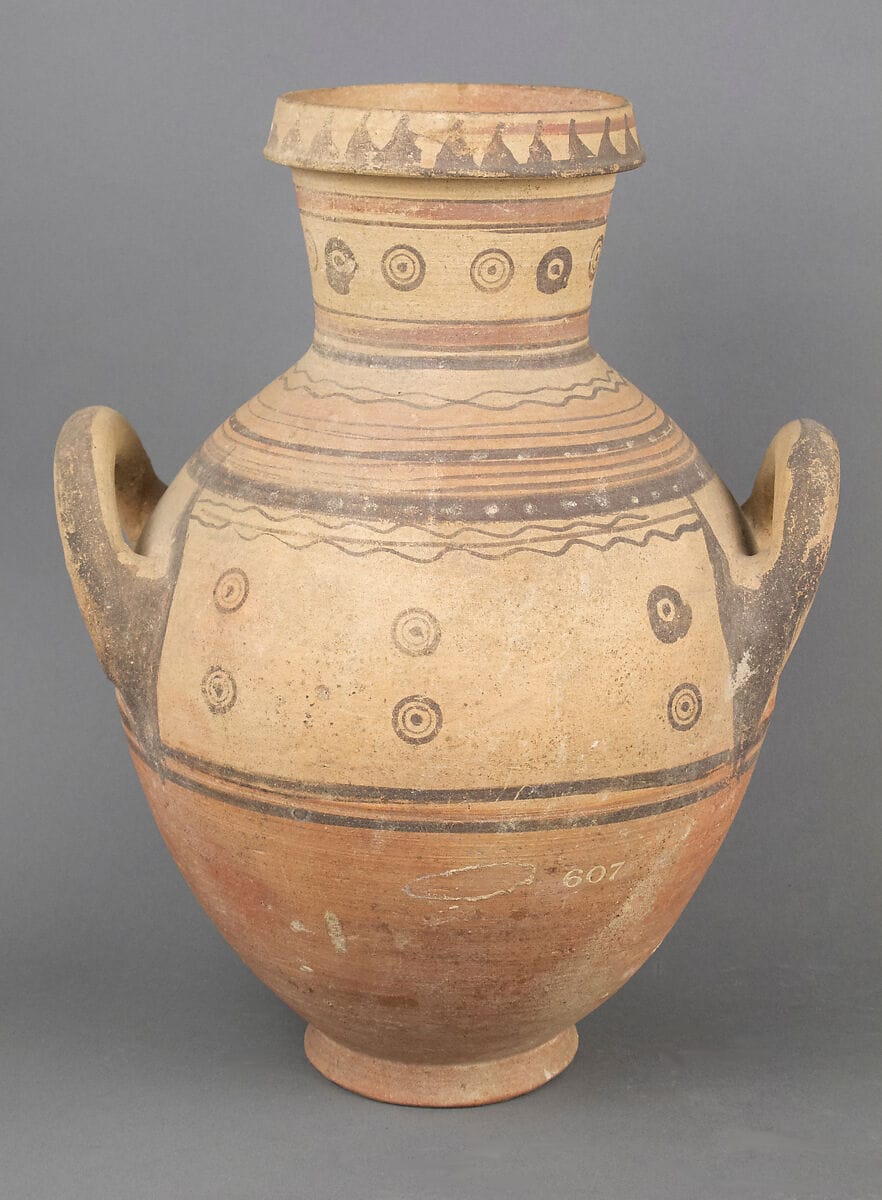
Amphora
Archaic II
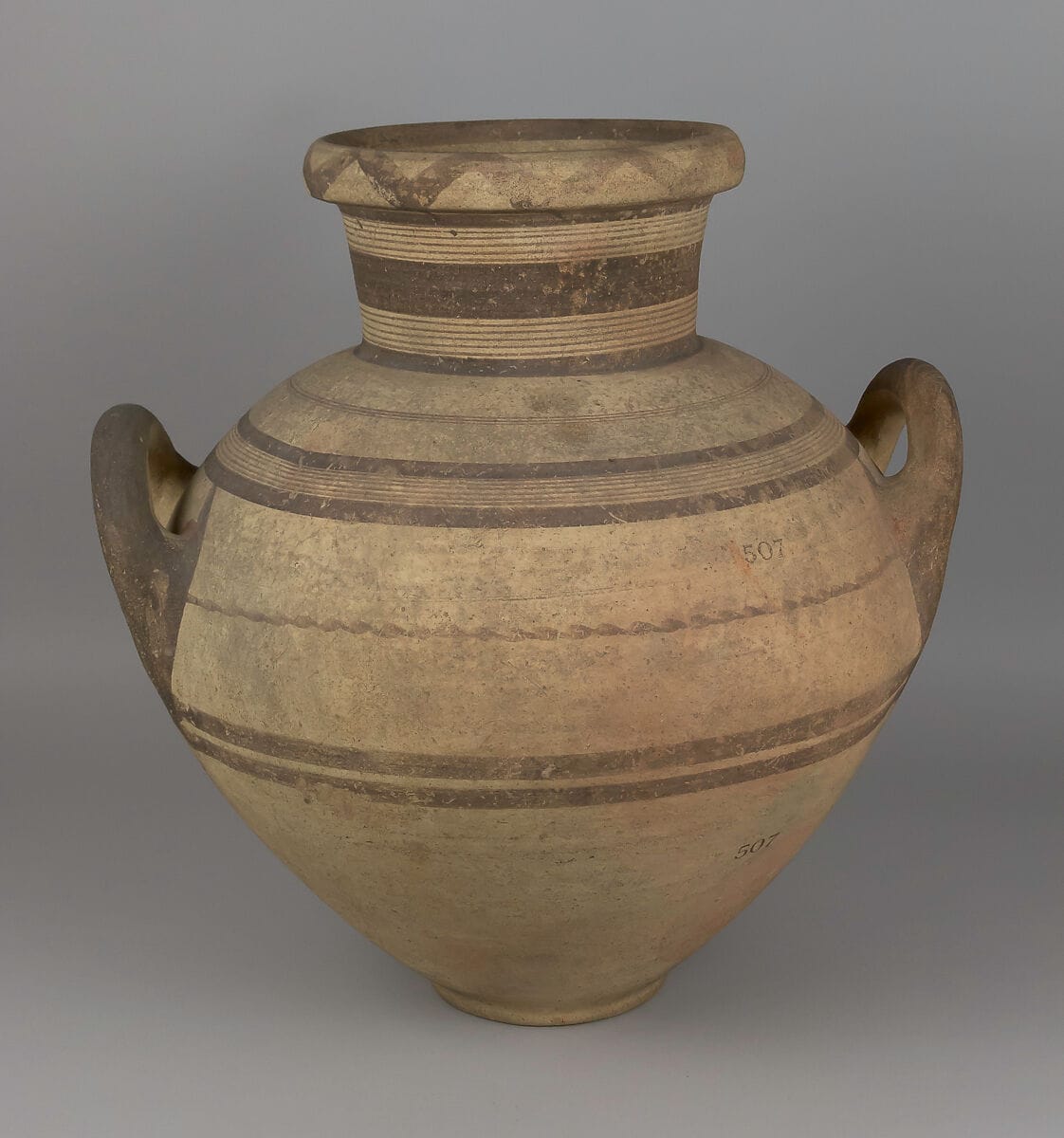
Amphora
Geometric I
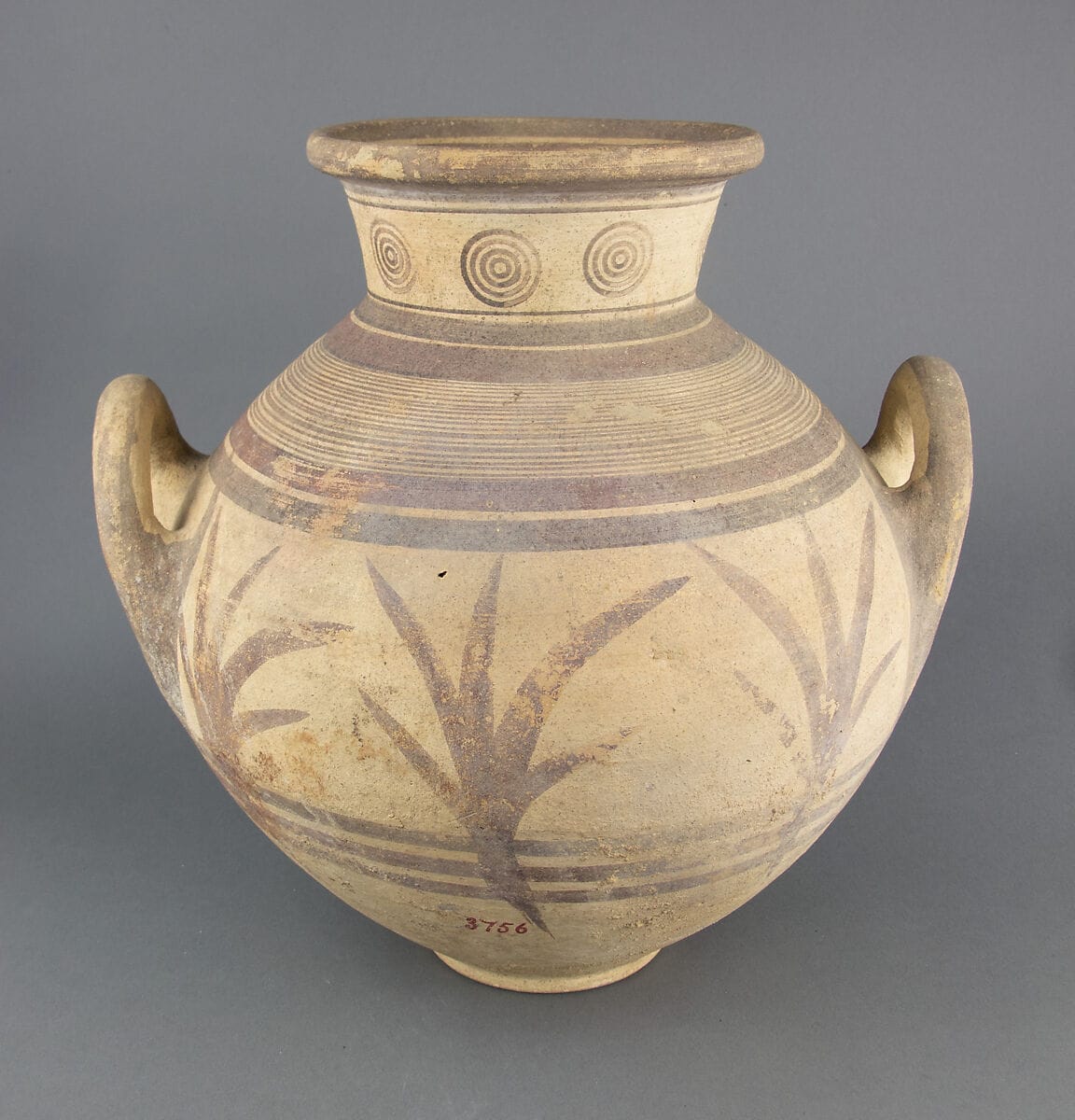
Amphora
Archaic II
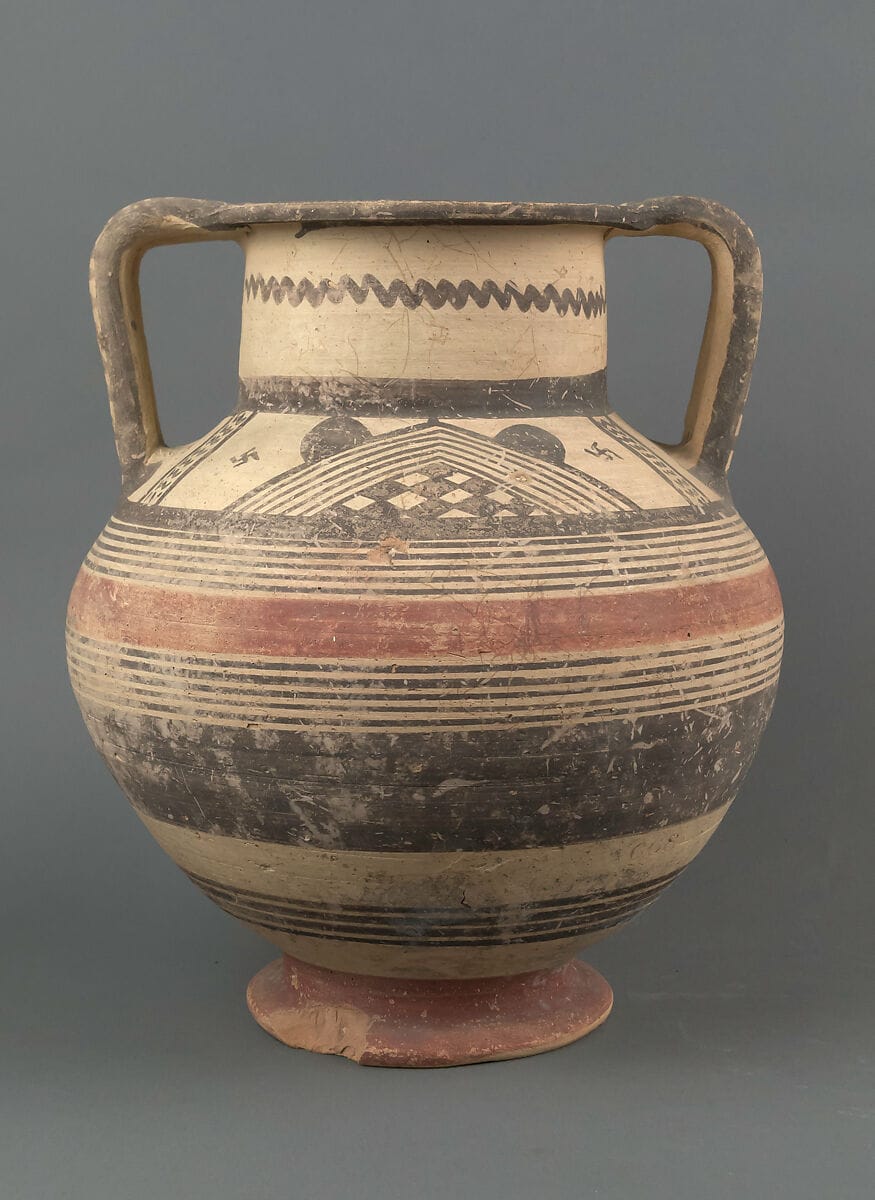
Amphora
Archaic I
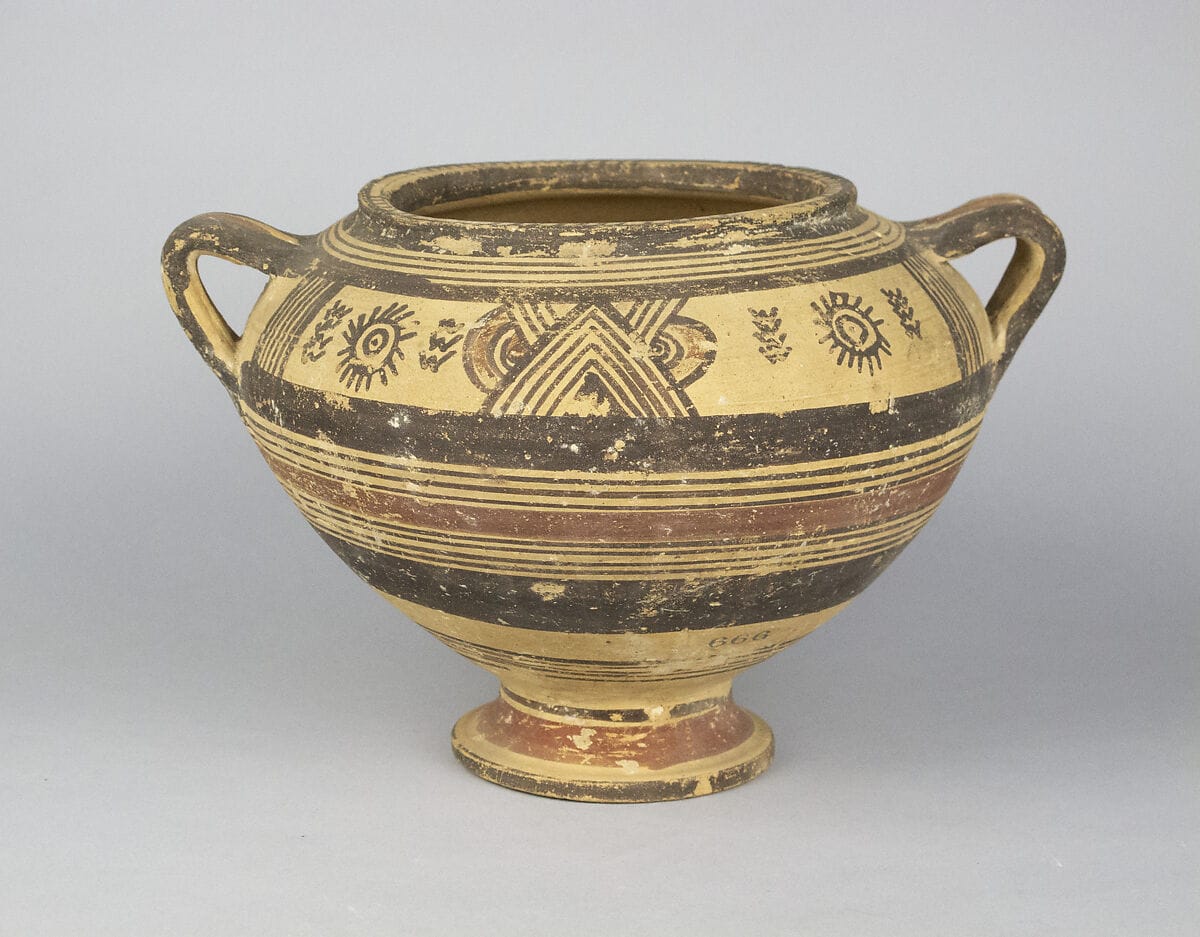
Dinos
Archaic I
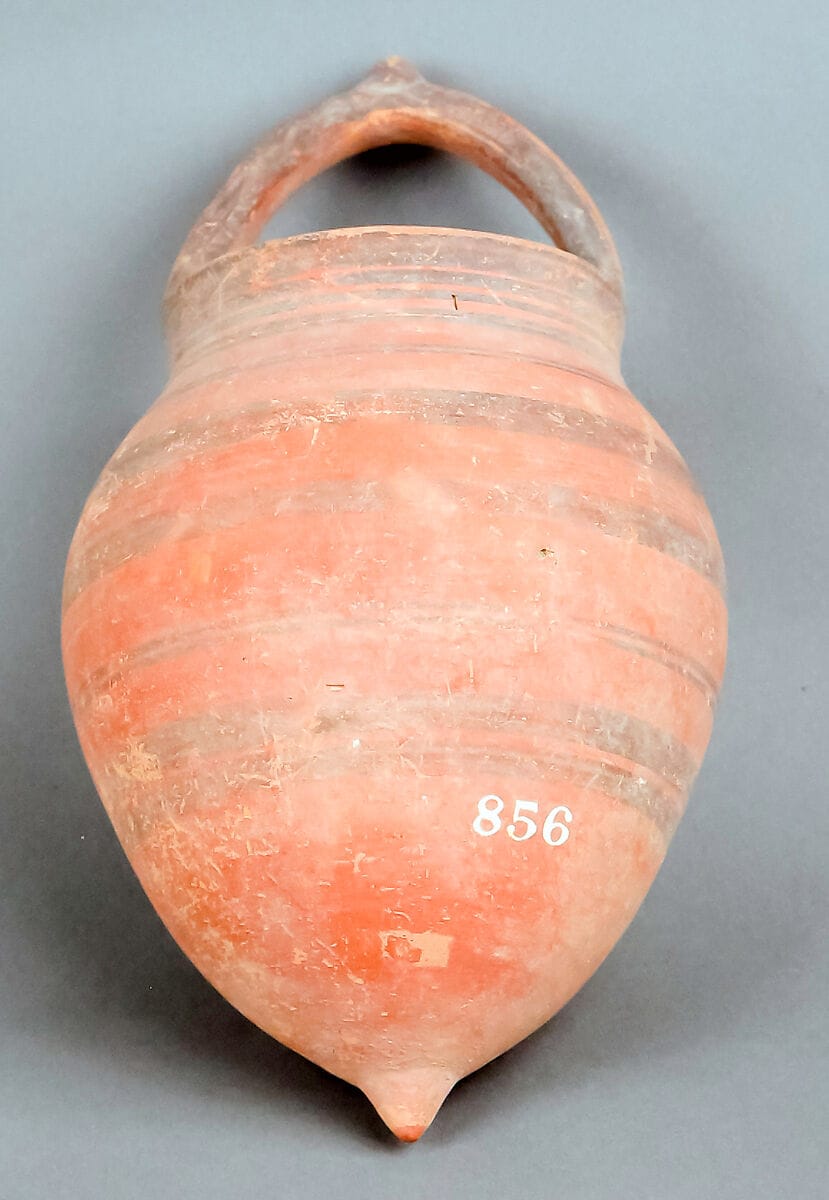
Amphoriskos
Geometric III
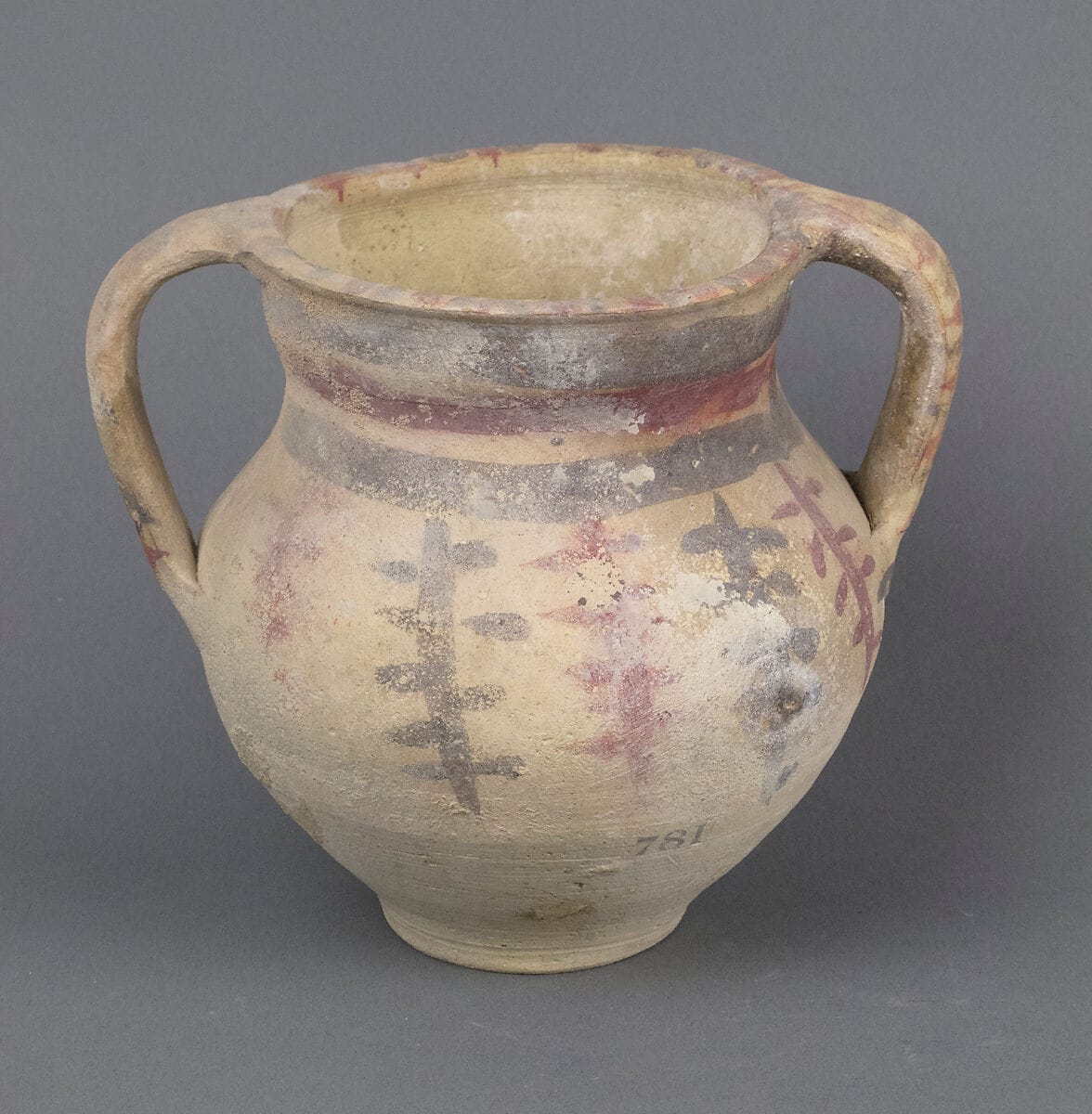
Amphoriskos
Archaic II
Limestone statuette of a boy holding an amphora
Hellenistic
Terracotta krater
Late Bronze Age III
Krater
Geometric I
Terracotta miniature amphora
Geometric III
Amphora
Late Bronze Age III
Amphora
Archaic II
Krater
Late Bronze Age III
Dinos
Archaic I
Amphora
Archaic
Terracotta amphora
Middle Bronze Age II
Amphora
Bronze Age