
Archaic
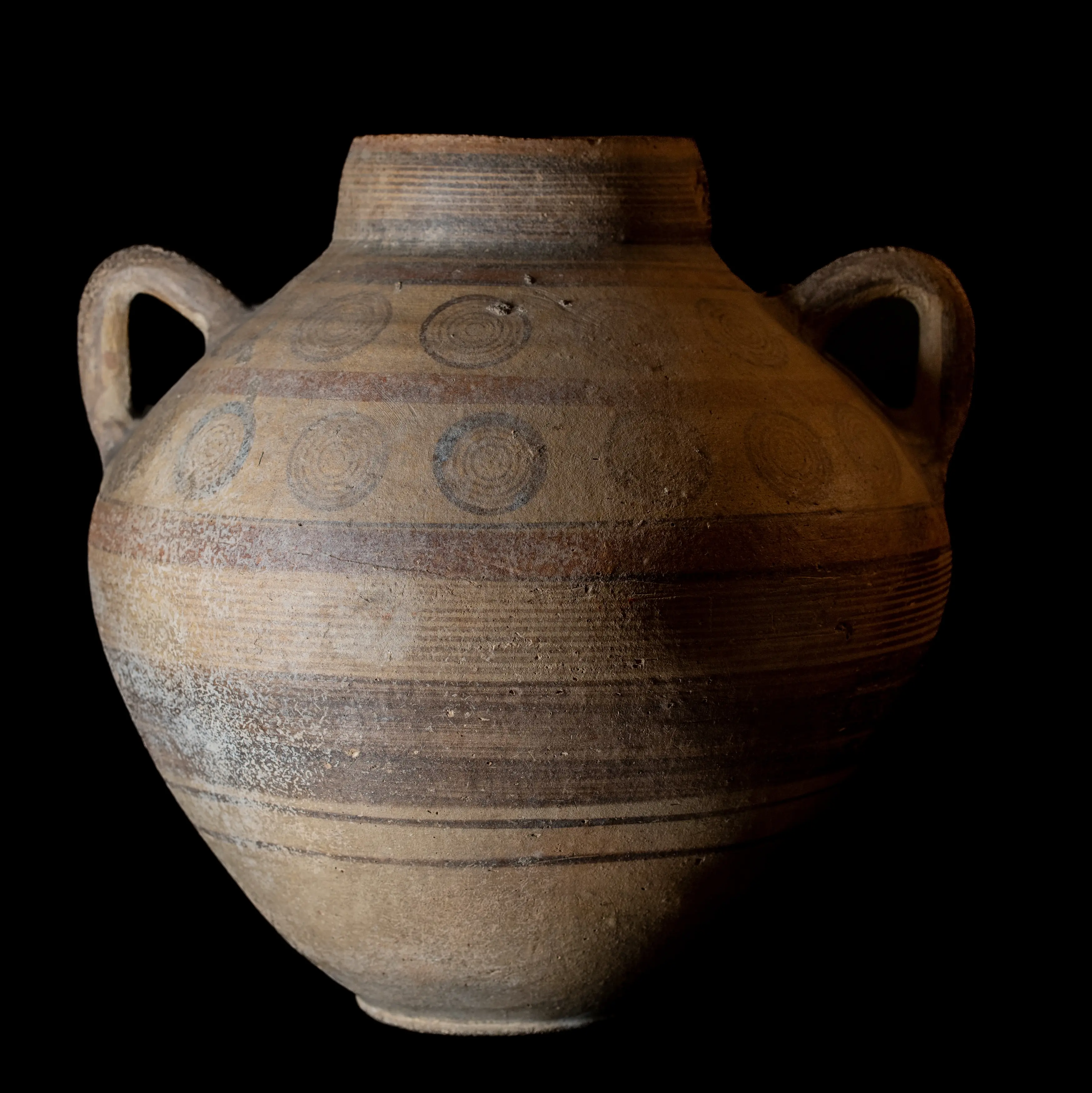
Globular Bichrome Amphora with Two Registers of Concentric Circles
Squat Cypriot Bichrome IV amphora with shoulder handles and two rows of concentric circles on the shoulder, above red and black bands. Cypro-Archaic I.
Date
750 - 480 BC
Accession No.
JAR-GE-009
Collection
Alexis Drakopoulos
Provenance
- Earlier history unknown
- 2024, sold at auction, United Kingdom
- 2024–present, Alexis Drakopoulos, London
Cypro-Archaic I–II, c. 750–480 BCE · Bichrome IV ware · Wheel-made · H. 31 cm
A broad, squat amphora whose body swells out to its greatest width high on the shoulder and then narrows in a long curve to a low ring base. The short cylindrical neck ends in a plain rim, and two stout loop handles stand upright on the shoulder. On the buff ground the painter set groups of fine black lines and a red band around the neck. The shoulder carries two registers of concentric circles, each a row of discs of five or six rings in dark paint, divided by a red band framed in black. Below comes a red band, a wide zone of close-set fine lines and a very broad dark belt across the belly, followed by two thin lines and a plain lower body.
A V-shaped piece is missing from the rim. One handle root shows a rough join with filler. A grey-white deposit clouds the belly belt, and there is a scratch on the lower body.
Commentary
The vessel is a Bichrome amphora of the shoulder-handled class, in the broad, low-bellied form that Gjerstad placed on the boundary between jars and amphorae [1]. An earlier description called it a "stamnos". That term belongs to a Greek shape and is best avoided for Cypriot vessels. The decoration belongs to what Gjerstad named the circle style. The concentric circle entered the Cypriot repertoire at the start of Cypro-Geometric III and became the leading ornament of Cypro-Archaic I, particularly in the west and north of the island, at Marion and Lapithos [1].
Two stacked registers of circles on the shoulder are a developed form of that style. The Getty amphora 94.AE.114.4 has the same arrangement of two circle zones on the shoulder, with a further row on the neck, and is dated about 550–450 BC [2]. A single row appears on an amphora in Detroit, 24.184, dated to the seventh century BCE [3]. The squat, depressed body finds a smaller counterpart in the Cesnola jar 74.51.577 in New York, decorated with rows of circles and dated to Cypro-Archaic II [4]. The Swedish Cyprus Expedition found Bichrome IV amphorae with circles on the shoulder in the tombs of Marion, among them M.062:036 from Tomb 62 (H. 23 cm), in a context of Cypro-Archaic II [5]. The circle style was established in Cypro-Archaic I, while three of these four parallels are dated to Cypro-Archaic II or later. A date in the Cypro-Archaic period, c. 750–480 BCE, is therefore secure, and the evidence does not allow the vessel to be pinned to one half of that range.
The circles are neat but not mechanical. The rings are evenly spaced within each disc, as when a multiple brush or compass-like tool is pivoted around a fixed centre, yet the discs differ slightly in size and spacing, and their outer rings vary in weight. Each was set out by hand around the shoulder. The red is laid on as broad bands only, while the black provides every line and circle, following the normal division of labour between the two colours in Bichrome ware.
Amphorae of this size served in households and tombs as containers for liquids or dry goods, and most intact examples survived in chamber tombs. The find-spot of this piece is unknown. Its circle style points towards the western and northern workshops, though the style was also practised elsewhere on the island.
The rough join at one handle root should be examined to establish whether the handle has been broken and reattached.
References
- 1.Gjerstad, E. (1948) The Swedish Cyprus Expedition IV.2: The Cypro-Geometric, Cypro-Archaic and Cypro-Classical Periods. Stockholm: Swedish Cyprus Expedition, pp. 44–53 and 188–189 (Bichrome ware; the circle style).
- 2.The J. Paul Getty Museum, Los Angeles, 94.AE.114.4. Bichrome ware amphora with compass-drawn circles on the neck and two zones of circles on the shoulder, about 550–450 BC, H. 42.4 cm (museum record).
- 3.Detroit Institute of Arts, 24.184. Amphora with a row of concentric circles on the shoulder, 7th century BCE, H. 33 cm; formerly Herzogliches Museum, Gotha (museum record).
- 4.The Metropolitan Museum of Art, New York, 74.51.577 (Cesnola Collection). Depressed globular jar with rows of concentric circles, Cypro-Archaic II, H. 17.5 cm (museum record).
- 5.Medelhavsmuseet, Stockholm, M.062:036. Amphora of Bichrome IV ware with circle groups on the shoulder, from Marion Tomb 62, Cypro-Archaic II context, H. 23 cm (Swedish Cyprus Expedition; museum record).
More from the Catalogue
Browse related objects
Amphora
Archaic II
Amphora
Geometric I
Amphora
Archaic II
Amphora
Archaic I
Dinos
Archaic I
Amphoriskos
Geometric III
Amphoriskos
Archaic II
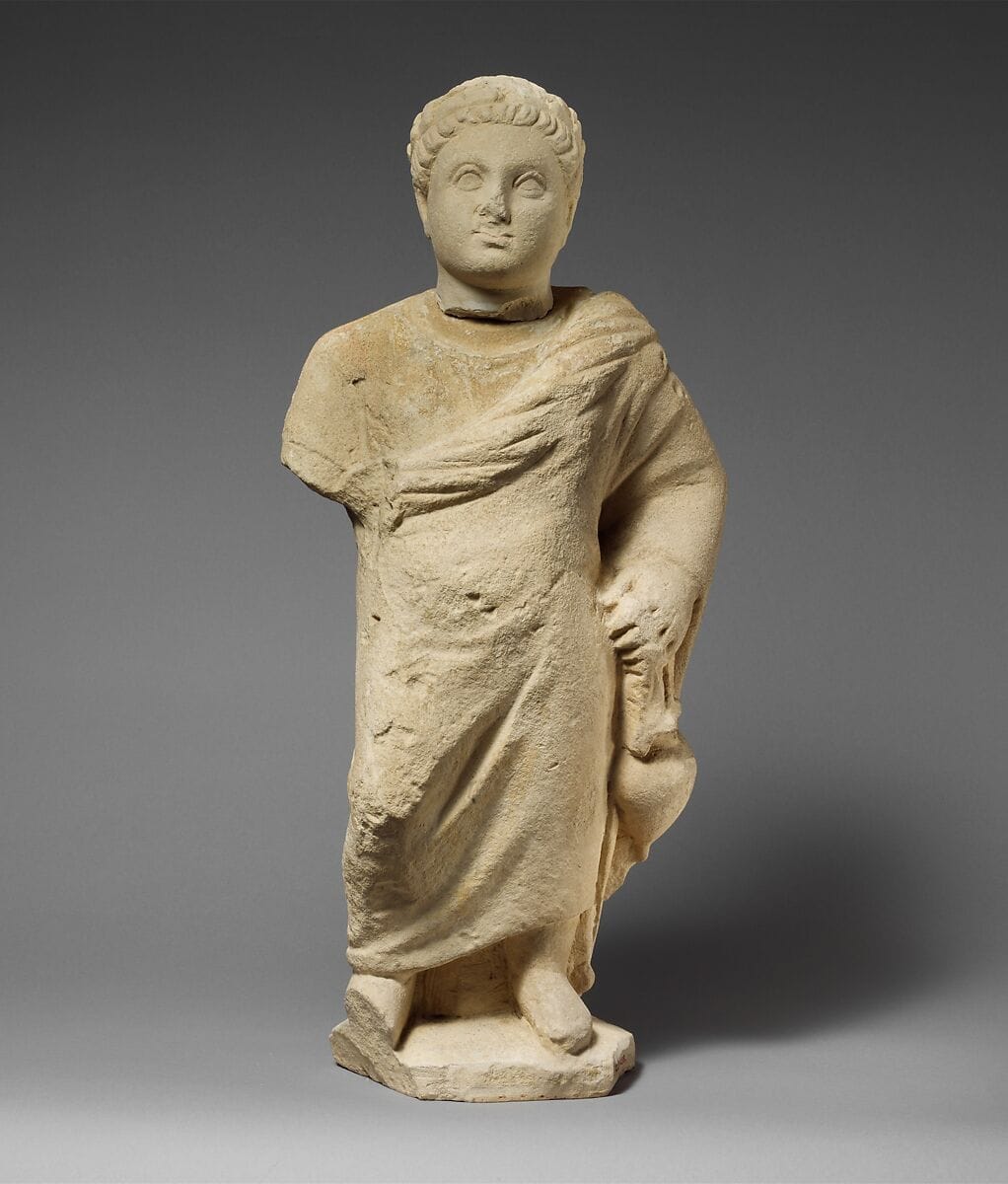
Limestone statuette of a boy holding an amphora
Hellenistic
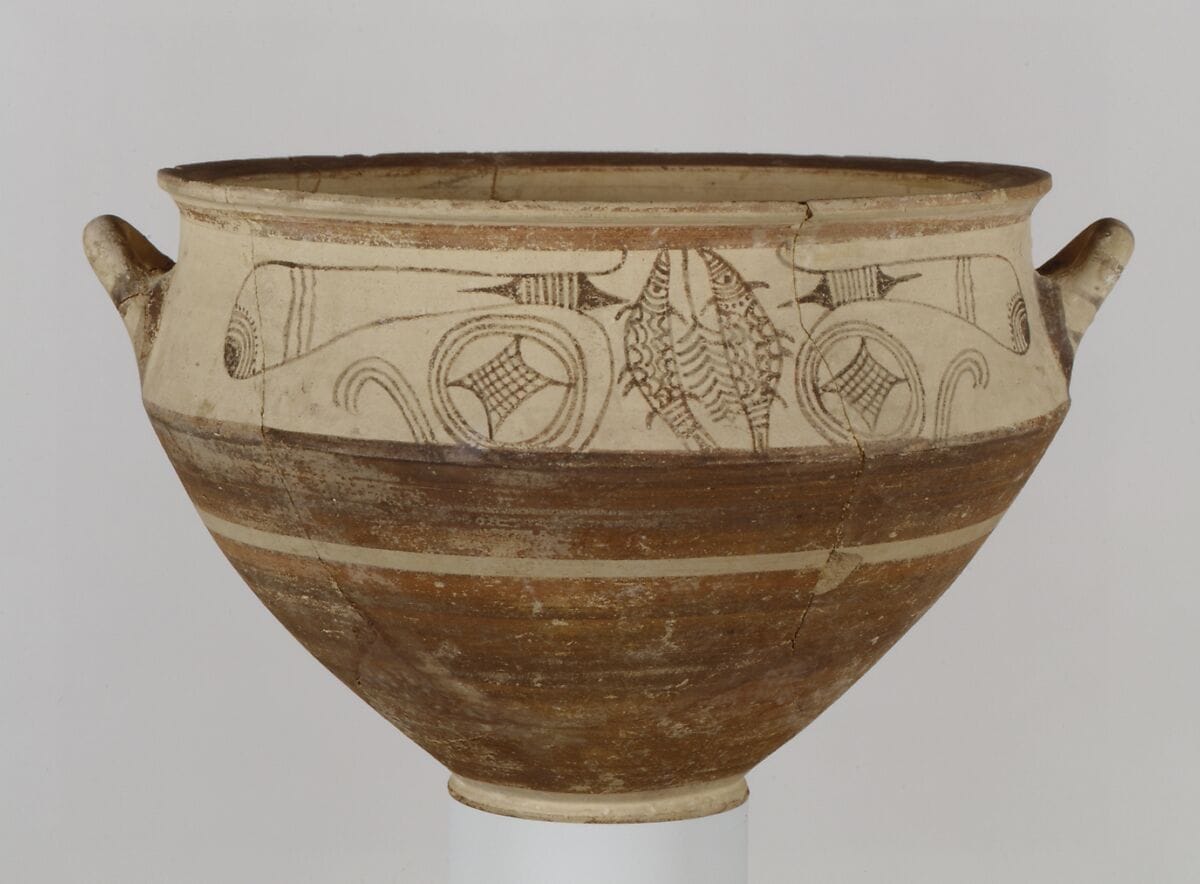
Terracotta krater
Late Bronze Age III
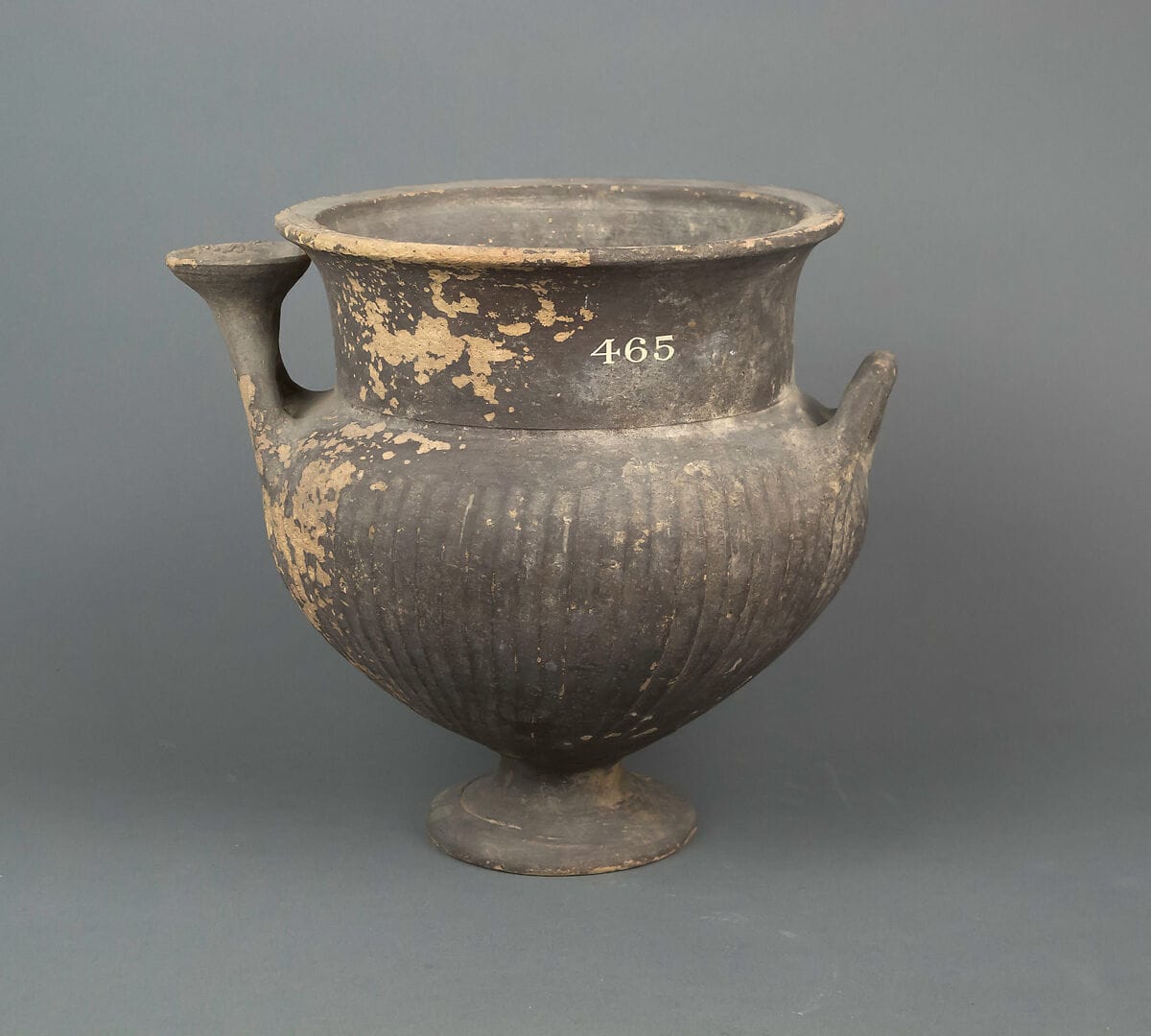
Krater
Geometric I
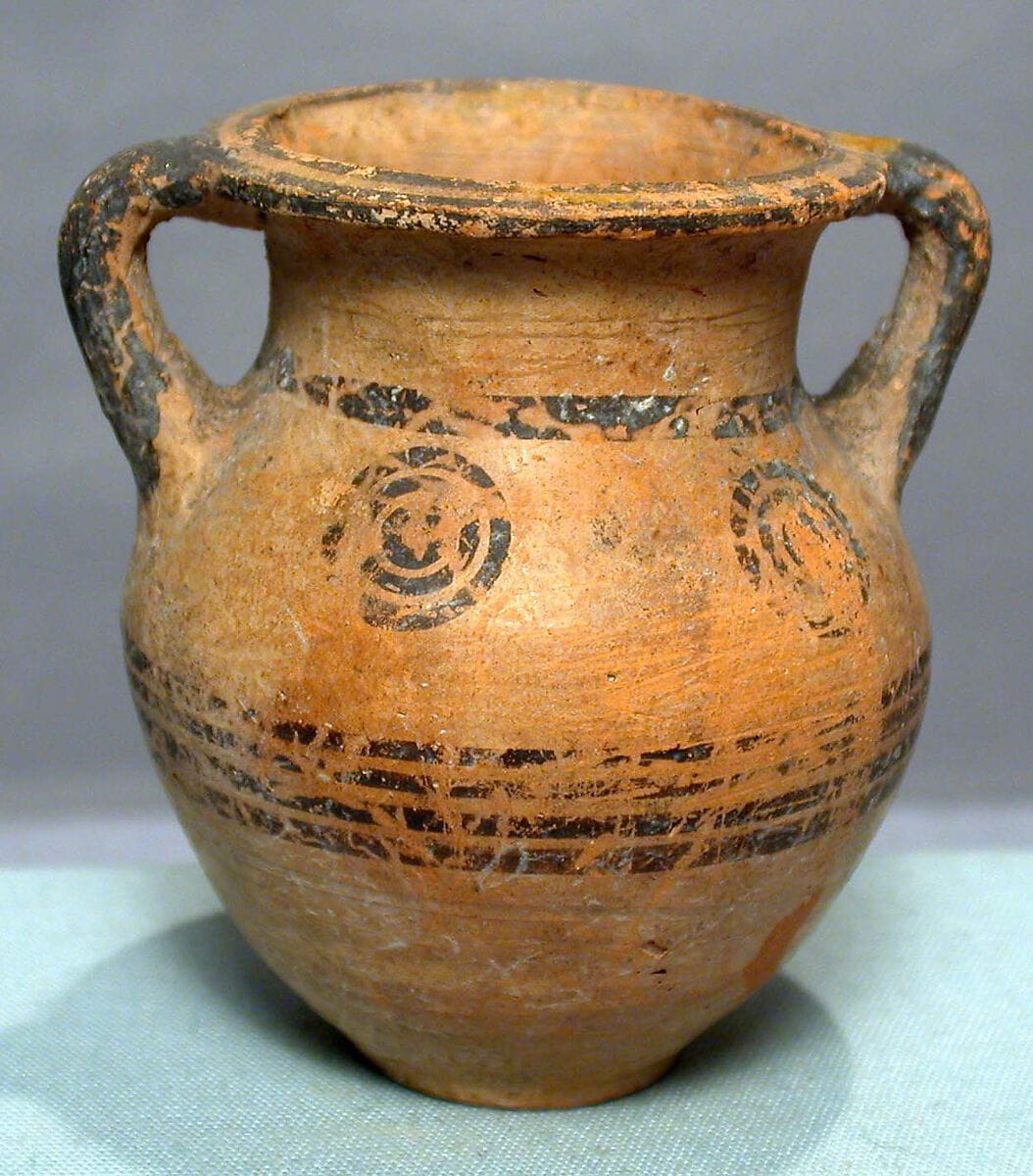
Terracotta miniature amphora
Geometric III
Amphora
Late Bronze Age III
Amphora
Archaic II
Krater
Late Bronze Age III
Dinos
Archaic I
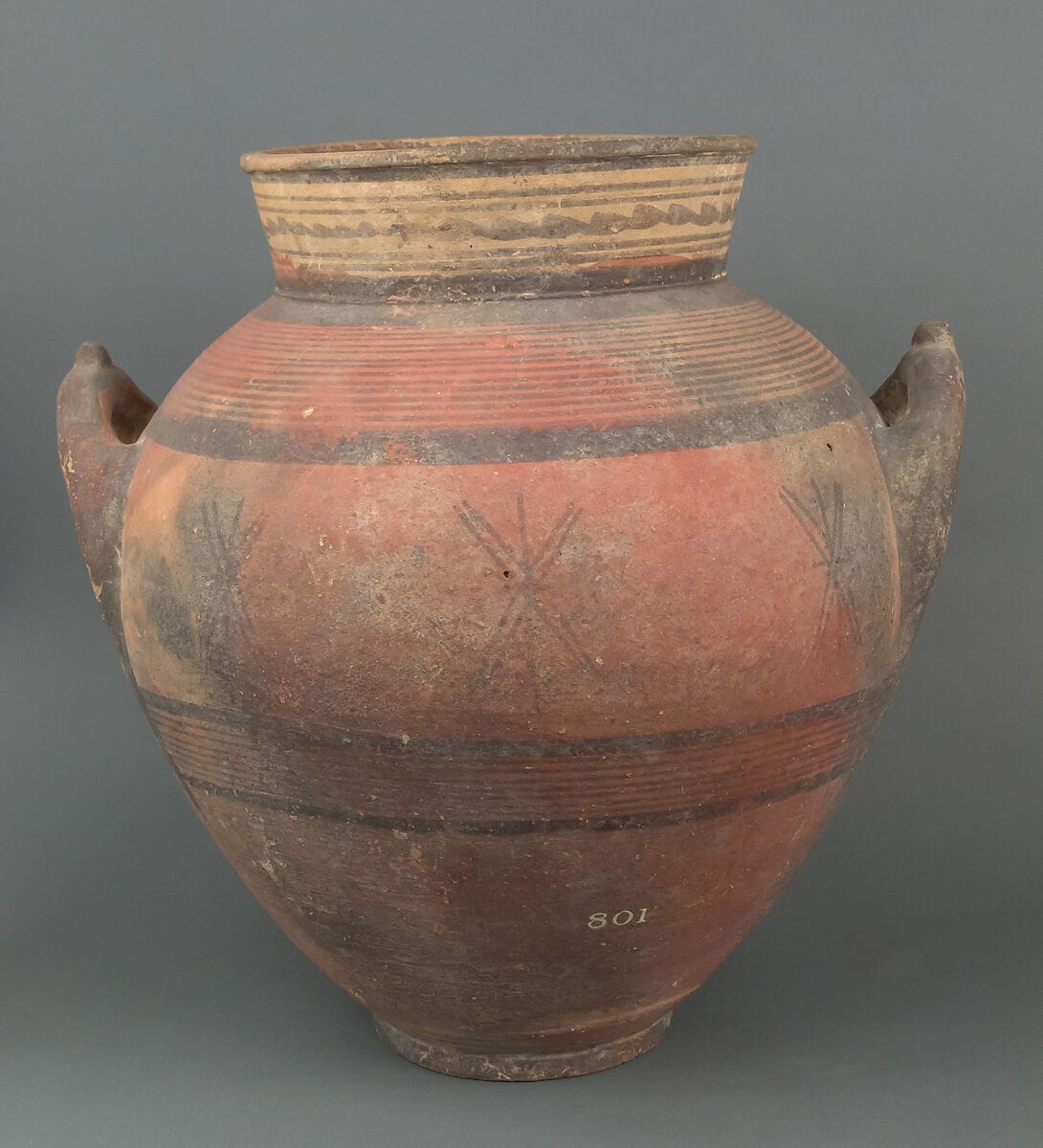
Amphora
Archaic
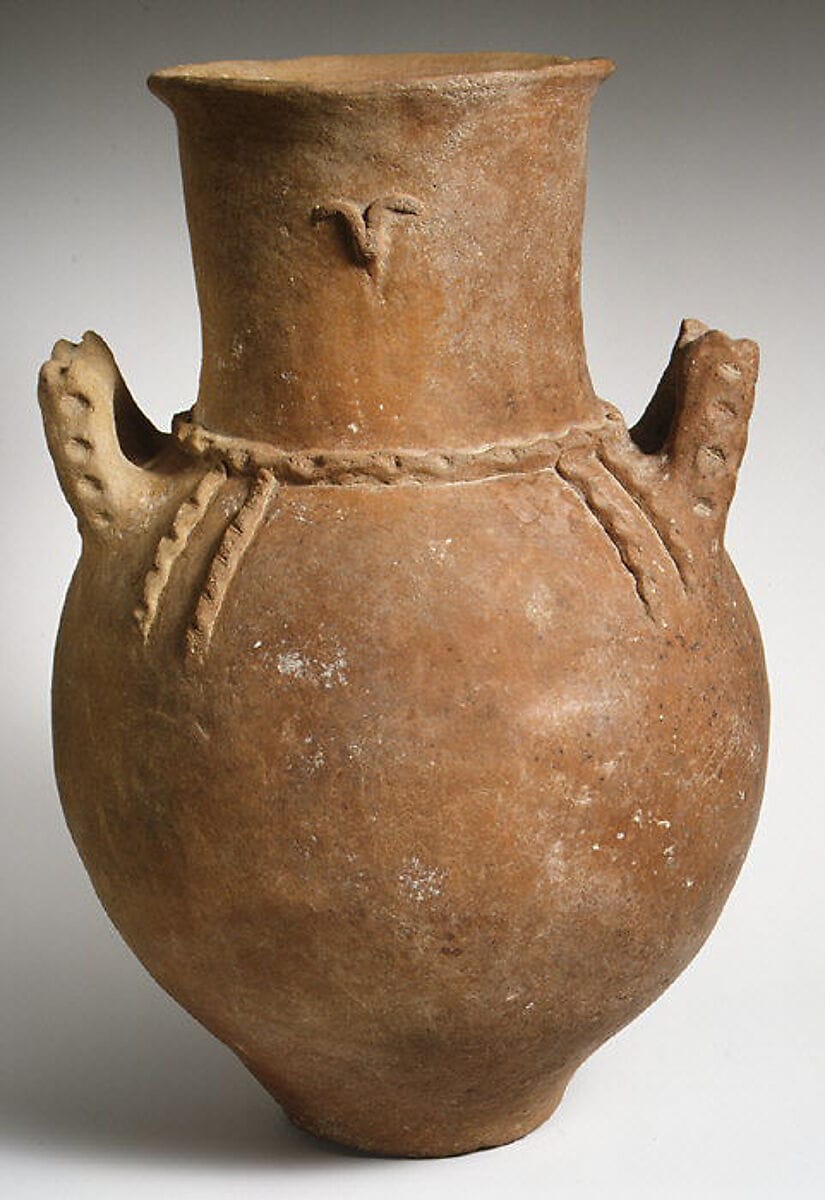
Terracotta amphora
Middle Bronze Age II
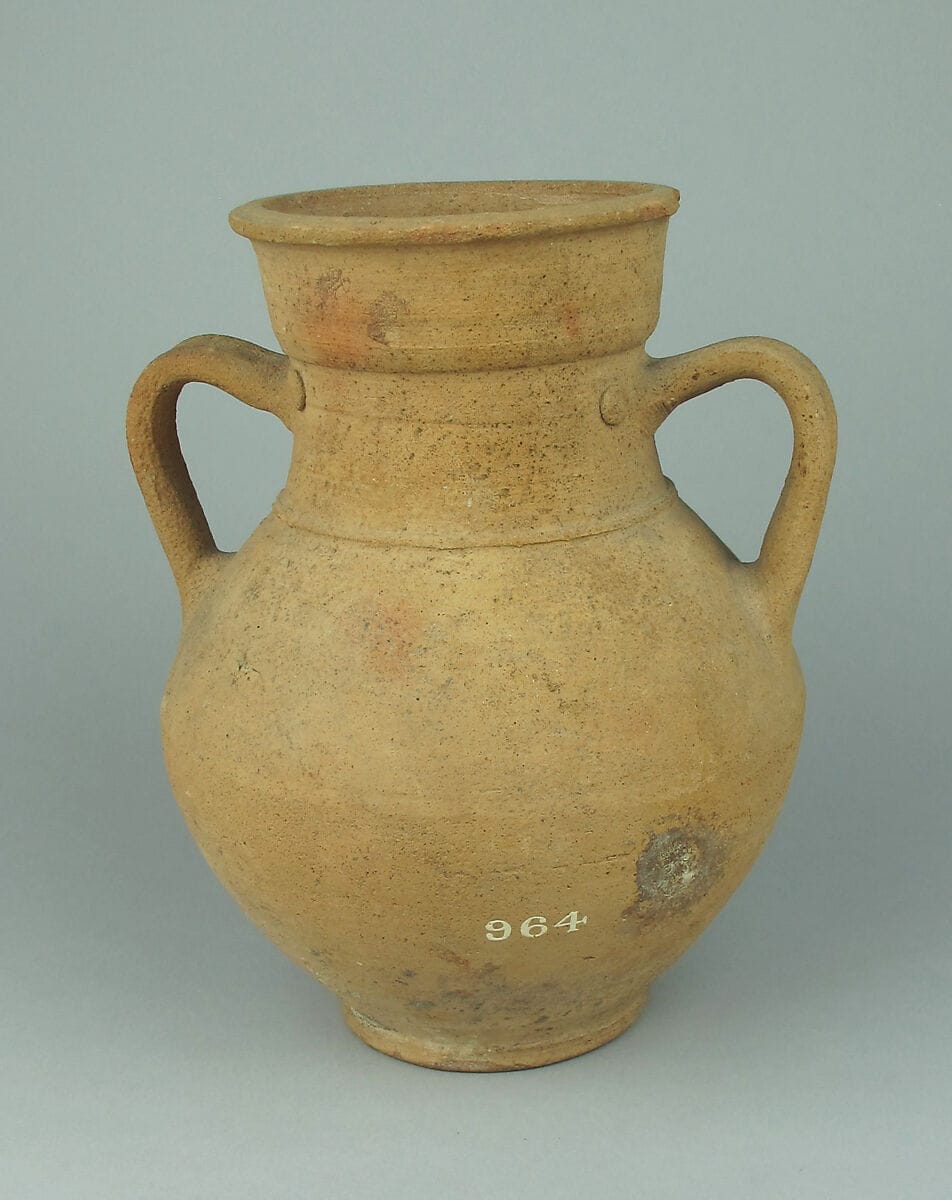
Amphora
Bronze Age