
Lecture·Archaeological Research Unit - University of Cyprus·2026
Recent finds and new directions in the epigraphy of ancient Cyprus
Chapters
About the lecture
Artemis Karnava of the University of Crete surveys recent publications and discoveries in the epigraphy of ancient Cyprus from the second and first millennia BC, covering Cypro-Minoan, the Cypriot Syllabary, Phoenician and alphabetic Greek.
She begins with the first fascicle of the Corpus of Cypriot Syllabic Inscriptions of the First Millennium BC (Inscriptiones Graecae, 2020), edited with Massimo Perna and Markus Egetmeyer. Contrasting the French tradition of Olivier Masson, which pairs texts with long commentary, with the German corpus model, she explains how the volume catalogues over 410 inscriptions from Amathus, Kourion and Marion with drawings, normalized syllabic signs, syllabic transliterations in Latin characters, Greek renderings and phonetic notations. A second volume on Paphos is in preparation, while a third will cover the rest of the island, including the difficult deposit from Kafizin, and the graffiti of Cypriot mercenaries at Abydos and Karnak in Egypt.
Turning to the Late Bronze Age and the Cypro-Minoan script, Karnava highlights an unpublished clay tablet from Pyla-Kokkinokremos now in the Larnaca District Museum, a surface find of an inscribed picrolite plaque from Enkomi whose left-hand sign matches Linear A and the earliest 16th-century Enkomi tablet, a clay ball from Mycenaean Tiryns, and a Neopalatial Minoan loom weight from Kalochorafis on Crete incised with a Cypro-Minoan sign.
For the first millennium BC, she discusses the Phoenician and syllabic archive from Idalion, including a Phoenician ostracon dated to the first year of Antigonus and Demetrius (306 BC) that shows Phoenician scribes continuing to run the fiscal administration under the early Hellenistic rulers, alongside the 2021 to 2022 discovery of a pit of fourth-century BC Phoenician ostraca at Kition-Bamboula. Among recent syllabic work, she presents a small administrative potsherd from Palaepaphos recording quantities of a commodity abbreviated te; her re-reading of a boundary stone from Rantidi naming the god of Kourion (Apollo); revised readings of royal coin legends and tombstones from Amathus, Marion and Salamis that mix Greek, Phoenician, Anatolian and indigenous names within single families; an inscribed bone with numerical entries excavated by Despo Pilides; and two syllabic ostraca from Stephan Schmid's excavations at Idalion bearing identical dedications to Aphrodite of Golgoi. After showing an alphabetic dedication to Aphrodite Akraia naming King Nikokles and the royal house of Salamis, she closes with reflections on paper squeezes, 3D scanning, the Berlin digital edition, and the risks of feeding unverified research databases inherited from Jean-Pierre Olivier into artificial intelligence models.
From our collection
Pieces in the Drakopoulos collection of the kinds and periods this talk covers: Stone, Cypro-Archaic, Hellenistic.
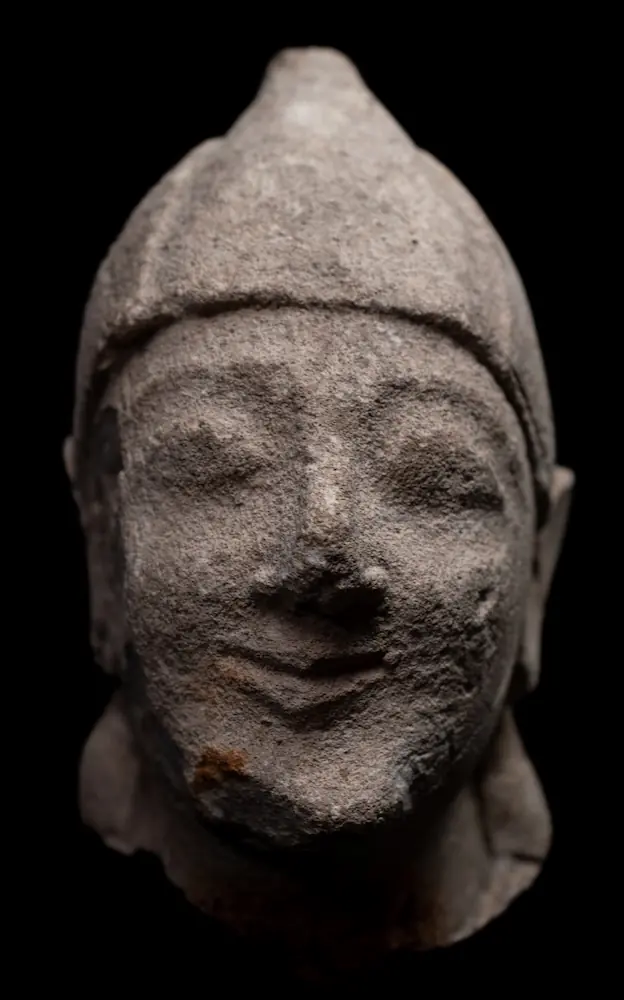
Limestone Head of a Beardless Votary in a Conical Helmet
Stone
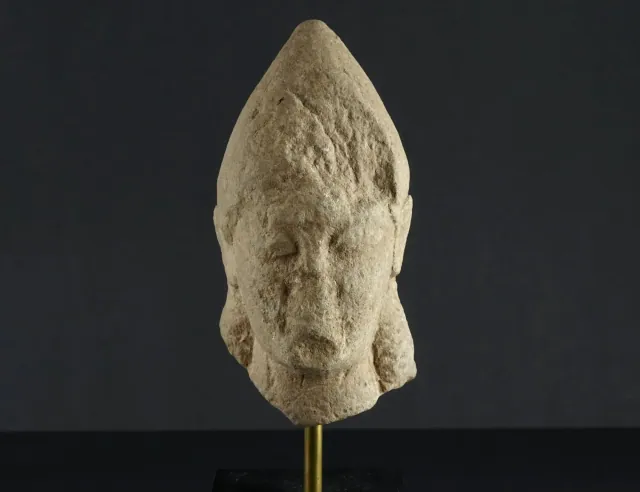
Weathered Limestone Head of a Votary in a Tall Pointed Cap
Stone
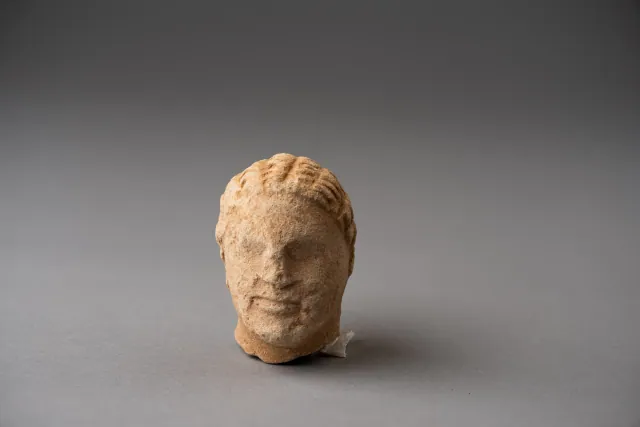
Limestone Head of a Boy, probably from a Temple Boy Statuette
Stone
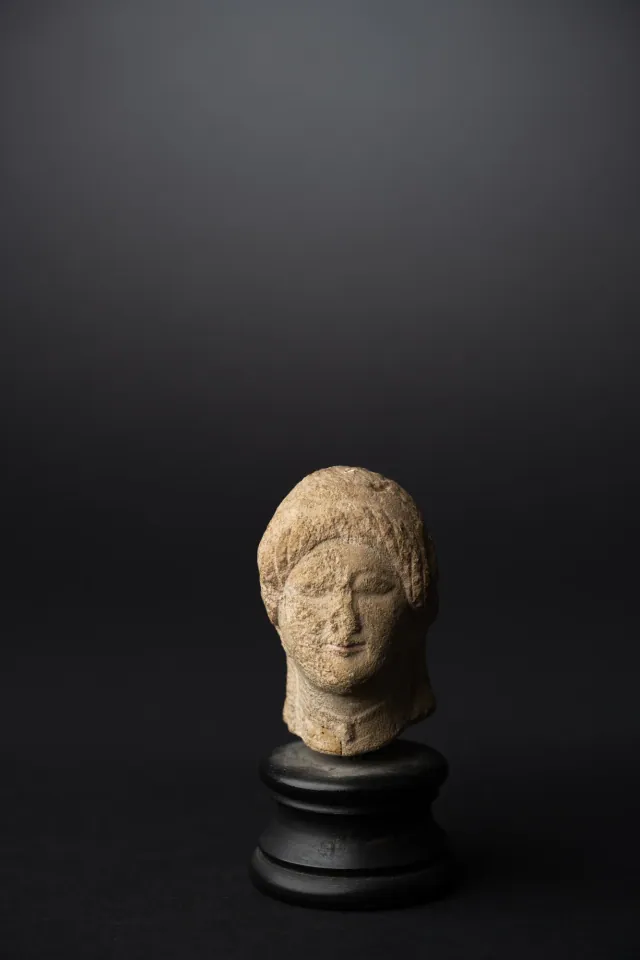
Limestone Head of a Votary with a Wreath
Stone
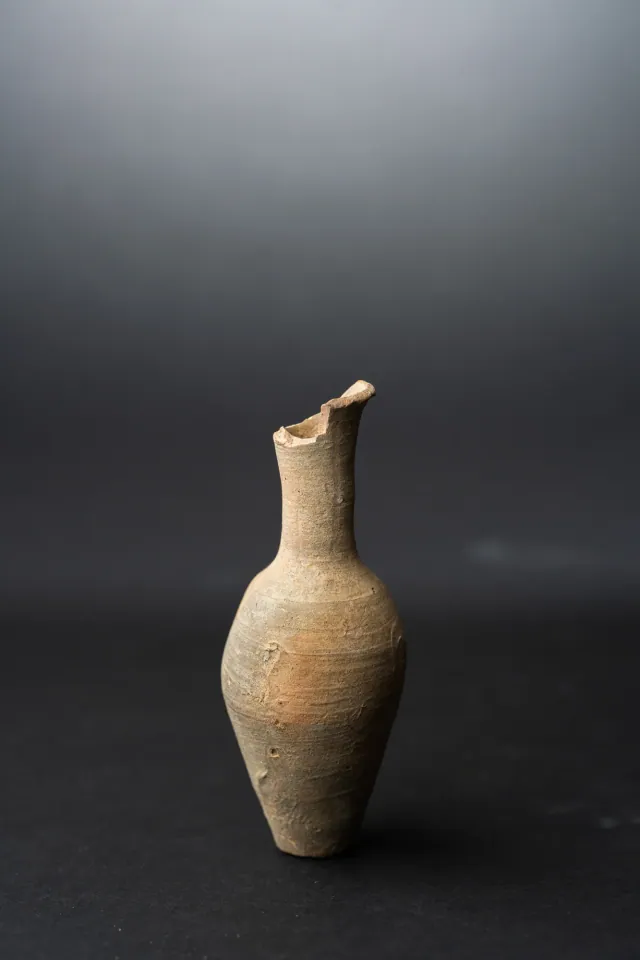
Fusiform Unguentarium
Hellenistic
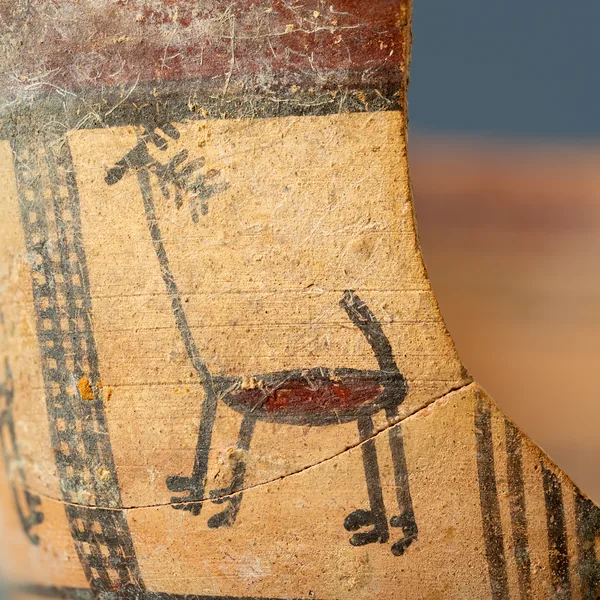
Bichrome Skyphos with Stags in Metopes
Cypro-Archaic
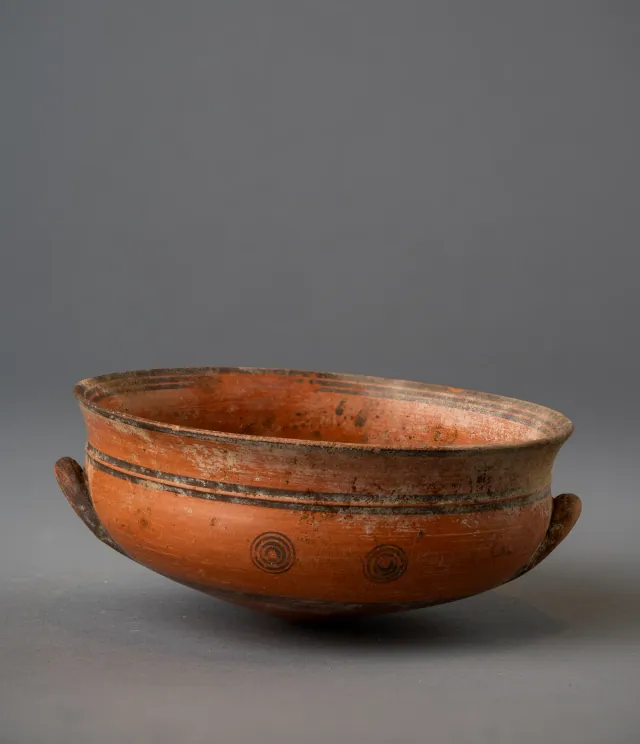
Black-on-Red Two-Handled Bowl with Raised Flaring Rim
Cypro-Archaic
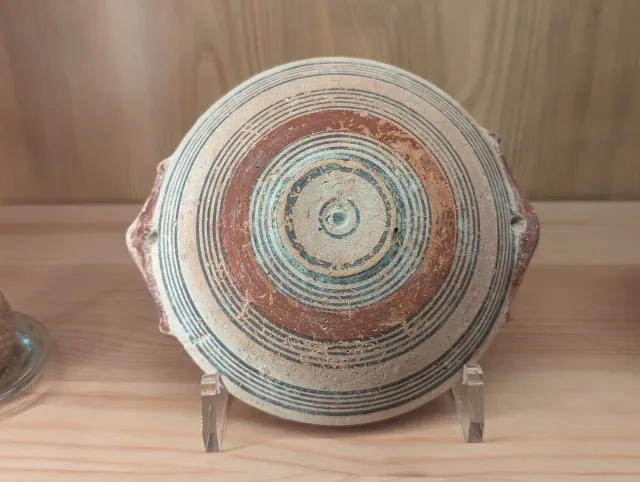
Bichrome IV Bowl with Red-Painted Pierced Lug Handles
Cypro-Archaic
Found at the places discussed
Objects in our catalogue, in museum collections, recorded as found at these sites.

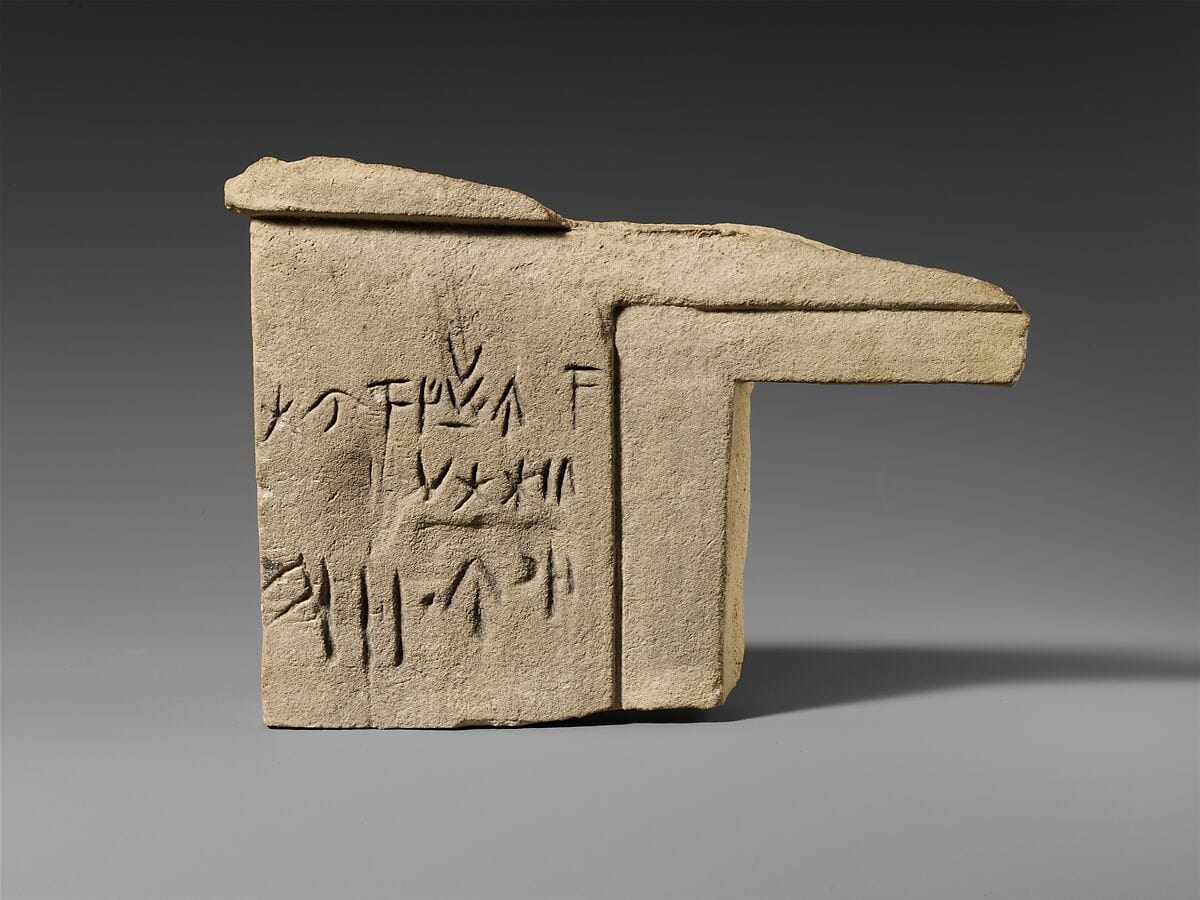
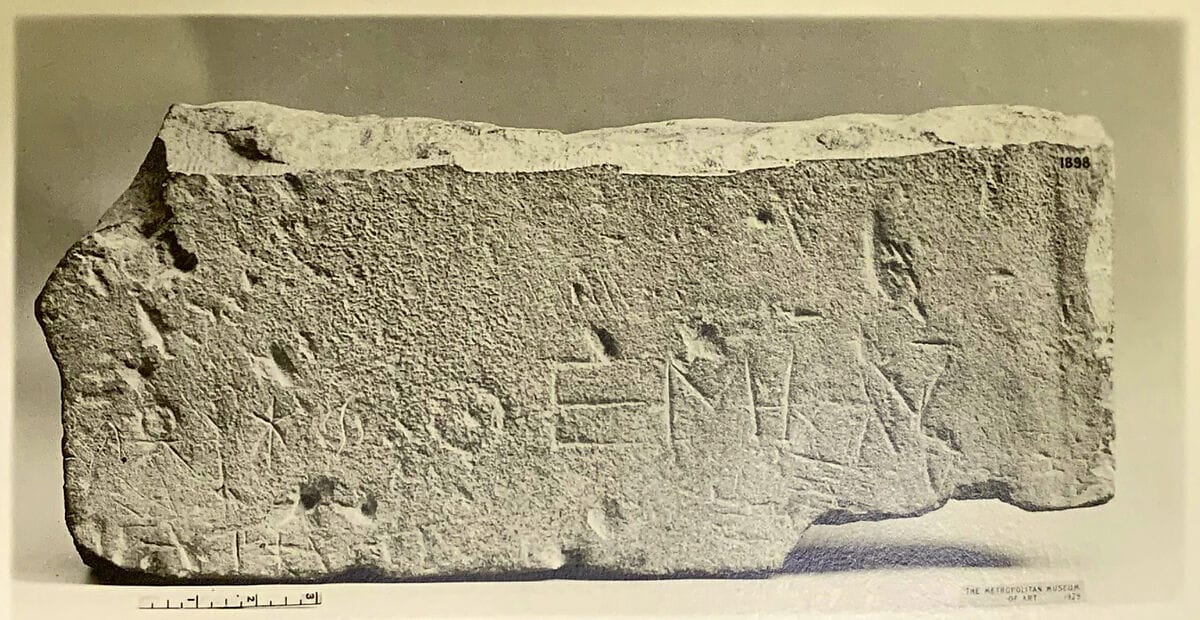

Background
Where to read more on this site before or after watching.
The site
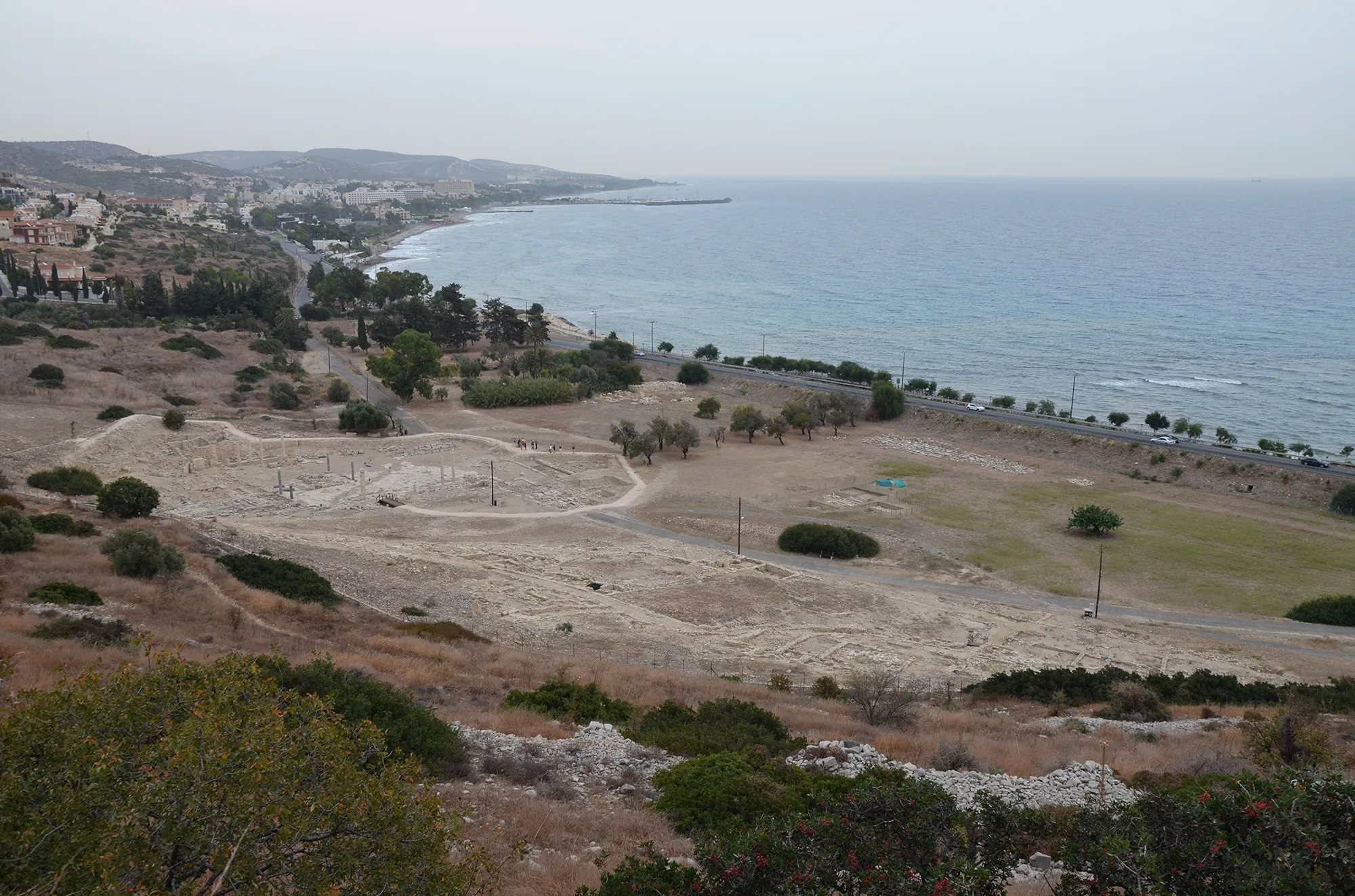
Amathus
Amathus was the capital of one of the Iron Age kingdoms of Cyprus, on a coastal hill about 10 km east of Limassol. It was founded on an empty site in the 11th century BC and lived in until the end of the 7th century AD. Its acropolis carried a sanctuary of Aphrodite and the kings' palace; its people kept the island's old non-Greek language, Eteocypriot, at least until the time of Alexander.
In the compendium
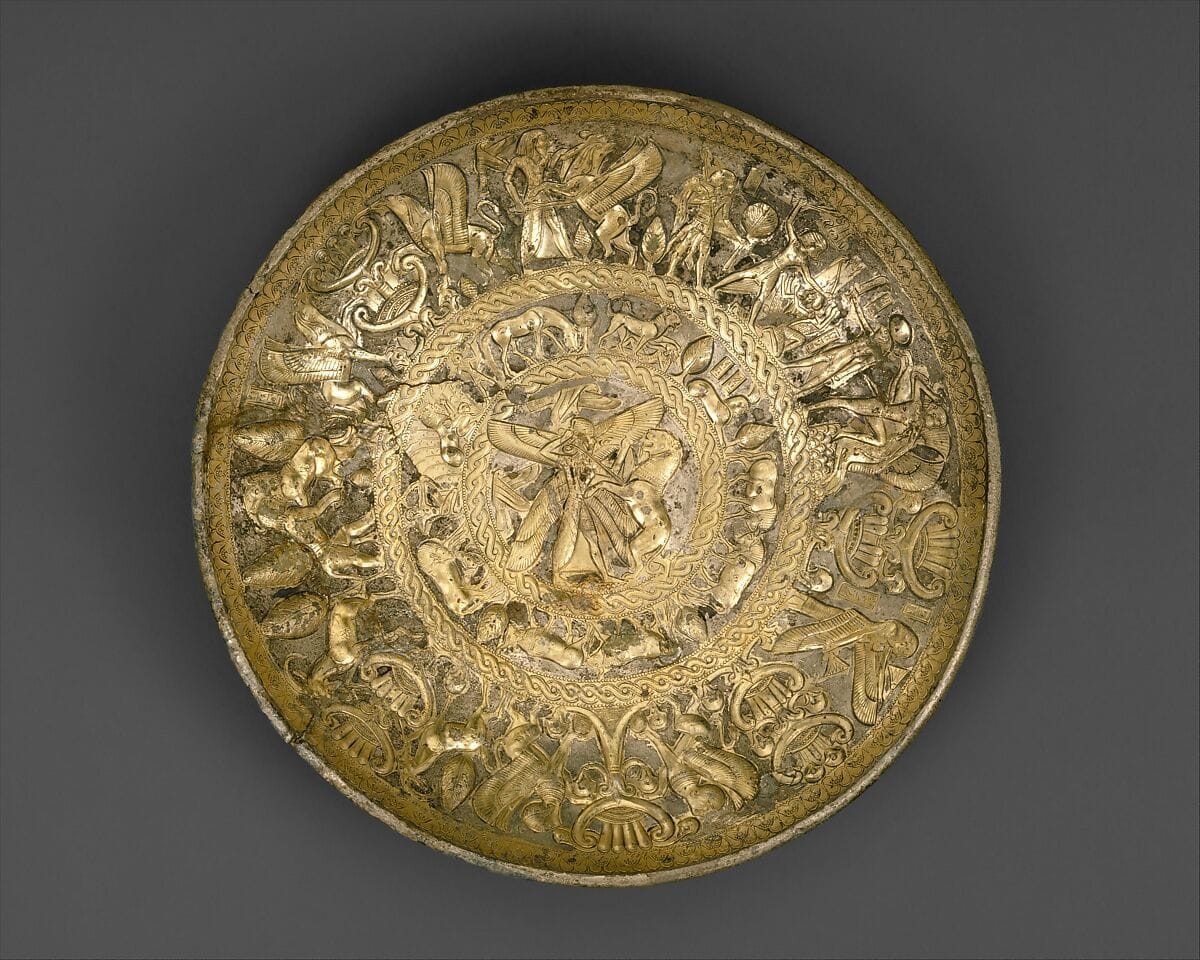
Writing and Literacy in Ancient Cyprus
The scripts of ancient Cyprus, from undeciphered Cypro-Minoan to the Cypriot Syllabary, Eteocypriot, Phoenician and the Greek alphabet, and who used them.

In the compendium
Coins of Ancient Cyprus
The coins struck in Cyprus from the late sixth century BCE by the city-kingdoms, then by Alexander, the Ptolemies and Rome, and what they record.
In the compendium
The Phoenicians
The Iron Age city-states of the Levantine coast, whose traders and settlers made Kition a Phoenician kingdom and shared a hybrid culture with Cyprus.
Map of Cyprus
Places discussed in the talk
- Has a page on this site
- Other places
- Ground above 200, 500, 1,000 m