
Lecture·Archaeological Research Unit - University of Cyprus·2024
Masons' Marks and the Circulation of Builders in the Bronze Age Aegean and Cyprus
Chapters
About the lecture
Maud Devolder examines Bronze Age masons' marks in the Aegean and Cyprus and what they indicate about ashlar masonry and the movement of builders. About 2,500 marks are known from the Aegean, concentrated on Minoan Crete between the 19th and 15th centuries BC, with later Aegean examples appearing only on reused blocks.
Although marks on blocks at Alassa, Maroni, Hala Sultan Tekke, Palaepaphos, Kalavasos-Ayios Dhimitrios and Kition have been published as masons' marks and cited as evidence of Aegean builders in Cyprus, Devolder argues that almost all are setting marks, pry holes or random signs. Only four marks in Late Cypriot IIIB walls of Temples 4 and 5 and Temenos B at Kition, possibly reused from 12th-century BC structures, resemble the Aegean practice. Cut over two centuries after the Aegean tradition ended, they represent signs CM 23 and CM 25 of the Cypro-Minoan script and point to a distinct local pattern during the Late Bronze Age flourishing of Cypriot ashlar architecture.
For the Aegean corpus, Devolder tests Arthur Evans's and Sinclair Hood's chronological classification at Knossos against 135 marked sandstone blocks in the Neopalatial palace at Malia and a sample from Knossos. At both sites, deep marks occur almost exclusively on uncut or rough upper and lower faces, whereas shallow marks appear on dressed outer faces. She argues that depth reflects the stage of work rather than date: quarriers cut deep marks on extracted blocks, and stonecutters cut shallow marks when dressing walls. Alongside new ashlar techniques and timber frameworks, the distribution of marks on Crete, Thera and the Peloponnese suggests that north-central Cretan masons travelled between building projects.
From our collection
Pieces in the Drakopoulos collection of the kinds and periods this talk covers: Late Cypriot (Late Bronze Age).
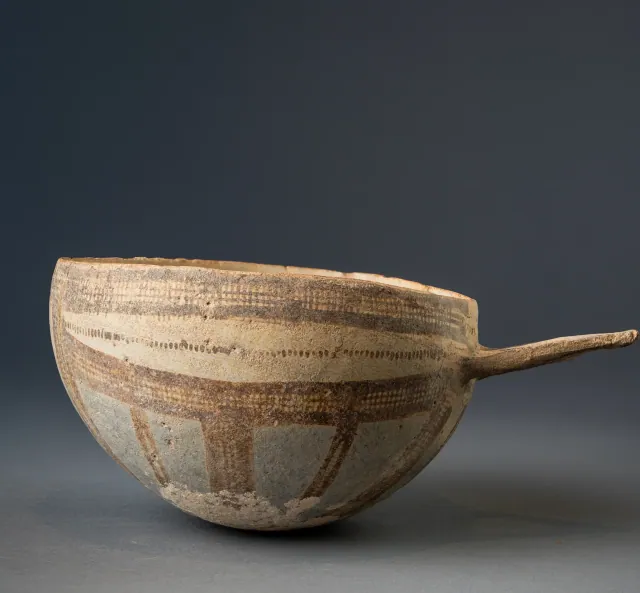
White Slip II Hemispherical Bowl with Wishbone Handle
Late Cypriot (Late Bronze Age)
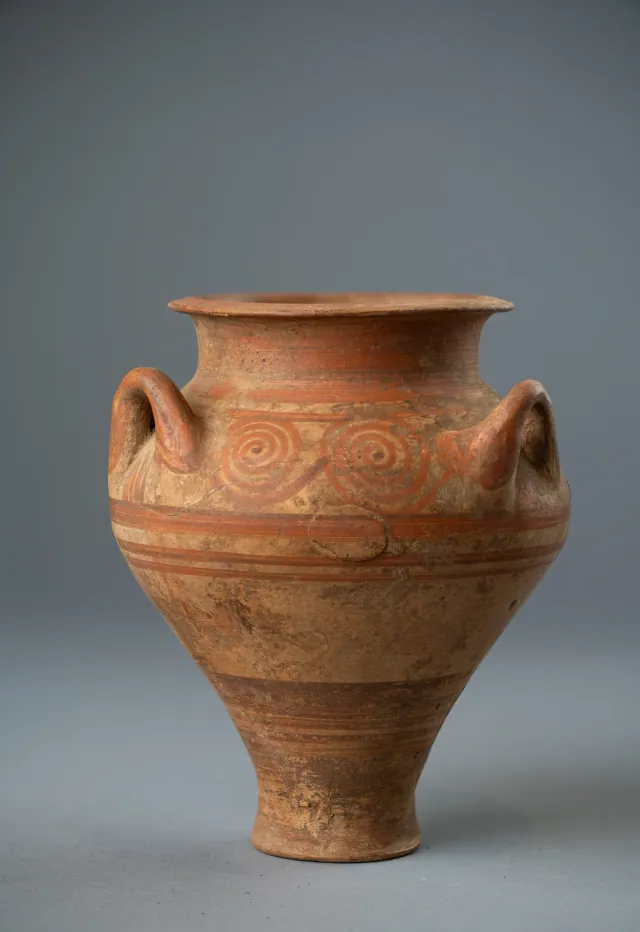
Cypriot Three-Handled Jar in the Mycenaean Style with Running Spirals
Late Cypriot (Late Bronze Age)
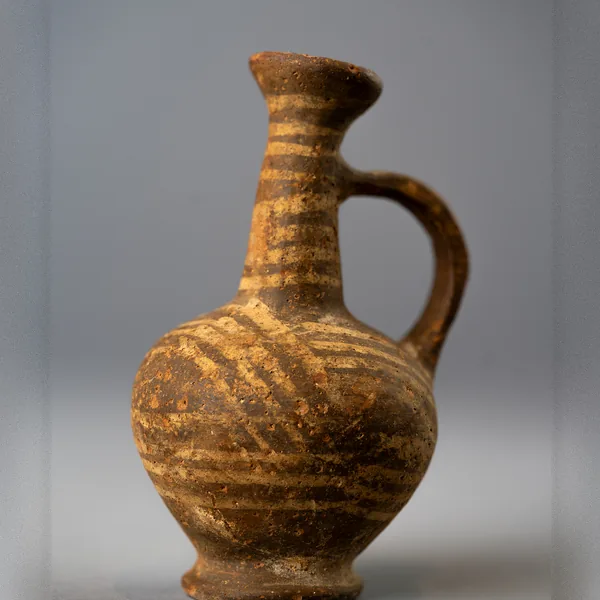
Base Ring II Bilbil Juglet with White-Painted Bands
Late Cypriot (Late Bronze Age)
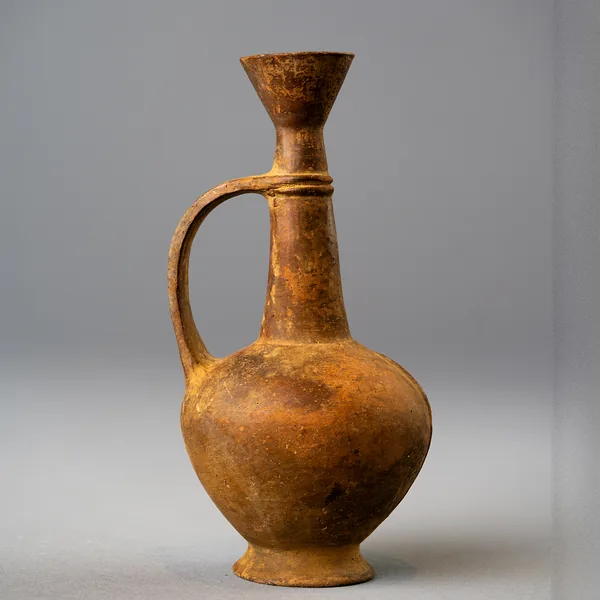
Base Ring Bilbil Juglet with Funnel Mouth and Neck Ridge
Late Cypriot (Late Bronze Age)
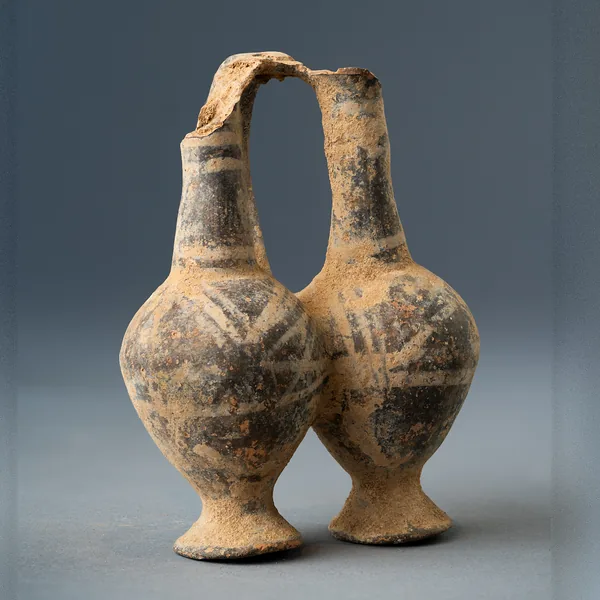
Base Ring II Double Juglet with White-Painted Decoration
Late Cypriot (Late Bronze Age)
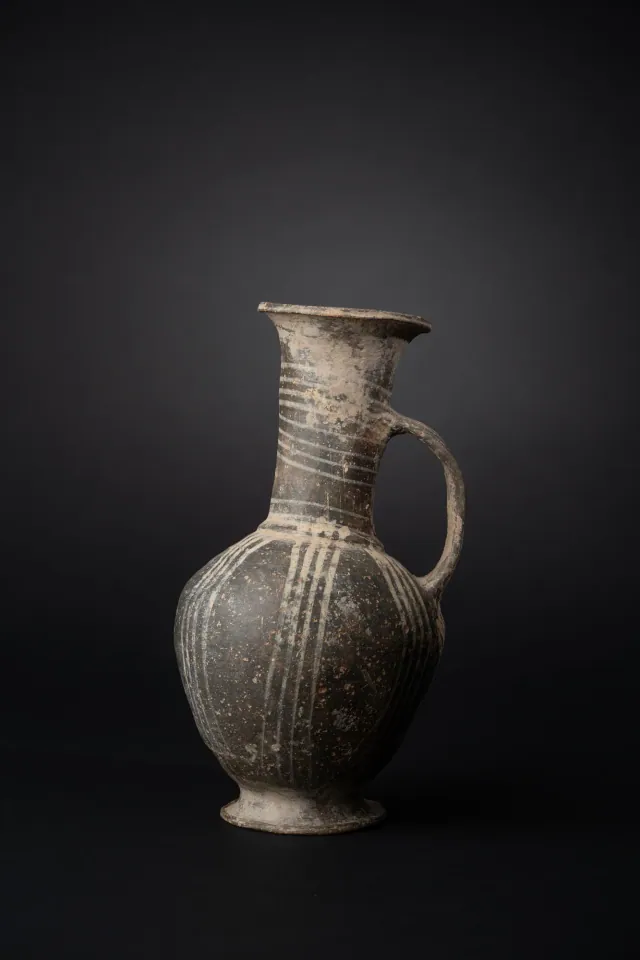
Base Ring II Jug with White-Painted Lattice Bands
Late Cypriot (Late Bronze Age)
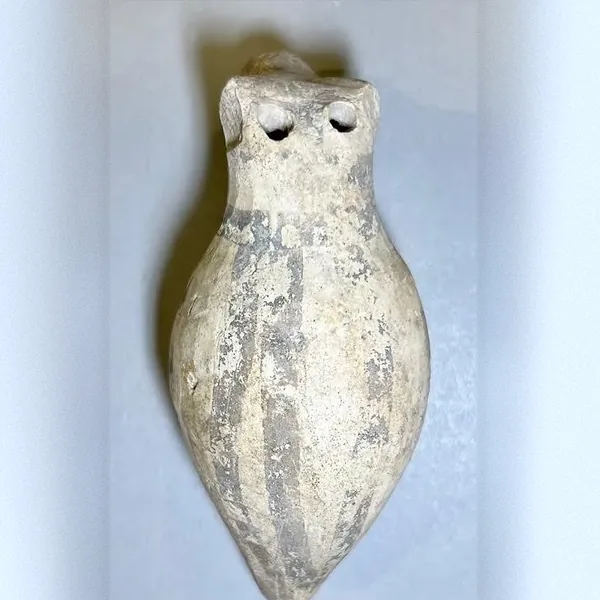
White Painted VI Owl-Headed Rattle
Late Cypriot (Late Bronze Age)
Found at the places discussed
Objects in our catalogue, in museum collections, recorded as found at these sites.
).webp)

).webp)

Background
Where to read more on this site before or after watching.
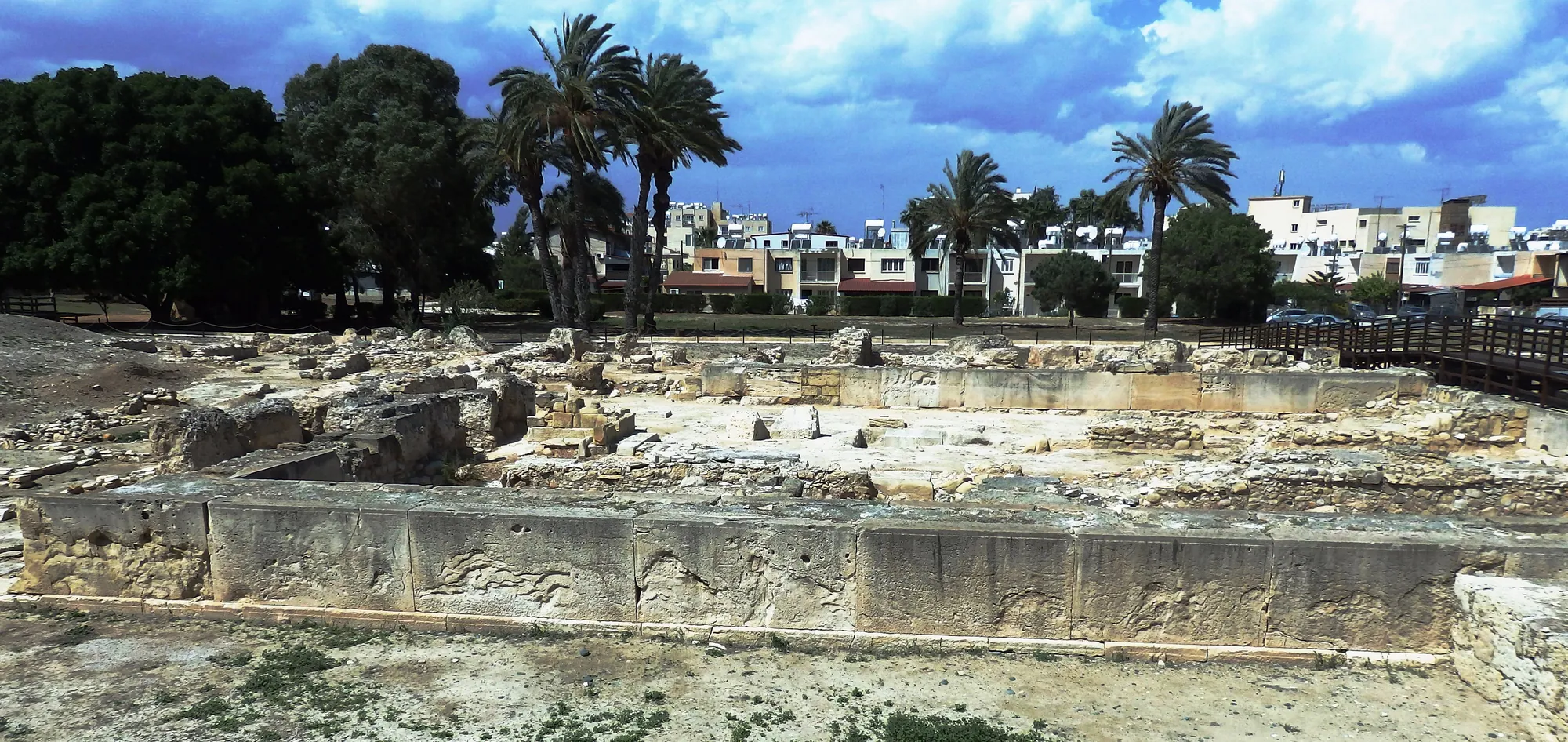
The site
Kition
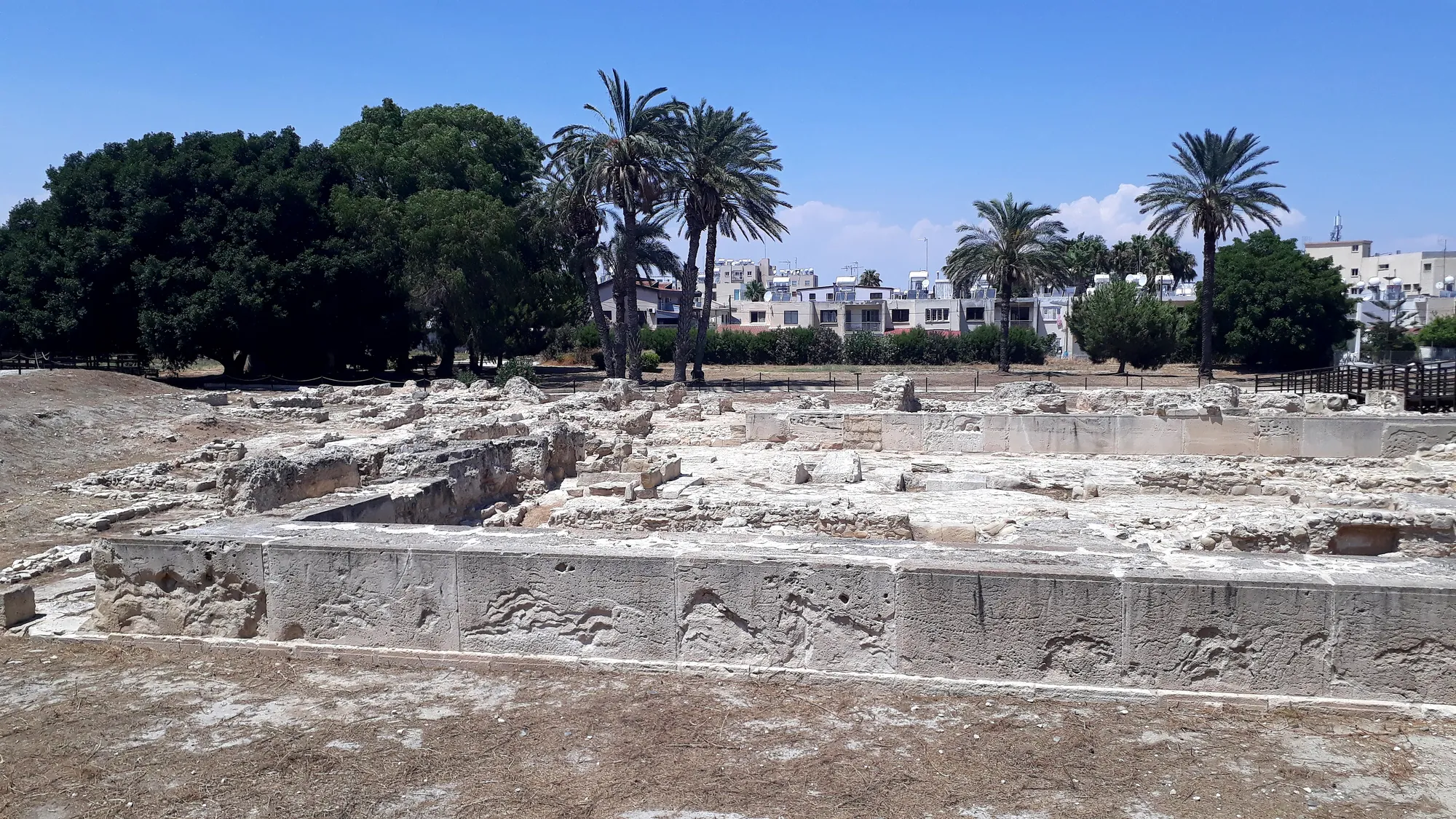
Kition lies under modern Larnaca on the south-east coast. It was founded as a harbour town in the 13th century BC, with temples and copper workshops in its sacred quarter at Kathari. After a long gap the Phoenicians rebuilt the main temple for Astarte, and from the 5th century BC the city was the seat of a Phoenician dynasty with a war harbour of ship sheds at Bamboula. Its last king was put to death by Ptolemy I in 312 BC, but the city lived on into the Roman period and beyond.
In the compendium
Ashlar Masonry
Squared, dressed stone used on Cyprus from about 1500 BC for gateways, tombs and the largest buildings of the Late Bronze Age towns, set below walls of mudbrick.
In the compendium
Bronze Age Sanctuaries and Temples
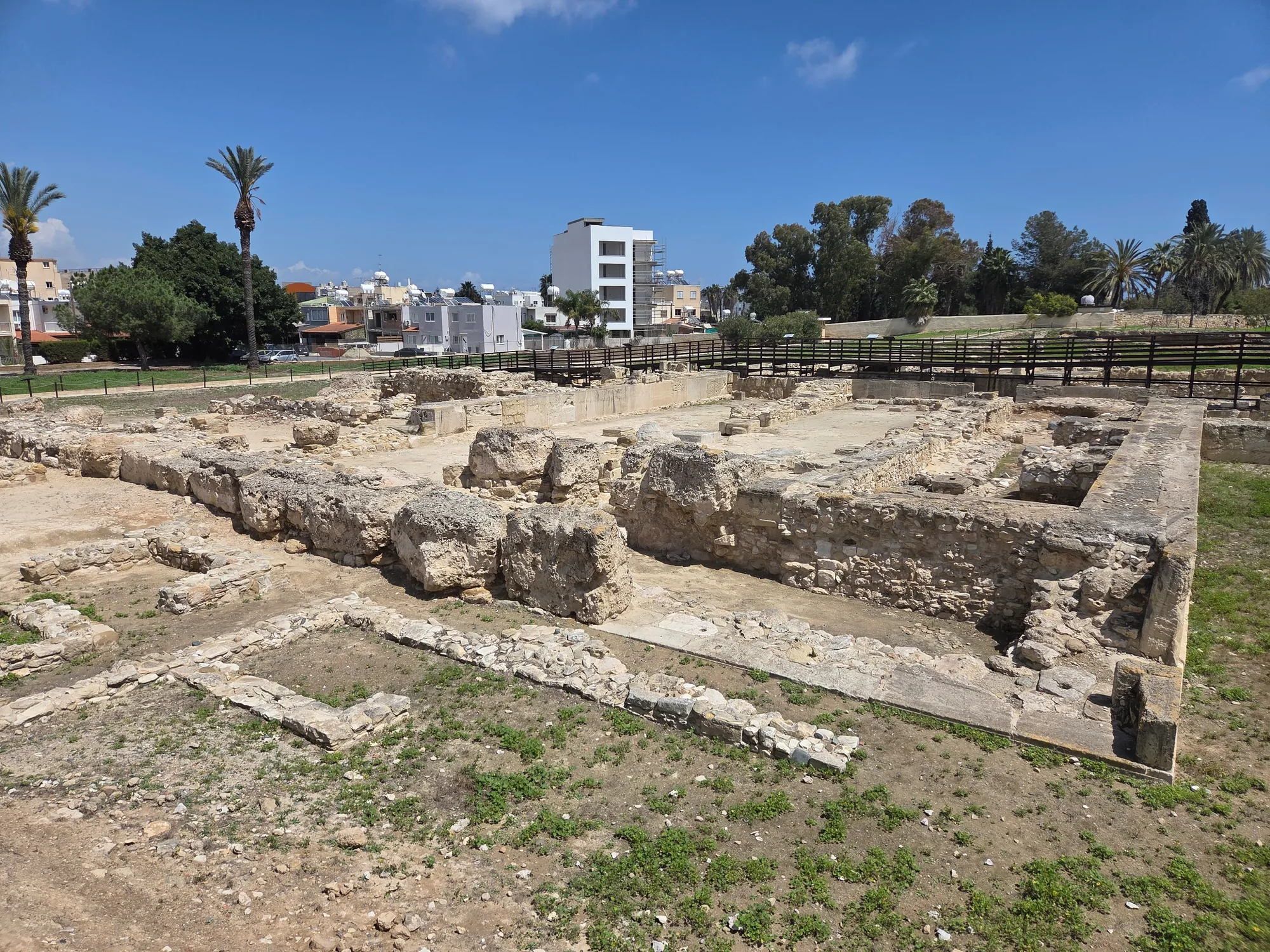
Cypriot cult buildings of the Bronze Age, from the clay sanctuary model of Vounous to the walled courts, altars and inner rooms of the Late Cypriot temples.
In the compendium
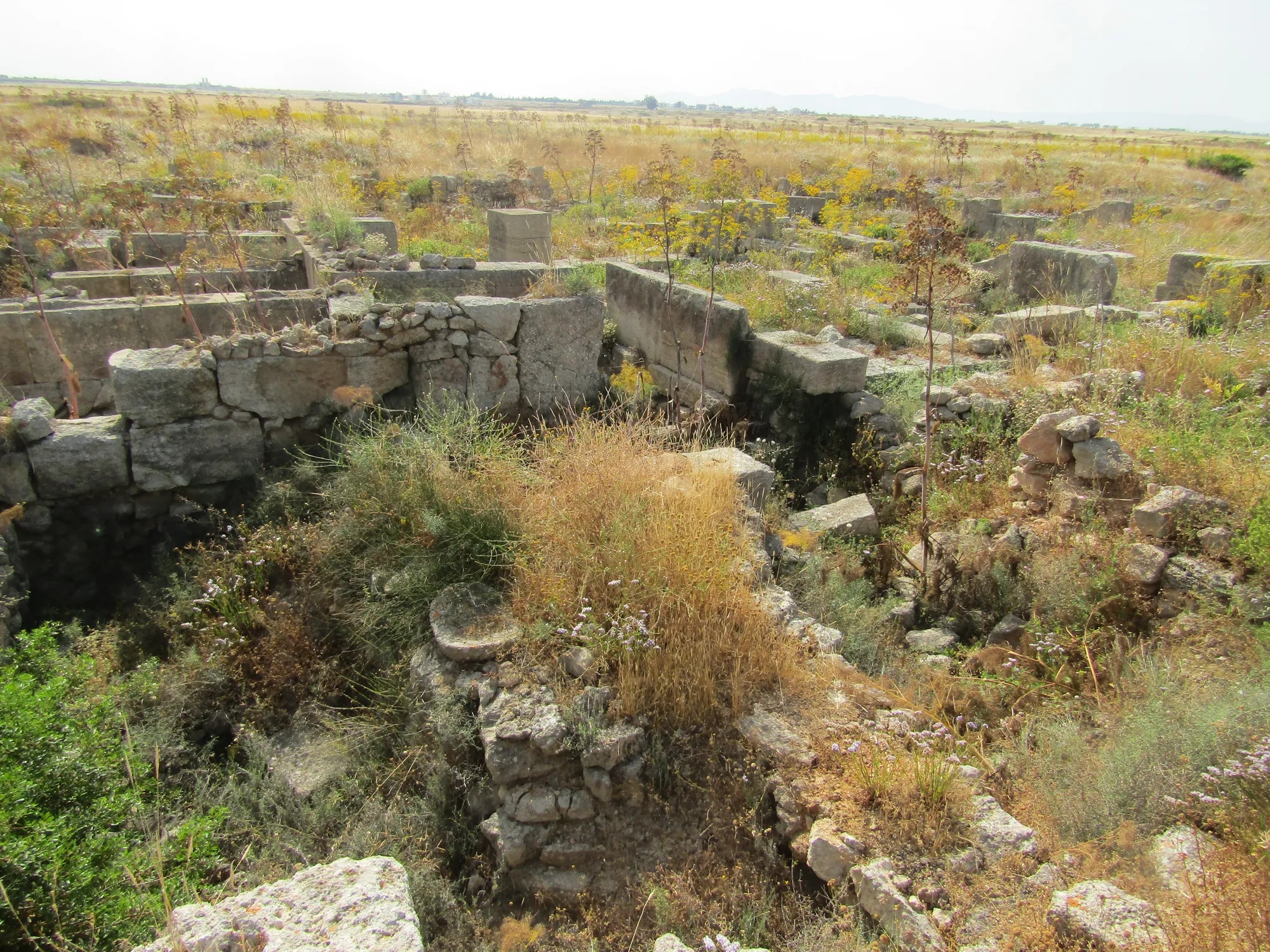
Late Bronze Age Towns and Buildings
How Late Bronze Age Cyprus built its first towns: street grids, large ashlar buildings with storage halls, courtyard houses, and the short-lived settlements of the twelfth century.