
Lecture·Archaeological Research Unit - University of Cyprus·2019
Perceptions of Language and Scribal Practices in Cyprus during the 1st Millennium BCE
Perceptions of language and scribal practices in Cyprus during the 1st mill. BCE
Chapters
About the lecture
Artemis Karnava examines the coexistence of languages and writing systems in Cyprus during the first millennium BCE, drawing on her work with Massimo Perna and Markus Egetmeyer compiling the Cypriot syllabic volumes for the Inscriptiones Graecae corpus. During this period, at least three languages were spoken on the island: the local Cypriot Greek dialect, Phoenician, and Eteocypriot. Alongside them, three scripts were in use: the native Cypriot Syllabary (in its Common and Paphian varieties, derived from Bronze Age Cypro-Minoan), the Phoenician alphabet, and, arriving around the sixth century and spreading in the fourth, the Greek alphabet.
Karnava distinguishes between bilingual inscriptions (recording two languages) and digraphic inscriptions (using two scripts, whether or not the language changes). She argues that in Cyprus the choice of script was tied to linguistic variety: the Cypriot syllabary recorded the local Cypriot dialect (or Eteocypriot), whereas the Greek alphabet was imported together with the Attic-Ionic Koine and was not used to write the local dialect. To trace how these scripts interacted in society, she organises the digraphic evidence into three levels: official, semi-official, and private.
At the official level, she reviews coins from Marion, including fifth-century issues of King Sasmas (whose father's name she and Evangelia Markou have newly read as Lysandros rather than Doxandros), which combine syllabic and Phoenician legends, and fourth-century coins of Timochares and Stasioikos that introduce the Greek alphabet alongside the syllabary. She also examines fourth-century royal and civic stone inscriptions: an Eteocypriot-Greek bilingual from Amathus, royal dedications by Stasias at Soloi and Nicocles at Paphos, and a Phoenician-syllabic dedication to Resheph Mikal and Apollo Amyklos from Idalion.
At the semi-official level, Karnava presents a seventh- or sixth-century syllabic and Phoenician funerary stele from Kourion, sixth- and fourth-century syllabic and Greek alphabetic tombstones, fourth-century digraphic graffiti carved by Cypriot mercenaries on the temple of Achoris at Karnak in Egypt, and sanctuary dedications including the third-century BCE vases from Kafizin and bilingually inscribed dedications from Tamassos. At the private level, she focuses on hundreds of Attic cups from the tombs of Marion bearing post-firing incised ownership marks, including monograms that ligature Greek alphabetic and Cypriot syllabic signs together, some preserved only in paper squeezes sent by Max Ohnefalsch-Richter to Wilhelm Deecke in Strasbourg.
A long question-and-answer session follows, covering the social status of scribes, the concentration of syllabic finds at Paphos and Marion, the assignment of border villages such as Drimou and Vasa Koilaniou in the corpus, nominative and genitive case endings on early tombstones, and an inscribed Attic cup with a royal title from Ledra.
From our collection
Pieces in the Drakopoulos collection of the kinds and periods this talk covers: Cypro-Geometric, Cypro-Archaic, Hellenistic.
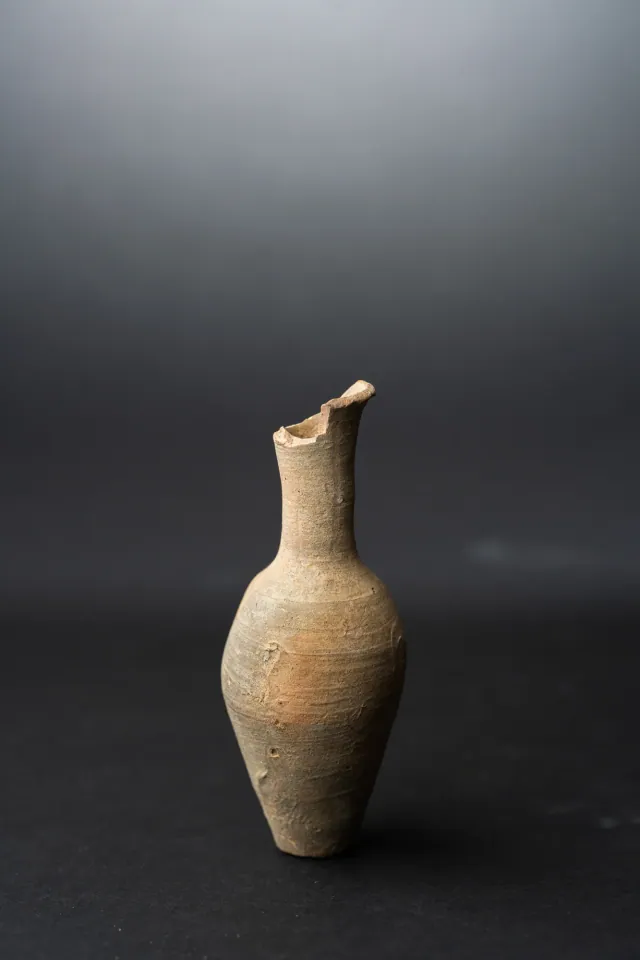
Fusiform Unguentarium
Hellenistic
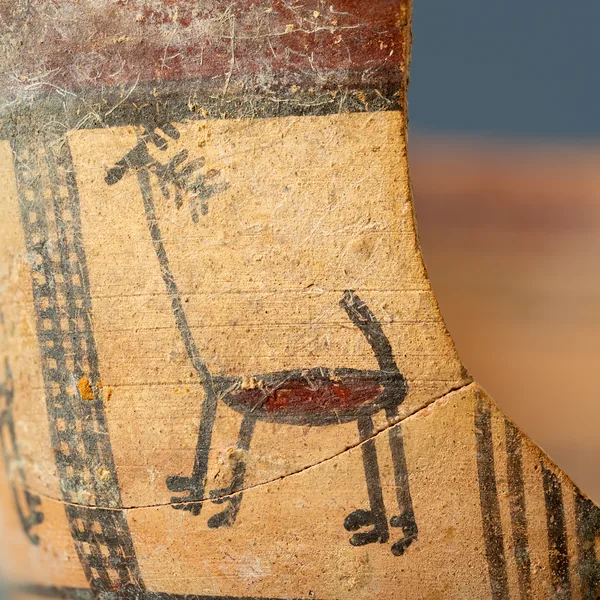
Bichrome Skyphos with Stags in Metopes
Cypro-Archaic
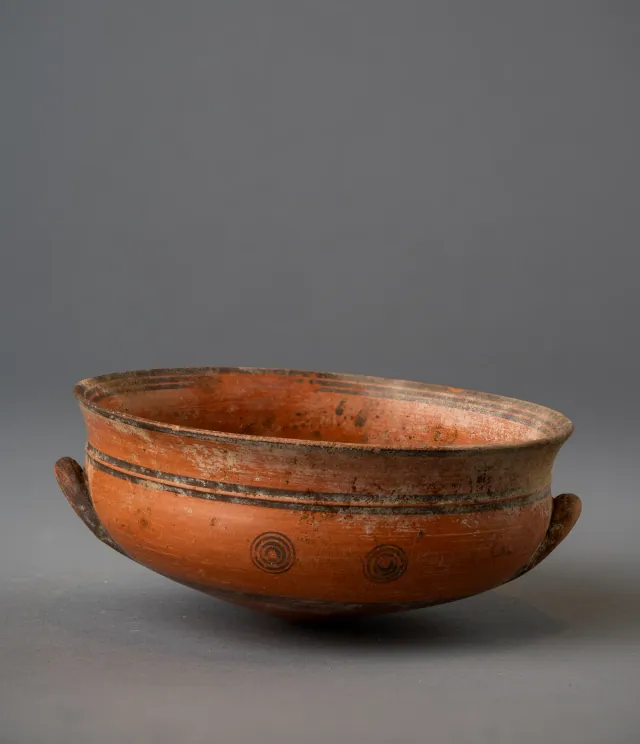
Black-on-Red Two-Handled Bowl with Raised Flaring Rim
Cypro-Archaic
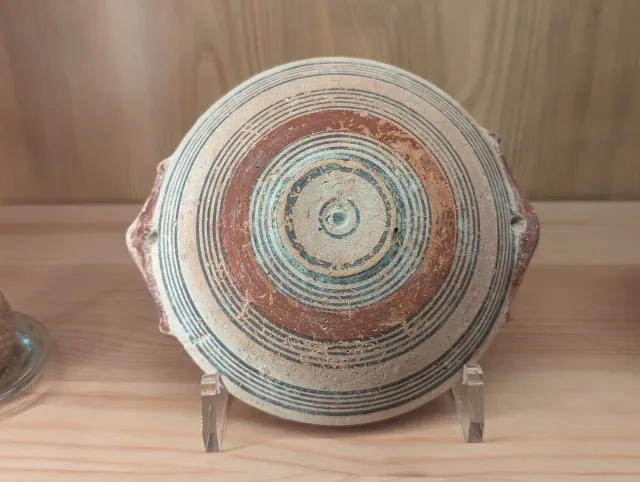
Bichrome IV Bowl with Red-Painted Pierced Lug Handles
Cypro-Archaic
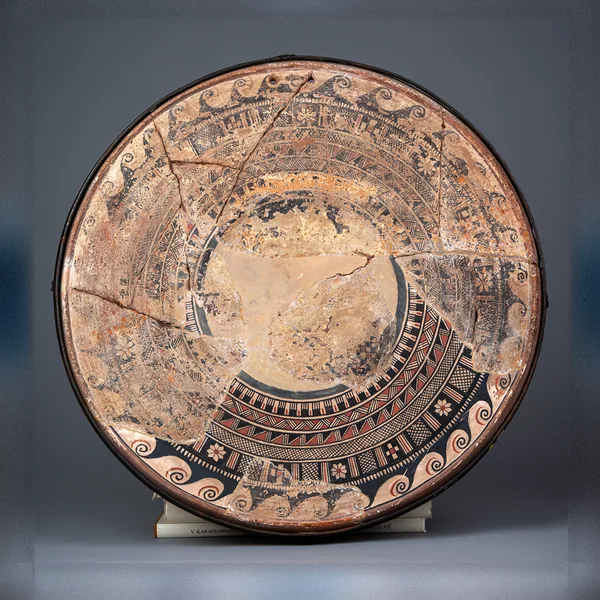
Large Bichrome Plate from Salamis with a Wave Band and Rosette Metopes
Cypro-Archaic
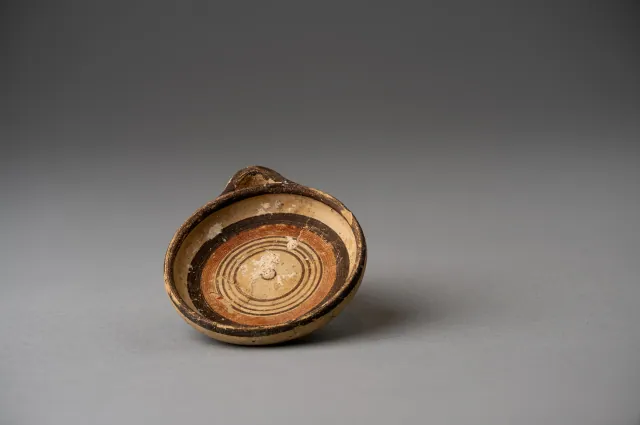
Miniature Bichrome Plate with Concentric Circles
Cypro-Archaic
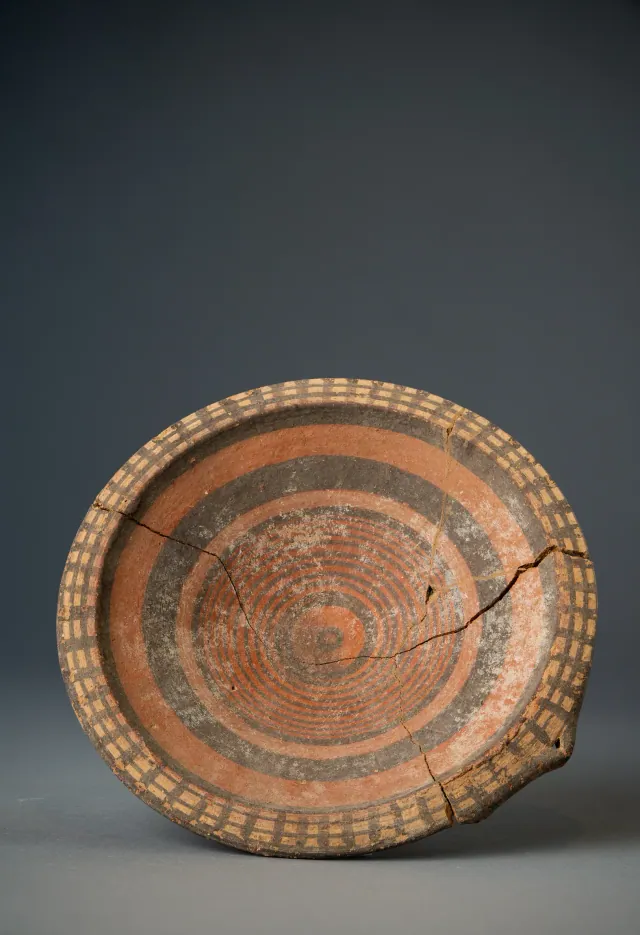
Black-on-Red Plate with Barred Rim and Concentric Circles
Cypro-Archaic
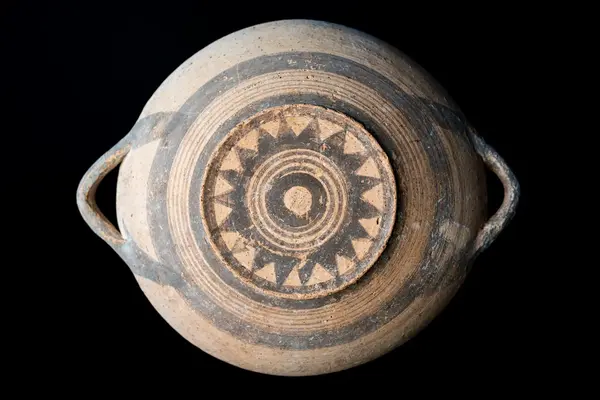
White Painted Plate with a Sawtooth Star on the Underside
Cypro-Geometric
Found at the places discussed
Objects in our catalogue, in museum collections, recorded as found at these sites.
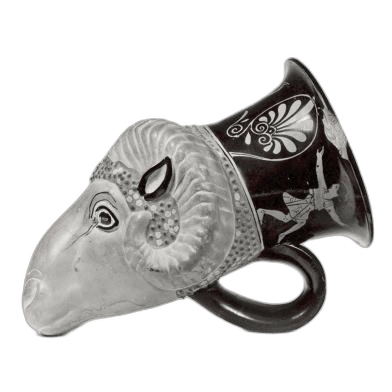


Background
Where to read more on this site before or after watching.
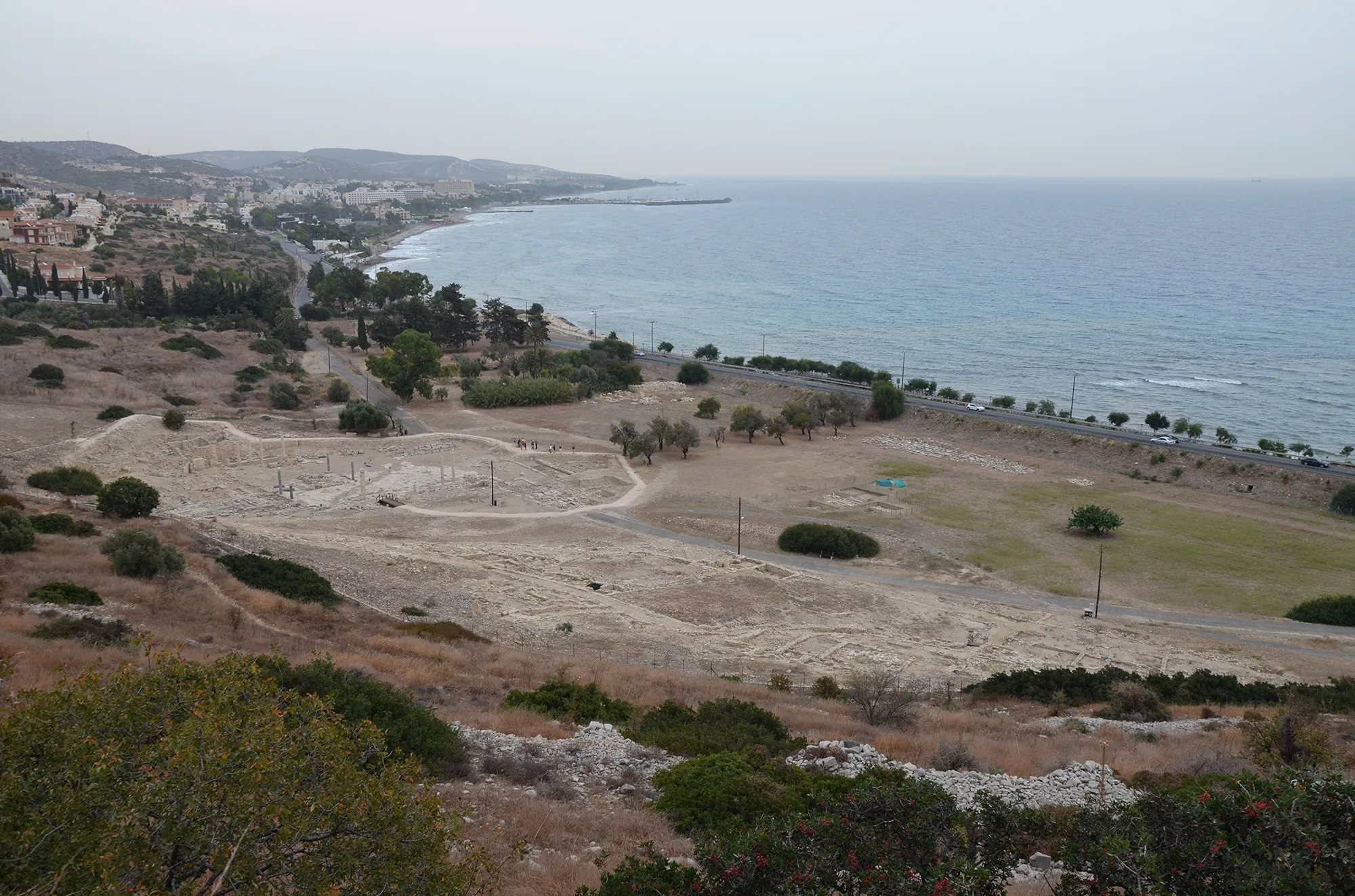
The site
Amathus
Amathus was the capital of one of the Iron Age kingdoms of Cyprus, on a coastal hill about 10 km east of Limassol. It was founded on an empty site in the 11th century BC and lived in until the end of the 7th century AD. Its acropolis carried a sanctuary of Aphrodite and the kings' palace; its people kept the island's old non-Greek language, Eteocypriot, at least until the time of Alexander.
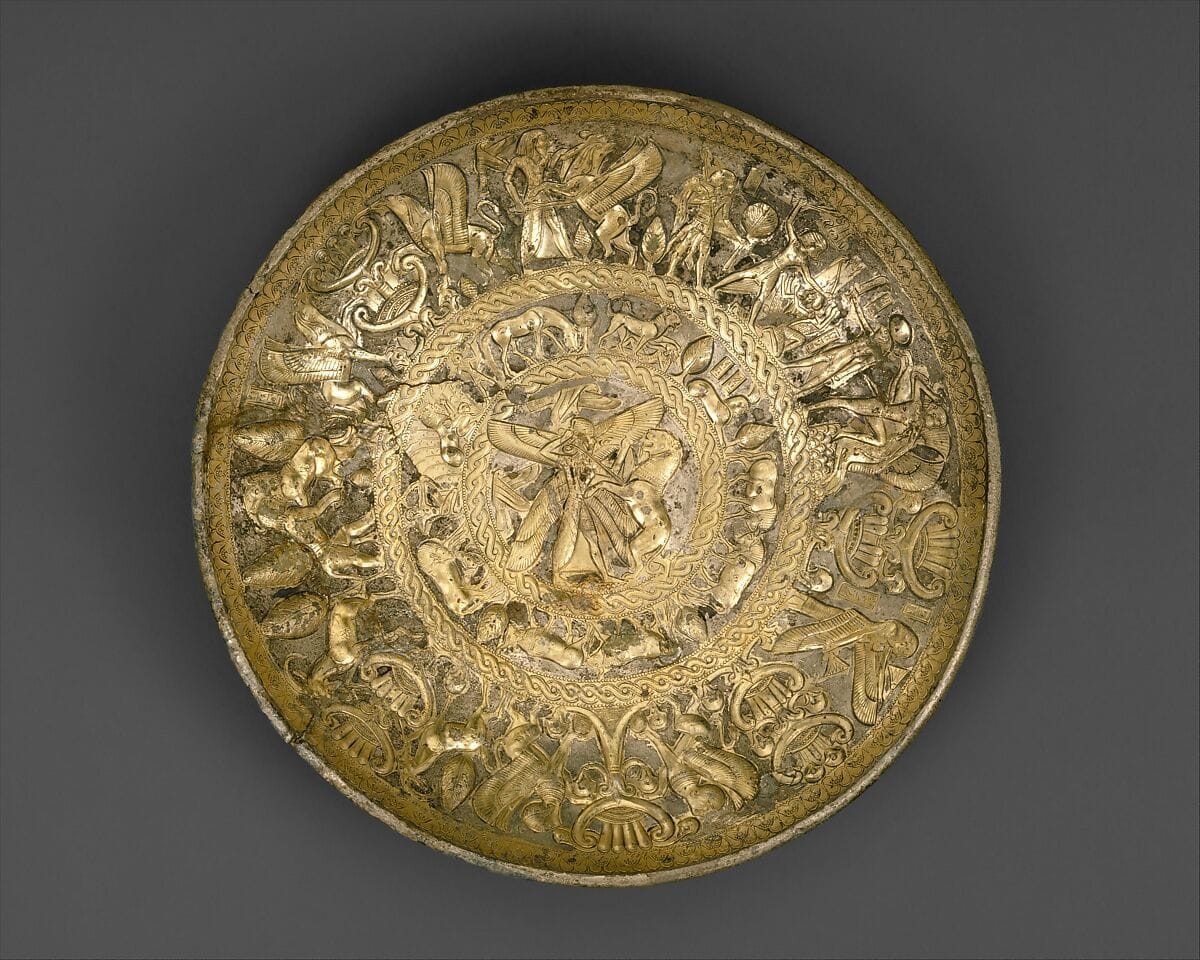
In the compendium
Writing and Literacy in Ancient Cyprus
The scripts of ancient Cyprus, from undeciphered Cypro-Minoan to the Cypriot Syllabary, Eteocypriot, Phoenician and the Greek alphabet, and who used them.

In the compendium
Coins of Ancient Cyprus
The coins struck in Cyprus from the late sixth century BCE by the city-kingdoms, then by Alexander, the Ptolemies and Rome, and what they record.
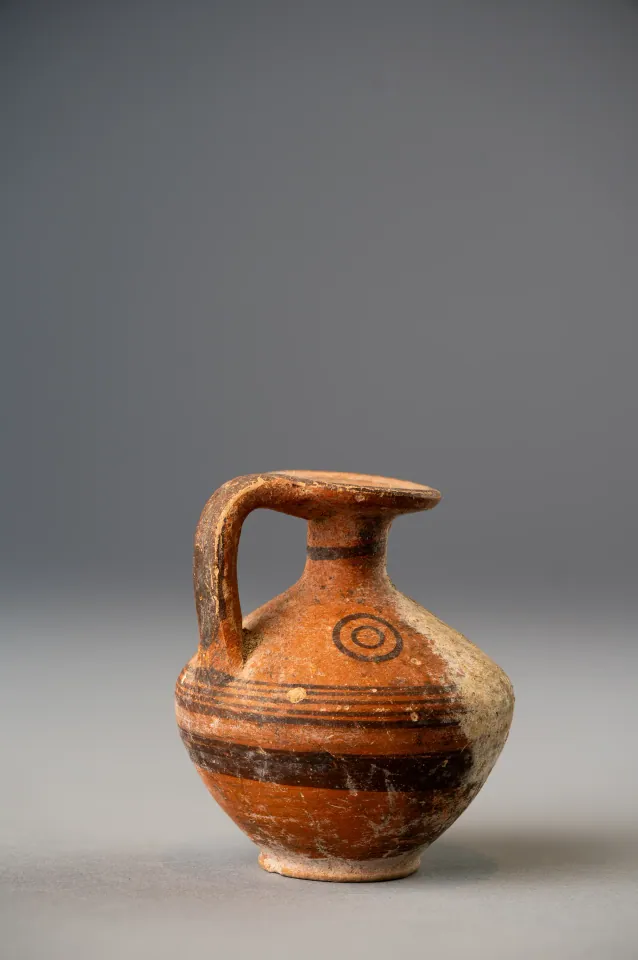
In the compendium
The Phoenicians
The Iron Age city-states of the Levantine coast, whose traders and settlers made Kition a Phoenician kingdom and shared a hybrid culture with Cyprus.
Map of Cyprus
Places discussed in the talk
- Has a page on this site
- Other places
- Ground above 200, 500, 1,000 m