
Conference paper·Archaeological Research Unit - University of Cyprus·2017
Under the Mediterranean (Session 1, Part 2): Honor Frost, Harbours, Stone Anchors and the Tropis Symposia
UNDER THE MEDITERRANEAN
Jean-Yves Empereur, David Blackman, Gregory Votruba, Lucy Blue, Harry Tzalas and Elpida Hadjidaki
Chapters
About the video
Recorded in October 2017 at the University of Cyprus, this second half of the opening session of the Honor Frost Foundation conference gathers five papers reflecting on Honor Frost and her fields of study in Mediterranean maritime archaeology.
Jean-Yves Empereur opens with Frost's work on the Pharos of Alexandria. After Kamal Abu el-Sadat located the submerged ruins in 1961, UNESCO commissioned Frost in 1968 to assess the site. Despite rough seas and few dives, she produced an accurate plan and drawings of colossal statues, crowns and sphinxes, publishing them in 1975. When Empereur began excavating in 1994, Frost returned in 1995 to help identify monuments buried under modern concrete blocks, work now continued through 3D photogrammetry.
David Blackman reminisces about his 1964 coastal survey in southern Turkey, cut short when Turkish forces massed for a threatened invasion of Cyprus, and his long editorial collaboration with Frost alongside figures such as Joan du Plat Taylor and Gerhard Kapitän. Turning to harbour research, he discusses geological sea-level indicators, ancient slipways, and the transmission of dockyard architecture from Roman and Byzantine naval bases to Islamic darsana facilities and thirteenth-century Mediterranean arsenals.
Gregory Votruba presents a quantitative study of seafaring and ships focusing on stone anchors, combining a database of 536 published examples with full-scale pulling trials in Urla, Izmir. Reconstructed single-hole limestone anchors generate resistance equal to roughly half their weight, whereas adding wooden arms to three-holed anchors doubles their holding power. Votruba charts morphology and chronology across the Mediterranean and Red Sea. For the Late Bronze Age, he contrasts the Levantine single-hole tradition with the trapezoidal three-holed stone anchors concentrated around Cyprus, notably at Kition, Hala Sultan Tekke and Maroni, often bearing Cypro-Minoan signs, alongside a seventh-century BC Cypriot jug showing a sailor deploying an anchor and a stone anchor and stock from Bamboula at Kition.
Lucy Blue reads a paper by Harry Tzalas on the ten Tropis symposia on ship construction held between 1985 and 2008, including the meeting in Ayia Napa. Tzalas recounts how building the Kyrenia II replica of the Kyrenia shipwreck with Michael Katzev, Susan Katzev and Richard Steffy raised practical questions about shell-first hulls, square sails and steering oars that prompted the first Piraeus meeting.
Finally, Elpida Hadjidaki recalls three decades of friendship with Frost and her excavations at the fortified kothon harbour of Phalasarna in western Crete, the Classical amphora wreck off Alonissos where Frost dived daily, and the Middle Minoan wreck off Pseira.
From our collection
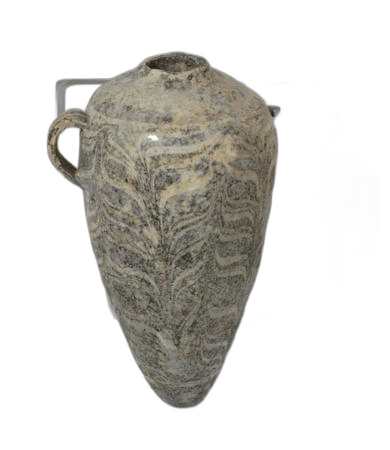
Pieces in the Drakopoulos collection of the kinds and periods this talk covers: Amphora.
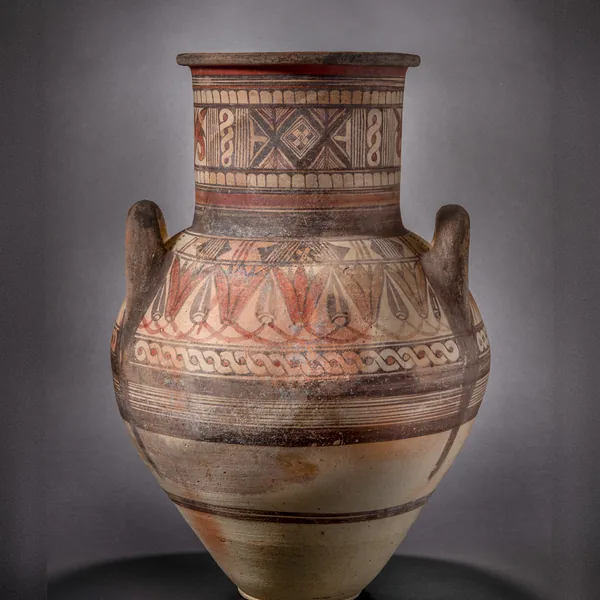
Bichrome IV Amphora with a Lotus-and-Bud Shoulder Frieze
Amphora
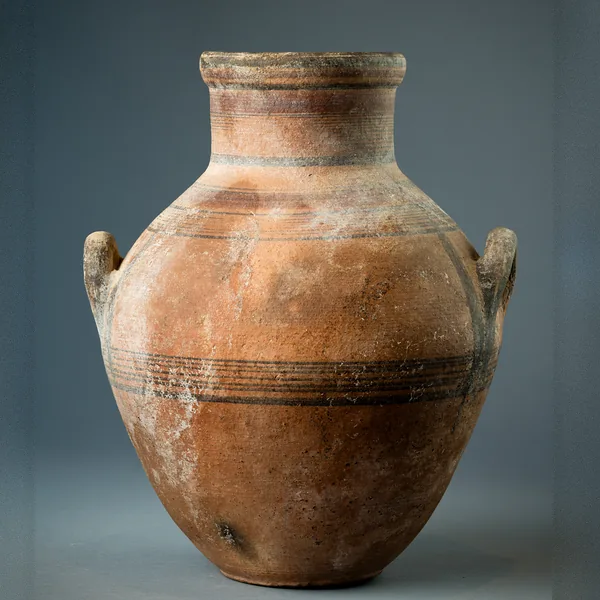
Bichrome IV Amphora with Shoulder Handles and Banded Decoration
Amphora
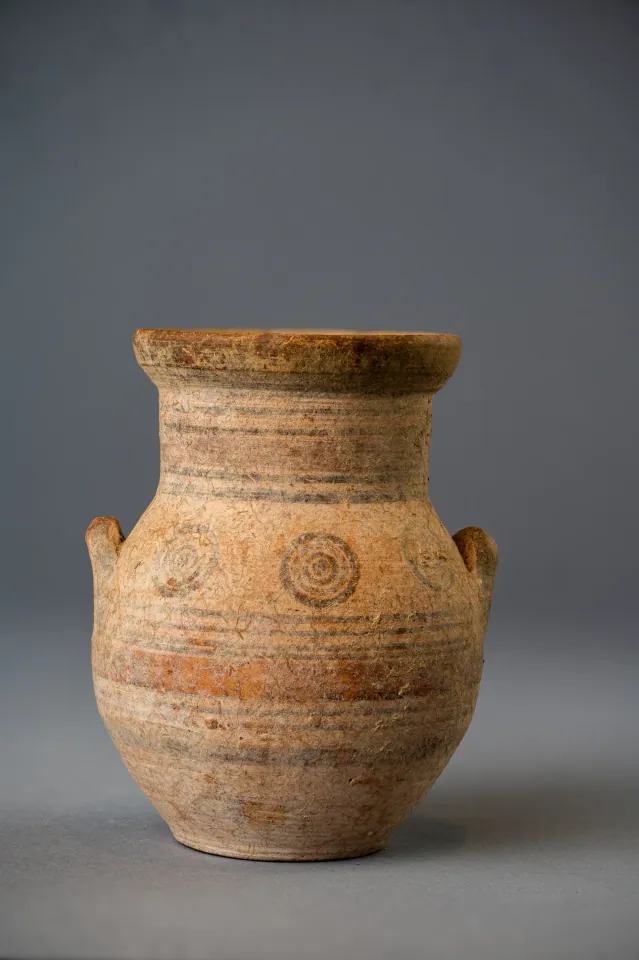
Bichrome IV Amphoriskos with Concentric Circles
Amphora
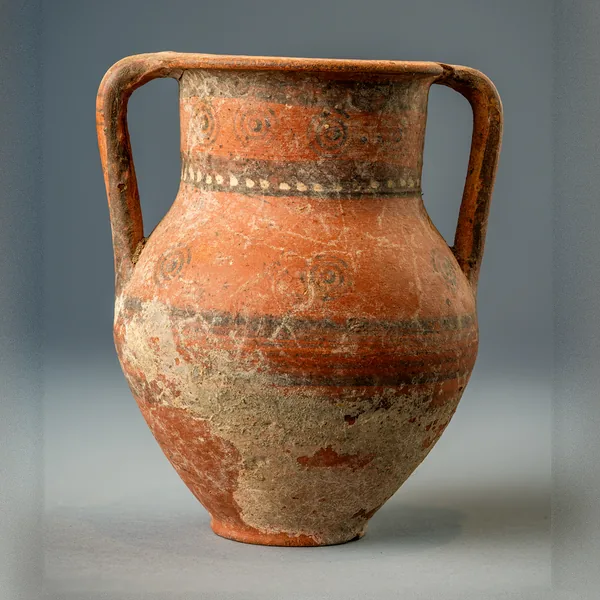
Bichrome Red Amphora with Concentric Circles and a Row of White Dots
Amphora
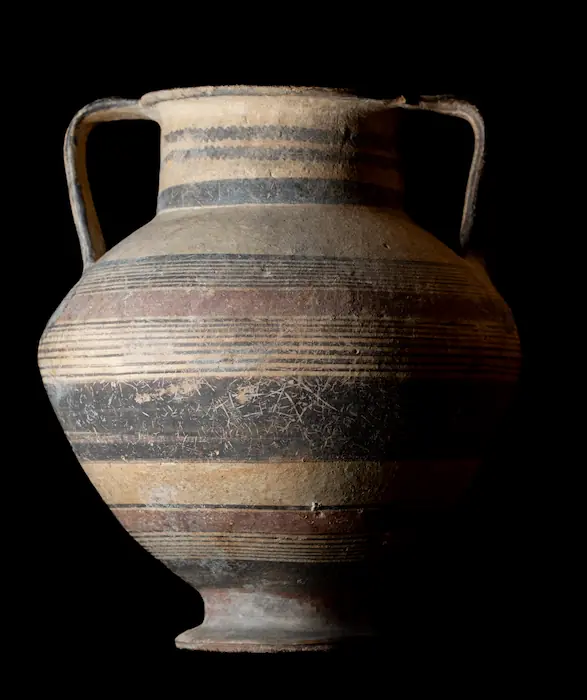
Bichrome Amphora on a Pedestal Foot with Wavy Lines on the Neck
Amphora
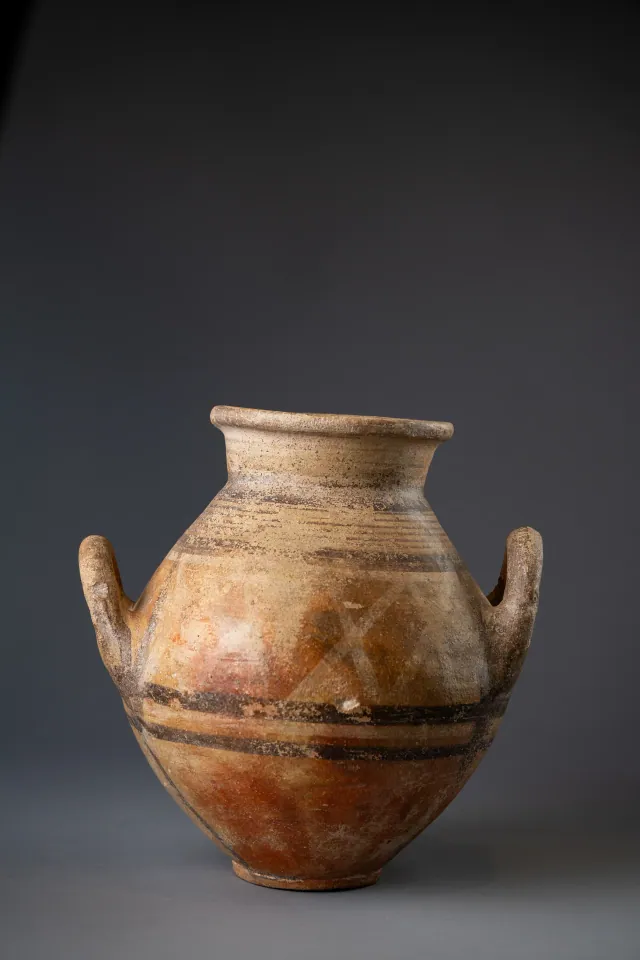
Red-Slipped Amphora with Pale Crosses on the Shoulder, probably Bichrome Red Ware
Amphora
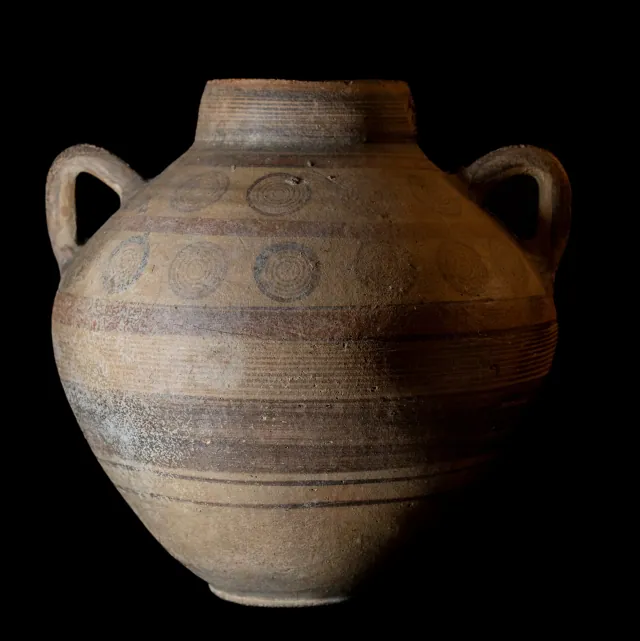
Globular Bichrome Amphora with Two Registers of Concentric Circles
Amphora
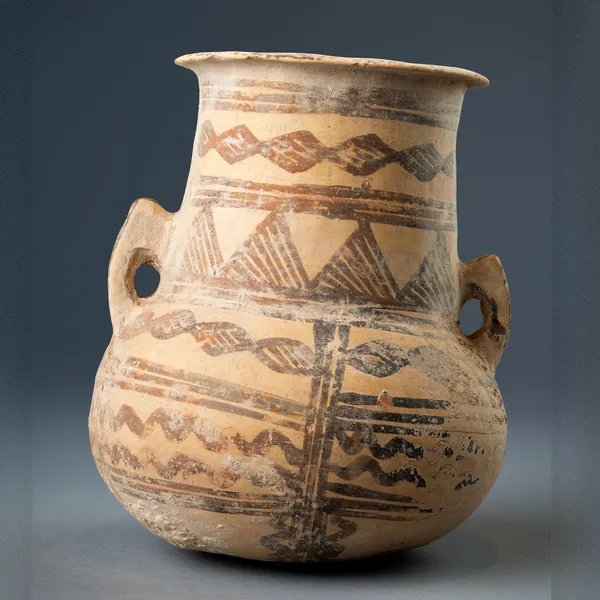
White Painted III-IV Amphora with Lozenge Chains and Hatched Triangles
Amphora
Found at the places discussed
Objects in our catalogue, in museum collections, recorded as found at these sites.


Background
Where to read more on this site before or after watching.
The site
Kition
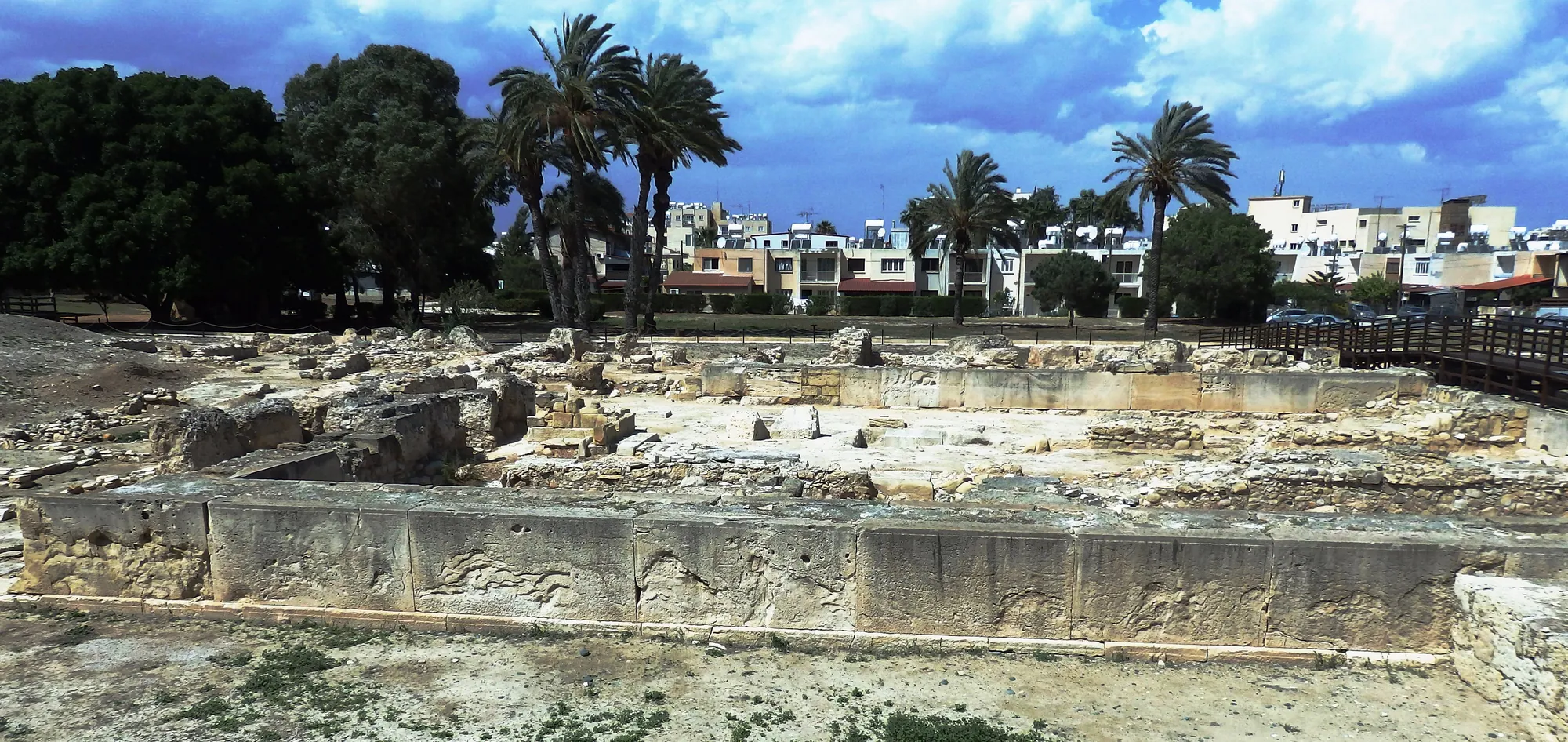
Kition lies under modern Larnaca on the south-east coast. It was founded as a harbour town in the 13th century BC, with temples and copper workshops in its sacred quarter at Kathari. After a long gap the Phoenicians rebuilt the main temple for Astarte, and from the 5th century BC the city was the seat of a Phoenician dynasty with a war harbour of ship sheds at Bamboula. Its last king was put to death by Ptolemy I in 312 BC, but the city lived on into the Roman period and beyond.
In the compendium
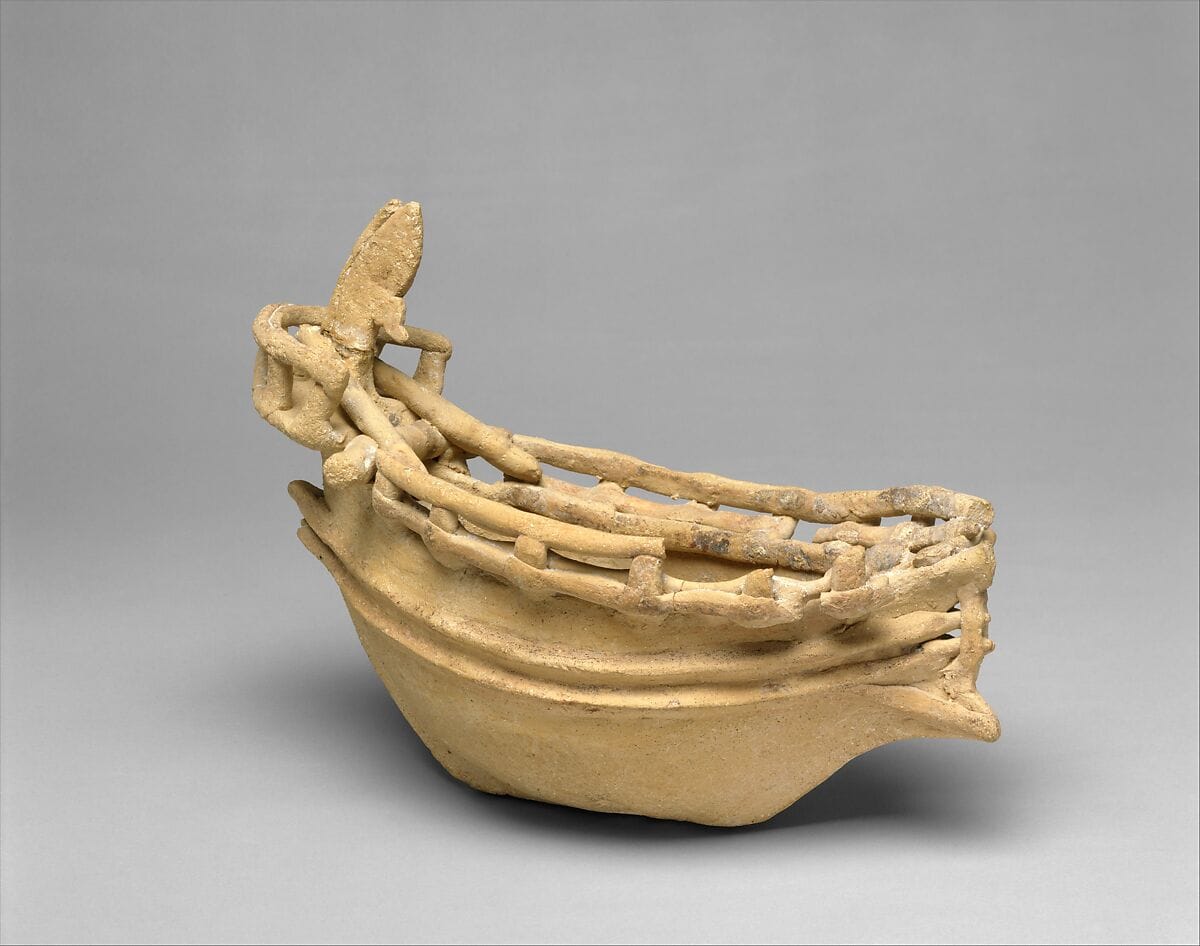
Seafaring and Ships in Ancient Cyprus
The evidence for boats and seafaring around Cyprus from the first crossings to the Classical period, from anchors, models and graffiti to wrecks and shipsheds.
In the compendium
Writing and Literacy in Ancient Cyprus
The scripts of ancient Cyprus, from undeciphered Cypro-Minoan to the Cypriot Syllabary, Eteocypriot, Phoenician and the Greek alphabet, and who used them.
In the compendium
Amphora
A closed jar with two opposed handles, made in Cyprus in belly-handled and vertical-handled painted series and as a basket-handled transport jar.
Map of Cyprus
Places discussed in the talk
- Has a page on this site
- Other places
- Ground above 200, 500, 1,000 m