
Geometric I
White Painted Plate with Latticed Triangles and Wavy Lines on the Underside
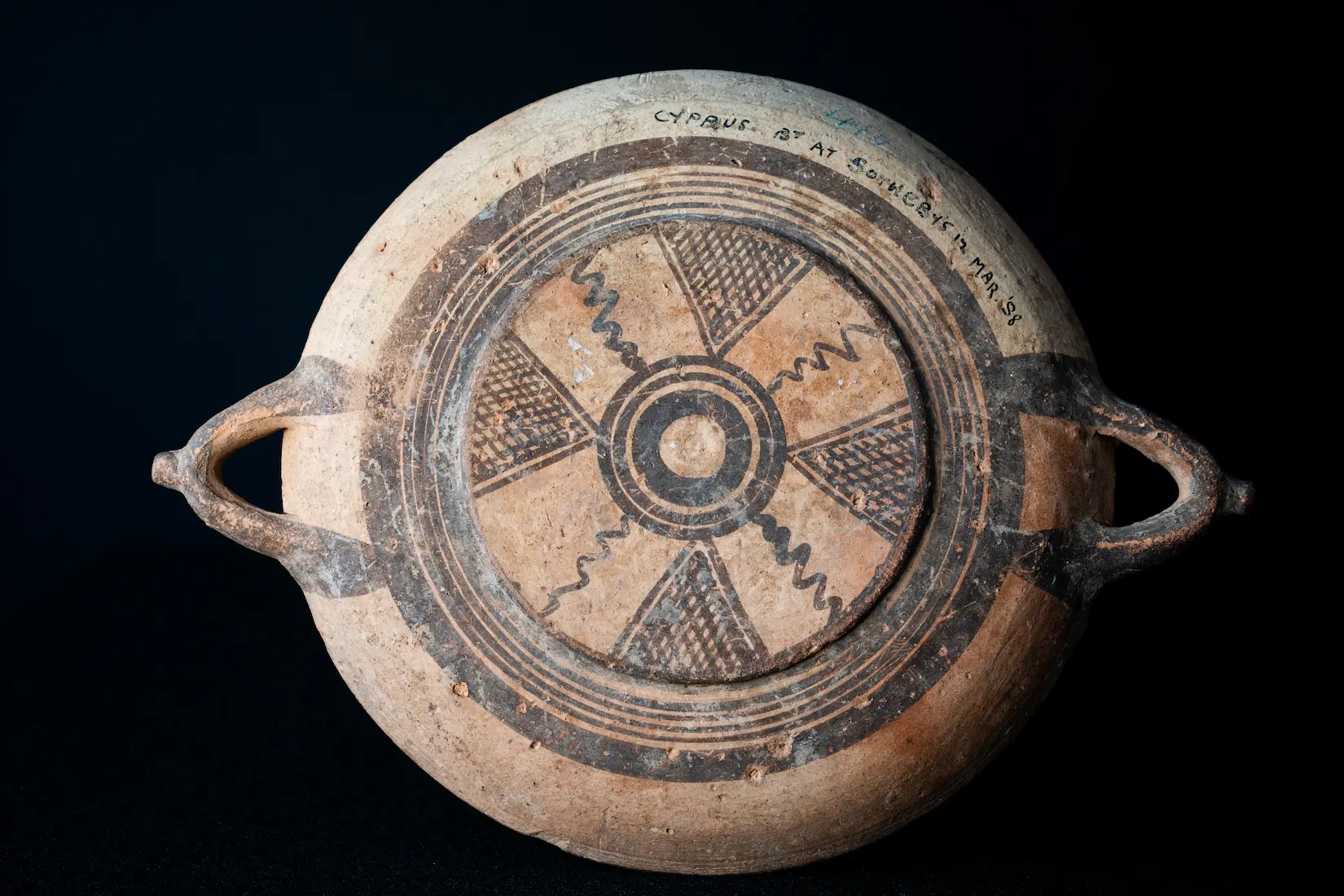
Cypro-Geometric White Painted plate with knobbed handles; the underside is painted with four latticed triangles alternating with wavy lines around concentric circles.
Date
1050 - 850 BC
Accession No.
DSH-GE-004
Collection
Alexis Drakopoulos
3D Model
Provenance
- Sotheby's, London, 12 March (year uncertain), according to an old ink inscription on the underside
- Until 2021, Private collection, Japan
- 2021–2024, Private collection, Chicago
- 2024, Hindman, Chicago
- 2024–present, Alexis Drakopoulos, London
Cypro-Geometric I–II, c. 1050–850 BCE · White Painted ware · Wheel-made
A shallow wheel-made plate on a flat, slightly raised base, with two horizontal loop handles set just below the rim, each drawn up at its apex into a small pointed knob. The pale buff surface carries a single matt brown-black paint. The main decoration is on the underside: a reserved central disc ringed by concentric circles, from which four framed, cross-hatched triangles radiate, alternating with four freehand wavy lines. A band with a group of fine encircling lines closes the base, and a broad band runs round the lower body. The handles are painted solid, the paint spreading onto the wall around their roots.
Inside, a painted spiral at the centre is surrounded by a single wide band, and the lip is dark. The surface has scattered pitting and small spalls, and the fabric is visibly speckled with dark inclusions. An old ink inscription runs along the underside rim, with a blue-ink number beside it, and the word "CYPRUS." is printed in small capitals on the interior near the rim.
Commentary
The plate belongs to the White Painted ware of the Early Iron Age, decorated in one dark paint on a pale ground. It has been described as "White Slip", but that name belongs to a Late Bronze Age handmade ware with a thick slip and quite different shapes, and nothing here fits that class. The flat plate with horizontal handles is itself a period marker. It did not exist in Proto-White Painted, the ware of the 11th-century transition, and first appears in advanced Cypro-Geometric I tomb groups in White Painted, Bichrome and Black Slip Painted wares, a local Cypriot invention whose circulation is essentially limited to the Cypro-Geometric period [1].
The decoration follows a scheme well documented in the Swedish Cyprus Expedition's tomb groups. At Lapithos Tomb 408, a White Painted I plate (no. 6) has "four lattice triangles meeting in a circle on base" and measures 34.5 cm across, close to the size of this piece; a Bichrome II plate from the same tomb (no. 5) combines the same triangles with knobbed horizontal handles [2]. At Idalion Tomb 3, a Bichrome II plate (no. 15) has "framed, latticed triangles alternating with groups of parallel lines" radiating from a central ornament of concentric lines, and White Painted I plates from the same tomb (nos. 33–34) have knobbed handles with "handles and rim black" [3]. Here the alternating element is a wavy line, a motif that runs through Cypro-Geometric painting from its beginning [4]. Close museum parallels include a Bichrome II plate in Stockholm with four framed latticed triangles radiating from concentric circles [5], a plate excavated in Lapithos Tomb 73 now in Philadelphia [6], and a large Cesnola plate in New York dated c. 1050–900 BCE [7].
A date in Cypro-Geometric I–II, c. 1050–850 BCE, follows from the shape, the monochrome paint and the close match with dated tomb groups. Cypro-Geometric III cannot be ruled out. The absolute dates for the whole sequence rest on Gjerstad's system and are approximate [4].
Almost all excavated plates of this kind come from tombs, where they were placed with other pottery as grave goods, and they may equally have served food at the table. Putting the richest ornament on the underside suggests the plate was meant to be seen when turned over or stood upright; the knobbed handles may have allowed it to be hung, though we know of no direct evidence for this.
The inscription on the underside appears to read "CYPRUS Bt AT SOTHEBYS 12 MAR", followed by a two-digit year that is hard to read. It records a purchase at Sotheby's in London; the year and the sale have yet to be identified.
References
- 1.Iacovou, M. (1991) 'Proto-White Painted Pottery: A Classification of the Ware', in Barlow, J. A., Bolger, D. L. and Kling, B. (eds) Cypriot Ceramics: Reading the Prehistoric Record. Philadelphia: University Museum, p. 226.
- 2.Gjerstad, E., Lindros, J., Sjöqvist, E. and Westholm, A. (1934) The Swedish Cyprus Expedition I: Finds and Results of the Excavations in Cyprus 1927–1931. Stockholm: Swedish Cyprus Expedition, Lapithos Tomb 408, nos. 5–6.
- 3.Gjerstad, E., Lindros, J., Sjöqvist, E. and Westholm, A. (1935) The Swedish Cyprus Expedition II: Finds and Results of the Excavations in Cyprus 1927–1931. Stockholm: Swedish Cyprus Expedition, Idalion Tomb 3, nos. 15, 33–34.
- 4.Gjerstad, E. (1948) The Swedish Cyprus Expedition IV.2: The Cypro-Geometric, Cypro-Archaic and Cypro-Classical Periods. Stockholm: Swedish Cyprus Expedition.
- 5.Stockholm, Medelhavsmuseet, MM Acc 0886: Bichrome II plate with knobbed handles (museum record).
- 6.Philadelphia, Penn Museum, 69-35-1187: plate from Lapithos Tomb 73 (museum record).
- 7.New York, Metropolitan Museum of Art, 74.51.967: plate, Cesnola Collection, c. 1050–900 BCE (museum record).
More from the Catalogue
Browse related objects
Flanged-base Tray
Chalcolithic
Terracotta plate
Geometric I
Basalt mortar or plate
Late Bronze Age II
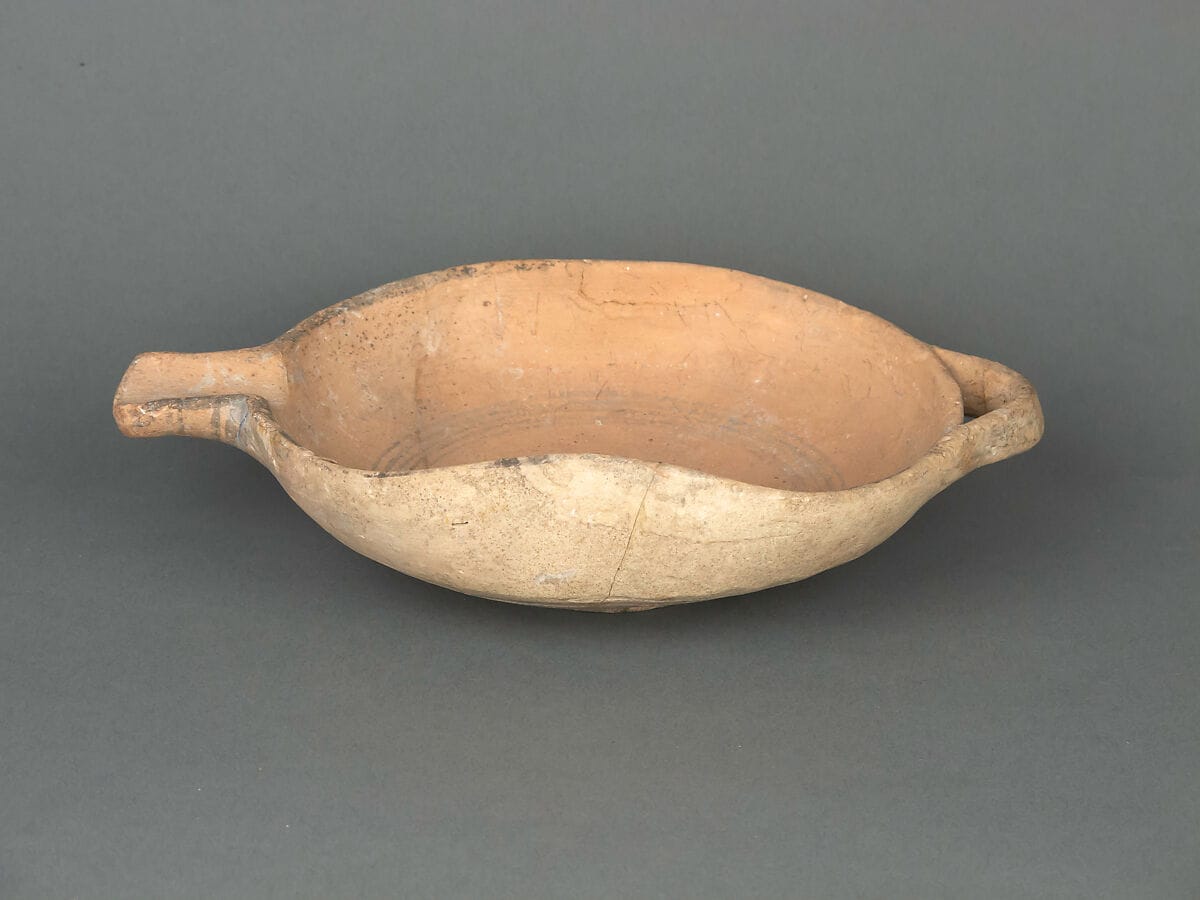
Plate
Geometric I
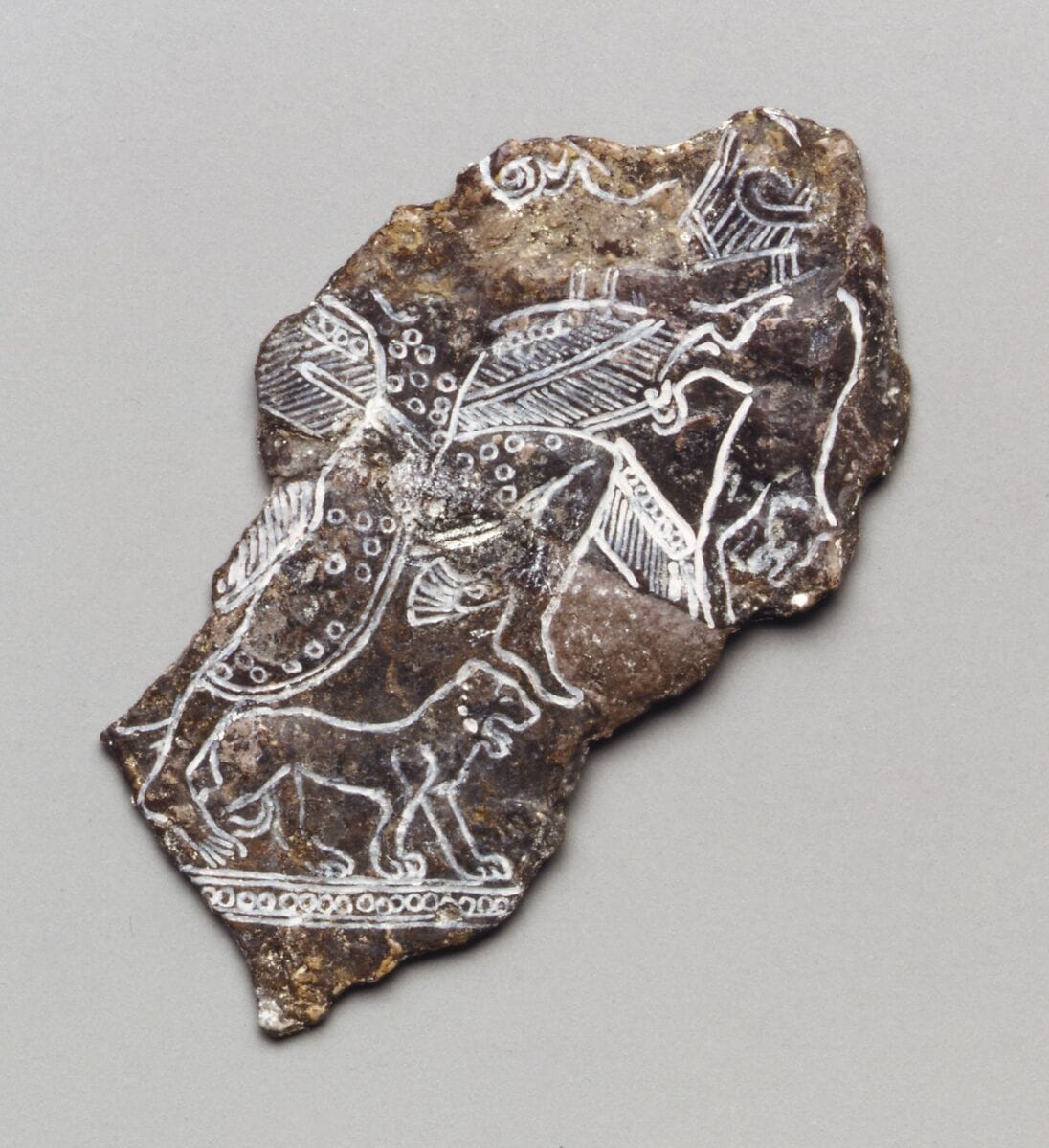
Fragment of a silver bowl
Archaic I
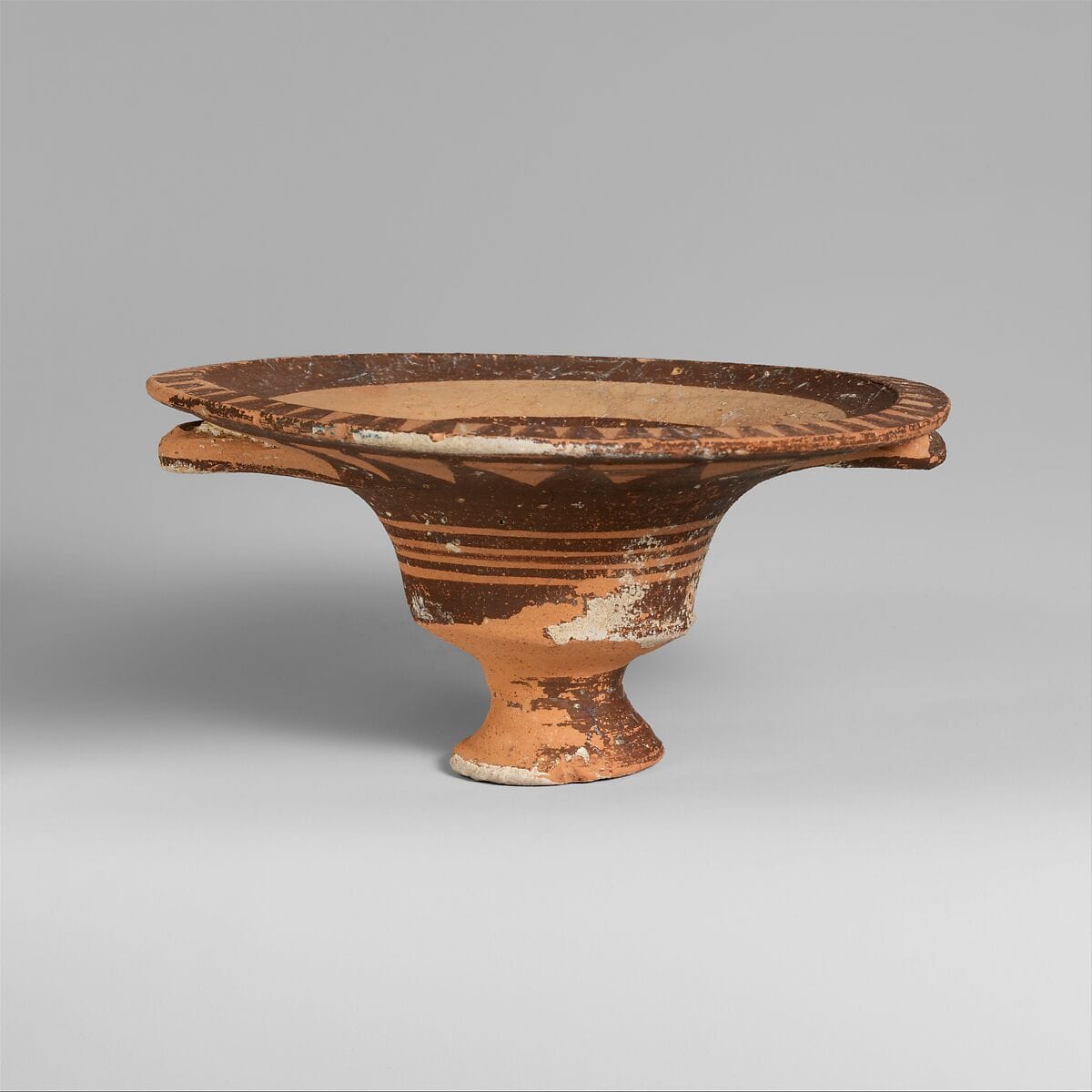
Terracotta stemmed dish with two handles
Geometric I
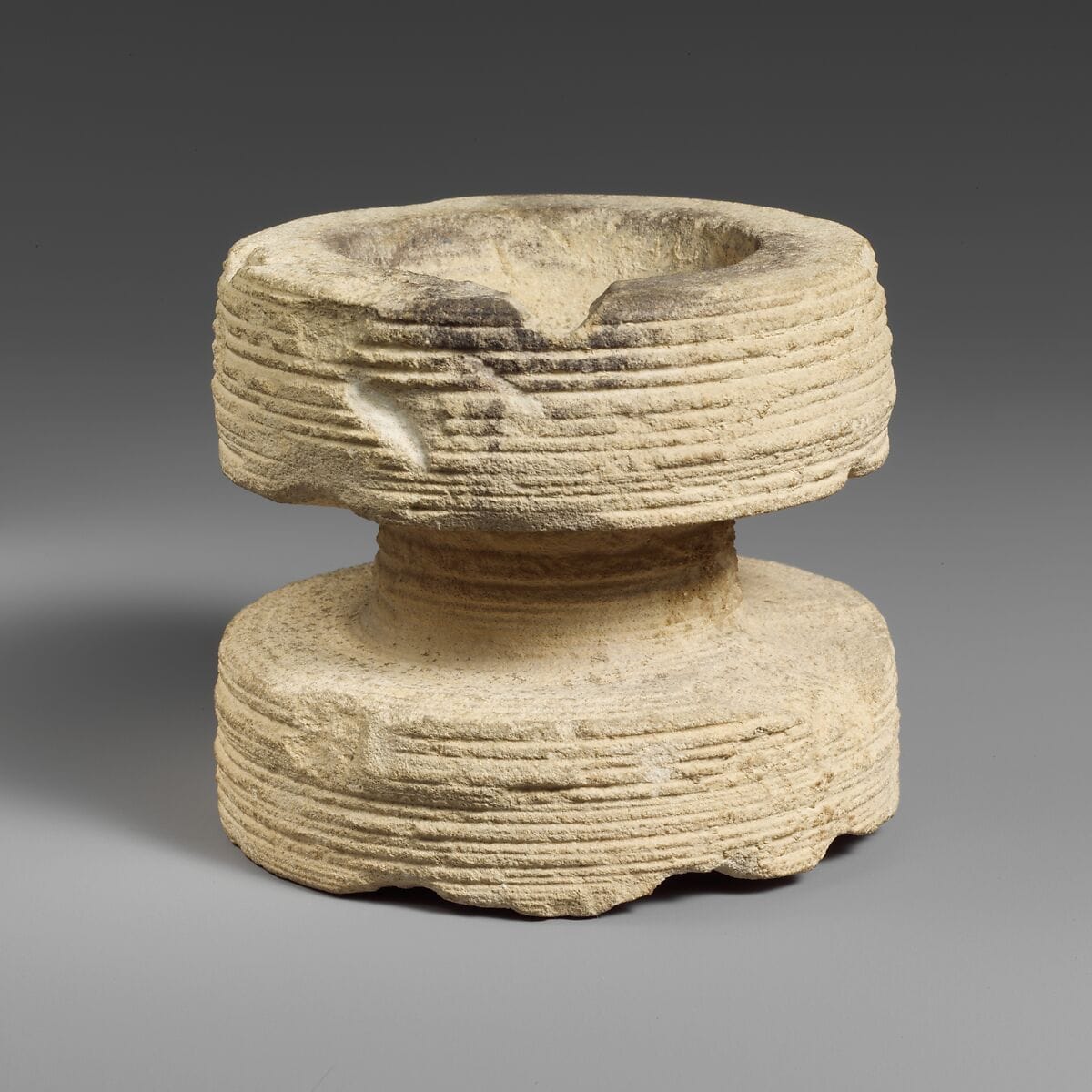
Circular limestone incense burner
Bronze Age
Phiale
Classical
Plate
Archaic I
Vesicular basalt mortar or plate
Late Bronze Age II
Plate
Archaic I
Plate
Geometric I
Terracotta plate with horned handles
Geometric II
Gabbro mortar or plate
Late Bronze Age II
Andesite mortar or plate
Late Bronze Age II
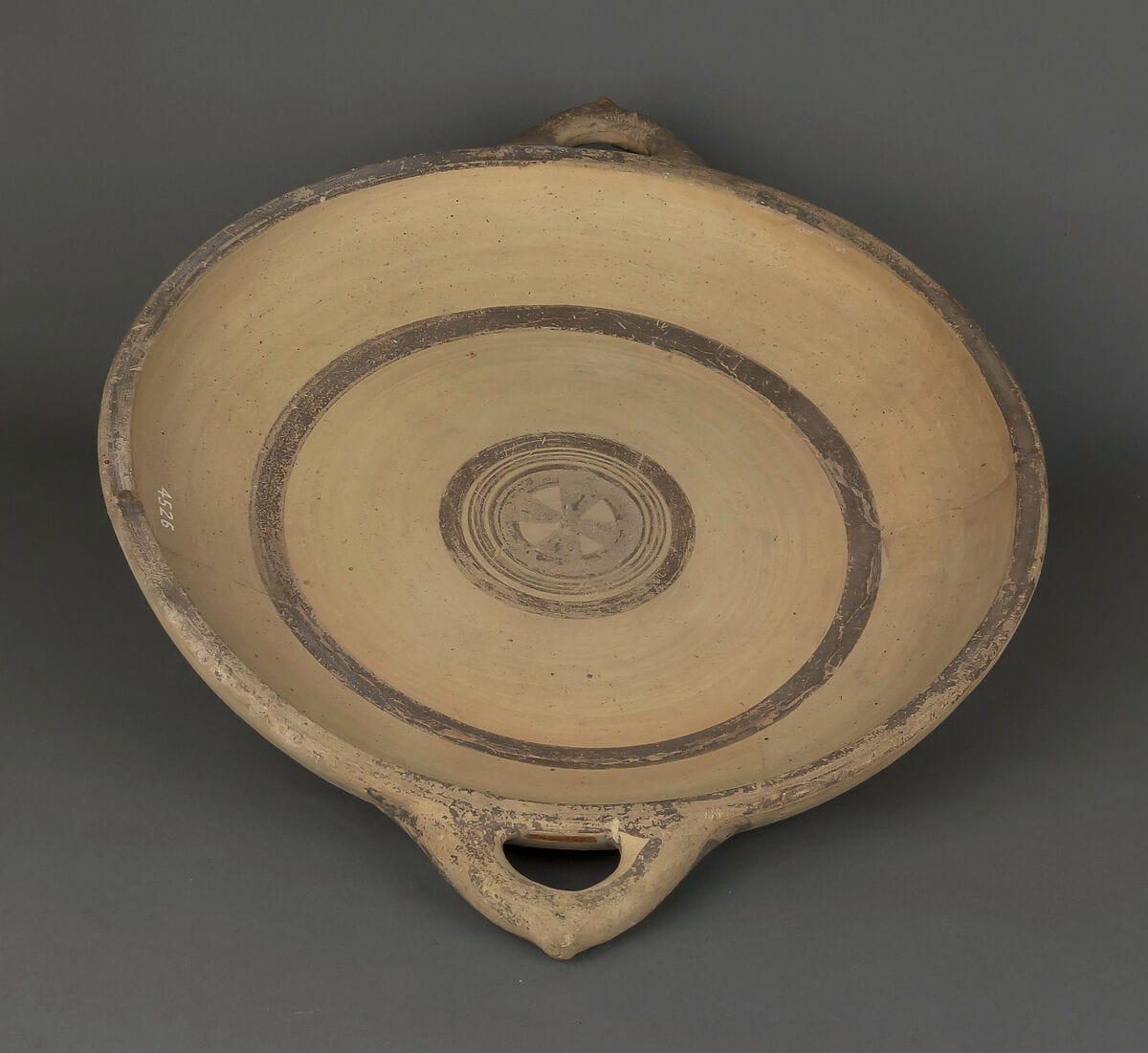
Plate
Geometric I
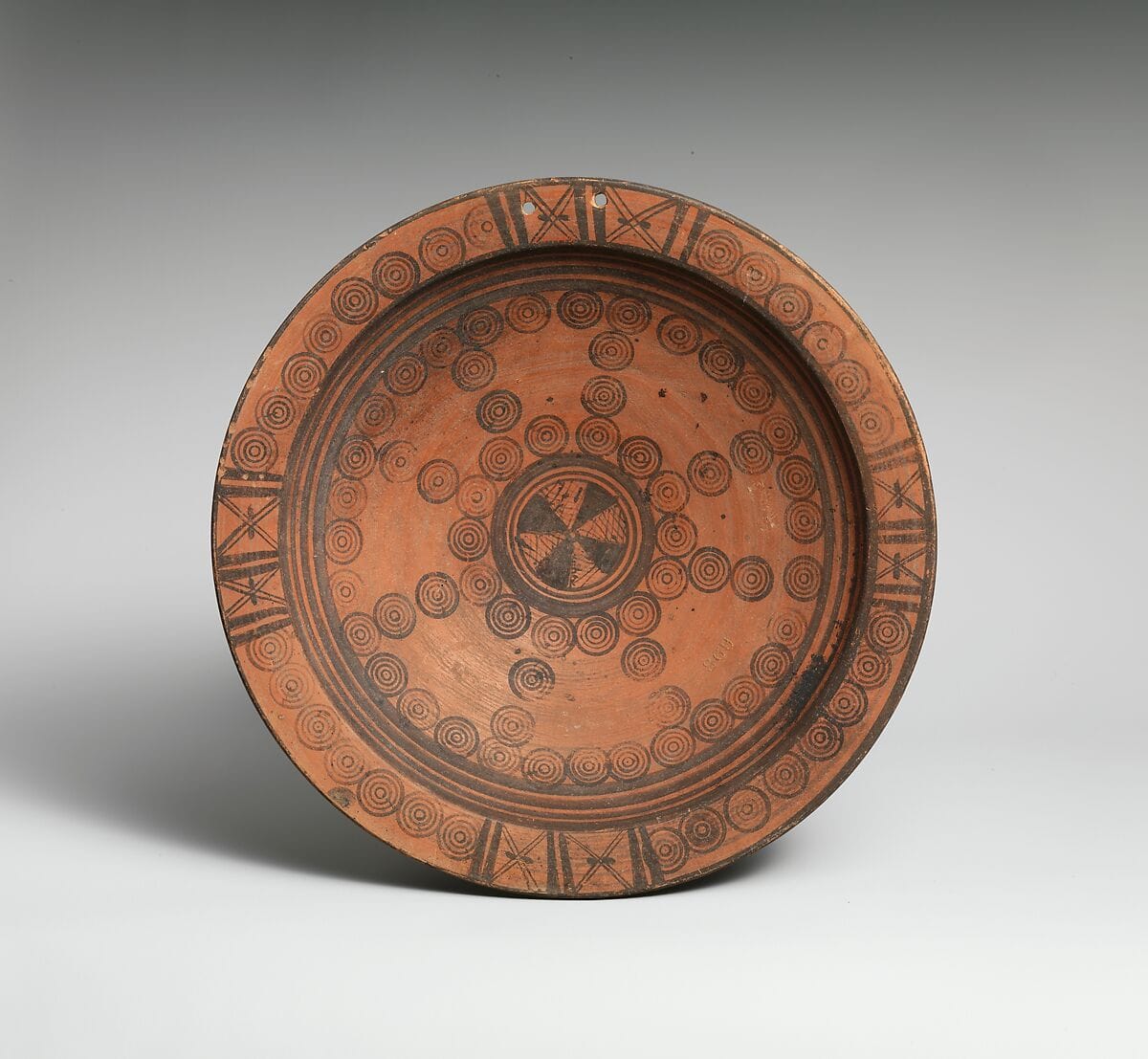
Plate
Archaic I
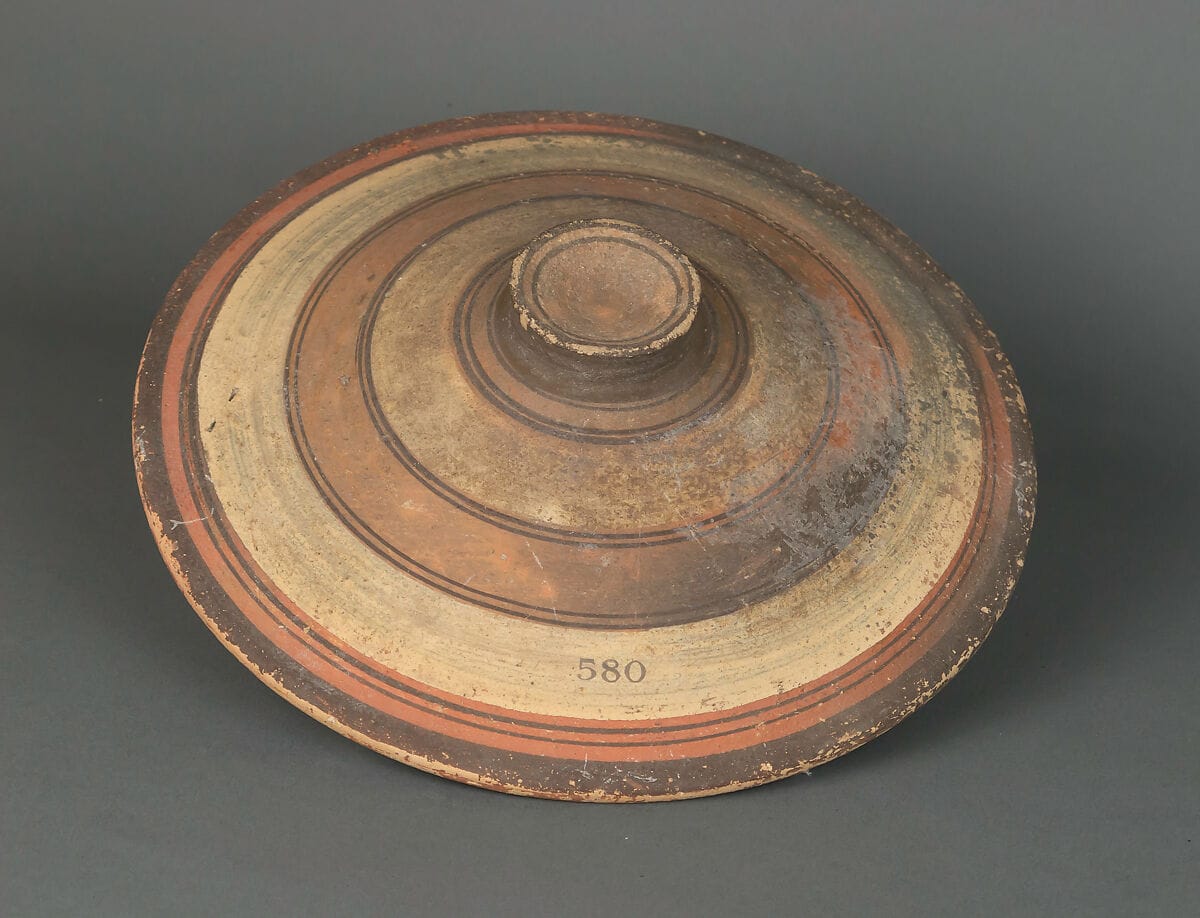
Lid of a bowl with knob
Archaic