
Museums·News
€1.6m redesign will strengthen Kourion's 1937 museum house at Episkopi against earthquakes
The works are part of a project estimated at €2.6m for the museum, which shows a family killed when an earthquake destroyed Roman Kourion. It has been shut since 1 August.



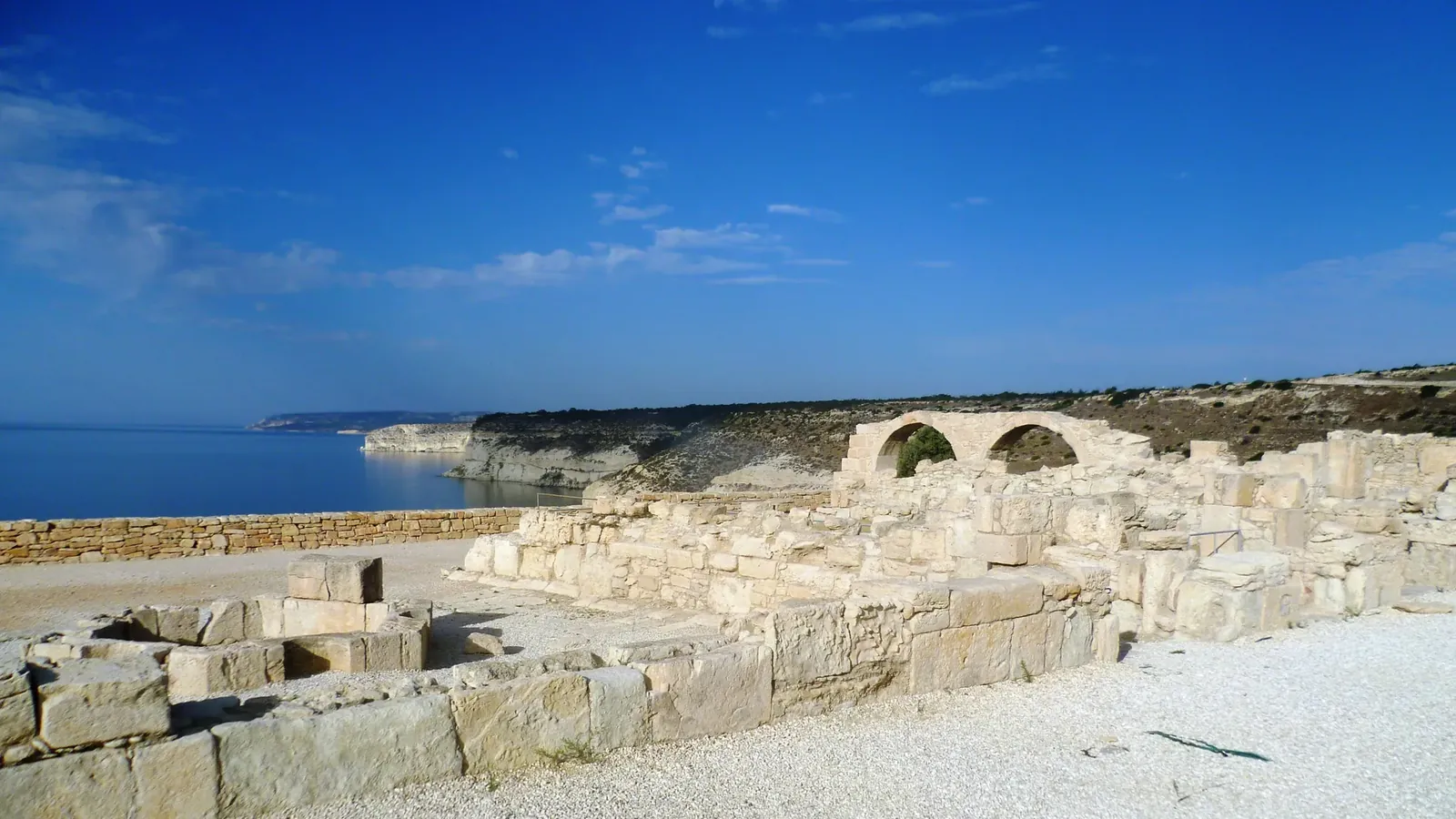
The museum for Kourion, which fills part of a house an American excavator built in Episkopi village in 1937, is to be redesigned and strengthened against earthquakes at a cost of €1.6 million plus VAT. The Deputy Minister of Culture, Clea Papaellina, gave the figure to the House Finance and Budget Committee on 30 October, adding that the tender for the building works should be awarded at the end of 2026 and the project finished in 2028. The museum has been closed to visitors since 1 August.
What the money buys
Papaellina's budget speech estimates the whole project at €2.6 million. Two lines are named: €1.6 million plus VAT to redesign the buildings and upgrade them against earthquakes, and €0.8 million to put the museological and museographic study into effect, that is, the new display itself. The project is one of the development lines of the Department of Antiquities, whose development spending for 2027 would be €3.8 million against €6.68 million in the 2026 budget. Another €625,000 is shared between restoration and conservation at the Kourion archaeological site and works at Amathus, Kato Paphos and the Tombs of the Kings. At the committee the Director of Antiquities warned MPs that the reduced budget will cost the island's heritage.
The Episkopi project is older than this budget. In October 2025 Papaellina's predecessor, Vasiliki Kassianidou, listed it among the Department's development spending for 2026, beside €900,000 for finishing the conservation of the shelters at the Kourion site and work at the Tomb of Agios Ermogenis: a full renovation and upgrade of the museum, with conservation of the traditional building and the carrying out of a museological and museographic study prepared in 2019. Reviewing the Deputy Ministry's year at a press conference on 3 April 2026, she counted among the results of 2025 the call for tenders for a thorough renovation and conservation of the museum building, a project that also modernises its displays.
The Department announced the closure in a notice of 9 July. The works, it said, would improve the exhibition and working spaces, protect and present the collections better and make the museum more accessible. A reopening date is to be announced later.
An excavator's house turned museum
The building belongs to the history of Kourion's excavation. According to the Department, George H. McFadden built it in 1937 and led research at Kourion and around it from 1934 until he drowned in 1953. He was the chief excavator and financial backer of the Penn Museum's expedition, whose titular director was Bert Hodge Hill, with John Franklin Daniel in charge of another section. The expedition dug at the Sanctuary of Apollo Hylates, the Late Bronze Age town at Episkopi-Bamboula, the tombs of Kaloriziki and Agios Ermogenis, and the city on the bluff. After McFadden's death the house went to the Department of Antiquities, which turned part of it into a display space opened in December 1969.
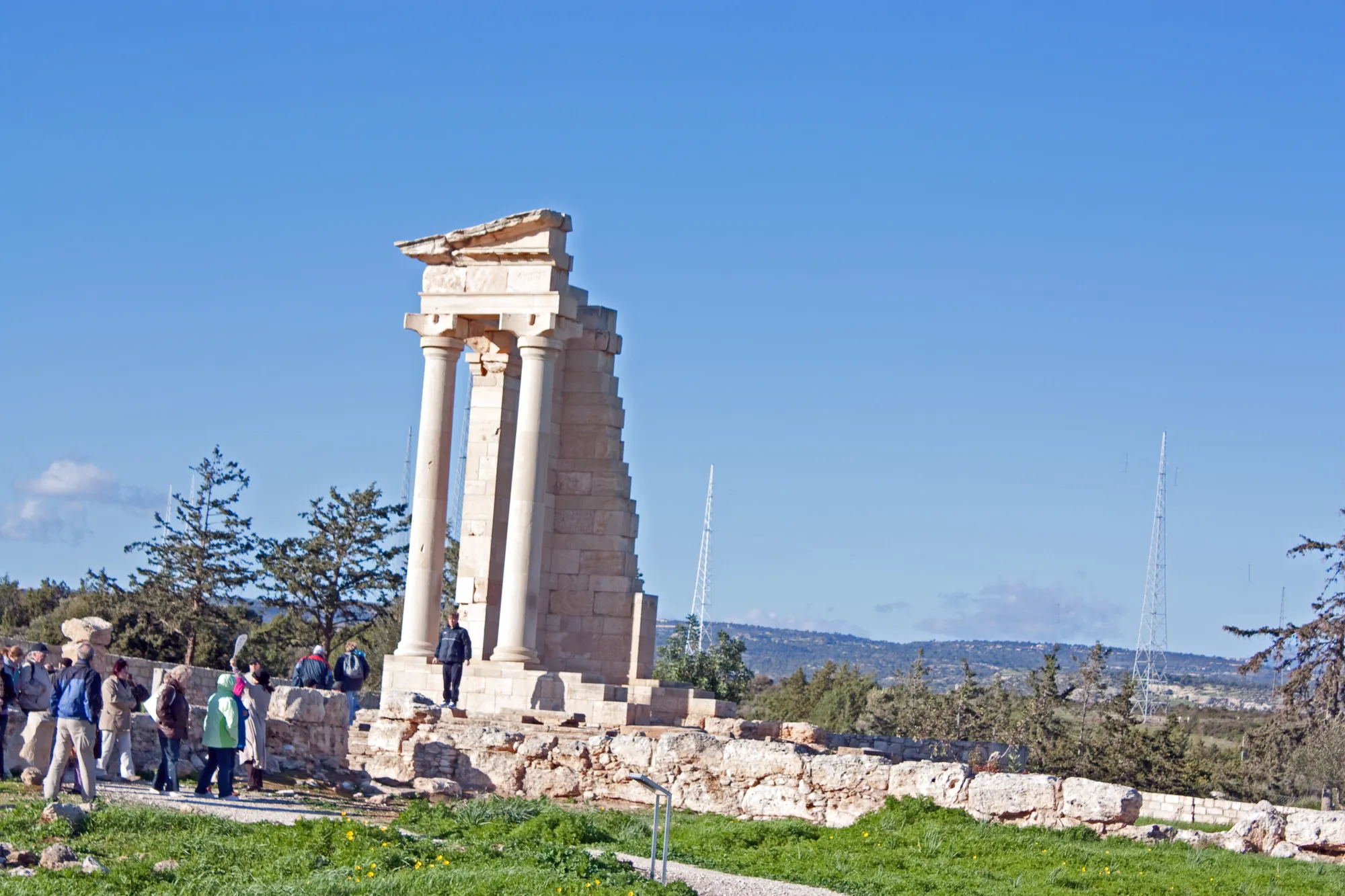
The museum is small, with two halls. The Department describes the first as a survey of Kourion's phases, with finds from the acropolis, the cemetery of Agios Ermogenis and the early Christian basilicas of the area. The second holds material from the Sanctuary of Apollo Hylates, the god "of the woodlands", and from settlements and cemeteries around Kourion.
The family from the Earthquake House
The best-known exhibit lies in the first hall: the skeletons of three people, a family in the Department's description, killed when an earthquake brought down the Roman city. They come from the Earthquake House on the south-eastern edge of the city, which a University of Arizona team under David Soren excavated between 1984 and 1987. The house had stone footings and mudbrick walls around a paved court, and by the time it fell it had been divided between households, with one room serving as a stable.
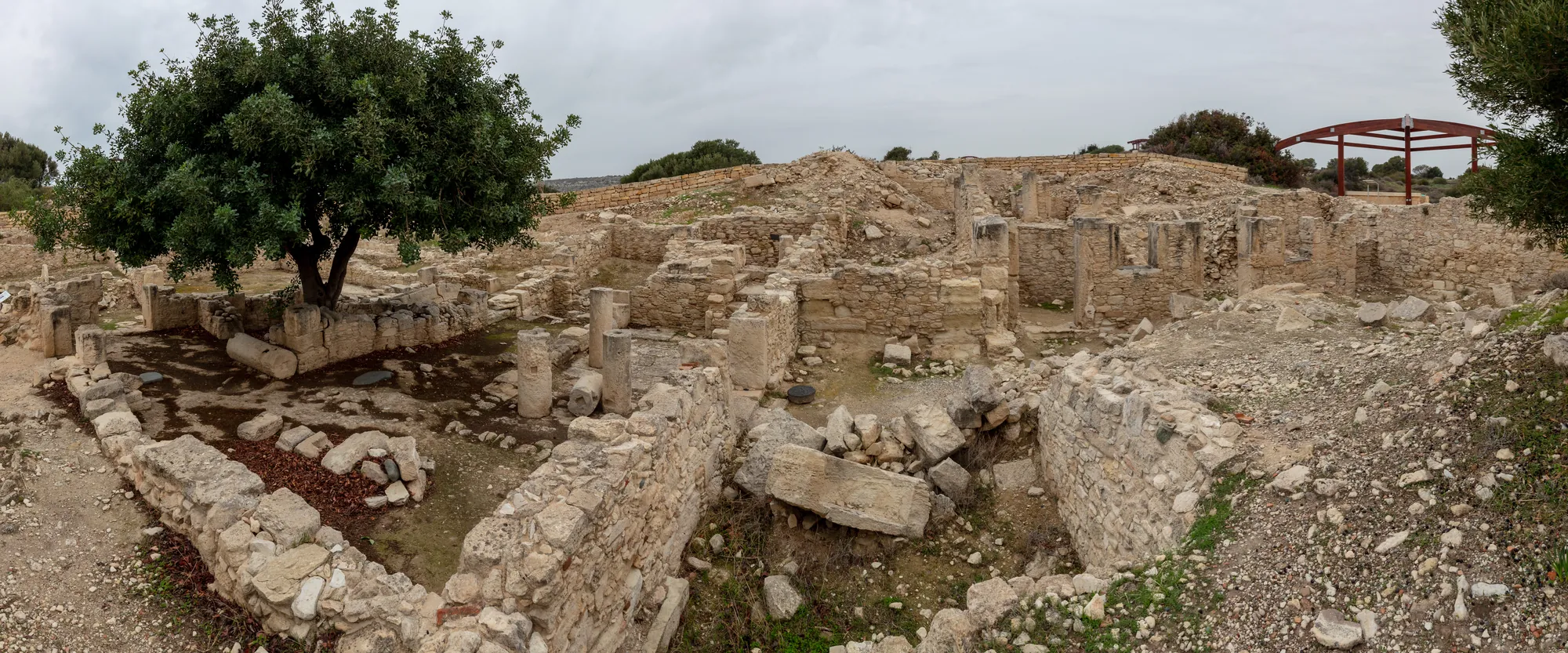
Benjamin Costello, who published the house from the excavation records, counts seven people killed in it. The three now in the museum were found in Room 20 on the last day of the 1986 season. The report on the 1987 season, when they were studied, describes a woman of 19 holding a child of eighteen months, and a man over 25 holding them both; several coins of the emperor Valens lay in the same room [1, p. 842]. Elsewhere in the house a child of about thirteen lay on a mule still chained to its stone trough.
The Department dates the disaster to AD 365. That year is Soren's: the 1984 season produced 365 bronze coins, and he matched the destruction to the earthquake of 21 July 365 described by the Roman historian Ammianus Marcellinus. Costello has questioned the match: a coin gives only the earliest possible date of the layer it lies in, and the epicentre of the 365 earthquake lay off western Crete, about 860 km away. He places the collapse in the later 4th century AD, possibly around AD 370–380, and Thomas W. Davis, field director of the excavation's first two seasons, also prefers a date around 370.
Original sources
- Deputy Ministry of Culture: speech by Deputy Minister Clea Papaellina on the Deputy Ministry's 2027 budget before the House Finance and Budget Committee
Official release·
- Deputy Ministry of Culture and Department of Antiquities: temporary closure of the Local Archaeological Museum of Kourion (Episkopi) for upgrade works
Official release·
- Deputy Ministry of Culture: press conference of Deputy Minister Vasiliki Kassianidou on the Deputy Ministry's work in 2025
Official release·
- Deputy Ministry of Culture: speech by Deputy Minister Vasiliki Kassianidou on the Deputy Ministry's 2026 budget before the House Finance and Budget Committee
Official release·
- Department of Antiquities: Museums, Local Archaeological Museum of Kourion
Official release
On ancientcyprus.com
- Sites
- Kourion, Episkopi-Bamboula
- Excavations
- Kourion: the Penn Museum excavations (Curium Expedition), Kourion: the University of Arizona excavation of the Earthquake House
- People
- George H. McFadden, Bert Hodge Hill, John Franklin Daniel, Vassiliki Kassianidou, David Soren, Thomas W. Davis, Benjamin Costello IV
- Institutions
- Department of Antiquities of Cyprus, Penn Museum (University of Pennsylvania Museum of Archaeology and Anthropology)
- Periods
- Roman
References
- 1.Karageorghis, V. (1988). Chronique des fouilles et découvertes archéologiques à Chypre en 1987. Bulletin de correspondance hellénique 112(2). https://doi.org/10.3406/bch.1988.6750
More in Museums
- Groundbreakers: Petrie Museum display on women archaeologists opens in London on 5 November
- Cyprus's draft 2027 budget cuts antiquities development spending by 43%, to €3.8m
- 3D reconstructions and AI scenes planned for Kourion, including contests at its Roman stadium
- Two artists, one a plastic surgeon, show new work among the Cyprus Museum's antiquities before its move
- Kourion, Kalavasos-Tenta and Paphos Castle to take card payments only from 1 November