Archaeologist · Draughtsman / artist · Numismatist · Cataloguer
Dorothy Hannah Cox
fl. 1931–2020 · United States
American excavation architect and numismatist who drew the Lapithos tombs in 1931, planned at Kourion in 1935-36, and published the Curium coins in 1959.
Biography
Dorothy Hannah Cox was an American excavation architect and numismatist who drew the tombs of the 1931 Lapithos excavation, worked as architect at Kourion and in 1959 published the coins from the University Museum's Curium excavations1,9,10,17. According to Pete Smith, she was born at Terre Haute, Indiana, on 18 February 1892, the daughter of Lewis Joseph Cox and Lenore Hanna11.
The sources disagree on her time at Bryn Mawr12,14. The college's alumnae bulletins of 1936 and 1940 say she studied there from 1910 to 1913 and give her a Columbia degree, a B. Arch. of 1917 in the 1936 list and a B.A. in the 1940 bulletin, which says she took up architecture there9,12. Nancy Brokaw calls her "Class of 1914", and Wikipedia says she completed her studies at Bryn Mawr in 191413,14. Brokaw also writes that she served as a nurse in the First World War and was fluent in Turkish, Greek and French13.
Dig architect
The 1940 bulletin describes her as a "dig architect" whose job was drawing plans of the architectural remains9. She worked first with Hetty Goldman at Colophon and then for three years at Eutresis, spent three years with Carl Blegen at the Argive Heraeum, and later a year with him at Troy9. Smith dates the Goldman seasons to 1924-1927 and says she documented the plan of the Metroon at Colophon11. Howard L. Adelson writes that, after almost ten years on excavations, she joined the coin room of the American Numismatic Society in 1931 and left after about a year for an excavation in Cyprus15.
Lapithos and Kourion
Ellen Herscher writes that in 1931 she was the architect of the University Museum's team at Lapithos, with Lucy Talcott and Virginia Grace1. The 1940 bulletin says she was a year in Cyprus with Bert Hodge Hill drawing the tombs9. A letter of January 1934 in the expedition records asks for "Miss Cox's detailed plans of the Lapithos tombs", most of which Blegen had brought in 193216. A letter of February 1934 calls D. H. Cox "the most valuable member of our staff" there and hopes she can be persuaded to return to Cyprus16.
A letter of 1934 judged her "just right for all phases of the job" as the architect Kourion needed, but expected her to be with Goldman's Bryn Mawr expedition in Cilicia16. John Franklin Daniel had her as architect in the third Kourion season, November to December 1935, and thanked her for making his tomb plans presentable17. The tomb record notes that she drew the plan of Kaloriziki Tomb 33 on 14 and 15 November16. In the spring of 1935 and again in 1936 she was architect of the American excavation at Tarsus, and Goldman lists her among the architects of the building plans of 1935-193812,16,18. A 1936 letter says she was to return to Curium that September16. In 1937 a telegram reported "Cox unavailable", and two letters of 1938 found her drawings of the inscriptions "not overly accurate" and, of the mosaic inscriptions, "not accurate enough for publication"16.
Yale, the war and the 1953 "mint"
The sources differ on when she went to Yale9,13. The 1940 bulletin already calls her curator of the numismatic collection of the Yale Museum, while Brokaw has her return to the United States in 1945 for a post as curator of coins in Yale's classics department9,13. Smith writes that the Office of Strategic Services recruited her at the start of the Second World War as one of several trained as spies under Rodney Young11. Writing on 8 August 1950, A. R. Bellinger said that he and Miss Cox had worked on the Curium coins16. John H. Young and Suzanne Halstead Young credited her with identifying the coins in their 1955 book on the Kourion figurines5.
Brokaw and Smith both say she retired to a Connecticut farm in 1953, Smith placing it at Cheshire, yet both record later fieldwork11,13. In November 1953 she came to Kourion with Young, and a letter from the site says she spent ten days digging the "potential mint"16,19. A. H. S. Megaw reported a three-room metal-working building of the fifth century AD, "possibly a mint", on the acropolis19. Her own notebook, begun on 26 November, records coins, tiles and quantities of slag16. In it she wrote that this was her first dig in the Roman period and that the building "may have been a glass factory", which an analysis of the slag might decide16. The site letter called the results inconclusive16.
The Curium coins
Coins from the Excavations at Curium, 1932-1953 catalogued 753 coins10. In it Cox wrote that Curium "gave little stratification of use in dating the coins", and held that small bronzes seemed to confirm the long-postulated mint of Euagoras I8. J. F. Healy called it "a valuable record" with a "stimulating commentary", though without weights10. C. M. Kraay found it of "valuable help in separating the Cypriot from the Egyptian issues"20. Aline Abaecherli Boyce noted that the few Arabic coins were omitted, thought a clearer arrangement could have been devised, regretted that die-positions were not given in the catalogue and found evidence of inadequate proof-reading, and concluded that Cox had attacked difficult material "with frankness, courage, and caution"21. R. Ross Holloway praised "the care and learning of Miss Cox's text" but found printing errors common22. David Soren later judged that, with no find spots, the book is useful only for the coins in use23. D. M. Metcalf wrote that she published the coins "with exemplary care" but omitted eight Islamic coins from the episcopal basilica7.
Brokaw writes that in the 1950s and 1960s she worked on digs at Gordion and at Balkh in Afghanistan13. Smith gives her death at New Haven, Connecticut, in December 197711.
Life and work
1931
Architect on the University Museum (Pennsylvania) team that opened further tombs at Lapithos (Vrysi tou Barba cemetery) under Bert Hodge Hill's general direction; staff were Lucy Talcott, Virginia Grace and Dorothy H. Cox.
In the Kourion expedition papers of 1934: «It will be convenient if I may have with me then Miss Cox's detailed plans of the Lapithos tombs we excavated in 1931.»
In the Kourion expedition papers of 1934: «I hope that Miss Cox can be somehow persuaded, or enabled, to come out to Cyprus again. You know how very good her work is.»
In the Kourion expedition papers of 1934: «I have not seen Miss Cox yet but hope to see her the next time I go to New York. Mr. Jayne says she would be very glad to go to Cyprus provided her expenses would be paid»
In the Kourion expedition papers of 1937: «I mention Miss Cox and Greco because I cannot recall whether I have written you that the former has a position at New Haven»
In the Kourion expedition papers of 1938: «Hannah Cox's drawings are not overly accurate and there seems to be none at all of the Phoebus inscription.»
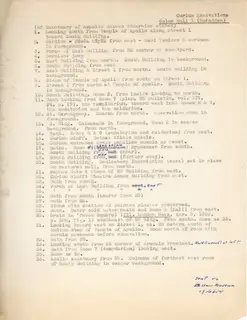
Excavated on the Kourion acropolis a three-room metal-working establishment, possibly a mint, of the fifth century AD, for the Pennsylvania University Museum; this followed the April 1953 death of G. H. McFadden, Assistant Field Director of the Curium expedition.
Identified the coins (and dated the finds) from Kourion for the publication of the Kourion terracotta figurines, and was to publish them with the other Kourion coins.
Published Coins from the Excavations at Curium, 1932-1953 (American Numismatic Society, Numismatic Notes and Monographs 145), covering coins from the Pennsylvania excavations; Metcalf notes the monograph omits eight Islamic coins from the episcopal basilica.
In the Kourion expedition papers of 1972: «It is regrettable that there was no concordance of publication numbers and coin inventory numbers in Dorothy Cox's manuscript.»
Said in the recorded talk «Law and archaeology in British-period Cyprus: the case of Lapithos» (CAARI Cyprus, 2020-11-17): Member of the American School of Classical Studies at Athens who assisted the Lapithos excavation.
Named in the «Archaeology in Cyprus» survey (JHS / Archaeological Reports): Published the coins from Kourion excavations at Curium 1932-1953: «On the other hand Miss D. H. Cox published the coins from Kourion»
Dorothy H. Cox, who had been on excavations for almost ten years, joined the Society's coin-room staff in 1931 and after about a year joined the staff of an…
28.Dikaios, 'Archaeology in Cyprus, 1959–61', AR 8 (1961–62).
29.Davis 1989, BA 52(chronology table).
30.Stella Diakou, «Law and archaeology in British-period Cyprus: the case of Lapithos», recorded conference paper, Empire and Excavation: Critical Perspectives on Archaeology in British-Period Cyprus, 1878-1960, CAARI Cyprus, published on YouTube 2020-11-17, at 0:16:00. Online
31.Penn Museum Archives, Kourion Expedition records (PU-Mu 1050), Box 1, folder 2.
32.Penn Museum Archives, Kourion Expedition records (PU-Mu 1050), Box 1, folder 5.
33.Penn Museum Archives, Kourion Expedition records (PU-Mu 1050), Box 4, folder 26.
34.Penn Museum Archives, Kourion Expedition records (PU-Mu 1050), Box 6, folder 4a.
35.Penn Museum Archives, Kourion Expedition records (PU-Mu 1050), Box 8, folder 5.
36.Penn Museum Archives, Kourion Expedition records (PU-Mu 1050), Box 1, folder 6.
37.Penn Museum Archives, Kourion Expedition records (PU-Mu 1050), Box 1, folder 7.
38.Penn Museum Archives, Kourion Expedition records (PU-Mu 1050), Box 1, folder 9.
39.Penn Museum Archives, Kourion Expedition records (PU-Mu 1050), Box 2, folder 2.
40.Penn Museum Archives, Kourion Expedition records (PU-Mu 1050), Box 2, folder 14.
41.Penn Museum Archives, Kourion Expedition records (PU-Mu 1050), Box 2, folder 15.
42.Penn Museum Archives, Kourion Expedition records (PU-Mu 1050), Box 3, folder 2.
43.Penn Museum Archives, Kourion Expedition records (PU-Mu 1050), Box 2, folder 7.
44.Penn Museum Archives, Kourion Expedition records (PU-Mu 1050), Box 2, folder 12.
45.Penn Museum Archives, Kourion Expedition records (PU-Mu 1050), Box 1, folder 3.
46.Penn Museum Archives, Kourion Expedition records (PU-Mu 1050), Box 1, folder 8.
47.Collège de France, Paris, Fonds Claude Schaeffer (34 CDF), 34 CDF art. 242, «[Cahier de notes concernant Chypre, Gaza, Jéricho, l'Egypte, la Syrie (chronologies)]», undatedof 107. Online
48.P. Dikaios, «Archaeology in Cyprus, 1959-61», Archaeological Reports 8 (1961-1962).
49.David Soren, 1987, The Sanctuary of Apollo Hylates at Kourion, Cyprus.
50.N. Robertson (ed.), 1975, The Archaeology of Cyprus: Recent Developments.
51.Thomas W. Davis, 1989, A History of American Archaeology on Cyprus, chronology table; Megaw, 1954, Archaeology in Cyprus, 1953.
52.American Journal of Archaeology January-March 1937: Vol 41 Iss 1 (1937).
53.Robertson 1975.
54.Ellen Herscher, 1975, (Lapithos survey chapter; title not read).
Corrections and additions
Did you know this person?
We would like to hear from relatives, colleagues and anyone who knows more about this person's life and work.