
Archaeologist · Excavator · Scholar
Carole McCartney
fl. 1995–2022 · United Kingdom
Lithics specialist (1965–2021) of the early Cypriot Neolithic, from Kalavasos-Tenta to Ayia Varvara-Asprokremnos, who started the Elaborating Early Neolithic Cyprus project in 2005.
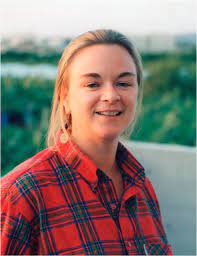
Biography
Carole McCartney was a specialist in chipped stone who worked on the earliest Neolithic of Cyprus, made the island her home, and in 2005 started the project that excavated Ayia Varvara-Asprokremnos18.
Edinburgh and Kissonerga
The Department of Antiquities gives her year of birth as 196519. Wikipedia alone gives her birthplace as Pittsburgh, Pennsylvania20. She studied archaeology at the University of Edinburgh and first came to Cyprus in 1987, as a member of Edgar J. Peltenburg's team excavating Chalcolithic sites in the Paphos district18. She took a Masters at Edinburgh in 1989 and a PhD there in 1996, with a thesis entitled The Analysis of Variability in Simple Core Technologies: Case Studies of Chipped Stone Technology in Post-PPN Assemblages from the Levant10,18.
She married Pambos Michael and moved to Kissonerga, where they lived with their two children, Katerina and Aimilios18. The Archaeological Research Unit of the University of Cyprus says that Cyprus was her home from 199518. In 1998 she gave her address as Kissonerga village in the Paphos District1, and in 2001 as the Lemba Archaeological Research Centre21. The Department of Antiquities records that she was a Cypriot citizen who spoke Greek19. Over thirty years she worked as lithic specialist for excavations and surveys in Jordan, Syria, Egypt and Cyprus18.
Tenta and the early Neolithic
Her research on Aceramic chipped stone was paid for by the annual scholarship of the British School of Archaeology in Jerusalem and the John Grier Bartol Fellowship of the American Schools of Oriental Research1. Stuart Swiny drew her attention to Asprokremnos and to a small sample of its chipped stone held at CAARI1. Her own sample from the site was surface material collected with the help of the Department of Antiquities in the winter of 1996, later housed in the Cyprus Museum1.
Müge Şevketoğlu reported in 1998, on the word of Trevor Watkins, that McCartney had suggested in a conference paper that the earliest occupation at Kalavasos-Tenta belonged to the seventh or late eighth millennium BC, on the basis of its chipped stone10. Her paper on the Tenta assemblage and its cultural and chronological implications appeared in Beyond Tools in 200122. Alan H. Simmons cited the chipped-stone similarities she identified there as support for placing Tenta in the Cypro-PPNB23. Joanne Clarke and Alexander Wasse write that in her 2005 report with Todd, before Klimonas and Asprokremnos were discovered, she surmised an undocumented phase between the late Epipalaeolithic Akrotiri phase and the Early PPNB13. After those discoveries, they say, she updated that assessment, proposing that the unidirectional cores for small blades and bladelets at Asprokremnos and Klimonas were an equally good parallel for the Tenta Period 5 industry13. Clarke and Wasse built on her record of tool-kit differences between the two Tenta 5 deposits and on the figure in her report with Todd that 88.9% of translucent chert tools there are bladelets13.
She was a co-author of the 2000 Antiquity paper by Peltenburg and others on agro-pastoralist colonisation of Cyprus23, and with B. Gratuze she wrote the chipped-stone chapter of the Kissonerga-Mylouthkia volume in 200322. The University unit says she was one of the first to identify the early date of the material from the Kissonerga wells, the lower strata of Tenta and the Sydney Cyprus Survey Project sites, finds that pushed the Neolithic of Cyprus back to the PPNB18. It also credits her work on other projects with showing that pre-Neolithic visits were earlier still and that Akrotiri-Aetokremnos is "not a unicum"18.
Asprokremnos and the EENC project
In 2005 she started the Elaborating Early Neolithic Cyprus project, a cooperation of the University of Cyprus, Cornell University and Trent University18. It surveyed the margins of the pillow lavas for lithic scatters and chert sources, and its main focus then turned to excavating Asprokremnos18. The 2006 season, excavation at the site and survey of its early Holocene landscape, was reported with Sturt W. Manning, D. Sewell and S. T. Stewart24, and the 2007 season with Manning, S. Rosendahl and Stewart23. The 2009 excavation, with radiocarbon dating and geochemical analysis of chert sources, was published in the Report of the Department of Antiquities22.
In Antiquity in 2010 Manning, McCartney, B. Kromer and Stewart reported 23 survey sites with lithic material of potentially early date, and Asprokremnos, on a saddle at about 318 m by the Yalias river in an area rich in chert, as a clear exception with intact deposits, substantiated by four seasons of excavation25. They wrote that the dates confirmed it as a very Early Neolithic occupation contemporary with the late PPNA of the Levant, pushing Neolithic occupation of Cyprus back to the earlier ninth millennium cal BC, and that similar sites suggested a wider PPNA period on the island25. The Department of Antiquities describes the finds as possibly linked to the exploitation of mineral resources, workshops and ritual activities19. The 2011 excavations there were published with Vassiliki Kassianidou and Manning in 201824.
Later work
She joined the University of Cyprus unit as an honorary research fellow in 2005, and taught students from universities worldwide on the lithic material of Cyprus18,19. Simmons wrote that her analysis of a 2008 surface collection from Roudias suggested affinities to Aetokremnos, and that the still ongoing studies of the material retrieved there, done primarily by her, suggested that two industries may be represented, one Late Epipalaeolithic22. With Nikos Efstratiou, P. Karkanas and D. Kyriakou she reported the second season at Ayios Ioannis-Roudias24. In 2016 she organised at the University of Cyprus, with Kassianidou, Laurence Astruc and François Briois, the eighth conference on PPN chipped and ground stone industries of the Near East, whose proceedings appeared in Studies in Mediterranean Archaeology18. She contributed to updating the Neolithic gallery of the Cyprus Museum and to the displays for the New Cyprus Museum and the district museums of Paphos and Larnaca19.
From 2019 she was a postdoctoral researcher at the University of Cyprus, on a project coordinated by Phaedon Kyriakidis on probable sea routes between Cyprus and the surrounding coasts at the start of the Holocene18. She died on Saturday 13 March 202118,19. In the article by Kyriakidis and others published in Heritage on 12 October 2022 she is the last-named author, marked with a dagger8.
Judgements
Simmons and Rolfe D. Mandel wrote in 2007 that her analysis of Ammerman and Noller's chipped stone was "a step in the right direction, since no one knows Cypriot lithics like her", but added that typological and technological comparisons "can only go so far" and that Ammerman and Noller had no solid data for their claims26. Swiny praised her "careful wide ranging analysis of Neolithic chipped stone"21. In 2014 Simmons called her "a local specialist who has recently contributed substantially" to lithic analyses of Late Epipalaeolithic and Neolithic assemblages22. The University unit called her "one of the leading experts on Cypriot lithics on an international level"18.
Life and work
1995
- Jerusalem Scholar 1995/6; researched Cypriot Aceramic chipped stone industry and visited Cypriot sites while resident at CAARI in Nicosia.
1998
- Published a preliminary report on the chipped stone from Ayia Varvara-Asprokremnos (Levant 30.1, 85-90), describing it as an Aceramic Neolithic site.
- Listed among the authors of Lemba Archaeological Project II.1A: Excavations at Kissonerga-Mosphilia 1979-1992 (E. J. Peltenburg and others).
KissonergaE. Peltenburg et al. (1998). Excavations at Kissonerga-Mosphilia, 1979-1992. Jonsered
2005
- With Ian Todd, authored the chipped-stone report for Kalavasos-Tenta (Vasilikos Valley Project 7: Excavations at Kalavasos-Tenta II); on that basis she proposed that the Tenta Period 5 industry points to an undocumented phase between the Akrotiri (Epipalaeolithic) and Early PPNB phases, a gap later filled by Klimonas and Asprokremnos.
KalavasosCarole McCartney, Ian A. Todd (2005). The chipped stone. Vasilikos Valley Project 7: Excavations at Kalavasos-Tenta, Volume II, 177-264. Sävedalen, Paul Åströms Förlag, pp. 177-264; J. Clarke, A. Wasse (2019). Time out of joint: A re-assessment of the Cypriot Aceramic Neolithic site of Kalavasos-Tenta and its regional implications. Levant 51, p. 6
2006
2006–2011
Directed or co-directed field seasons of the Elaborating Early Neolithic Cyprus (EENC) project at Ayia Varvara-Asprokremnos and on the surrounding Kourka chipped-stone scatters and local landscape: reports for 2006 (McCartney, Manning, Sewell, Stewart), 2008 (McCartney, Croft, Manning, Rosendahl) and 2009 (McCartney, Manning, Stewart). The work re-examined the site and established a Cypro-PPNA phase.Ayia VarvaraM. K. Toumazou (ed.), P. N. Kardulias (ed.), D. B. Counts (ed.) (2011). Crossroads and Boundaries: The Archaeology of Past and Present in the Malloura Valley, Cyprus; Jean-Denis Vigne, Antoine Zazzo, Thomas Cucchi, Isabelle Carrère et al. (2012). The transportation of mammals to Cyprus sheds light on early voyaging and boat building in the Mediterranean Sea. Eurasian Prehistory 10, 157-176, p. 18; Stewart (2020). Spatial analysis of chipped stone at the ... (Asprokremnos; title truncated in file stem), p. 3
2008
- With Louise Steel published a preliminary analysis of the surface material-culture assemblages from Aredhiou-Vouppes (Lithosouros), a Late Bronze Age agricultural settlement identified in 1993 (BASOR 351).
2011
- Co-author with N. Efstratiou, P. Karkanas and D. Kyriakou of the report on the third season (2011) at the Late Epipalaeolithic camp site of Vretsia-Roudias in the upland Troodos.
2013
- directed 'Αγία Βαρβάρα- Ασπρόκρεμνος' (2013) on the Department of Antiquities' excavations list (no. 11); heads a foreign archaeological mission in Cyprus (Αγία Βαρβάρα-Ασπρόκρεμμος; Νεολιθική περίοδος) on the Department of Antiquities' mis
2022
- Last-listed author (with the note 'This author passed away') of the virtual sea-drifting study of crossings between Cyprus and the mainland in the early Holocene.
Undated
n.d.
- Author of chapter on prehistoric chert use in Cyprus; based at Lemba Archaeological Research Centre, Cyprus; studied Cypriot chipped stone assemblages.
Excavations
5 projects- 1996Ayia Varvara-Asprokremnos: McCartney's surface sample (1996)Director · Survey
- 2000Ranti-Asprokremmos: McCartney's workDirector · Survey
- 2005–2011Ayia Varvara-Asprokremnos: the EENC projectDirector · Excavation
- 2006–2007Akamas-Aspros and Nissi Beach: the Colgate University surveyDirected by Albert J. AmmermanSurveyor · Survey
- 2008–todayVretsia-Roudias: the Aristotle University of Thessaloniki projectWith Nikos Efstratiou and M. NtinouDirector · Excavation
In the field
3 recordsWhere they worked in the field
- Ground above 200, 500, 1,000 m
Sites
- 1Ayia Varvara-Asprokremnos
- 2Nissi Beach (approx.)
Ayia Varvara-Asprokremnos
1996–2007
Surveyed · 1996Collected a grab sample of surface chipped stone and ground stone artifacts at the Asprokremnos site with Department of Antiquities assistance.
surface chipped stone sample, ground stone sampleMcCartney 1998, p. 85
Dug for · 2007C. McCartney excavated at Ayia Varvara-Asprokremnos for Cornell University.
Nissi Beach
2006
Dug for · 2006C. McCartney surveyed Nissi Beach and Akamas-Aspros for Colgate University.
Connections
23 peopleFieldwork & employment
- Excavated with Sturt W. ManningEENC project at Asprokremnos; Agia Varvara-Asprokremmos D. B. Counts and others, 2011, Crossroads and Boundaries: The Archaeology of Past and Present in the Malloura Valley; The transportation of mammals to Cyprus (title from file stem), p. 18; Becoming Farmers: (2011), p. S2192006–2011
- Excavated with David A. SewellAgia Varvara-Asprokremmos Becoming Farmers: (2011), p. S2192007
- Excavated with Sarah StewartAgia Varvara-Asprokremmos Becoming Farmers: (2011), p. S2192007
- Excavated with Paul CroftEENC 2008 excavation report (McCartney, Croft, Manning, Rosendahl) The transportation of mammals to Cyprus (title from file stem), p. 182008
Scholarship
- Wrote with Bernard Gratuzechipped stone reports, Kissonerga-Mosphilia and Mylouthkia William (Bill) D. Finlayson, B. Gratuze and Carole McCartney, 1998, The Chipped Stone Assemblage, pp. 202-206; Carole McCartney and Bernard Gratuze1998–2003
- Wrote with Bill FinlaysonChipped stone reports, Kissonerga-Mosphilia Christine Winkelmann, 2020, The Neolithic and Chalcolithic Figurines of Cyprus1998
- Wrote with Edgar J. PeltenburgLemba Archaeological Project volumes (1998); Western Cyprus survey chapter (2004); contributor to Peltenburg-edited volume (2013) E. J. Peltenburg and others (incl. C. McCartney), 1998, Lemba Archaeological Project II.1A: Excavations at Kissonerga-Mosphilia 1979-1992, record; Michael Given, 2025, Over the Landscape and Far Away (title from file stem)(Bolger, McCartney and Peltenburg 2004); Edgar Peltenburg (ed.), 2013, Title page reads 'Cyprus' (contributors include Keswani, McCartney, Webb), p. 41998–2013
- Wrote with Adam JacksonMylouthkia and Souskiou publications; Agro-pastoralist colonization of Cyprus in the 10th millennium BP: Initial assessments Christine Winkelmann, 2020, The Neolithic and Chalcolithic Figurines of Cyprus (Marru)-Zaphon; Peltenburg et al., Agro-pastoralist colonization of Cyprus in the 10th millennium BP: Initial assessments, 20002000–2006
- Wrote with Mary Anne MurrayAgro-pastoralist colonization of Cyprus in the 10th millennium BP: Initial assessments Peltenburg et al., Agro-pastoralist colonization of Cyprus in the 10th millennium BP: Initial assessments, 20002000–2001
- Wrote with Paul CroftAgro-pastoralist colonization of Cyprus in the 10th millennium BP: Initial assessments P. Croft; C. McCartney, 2007, New Light in Ancient Pits. The 1940s Excavations at Kalavasos-Pampoules, Cyprus, pp. 45-86; Peltenburg et al., Agro-pastoralist colonization of Cyprus in the 10th millennium BP: Initial assessments, 20002000–2007
- Wrote with Sue ColledgeAgro-pastoralist colonization of Cyprus in the 10th millennium BP: Initial assessments Peltenburg et al., Agro-pastoralist colonization of Cyprus in the 10th millennium BP: Initial assessments, 20002000
- Wrote with Diane BolgerRegional interaction in the prehistoric west: Lemba Archaeological Project Western Cyprus Survey (Bolger, McCartney, Peltenburg) Christine Winkelmann, 2020, The Neolithic and Chalcolithic Figurines of Cyprus, p. 5852004
- Wrote with Douglas BairdTenta II Artifacts chapter C. Winkelmann, 2020, The Neolithic and Chalcolithic Figurines of Cyprus2005
- Wrote with Ian A. ToddTenta chipped stone report (VVP 7) Carole McCartney and Ian A. Todd, 2005, The chipped stone (Tenta Chipped Stone Report), pp. 177-264; Joanne Clarke and Alexander Wasse, 2019, Time out of joint: A re-assessment of the Cypriot Aceramic Neolithic site of Kalavasos-Tenta and its regional implications, p. 62005
- Wrote with Albert J. AmmermanRDAC 2006 and 2007 'New Early Sites' reports Christine Winkelmann, 2020, The Neolithic and Chalcolithic Figurines of Cyprus2006–2007
- Wrote with Daniel SorabjiRDAC 2006, 2007 C. Winkelmann, 2020, The Neolithic and Chalcolithic Figurines of Cyprus2006–2007
- Wrote with Alexander WasseOn the Margins of Southwest Asia J. Clarke (ed.), 2007, On the Margins of Southwest Asia: Cyprus during the 6th to 4th Millennia BC2007
- Wrote with David A. SewellprobablyEENC 2006 field season report D. B. Counts, M. K. Toumazou, et al., 2011, Crossroads and Boundaries: the Archeology of Past and Present in the Malloura Valley2007
Show 7 moreShow fewer
- Wrote with Joanne ClarkeOn the Margins of Southwest Asia: Cyprus during the 6th to 4th Millennia BC Clarke et al., On the Margins of Southwest Asia: Cyprus during the 6th to 4th Millennia BC, 20072007
- Wrote with Louise SteelSurvey at Aredhiou-Vouppes, BASOR 351 Louise Steel and Carole McCartney, 2008, Survey at Arediou Vouppes (Lithosouros), a Late Bronze Age Agricultural Settlement on Cyprus: A Preliminary Analysis of the Material Culture Assemblages, p. 12008
- Wrote with Nikos EfstratiouVretsia-Roudias third season report N. Efstratiou, C. McCartney, P. Karkanas and D. Kyriakou, 2018, The Late Epi-palaeolithic camp site of Vretsia-Roudias in upland Troodos: the third season of fieldwork (2011), record2011–2018
- Wrote with Panagiotis KarkanasVretsia-Roudias third season report N. Efstratiou, C. McCartney, P. Karkanas and D. Kyriakou, 2018, The Late Epi-palaeolithic camp site of Vretsia-Roudias in upland Troodos: the third season of fieldwork (2011), record2011–2018
- Wrote with Dimitris KyriakouRoudias reports I. Voskos, D. Kloukinas and E. Mantzourani (eds), 2023, Prehistoric Lifeways in Cyprus from the Early Holocene to the Middle Bronze Age (Studies in Mediterranean Archaeology 155): Introduction, p. 242012–2018
- Wrote with Michael GivenLandscape and Interaction: The Troodos Archaeological and Environmental Survey Project, Cyprus Volume 1 Methodology, Analysis and Interpretation Given et al., Landscape and Interaction: The Troodos Archaeological and Environmental Survey Project, Cyprus Volume 1 Methodology, An…, 20132013
- Wrote with Phaedon KyriakidisVirtual sea-drifting experiments Phaedon Kyriakidis and others (incl. Carole McCartney), 2022, Virtual Sea-Drifting Experiments between the Island of Cyprus and the Surrounding Mainland in the Early Prehistoric Eastern Mediterranean, p. 12022
Colleagues & contacts
- Worked with Joanne ClarkeOn the Margins of Southwest Asia (Clarke ed.; McCartney lithics chapter); New Light in Ancient Pits Excavations at Kalavasos-Kokkinogia (reference list page), p. 102007
Recording and study
6 records- Studied6
Carole McCartney examined material from a main site at Ayia Napa and agreed with its pre-Neolithic attribution.
lithic material from one of the main sites at Ayia NapaAmmerman & Noller 2005, p. 535
Carole McCartney analysed the chipped stone assemblage from Politiko-Kokkinorotsos.
5,704 chipped stone artefactsBolger & Maguire 2010, p. 41
Carole McCartney discussed and evaluated the TAESP lithic data.
chipped and ground stone artefacts collected by TAESPSurvey AreaGiven et al. 2013, p. 200
Carole McCartney examined the material culture assemblage recovered during the intensive survey at Vouppes.
material culture assemblage recovered during intensive surveyArediou VouppesSteel & McCartney 2008, p. 9
Analysed the chipped stone assemblage from the Asprokremnos site, a sample housed in the Cyprus Museum.
chipped stone assemblage from Ayia Varvara AsprokremnosAyia Varvara AsprokremnosMcCartney 1998, p. 89
probablyStudied a small additional sample of Asprokremnos chipped stone held at CAARI.
small additional sample of chipped stone materials from Asprokremnos held at CAARIMcCartney 1998, p. 85
Mentioned in
50 mentionsDocuments · 18
- Preliminary Report on the Chipped Stone Assemblage from the Aceramic Neolithic Site of Ayia Varvara Asprokremnos, Cyprus
1996 · pp. 85, 89
Collected a grab sample of surface chipped stone and ground stone artifacts at the Asprokremnos site with Department of Antiquities assistance.
McCartney 1998
- New Light on Aetokremnos
2005 · p. 535
Carole McCartney examined material from a main site at Ayia Napa and agreed with its pre-Neolithic attribution.
Ammerman & Noller 2005
- Cyprus: Crossroads of civilizations
Excavated · 2006 · p. 250
C. McCartney surveyed Nissi Beach and Akamas-Aspros for Colgate University.
Hadjisavvas 2010
- American researchers and the earliest Cypriots
2008
studied early sites and lithic materials
Simmons 2008
- Time out of joint: A re-assessment of the Cypriot Aceramic Neolithic site of Kalavasos-Tenta and its regional implications
2019
analysed the Tenta chipped stone
Clarke & Wasse 2019
- Landscape and Interaction: The Troodos Archaeological and Environmental Survey Project, Cyprus. Volume 1: Methodology, Analysis and Interpretation
p. 200
Carole McCartney discussed and evaluated the TAESP lithic data.
Given et al. 2013
Lectures and videos · 1
- Issues of Continuity in Cypriot Prehistory: The Case of the Roudias Terrace in Upland Cyprus
2022
Efstratiou & Kyriakou 2022
On Ancient Cyprus · 1
Institutions · 6
- Aristotle University of Thessaloniki
2006
AUT fieldwork led by Nikos Efstratiou at the Epipalaeolithic upland camp site Vretsia-Roudias (recognised 2007, survey 2008-2009, excavation; third season…
Winkelmann 2020; Efstratiou et al. 2018; Antiquities 2013, p. 73
- Colgate University
Dug for · 2006
Hadjisavvas 2010, p. 250
- Cornell University
Dug for · 2007
Hadjisavvas 2010, p. 250
- Lemba Archaeological Project
Member (2008) · 2008
Steel & McCartney 2008, p. 2
- Archaeological Research Unit, University of Cyprus
Affiliation given in 2022 article · 2022
Kyriakidis et al. 2022, p. 1
- University of Edinburgh
Doctoral student, phD 1996, 'The Analysis of Variability in Simple Core Technologies: Case Studies of Chipped Stone Technology in Post-PPN Assemblages From the Levant'
Şevketoğlu 1998
- Excavations · 4listed under Excavations
- People · 20listed under Connections
Sources
- 1.Carole McCartney (1998). “Preliminary Report on the Chipped Stone Assemblage from the Aceramic Neolithic Site of Ayia Varvara Asprokremnos, Cyprus”. Levant 30, 85-90. Online
- 2.Carole McCartney, Ian A. Todd (2005). “The chipped stone”. Vasilikos Valley Project 7: Excavations at Kalavasos-Tenta, Volume II, 177-264. Sävedalen, Paul Åströms Förlag.
- 3.Louise Steel, Carole McCartney (2008). “Survey at Arediou Vouppes (Lithosouros), a Late Bronze Age Agricultural Settlement on Cyprus: A Preliminary Analysis of the Material Culture Assemblages”. Bulletin of the American Schools of Oriental Research 351, 9-37.
- 4.C. McCartney, S. W. Manning, D. Sewell, S. T. Stewart (2007). “The EENC 2006 Field Season: Excavations at Agia Varvara-Asprokremnos and Survey of the Local Early Holocene Landscape”. Report of the Department of Antiquities, Cyprus, 27-44.
- 5.C. McCartney, P. Croft, S. W. Manning, S. Rosendahl (2009). “Preliminary report on the 2008 EENC Excavation at Agia Varvara-Asprokremnos and regional field survey”. Report of the Department of Antiquities, Cyprus, 1-16.
- 6.C. McCartney, S. W. Manning, S. T. Stewart (2010). “Agia Varvara-Asprokremnos 2009: Excavations, radiocarbon dating and geo-chemical analyses of chert sources”. Report of the Department of Antiquities, Cyprus, 77-94.
- 7.N. Efstratiou, C. McCartney, P. Karkanas, D. Kyriakou (2018). “The Late Epi-palaeolithic camp site of Vretsia-Roudias in upland Troodos: the third season of fieldwork (2011)”. Report of the Department of Antiquities, Cyprus, New Series 1, 342-376.
- 8.Phaedon Kyriakidis, Theodora Moutsiou, Andreas Nikolaidis, Christian Reepmeyer et al. (2022). “Virtual Sea-Drifting Experiments between the Island of Cyprus and the Surrounding Mainland in the Early Prehistoric Eastern Mediterranean”. Heritage 5, 3081-3099. MDPI. Online
- 9.E. Peltenburg et al. (1998). Excavations at Kissonerga-Mosphilia, 1979-1992. Jonsered.
- 10.Müge Hüseyin Şevketoğlu (1998). “Archaeological Field Survey of the Neolithic and Chalcolithic Settlement Sites in Kyrenia District, North Cyprus: Systematic Surface Collection and the Interpretation of Artefact Scatters”. PhD thesis, University of Edinburgh.
- 11.M. K. Toumazou (ed.), P. N. Kardulias (ed.), D. B. Counts (ed.) (2011). Crossroads and Boundaries: The Archaeology of Past and Present in the Malloura Valley, Cyprus.
- 12.Michael Given (2025). “Over the landscape, in the landscape? Knowledge and agency in Cypriot archaeology, 1870-1910”. Empire & Excavation: Critical perspectives on archaeology in British-period Cyprus, 1878-1960. Leiden, Sidestone Press.
- 13.J. Clarke, A. Wasse (2019). “Time out of joint: A re-assessment of the Cypriot Aceramic Neolithic site of Kalavasos-Tenta and its regional implications”. Levant 51. Online
- 14.Edgar Peltenburg (ed.) (2013). Cyprus.
- 15.Jean-Denis Vigne, Antoine Zazzo, Thomas Cucchi, Isabelle Carrère et al. (2012). “The transportation of mammals to Cyprus sheds light on early voyaging and boat building in the Mediterranean Sea”. Eurasian Prehistory 10, 157-176.
- 16.Stewart (2020). Spatial analysis of chipped stone at the ... (Asprokremnos; title truncated in file stem).
- 17.Maritime Narratives of Prehistoric Cyprus.
- 18.Staff Reporter (2021). “ARU pays tribute to archaeologist Dr Carole McCartney”. Cyprus Mail. Online
- 19.Department of Antiquities of Cyprus (2021). “Obituary for the loss of Carole McCartney”. Archaeology Wiki. Online
- 20.Wikipedia (2026). Carole McCartney. Online
- 21.Stuart Swiny (ed.) (2001). “The Earliest Prehistory of Cyprus: From Colonization to Exploitation”. CAARI Monograph Series 2.
- 22.Alan H. Simmons (2014). Stone Age Sailors: Paleolithic Seafaring in the Mediterranean. Left Coast Press.
- 23.Alan H. Simmons (2011). “Rewriting the colonisation of Cyprus”. N. Phoca-Cosmetatou (ed.), The First Mediterranean Islanders.
- 24.Sarah T. Stewart, Shaun Murphy, Peter Bikoulis, Carole McCartney, Sturt W. Manning and Ronald G.V. Hancock (2020). “[Early chert procurement in central Cyprus: geo-chemical and spatial analyses]”.
- 25.Sturt W. Manning, Carole McCartney, Bernd Kromer and Sarah T. Stewart (2010). “The earlier Neolithic in Cyprus: recognition and dating of a Pre-Pottery Neolithic A occupation”. Antiquity 84, 693-706.
- 26.Alan Simmons and Rolfe Mandel (2007). “Not such a new light: a response to Ammerman and Noller”. World Archaeology 39, 475-482.
- 27.S. Hadjisavvas (ed.) (2010). Cyprus: Crossroads of civilizations. Washington, DC, National Museum of Natural History, Smithsonian Institution.
- 28.Albert J. Ammerman, Jay Stratton Noller (2005). “New Light on Aetokremnos”. World Archaeology 37, 533-543. Online
- 29.D. Bolger (ed.), L. C. Maguire (ed.) (2010). The Development of Pre-State Communities in the Ancient Near East: Studies in Honour of Edgar Peltenburg. Oxford, Oxbow Books.
- 30.Michael Given, A. Bernard Knapp, Jay Noller, Luke Sollars et al. (2013). Landscape and Interaction: The Troodos Archaeological and Environmental Survey Project, Cyprus. Volume 1: Methodology, Analysis and Interpretation. Oxford and Oakville, Council for British Research in the Levant and Oxbow Books.
- 31.document:dept-antiquities-2018-excavations-list, loc no. 11 (Department of Antiquities, Cyprus, «Ανασκαφές που διενεργήθηκαν στην Κύπρο από το Τμήμα Αρχαιοτήτων και από ξένες αρχαιολογικές αποστολές» (Excavations carried out in Cyprus by the Department of Antiquities and by foreign archaeological missions), open dataset, first issued 8 February 2018, modified 16 January 2024, CC BY 4.0, row no. 11, (and 1 more: document:dept-antiquities-2018-foreign-missions-list, loc no. 7 (Department of Antiquities, Cyprus, «Ξένες Αρχαιολογικές αποστολές στην Κύπρο» (Foreign Archaeological Missions in Cyprus), open dataset, first issued 8 February 2018, modified 16 January 2024, CC BY 4.0, row no. 7. Online
- 32.Christophe Delage (2007). Chert Availability and Prehistoric Exploitation in the Near East. In BAR International Series 1615 1615. Oxford, BAR Publishing. p. 304..
- 33.Kay Prag (1998). LEVANT Volume XXX 1998. Vol. XXX. The British School of Archaeology in Jerusalem. p. 209..
- 34.Christine Winkelmann, 2020, The Neolithic and Chalcolithic Figurines of Cyprus.
- 35.J. Clarke (ed.), 2007, On the Margins of Southwest Asia: Cyprus during the 6th to 4th Millennia BC.
- 36.William (Bill) D. Finlayson, B. Gratuze and Carole McCartney, 1998, The Chipped Stone Assemblage.
- 37.D. B. Counts and others, 2011, Crossroads and Boundaries: The Archaeology of Past and Present in the Malloura Valley; The transportation of mammals to Cyprus (title from file stem).
- 38.The transportation of mammals to Cyprus (title from file stem).
- 39.Carole McCartney and Ian A. Todd, 2005, The chipped stone (Tenta Chipped Stone Report), pp. 177-264; Joanne Clarke and Alexander Wasse, 2019, Time out of joint: A re-assessment of the Cypriot Aceramic Neolithic site of Kalavasos-Tenta and its regional implications.
- 40.Louise Steel and Carole McCartney, 2008, Survey at Arediou Vouppes (Lithosouros), a Late Bronze Age Agricultural Settlement on Cyprus: A Preliminary Analysis of the Material Culture Assemblages.
- 41.E. J. Peltenburg and others (incl. C. McCartney), 1998, Lemba Archaeological Project II.1A: Excavations at Kissonerga-Mosphilia 1979-1992, record; Michael Given, 2025, Over the Landscape and Far Away (title from file stem)(Bolger, McCartney and Peltenburg 2004); Edgar Peltenburg (ed.), 2013, Title page reads 'Cyprus' (contributors include Keswani, McCartney, Webb).
- 42.Michael Given, 2025, Over the Landscape and Far Away (title from file stem).
- 43.N. Efstratiou, C. McCartney, P. Karkanas and D. Kyriakou, 2018, The Late Epi-palaeolithic camp site of Vretsia-Roudias in upland Troodos: the third season of fieldwork (2011), record.
- 44.Phaedon Kyriakidis and others (incl. Carole McCartney), 2022, Virtual Sea-Drifting Experiments between the Island of Cyprus and the Surrounding Mainland in the Early Prehistoric Eastern Mediterranean.
- 45.Becoming Farmers: (2011).
- 46.Peltenburg et al., Agro-pastoralist colonization of Cyprus in the 10th millennium BP: Initial assessments, 2000.
- 47.Clarke et al., On the Margins of Southwest Asia: Cyprus during the 6th to 4th Millennia BC, 2007.
- 48.Excavations at Kalavasos-Kokkinogia (reference list page).
- 49.P. Croft; C. McCartney, 2007, New Light in Ancient Pits. The 1940s Excavations at Kalavasos-Pampoules, Cyprus.
- 50.C. Winkelmann, 2020, The Neolithic and Chalcolithic Figurines of Cyprus.
- 51.D. B. Counts, M. K. Toumazou, et al., 2011, Crossroads and Boundaries: the Archeology of Past and Present in the Malloura Valley.
- 52.I. Voskos, D. Kloukinas and E. Mantzourani (eds), 2023, Prehistoric Lifeways in Cyprus from the Early Holocene to the Middle Bronze Age (Studies in Mediterranean Archaeology 155): Introduction.
- 53.Given et al., Landscape and Interaction: The Troodos Archaeological and Environmental Survey Project, Cyprus Volume 1 Methodology, An…, 2013.
- 54.Christine Winkelmann, 2020, The Neolithic and Chalcolithic Figurines of Cyprus (Marru)-Zaphon.
- 55.D. B. Counts et al. (eds.), 2011, Crossroads and Boundaries: The Archaeology of Past and Present in the Malloura Valley.
- 56.Ioannis Voskos, Dimitris Kloukinas, Eleni Mantzourani (eds), 2023, Prehistoric Lifeways in Cyprus from the Early Holocene to the Middle Bronze Age (Studies in Mediterranean Archaeology 155), p. 24bibliography); Alan H. Simmons, 2014, Stone Age Sailors: Paleolithic Seafaring in the Mediterranean.
- 57.N. Efstratiou, C. McCartney, P. Karkanas and D. Kyriakou, 2018, The Late Epi-palaeolithic camp site of Vretsia-Roudias in upland Troodos: the third season of fieldwork (2011).
- 58.P. Kyriakidis, T. Moutsiou, A. Nikolaidis, C. Reepmeyer, G. Leventis, S. Demesticha, E. Akylas, V. Kassianidou, C. Michailides, Z. Zomeni, D. E. Bar-Yosef Mayer, Y. Makovsky, C. McCartney, 2022, Virtual Sea-Drifting Experiments between the Island of Cyprus and the Surrounding Mainland in the Early Prehistoric Eastern Mediterranean.
- 59.Kyriakidis et al., Virtual Sea-Drifting Experiments between the Island of Cyprus and the Surrounding Mainland in the Early Prehistoric Eas…, 2022.
- 60.L. Steel and C. McCartney, 2008, Survey at Arediou Vouppes (Lithosouros): A Late Bronze Age Agricultural Settlement on Cyprus. A Preliminary Analysis of the Material Culture Assemblages.
- 61.Steel and McCartney, Survey at Arediou Vouppes (Lithosouros), A Late Bronze Age Agricultural Settlement on Cyprus: A Preliminary Analysis of…, 2008.
- 62.Ian A. Todd (ed.), 2005, Vasilikos Valley Project 7: Excavations at Kalavasos-Tenta, Volume II.
Corrections and additions
Did you know this person?
We would like to hear from relatives, colleagues and anyone who knows more about this person's life and work.
Missing from this record
- Dates of birth and death unknown
We would like to hear about
- Dates and places of birth and death
- Other spellings or names they used
- Photographs, letters or papers
- Their work, collections or excavations
- A mistake in what we say
If this page is about you, write to us and we will correct it or take it down. Tell us if you would like to be thanked by name on the page.