
Lecture·Archaeological Research Unit - University of Cyprus·2018
The Excavations at the Site of Chlorakas-Palloures: New Light on the Late Chalcolithic of Cyprus
Chapters
About the lecture
Bleda S. Düring of Leiden University presents the results of the first three excavation seasons (2015–2017) at the Chalcolithic settlement of Chlorakas-Palloures in the Paphos district. Initiated at the suggestion of the late Edgar Peltenburg on a five-hectare site threatened by modern development, the project investigates the transition from the Middle to the Late Chalcolithic and the early Late Chalcolithic (c. 3000–2600 BC). Düring argues that prehistoric villages in western Cyprus were not interchangeable farming communities, and that Palloures differed from neighbours such as Lemba-Lakkous and Kissonerga-Mosphilia in its scale, craft activities, and exchange networks.
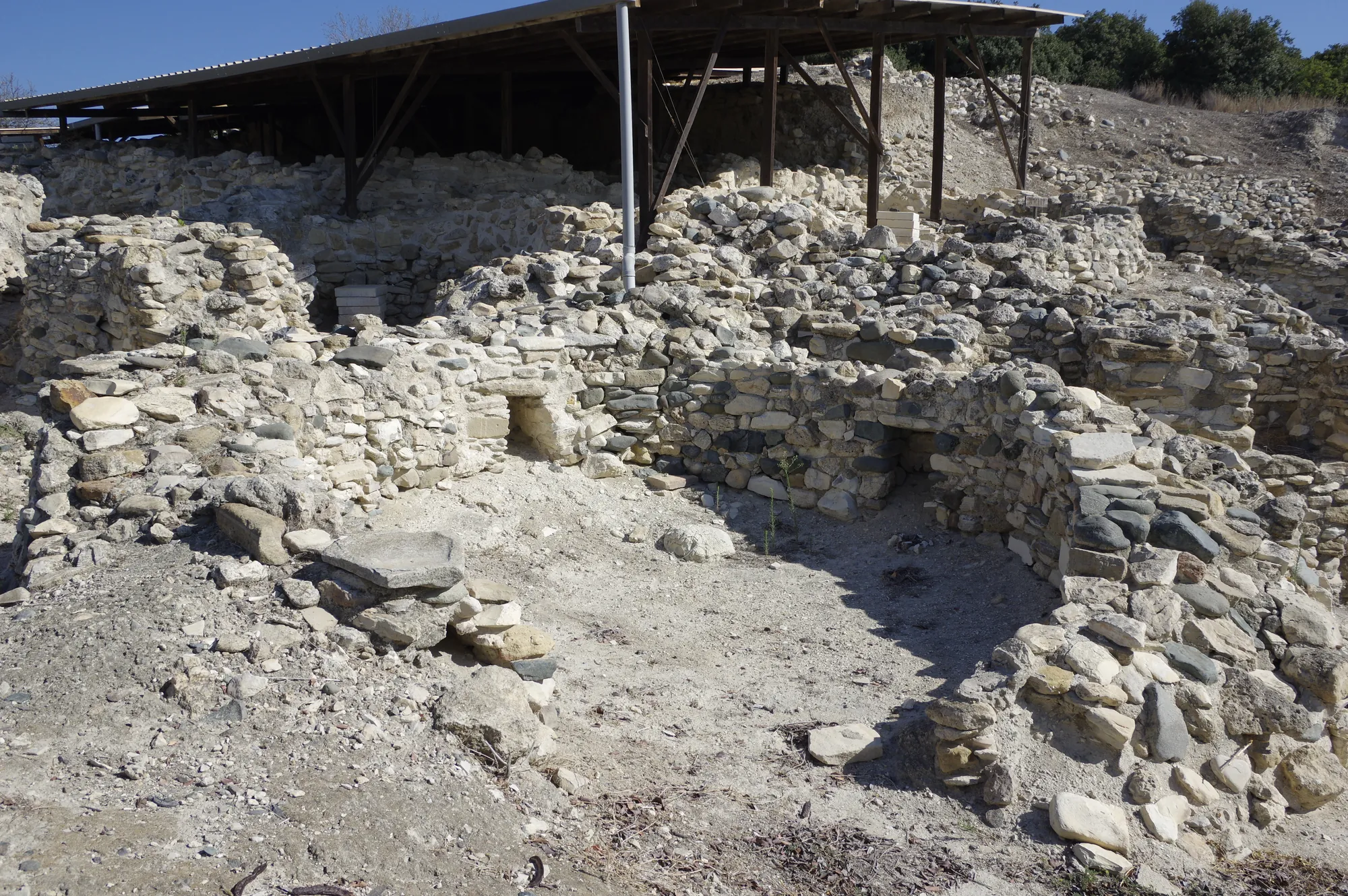
After outlining how previous survey data and surface pottery were skewed by agricultural terracing, Düring contrasts the northern and southern sectors of the 750-square-metre excavation area. The northern trenches revealed monumental Chalcolithic round houses, most notably Building 1, dated by stratigraphy and radiocarbon to c. 2800–2700 BC. This structure features walls a metre wide, a plastered exterior portico and interior floor, a hearth platform 2.5 metres across, and a double-dipped stone mortar installation.
In the southern area, the team uncovered smaller, densely stratified structures measuring four to eight metres across with varied construction techniques, including mud-walled buildings, superimposed plaster floors, and a stone wall standing to 1.2 metres. Associated with a later building set in front of Building 5, excavators recovered a nearly complete large jar with parallels at Kalavasos-Pamboules, radiocarbon-dated to c. 2600 BC. Inside the vessel lay a cache containing hooks made of boar tusk, a flat stone axe, and a copper axe. Compositional analysis by Andreas Charalambous and Lina Kassianidou showed that the metal axe contains a trace of tin foreign to Cypriot ores, indicating imported metal or an imported object.
Düring reviews further evidence for regional and overseas links, including Red-and-Black Stroke-Burnished ware with Anatolian affinities, Moni chert, a copper spiral, a copper snake, and a sherd painted with a snake that recall finds from Souskiou-Laona. He concludes with an overview of burials cut into the bedrock outside the buildings, picrolite and stone figurines, and the Department of Antiquities decision to acquire the plots for long-term research. In the discussion afterwards, Diane Bolger, Harry Paraskeva, Jenny Webb, Kassianidou, and others examine the ceramic transition, the jar's parallels, and tin traces in Chalcolithic metalwork and faience.
From our collection
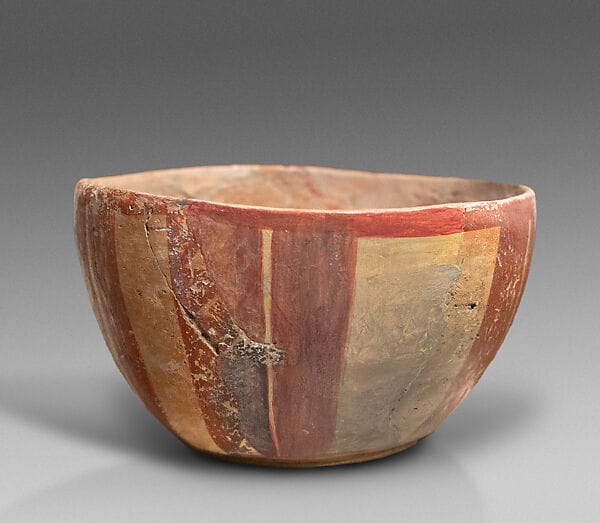
Pieces in the Drakopoulos collection of the kinds and periods this talk covers: Neolithic and Chalcolithic wares.
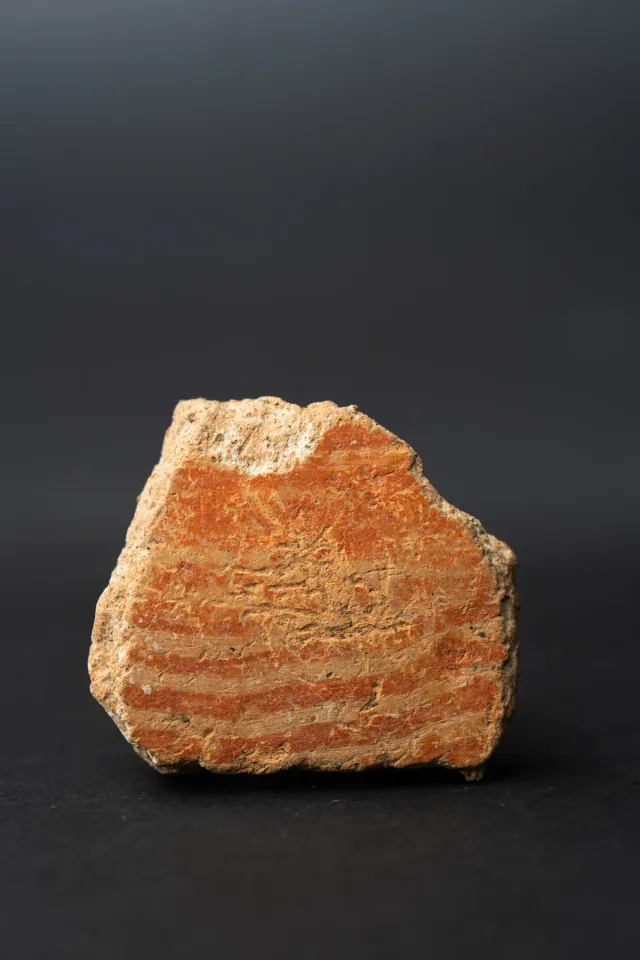
Combed Ware Bowl Fragment with Parallel Bands
Neolithic and Chalcolithic wares
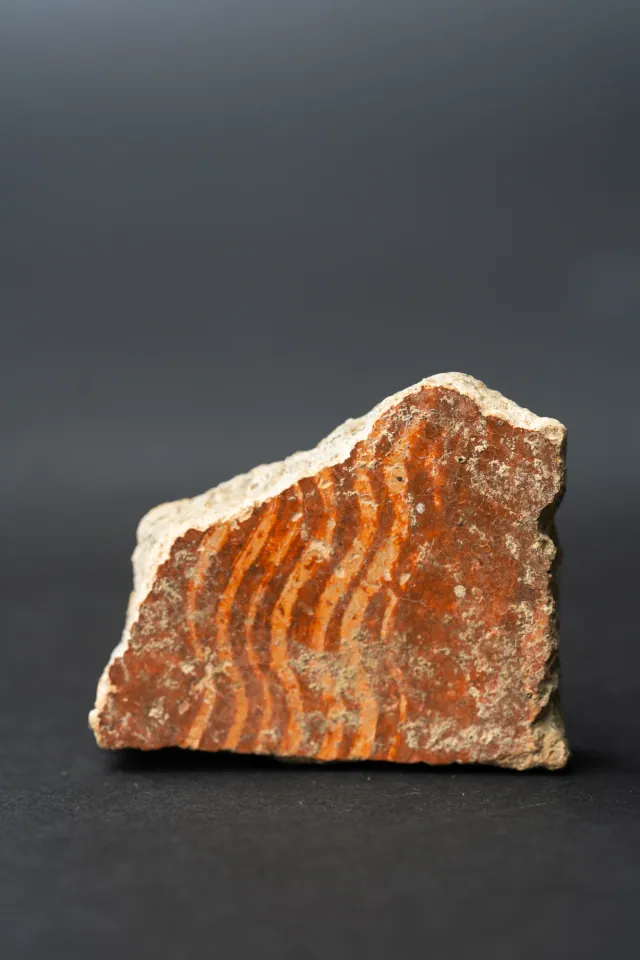
Combed Ware Bowl Fragment with Multiple Wavy Bands
Neolithic and Chalcolithic wares
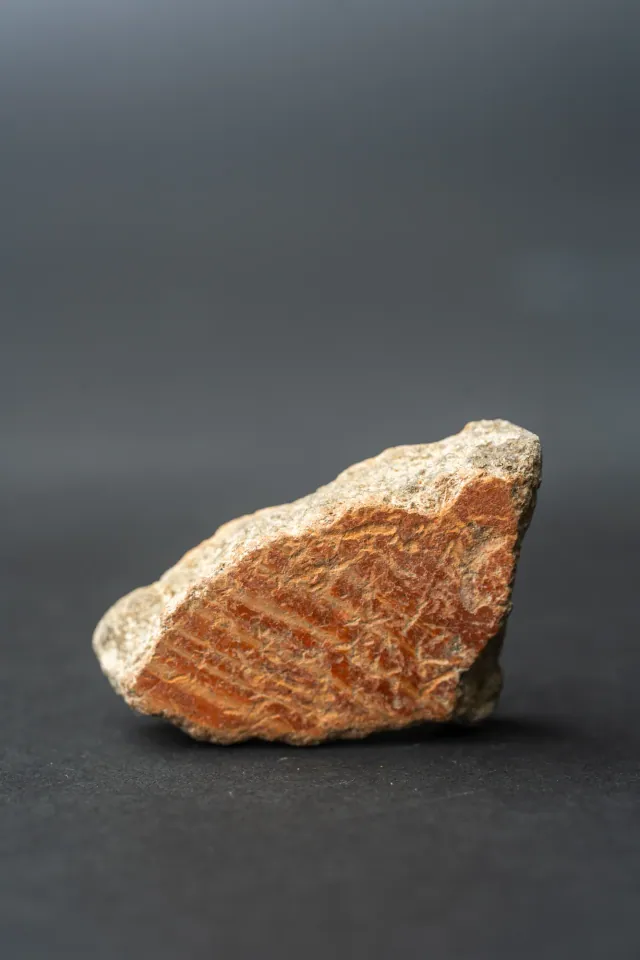
Combed Ware Bowl Fragment with Oblique Bands
Neolithic and Chalcolithic wares
Found at the places discussed
Objects in our catalogue, in museum collections, recorded as found at these sites.
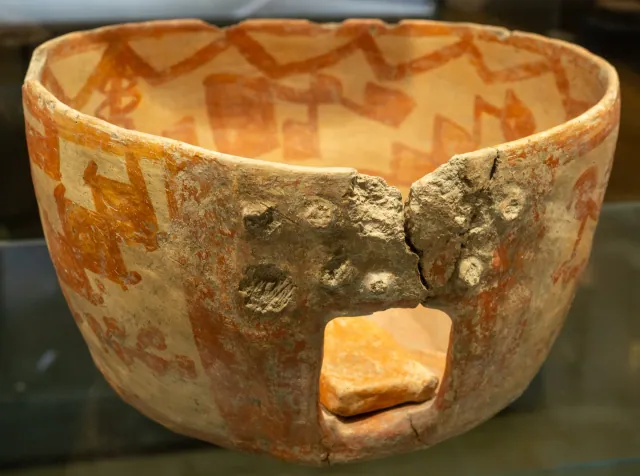
Background
Where to read more on this site before or after watching.
The site
Chlorakas-Palloures
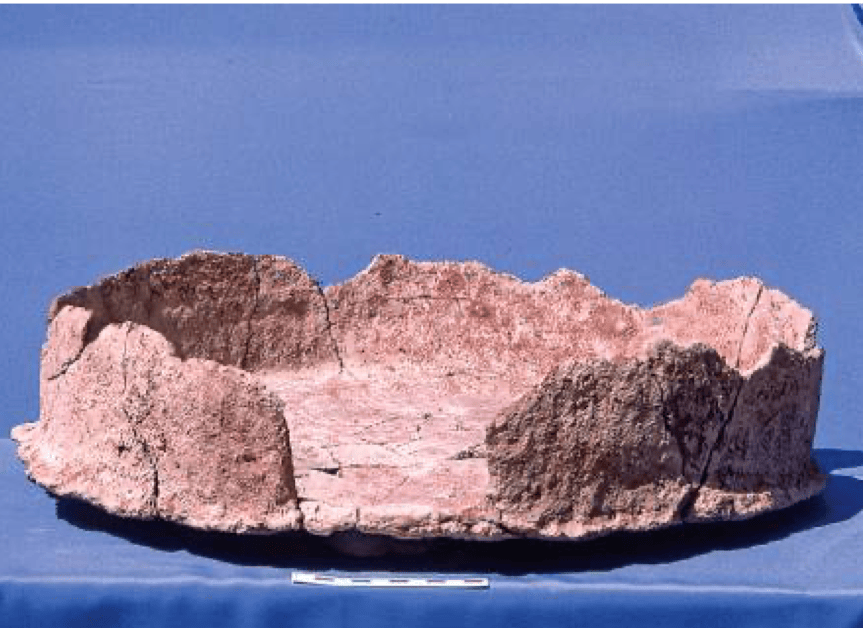
A Middle and Late Chalcolithic village on a terrace edge above the coastal plain at Chlorakas, north of Paphos, lived in from about 3400 to 2400 BC. Rescue excavation since 2015 has found the largest Late Chalcolithic round building yet known on Cyprus and the oldest securely dated copper axe from the island.
In the compendium
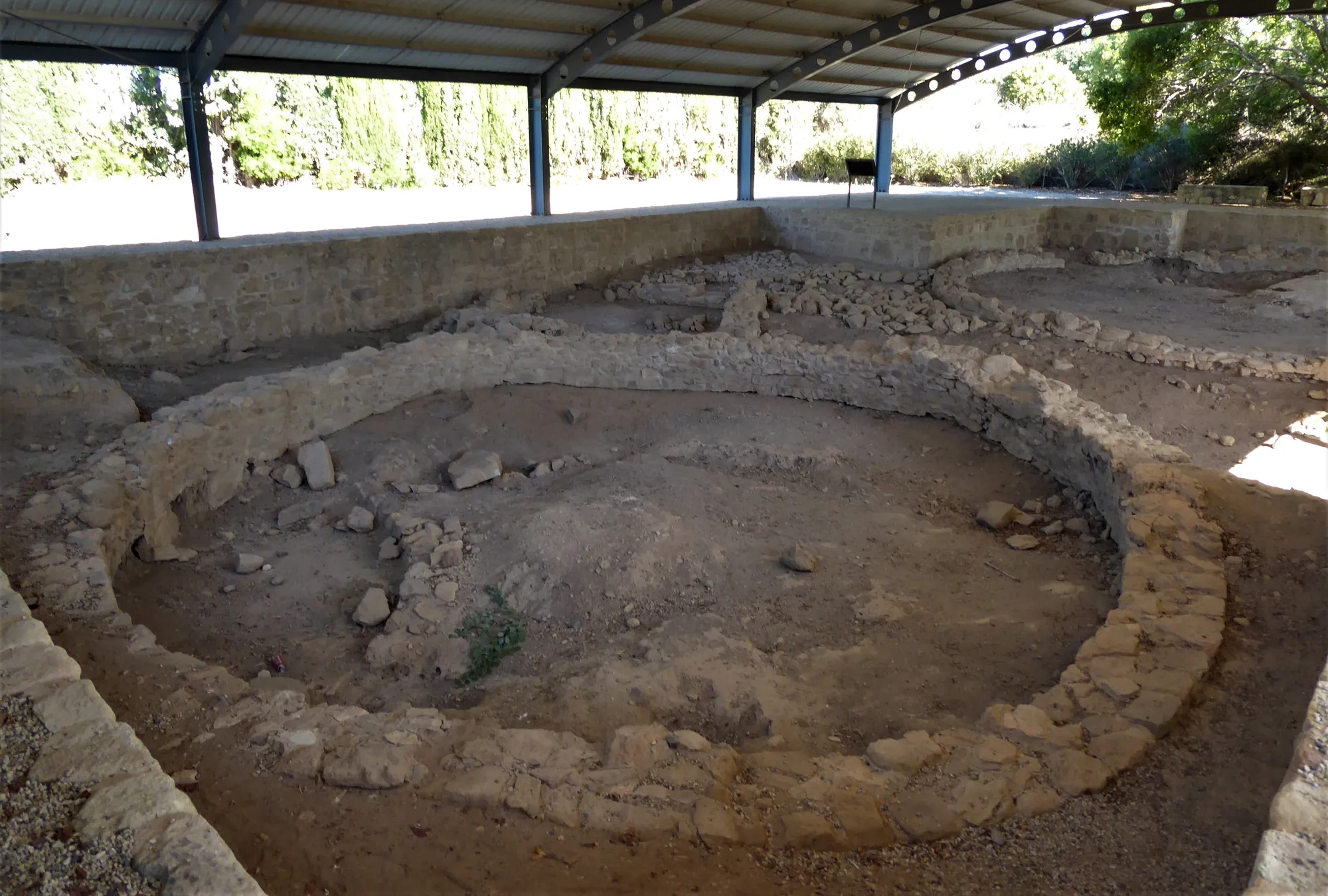
Chalcolithic Round Houses
The free-standing circular house of Chalcolithic Cyprus, from timber post rings to stone-footed great houses, and the Kissonerga building model.
In the compendium
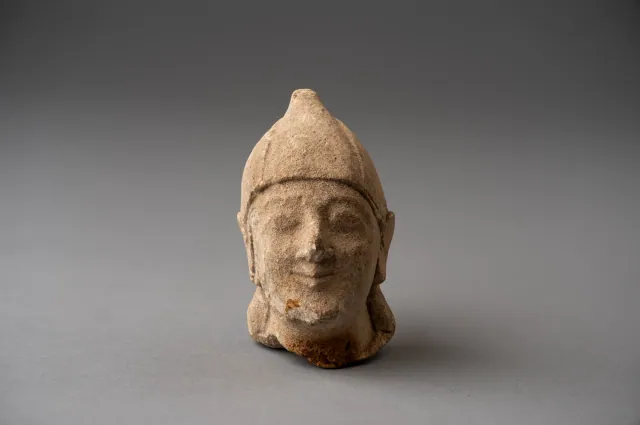
Stone in Ancient Cyprus
Cypriots worked local chert, igneous rocks, picrolite and limestone from the Neolithic onwards, and imported marble, alabaster and gemstones.
In the compendium
Neolithic and Chalcolithic Burial in Cyprus
Burial on Cyprus from the first farming villages to the eve of the Bronze Age, mostly contracted bodies in pits beneath or beside houses.
Map of Cyprus
Places discussed in the talk
- Has a page on this site
- Other places
- Ground above 200, 500, 1,000 m
Places
- 1Chlorakas-Palloures
- 2Lemba-Lakkous
- 3Kissonerga-Mosphilia
- 4Kissonerga-Mylouthkia (approx.)
- 5Souskiou-Laona (approx.)
- 6Kalavasos-Pamboules (approx.)
- 7Sotira-Kaminoudhia