
Fieldwork·Brief
2026 dig at Kissonerga-Skalia adds to the case for Bronze Age beer, Akamas municipality says
Lindy Crewe's CAARI team closed its season at the village north of Paphos, where a 4 m oven yielded charred wheat and terebinth in 2025.



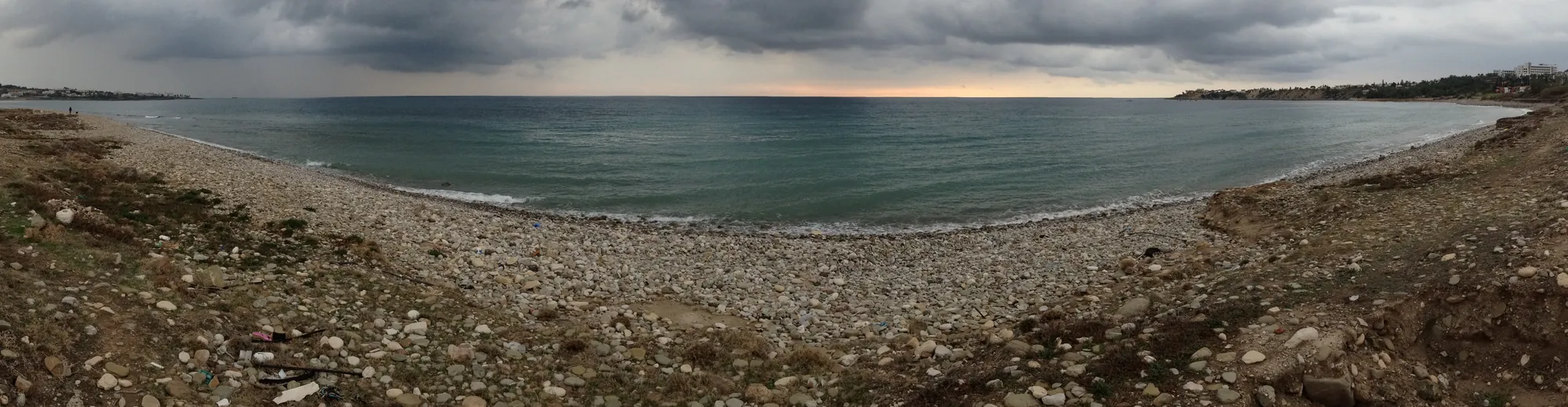
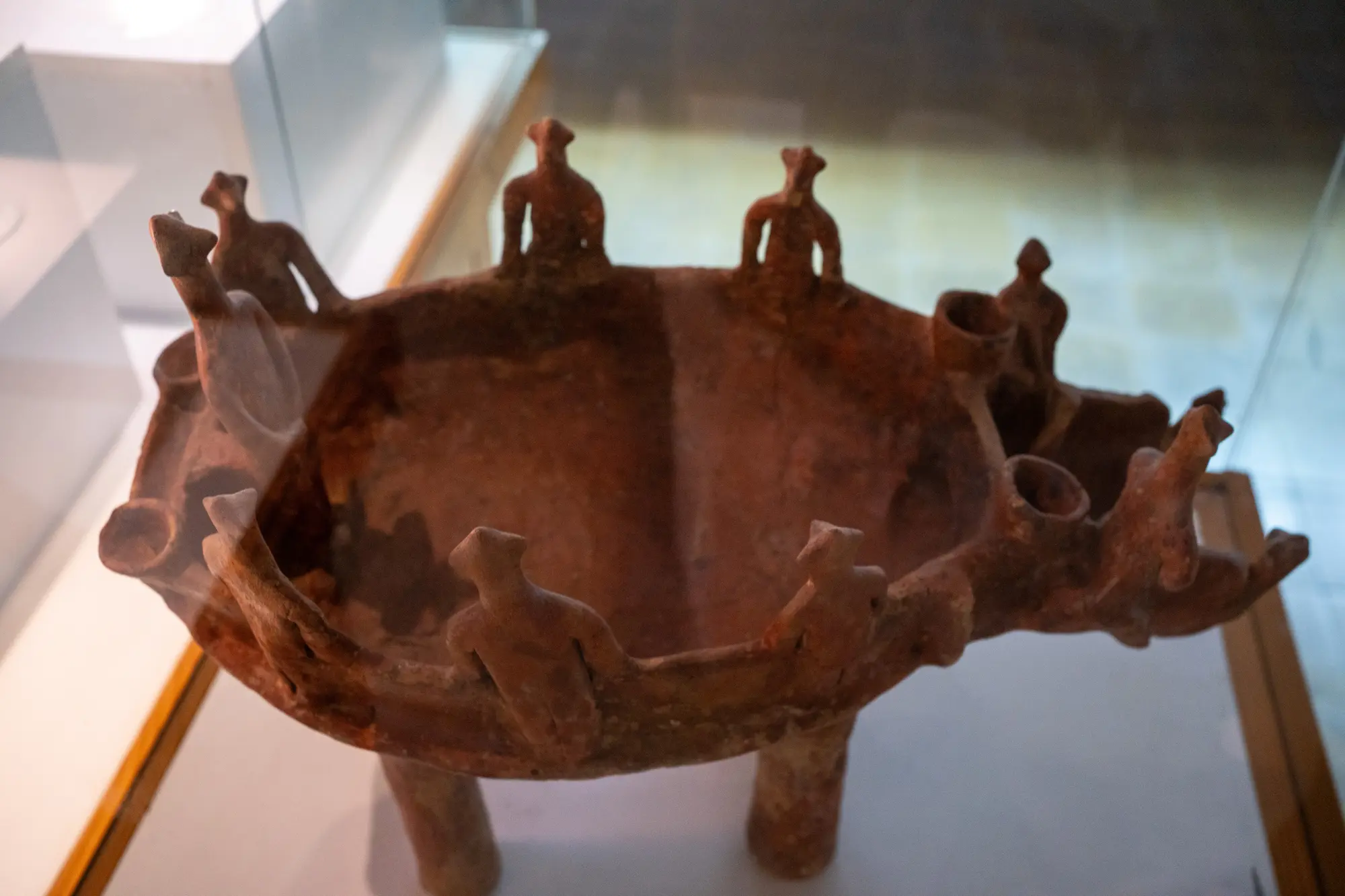
Archaeologists of the HARP project and the Cyprus American Archaeological Research Institute (CAARI) finished their 2026 season at Kissonerga-Skalia, a Bronze Age village on the coast north of Paphos, in late July. Announcing the close of work on Saturday 25 July, the Akamas municipality said the season had added to the evidence for how the settlement grew and had strengthened the earlier case for brewing there, which it described as one of the oldest breweries in the world. Lindy Crewe, director of CAARI, leads the excavation.
Neophytos Constantinou, an Akamas municipal councillor, marked the end of the season with a visit to the trenches. He thanked the archaeologists, researchers and students, and the Akamas school board, which housed the team again this year. In the municipality's view, the results confirm that beer played an important part in the social and ritual life of the village.
Map of Cyprus
Skalia and its neighbours
- Ground above 200, 500, 1,000 m
Sites on this map
- 1Kissonerga-Skalia (approx.)
- 2Kissonerga
- 3Maa-Palaeokastro
A working complex on an old village site
Most of what the team digs is the village's last phase. According to the Department of Antiquities, which reported on the 2025 season on 20 November 2025, Skalia ended as a complex of courtyards and roofed rooms covering at least 1,200 m², begun around 1750 BCE, near the end of the Middle Bronze Age. The Department found no sign that anyone lived in it. It held large fire installations, places for grinding and processing materials, and storage jars. To make room, the builders pulled down older buildings on the northern, upper part of the slope, spread the debris downslope into a level platform and raised walls up to 1.2 m wide. The complex may have stood for only a few generations before the site was deserted around 1600 BCE, at the opening of the Late Bronze Age.
The village beneath is far older. Founded about 2500 BCE, in the Philia phase that begins the Early Bronze Age, on ground with traces of earlier Chalcolithic occupation, it took over from neighbouring Kissonerga-Mosphilia, dug by Edgar Peltenburg and the Lemba Archaeological Project. Graham Philip published pottery from Skalia collected during the Ktima lowlands investigations of 1979 to 1982, and Crewe, then at the University of Manchester, began excavating in 2007.
Crewe and Ellon Souter count the complex among the large non-domestic buildings put up across Cyprus as the Middle Bronze Age gave way to the Late. Its size, they argue, means the whole community worked on it; whether as equals or under pressure from part of the population is unknown [2, p. 179].
Feature 33 and the four-metre oven
The brewing case rests on Feature 33, a domed installation in one of the complex's courtyards.
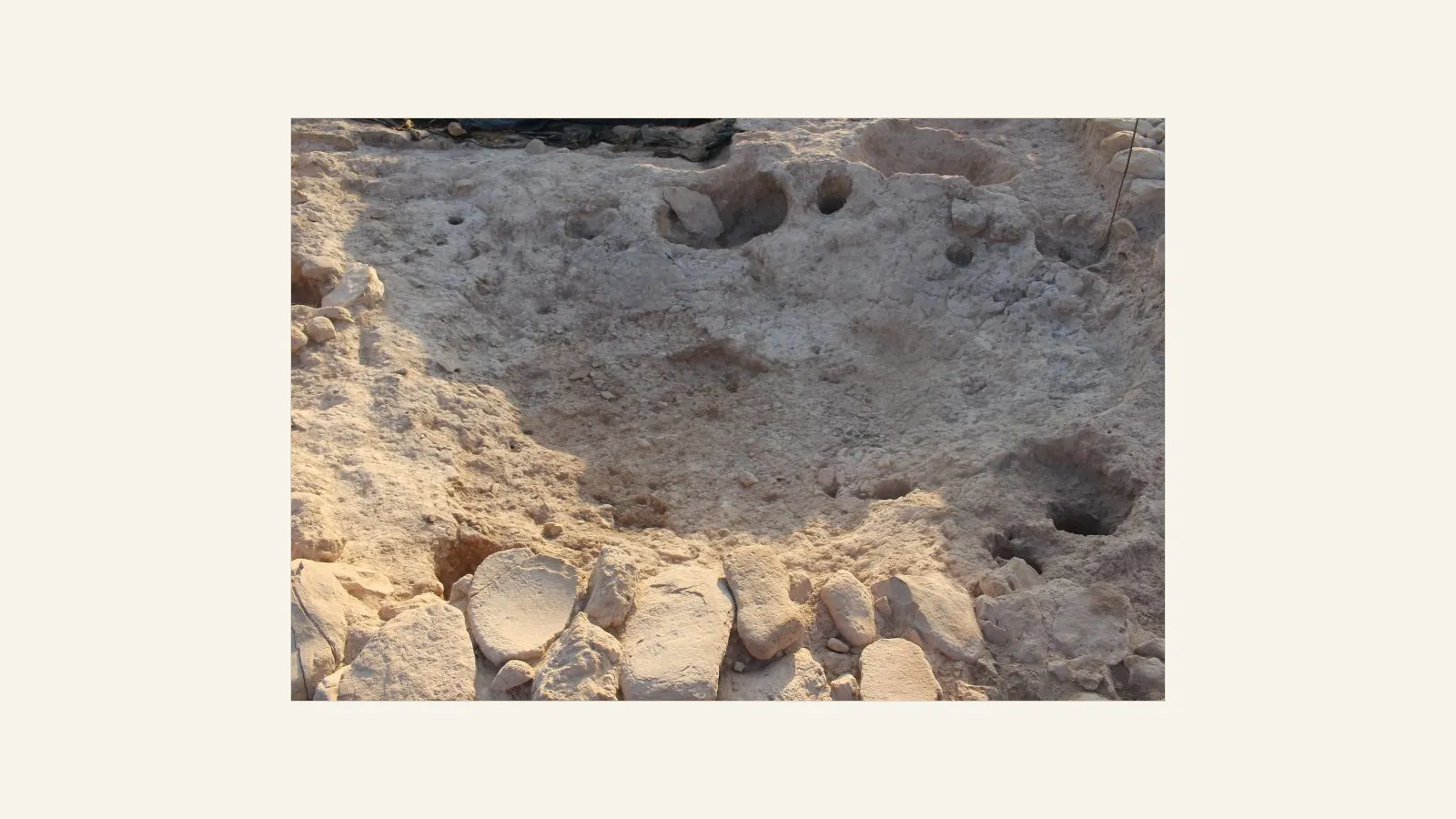
The 2025 season added a second, much larger oven. Excavation showed that the courtyard holding a 1.5 m domed oven, found earlier, was L-shaped, and in its short arm lay a concave basin of hard-baked mud plaster about 4 m across, with low mud walls and no roof. It had gone out of use while the village was still inhabited: it was filled in and floored over before the domed oven was built. The filling contained discarded grinding stones, lumps of plaster, sherds and animal bones.
The Department called the big oven's purpose unclear. Wet-sieving of its soil produced charred wheat and terebinth, probably burnt by accident, which the Department suggests may point to a food made with wheat and terebinth seeds in the Bronze Age.
After Skalia was abandoned, no Bronze Age settlement is known near Kissonerga until Maa-Palaeokastro was founded, about 1225 BCE, 5 km to the north [1, p. 206].
Original sources
- Cyprus Mail: Excavations at Kissonerga uncover one of Cyprus' oldest Bronze Age settlements
Press·
- Department of Antiquities, Cyprus: Completion of the 2025 season of archaeological excavations at the Bronze Age settlement of Kissonerga-Skalia
Official release·
- Cyprus Times: Significant finds at the Skalia archaeological site in Kissonerga
Press·
- Ant1 Live: Significant archaeological finds at Kissonerga
Press·
On ancientcyprus.com
References
- 1.Crewe, L. and Hill, I. (2012). Finding beer in the archaeological record: a case study from Kissonerga-Skalia on Bronze Age Cyprus. Levant 44, 205–237.
- 2.Crewe, L. and Souter, E. (2023). Strategies for success during the transition to the Late Bronze Age at Kissonerga-Skalia. In T. Bürge and L. Recht (eds), Dynamics and Developments of Social Structures and Networks in Prehistoric and Protohistoric Cyprus, 179–195. London: Routledge.
More in Fieldwork
- Hellenistic quarry under Paphos's Fabrika hill became an unused tomb, then a church
- This Week in Cypriot Archaeology: 31 August–6 September 2026
- Hollows cut into a Bronze Age threshold at Erimi match a senet game board
- This Week in Cypriot Archaeology: 27 July–2 August 2026
- Grape seeds and unfired loom weights found in Bronze Age work complex at Erimi-Pitharka