
Conference paper·Archaeological Research Unit - University of Cyprus·2019
A Conference in Honour of A. Bernard Knapp: Bronze Age Connections at Lapithos and the Miners' Sanctuary at Mathiatis-Mavrovouni
Chapters
About the video
This first recording from the conference "The Archaeology of Cyprus and the Wider Mediterranean", held at the Archaeological Research Unit in Nicosia in honour of A. Bernard Knapp, opens with welcome addresses by Sturt Manning, Vasiliki Kassianidou, Lindy Crewe, and Marina Solomidou-Ieronymidou surveying Knapp's career in Cypriot prehistory, archaeometallurgy, maritime exchange, and regional survey.
In the first paper, "Cyprus's External Connections in the Prehistoric Bronze Age: Refining a Maximalist Position", Jennifer Webb responds to Knapp's critique of her argument that the north coast settlements at Vasilia and Lapithos participated actively in seaborne metal trade during the Early Bronze Age and Middle Bronze Age. Citing lead isotope data and portable XRF analyses by Andreas Charalambous, she notes that 49 percent of 415 analysed Middle Cypriot objects from Lapithos are copper-tin alloys, with tin present in 68 percent of the sample. Webb counts at least 150 imports at Lapithos, Vounous, and Karmi, alongside Anatolian-type needles, Levantine-style toggle pins, and local mushroom-headed pins. Comparing tomb assemblages excavated between 1913 and 1931, she argues that metal wealth and imports correlate from Middle Cypriot I-II onwards and concentrate in a small group of tombs, indicating qualitative differences in status and funerary display before the Late Bronze Age. In the discussion afterwards, Knapp reiterates his reservations regarding lead isotope sourcing, portable XRF, and the absence of excavated settlement evidence on the north coast.
In the second paper, "Mathiatis-Mavrovouni: A Miners' Sanctuary", Sophocles Hadjisavvas presents a five-day rescue excavation conducted in June 1983 after road construction disturbed a slag heap between the village of Mathiatis and the South Mathiatis mine. After reviewing earlier discoveries in the mining district, including a 1936 oxhide ingot hoard, a Hellenistic relief of Dionysos, and Cypro-Archaic II roasting and smelting furnaces near Strongylos, he describes the recovery of disturbed walls, ash layers, a grooved stone hammer, and a Late Bronze Age bronze charcoal shovel. The votive assemblage comprises 136 limestone votives, including 130 sculptures, and 62 terracotta figurines dating from the Cypro-Archaic to the Hellenistic period, with representations of Pan, Herakles, Apollo, male votaries, and horse-and-rider figurines. Hadjisavvas traces the cult of Pan along the overland copper route from the Troodos mines to the eastern ports.
From our collection
Pieces in the Drakopoulos collection of the kinds and periods this talk covers: Stone sculpture, Terracotta figurine.
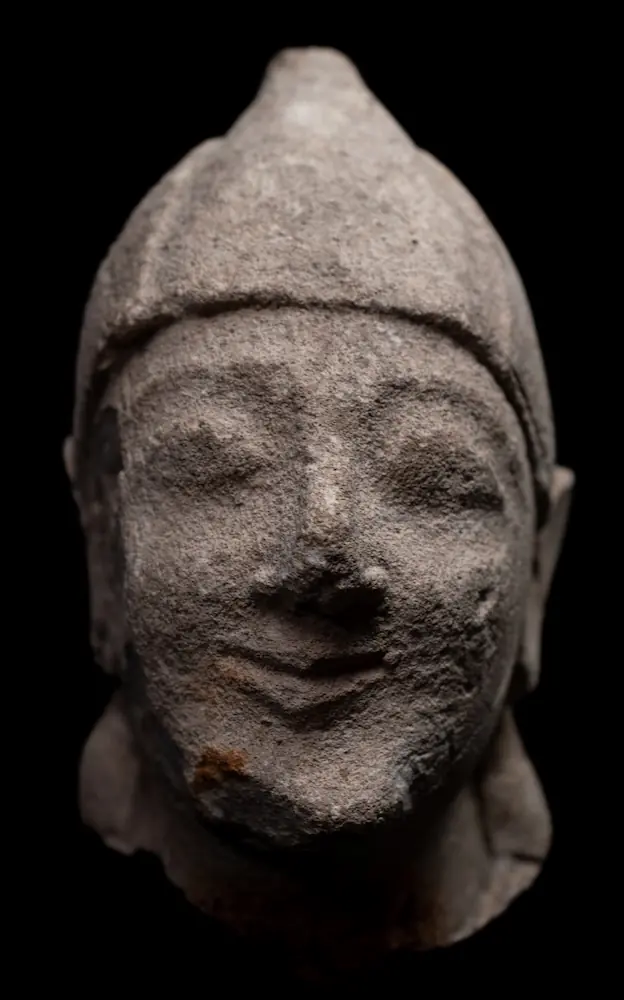
Limestone Head of a Beardless Votary in a Conical Helmet
Stone sculpture
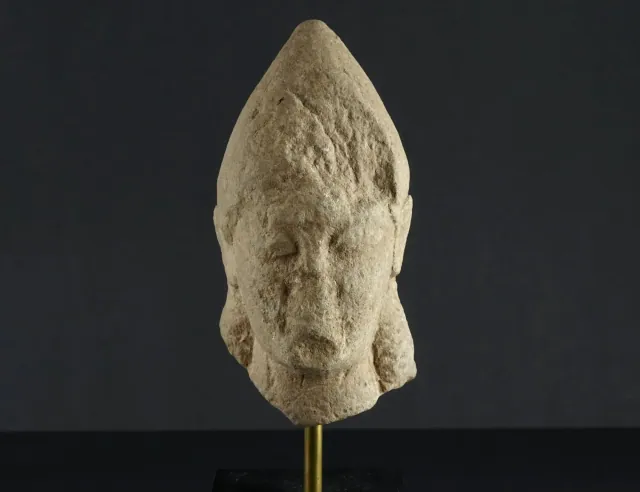
Weathered Limestone Head of a Votary in a Tall Pointed Cap
Stone sculpture
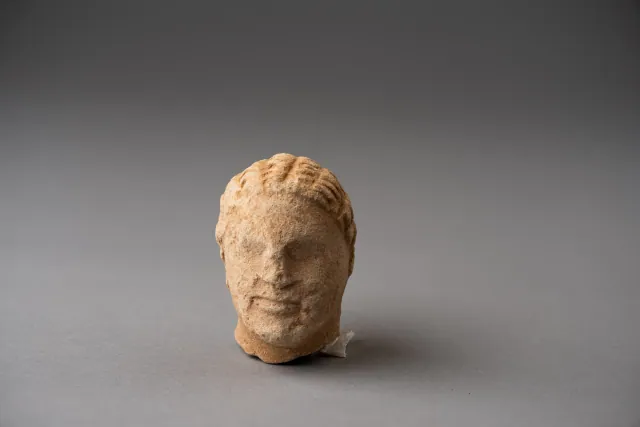
Limestone Head of a Boy, probably from a Temple Boy Statuette
Stone sculpture
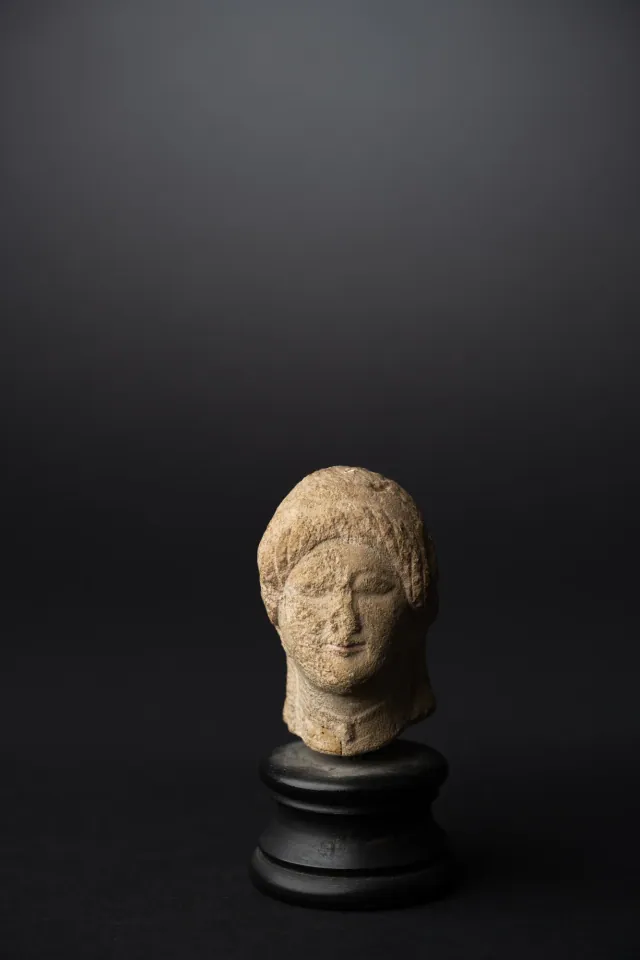
Limestone Head of a Votary with a Wreath
Stone sculpture
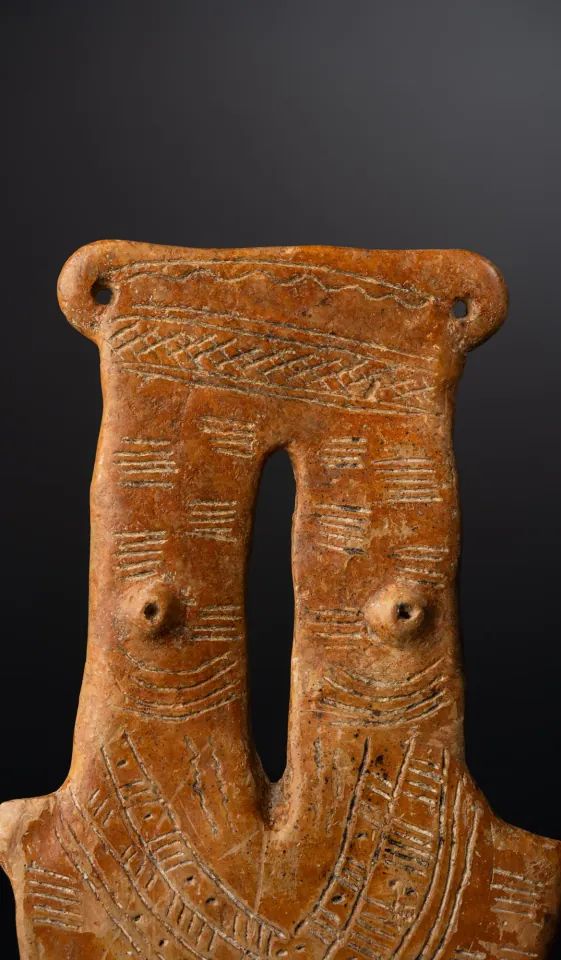
Red Polished Two-Necked Plank Figure
Terracotta figurine
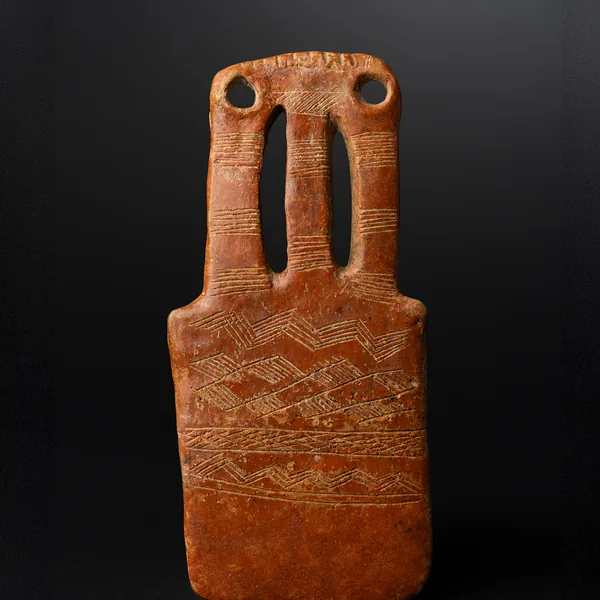
Red Polished Three-Necked Plank Figure
Terracotta figurine
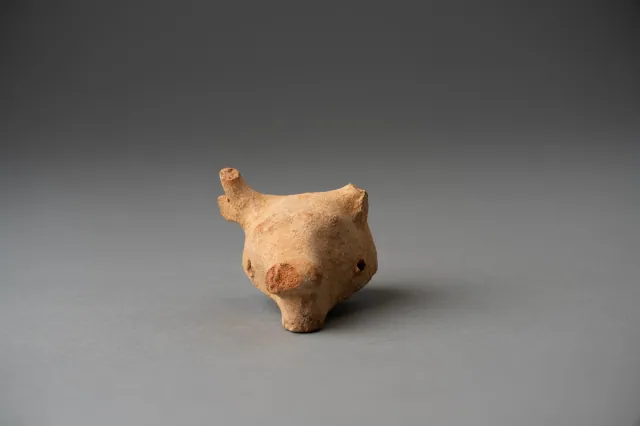
Head of a Terracotta Bull Figurine
Terracotta figurine
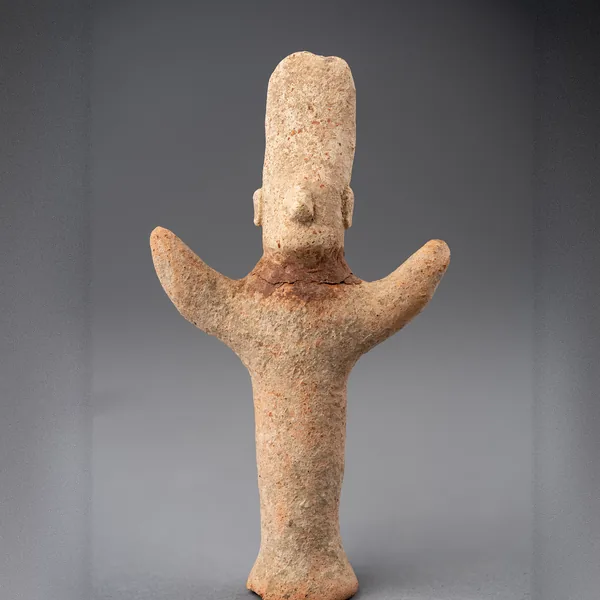
Terracotta Figure with Upraised Arms and Tall Cylindrical Headdress
Terracotta figurine
Found at the places discussed
Objects in our catalogue, in museum collections, recorded as found at these sites.
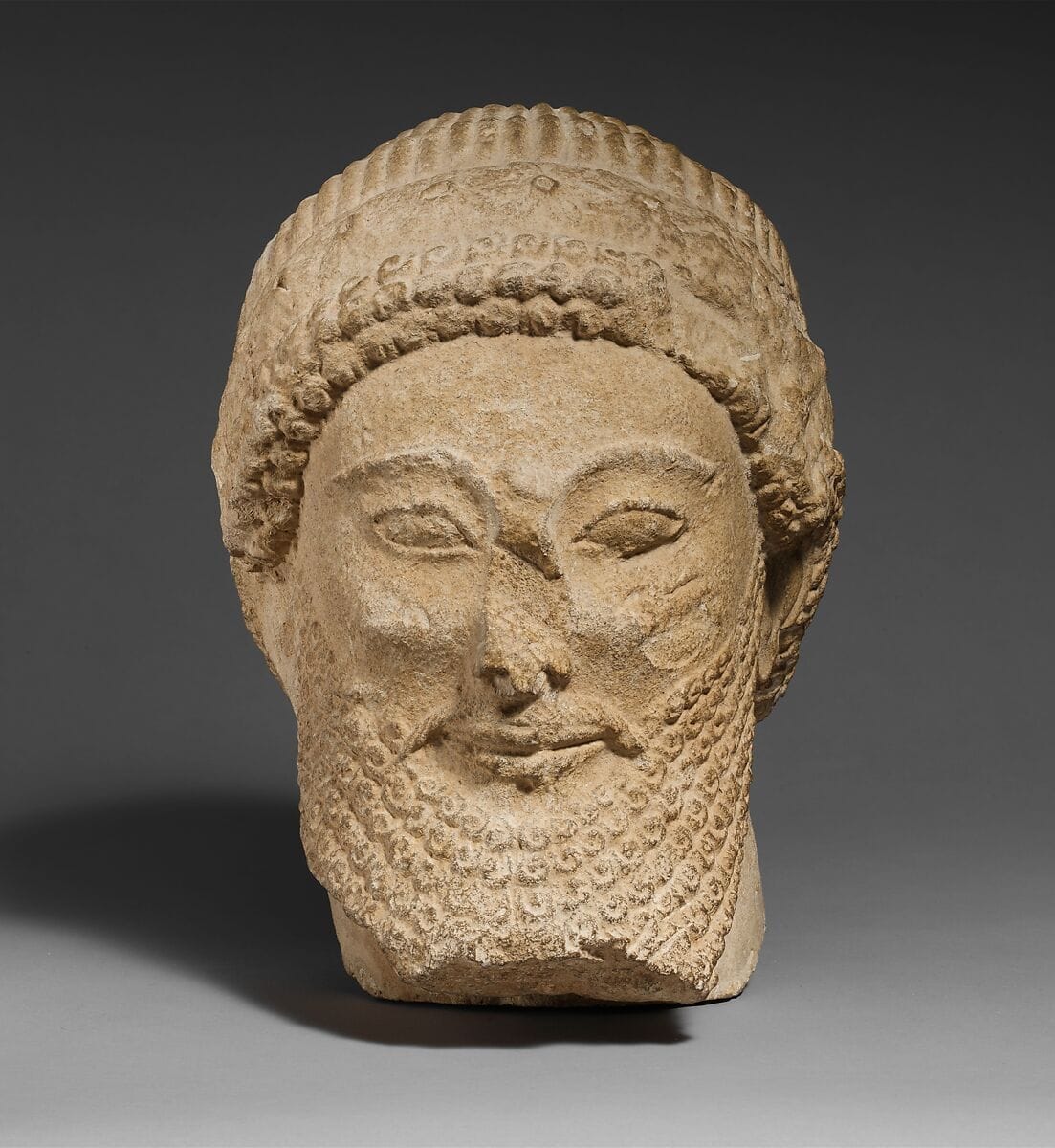
Limestone head of a bearded male with a wreath of flowers
Golgoi · Metropolitan Museum of Art
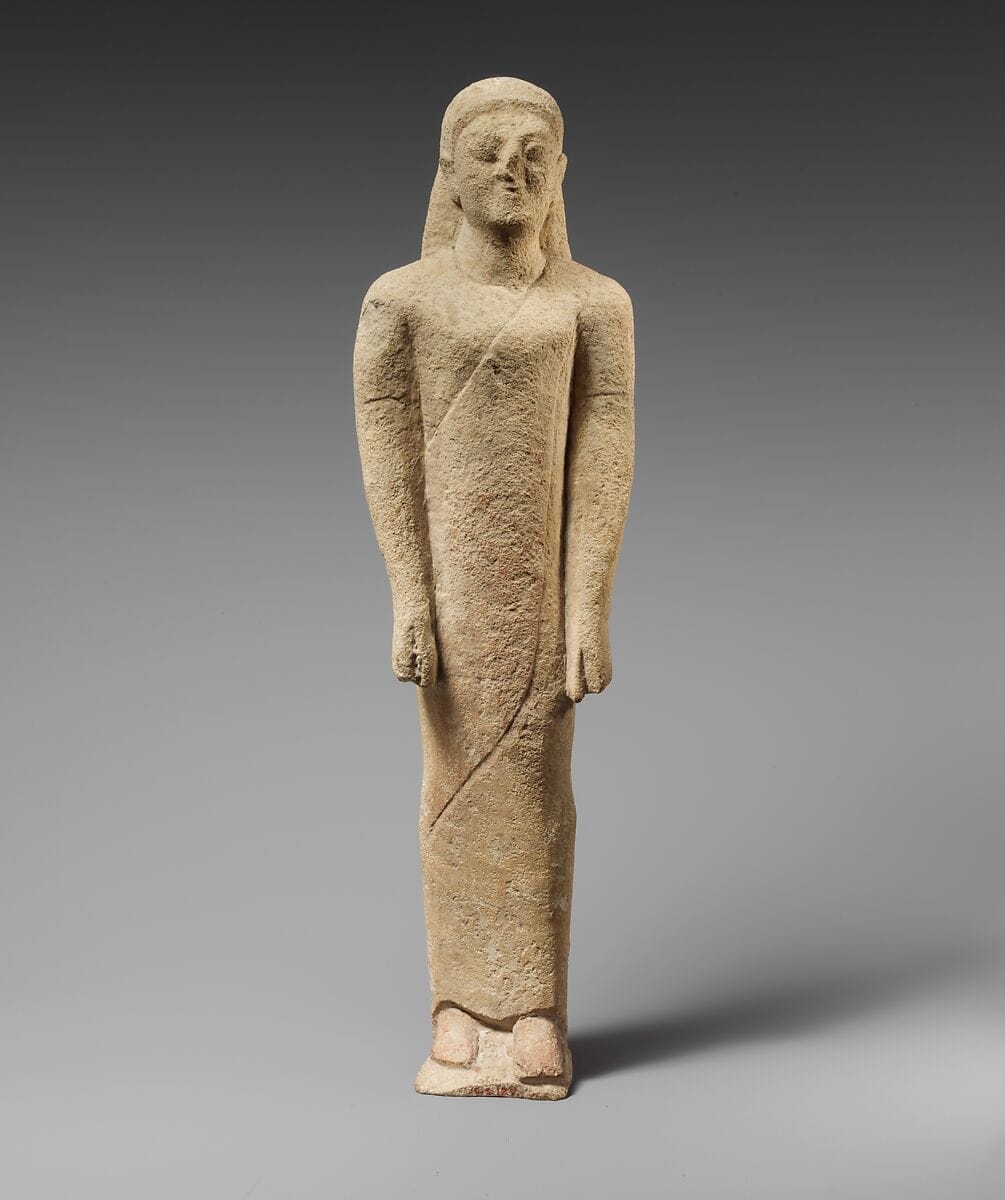
Limestone statuette of a beardless male votary in Greek dress
Idalion · Metropolitan Museum of Art
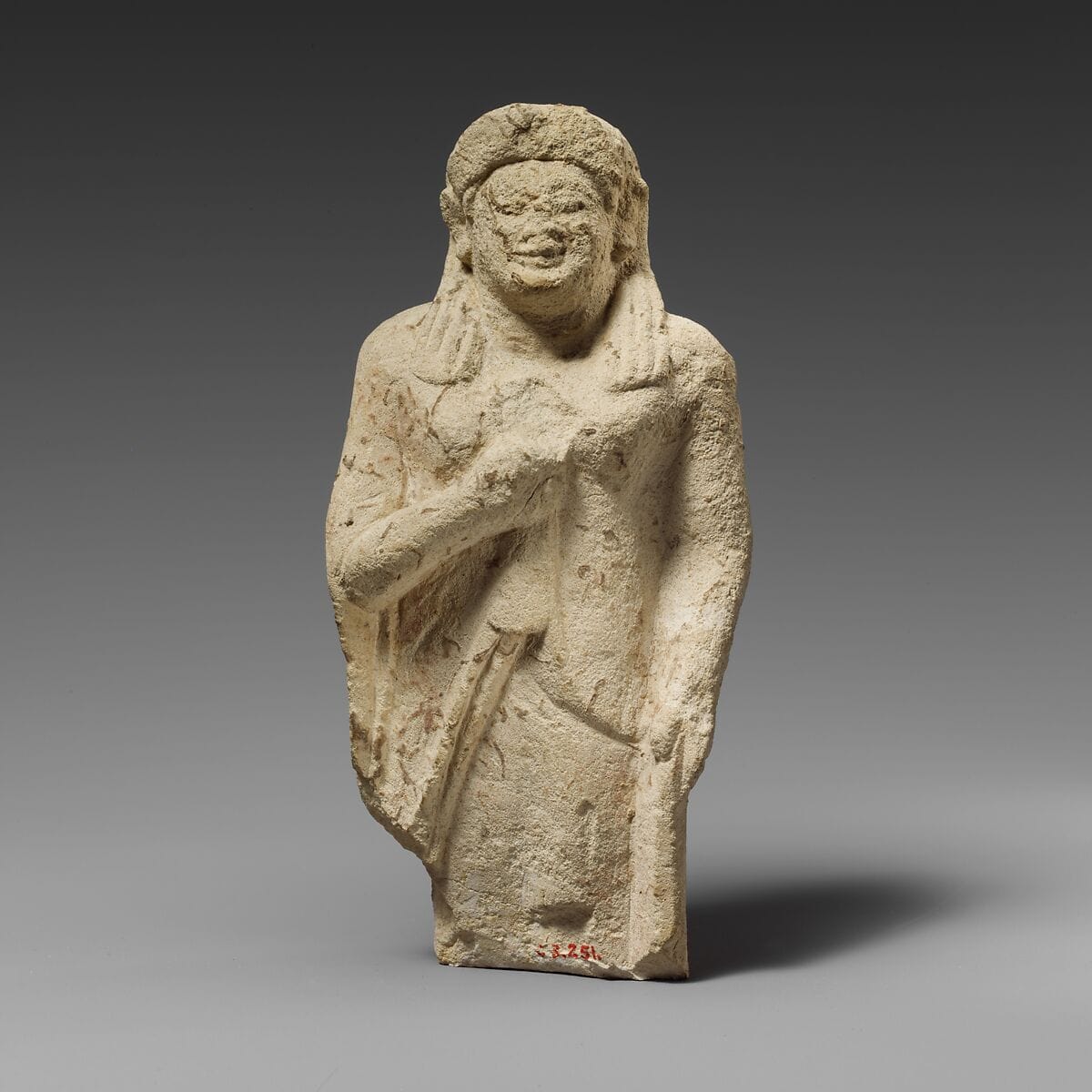
Limestone statuette of a female votary of the kore type
Golgoi · Metropolitan Museum of Art
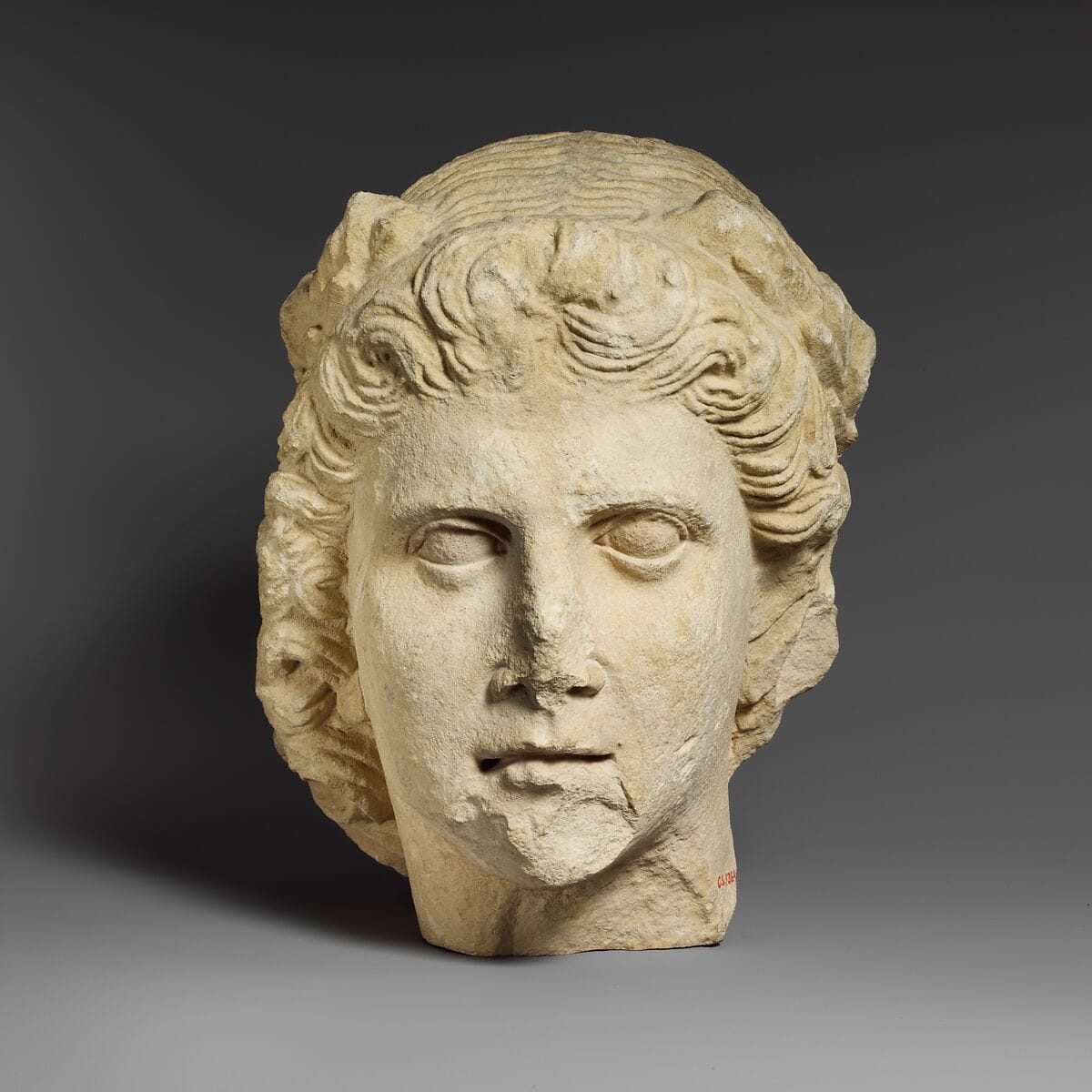
Limestone head of Apollo
Golgoi · Metropolitan Museum of Art
Background
Where to read more on this site before or after watching.
The site
Lapithos
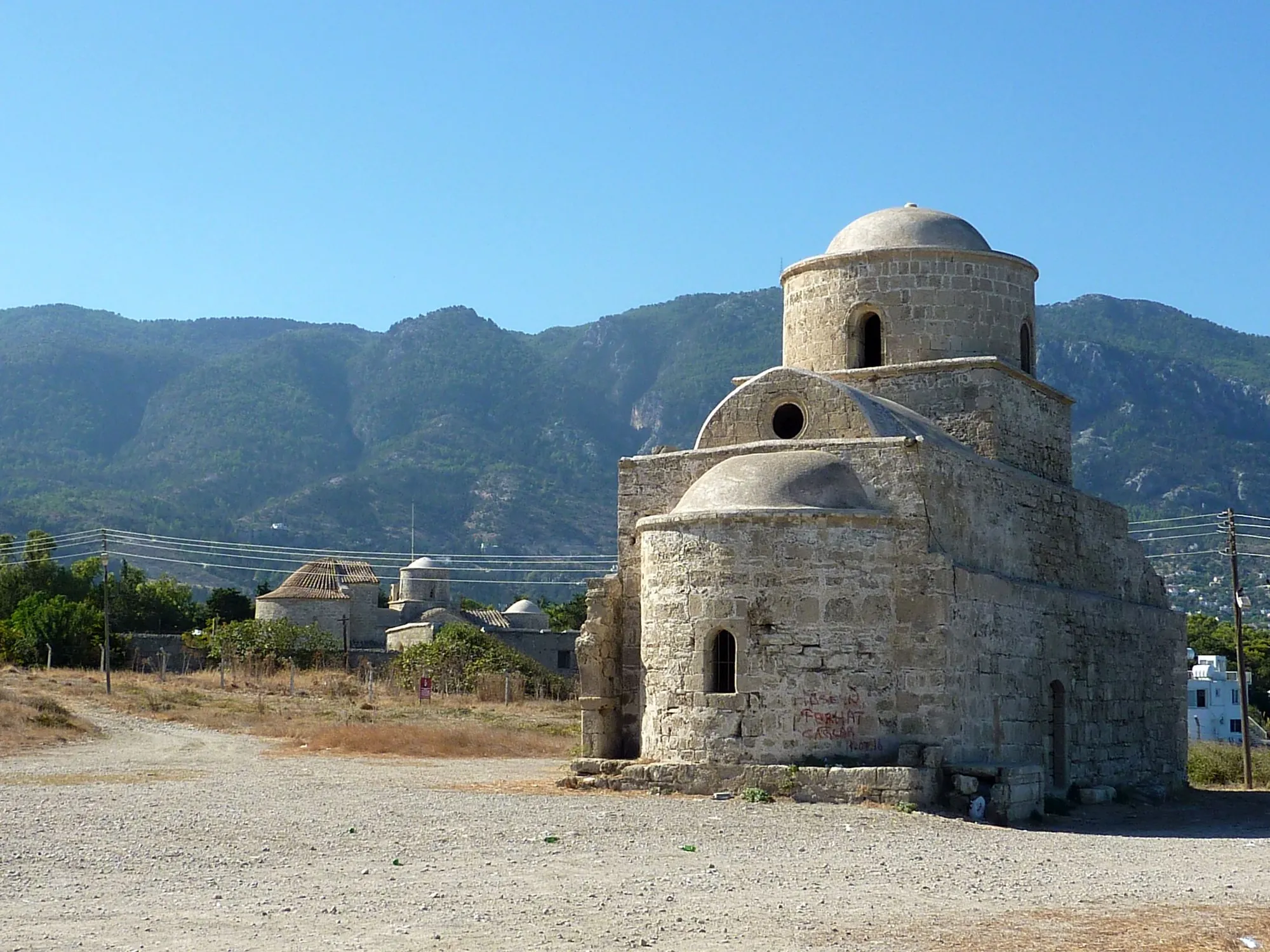
A group of cemeteries and settlement sites around the village of Lapithos on the north coast, below the Kyrenia range. Its Early and Middle Bronze Age cemetery at Vrysi tou Barba has produced about five times as much metal as Vounous, its Cypro-Geometric tombs gave the pottery sequence for that period, and ancient Lapethos was a city-kingdom until 312 BC.
In the compendium
Copper Metallurgy in Ancient Cyprus
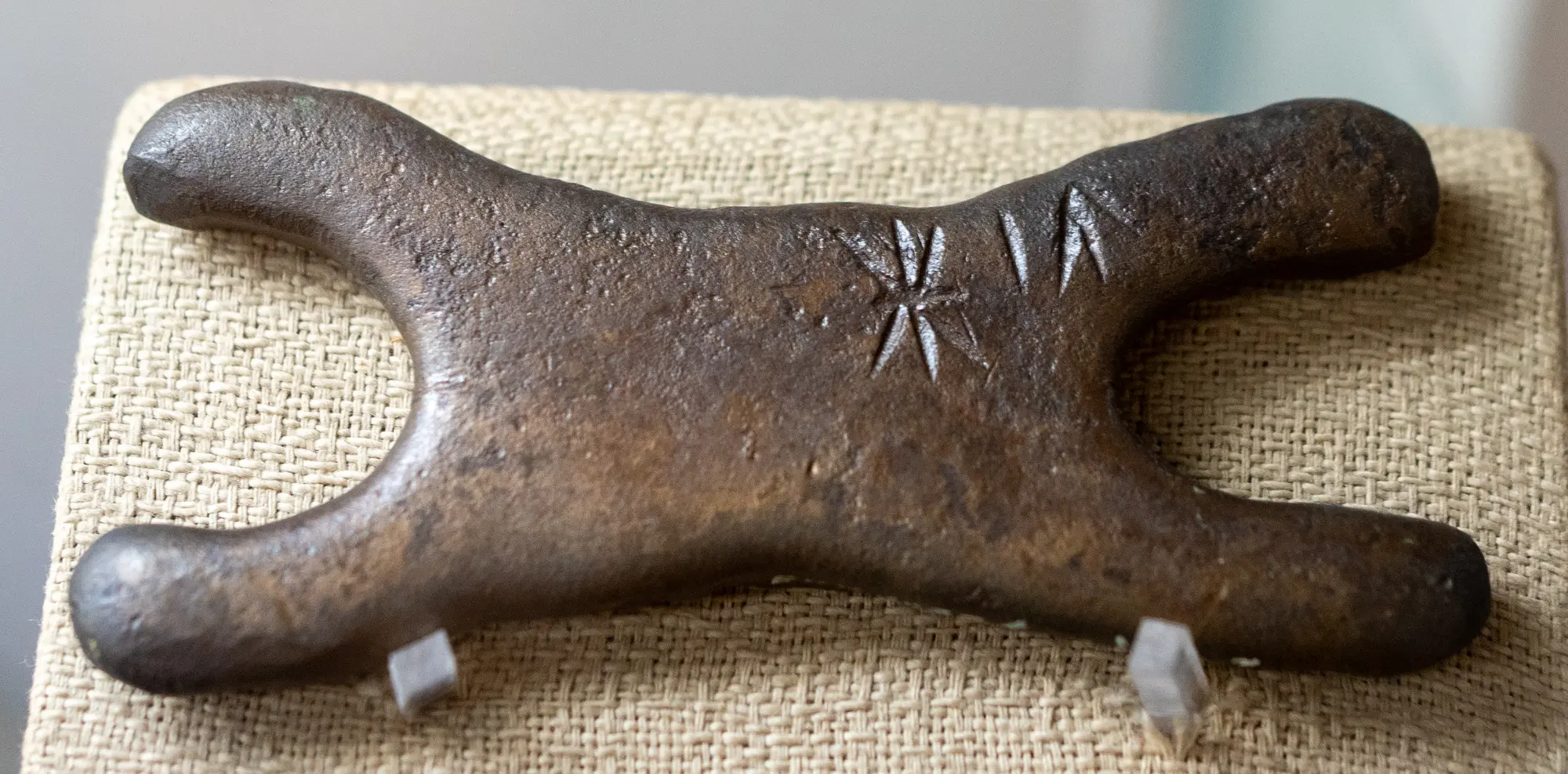
The mining, smelting and casting of the Troodos sulphide ores, from hammered Chalcolithic native copper to Late Bronze Age oxhide ingots and Archaic slag heaps.
In the compendium
Gold, Silver, Tin, Arsenic and Iron in Ancient Cyprus
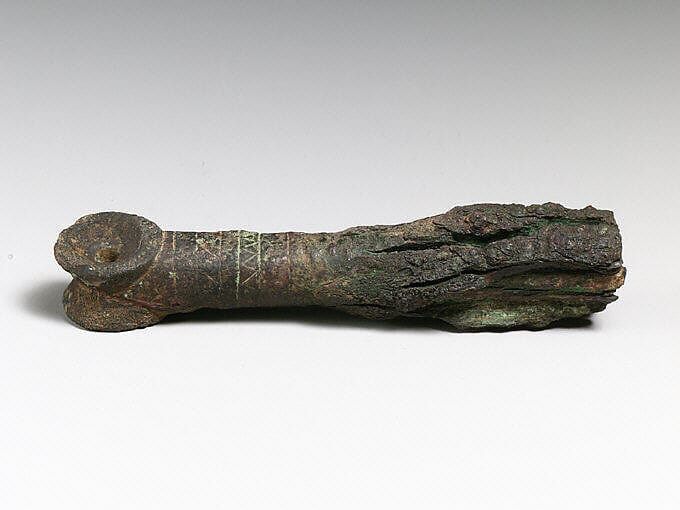
The metals other than copper used by Cypriot smiths from the Philia facies to the Hellenistic period, including arsenic, tin, gold, electrum, silver, lead and iron.
In the compendium
Seafaring and Ships in Ancient Cyprus
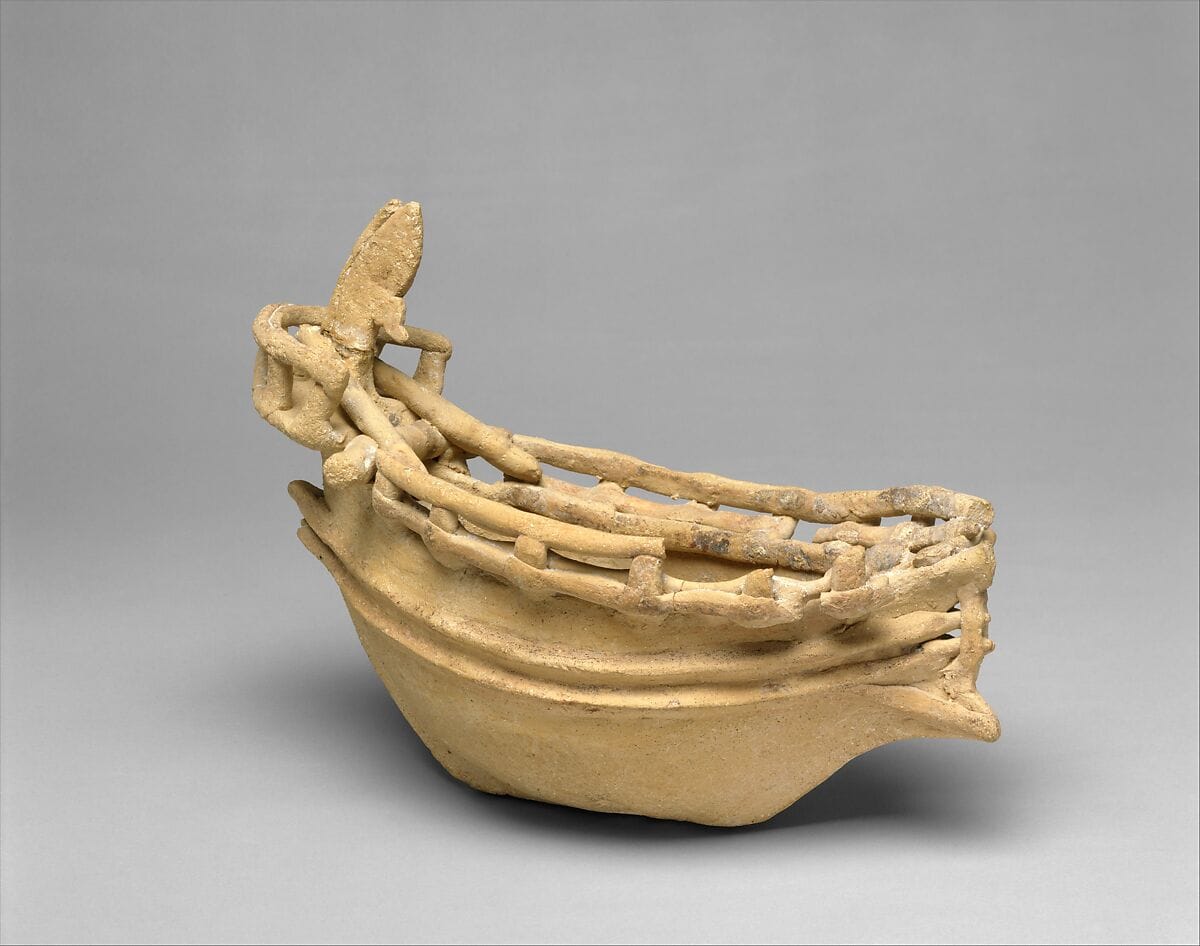
The evidence for boats and seafaring around Cyprus from the first crossings to the Classical period, from anchors, models and graffiti to wrecks and shipsheds.
Map of Cyprus
Places discussed in the talk
- Has a page on this site
- Other places
- Ground above 200, 500, 1,000 m