
Lecture·CAARI Cyprus·2022
Weaving New Patterns: Textile Production and Social Implications in Cyprus between the End of the Chalcolithic and the Transition to the Late Bronze Age
Giulia Muti
Chapters
About the lecture
Introduced by CAARI director Lindy Crewe, Peltenburg Postdoctoral Fellow Giulia Muti examines textile production and its tools in Cyprus from the end of the Chalcolithic (c. 2700–2500/2400 BCE) through the Early Bronze Age and the Middle Bronze Age to the opening of the Late Bronze Age (c. 1700–1450 BCE). Combining techno-functional analysis of artefacts with contextual study of settlements, she asks how spinning, splicing and weaving technologies developed on the island and how craft organisation related to prehistoric Cypriot communities.
Muti begins with the problem of visibility in textile archaeology and with David Frankel and Jennifer Webb's model of the Philia phase, which treated the appearance of terracotta spindle whorls and loom weights as part of a package brought from Anatolia. To establish what preceded the Bronze Age, she looks at Late Chalcolithic material from Kissonerga-Mosphilia and Souskiou, including bone needles, flax remains, caprid faunal data and perforated stone beads first suggested as whorls by Edgar Peltenburg. She argues that Chalcolithic thread-making relied mainly on plant bast fibres worked by splicing, whereas the light, fast-rotating biconical and conical whorls of the Late Chalcolithic, Philia and Early Cypriot I–II periods correspond to the introduction of drop-spinning short sheep's wool within a wider third-millennium eastern Mediterranean network.
Tracing spindle whorls into the late Early and Middle Cypriot periods, Muti notes a broadening of weight and diameter classes up to 120–150 grams, which she interprets as an adaptation of the spindle to ply spliced yarn and work both plant and animal fibres alongside continuing splicing, attested in mineralised fabric remains. By contrast, Early and Middle Cypriot conical loom weights are few, heavy (roughly 400 to 1,200 grams) and made of low-fired or unfired clay, suggesting to Muti that warp-weighted looms were used mainly for heavy fabrics while other, archaeologically invisible looms handled finer weaving.
The second half of the talk turns to where textile tools were used. At domestic settlements such as Marki, Sotira-Kaminoudhia and Alambra, small groups of whorls with varied parameters point to household production for domestic needs. At Middle Cypriot sites with communal complexes, including Politiko, Kissonerga-Skalia and the workshop complex at Erimi-Laonin tou Porakou excavated by Luca Bombardieri, tools cluster in shared work spaces; at Erimi, fixed installations and indirect evidence for dyeing point to organised production for exchange. Muti closes with her fellowship research on the Middle Cypriot III to Late Cypriot I transition, using the adoption of Aegean-type moulded discoid loom weights alongside Cypro-Minoan script to trace direct craft interaction with Minoan Crete and the Aegean.
From our collection
Pieces in the Drakopoulos collection of the kinds and periods this talk covers: Textile tool, Early Cypriot (Early Bronze Age).
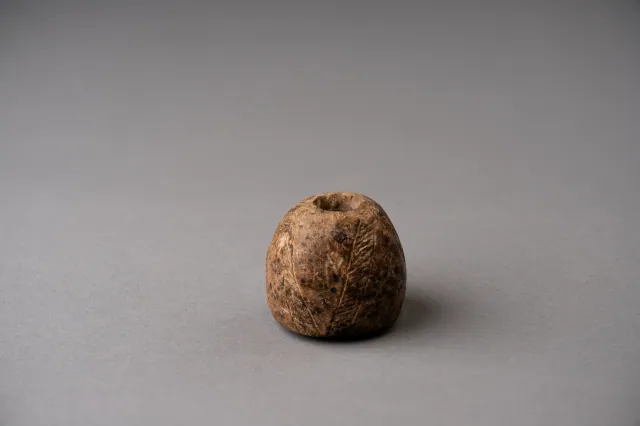
Spindle Whorl with Incised Herringbone Bands
Textile tool
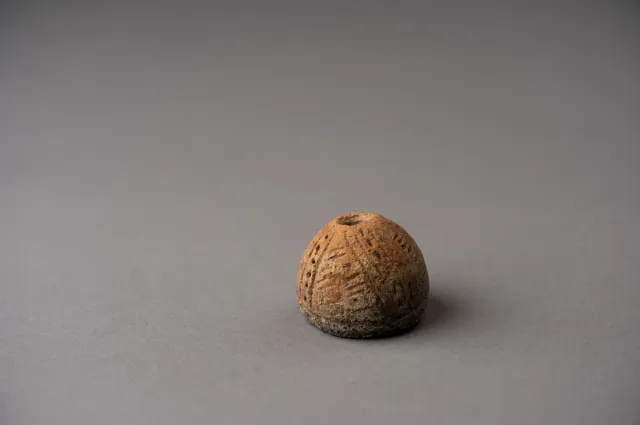
Red Polished Spindle Whorl with Incised Lattice and Dotted Bands
Textile tool
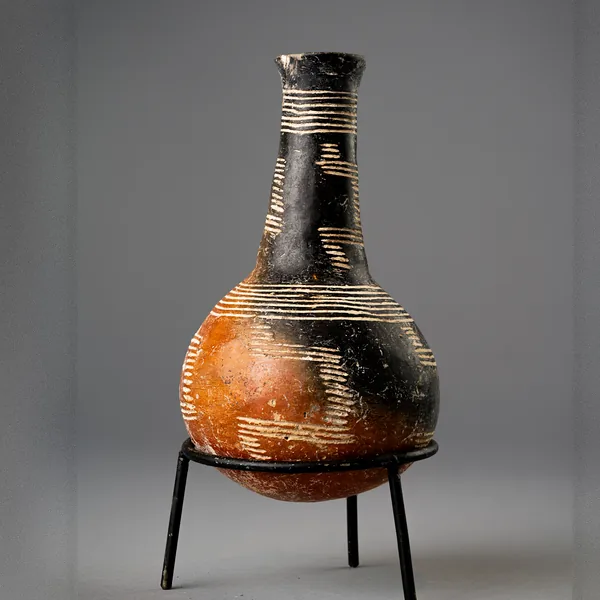
Red Polished Black-Topped Bottle with Stepped Incised Bands
Early Cypriot (Early Bronze Age)
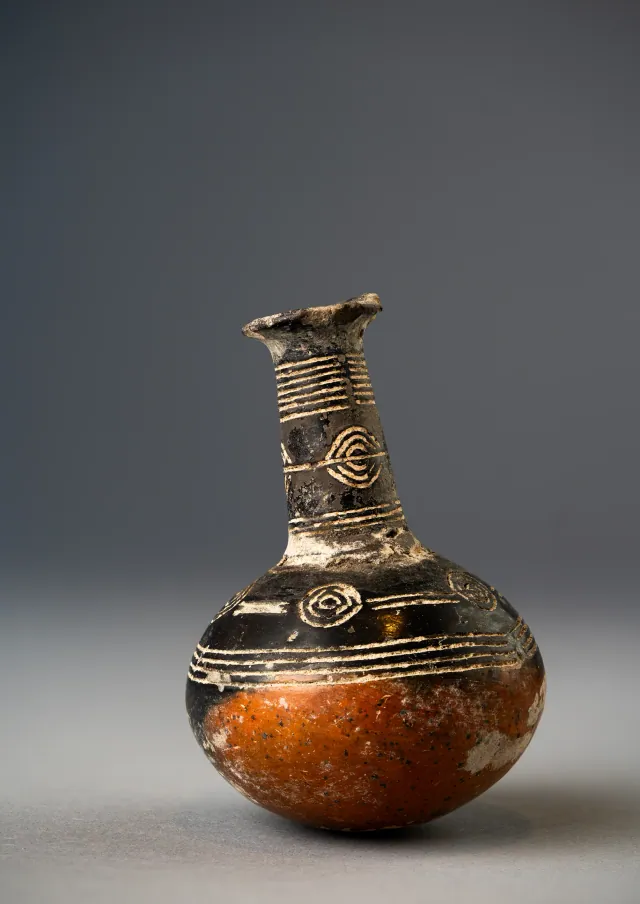
Red Polished Black-Topped Bottle with Incised Concentric Circles
Early Cypriot (Early Bronze Age)
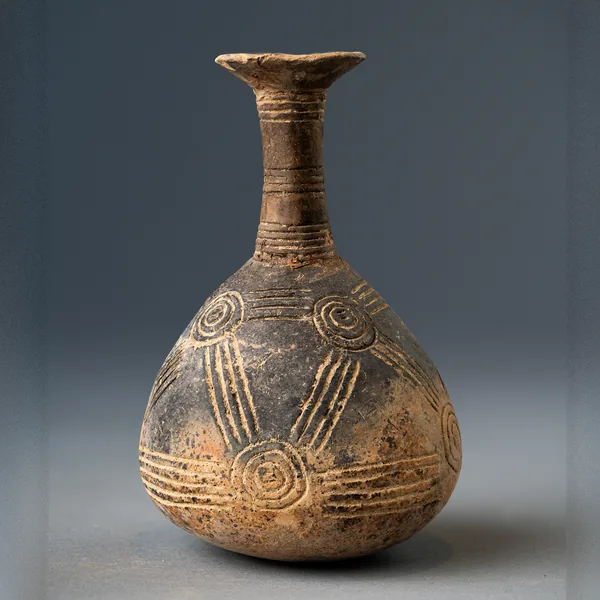
Red Polished Bottle with Linked Concentric Circles
Early Cypriot (Early Bronze Age)
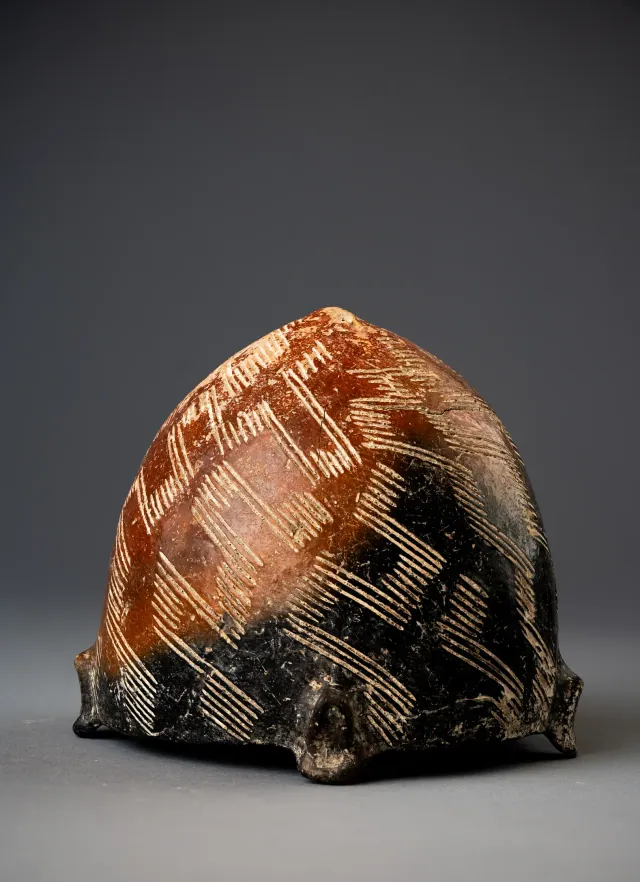
Black-topped Red Polished Tulip Bowl with Incised Hatched Lattice
Early Cypriot (Early Bronze Age)
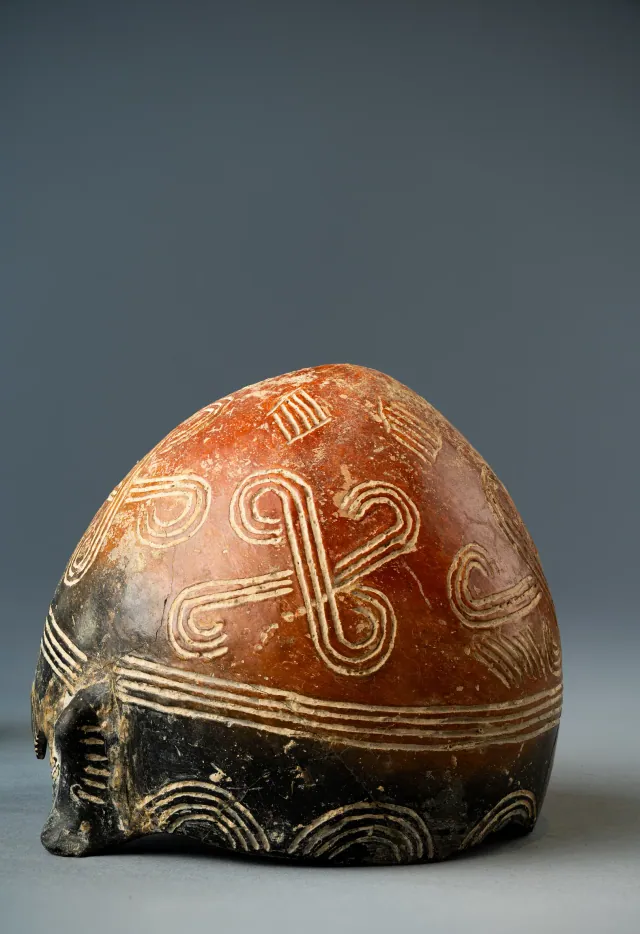
Black-topped Red Polished Tulip Bowl with Incised Spiral-armed Cross, Circles and Arcades
Early Cypriot (Early Bronze Age)
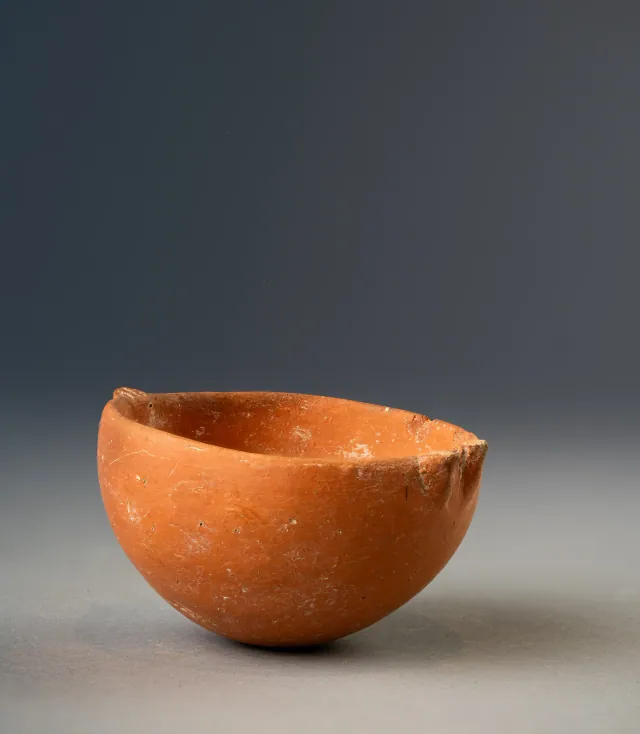
Red Polished Hemispherical Bowl with Two Rim Lugs
Early Cypriot (Early Bronze Age)
Found at the places discussed
Objects in our catalogue, in museum collections, recorded as found at these sites.


Background
Where to read more on this site before or after watching.
The site
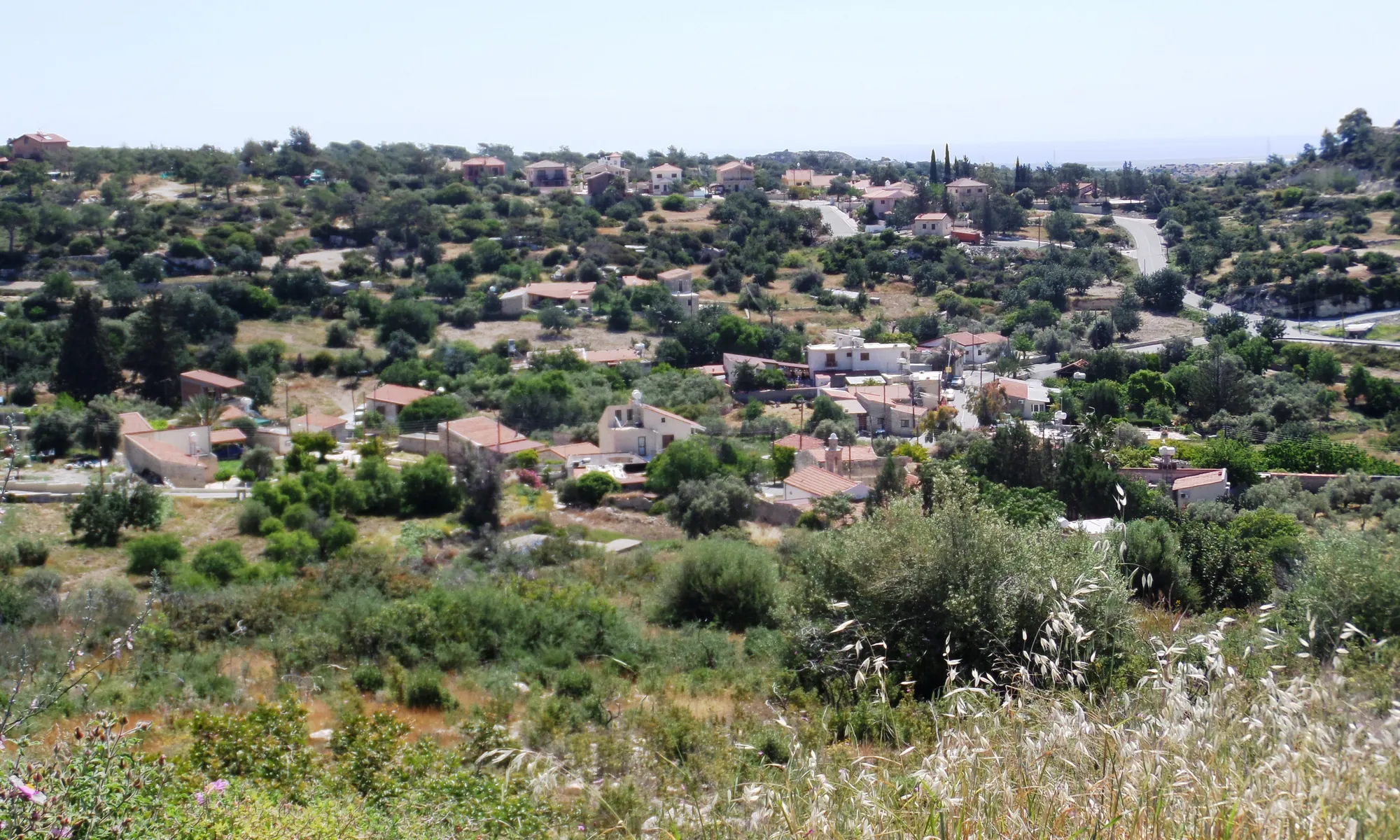
Sotira
Two prehistoric sites at the village of Sotira in Limassol District, about 400 m apart: Sotira-Teppes, the hilltop village of the later 5th millennium BC that gave its name to the Ceramic Neolithic Sotira culture, and Sotira-Kaminoudhia, an Early Bronze Age village of stone houses with two cemeteries, lived in until about 2200 BC.
In the compendium
Spindle Whorls and Textile Tools in Ancient Cyprus
The tools of spinning, weaving and dyeing in ancient Cyprus, from Neolithic bone needles to the terracotta whorls and loom weights of the Bronze Age.
In the compendium
Clothing and Dress in Ancient Cyprus
What Cypriots wore from the Neolithic to the Cypro-Classical period, reconstructed from figurines, statues, textile tools and metal fasteners.
In the compendium
Village Life in Early Bronze Age Cyprus
Everyday life in the unwalled farming villages of Philia and Early Cypriot Cyprus, known best from the excavated settlements of Marki-Alonia and Sotira-Kaminoudhia.
Map of Cyprus
Places discussed in the talk
- Has a page on this site
- Other places
- Ground above 200, 500, 1,000 m
Places
- 1Kissonerga-Mosphilia
- 2Souskiou (approx.)
- 3Sotira-Kaminoudhia
- 4Marki-Alonia
- 5Alambra-Mouttes
- 6Politiko-Troullia (approx.)
- 7Kissonerga-Skalia (approx.)
- 8Erimi-Laonin tou Porakou