
Early Bronze Age II
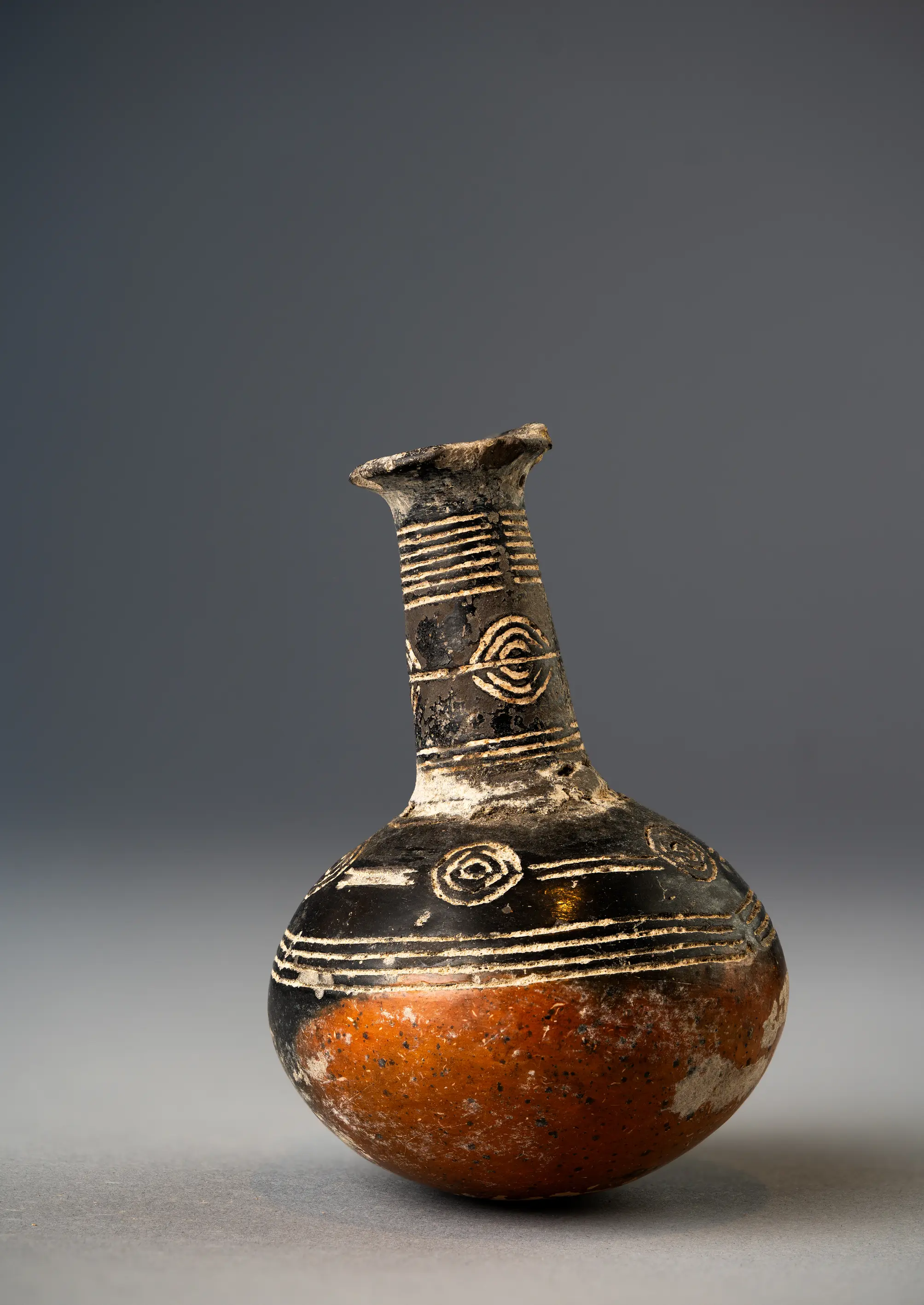
Red Polished Black-Topped Bottle with Incised Concentric Circles
Small black-topped Red Polished bottle of the north-coast export type, incised with concentric circles strung on lines, Early Cypriot, c. 2250–2000 BCE.
Date
2250 - 2000 BC
Accession No.
BTL-BA-002
Collection
Alexis Drakopoulos
Provenance
- 1960s–2025, The Goodman Collection (acquired 1965–1969)
- 2025–present, Alexis Drakopoulos, London
Early Cypriot, c. 2250–2000 BCE · Red Polished ware, black-topped · Handmade, incised with white fill
A small, squat bottle with a near-spherical body that rests on its rounded base, a tapering neck and a wide flaring rim. The colour divides cleanly about halfway down the body: above, the slip is black and lustrous, worn to grey in places; below, it is a polished orange-red flecked with tiny dark specks.
The incised decoration is sparse and ordered. A group of five horizontal lines runs under the rim. At mid-neck, concentric circles are threaded on a single horizontal line, and a second group of lines marks the base of the neck. On the shoulder a frieze of concentric circles, three of them visible on this side, sits on another threaded line, and a band of four or five horizontal lines below follows the edge of the black zone. The grooves keep their white fill. The rim is chipped at the front and left, the neck-shoulder join is crusted, and there are pale deposits on the red lower body.
Commentary
The bottle belongs to the north-coast type that Ellen Herscher identified as one of the few Early Bronze Age pots traded widely within Cyprus. Her description fits it in most respects: a piriform body, tapering neck and flaring rim with two opposed holes, black-topped, with groups of concentric circles "strung on a horizontal line on the neck and sometimes the upper body" and, as standard, a zigzag band of parallel lines around the body [1]. No zigzag band is visible on the photographed side of this bottle, where the body carries only the circle frieze and horizontal lines. The rim is too damaged here to show whether the string-holes survive.
Bottles of this type are best known from the tombs of Lapithos-Vrysi tou Barba and Bellapais-Vounous on the north coast, and the Swedish Cyprus Expedition published one as a type figure [1][7]. They also turn up far from there, at Episkopi-Phaneromeni, Kalavasos, Alassa, Marki, Ayia Paraskevi and Sotira-Kaminoudhia, which led Herscher to suggest that they were exported for their contents, perhaps an oil or other valued liquid [1][2]. No residue analysis has yet shown what they held. One such bottle at Kaminoudhia (P74) had been kept in a wall niche inside a house, so these vessels were used in daily life as well as placed in graves [2].
The date has moved. Herscher first put the type at the end of Early Cypriot III or the start of Middle Cypriot I, then, with the Kaminoudhia bottle, placed it earlier within Early Cypriot III [1][2]. The Kaminoudhia settlement is anchored by radiocarbon at about 2200 BCE [2][3]. The British Museum, following Stewart's older typology, catalogues its Vounous bottles as Red Polished I, Early Cypriot I, 2300–2100 BCE, so the same vessel can carry the numeral I in one catalogue and III in another [6]. A date of about 2250–2000 BCE is consistent with all of this evidence.
The nearest parallel is a flask in the Teece Museum, Christchurch (51.57), given by the Melbourne University Cyprus Expedition in 1957 and dated by the museum to the 21st century BCE. It is 11.2 cm high, black on the upper half, and its neck carries "a row of double circles bisected by a horizontal line" between groups of lines, the arrangement seen on the neck here [4]. A bottle in Chicago (ISAC X347, H. 11.5 cm) has the black upper part, concentric circles on neck and shoulder and two perforations below the rim [5]. British Museum 1939,0217.40 from Vounous (H. 17 cm) combines concentric circles with bands of horizontal lines on neck and body [6]. The Kaminoudhia bottle shows the same scheme of straight and broken lines dividing concentric circles on the neck [2].
The find-spot of this bottle is unknown; its type points to a north-coast workshop. Its height has not been recorded.
References
- 1.Herscher, E. (1991) 'Beyond Regionalism: Toward an Islandwide Early and Middle Cypriot Sequence.' In J.A. Barlow, D.L. Bolger and B. Kling (eds), Cypriot Ceramics: Reading the Prehistoric Record. Philadelphia: University Museum, pp. 45–50, esp. 46–47.
- 2.Swiny, S., Rapp, G. and Herscher, E. (eds) (2003) Sotira Kaminoudhia: An Early Bronze Age Site in Cyprus. CAARI Monograph 4. Boston: American Schools of Oriental Research, cat. P74, fig. 4.11.
- 3.Coleman, J.E., Barlow, J.A., Mogelonsky, M.K. and Schaar, K.W. (1996) Alambra: A Middle Bronze Age Settlement in Cyprus. Studies in Mediterranean Archaeology 118. Jonsered: Paul Åströms Förlag.
- 4.Teece Museum of Classical Antiquities, University of Canterbury, Christchurch, 51.57, Red Polished flask (collection record).
- 5.Institute for the Study of Ancient Cultures, University of Chicago, X347, Red Polished bottle (collection record).
- 6.British Museum, London, 1939,0217.40, Red Polished black-topped bottle from Bellapais-Vounous (collection record).
- 7.Stewart, J.R. (1962) The Early Cypriote Bronze Age. The Swedish Cyprus Expedition IV.1A. Lund: Swedish Cyprus Expedition, fig. CI:5.
More from the Catalogue
Browse related objects
Alabaster alabastron (perfume vase)
Archaic II
Terracotta bottle
Middle Bronze Age II
Alabaster alabastron (perfume vase)
Archaic II
Alabaster unguentarium
Hellenistic
Bottle
Classical
Rock crystal bottle
Classical
Terracotta spindle bottle
Late Bronze Age II
Terracotta bottle
Late Bronze Age III
Bottle
Late Bronze Age III
Terracotta globular bottle with two handles
Late Bronze Age III
Bottle
Late Bronze Age II
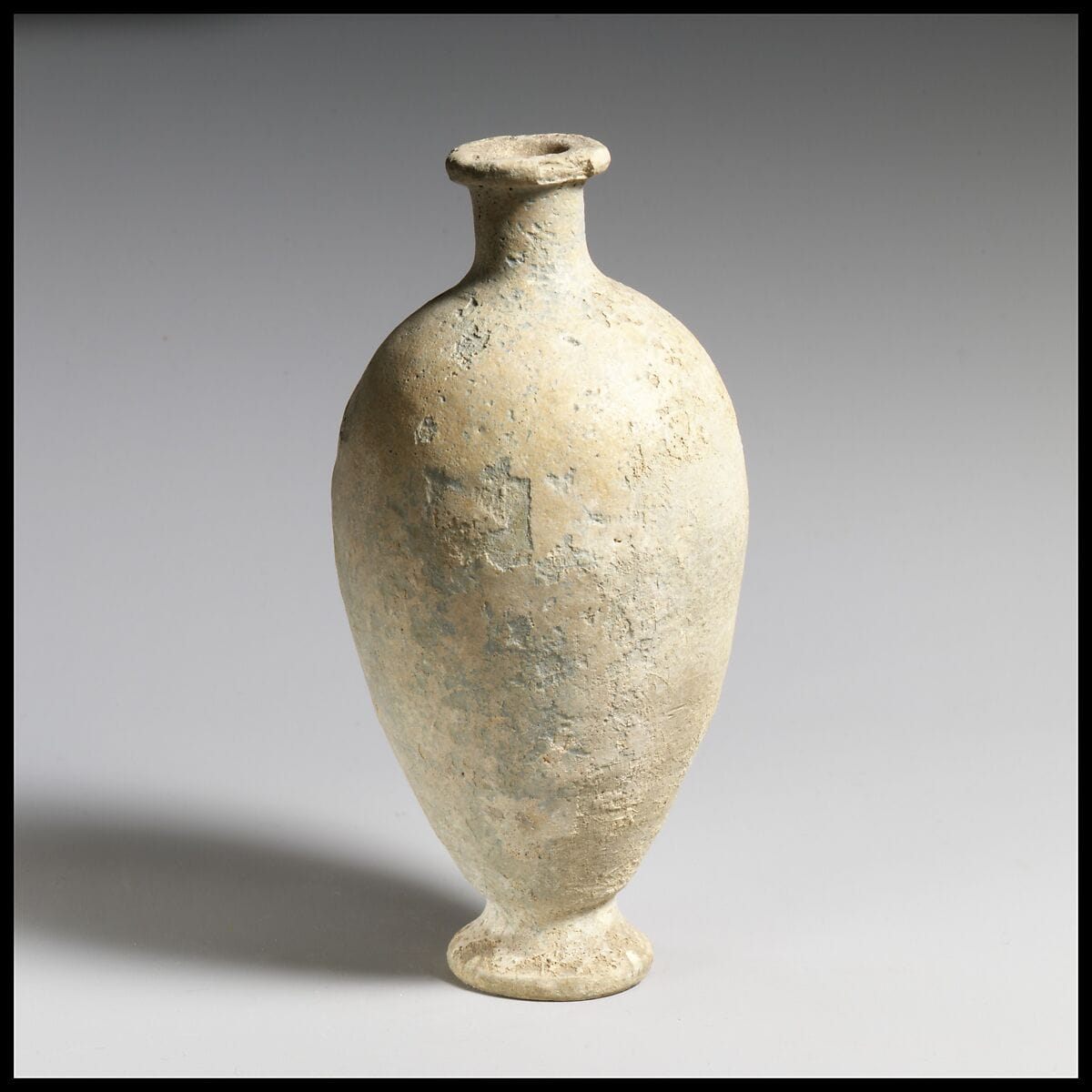
Bottle
Late Bronze Age II
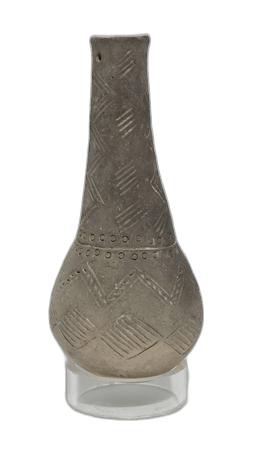
Black Polished Bottle
Early Bronze Age II
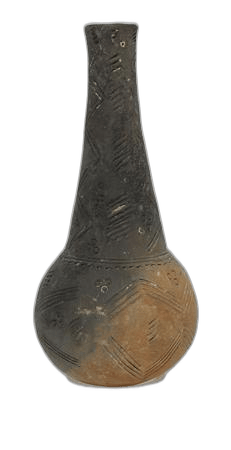
Red Polished Bottle
Early Bronze Age II
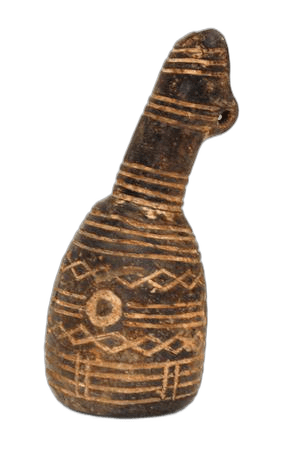
Black Polished Miniature Bottle
Middle Bronze Age I
Black Polished Miniature Bottle
Middle Bronze Age I
Black Polished Miniature Bottle
Middle Bronze Age I
Red Polished Miniature Bottle
Middle Bronze Age II