
Conference paper·Archaeological Research Unit - University of Cyprus·2020·In Greek
To Ergon 2019: the SIMPLECS ceramic ontology, the Mazotos shipwreck and the Rural CY monastic economy project
ΤΟ ΕΡΓΟΝ 2019
Charalambos Paraskeva, Massimiliano Secci and Petroula Hadjitofi
Chapters
About the video
This fourth session of the annual study day on the archaeological work of the University of Cyprus in 2019 comprises three papers on internal research programmes, the first and third given in Greek and the second in English.
Charalambos Paraskeva presents the completion of the three-year SIMPLECS project, which built a database and ontology for recording and analysing Cypriot ceramics within the framework of the SeSaLaC surface survey. Held in the system are ceramological and archaeometric records for roughly 11,500 sherds, 3,500 photographs and typological entries covering Cypriot wares from the Ceramic Neolithic to the early twentieth century AD. Paraskeva explains the design of the SIMPLECS ontology as an extension of the CIDOC-CRM standard, adding 25 classes and 32 properties specific to ceramic analysis and around 1,100 terms for shapes, wares and fabrics, with an export mechanism in RDF/XML format and ongoing integration of analogue and digital survey archives. A discussion follows on the ontology's philosophical basis and practical use.
Massimiliano Secci presents his postdoctoral project "A Living Shipwreck: Sediment Accretion and Artifact Displacement in the Mazotos Shipwreck Site", conducted in collaboration with Carlos Jimenez of the Enalia Physis Environmental Research Centre, Varvara Stivarou, Irini Katsouri and Stella Demesticha of MARELab. Applying site formation theory from Michael Schiffer and Muckelroy to the bow of the Mazotos wreck, Secci aligns photogrammetric 3D models of lifted amphorae with the 2007 pre-disturbance survey model. By plotting sedimentation marks and biogenic encrustation on the jars in 3ds Max and Rhinoceros 3D, he reconstructs two distinct seafloor interfaces and identifies a void on the starboard side of the keel where amphorae slid below the hull planking and broke at the shoulder. Questions afterwards address the dating and sequence of the two seafloor levels.
Petroula Hadjitofi introduces Rural CY, a project coordinated by Athanasios Vionis with Euphrosyne Rizopoulou-Egoumenidou, Michalis Michael and Charalambos Paraskeva, studying rural material culture and monastic economy in eighteenth- and nineteenth-century Ottoman Cyprus. The project digitises and analyses the Great Property Codex (Megas Ktimatikos Kodikas), begun in March 1773 under Archbishop Chrysanthos, which inventories the estates, metochia, mills, presses, livestock, crops, tools and household vessels of 212 churches and monasteries, alongside unpublished registers from the Archbishopric of Cyprus and the Metropolis of Kition. Hadjitofi outlines how these lists trace pottery from centres such as Kornos and Lapithos, copperware, textiles, cash crops and diet, and describes the MySQL and Microsoft Access database built to classify every entry across sixteen conceptual categories.
From our collection
Pieces in the Drakopoulos collection of the kinds and periods this talk covers: Vessel.
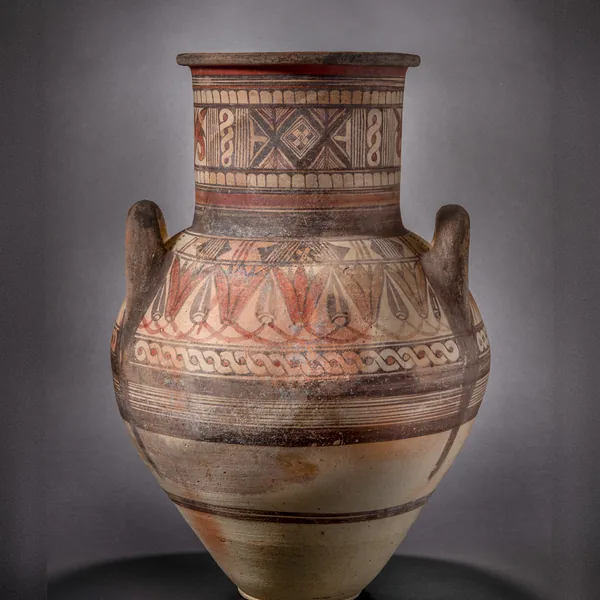
Bichrome IV Amphora with a Lotus-and-Bud Shoulder Frieze
Vessel
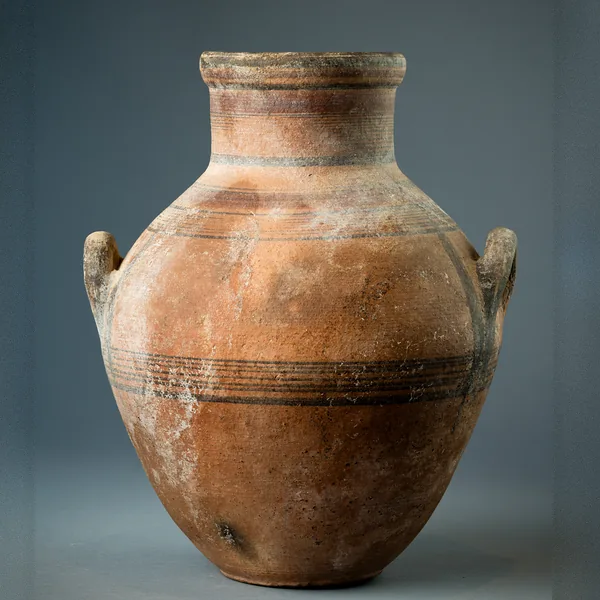
Bichrome IV Amphora with Shoulder Handles and Banded Decoration
Vessel
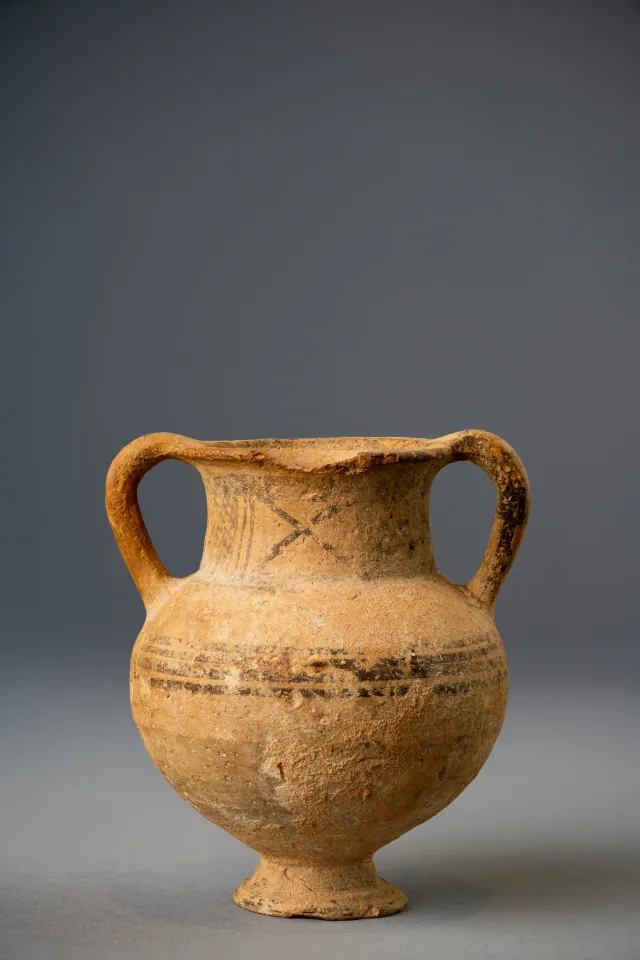
White Painted Amphoriskos on a Conical Foot
Vessel
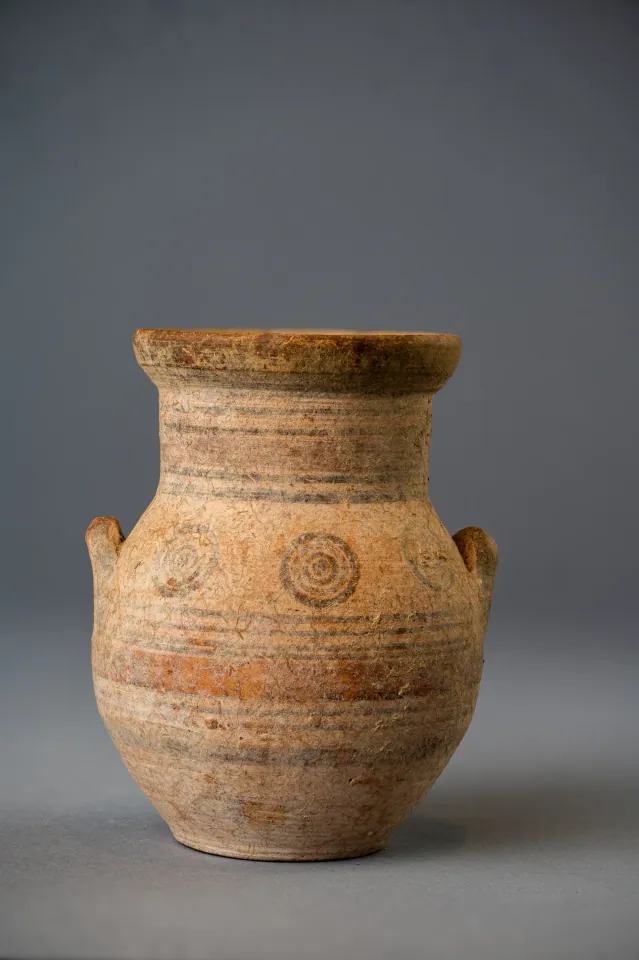
Bichrome IV Amphoriskos with Concentric Circles
Vessel
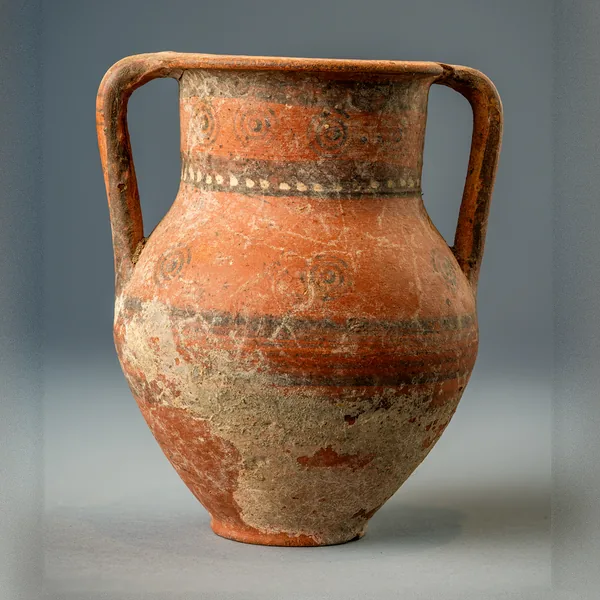
Bichrome Red Amphora with Concentric Circles and a Row of White Dots
Vessel
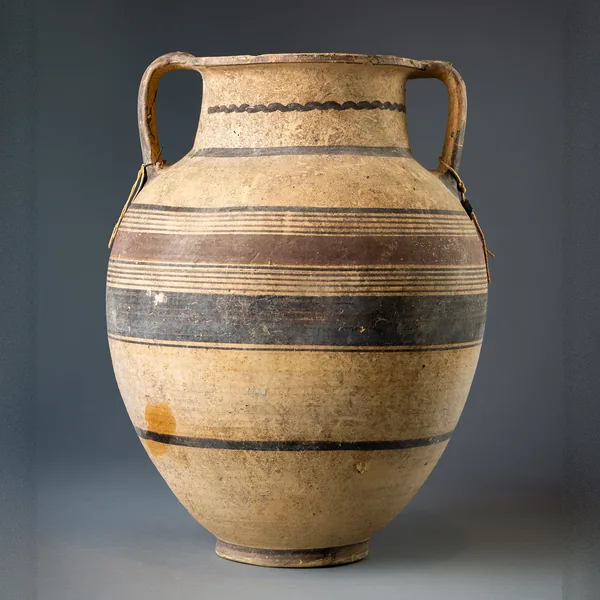
Large Bichrome Amphora with a Wavy Line on the Neck
Vessel
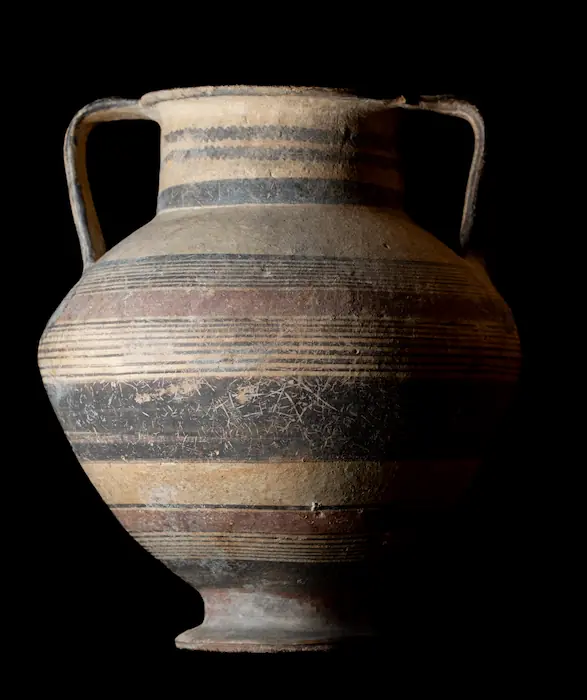
Bichrome Amphora on a Pedestal Foot with Wavy Lines on the Neck
Vessel
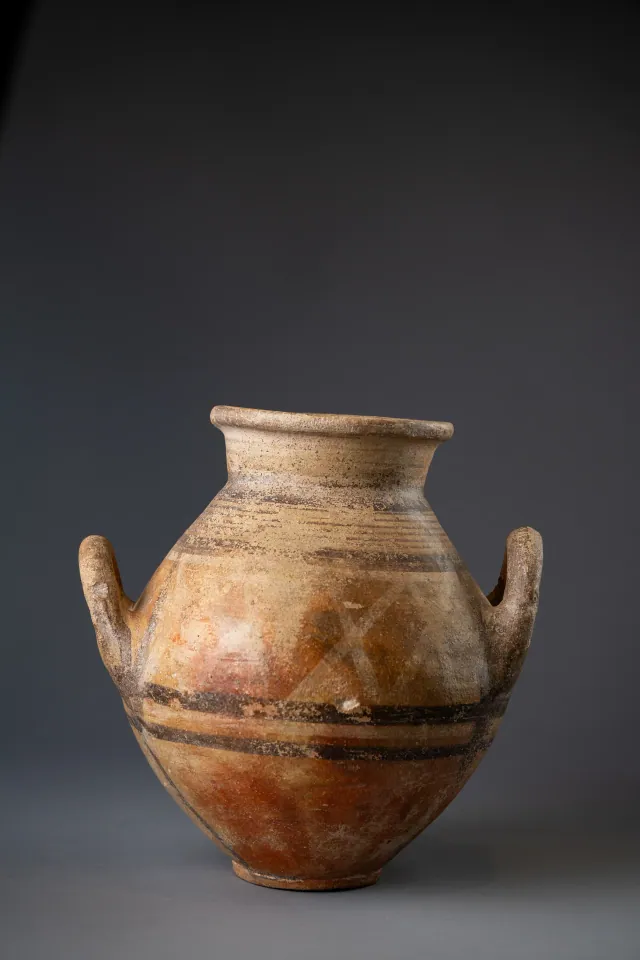
Red-Slipped Amphora with Pale Crosses on the Shoulder, probably Bichrome Red Ware
Vessel
Found at the places discussed
Objects in our catalogue, in museum collections, recorded as found at these sites.

Background
Where to read more on this site before or after watching.
The site
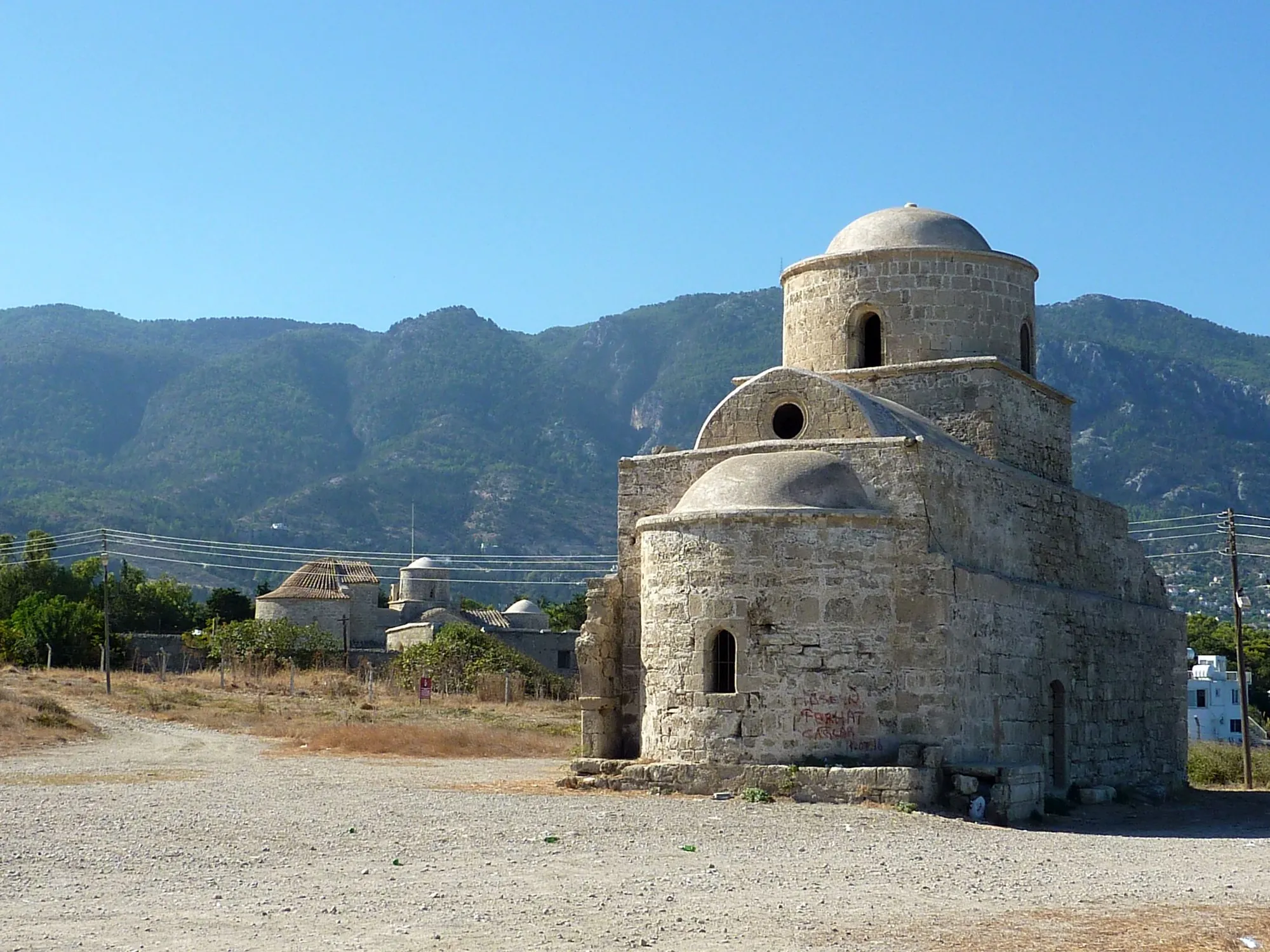
Lapithos
A group of cemeteries and settlement sites around the village of Lapithos on the north coast, below the Kyrenia range. Its Early and Middle Bronze Age cemetery at Vrysi tou Barba has produced about five times as much metal as Vounous, its Cypro-Geometric tombs gave the pottery sequence for that period, and ancient Lapethos was a city-kingdom until 312 BC.
In the compendium
Amphora
A closed jar with two opposed handles, made in Cyprus in belly-handled and vertical-handled painted series and as a basket-handled transport jar.
In the compendium
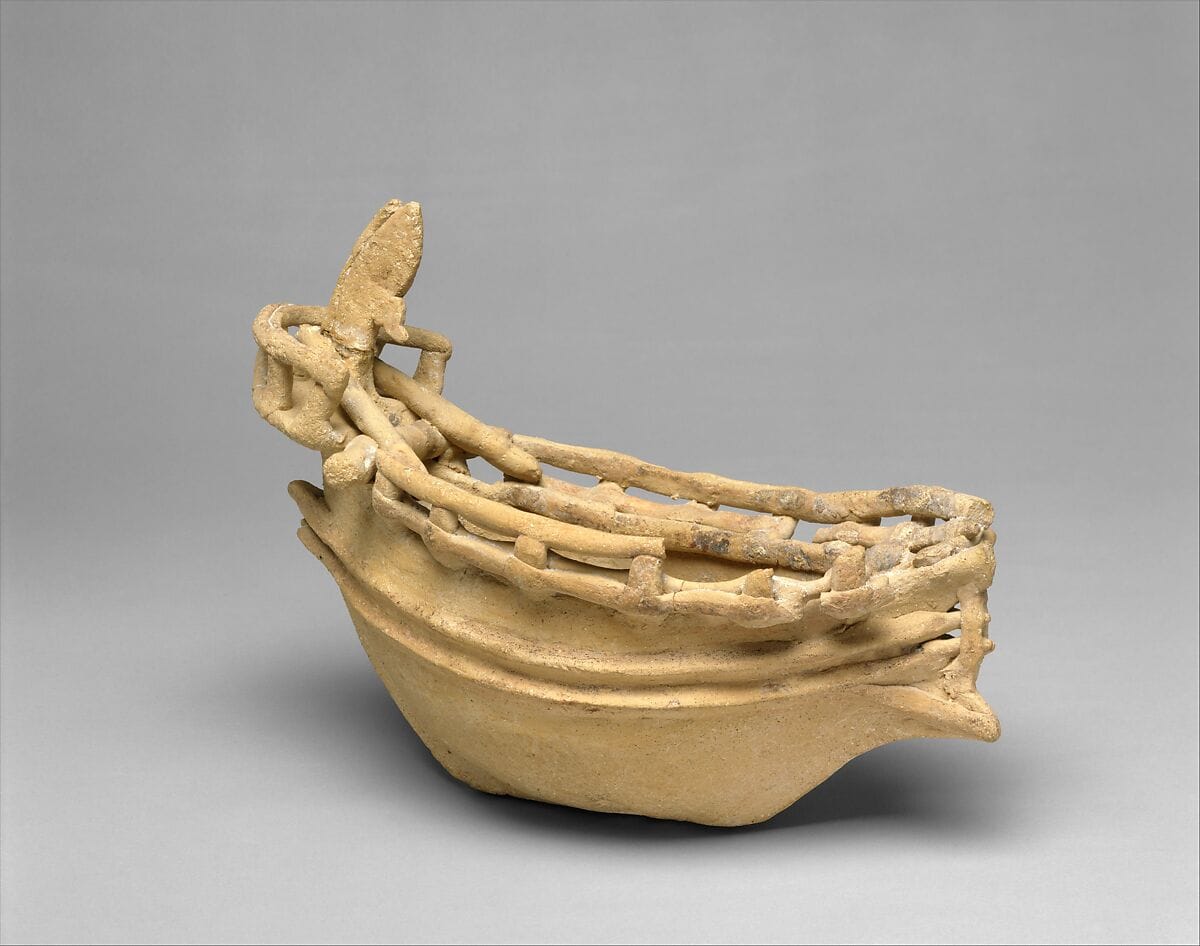
Seafaring and Ships in Ancient Cyprus
The evidence for boats and seafaring around Cyprus from the first crossings to the Classical period, from anchors, models and graffiti to wrecks and shipsheds.
In the compendium
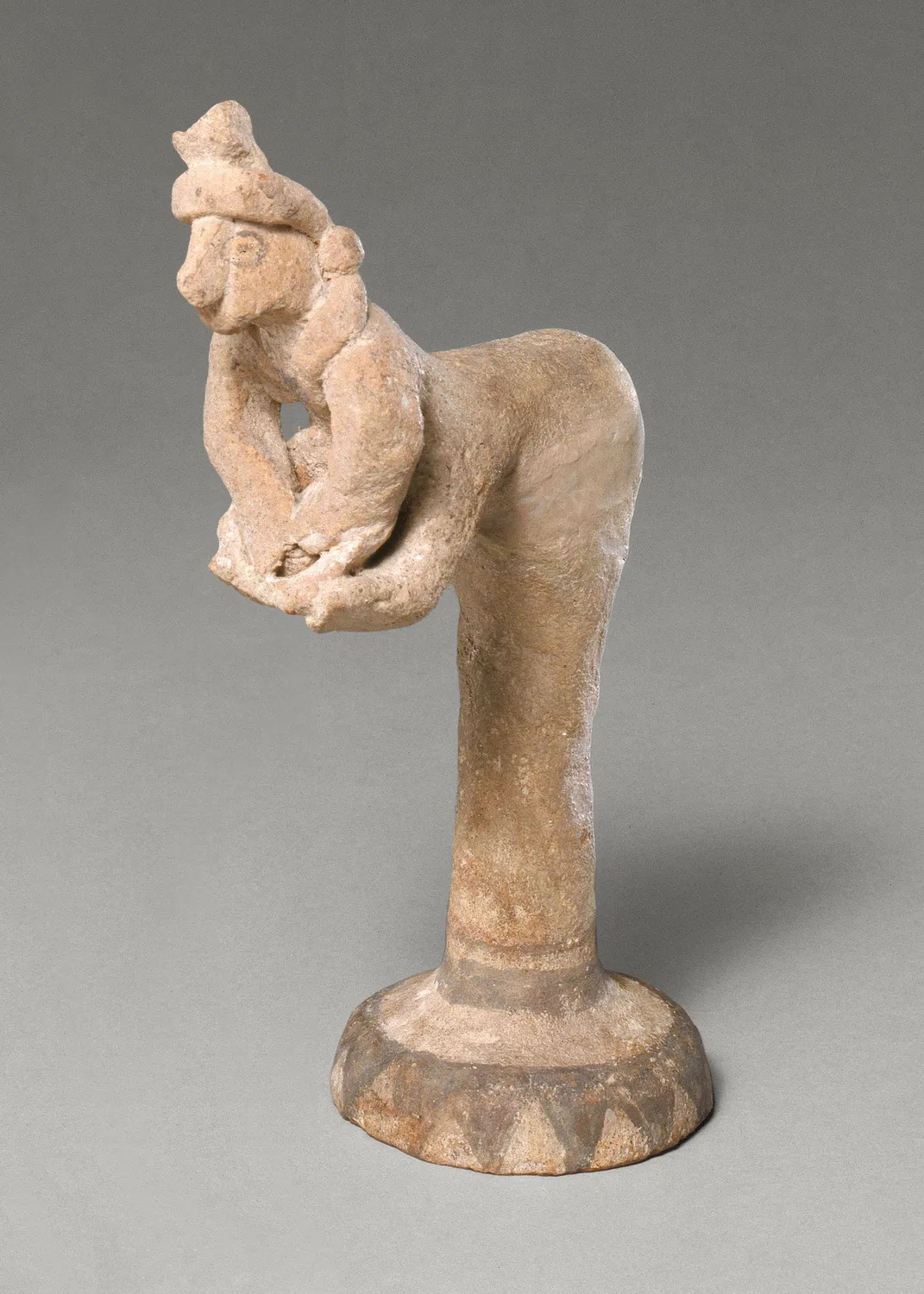
Food and Diet in Ancient Cyprus
What Cypriots grew, herded, hunted, cooked and drank from the first Neolithic villages to the end of the Cypro-Archaic period.
Map of Cyprus
Places discussed in the talk
- Has a page on this site
- Other places
- Ground above 200, 500, 1,000 m
Places
- 1Mazotos (approx.)
- 2Kornos (approx.)
- 3Lapithos