
Conference paper·Archaeological Research Unit - University of Cyprus·2018·In Greek
Simplex Reloaded: Experiences from the Design, Implementation, Practical Field Use and Data Analysis
Simplex Reloaded: Εμπειρίες από τον σχεδιασμό, την υλοποίηση, την πρακτική χρήση στο πεδίο και την ανάλυση δεδομένων
Chapters
About the video
Speaking in Greek, Charalambos Paraskeva of the Archaeological Research Unit at the University of Cyprus presents a live software demonstration rather than a slide lecture, showing the design and field operation of Simplex, a database system built for recording pottery from the surface survey at Salamiou and related work discussed earlier in the day by Athanasios Vionis.
Paraskeva begins with the architecture of the system, which splits the database into three components: a front-end user interface, a separate back-end data file, and an external folder for multimedia resources such as photographs and 3D models. He explains the three reasons for this separation: preventing data loss if the interface file is corrupted, securing the back-end tables with SHA-256 encryption, and allowing continuous updates to the interface during fieldwork without disturbing the stored records. Because the database runs locally in the field rather than over a network, a custom script automatically relinks the front-end interface to the back-end tables whenever the files are moved to a new computer. The login system distinguishes between standard data-entry users, who see a restricted workspace, and administrators with full access to the underlying tables and design tools.
Moving to the main pottery recording form, Paraskeva demonstrates how the software prevents human error and eliminates free-text typing. Validation rules block invalid transect codes and alert students immediately if a sherd number has already been entered. To make roughly 500 pottery types manageable, selecting up to three broad chronological periods filters all subsequent dropdown lists to show only wares and shapes relevant to those periods. Users can select multiple options when an identification is uncertain, such as between Red Polished I and II, and record a confidence rating. Built-in tooltips and pop-up reference windows with definitions and bibliography explain fabrics, surface treatments, and diagnostic features so that the software also functions as a teaching tool for students. Clay and surface colours are recorded using a built-in Munsell chart with live colour previews.
The talk then covers multimedia and archaeometric extensions. Photographs are linked from the external resource folder, and a custom script automatically extracts and logs camera metadata, handling over 1,200 images and 300,000 lines of metadata without slowing the system. For chemical analysis by pXRF, Paraskeva shows a template tool that lets researchers pre-select the specific elements or compounds being measured rather than scrolling through thousands of columns. He concludes with features developed in response to field needs: search and filtering tools across 4,000 recorded objects, field-level timestamping to merge parallel entries made by multiple researchers on separate computers, and the underlying 50 tables, 220 pages of Visual Basic code, and 100 pages of SQL that connect the Microsoft Access database directly to Excel and ArcGIS for statistical and spatial analysis.
From our collection
Pieces in the Drakopoulos collection of the kinds and periods this talk covers: Vessel.
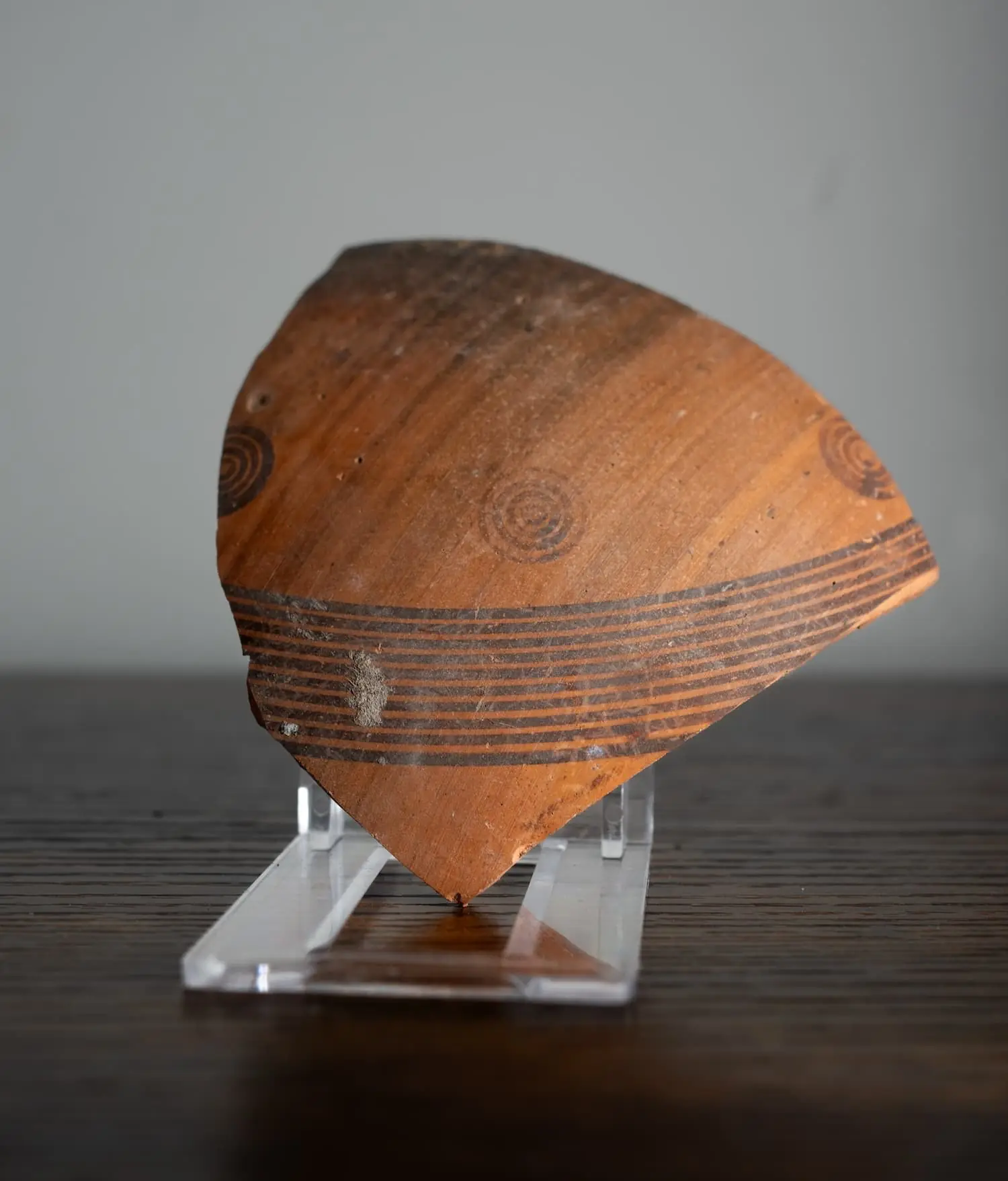
Black-On-Red Geometric Jug Sherd
Vessel
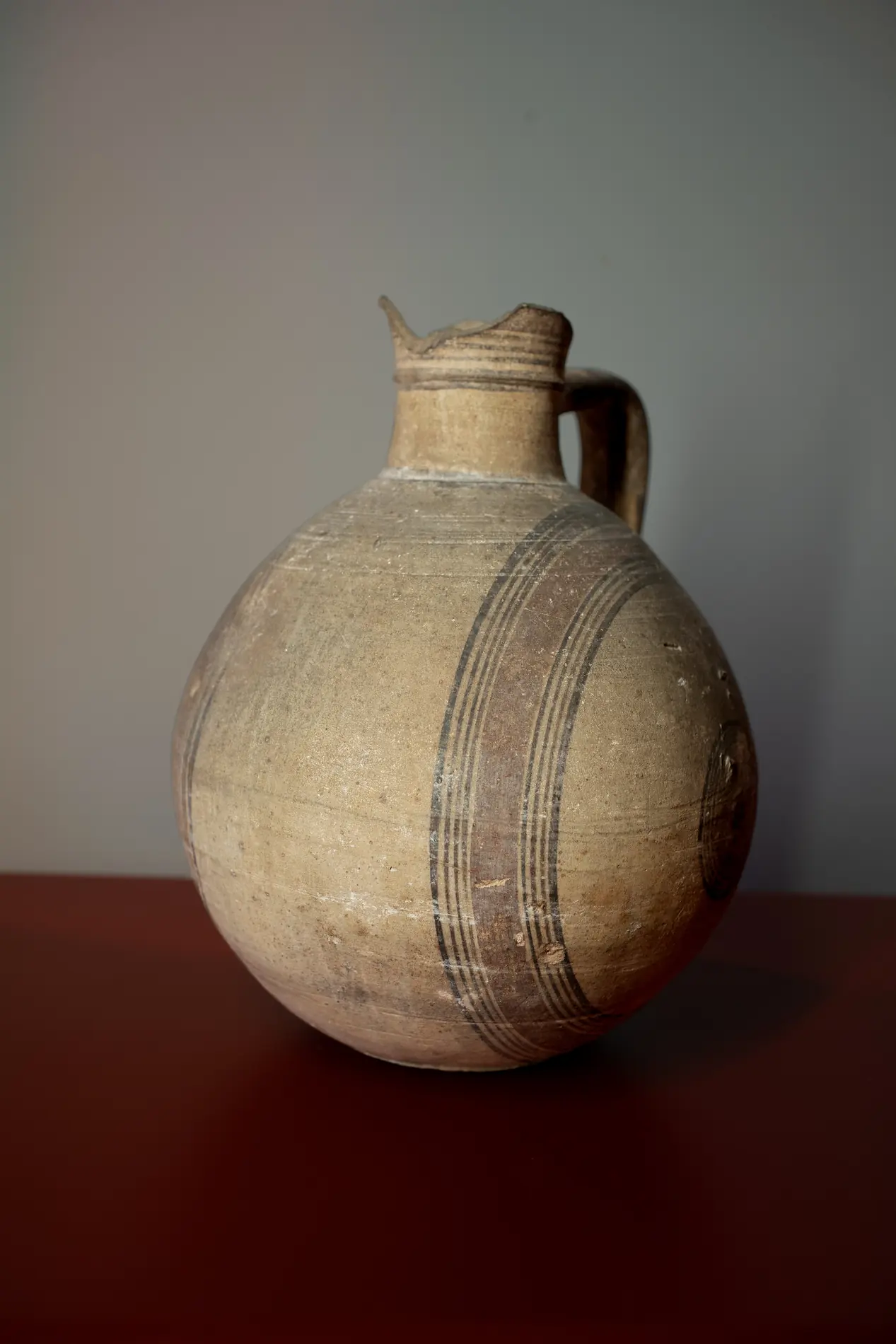
Bichrome Jug
Vessel
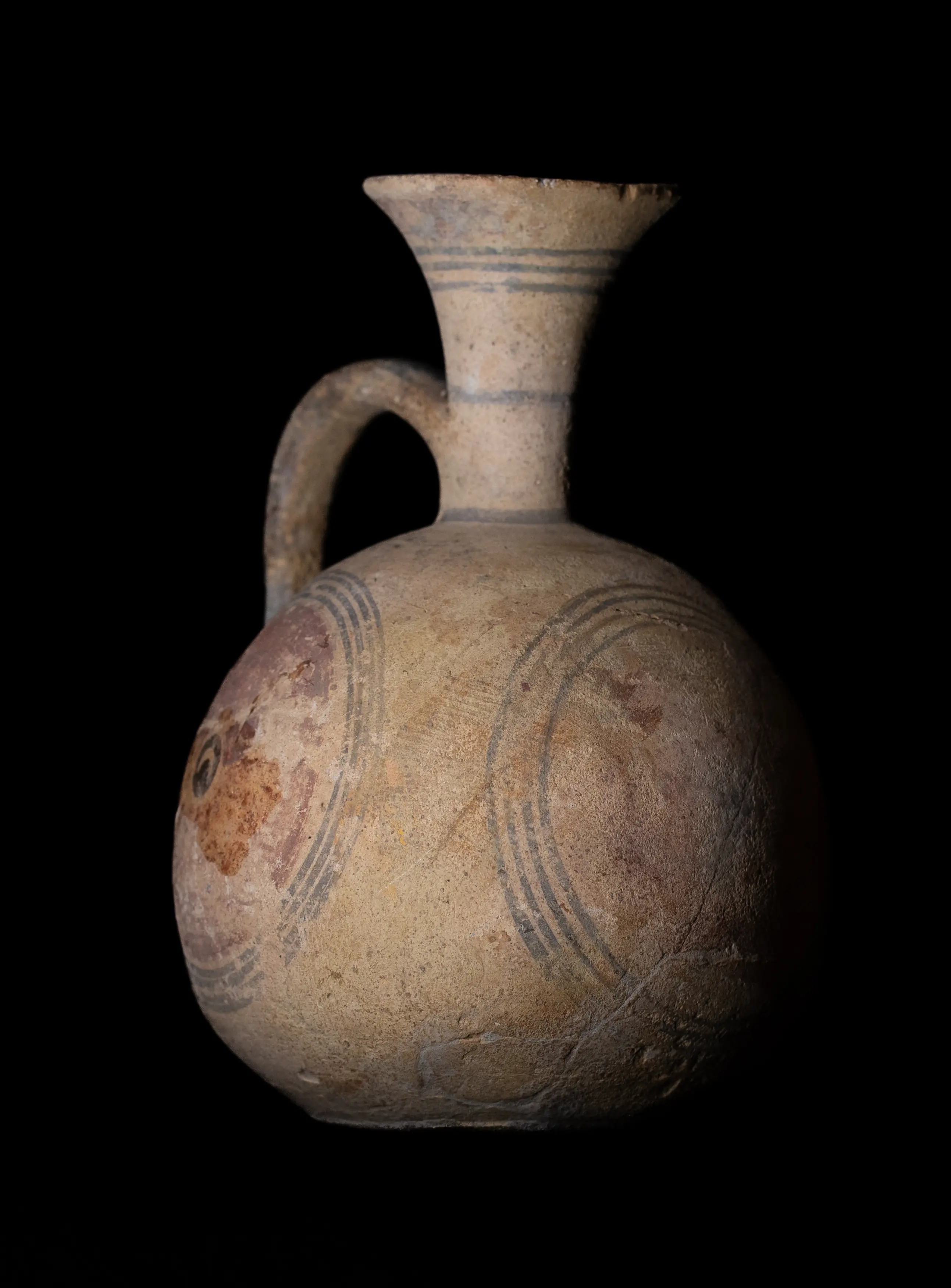
Bichrome Juglet
Vessel
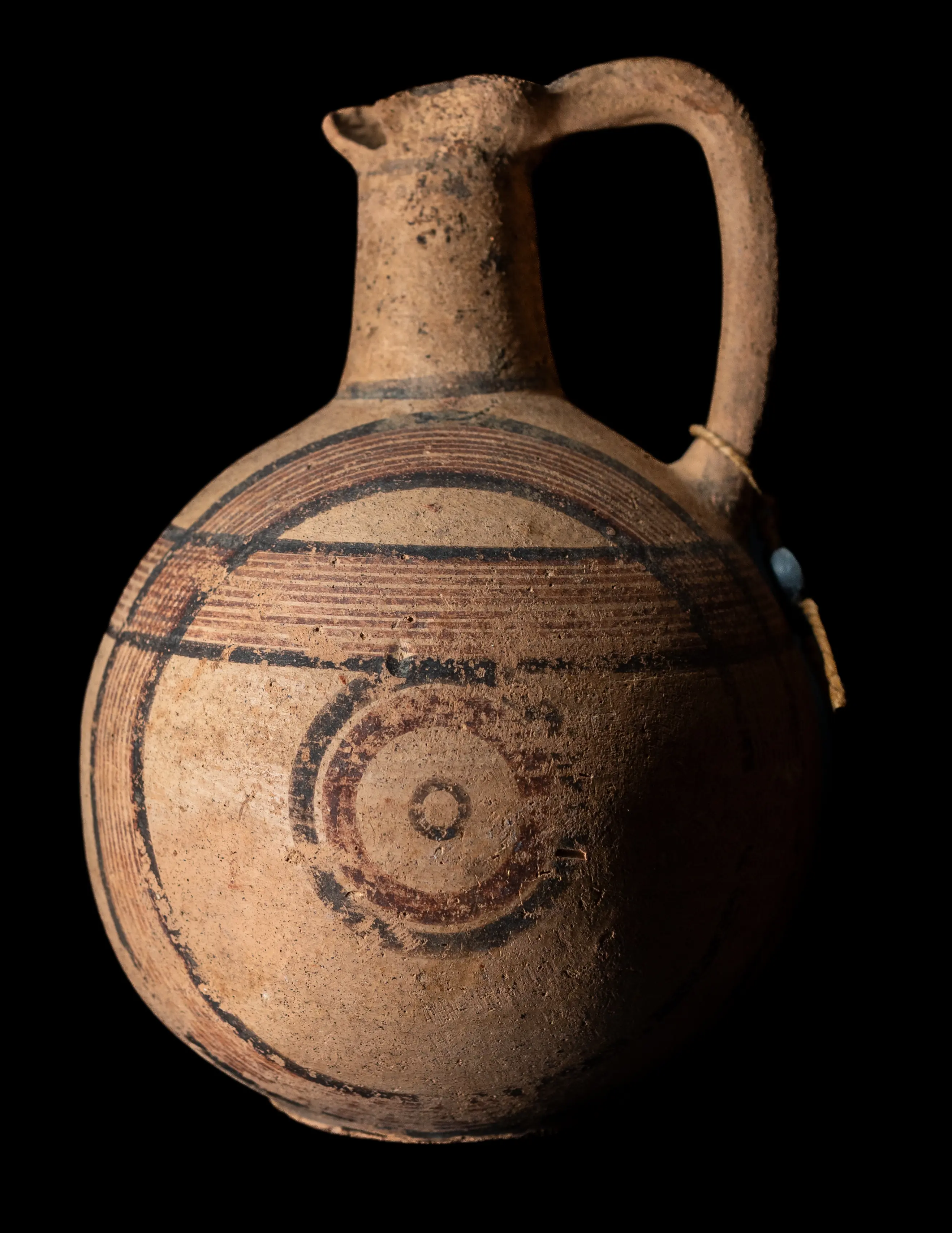
Bichrome Oinochoe
Vessel
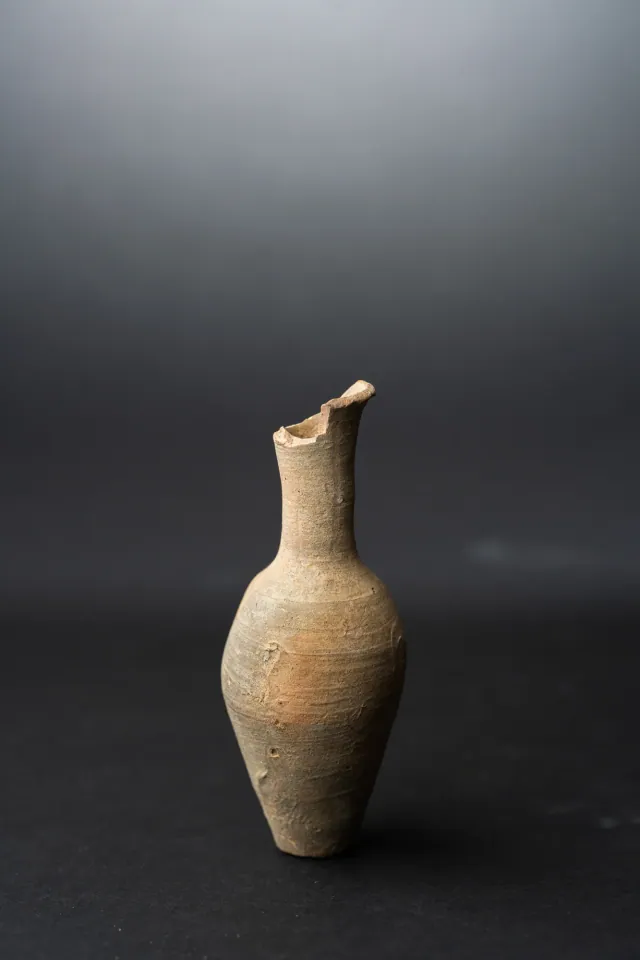
Fusiform Unguentarium
Vessel
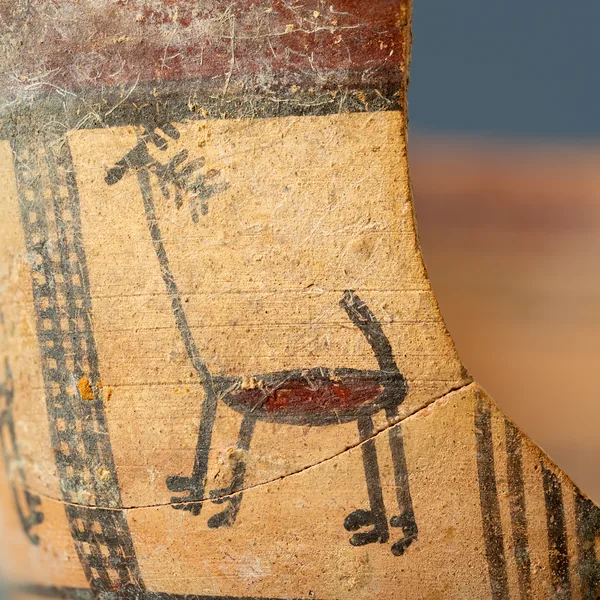
Bichrome Skyphos with Stags in Metopes
Vessel
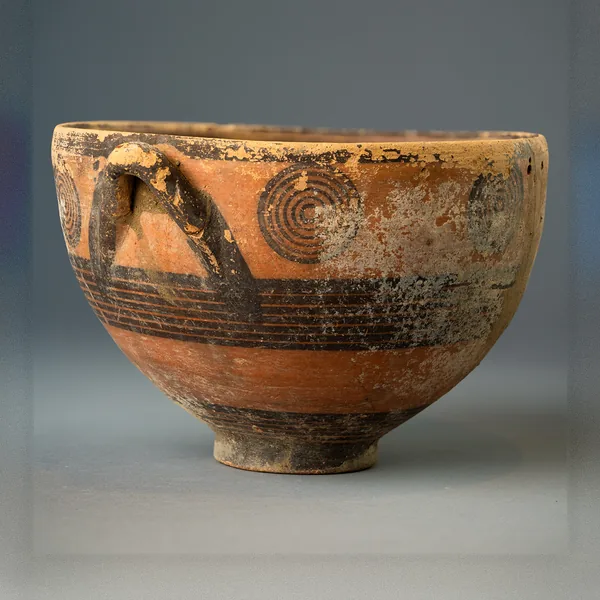
Black-on-Red Deep Bowl with Concentric Circles below the Rim
Vessel
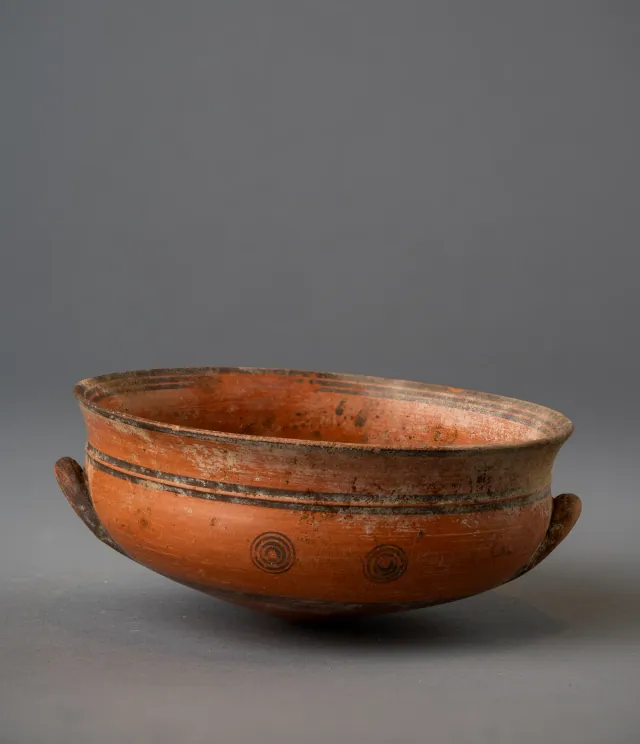
Black-on-Red Two-Handled Bowl with Raised Flaring Rim
Vessel