
Conference paper·Archaeological Research Unit - University of Cyprus·2019·In Greek
SIMPLEX Revolutions: From Recording to the Analysis and Visualisation of Archaeological Data
SIMPLEX Revolutions: Από την καταγραφή στην ανάλυση και οπτικοποίηση αρχαιολογικών δεδομένων
Chapters
About the video
In this paper, given in Greek at the annual review of the archaeological work of the University of Cyprus, postdoctoral researcher Charis Paraskeva presents the technical methodology of the SIMPLEX project. Running for two years, SIMPLEX is a system designed for the management, analysis, and visualisation of archaeological pottery data. At the time of the talk, the database held ceramological and archaeometric records for roughly 8,100 sherds and 2,500 photographs with metadata, alongside reference entries for ware types, vessel shapes, surface treatments, and clay fabrics.
Paraskeva explains how the database is built in Microsoft Access to feed directly into analytical software such as Excel, Minitab, SPSS, and ArcGIS via OLEDB connections and query tables, avoiding manual data cleaning. As a first case study, he tests whether Munsell slip colours on Bronze Age sherds from Alaminos-Kampos vary across clay fabric groups. The resulting charts show that subgroups of fabric group A share identical red slips inside and out, whereas groups B and C display a wider, browner range, suggesting differences in chronology, firing temperatures, stylistic choice, or import status.
The second part of the talk demonstrates statistical and spatial visualisations generated from the Xeros Valley survey material. Paraskeva shows a treemap of the entire assemblage dominated by Late Roman wares, alongside smaller Bronze Age, Iron Age, and Medieval quantities. Bar charts isolate a small Late Roman site with earlier Iron Age and Hellenistic activity in survey area 7, and break down Bronze Age wares across ten trenches at Alaminos-Kampos, where Early and Middle Bronze Age Red Polished ware predominates alongside north- and south-coast imports. A dendrogram of portable XRF results on Late Roman sherds contrasts homogeneous fine wares with local coarse wares that split into three distinct fabric subgroups. GIS maps then plot sherd counts, per-hectare densities, and Getis-Ord Gi* hot-spot analyses across the Xeros Valley, as well as weighted average sherd thickness at Alaminos-Kampos to locate pithos storage or production areas.
Finally, Paraskeva outlines how SIMPLEX generates daily work logs, storage inventories, and sample lists, and describes a photogrammetry workflow using Agisoft Photoscan, Meshmixer, Blender, and MeshLab to create 3D models of thirty selected objects (three completed so far) with one-millimetre accuracy, embedded directly into the database interface as 3D PDFs.
From our collection
Pieces in the Drakopoulos collection of the kinds and periods this talk covers: Red Polished ware.
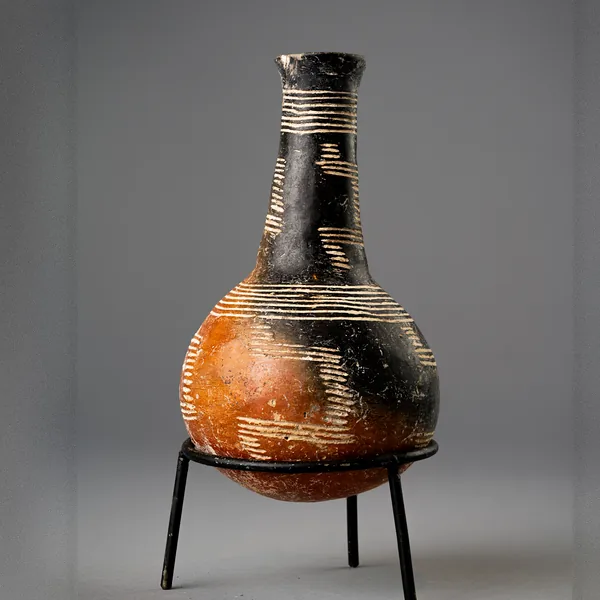
Red Polished Black-Topped Bottle with Stepped Incised Bands
Red Polished ware
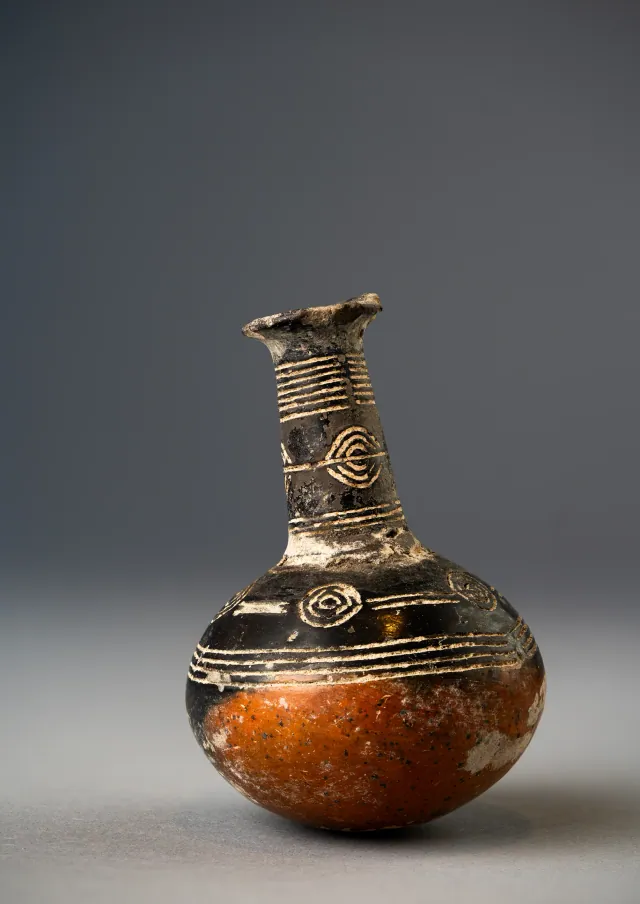
Red Polished Black-Topped Bottle with Incised Concentric Circles
Red Polished ware
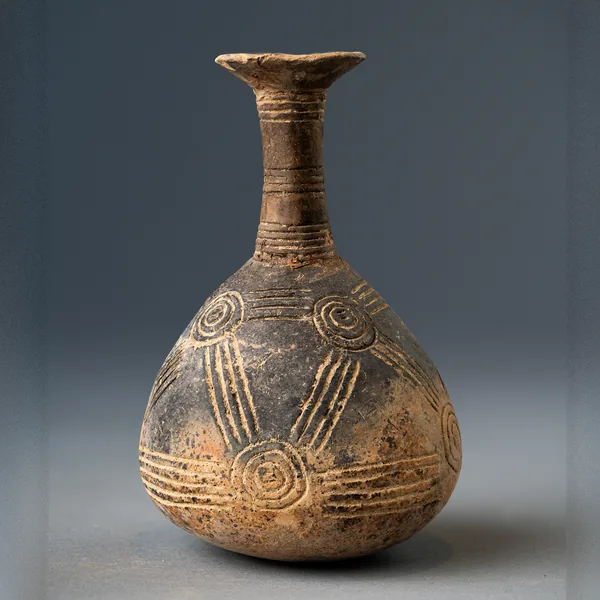
Red Polished Bottle with Linked Concentric Circles
Red Polished ware
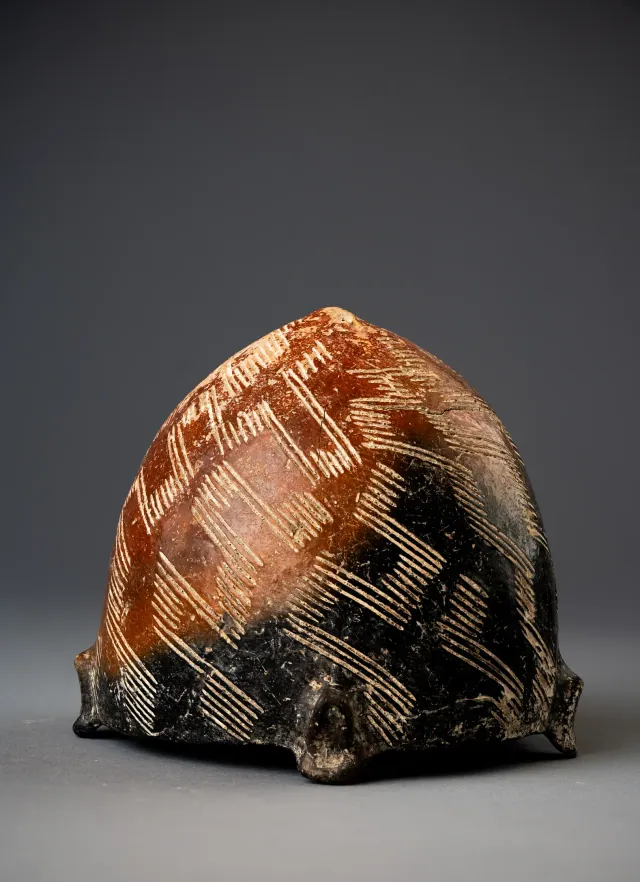
Black-topped Red Polished Tulip Bowl with Incised Hatched Lattice
Red Polished ware
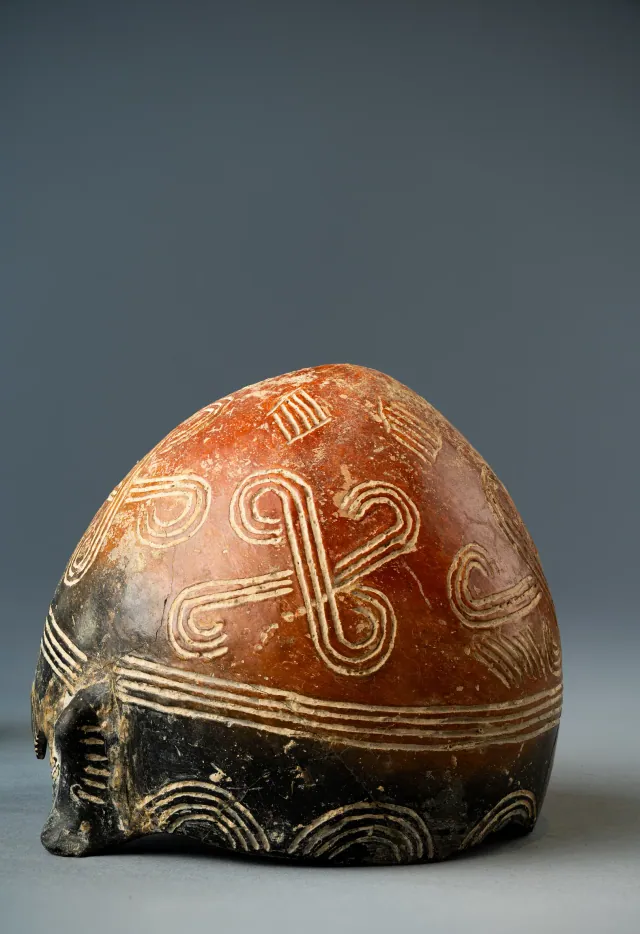
Black-topped Red Polished Tulip Bowl with Incised Spiral-armed Cross, Circles and Arcades
Red Polished ware
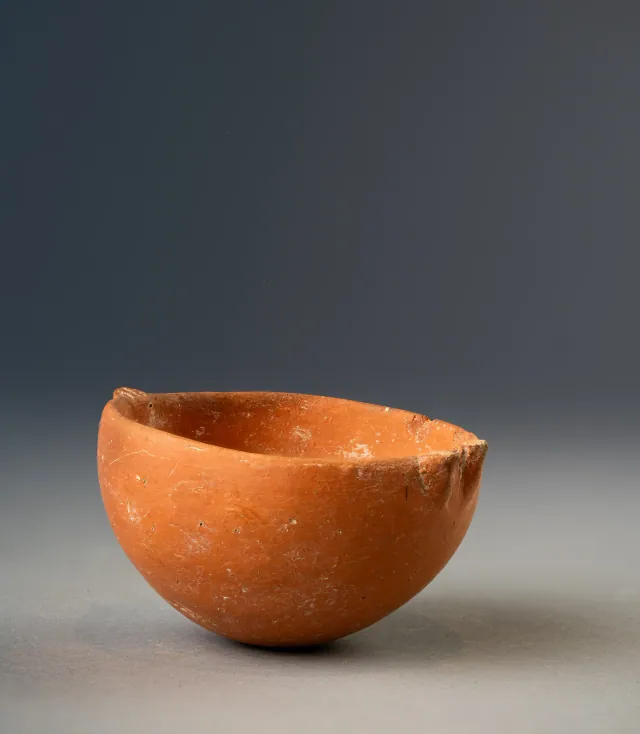
Red Polished Hemispherical Bowl with Two Rim Lugs
Red Polished ware
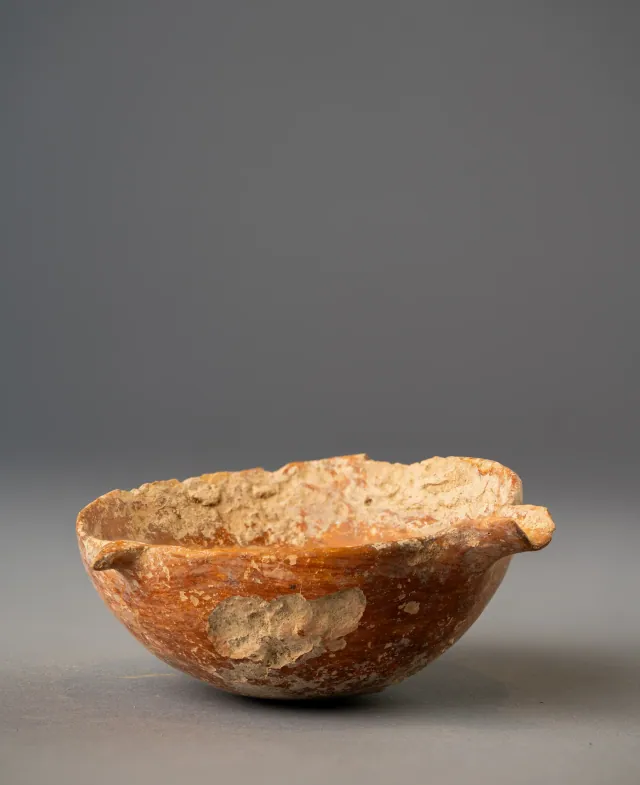
Red Polished Bowl with Two Opposed Tab Lugs
Red Polished ware
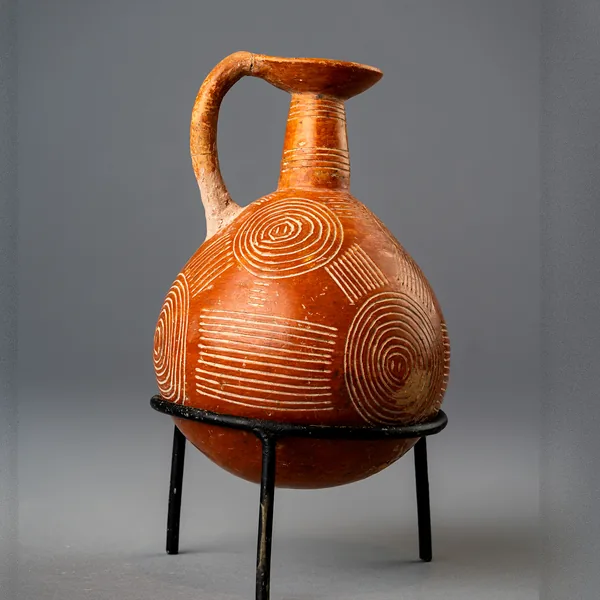
Red Polished Jug with Concentric Circles and Line Panels
Red Polished ware
Background
Where to read more on this site before or after watching.
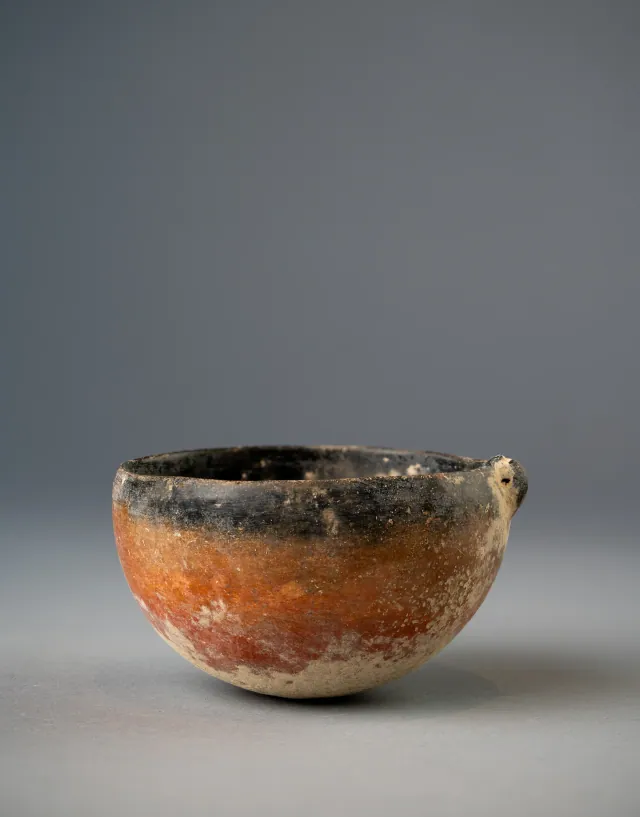
In the compendium
Red Polished Ware
Red Polished is the hand-made, red-slipped and burnished pottery that dominated Cyprus in the Early and Middle Bronze Age.
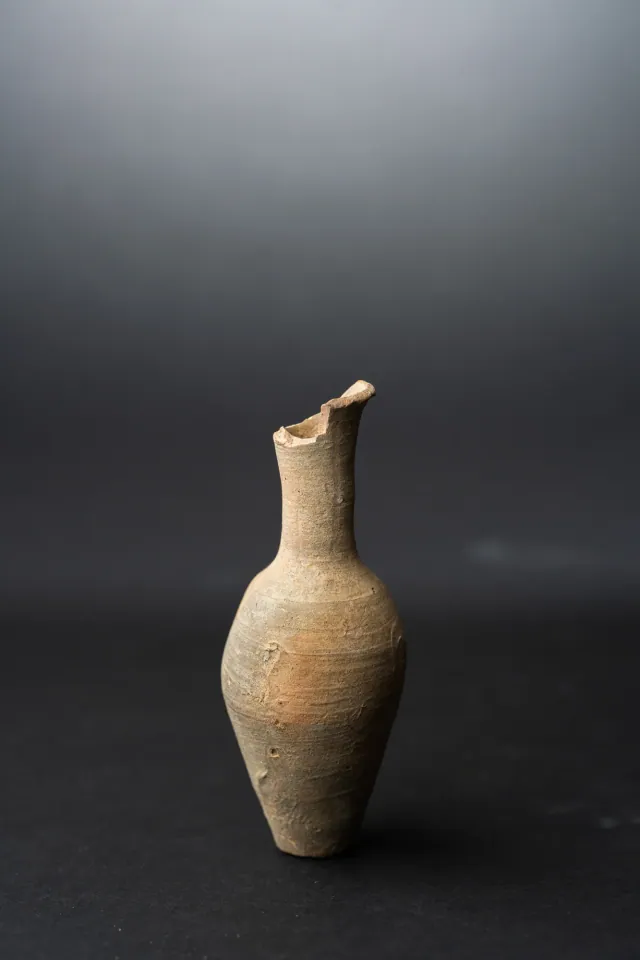
In the compendium
Hellenistic and Roman Pottery in Cyprus
Cyprus used a succession of slipped fine wares from c. 310 BCE to the 7th century CE, some made on the island and many imported from Syria, Cilicia and Pamphylia.
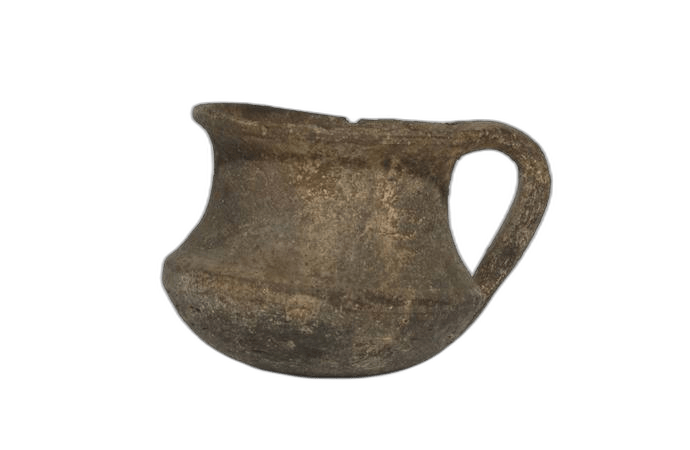
In the compendium
Coarse Wares, Pithoi and Cooking Pots
The heavily tempered storage, cooking and utility pottery of Cyprus from the Chalcolithic to the Cypro-Classical period, classified mainly by fabric and function.
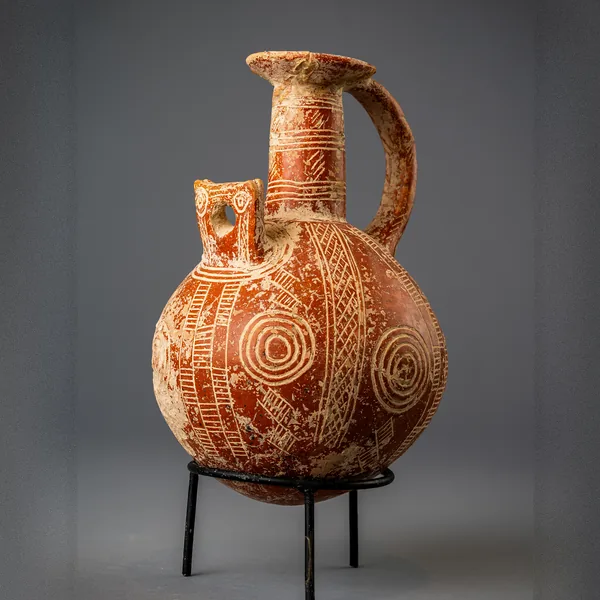
The period
Early Bronze Age
The period c. 2500–1950 BCE, from the Philia phase through Early Cypriot I–III, of rectilinear villages, Red Polished pottery and chamber-tomb cemeteries.