
Lecture·CAARI Cyprus·2020
Cylinder-seal impressions on storage vessels from Late Bronze Age Cyprus: exploring the materiality of an idiosyncratic mechanism
Chapters
About the lecture
Artemis Georgiou, delivering the Edgar Peltenburg Fellowship lecture, examines the small corpus of pithoi from the Late Bronze Age in Cyprus that bear relief friezes rolled from cylinder seals. After briefly outlining her fellowship project on maritime transport containers from Porphyrios Dikaios's excavations at Enkomi, she turns to how these relief bands were made and used.
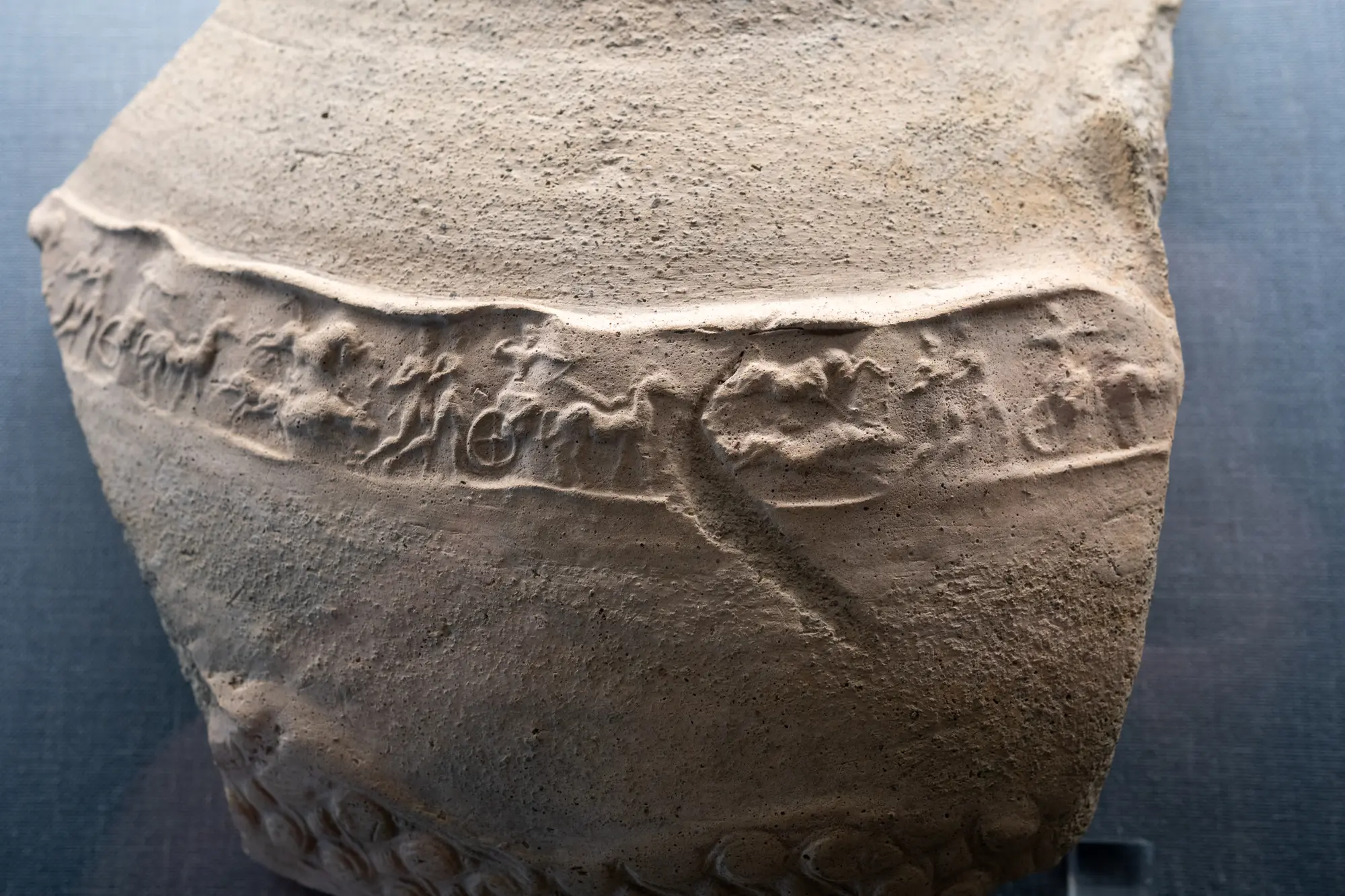
Unlike stone cylinder seals used to secure containers, the rollers employed on Cypriot pithoi were rolled directly onto the wet vessel wall or onto an added band of finer, lighter clay before firing. None of the rollers survive, but wood-grain imprints identified by Joanna Smith show that at least some were carved of wood and stood up to 8.4 centimetres high. Apart from one 14th-century BC heirloom impression from Episkopi, the corpus dates to the late 13th and early 12th centuries BC. Alassa has yielded 190 impressed fragments from at least eight rollers, followed by Maa-Palaeokastro with 26, Episkopi-Bamboula with eight, and Palaepaphos with three, alongside a single possible Cypriot import at Frattesina in Italy.
Georgiou surveys the shared repertoire of themes: chariot hunts at Alassa, Maa-Palaeokastro, Analiondas, and Athienou; a hunter kneeling before a lion at Alassa; bulls with interlocked horns restrained by human figures at Enkomi, Episkopi-Bamboula, and Palaepaphos; warriors fighting griffins and lions; crouching griffins stamped with the same seal at both Alassa and Episkopi-Bamboula; goats or birds flanking olive trees; and a row of murex shells at Hala Sultan Tekke. She compares these scenes to luxury objects from elite burials, especially carved ivory game boxes, pyxides, and mirror handles.
Because most impressed pithoi come from large storage buildings such as Building II at Alassa and Building III at Maa-Palaeokastro, Georgiou interprets the friezes as a visual marking system within regional administration. She weighs whether the scenes indicated contents such as olive oil, elite ownership during the 13th-to-12th-century transition, or goods reserved for ceremonial feasts linked to an oral heroic cycle. Comparing their south-western concentration with the distribution of Cypro-Minoan inscriptions and stone cylinder seals at Enkomi, Kition, Kalavasos, and Maroni, she argues that Late Cypriot communities used distinct regional administrative tools. In the discussion afterwards, she addresses connections between wood, ivory, and bronze workshops, residue analysis at Alassa, and whether seal impressions ever co-occur with Cypro-Minoan marks.
From our collection
Pieces in the Drakopoulos collection of the kinds and periods this talk covers: Jar, Late Cypriot (Late Bronze Age).
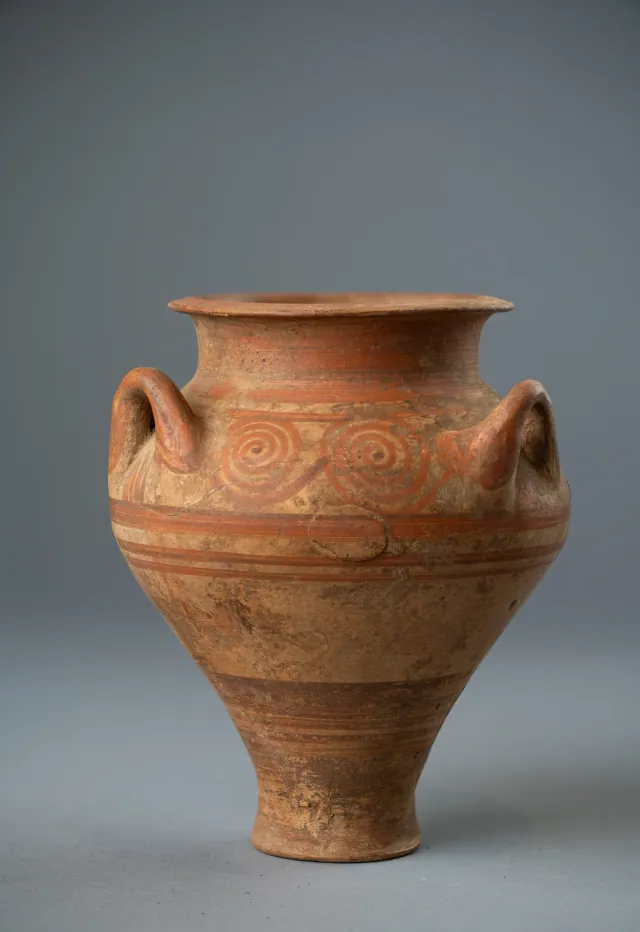
Cypriot Three-Handled Jar in the Mycenaean Style with Running Spirals
Jar
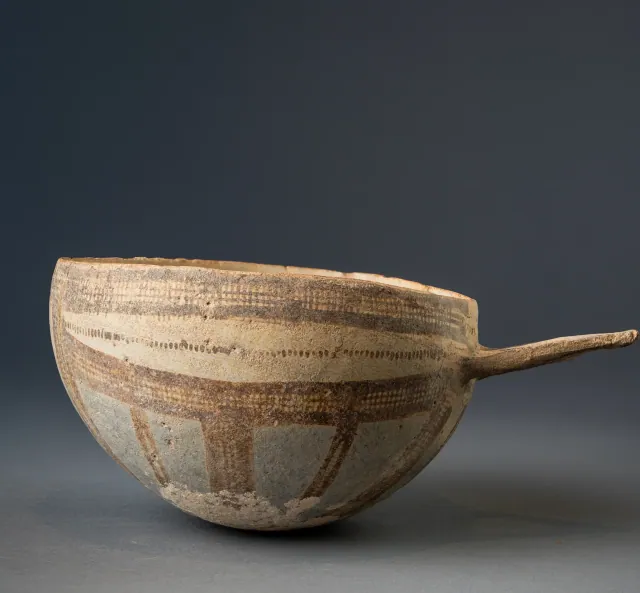
White Slip II Hemispherical Bowl with Wishbone Handle
Late Cypriot (Late Bronze Age)
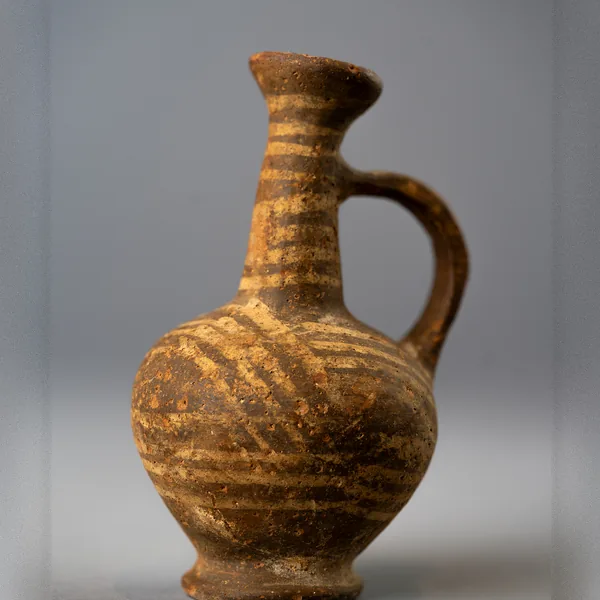
Base Ring II Bilbil Juglet with White-Painted Bands
Late Cypriot (Late Bronze Age)
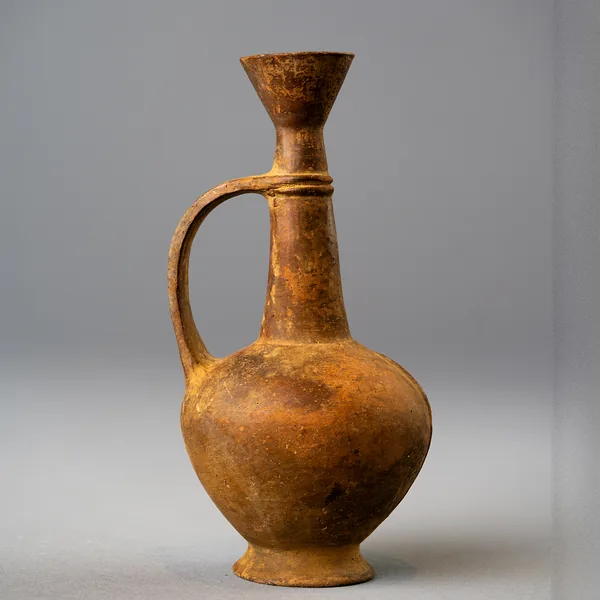
Base Ring Bilbil Juglet with Funnel Mouth and Neck Ridge
Late Cypriot (Late Bronze Age)
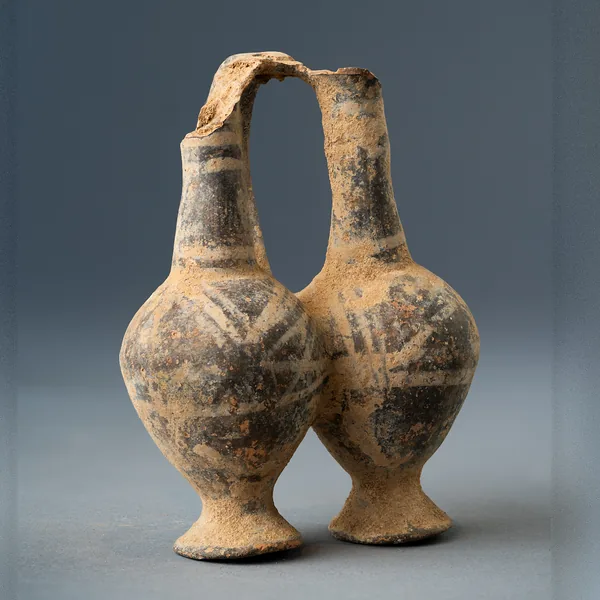
Base Ring II Double Juglet with White-Painted Decoration
Late Cypriot (Late Bronze Age)
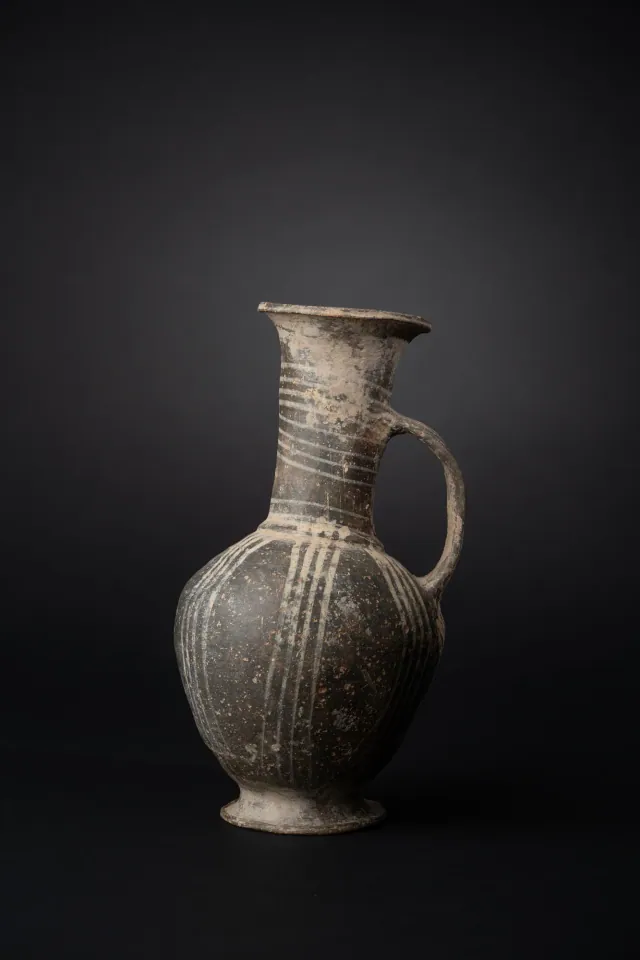
Base Ring II Jug with White-Painted Lattice Bands
Late Cypriot (Late Bronze Age)
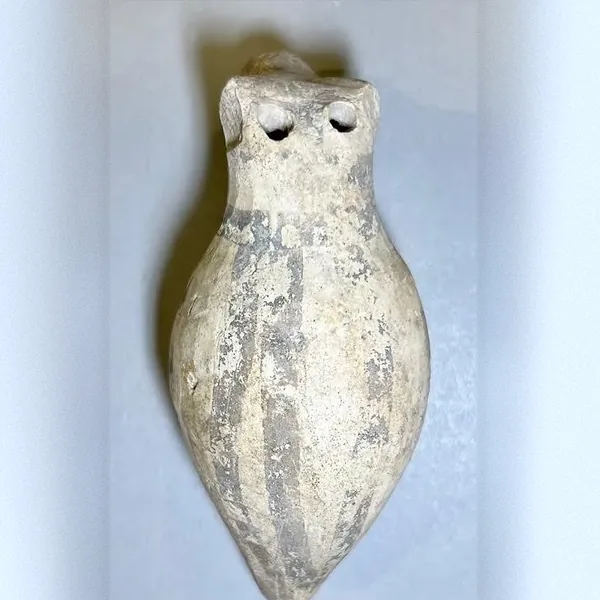
White Painted VI Owl-Headed Rattle
Late Cypriot (Late Bronze Age)
Found at the places discussed
Objects in our catalogue, in museum collections, recorded as found at these sites.


Background
Where to read more on this site before or after watching.
The site
Alassa
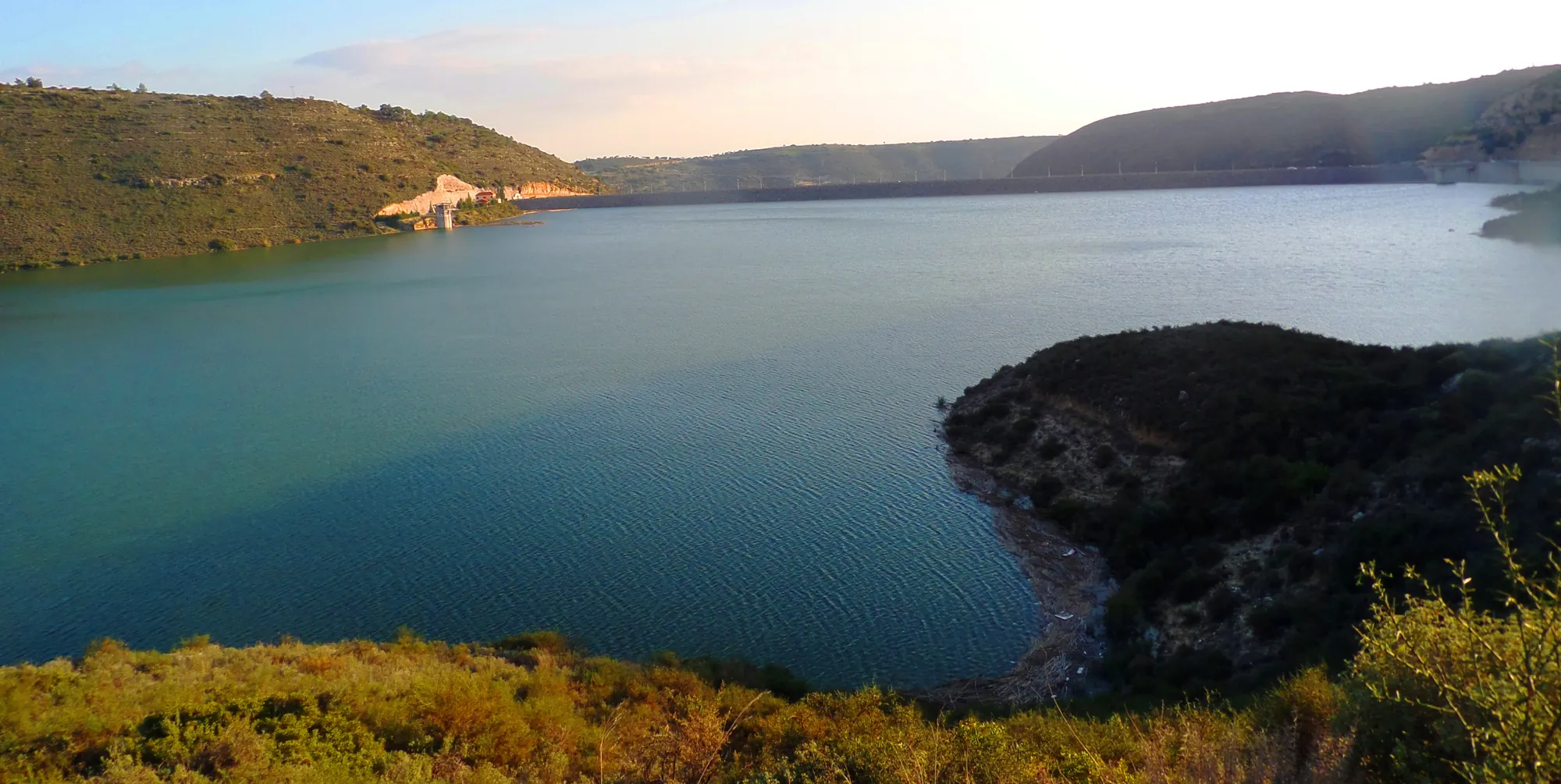
A Late Bronze Age town in the Kouris valley, found in 1983 during survey ahead of the Kouris dam and excavated by Sophocles Hadjisavvas for the Department of Antiquities from 1984 to 2000. Its upper quarter at Paliotaverna has the largest ashlar building of the period on Cyprus; houses and tombs lie downslope at Pano Mandilaris.
In the compendium
Food Storage in Ancient Cyprus: Pits, Pithoi and Storerooms
How Cypriots stored grain, oil and wine, from Chalcolithic pits and household jars to the great pithos halls of the Late Bronze Age towns.
In the compendium
Writing and Literacy in Ancient Cyprus
The scripts of ancient Cyprus, from undeciphered Cypro-Minoan to the Cypriot Syllabary, Eteocypriot, Phoenician and the Greek alphabet, and who used them.

In the compendium
Seals
Engraved stone stamps and cylinders used in Cyprus from the Late Chalcolithic to the Classical period, often worn or set in gold.
Map of Cyprus
Places discussed in the talk
- Has a page on this site
- Other places
- Ground above 200, 500, 1,000 m
Places
- 1Alassa
- 2Amathus
- 3Athienou
- 4Enkomi
- 5Episkopi-Bamboula
- 6Hala Sultan Tekke
- 7Kalavasos-Ayios Dhimitrios
- 8Kition
- 9Maa-Palaeokastro
- 10Maroni-Vournes (approx.)
- 11Palaepaphos