
Conference paper·Archaeological Research Unit - University of Cyprus·2019·In Greek
Cypriot Polities in the Decentralised Trade of the 12th Century BC
Οι κυπριακές πολιτείες στο αποκεντρωμένο εμπόριο του 12ου αιώνα π.Χ.
Chapters
About the video
In this talk, given in Greek at the annual presentation of the archaeological work of the University of Cyprus, postdoctoral researcher Artemis Georgiou examines the participation of Cypriot polities in overseas trade during the 12th century BC, at the end of the Late Bronze Age.
Georgiou begins by introducing her postdoctoral project on the Bronze Age material from Palaepaphos, excavated by the Palaepaphos Urban Landscape Project under Maria Iacovou. She outlines a forthcoming collective volume presenting material from sites including Marcello, with contributions by Susan Sherratt, Priscilla Keswani, Eleni Nodarou, Arianne Jacobs, Maria Dikomitou-Eliadou, Nicole Hirschfeld and Zomenia Zomeni.
Turning to the wider Mediterranean crisis of the 12th century BC, Georgiou notes that while urban centres in the Vasilikos and Maroni river valleys were abandoned, Cyprus did not suffer a general collapse of its urban structures or political organisation. Older scholarship assumed trade ceased because markers of elite exchange, such as oxhide ingots and imported Mycenaean pottery, disappeared. Georgiou argues instead that the collapse of centralised states allowed a pre-existing, decentralised system driven by private initiative to flourish, with coastal Cypriot towns taking a leading role.
She presents three categories of archaeological evidence. First is copper metallurgy and trade. Although oxhide ingots ceased to be produced, primary smelting continued alongside extensive bronze recycling, attested by five bronze hoards at Pyla-Kokkinokremos and scrap cargo on the Cape Gelidonya shipwreck. Lead isotope analysis of post-palatial bronzes from the Aegean, including Naue II swords and violin-bow fibulae, shows compatibility with Cypriot copper slags, while high tin content suggests newly exported raw material rather than recycled metal alone.
Second, as Mycenaean imports ceased, Cypriot workshops produced Aegean-style fine ware (White Painted Wheelmade Ware). Archaeometric analyses show that Cypriot-made Aegean-style vessels were exported in large numbers to Cilicia and the Syro-Palestinian coast, and that Levantine workshops imitated Cypriot prototypes rather than Mycenaean ones.
Third, Georgiou analyses Canaanite jars. She distinguishes between the highly standardised, sharply carinated type associated with centralised trade (as on the Uluburun wreck and at Ugarit), which is rare in Cyprus, and a second, broader-shouldered, less standardised type that continued into the 12th century BC. The majority of Canaanite jars on Cyprus come from 12th-century strata at Hala Sultan Tekke, Kition, Maa-Palaeokastro and Pyla-Kokkinokremos, alongside Egyptian-made variants. Handles incised with marks, continuing the earlier practice of marking Aegean imports with Cypro-Minoan signs and found both in Cyprus and in Philistia, indicate direct Cypriot mercantile involvement in this trade, which also coincided with the island's early role in ironworking.
From our collection
Pieces in the Drakopoulos collection of the kinds and periods this talk covers: Mycenaean pottery, Late Cypriot (Late Bronze Age).
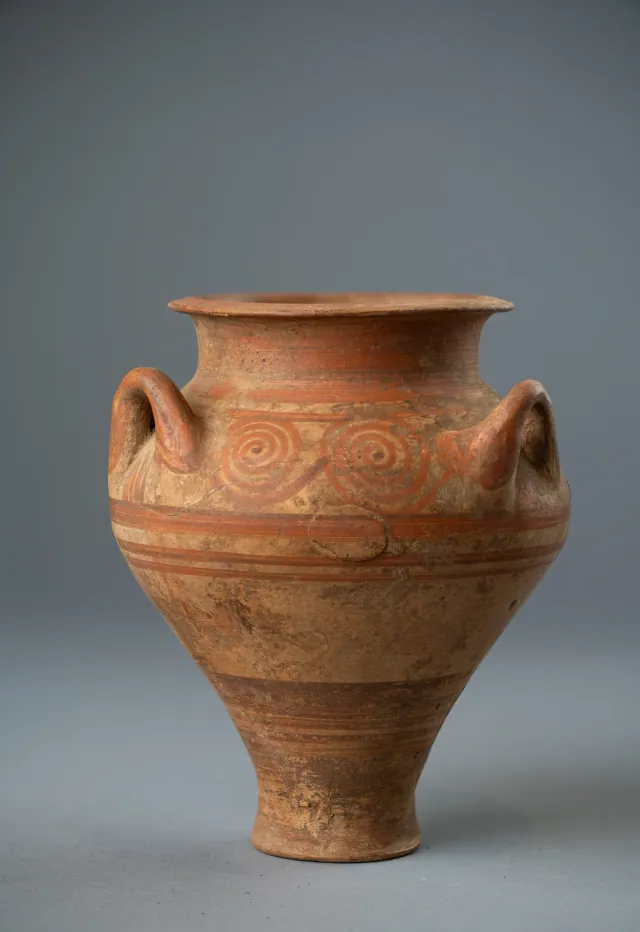
Cypriot Three-Handled Jar in the Mycenaean Style with Running Spirals
Mycenaean pottery
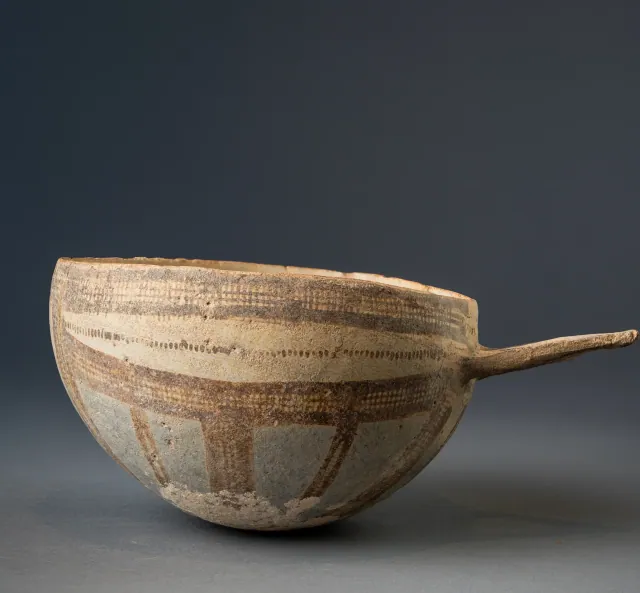
White Slip II Hemispherical Bowl with Wishbone Handle
Late Cypriot (Late Bronze Age)
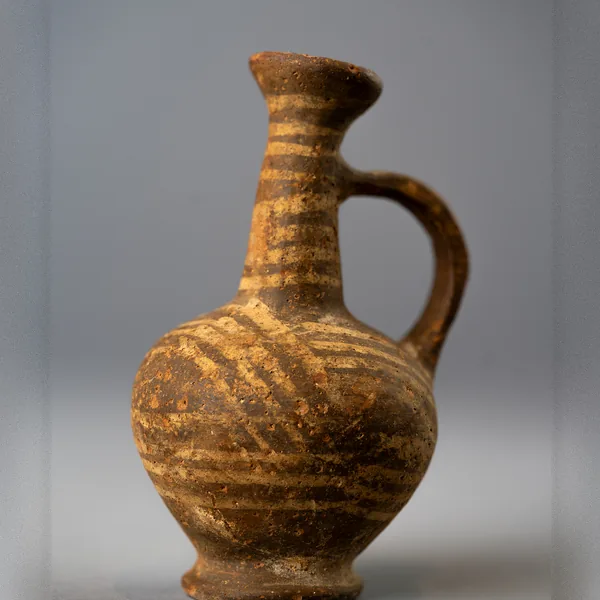
Base Ring II Bilbil Juglet with White-Painted Bands
Late Cypriot (Late Bronze Age)
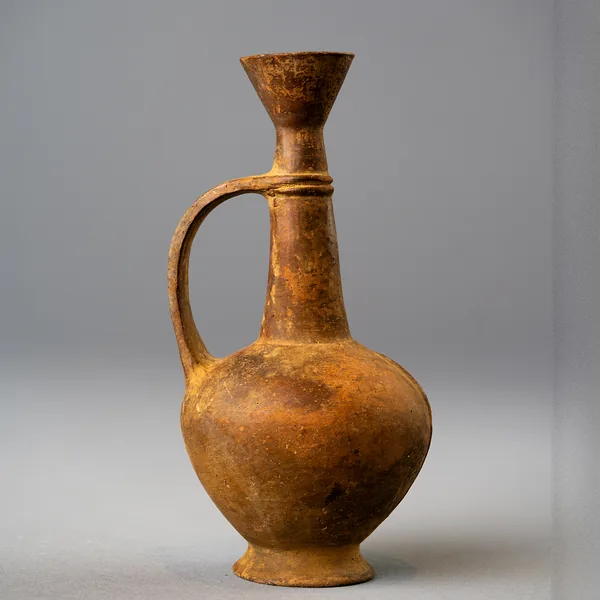
Base Ring Bilbil Juglet with Funnel Mouth and Neck Ridge
Late Cypriot (Late Bronze Age)
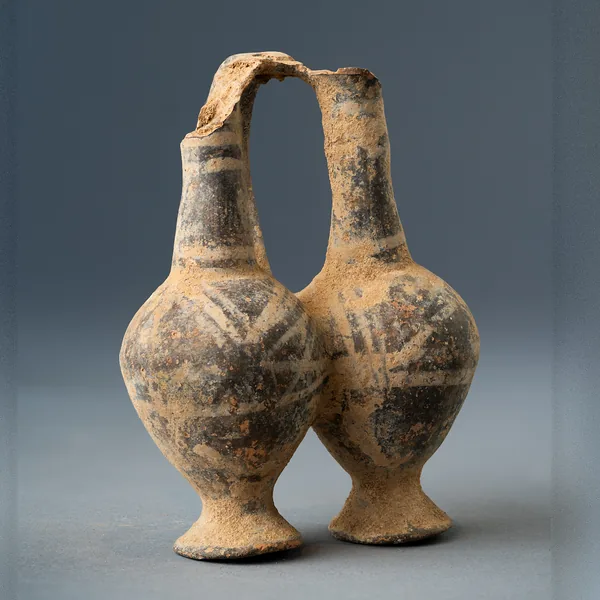
Base Ring II Double Juglet with White-Painted Decoration
Late Cypriot (Late Bronze Age)
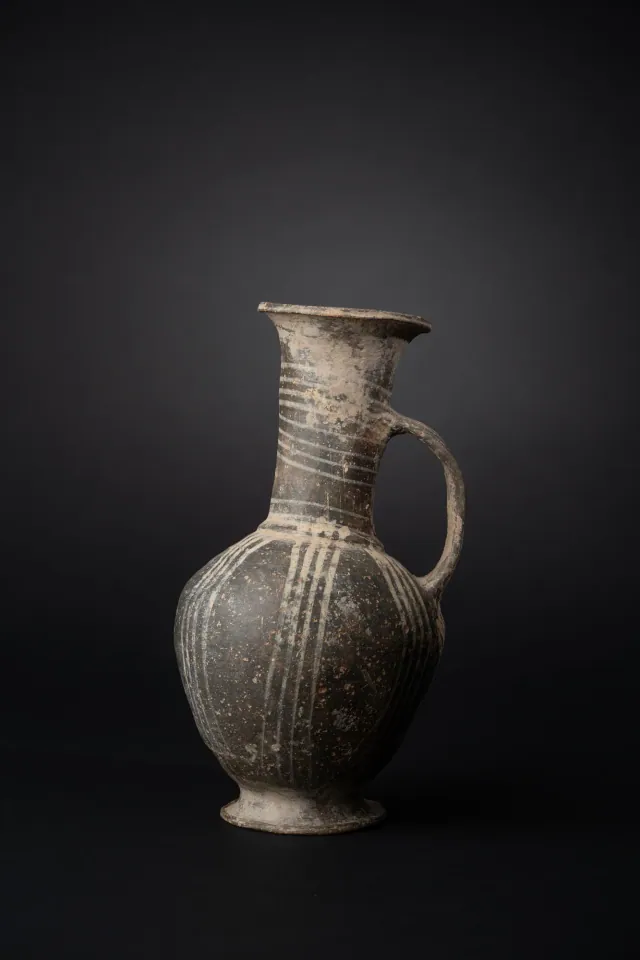
Base Ring II Jug with White-Painted Lattice Bands
Late Cypriot (Late Bronze Age)
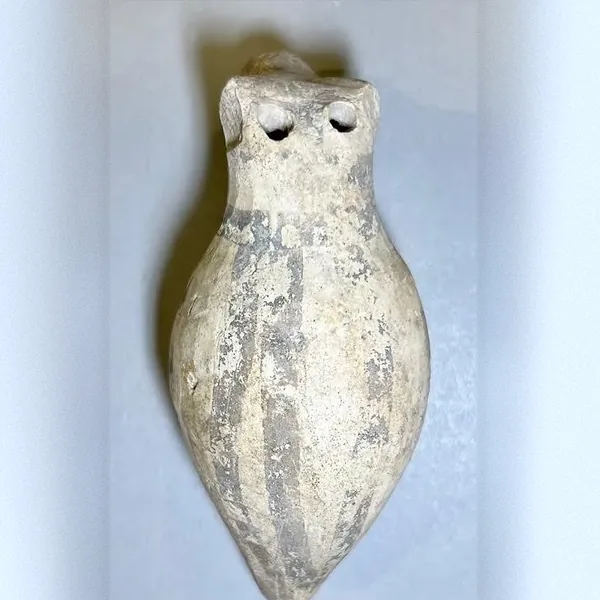
White Painted VI Owl-Headed Rattle
Late Cypriot (Late Bronze Age)
Found at the places discussed
Objects in our catalogue, in museum collections, recorded as found at these sites.
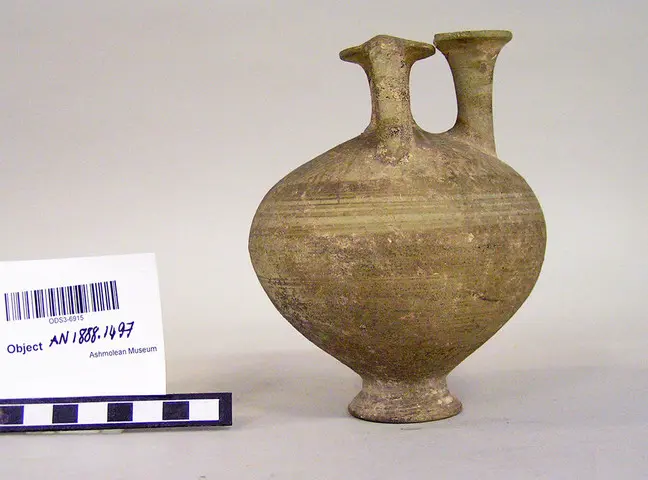
).webp)


Background
Where to read more on this site before or after watching.
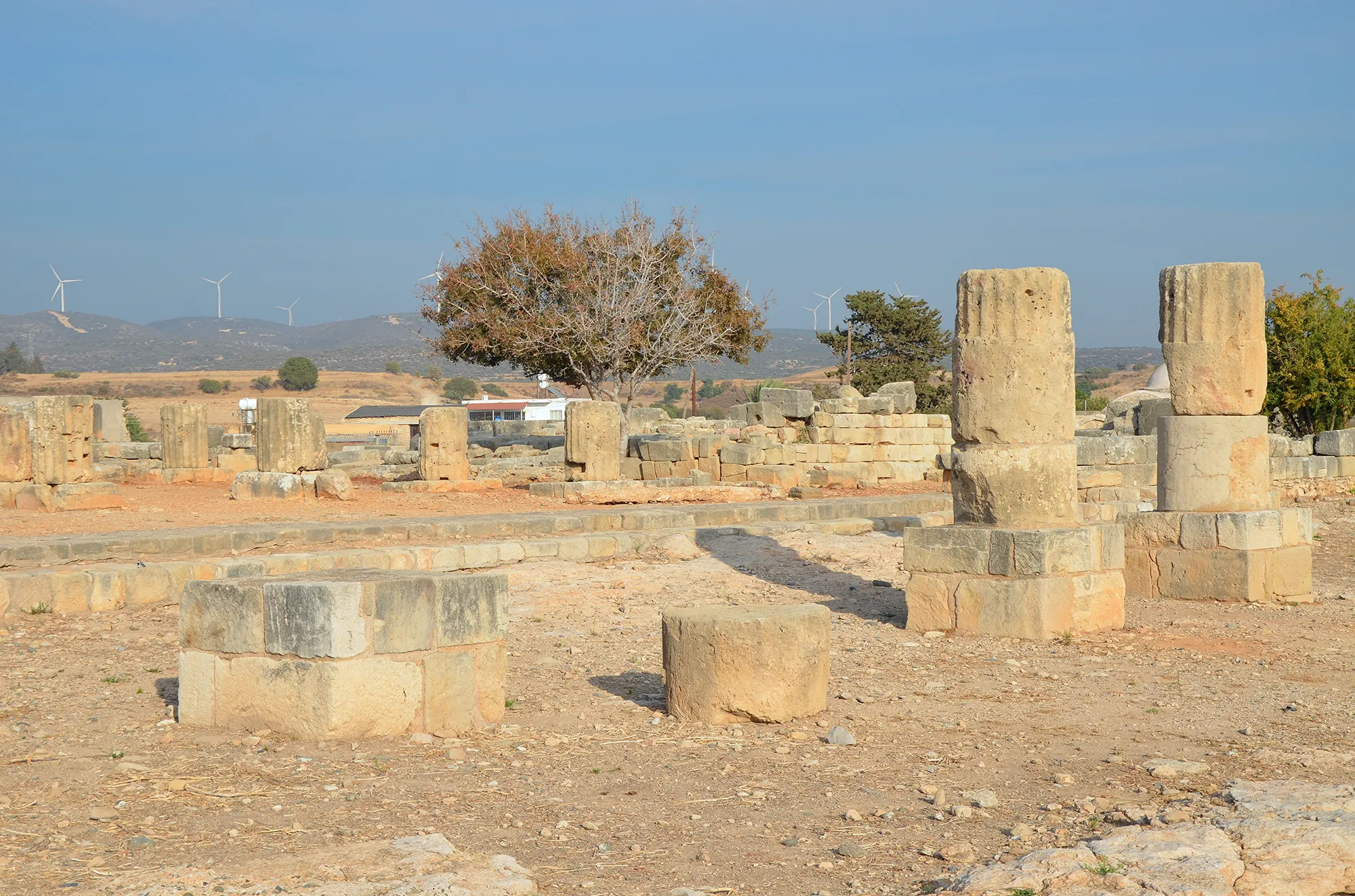
The site
Palaepaphos (Kouklia)
Palaepaphos, Old Paphos, lies under and around the village of Kouklia in western Cyprus. Founded in the Middle Bronze Age, it was the only large town of the south-west until the early Hellenistic period, the seat of the kings of Paphos and the site of the sanctuary of the Paphian goddess, Aphrodite, worshipped here from about 1200 BC to the end of the 4th century AD.
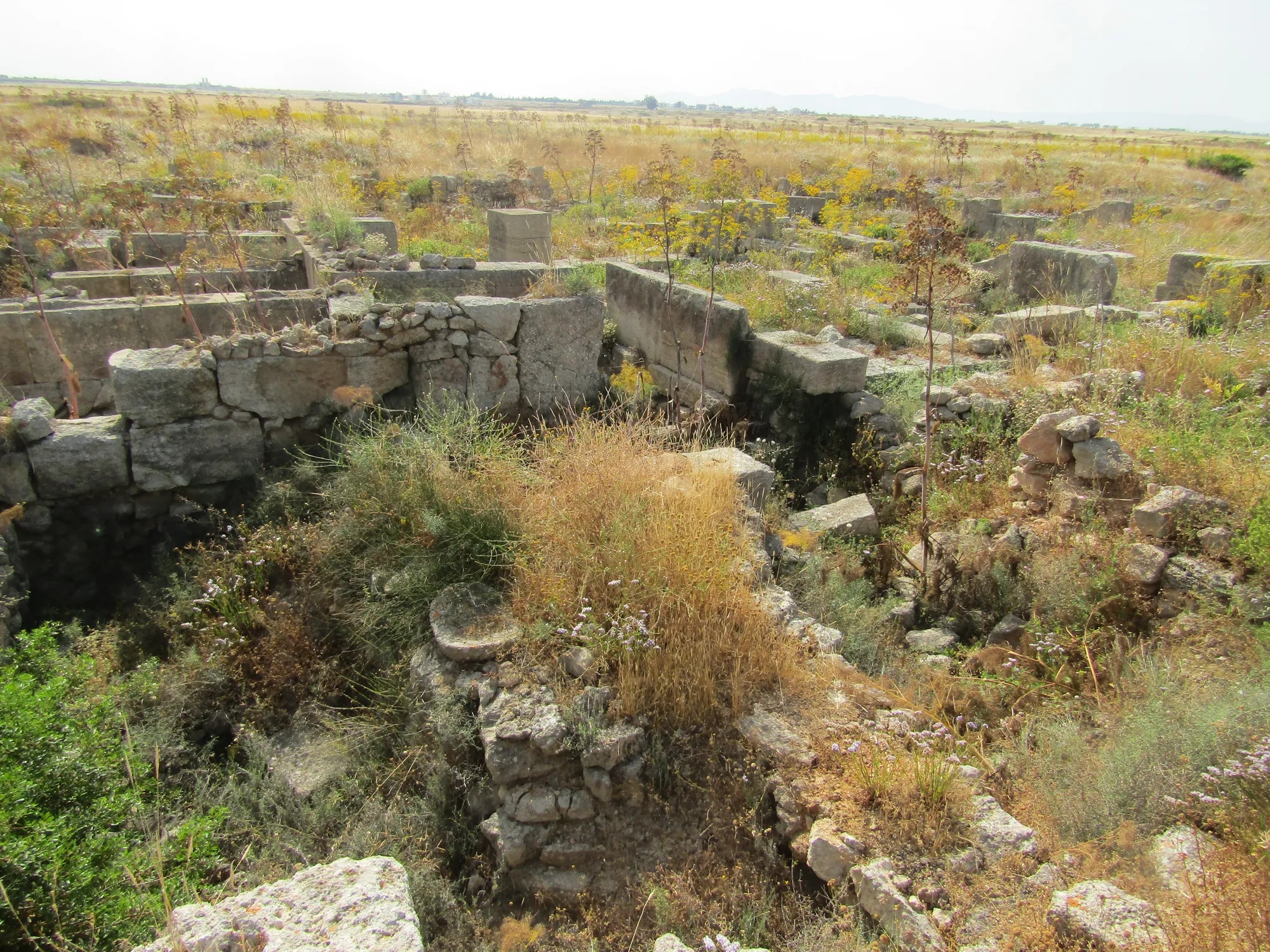
In the compendium
Late Bronze Age Towns and Buildings
How Late Bronze Age Cyprus built its first towns: street grids, large ashlar buildings with storage halls, courtyard houses, and the short-lived settlements of the twelfth century.
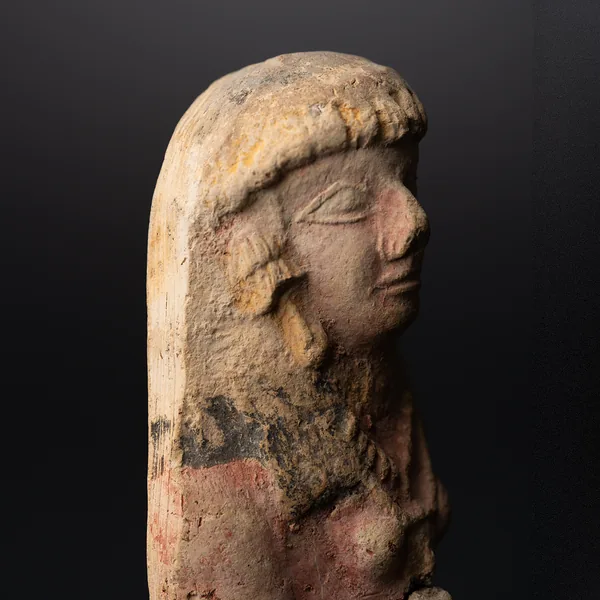
In the compendium
Egypt
Ancient Egypt, Cyprus's partner in copper, pottery and prestige goods from the Middle Kingdom to the Ptolemies, who annexed the island.
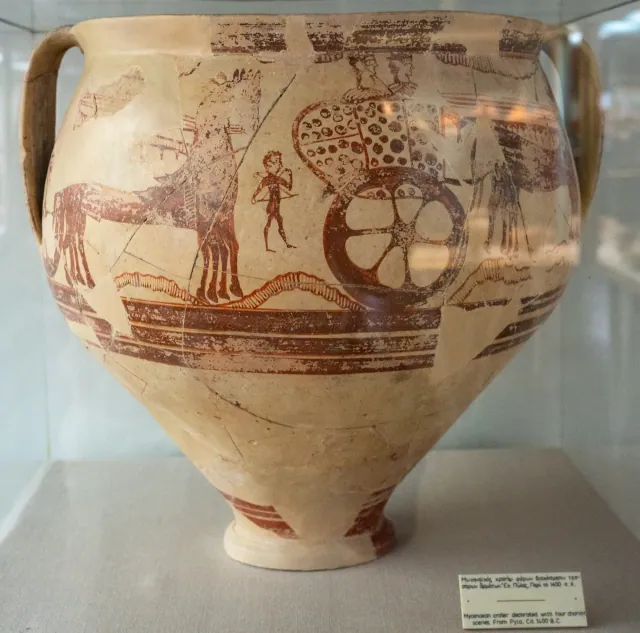
In the compendium
The Mycenaeans and Cyprus
The palatial Late Bronze Age societies of mainland Greece, whose pottery flooded Cypriot coastal towns in the 14th and 13th centuries BCE.
Map of Cyprus
Places discussed in the talk
- Has a page on this site
- Other places
- Ground above 200, 500, 1,000 m
Places
- 1Palaepaphos
- 2Pyla-Kokkinokremos
- 3Maa-Palaeokastro
- 4Hala Sultan Tekke
- 5Kition