
Conference paper·Archaeological Research Unit - University of Cyprus·2018·In Greek
Analysing the External Contacts of Paphos in the Late Cypriot Bronze Age: Imported Objects from the Urban Centre and the Periphery
Αναλύοντας τις εξωτερικές επαφές της Πάφου κατά την Ύστερη Κυπριακή Χαλκοκρατία: τα εισηγμένα αντικείμενα από το αστικό κέντρο και την περιφέρεια
Chapters
About the video
In this conference paper, given in Greek, Artemis Georgiou of the Archaeological Research Unit at the University of Cyprus presents results from the four-year Marie Curie project ARIEL, coordinated by Maria Iacovou. Drawing on fieldwork by the Palaepaphos Urban Landscape Project at Hadjiabdullah and Laona, the recent publication of two wells at Kouklia-Evreti dug by the German-Swiss mission, and published material from the 1950s British expedition, the German-Swiss mission under Franz Georg Maier, and the Department of Antiquities, she surveys the imported objects and raw materials that reached Palaepaphos and its region during the Late Bronze Age.
Imports appear at the foundation horizon of the settlement at the start of the Late Cypriot period. A Late Minoan IA spiral-decorated cup fragment from an Evreti well, dating to the mid-16th century BC, and three Minoan cup sherds from Teratsoudhia tombs mark the earliest contacts with Crete. From the same horizon come Egyptian imports: a stone vessel fragment bearing the cartouche of Pharaoh Ahmose I from Teratsoudhia and a faience necklace with a carnelian pendant from an Asproyi tomb, which also held a blue glass Hathor pendant with northern Mesopotamian parallels of the 16th and 15th centuries BC.
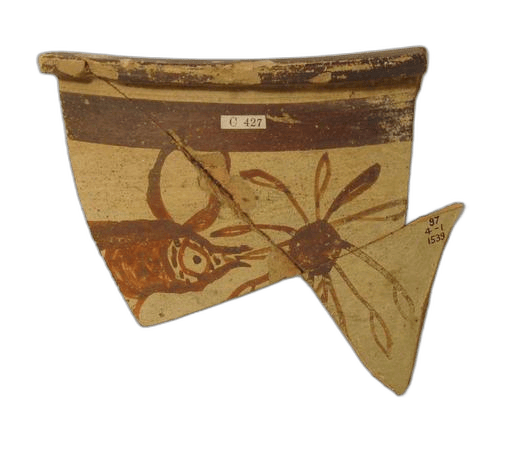
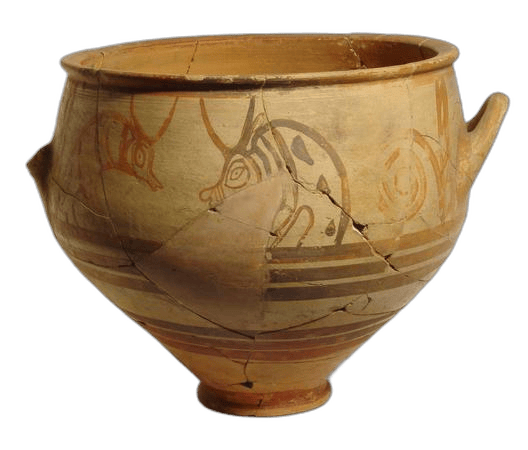
Mycenaean pottery arrives in the late 15th and early 14th centuries BC, including an Argolid stipple-decorated cup rim, and peaks in the late 14th and 13th centuries, dominated by closed shapes such as stirrup jars, pyxides and jugs alongside kylikes, bowls and kraters. Fine and coarse Minoan oatmeal-fabric vessels, including a stirrup jar handle incised with a Cypro-Minoan sign, also occur. Georgiou argues that earlier scholarship understated eastern trade because undiagnostic body sherds of Canaanite jars were overlooked; in the University of Cyprus excavations these transport amphorae, some marked in Cypro-Minoan, make up 11 percent of the Bronze Age pottery at Laona and 9 percent at Hadjiabdullah, compared with 3 percent for Mycenaean wares. Egyptian alabaster vessels (including one with Bes-shaped handle bases), faience gaming pieces, and 619 worked and unworked pieces of elephant and hippopotamus ivory from the Evreti wells demonstrate local workshop production using imported raw materials.
In the wider Paphos region, rescue excavations at Yeroskipou yielded tombs with gold, ivory and a faience lentoid flask, while the short-lived late 13th-century BC settlement at Maa-Palaeokastro produced the island's second-largest assemblage of Canaanite jars after Hala Sultan Tekke, mostly from the southern Syro-Palestinian coast and Egypt. Georgiou concludes that Palaepaphos functioned from its foundation as a port town comparable to Enkomi, Hala Sultan Tekke and Maroni, and notes that its elite displayed status in tombs such as Evreti Tomb 8 through gold and ivory rather than Mycenaean pictorial kraters, which are nearly absent.
From our collection
Pieces in the Drakopoulos collection of the kinds and periods this talk covers: Mycenaean pottery, Late Cypriot (Late Bronze Age).
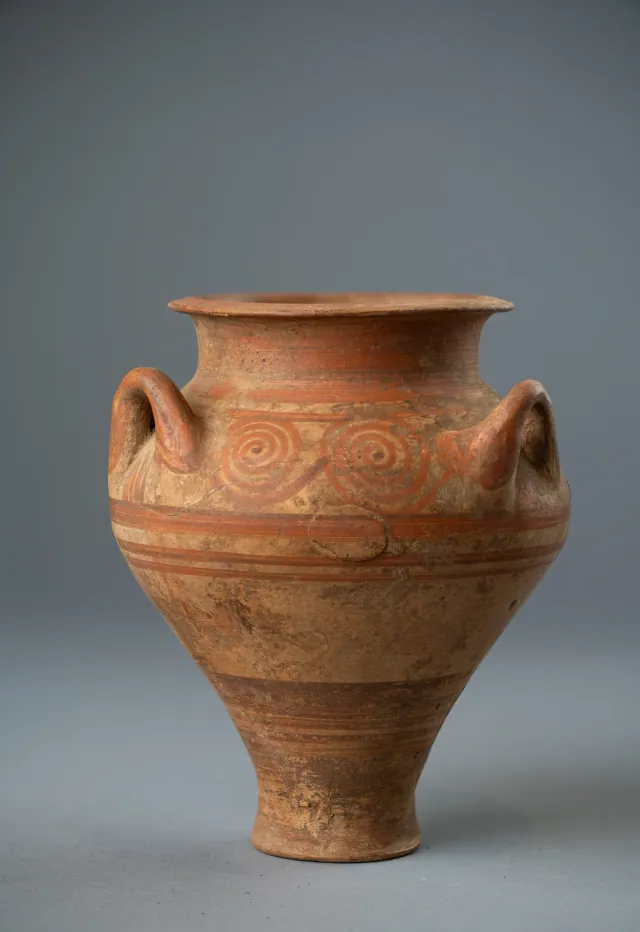
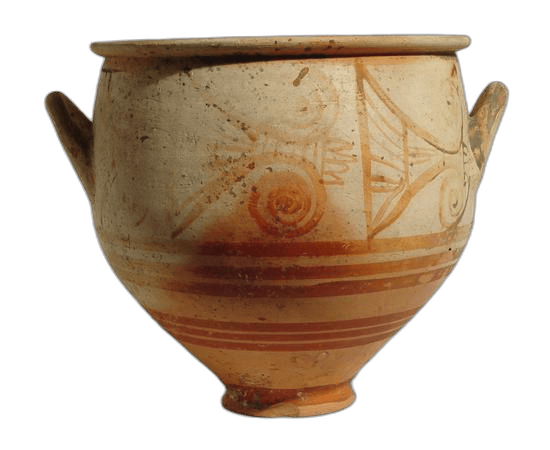
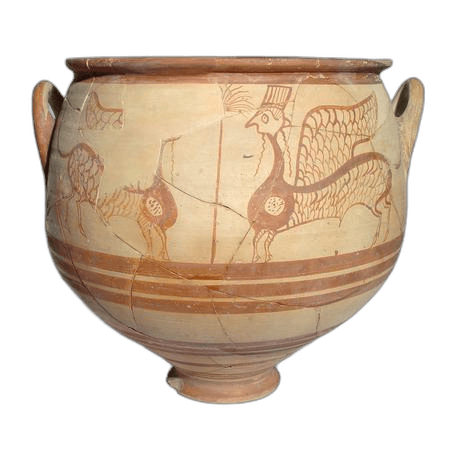
Cypriot Three-Handled Jar in the Mycenaean Style with Running Spirals
Mycenaean pottery
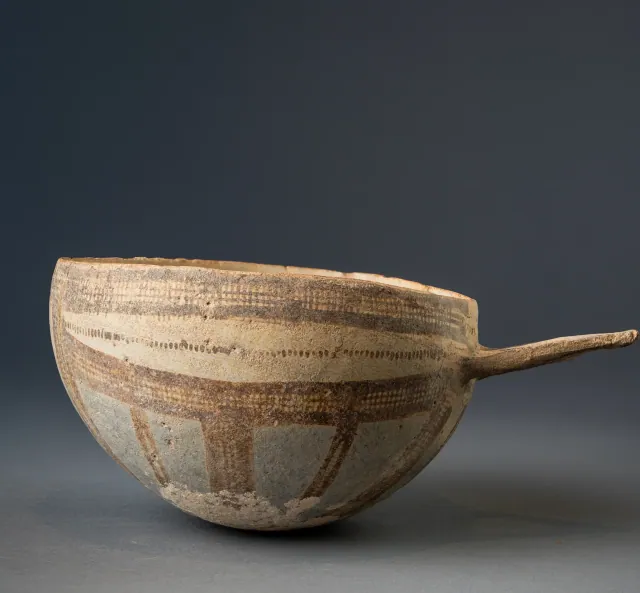
White Slip II Hemispherical Bowl with Wishbone Handle
Late Cypriot (Late Bronze Age)
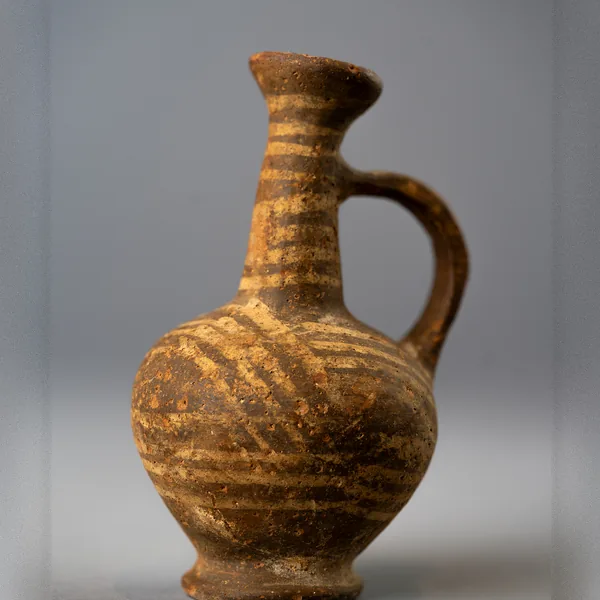
Base Ring II Bilbil Juglet with White-Painted Bands
Late Cypriot (Late Bronze Age)
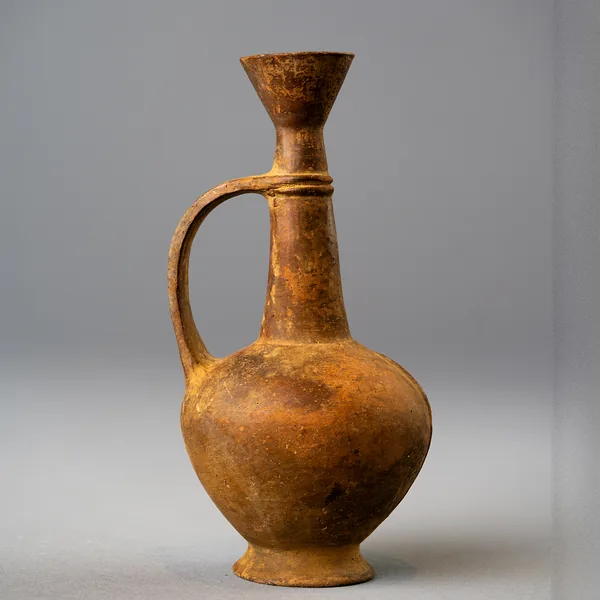
Base Ring Bilbil Juglet with Funnel Mouth and Neck Ridge
Late Cypriot (Late Bronze Age)
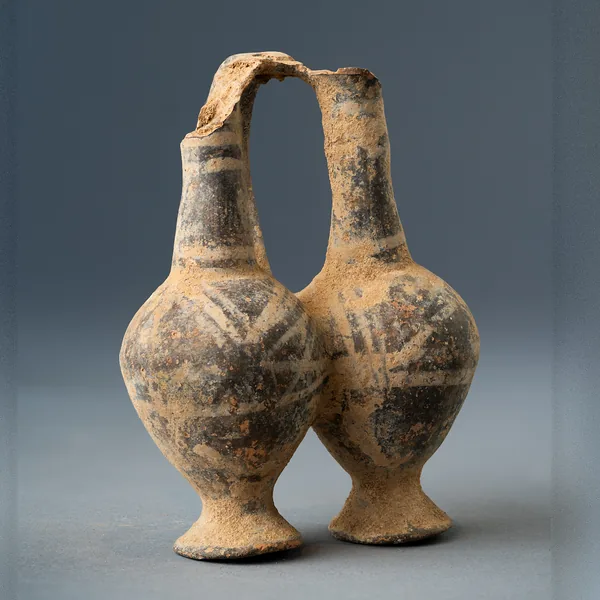
Base Ring II Double Juglet with White-Painted Decoration
Late Cypriot (Late Bronze Age)
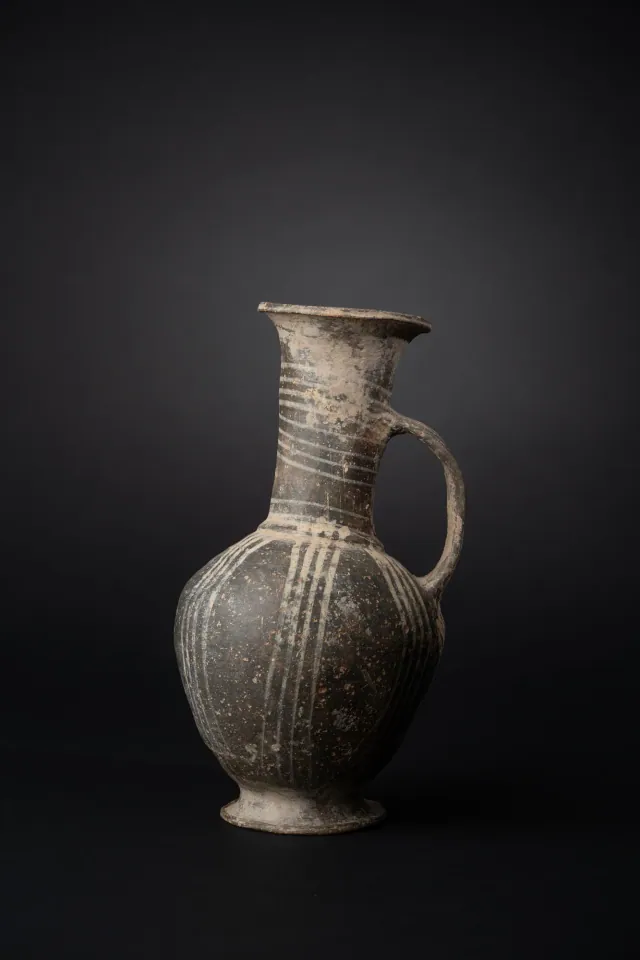
Base Ring II Jug with White-Painted Lattice Bands
Late Cypriot (Late Bronze Age)
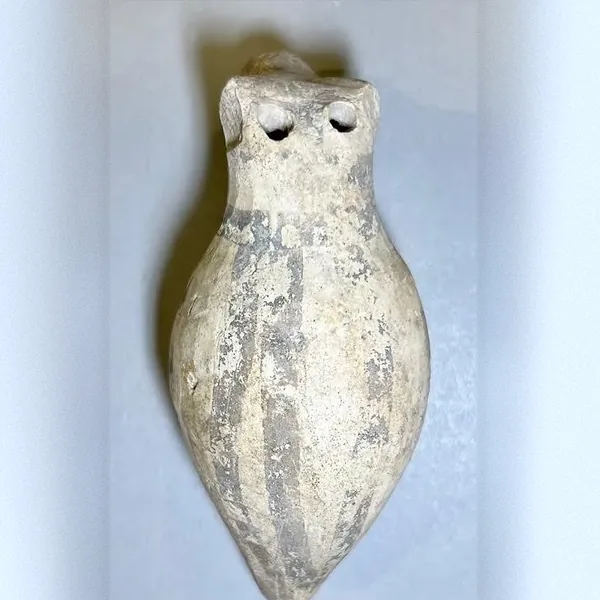
White Painted VI Owl-Headed Rattle
Late Cypriot (Late Bronze Age)
Found at the places discussed
Objects in our catalogue, in museum collections, recorded as found at these sites.
Background
Where to read more on this site before or after watching.
The site
Palaepaphos (Kouklia)
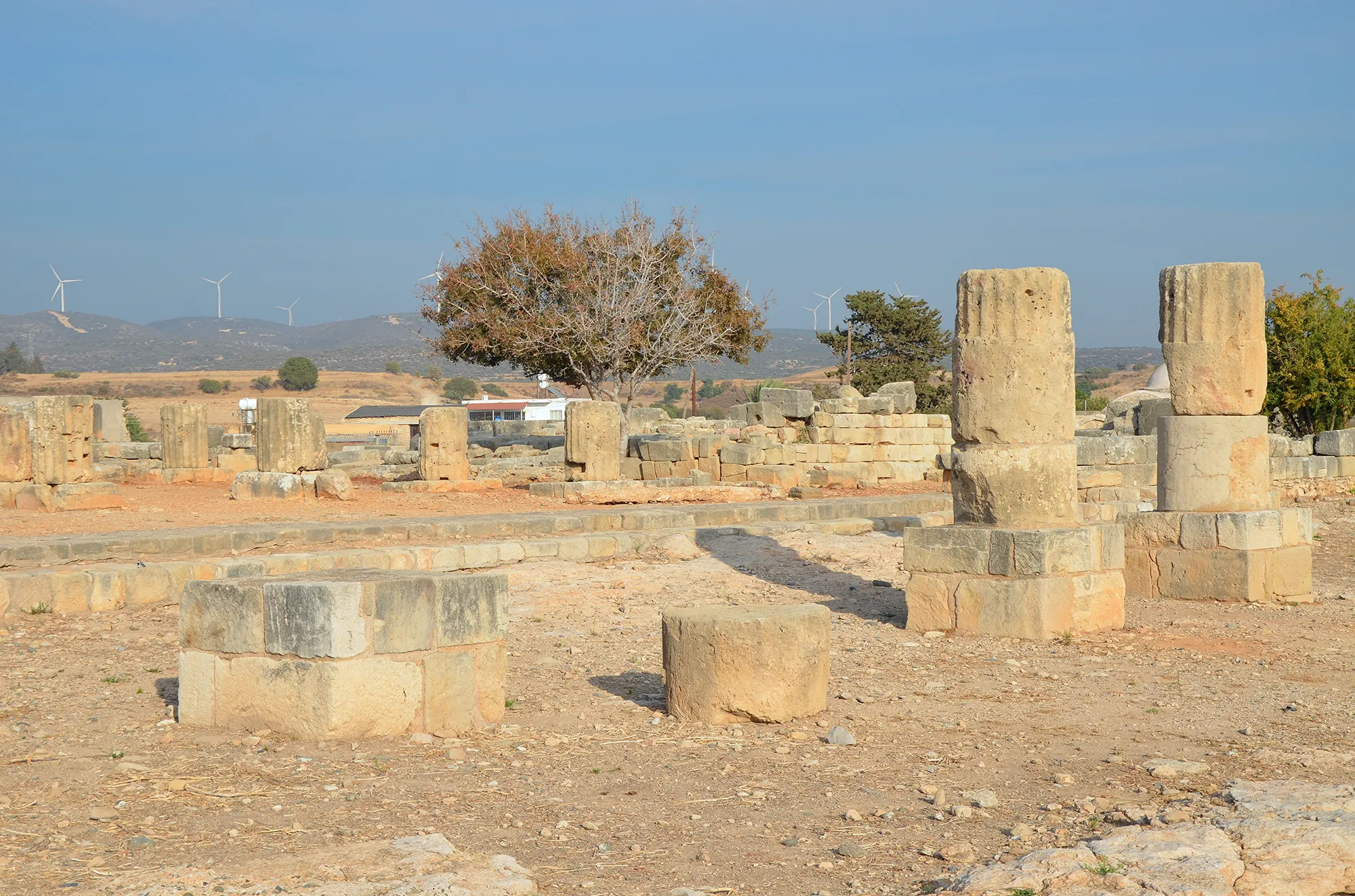
Palaepaphos, Old Paphos, lies under and around the village of Kouklia in western Cyprus. Founded in the Middle Bronze Age, it was the only large town of the south-west until the early Hellenistic period, the seat of the kings of Paphos and the site of the sanctuary of the Paphian goddess, Aphrodite, worshipped here from about 1200 BC to the end of the 4th century AD.
In the compendium
The Minoans
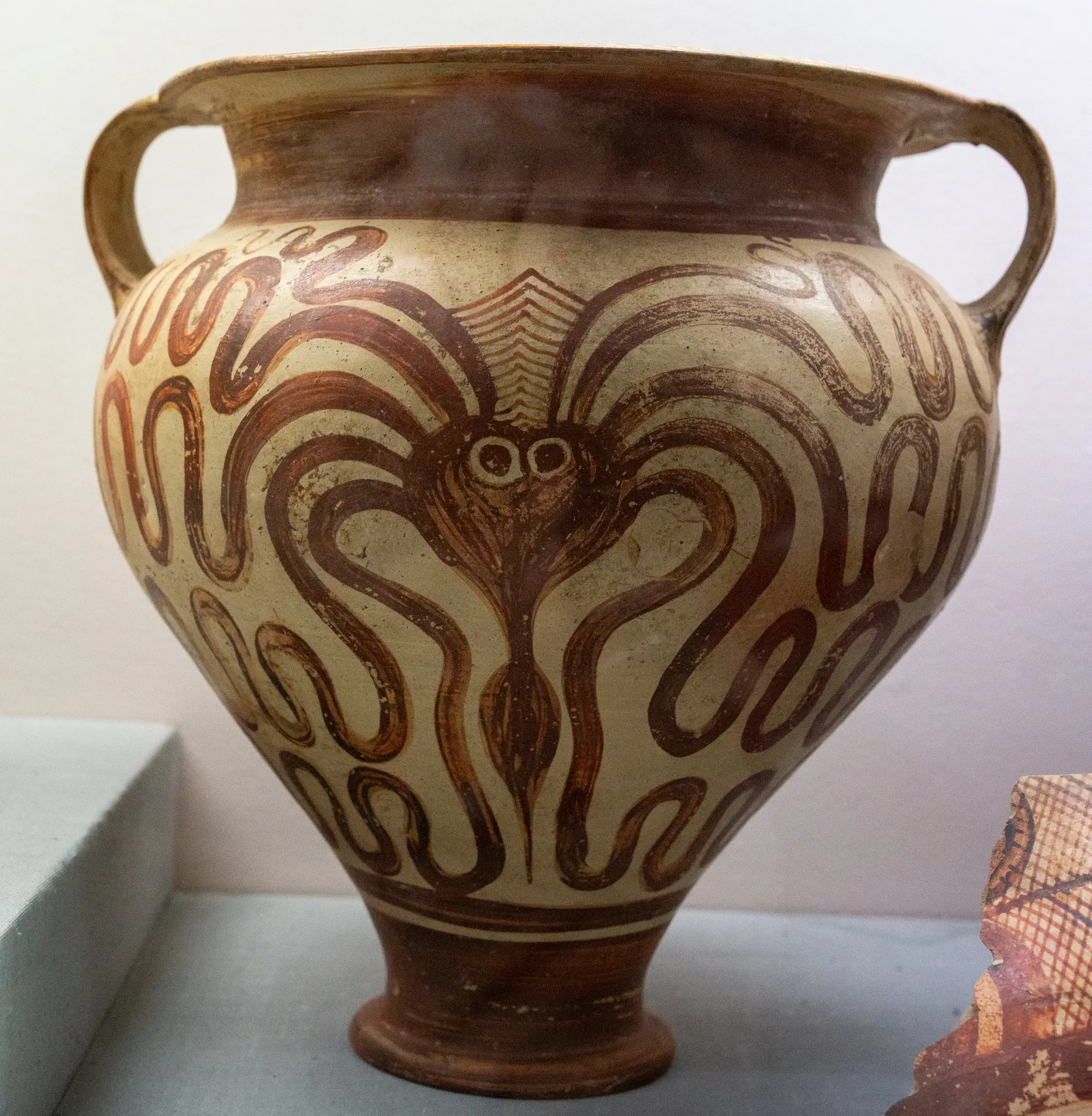
The palatial Bronze Age civilization of Crete, which took Cypriot copper and passed writing to Cyprus in the early Late Bronze Age.
In the compendium
Egypt
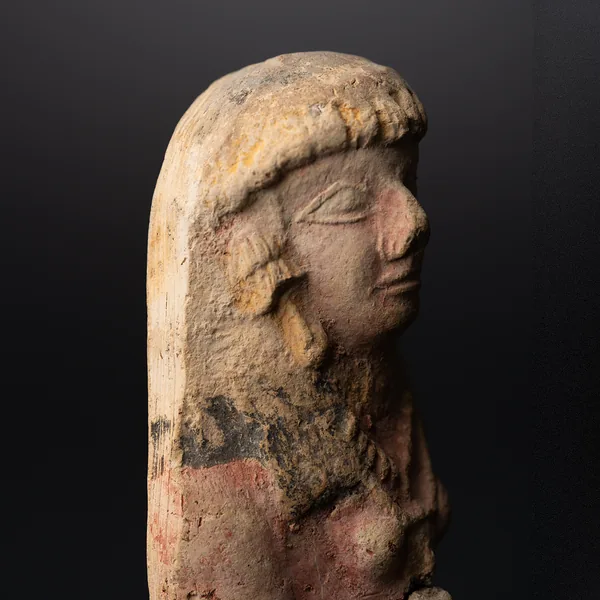
Ancient Egypt, Cyprus's partner in copper, pottery and prestige goods from the Middle Kingdom to the Ptolemies, who annexed the island.
In the compendium
The Mycenaeans and Cyprus
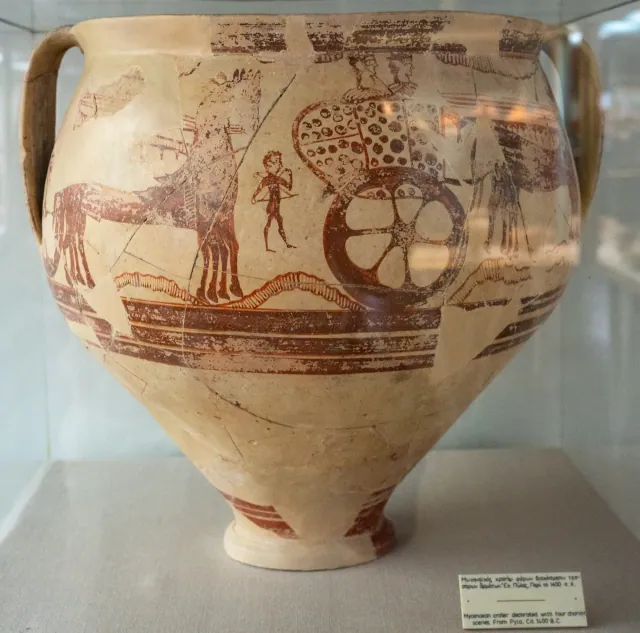
The palatial Late Bronze Age societies of mainland Greece, whose pottery flooded Cypriot coastal towns in the 14th and 13th centuries BCE.
Map of Cyprus
Places discussed in the talk
- Has a page on this site
- Other places
- Ground above 200, 500, 1,000 m
Places
- 1Palaepaphos
- 2Maa-Palaeokastro
- 3Yeroskipou (approx.)
- 4Hala Sultan Tekke
- 5Enkomi
- 6Maroni