
Materials
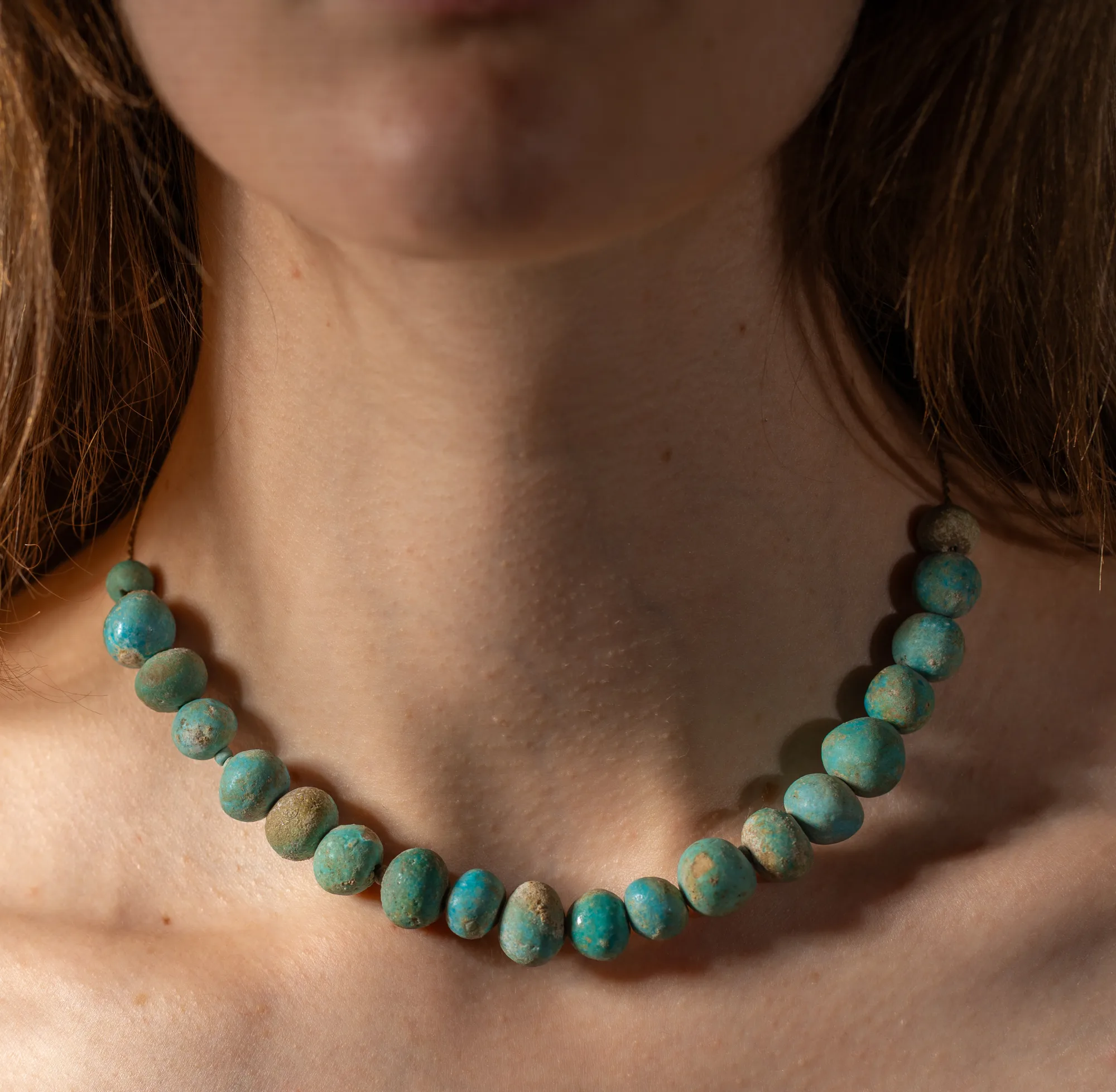
Most Cypriot objects were made from what the island itself supplied: clay, limestone, picrolite from the Troodos and copper from its ore bodies. A smaller group was made from materials that came by sea, above all faience, glass and ivory. This section describes each material, links to the compendium pages that treat it in depth, and points to the catalogue pages where objects can be browsed by what they are made of.
Materials from the island
Clay. Pottery and terracotta figurines make up the bulk of the archaeological record of Cyprus. The wares, shapes and decoration are covered in the Pottery section, and the way pots were fired in Pottery Kilns and Firing. In the catalogue, clay objects are listed under Clay.
Stone. Chalcolithic figurines and pendants were carved from picrolite, a soft stone found in seams in serpentinite. The best seams lie high in the Troodos near Pano Amiandos; at Souskiou the slabs used are fresh rather than water-worn, which implies quarrying as well as collecting pebbles from the Kouris and neighbouring rivers [1]. From the end of the 7th century BC, sculptors used local limestone, since the island has no marble of its own, and the limits of that stone shaped the local style [5, p. 36]. Calcite (alabaster) vessels of Egyptian form were either imported or carved from local stone [2, p. 178]. The Stone page covers these in turn, and the sculpture is treated in Archaic Limestone Sculpture and Neolithic and Picrolite Figurines. Browse the catalogue under Stone, Limestone or Picrolite.
Metals. Weathering of the Troodos ophiolite turned the upper parts of the ore bodies into malachite and azurite, which are easy to smelt, and the enriched zones beneath, with 10 to over 15 per cent copper, produced most of the copper of ancient Cyprus. Ancient miners had no pumps and left the deeper pyrite ore alone [6, p. 93]. The story of that copper is told in Copper Metallurgy; gold, silver, lead and iron are covered in Metals Beyond Copper, and the articles Copper Kingdoms of Ancient Cyprus and Metal in Ancient Cyprus take the subject further. In the catalogue: Metal, Copper and bronze, Gold, Silver, Iron and Lead.
Materials from abroad
Glass and faience
Faience and glass belong to one family of vitreous materials, listed together in the catalogue as Glass and faience. Faience is a body of crushed quartz or quartz sand covered with a soda-lime-silica glaze; it was made in Egypt and the Near East from the 4th millennium BC into the Roman period, for bowls, tiles, beads, rings, amulets and scarabs [1]. Glass is the fully vitrified member of the family. Early faience was coloured with copper for blue and green and with manganese for black; once glass was being produced, from the middle of the 2nd millennium BC, cobalt blue, manganese purple and lead antimonate yellow were added [1].
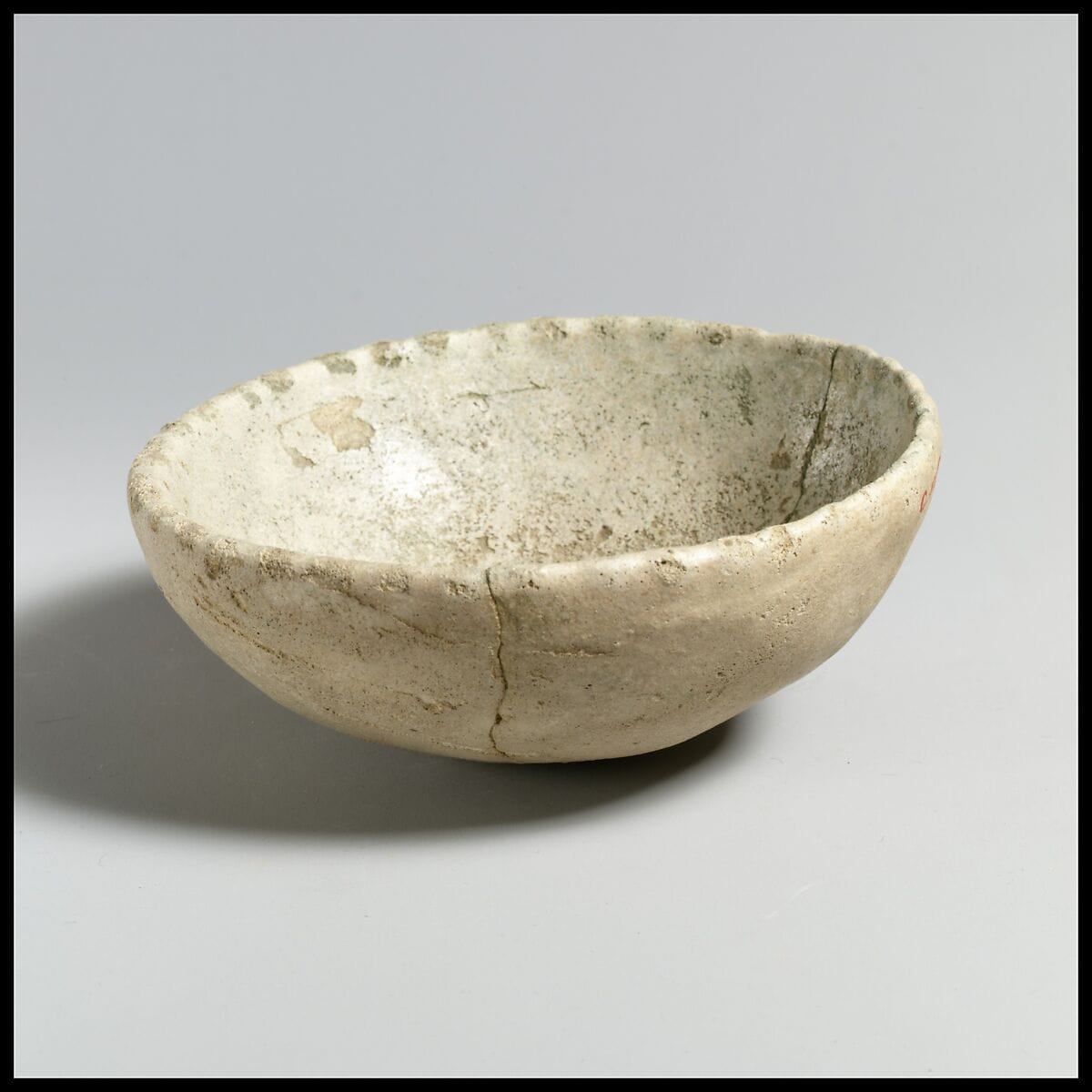
The earliest faience in Cyprus is a group of 29 beads from Souskiou-Laona, of the Middle Chalcolithic, described by the excavators as the earliest securely dated faience from Cyprus and perhaps from the whole eastern Mediterranean [1]. Whether they were made on the island is open: one bead contained traces of tin, which does not occur in Cyprus, and Edgar Peltenburg found no sign of an independent faience industry at Kissonerga [1]. In the Late Bronze Age, glazed vessels were plentiful at Kition in tombs, houses and sanctuaries. Most came from Egypt, as luxury goods received in return for Cypriot copper, and they became rarer in the Iron Age, when faience and glass vessel production declined in Egypt and western Asia [2, p. 178]. The Met's faience bowl and its faience flask, both from the Cesnola collection, belong to this Late Bronze Age class.
About a hundred core-formed glass vessels of the 14th and 13th centuries BC are known from Cyprus. Some shapes, such as pomegranate jars, Base Ring jugs and pyxides, look Cypriot, while amphoriskoi, krateriskoi and lentoid flasks follow Egyptian forms; whether there was a local glass workshop is still debated [3]. One example is the krateriskos that Cesnola found at Idalion, now the Metropolitan Museum's krateriskos 74.51.352, catalogued as "Egyptian or Cypriot". Glass made a second appearance under Rome, when blown cups, beakers and bowls were made on the island; the indented beakers and sack-shaped cups of the Cesnola collection are regarded as local or probably local [4, pp. 67–68].
Faience did not disappear with the Bronze Age. Small Egyptian amulets and vessels reached Iron Age sanctuaries, among them a faience aryballos bearing the cartouche of Amasis (569–525 BC) from Marion [2, p. 178]. The British Museum's blue-green glazed Isis amulet and glazed amygdaloid bead set are glazed objects of this kind. The full accounts are in Faience and Glass; the Drakopoulos necklace of globular faience beads is discussed in an article of its own. Browse Faience and Glass separately in the catalogue.
Ivory, bone and shell
In the Bronze Age, hippopotamus and elephant ivory reached Cyprus from the Syro-Palestinian coast and Egypt, and travelled on westward to the Aegean, as the Uluburun cargo shows. It was used for seals, inlays, figurines and cosmetic objects [2, p. 164]. The Ivory, Bone and Shell page covers these organic materials. In the catalogue: Organic materials, Ivory, Bone and antler, Shell and Wood.
From the collection
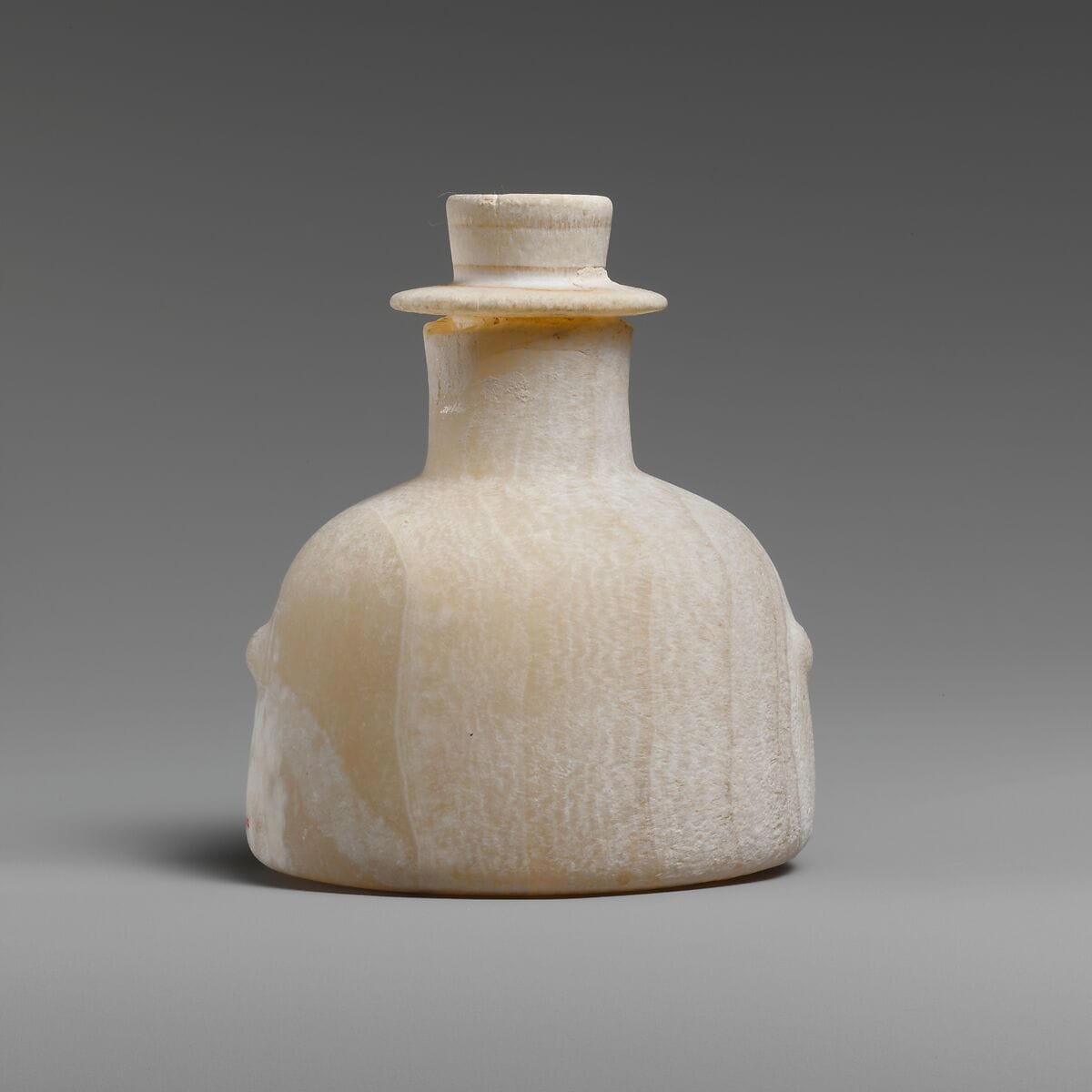 Alabaster flask with stopperHellenistic · 199–50 BC
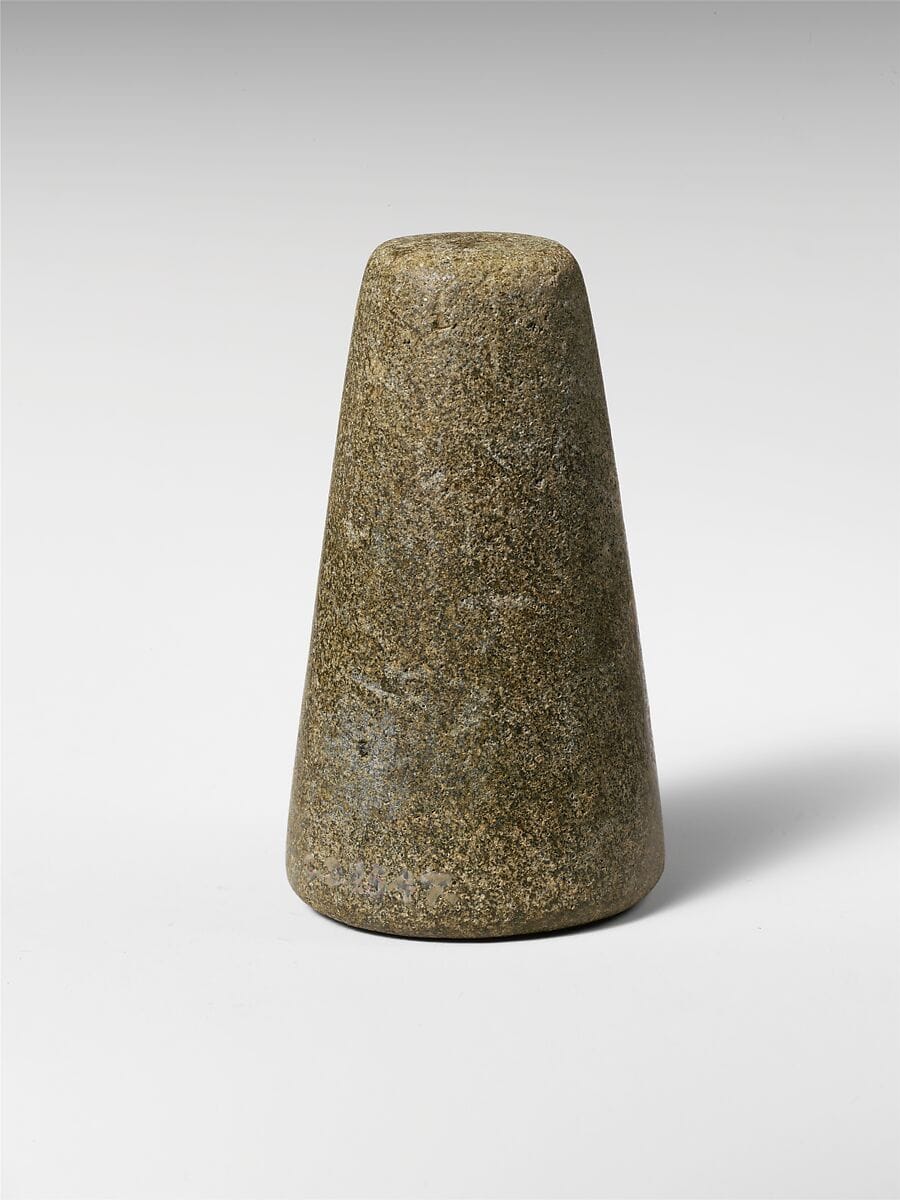 Andesite pestleLate Bronze Age II · 1600–1100 BC
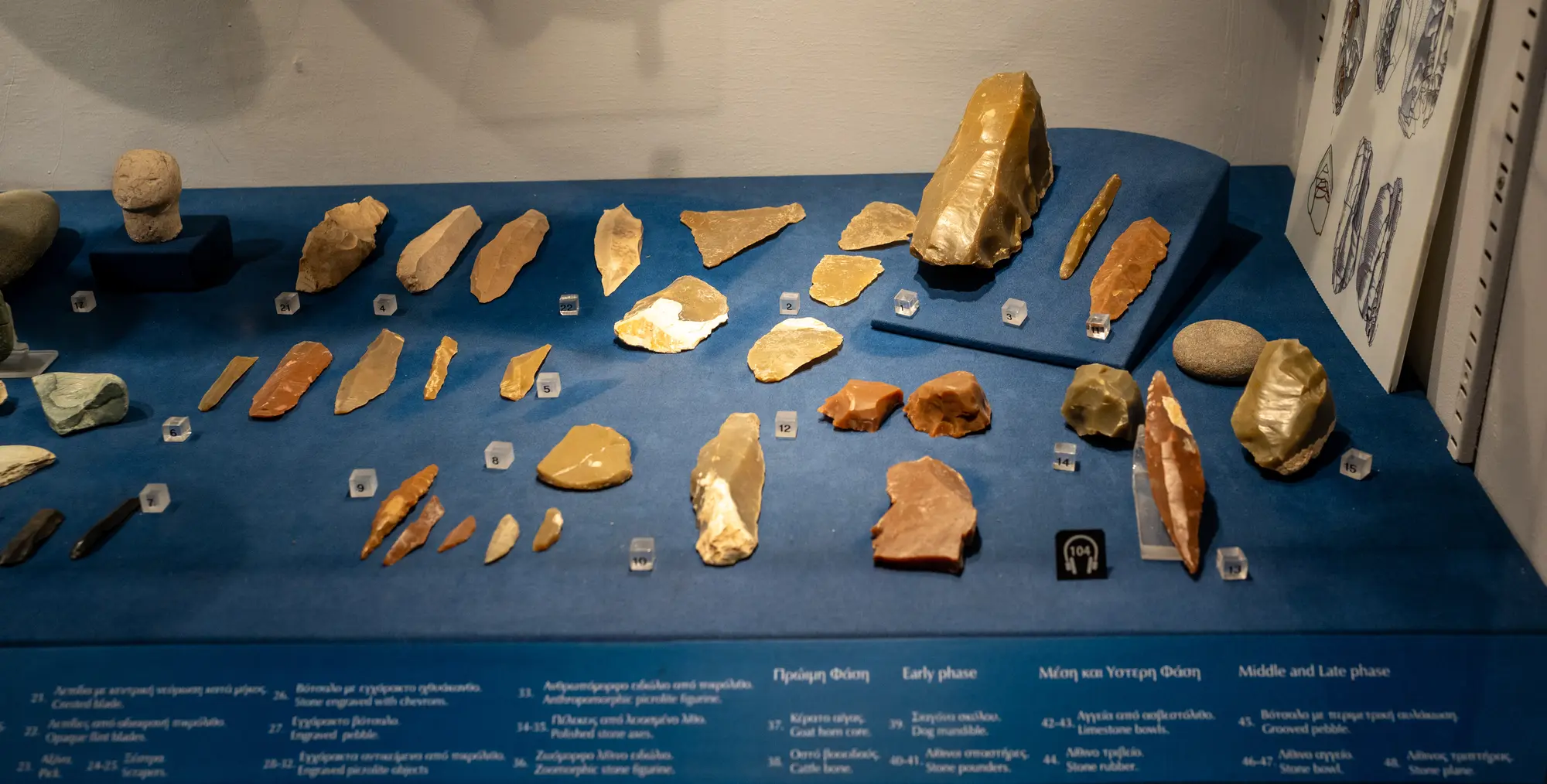 Assorted Neolithic FlintNeolithic · 12000–5500 BC
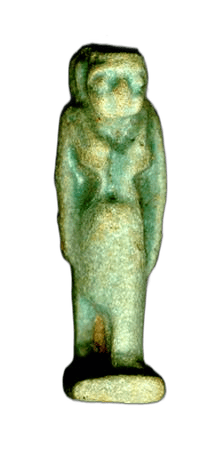 Blue-Green Glazed Isis AmuletArchaic · 750–300 BC
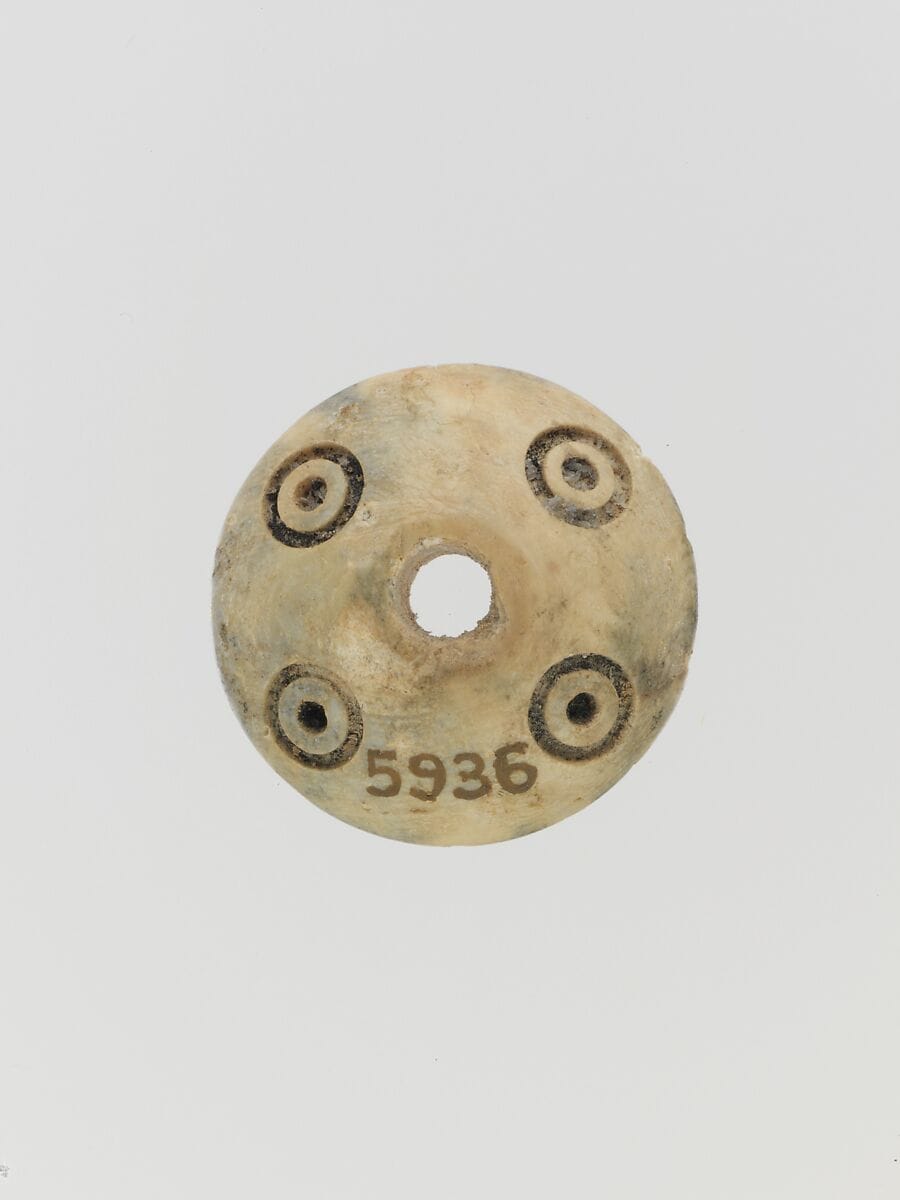 Bone spindle whorlLate Bronze Age II · 1600–1050 BC
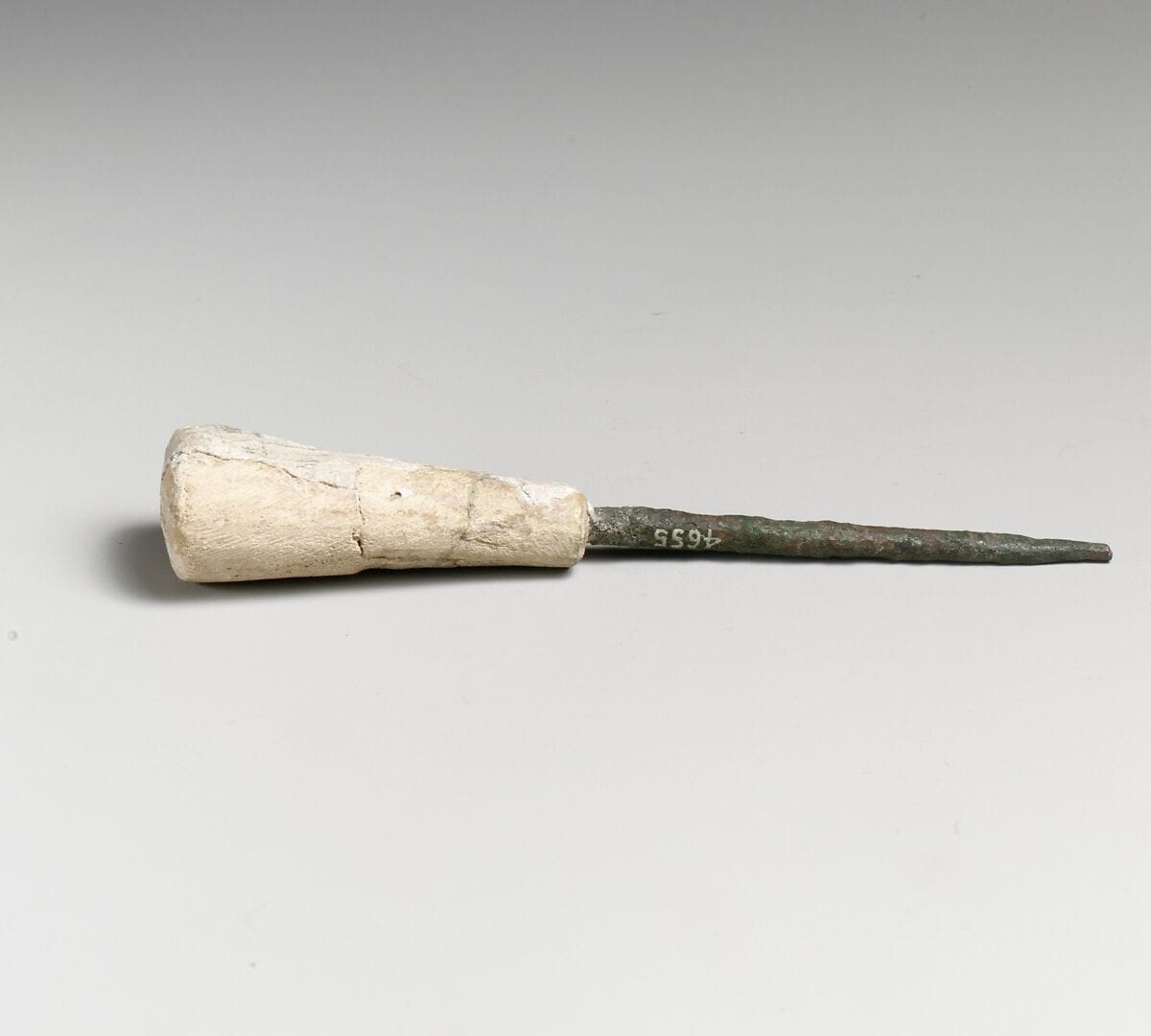 Bronze awl with bone handleMiddle Bronze Age II · 1900–1600 BC
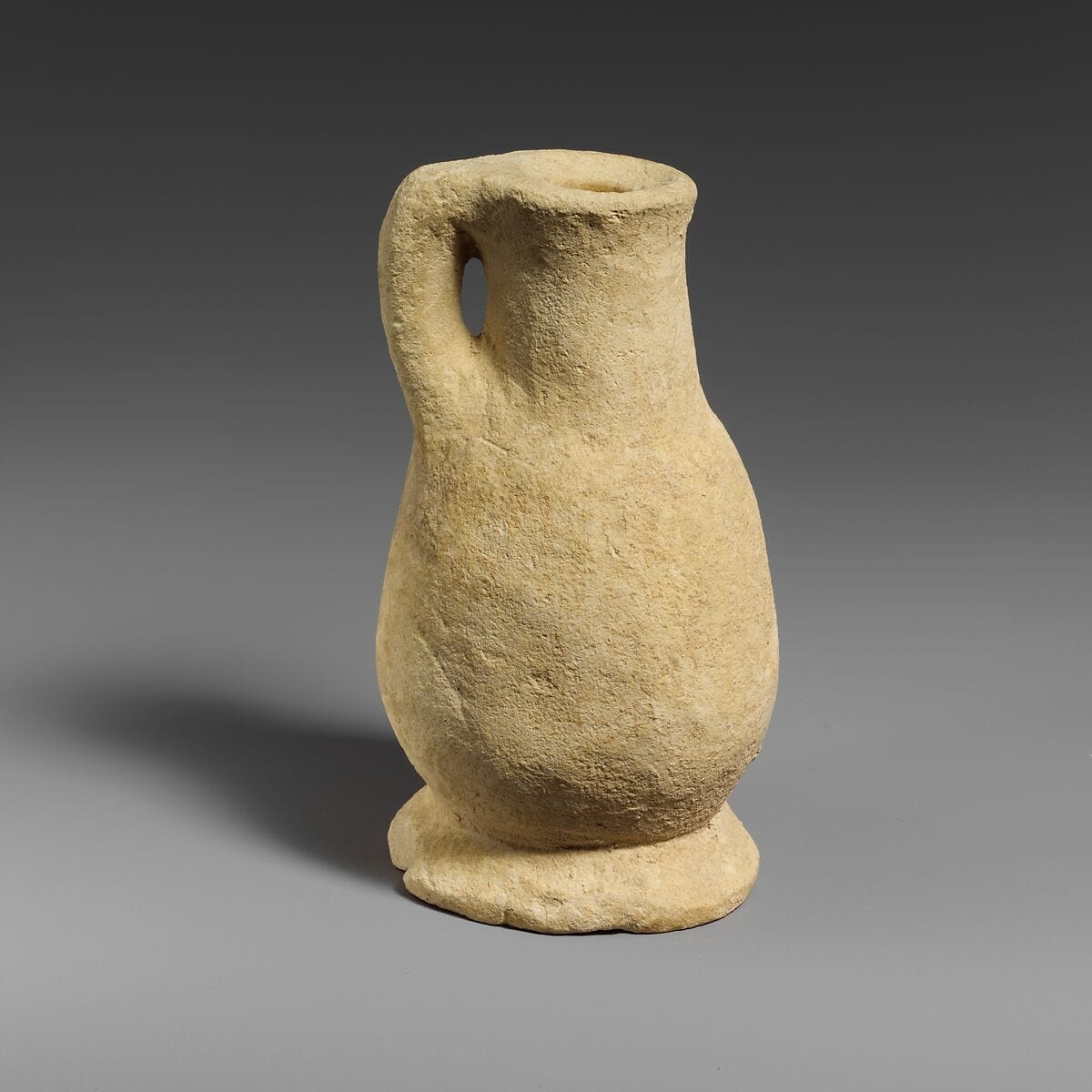 Chalk jugClassical · 499–300 BC
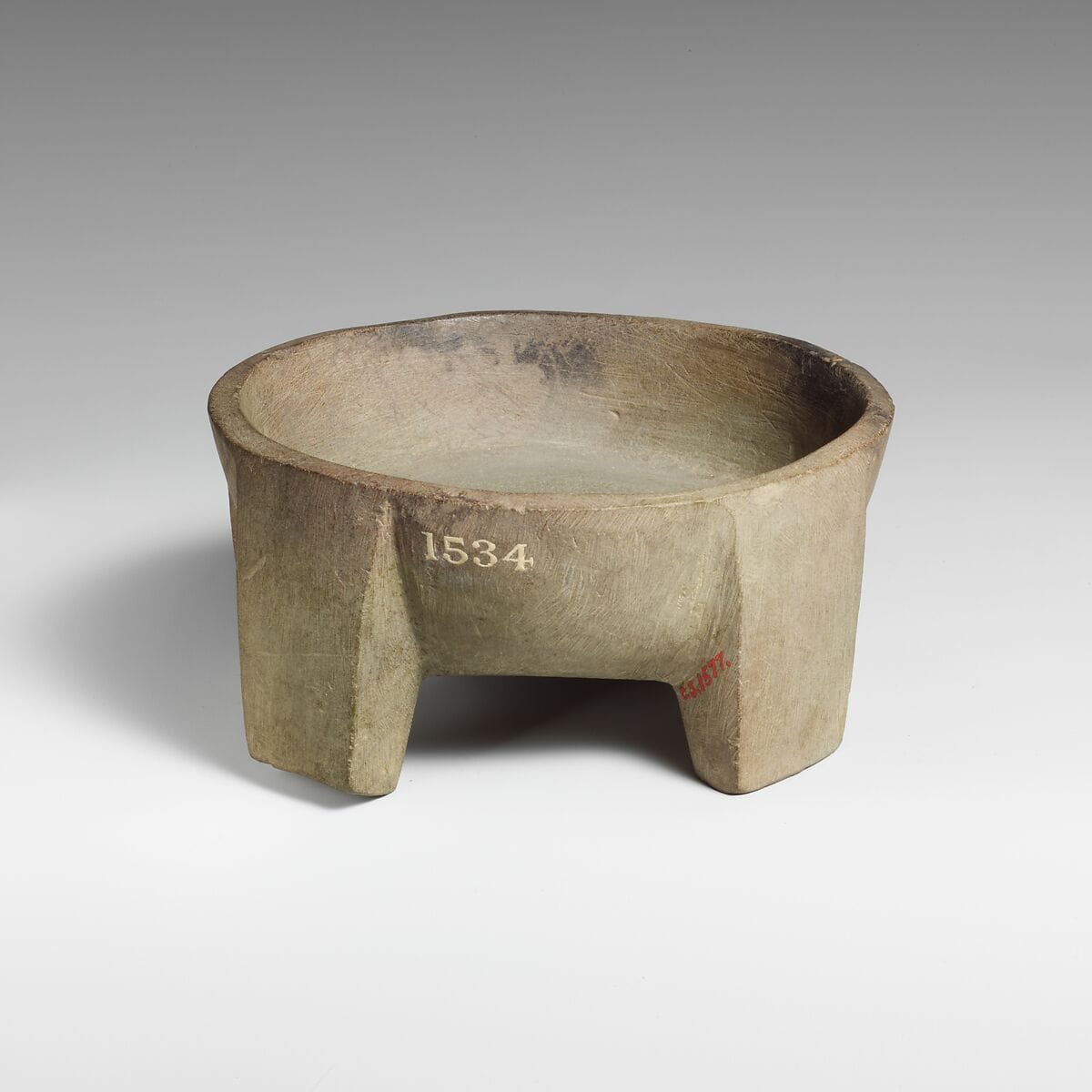 Chlorite mortarLate Bronze Age II · 1600–700 BC
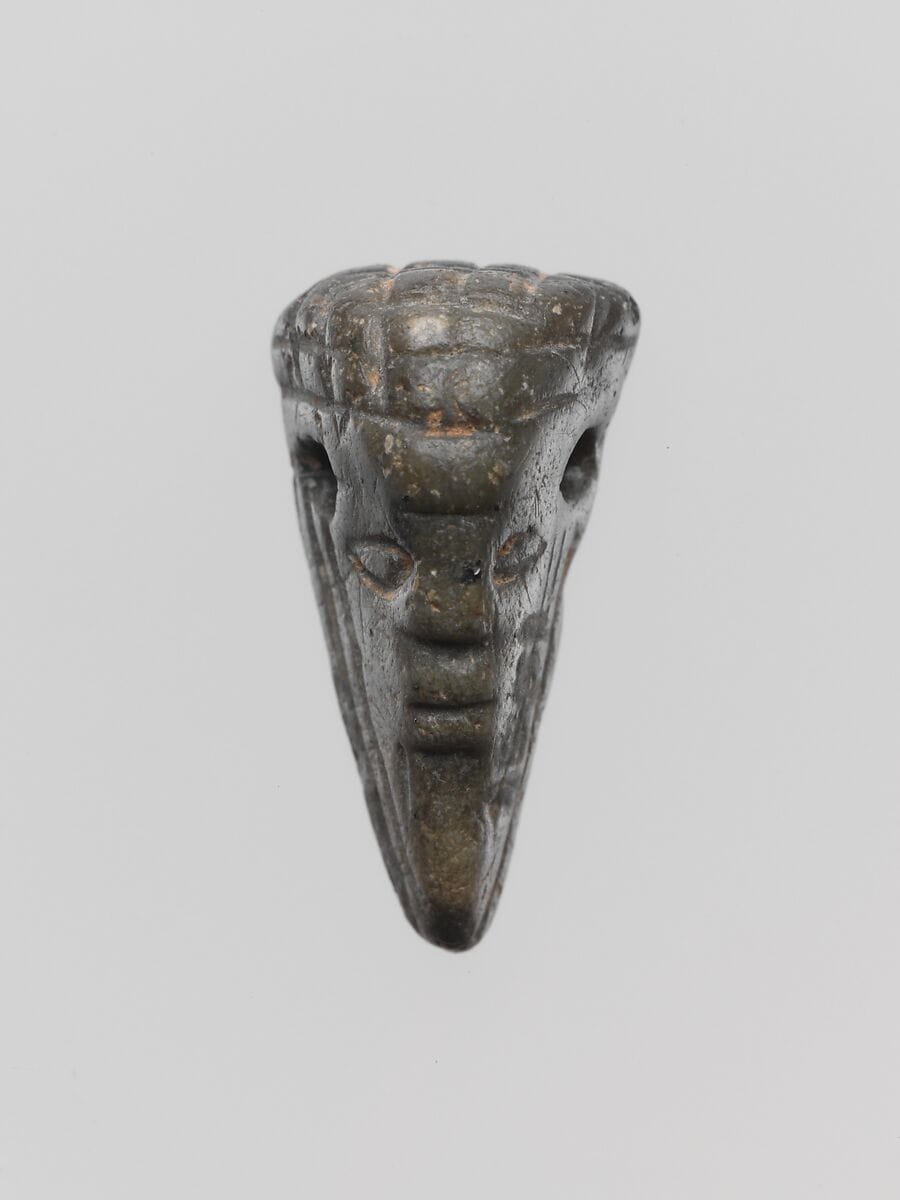 Chlorite pendant in the form of the head of an AssyrianArchaic II · 599–500 BC
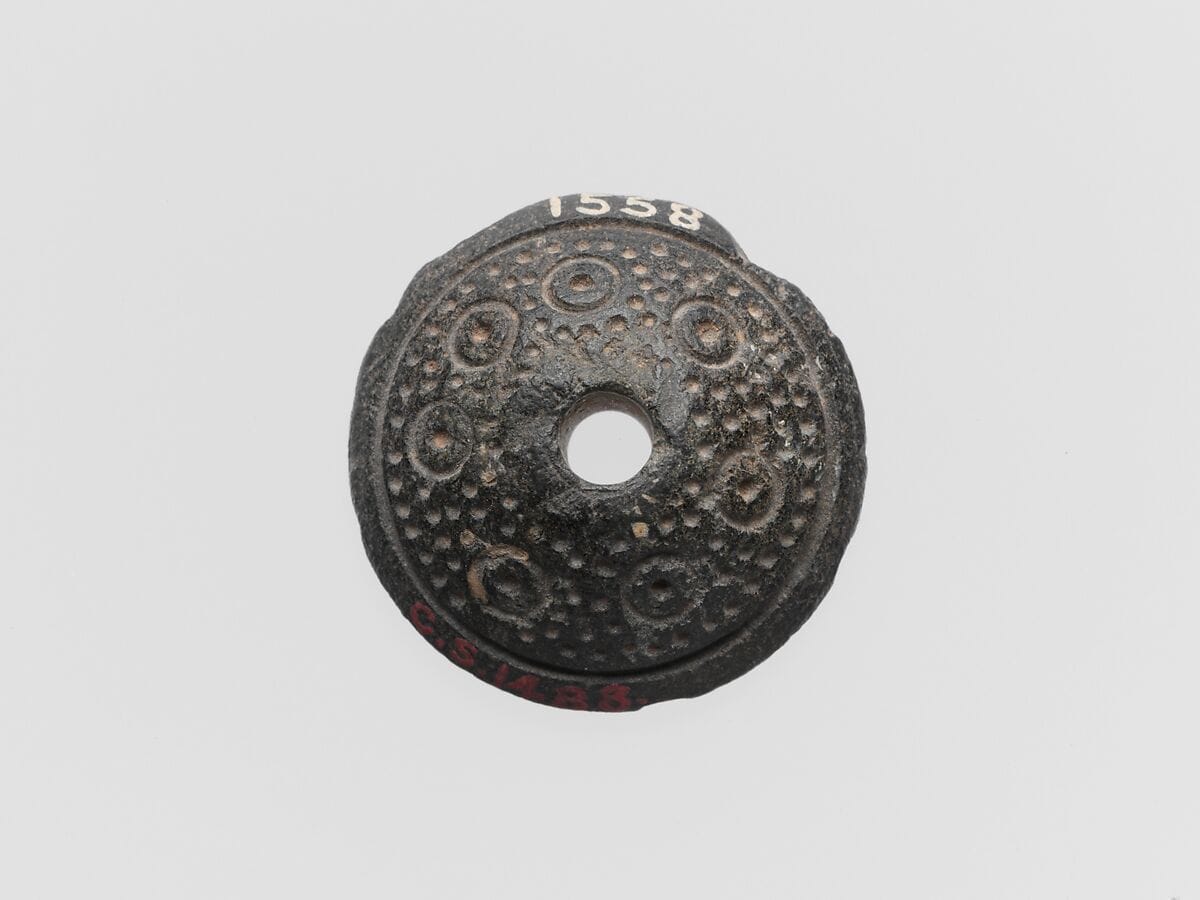 Chlorite spindle whorlLate Bronze Age III · 1200–1050 BC
- Faience bowlLate Bronze Age III · 1250–1150 BC
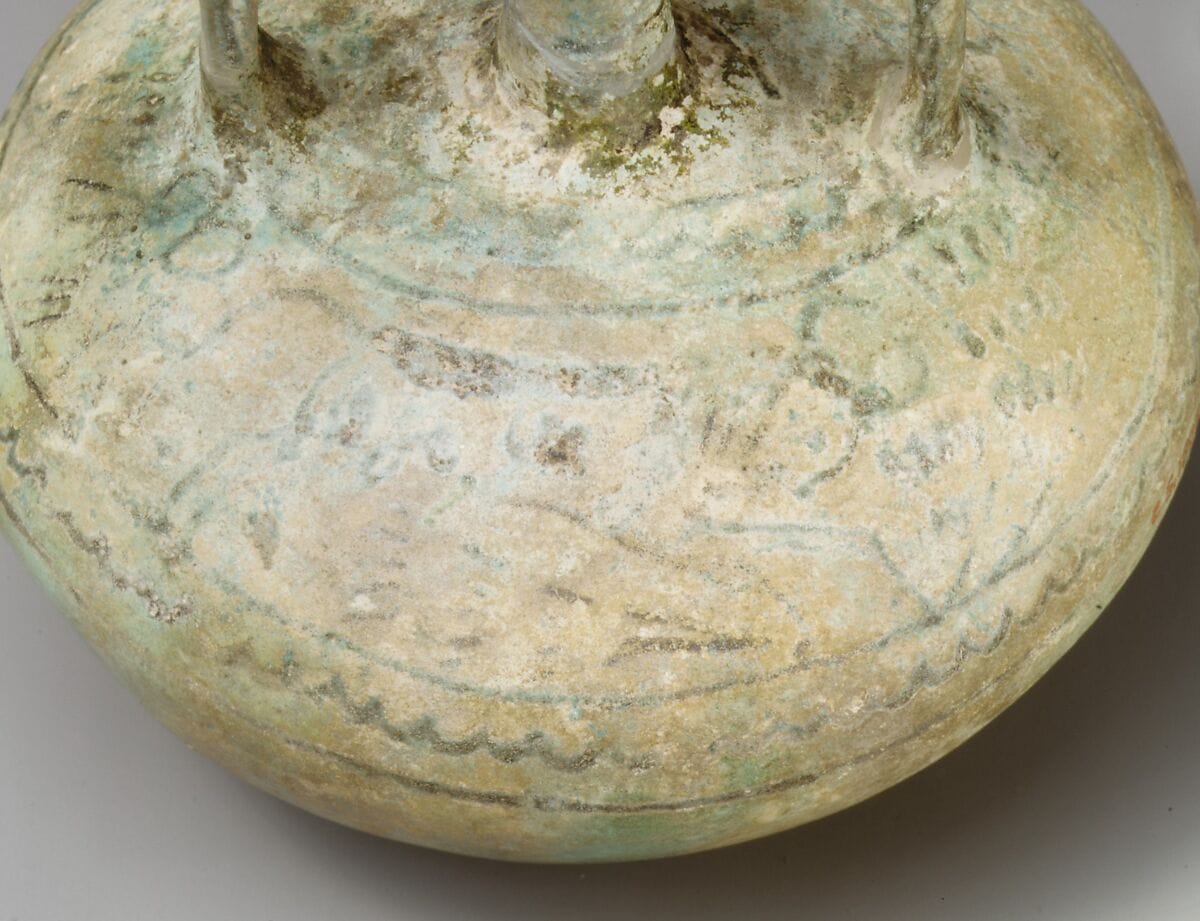 Faience flaskLate Bronze Age III · 1250–1150 BC
and 27 more objects linked from these pages
References
- 1.Peltenburg, E., Bolger, D., & Crewe, L. (Eds.). (2019). Figurine makers of prehistoric Cyprus: Settlement and cemeteries at Souskiou. Oxbow Books.
- 2.Pilides, D., & Papadimitriou, N. (Eds.). (2012). Ancient Cyprus: Cultures in dialogue. Department of Antiquities, Cyprus.
- 3.Cosyns, P. (2017). The Late Bronze Age core-formed glass vessels in Cyprus: A preliminary report. In L. Bombardieri, M. Amadio & F. Dolcetti (Eds.), Ancient Cyprus, an unexpected journey: Communities in continuity and transition. Editoriale Artemide.
- 4.Lightfoot, C. S. (2017). The Cesnola Collection of Cypriot art: Ancient glass. The Metropolitan Museum of Art.
- 5.Satraki, A. (n.d.). Manifestations of royalty in Cypriot sculpture. In POCA 2005: Postgraduate Cypriot Archaeology, Proceedings of the Fifth Annual Meeting.
- 6.Kassianidou, V., & Papasavvas, G. (Eds.). (2012). *Eastern Mediterranean metallurgy and metalwork in the second millennium BC: A conference in honour of James D. Muhly, Nicosia, 10th–11th October 2009*. Oxbow Books.