
Archaic II
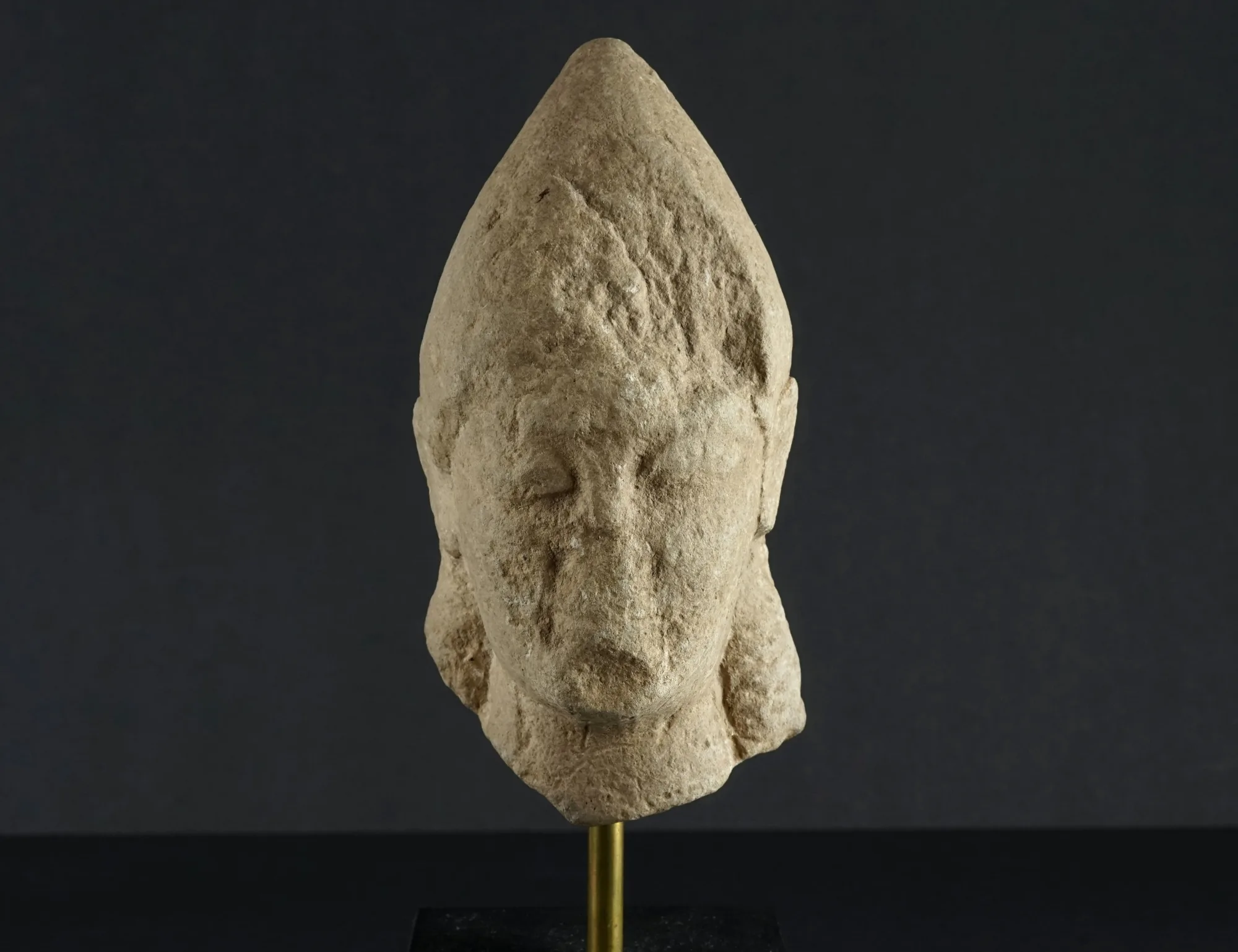
Weathered Limestone Head of a Votary in a Tall Pointed Cap
Heavily weathered Cypro-Archaic limestone head of a male votary in a tall pointed conical cap, broken at the neck and mounted on a modern base.
Date
600 - 500 BC
Accession No.
STA-AR-003
Collection
Alexis Drakopoulos
Provenance
- Undated, James Murphy Coins & Antiquities (with an old printed label)
- Between 1980 and 2015, private collection, Graz, Austria
- 11 May 2025, Numisart, lot 2
- 2025–present, Alexis Drakopoulos, London
Cypro-Archaic II, c. 600–500 BCE · Limestone · Carved · H. 13.5 cm (without base)
The head of a man from a limestone statuette, broken through the neck and set on a modern dark block with a brass rod. The stone is a pale cream limestone, weathered all over to a sugary, pitted surface, so that every form has been softened. The dominant feature is the cap: a tall, sharply pointed cone that rises well above the face and leans slightly back in profile, with no knob surviving at the tip.
Beneath the rim of the cap the brow is low. The eyes read only as shallow swellings, the nose is abraded away, and a small mouth sits above a rounded chin. Thick masses of hair, or possibly cheekpieces, frame both sides of the face down to the jaw. The face appears beardless, though the wear on the chin is too great to exclude a short beard.
Commentary
Despite its condition, the head belongs to a well-known class: votive statuettes of male worshippers wearing the tall conical headgear often called the Assyrian cap. Ulbrich dates bearded and beardless votaries in this conical helmet or cap from the late 7th into the 6th century BCE, the period when Cypriot votive dress followed Near Eastern models, before Greek hairstyles and wreaths became the norm [1]. Figures of this kind were set up in open-air sanctuaries across the island as lasting stand-ins for their dedicants.
The date given here, c. 600–500 BCE, rests on the type alone. The weathering has removed the eyes, lips and hair detail on which a closer stylistic date would depend, and the proportions of the cap are the only secure evidence left. The height of the cone relative to the face is at the tall end of the range. It compares with a helmeted head in the Royal Ontario Museum (958.61.217), dated about 600–550 BCE and probably made at Tamassos-Frangissa [2], and with the larger Golgoi head in the Metropolitan Museum (74.51.2543), of the first half of the 6th century [3]. The same steep pointed cap appears in clay on a small terracotta head in the Louvre (AM 1621) from Kition or Lapithos, dated to Cypro-Archaic II, which shows that the headdress was shared across media [4].
The masses at the sides of the face could be hair or the cheekpieces of a helmet; on better-preserved heads both occur, and here the surface does not allow a decision.
References
- 1.Ulbrich, A. (2020) 'Adoption and Adaptation of Greek Iconography in Cypriot Votive Sculpture of the Late Archaic and Classical Periods.' In M. Christidis, A. Hermary, G. Koiner and A. Ulbrich (eds), Classical Cyprus (Kypriaka 5). Vienna: Holzhausen, section 'Male and Female Votaries'.
- 2.Royal Ontario Museum, Toronto, 958.61.217, male head with conical helmet, about 600–550 BCE, probably made at Tamassos-Frangissa (collection record).
- 3.Hermary, A. and Mertens, J.R. (2014) The Cesnola Collection of Cypriot Art: Stone Sculpture. New York: The Metropolitan Museum of Art, cat. 9 (74.51.2543).
- 4.Musée du Louvre, Paris, AM 1621, terracotta head of a man in a pointed cap, Kition or Lapithos, Cypro-Archaic II (collection record).
More from the Catalogue
Browse related objects
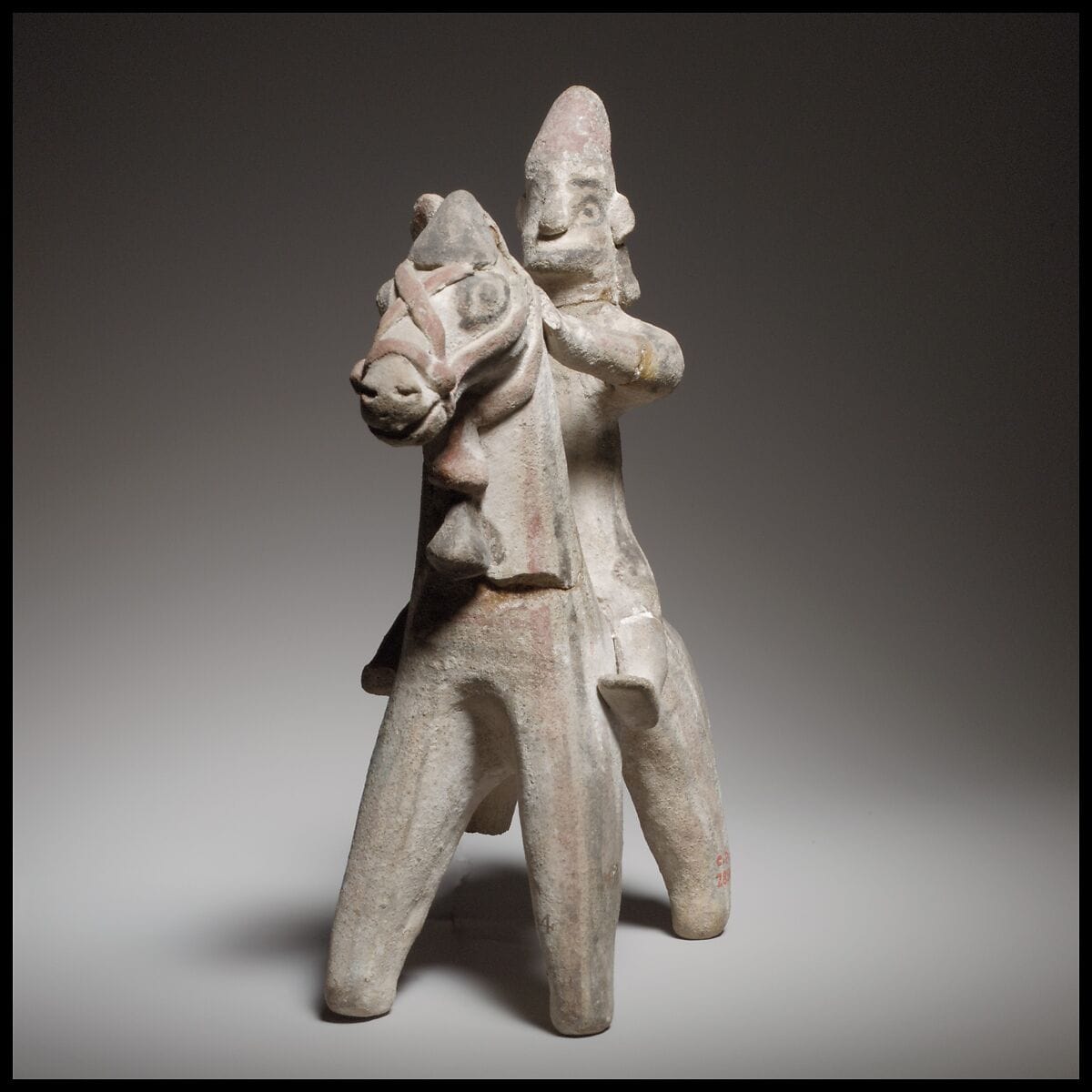
Horse and rider figurine
Archaic II
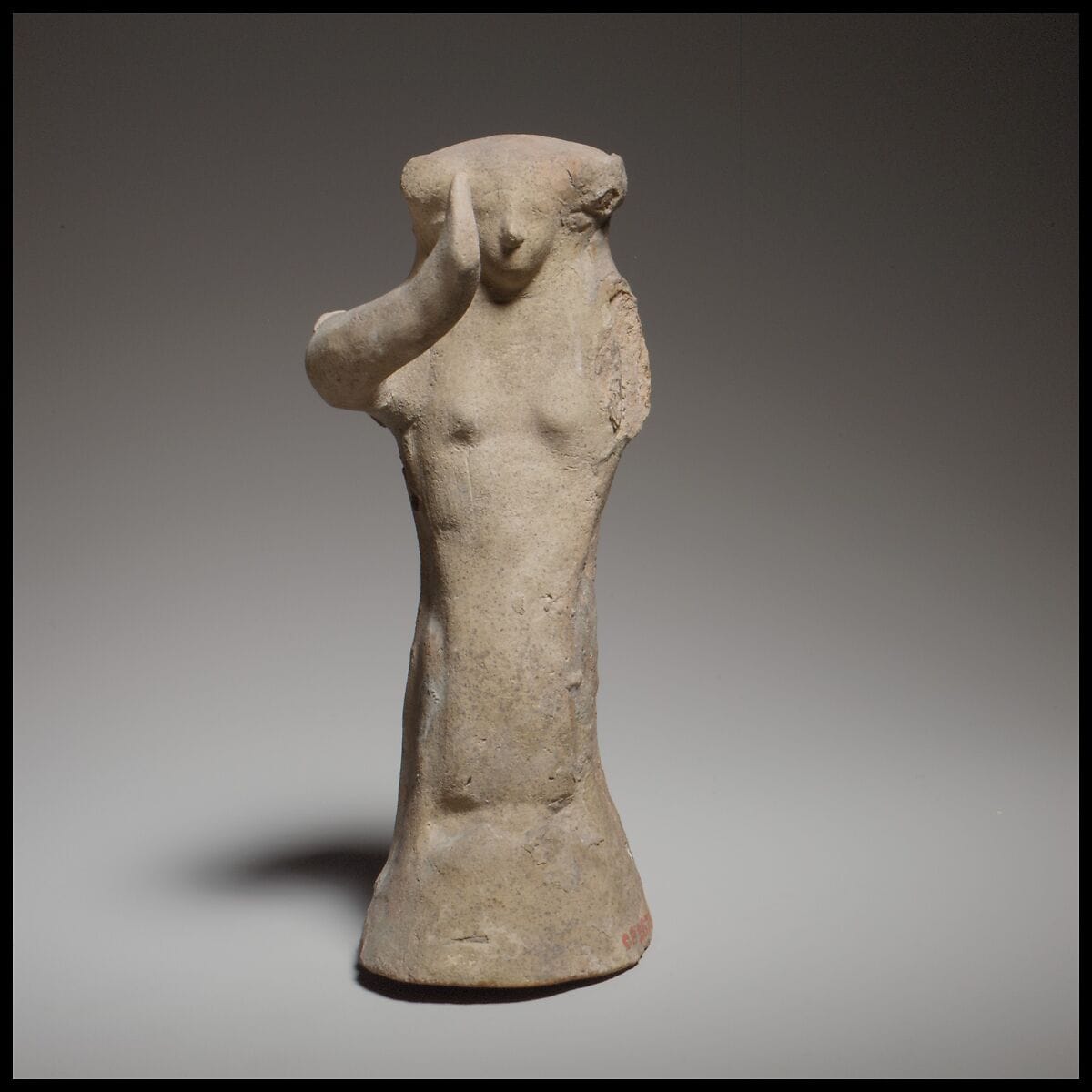
Seated female figurine of the dea gravida type
Archaic II
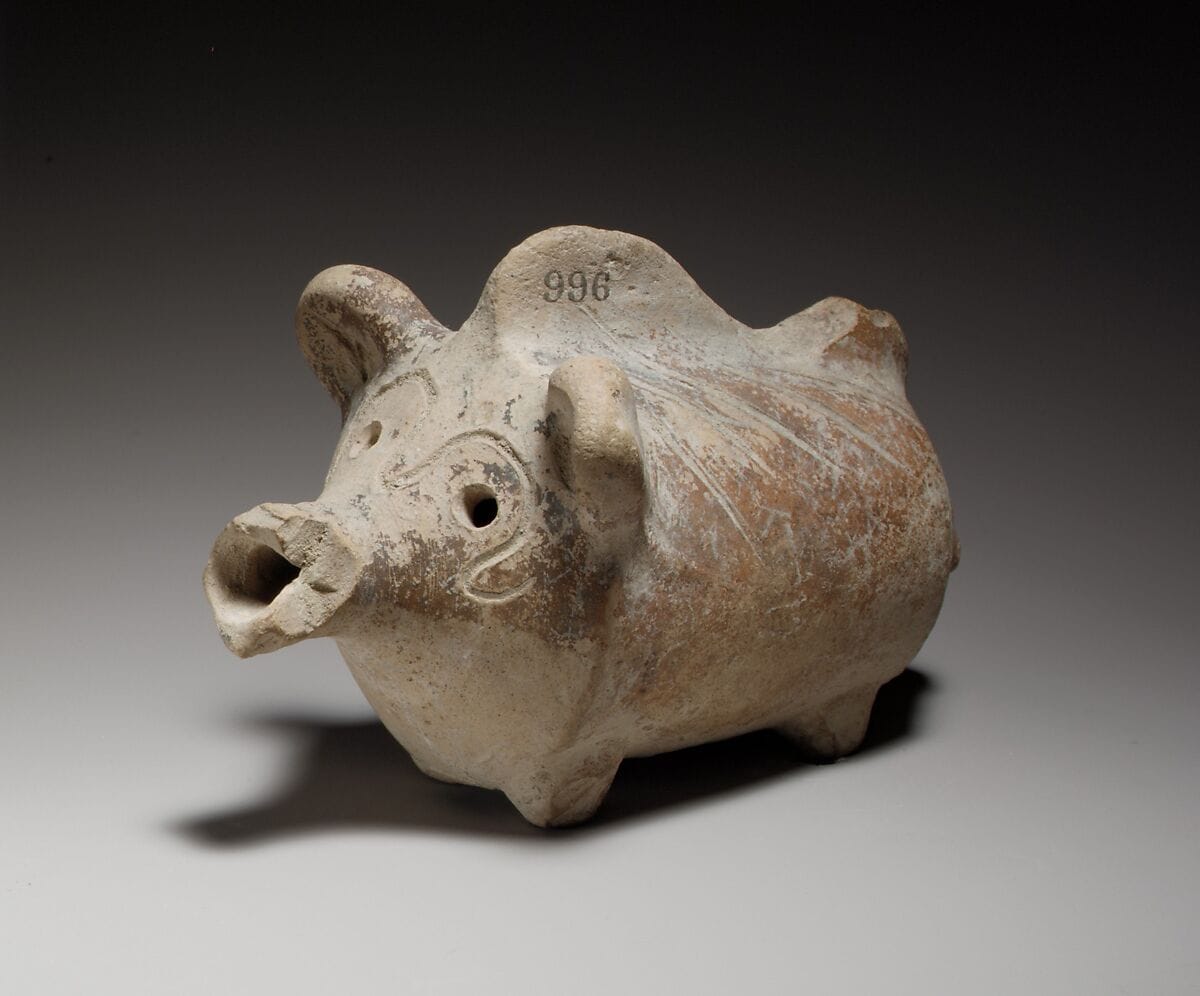
Terracotta rattle in the form of a pig
Hellenistic
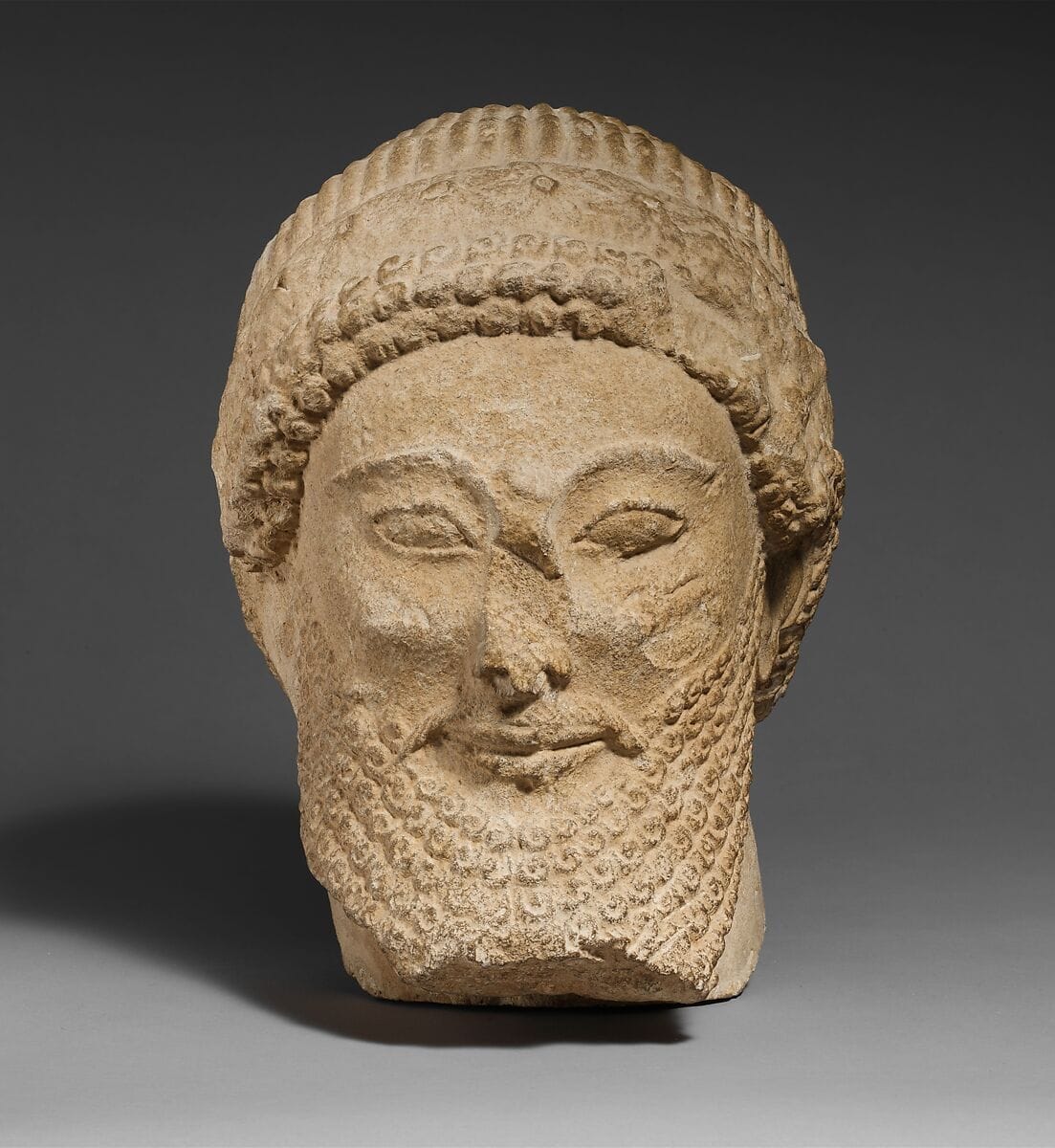
Limestone head of a bearded male with a wreath of flowers
Archaic II
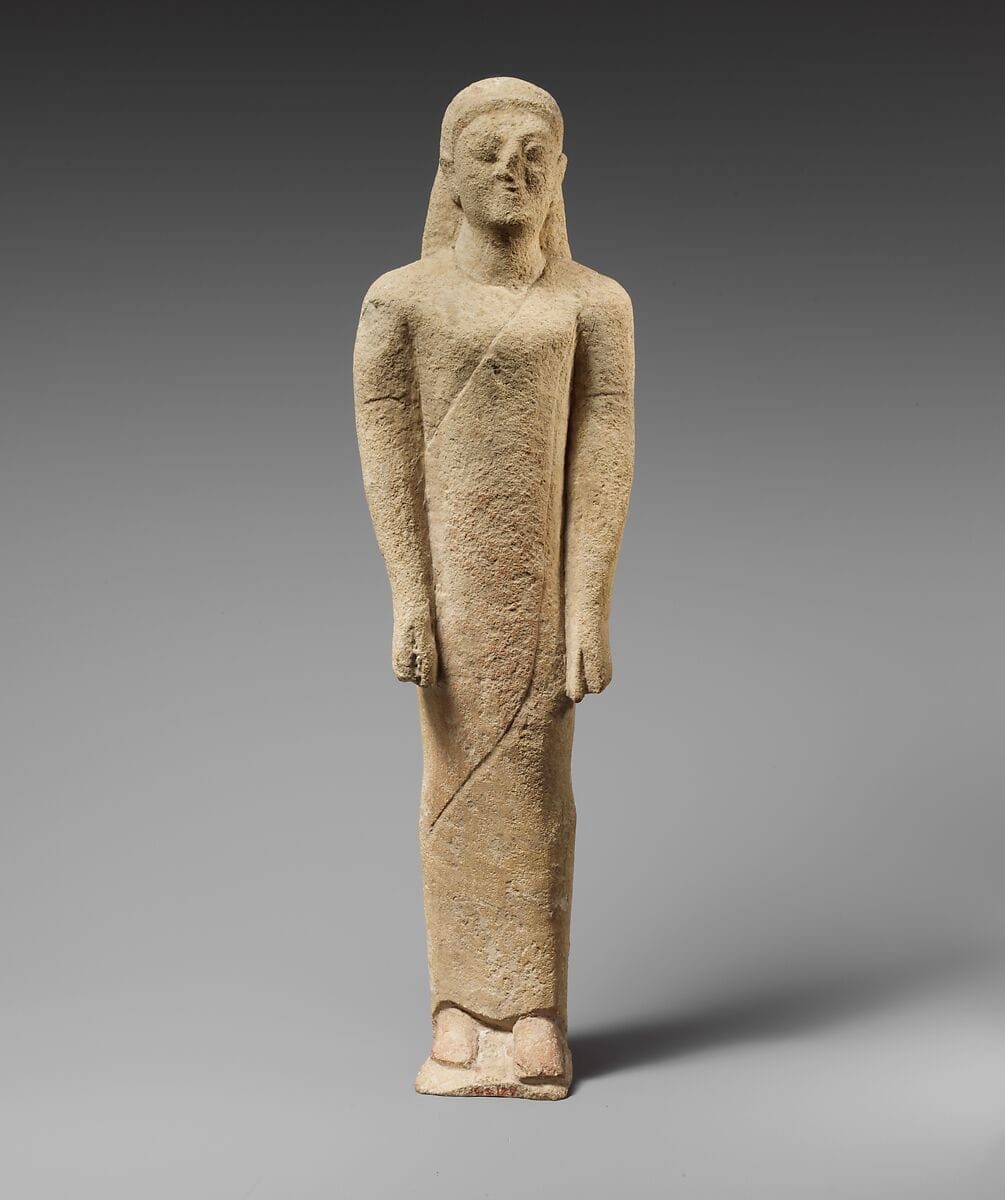
Limestone statuette of a beardless male votary in Greek dress
Archaic II
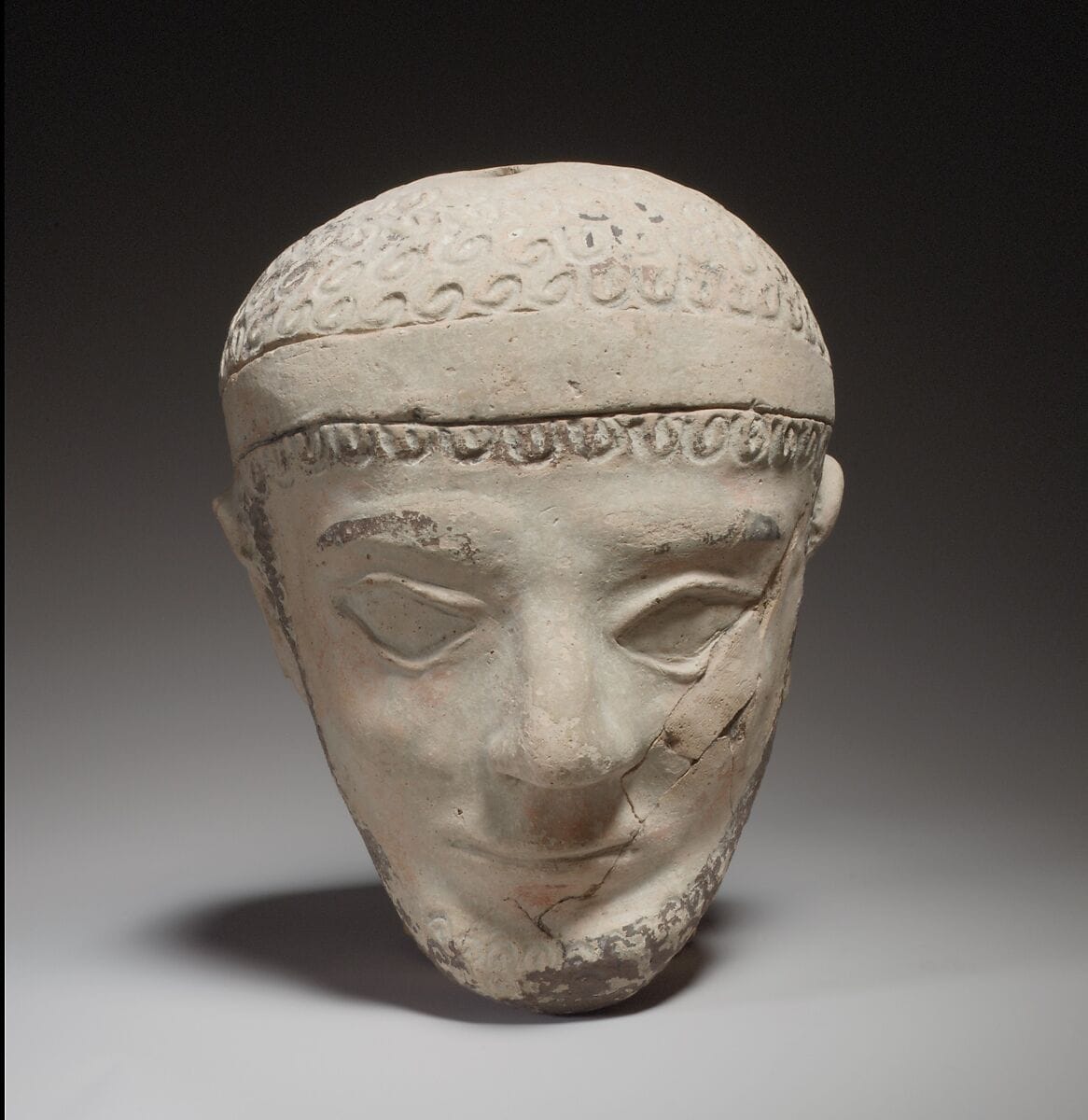
Terracotta head of a man
Archaic II
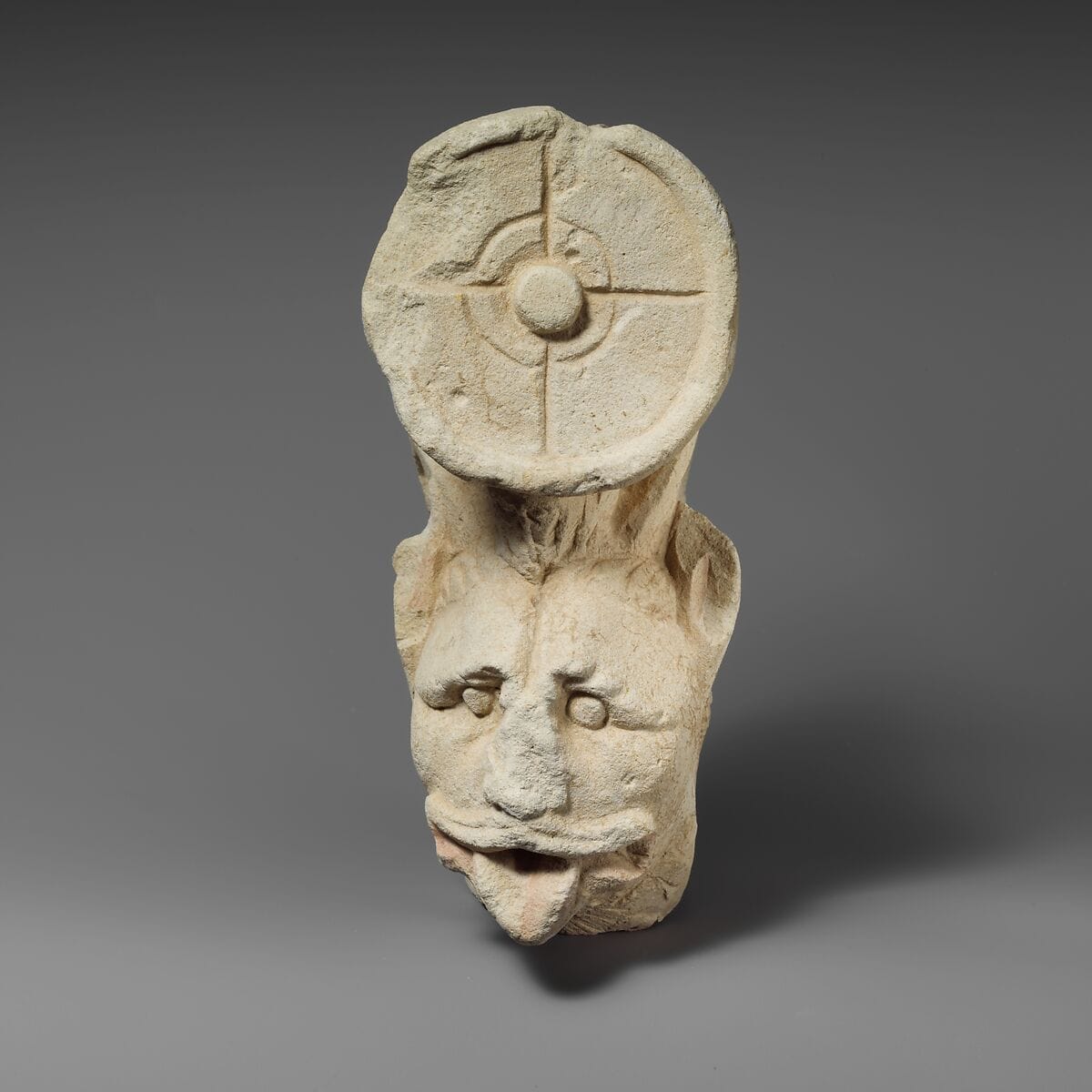
Fragment of a limestone throne (?) with the head of a horned lion
Roman
Head of a comic figurine
Hellenistic
Limestone statuette of a female votary of the kore type
Archaic II
Limestone head of Apollo
Hellenistic
Standing female flute player
Classical
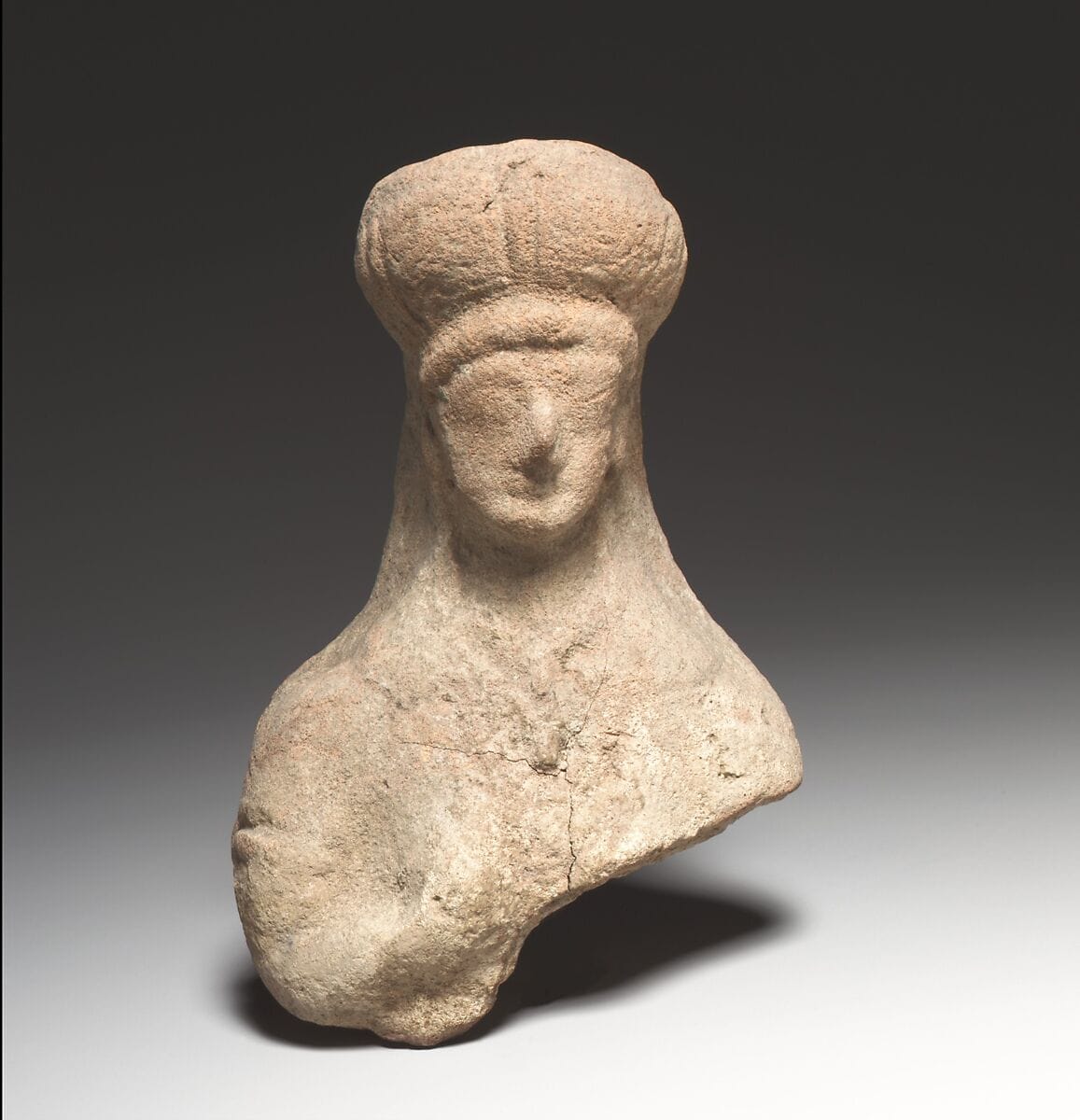
Standing female figurine
Archaic II
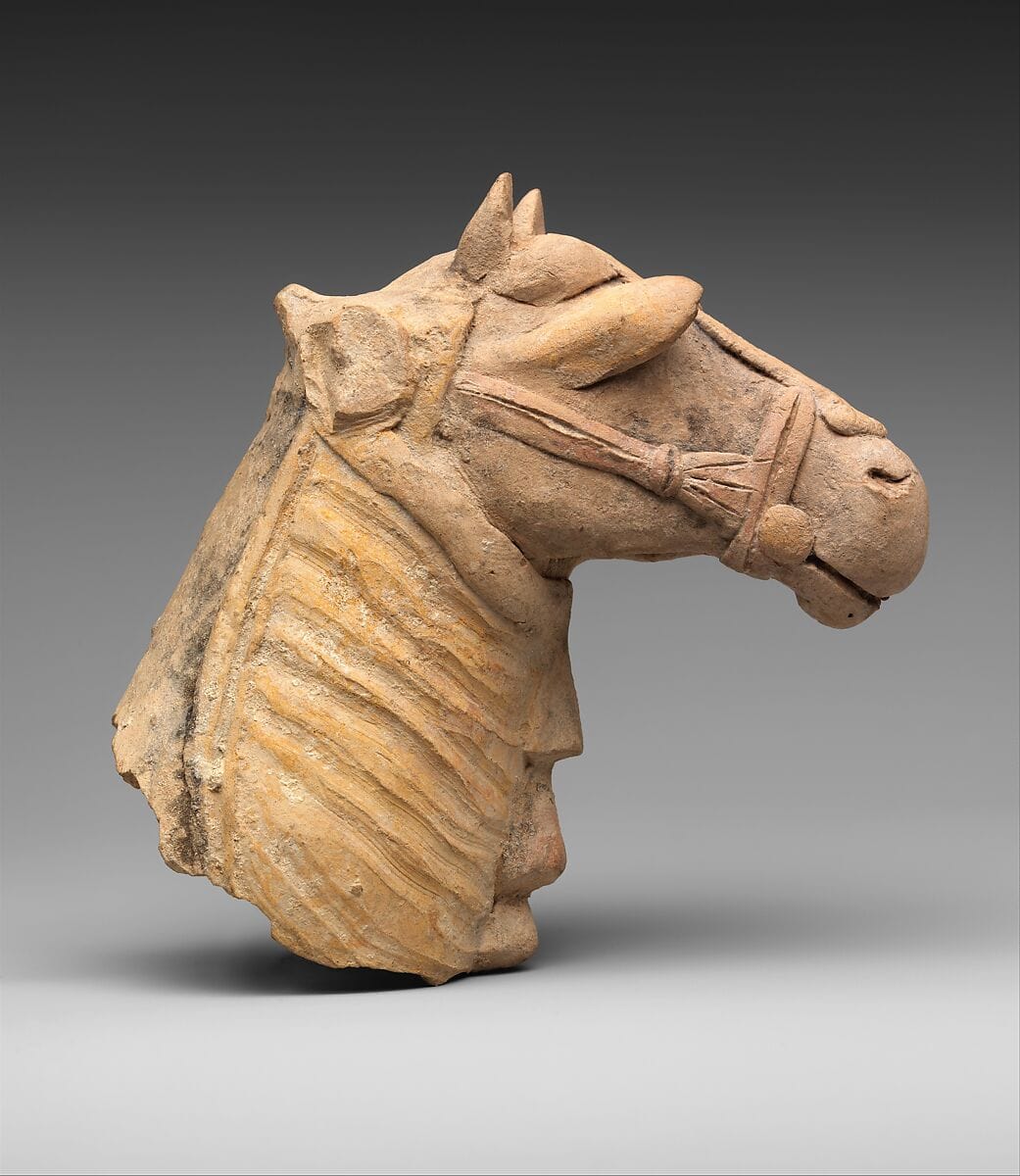
Horse's head with harness
Archaic II
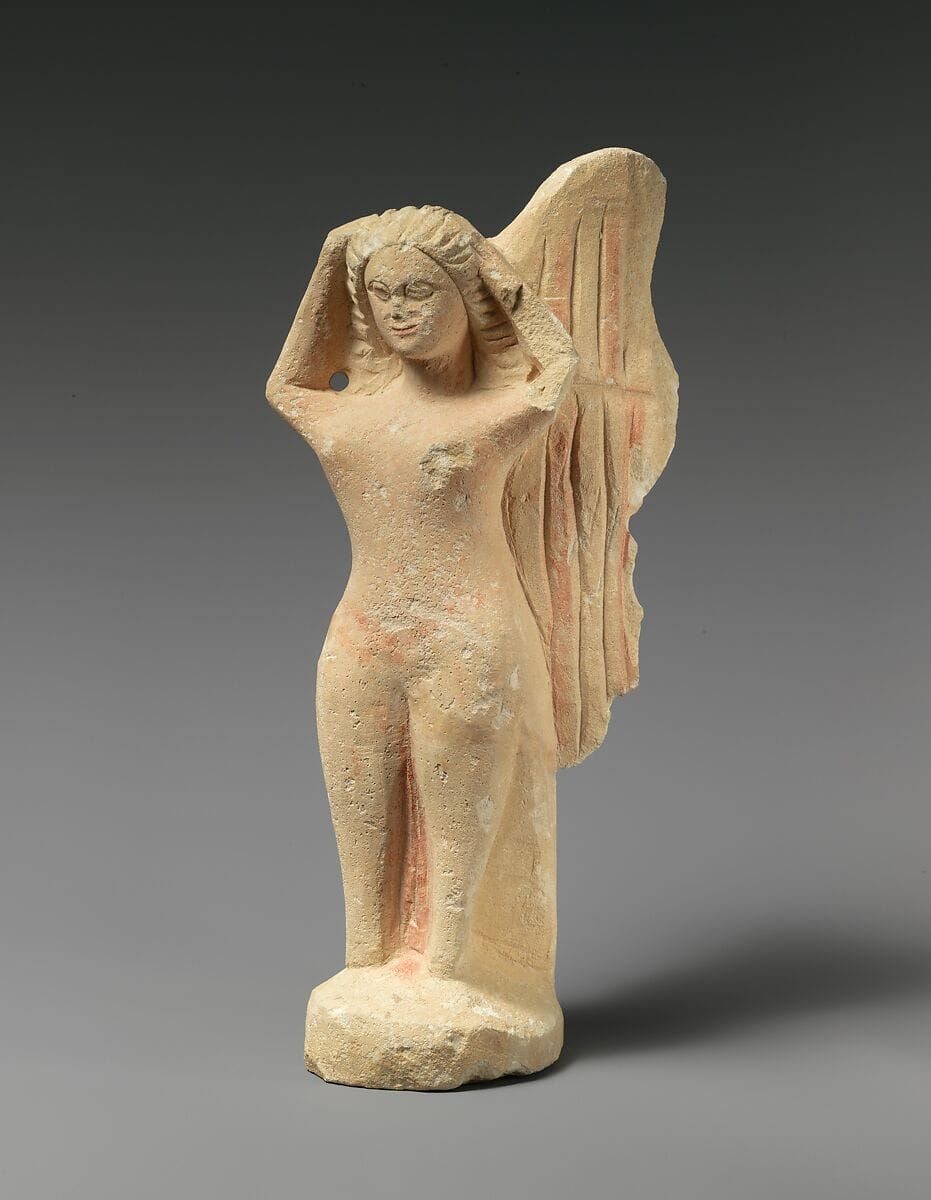
Limestone statuette of a mourning siren
Hellenistic
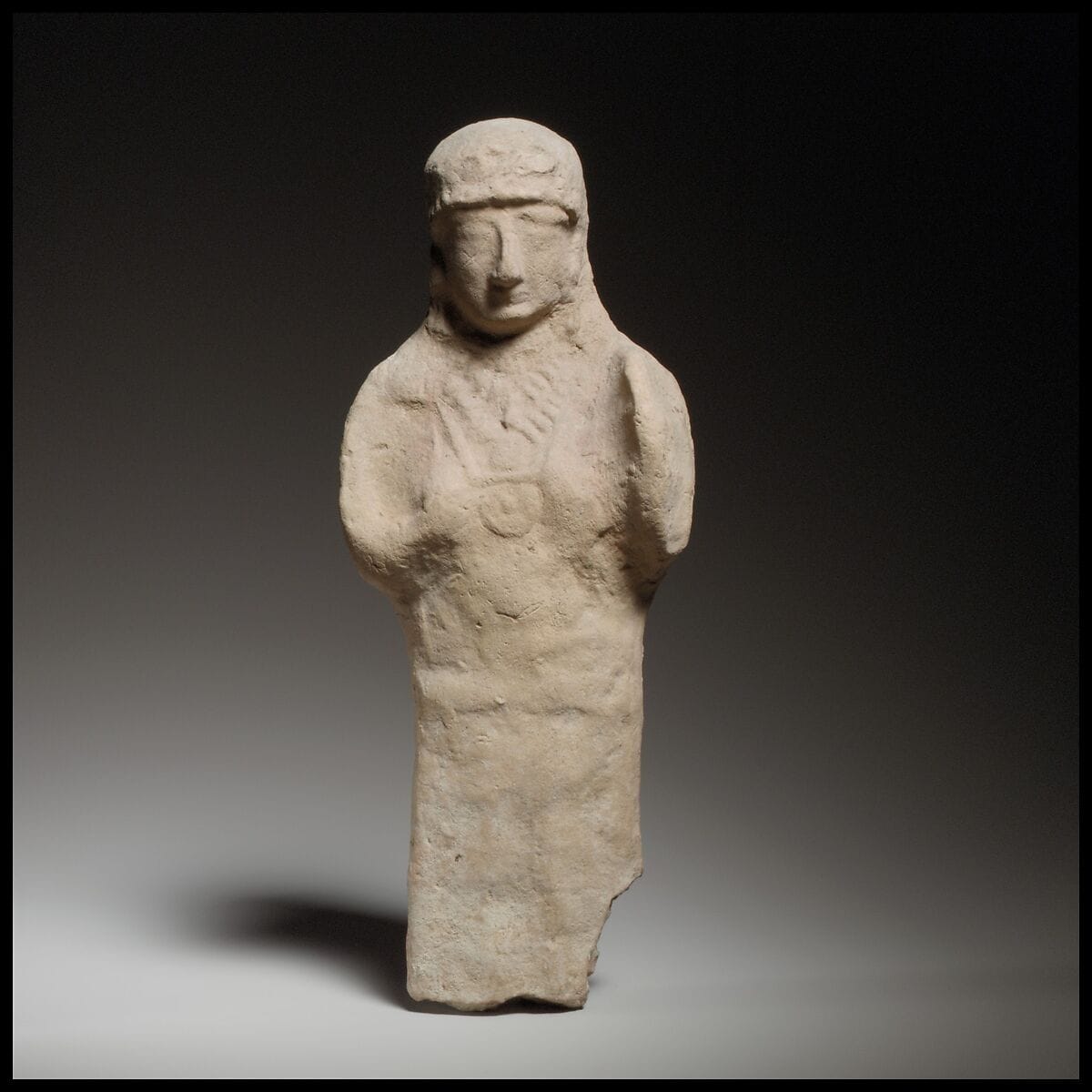
Standing female figurine
Archaic II
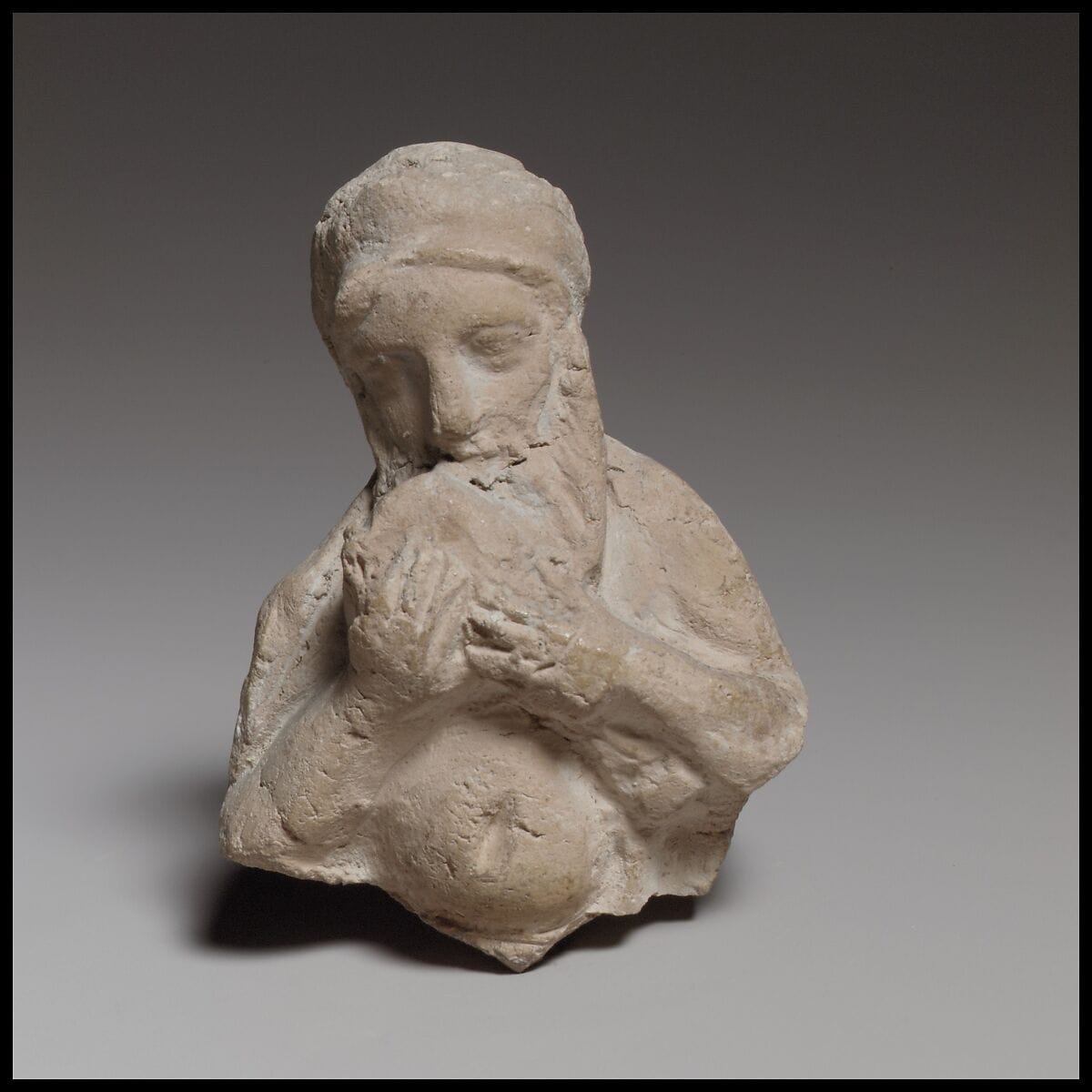
Terracotta statuette of Silenos (?) drinking
Hellenistic
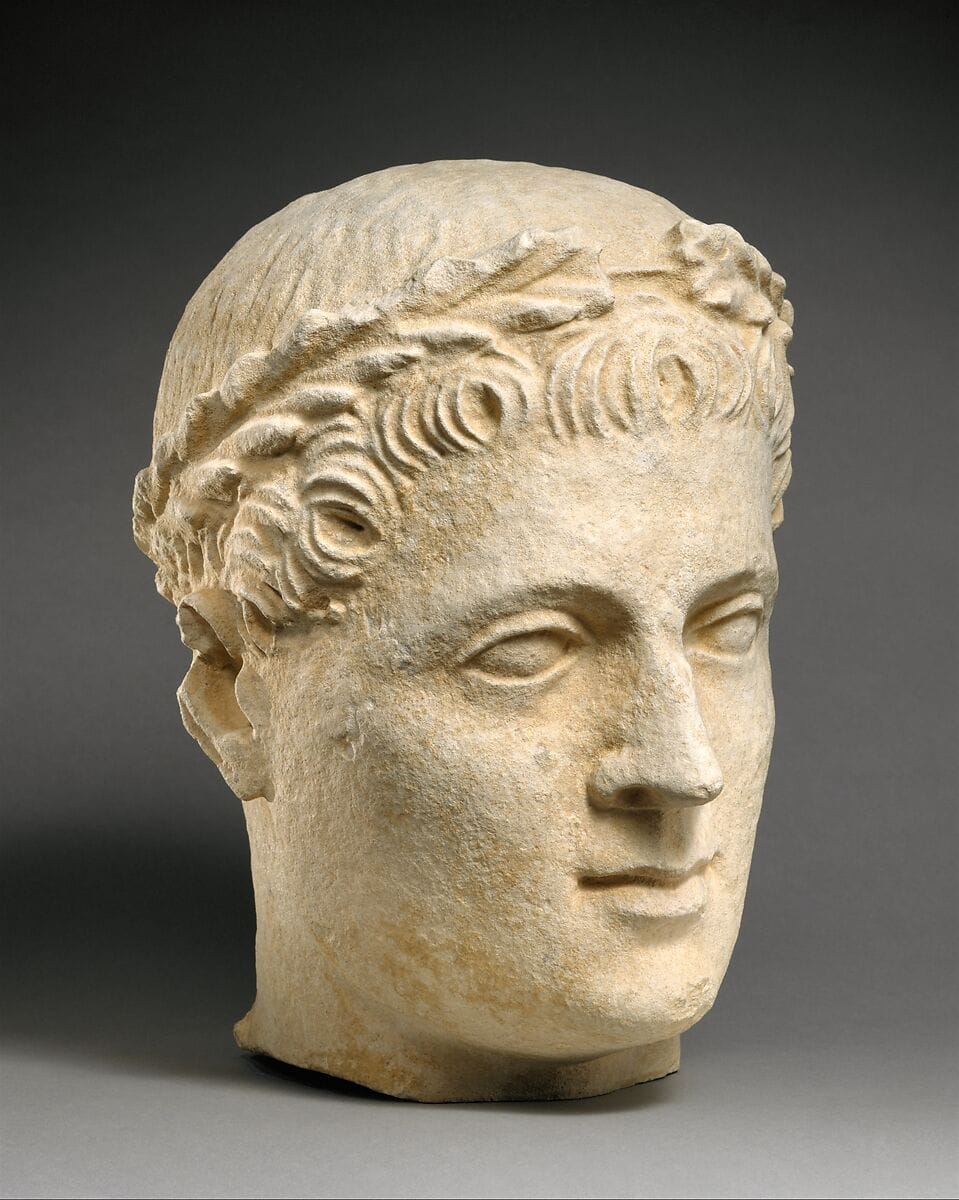
Limestone head of beardless male votary with wreath of leaves
Hellenistic
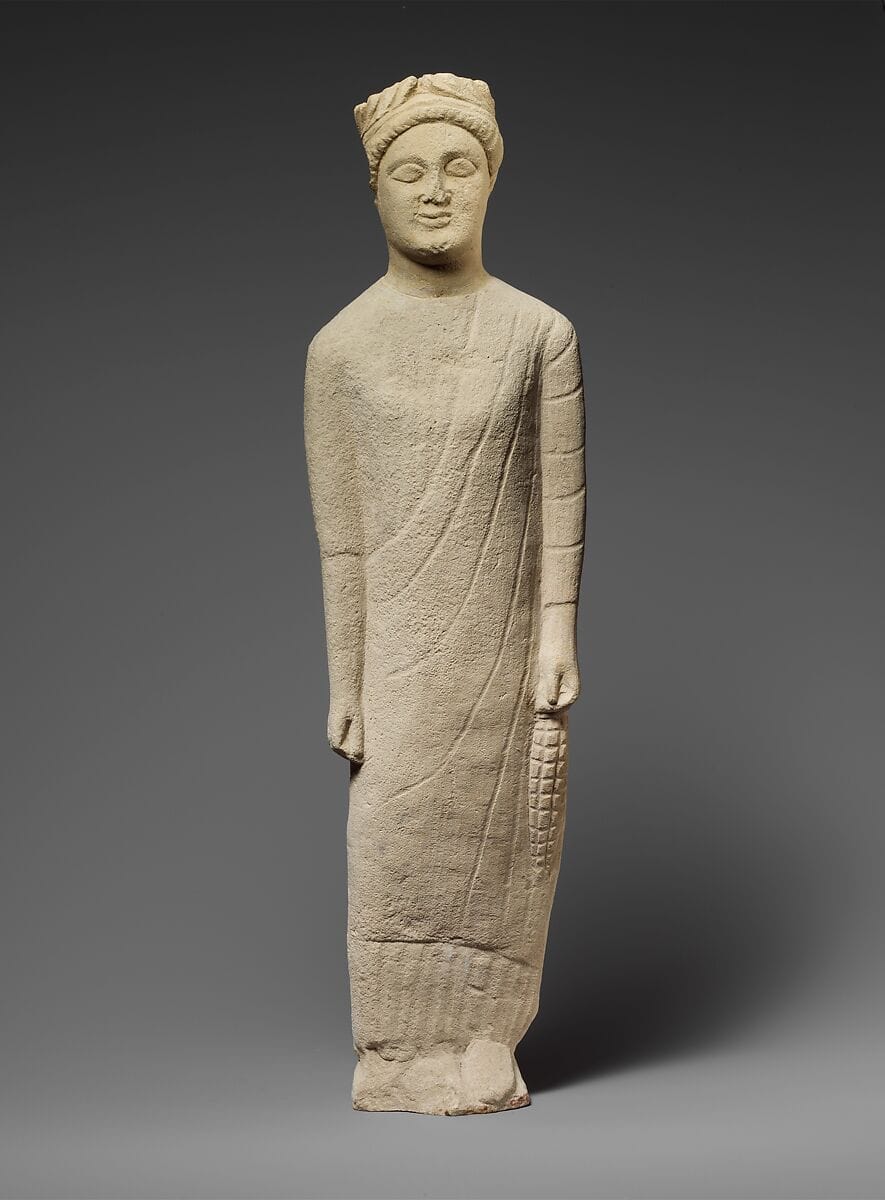
Limestone statuette of a beardless male votary with a wreath of leaves
Classical