
Lecture·Archaeological Research Unit - University of Cyprus·2026
The archaeology of Bronze Age Lapithos: from 1913 to 2025
Chapters
About the lecture
Jenny Webb presents the results of a decade-long project to locate, document and publish the material and archival records from pre-1974 excavations at Lapithos on the north coast of Cyprus. Because the area has been inaccessible for fieldwork since the Turkish invasion of 1974, and because most early twentieth-century excavations at the site remained unpublished, the conventional view of the Middle Bronze Age long pictured an isolated island of peaceful, egalitarian agricultural villages. Webb argues that the north coast settlements of Vasilia, Vounous and Lapithos were outward-facing communities positioned along the maritime corridor between Anatolia, the Levant and the Aegean, and that Lapithos functioned as a gateway for the export of Cypriot copper.
The lecture traces the history of the 1913 excavations sponsored by the Cyprus Museum Committee under John Myres and Menelaos Markides, showing from archival folders in the Cyprus Museum that the fieldwork at Vrysi tou Barba was in fact directed and recorded by the twenty-four-year-old physical anthropologist Leonard Halford Dudley Buxton. Buxton supervised the digging of sixty-two Bronze Age tombs in four weeks and produced detailed day sheets with annotated plans and sketches of finds in situ. Webb combined these records with Markides's 1917 tombs and the Department of Antiquities' 1968–1969 rescue excavations to bring the total of published tombs from Lapithos to 124. She also accounts for missing objects through early dispersals to landowners such as Demosthenes Severis, possible gifts to colonial officials including Lady Goold-Adams, and lost paper labels.
Turning to the assemblage from c. 2200 to 1700 BC, Webb highlights thirty-eight plank figures, ceramic links with Vounous and the Karpas, and 1,840 metal artefacts, far more than any other Early or Middle Bronze Age site on the island. Portable XRF analysis by Andreas Charalambous shows tin bronze becoming dominant by Middle Cypriot II–III, used selectively for daggers, knives and gold-like toggle pins while spearheads remained arsenical copper. Tool marks, a lump of imported iron-arsenic speiss, and Anatolian wrap-over needles indicate local metalworking and small-scale personal mobility across the Cilician strait. High weapon ratios and the grouping of metal wealth in late chambers point to social inequality and a procurement network linking Lapithos across the Kyrenia passes to mining and transit centres such as Ambelikou, Dhenia and Ayia Paraskevi. In the discussion afterwards, Webb addresses Buxton's omission from later accounts, coastal anchorages via Karavostasi, and macroscopic wear on the weapons.
From our collection
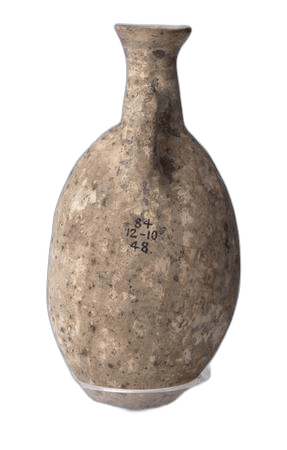
Pieces in the Drakopoulos collection of the kinds and periods this talk covers: White Painted ware (Bronze Age), Early Cypriot (Early Bronze Age).
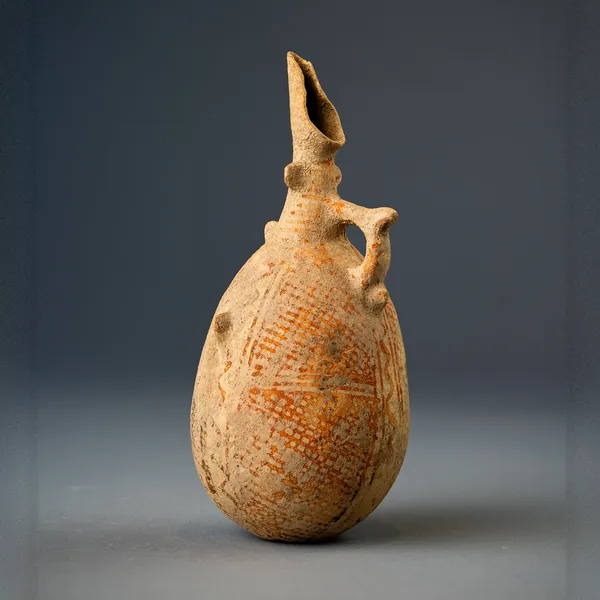
White Painted II Jug with Cut-away Neck and Lattice Panels
White Painted ware (Bronze Age)
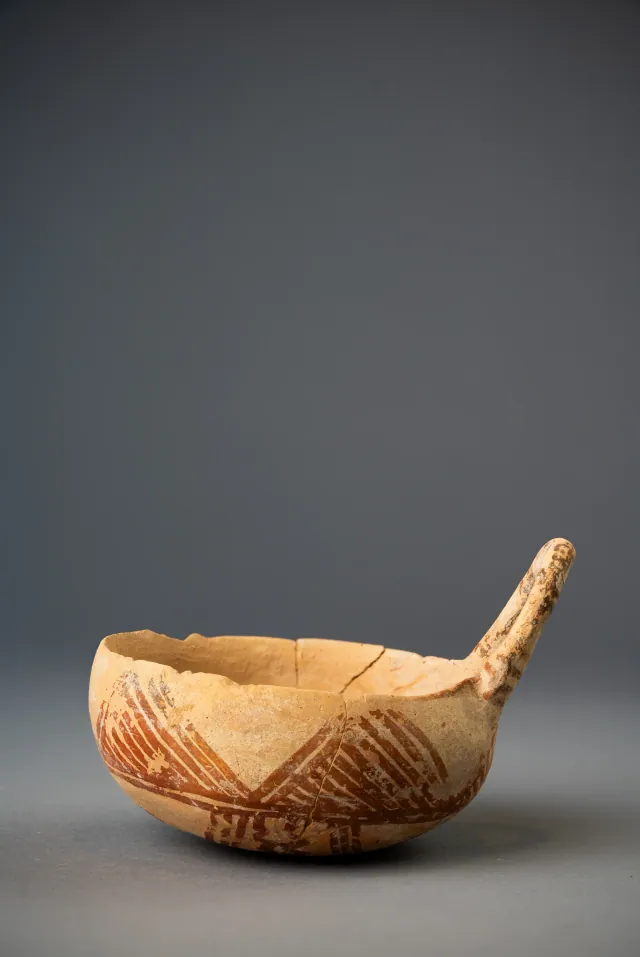
White Painted III-IV Bowl with Rising Handle and Hatched Triangles
White Painted ware (Bronze Age)
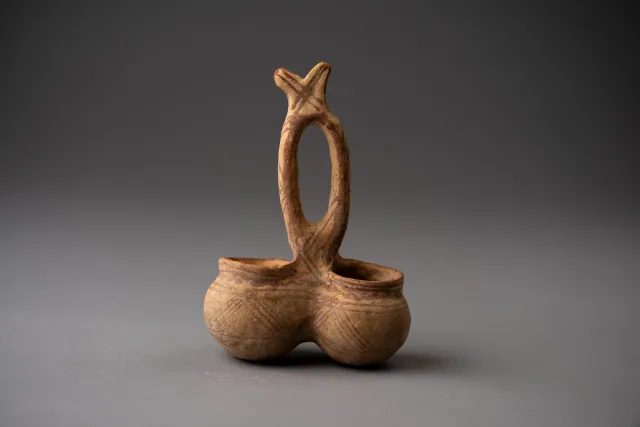
White Painted Double Bowl with Tall Loop Handle
White Painted ware (Bronze Age)
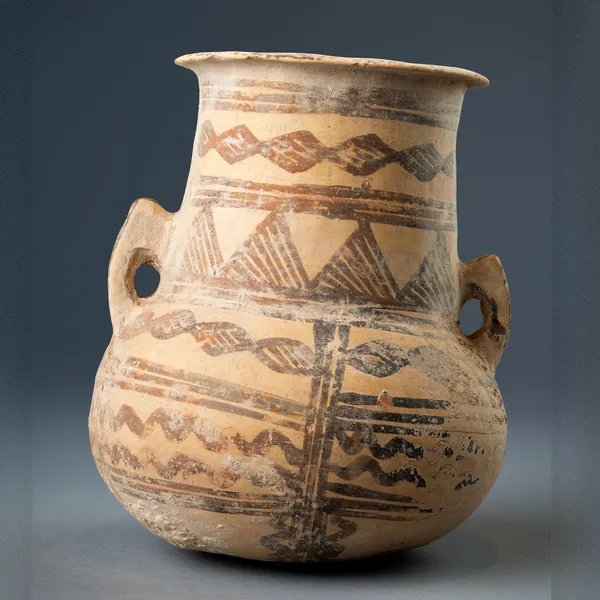
White Painted III-IV Amphora with Lozenge Chains and Hatched Triangles
White Painted ware (Bronze Age)
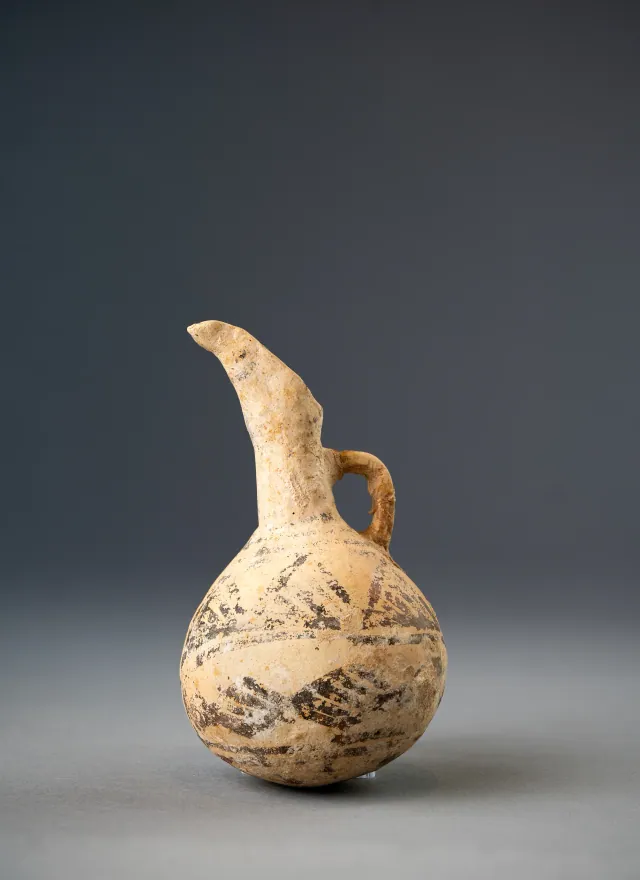
White Painted III-IV Juglet with Cut-away Neck
White Painted ware (Bronze Age)
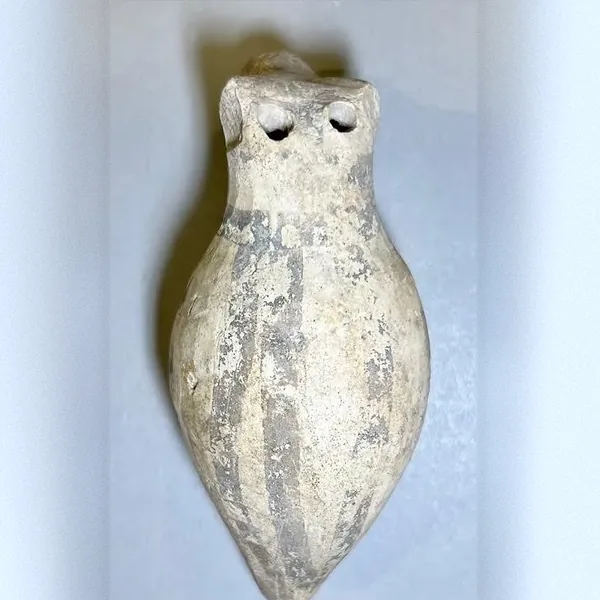
White Painted VI Owl-Headed Rattle
White Painted ware (Bronze Age)
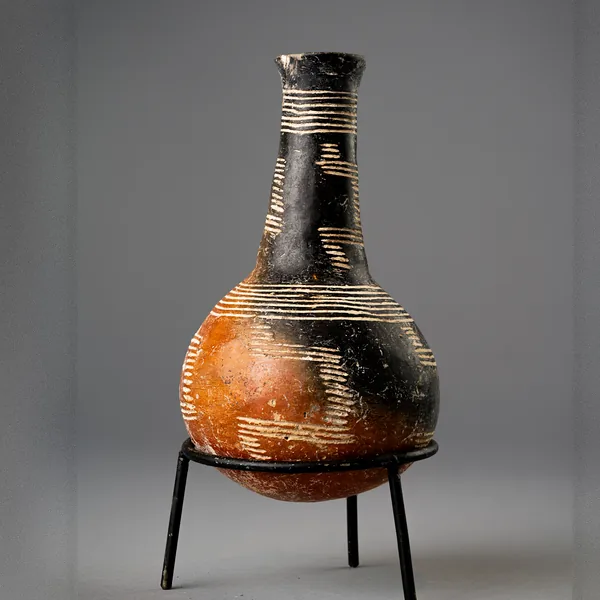
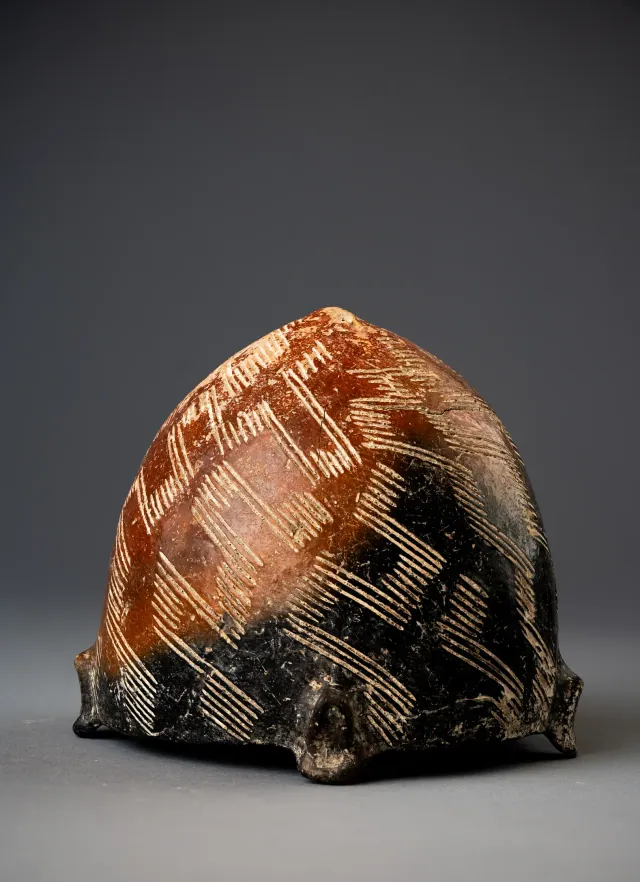
Red Polished Black-Topped Bottle with Stepped Incised Bands
Early Cypriot (Early Bronze Age)
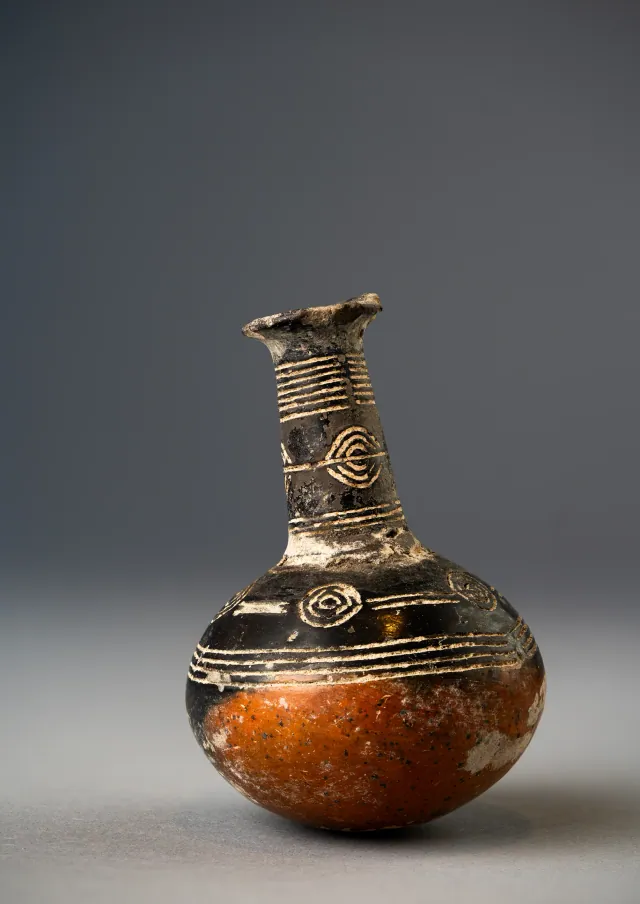
Red Polished Black-Topped Bottle with Incised Concentric Circles
Early Cypriot (Early Bronze Age)
Found at the places discussed
Objects in our catalogue, in museum collections, recorded as found at these sites.



Background
Where to read more on this site before or after watching.
The site
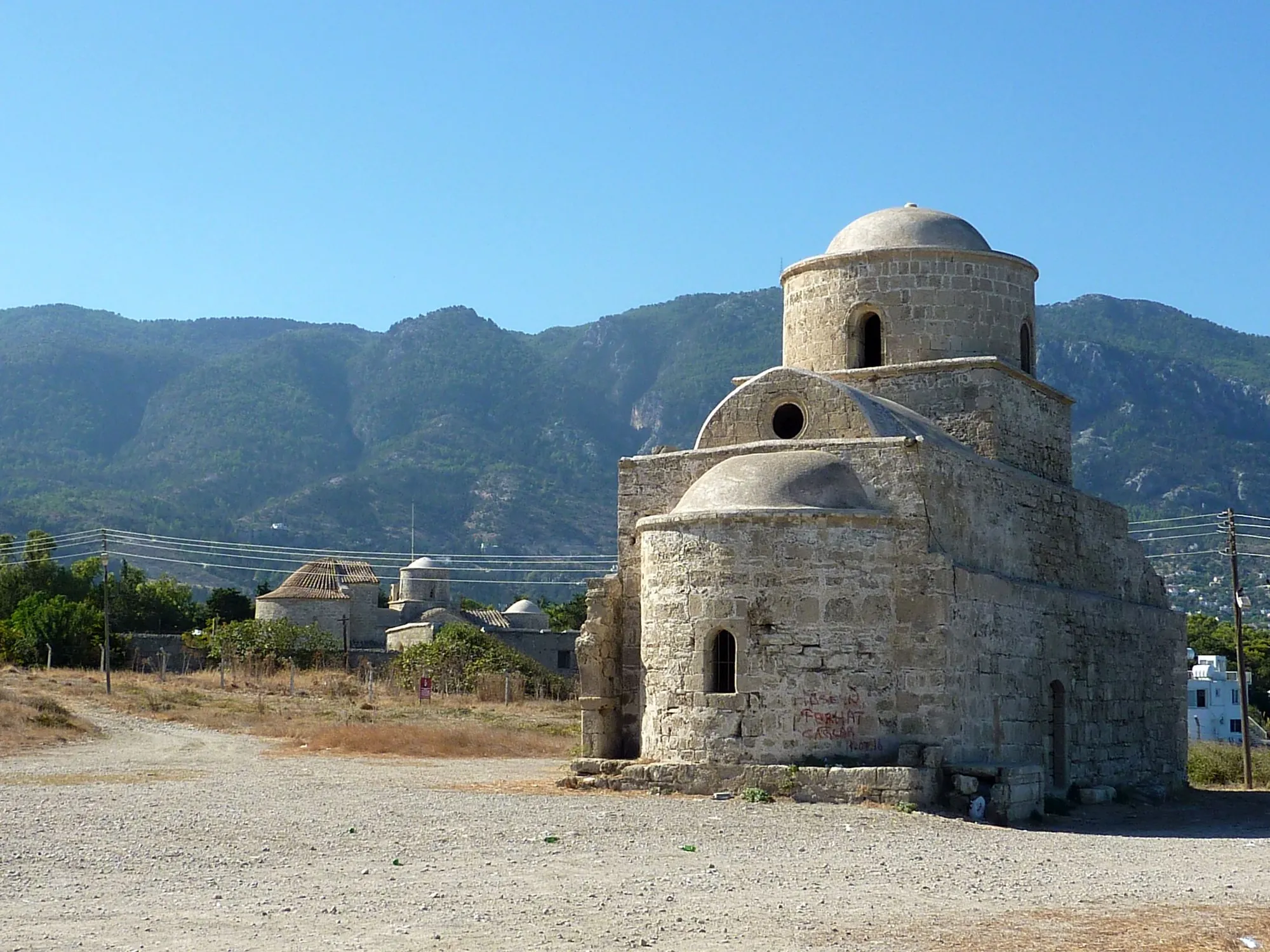
Lapithos
A group of cemeteries and settlement sites around the village of Lapithos on the north coast, below the Kyrenia range. Its Early and Middle Bronze Age cemetery at Vrysi tou Barba has produced about five times as much metal as Vounous, its Cypro-Geometric tombs gave the pottery sequence for that period, and ancient Lapethos was a city-kingdom until 312 BC.
In the compendium
Bronze Age Chamber Tombs
Rock-cut chambers entered by a dromos and reopened for successive burials were the standard Cypriot grave from the Philia phase to the end of the Bronze Age.
In the compendium
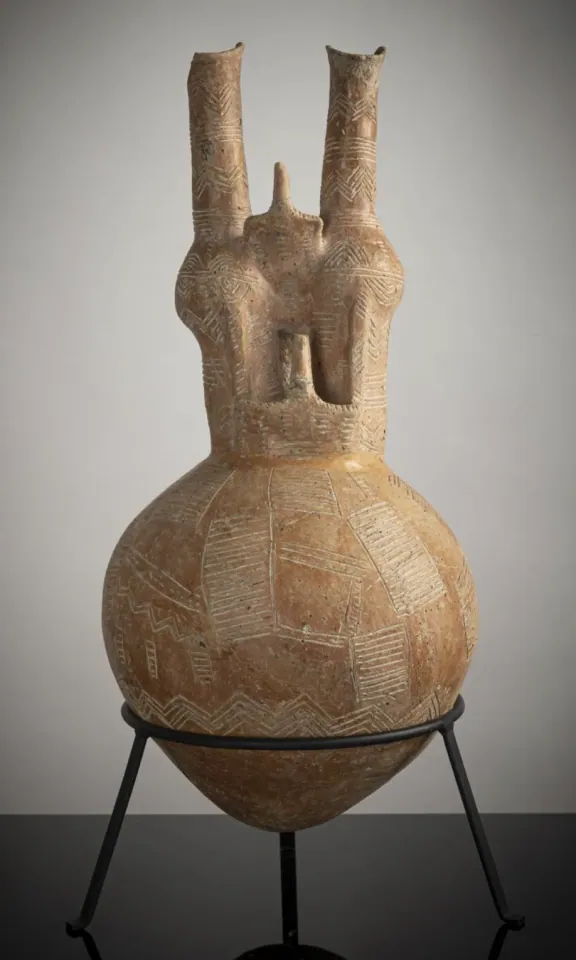
Vounous and Early Bronze Age Burial
Bellapais-Vounous is a north-coast cemetery of rock-cut chamber tombs whose figured Red Polished grave goods define Early Bronze Age burial in Cyprus.

In the compendium
Plank Figures
Flat, rectangular, stylised human figures, mostly in incised Red Polished clay, made in Cyprus from Early Cypriot IIIA to Middle Cypriot II.
Map of Cyprus
Places discussed in the talk
- Has a page on this site
- Other places
- Ground above 200, 500, 1,000 m