
Events·Event
Evangeline Markou to speak in Athens on the coins of the kings of Kition and Idalion
A numismatics seminar at the French School at Athens on Tuesday 10 November at 19:00, also open online through Zoom, looks at the coins of two Cypriot kingdoms.



Lecture
- When
- 10 November 2026 Tomorrow
- Where
- École française d'Athènes, Didotou 6, Athens
The numismatist Evangeline Markou speaks on "The Royal Coinages of the Kings of Kition and Idalion (Cyprus)" at the École française d'Athènes on Tuesday 10 November 2026, at 19:00 Athens time. The talk belongs to the School's series of numismatic meetings, the Rencontres numismatiques, run by its section for antiquity and Byzantium.
It takes place at the School, Didotou 6, Athens 10680, and can also be followed online: the School's event page links to a Zoom webinar registration for remote listeners. The School lists her at the Institute of Historical Research of the National Hellenic Research Foundation. Markou works on the coins of the Cypriot kings and wrote L'or des rois de Chypre, a study of their gold coinage in the Classical period (Mélétemata 64).
The coins of Kition and Idalion
Kition, under modern Larnaca, was the seat of a Phoenician dynasty in the 5th and 4th centuries BC, and its kings are known from their coins and inscriptions. Their coins carry Herakles-Melqart, and their legends are in Phoenician letters, unlike the Cypriot syllabary used by most of the island's other kingdoms (see coins in ancient Cyprus).
Idalion, inland at the village of Dali, began striking coins late in the 6th century BC. After a run of issues without inscriptions, four of its kings put their names in the syllabary on coins showing a seated sphinx, with a lotus flower or an incuse square on the other face. In the first half of the 5th century the city was besieged by the Persians and the Kitians, a war recorded on the bronze tablet of Idalion. Kition annexed the city about the middle of the century, and King Ozibaal of Kition struck coins as "king of Kition and Idalion"; a later title added Tamassos.
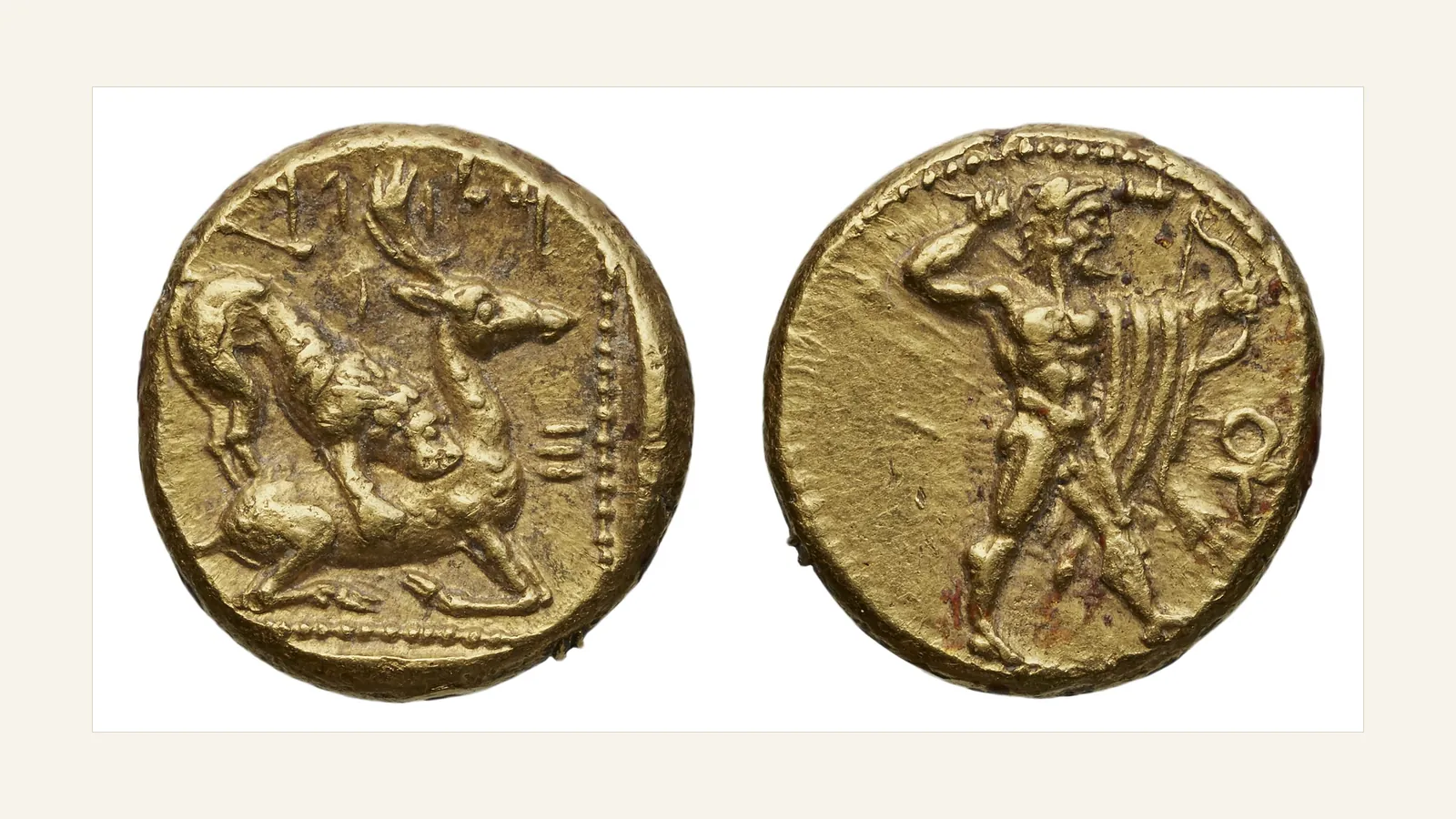
The last two kings of Kition, Milkyaton and Pumayyaton, struck gold. Milkyaton and Evagoras I of Salamis struck the first gold coins on the island during the wars of the early 4th century, to pay their mercenaries. Pumayyaton, who reigned from about 362 BC until Ptolemy I had him killed in 312 BC, was the first to put a regnal year on the reverse of his coins. The gold half-stater in the picture above, came to the Bibliothèque nationale de France with the collection of the duc de Luynes and is catalogued there as his.
Original source
On ancientcyprus.com
- People
- Evangeline Markou
- Periods
- Cypro-Archaic, Cypro-Classical
More in Events
- Nicosia museum workshop teaches children the peaks and castles of Pentadaktylos
- Nicosia conference on 6–7 November hears new work on Erimi, Ayia Irini and the "Achaeans"
- Lapithos symposium on 7 November follows the occupied town from antiquity to displacement
- Kassianidou, Reeve and Ulbrich to discuss Cypriot antiquities in UK museums in London on 7 December
- Three coin curators trace money from Asia Minor to Byzantium in a Nicosia lecture on 9 November