
Conference paper·Archaeological Research Unit - University of Cyprus·2020·In Greek
To Ergon 2019: Palaepaphos, the Protaras and Mazotos shipwrecks, the Xeros valley and the Aegean
ΤΟ ΕΡΓΟΝ 2019
Athanasios Vionis, Tasos Christofides, Marina Solomidou-Ieronymidou, Maria Iacovou, Stella Demesticha and Ourania Kouka
Chapters
About the video
This Greek-language recording is the opening session of the fifth annual review of the Archaeological Research Unit of the University of Cyprus, covering fieldwork conducted in 2019. After welcoming addresses by the unit's director Athanasios Vionis, the rector Tasos Christofides, and the director of the Department of Antiquities Marina Solomidou-Ieronymidou, Apostolos Sarris chairs four papers on projects in Cyprus and the Aegean.
Maria Iacovou presents the 2019 season at Palaepaphos, focusing on the Cypro-Classical workshop and storage complex on the Hadjiabdullah plateau. Excavation of units 2, 5 and 8 exposed mudbrick slab floors, a drainage channel, and a sunken pithos set before an olive-press basin. The season's principal find, studied with Artemis Karnava, is a fourth-century BC potsherd inscribed in black ink in the Paphian Cypriot Syllabary, contemporary with King Nikokles. Recording three lines of commodity quantities and the name Philegalos, it provides the first evidence at Paphos for a standardized palace accounting system comparable to the Phoenician and syllabic archive at Idalion, as well as accounting ostraca from Salamis, Kition and Athienou.
Stella Demesticha reports on two underwater shipwreck investigations. In June and July 2019 her team documented a newly reported Roman wreck of the first to second centuries AD at 37 metres depth off Protaras. The surface cargo of 188 amphorae includes 149 Dressel 2-4 vessels and eight 128-litre Syrian jars from Ras al-Bassit; Demesticha considers whether it relates to the nearby shallow wreck at Fig Tree Bay recorded by Justin Leidwanger. She then turns to the seventh season at the fourth-century BC Mazotos wreck, where excavation reached the wooden hull. Unlike the wine-glass profiles of the Kyrenia and Ma'agan Mikhael ships, Mazotos had a conservative rounded bottom and seven frames of beech and cherry wood. Questions after her paper address the spatial grouping of the Roman amphorae and how pointed amphora toes were stowed aboard ship.
Athanasios Vionis summarises the completion of ceramic study for the Boeotia Project in central Greece, highlighting the Frankish and Ottoman village of Palaiopanagia near Askra, where sixteenth-century agricultural surpluses funded imported Italian, Ottoman and Greek glazed tablewares. He then reports on the 2019 surface and geoarchaeological survey of the Settled and Sacred Landscapes of Cyprus project in the Xeros River valley around Kofinou, Agios Theodoros, Alaminos and Menogeia, where grid collection and kernel density analysis show peak rural settlement between the fifth and seventh centuries AD.
Finally, Ourania Kouka presents work in the eastern Aegean: the study of Hans Walter's unpublished Bronze Age pottery from the Heraion of Samos alongside Sergios Menelaou, and excavations at Liman Tepe (Klazomenai) near Smyrna, which exposed Late Helladic IIIC terraced houses, kilns, and extramural infant jar burials set into abandoned houses outside the fortification wall. A brief discussion follows on why infants were buried separately from adults near the houses.
From our collection
Pieces in the Drakopoulos collection of the kinds and periods this talk covers: Amphora.
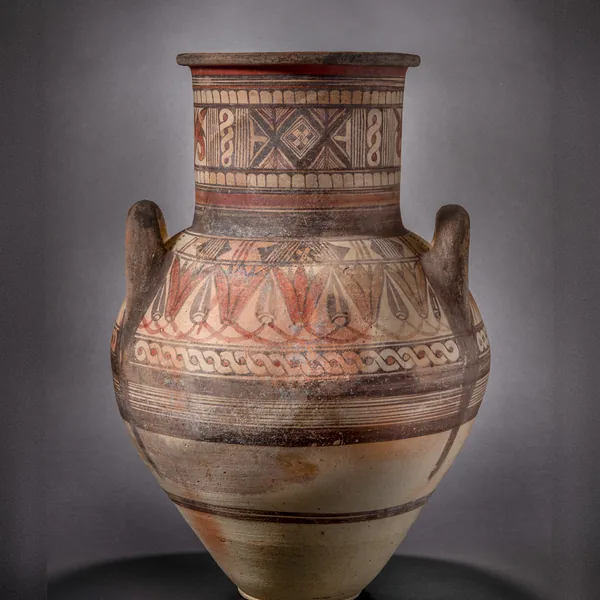
Bichrome IV Amphora with a Lotus-and-Bud Shoulder Frieze
Amphora
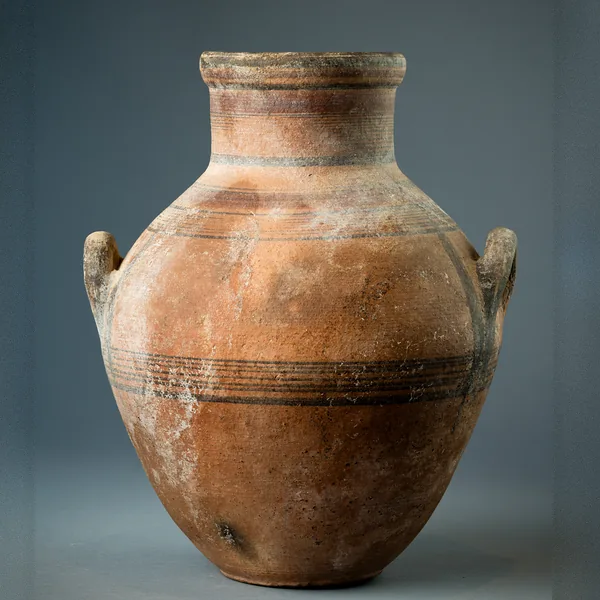
Bichrome IV Amphora with Shoulder Handles and Banded Decoration
Amphora
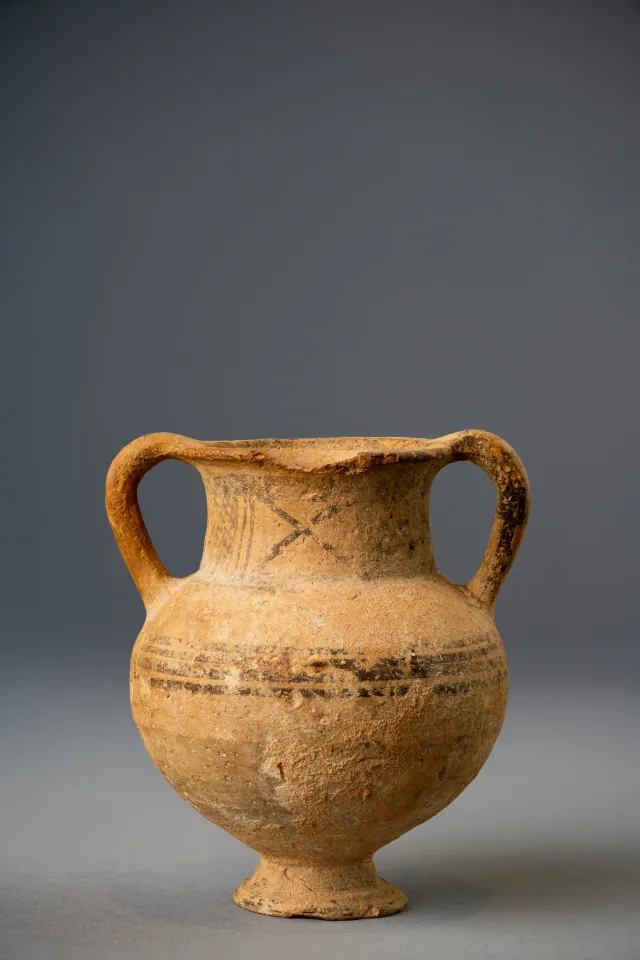
White Painted Amphoriskos on a Conical Foot
Amphora
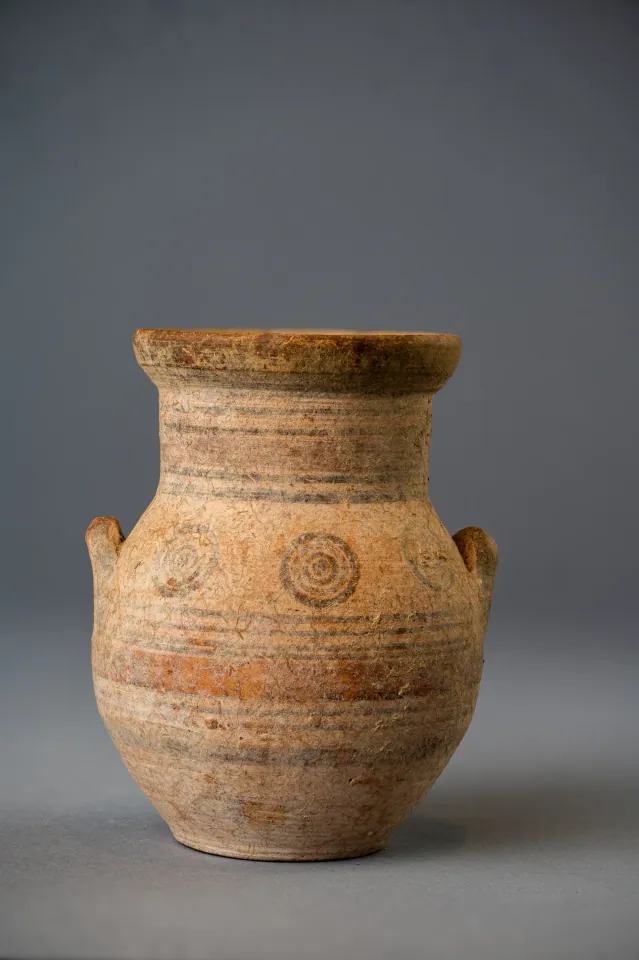
Bichrome IV Amphoriskos with Concentric Circles
Amphora
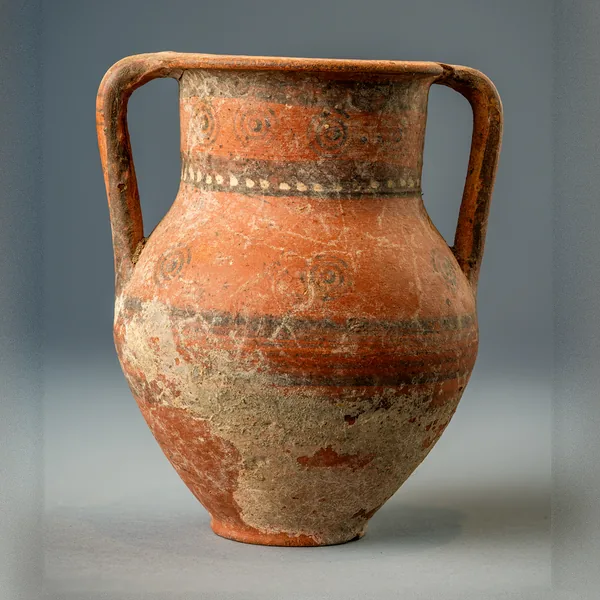
Bichrome Red Amphora with Concentric Circles and a Row of White Dots
Amphora
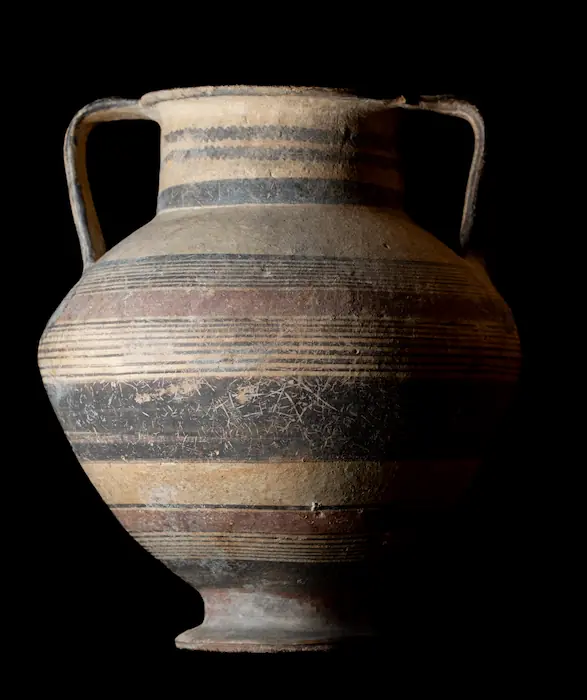
Bichrome Amphora on a Pedestal Foot with Wavy Lines on the Neck
Amphora
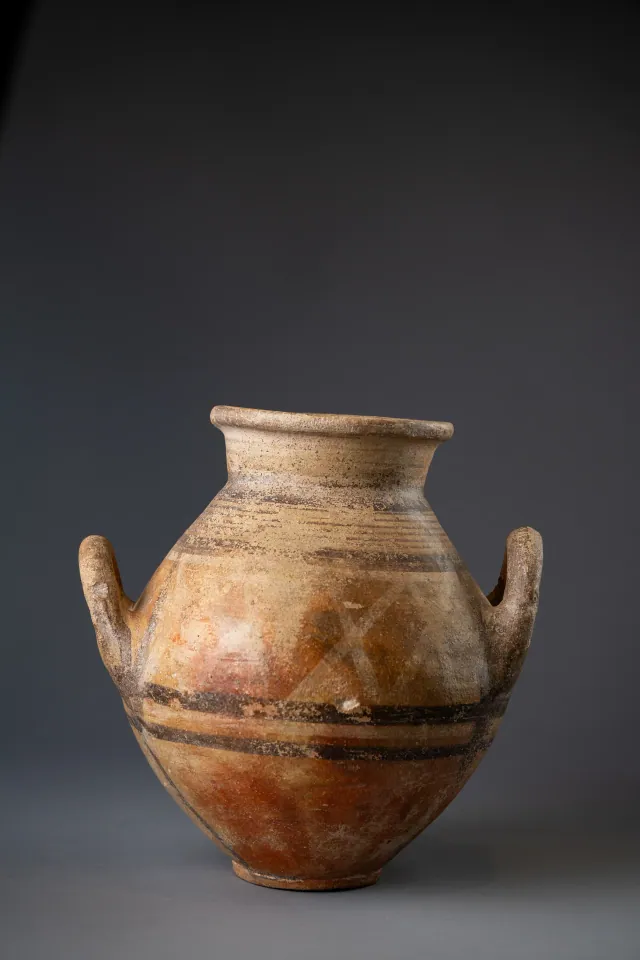
Red-Slipped Amphora with Pale Crosses on the Shoulder, probably Bichrome Red Ware
Amphora
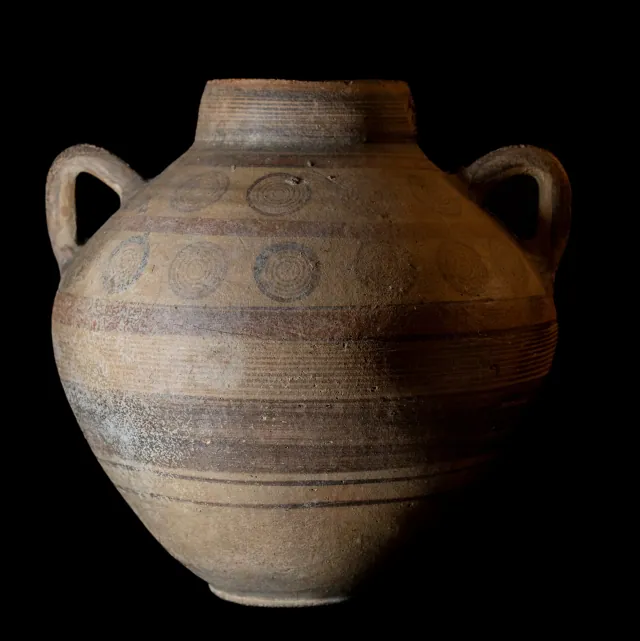
Globular Bichrome Amphora with Two Registers of Concentric Circles
Amphora
Found at the places discussed
Objects in our catalogue, in museum collections, recorded as found at these sites.


Background
Where to read more on this site before or after watching.
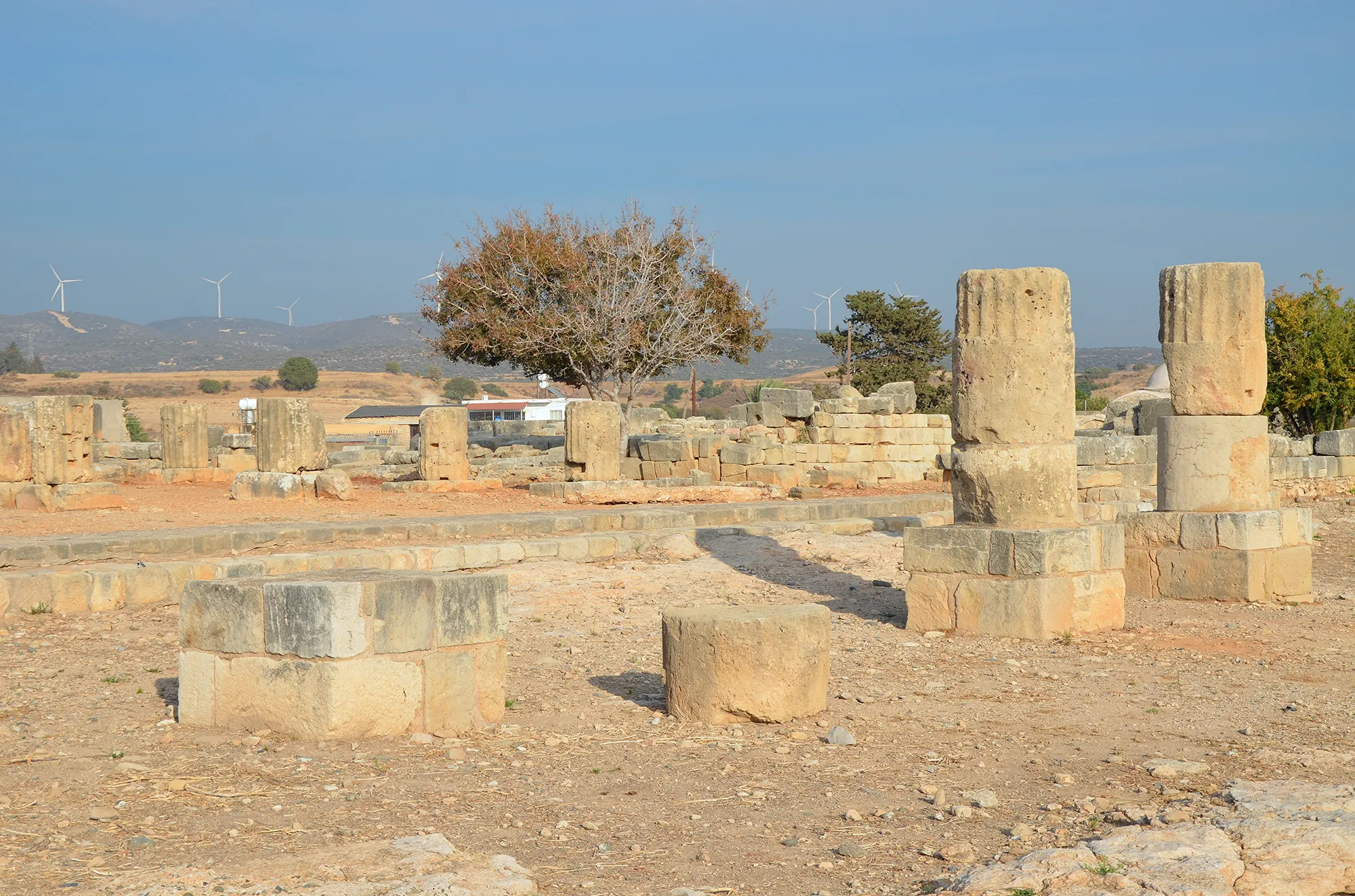
The site
Palaepaphos (Kouklia)
Palaepaphos, Old Paphos, lies under and around the village of Kouklia in western Cyprus. Founded in the Middle Bronze Age, it was the only large town of the south-west until the early Hellenistic period, the seat of the kings of Paphos and the site of the sanctuary of the Paphian goddess, Aphrodite, worshipped here from about 1200 BC to the end of the 4th century AD.
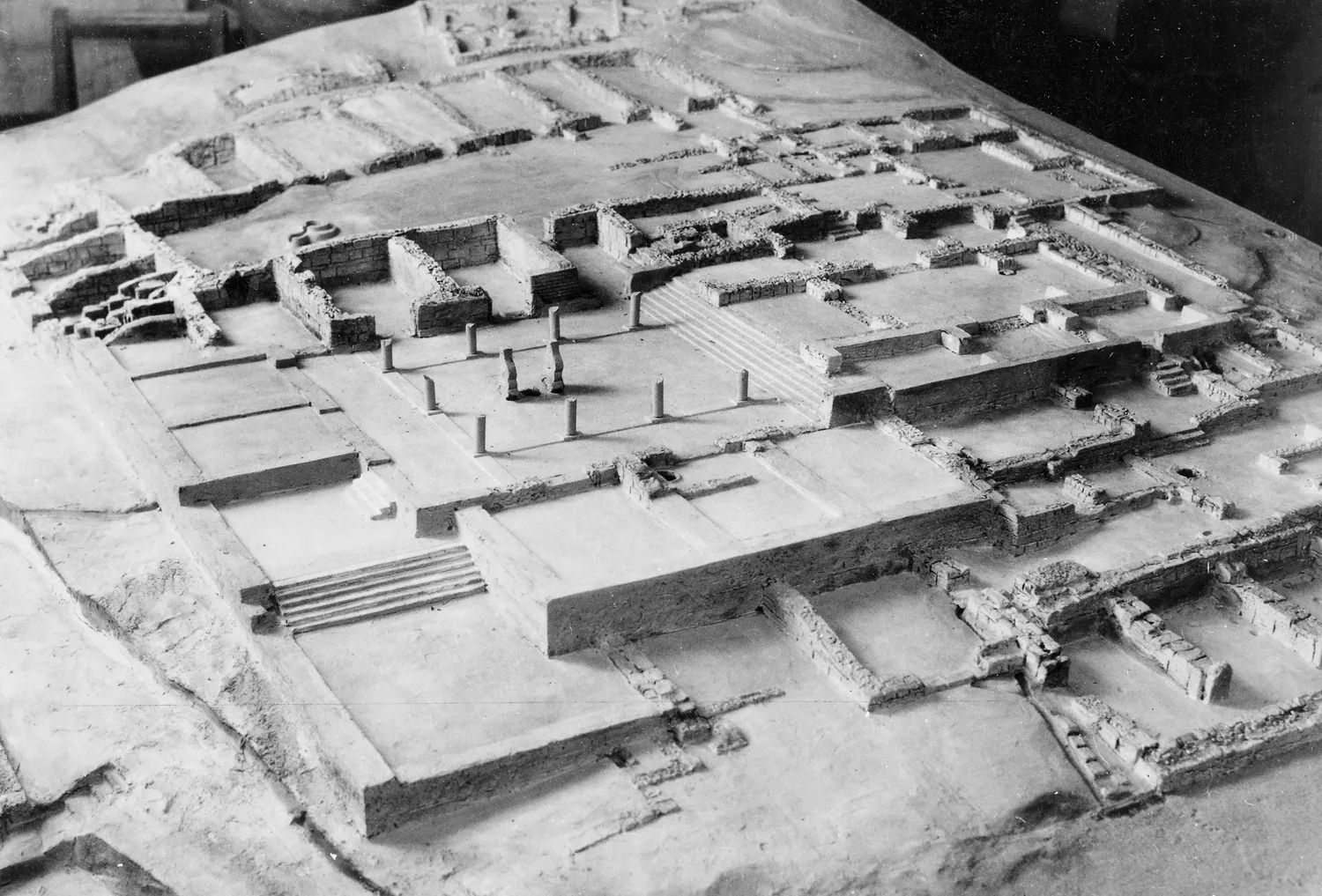
In the compendium
Iron Age Cities and Palaces
The capitals of the Iron Age kingdoms of Cyprus, their palaces at Vouni, Amathus, Idalion and Palaepaphos, their houses, and the volute and Hathor capitals of the period.
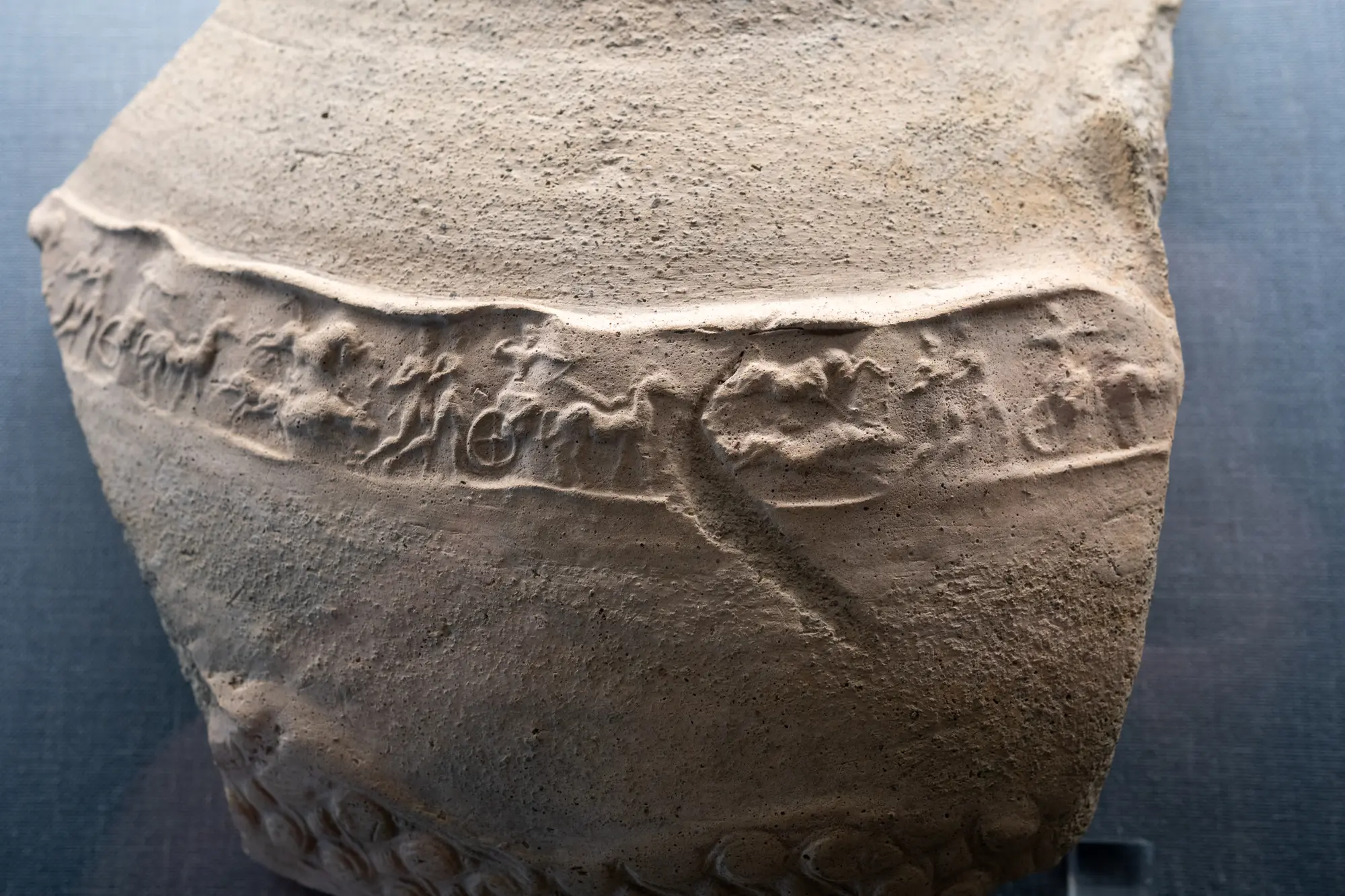
In the compendium
Food Storage in Ancient Cyprus: Pits, Pithoi and Storerooms
How Cypriots stored grain, oil and wine, from Chalcolithic pits and household jars to the great pithos halls of the Late Bronze Age towns.
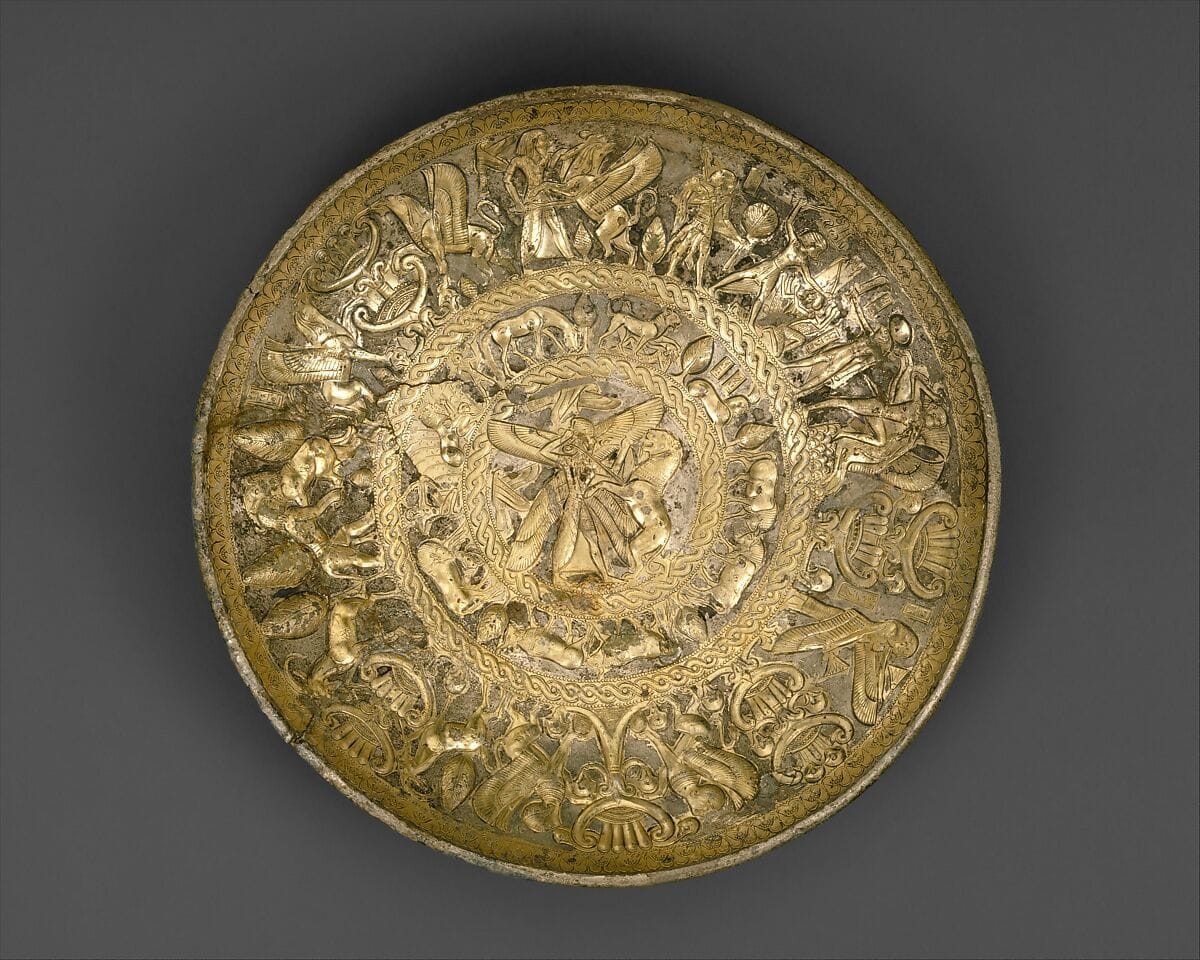
In the compendium
Writing and Literacy in Ancient Cyprus
The scripts of ancient Cyprus, from undeciphered Cypro-Minoan to the Cypriot Syllabary, Eteocypriot, Phoenician and the Greek alphabet, and who used them.
Map of Cyprus
Places discussed in the talk
- Has a page on this site
- Other places
- Ground above 200, 500, 1,000 m