
Lecture·Archaeological Research Unit - University of Cyprus·2018·In Greek
The Epigraphy of Cyprus in the Light of the Edition of Inscriptiones Graecae (IG XV)
Η Επιγραφική της Κύπρου υπό το φως της έκδοσης των Inscriptiones Graecae (IG XV)
Chapters
About the lecture
In this lecture, given in Greek, Maria Kantirea of the University of Cyprus presents the preparation of the Cypriot volumes of the Berlin Academy of Sciences series Inscriptiones Graecae (IG XV) and examines two traits of Cypriot epigraphy from the Cypro-Classical period to Late Antiquity: its dating conventions and its administrative style.
Kantirea begins with the history of the IG XV project, planned before the First World War, abandoned in 1915, and revived in 2008 alongside a parallel three-volume corpus of Cypro-Syllabic inscriptions led by Markus Egetmeyer and Artemis Karnava. The alphabetic corpus is divided into four geographical volumes, the first, prepared with Daniela Summa, covering Nicosia, Idalion, Tamassos, Golgoi and Kition. While acknowledging the work of Terence Mitford and Ino Nicolaou, Kantirea explains that the new critical edition removes speculative restorations from the main text and places them in the critical apparatus. As an example she examines the late Classical inscription of King Nikokles of Paphos found at Ledra, where the attribution of a sanctuary of Paphian Aphrodite to Ledra rests on a single surviving letter, pi.
The second part addresses the paradox of dating Cypriot inscriptions. About half of the island's roughly three thousand alphabetic texts are Hellenistic and Roman funerary cippi (columellae), which carry formulaic greetings and can rarely be dated closely. Conversely, a high proportion of public and private texts record exact dates, sometimes to the day, yet routinely omit the ruler's name. Kantirea traces this habit from the bronze tablet of Idalion through the post-312/311 BC era at Idalion, the 310 inscribed vessels dedicated by Onasagoras at the Nymphaeum of Kafizin, Ptolemaic honorifics and gymnasium texts from Salamis, Paphos and Lapithos, and Roman dedications from Amathus, Kourion and Louroujina.
Turning to style, Kantirea shows how Cypriot inscriptions copy administrative and financial records onto stone. A statue base of Caracalla at Paphos of AD 211 combines imperial titles and Severan regnal years with a report that the 500 denarii were voted from city funds and audited by the Roman logistes; similar procedural clauses appear on a base for Nero at Kourion and on the Claudius aqueduct inscription from Kyrenia (AD 41 to 43). In Late Antiquity the same dating habit continues with indictions and the years of archbishops and bishops, including inscriptions recording the Arab raids of AD 649 and an aqueduct from Chytroi to Salamis. Kantirea closes by asking whether these habits reflect Ptolemaic bureaucracy or an older Phoenician practice on the island, a point taken up with Theodoros Mavrogiannis and Despo Pilides in the discussion afterwards.
From our collection
Pieces in the Drakopoulos collection of the kinds and periods this talk covers: Cypro-Classical, Hellenistic.
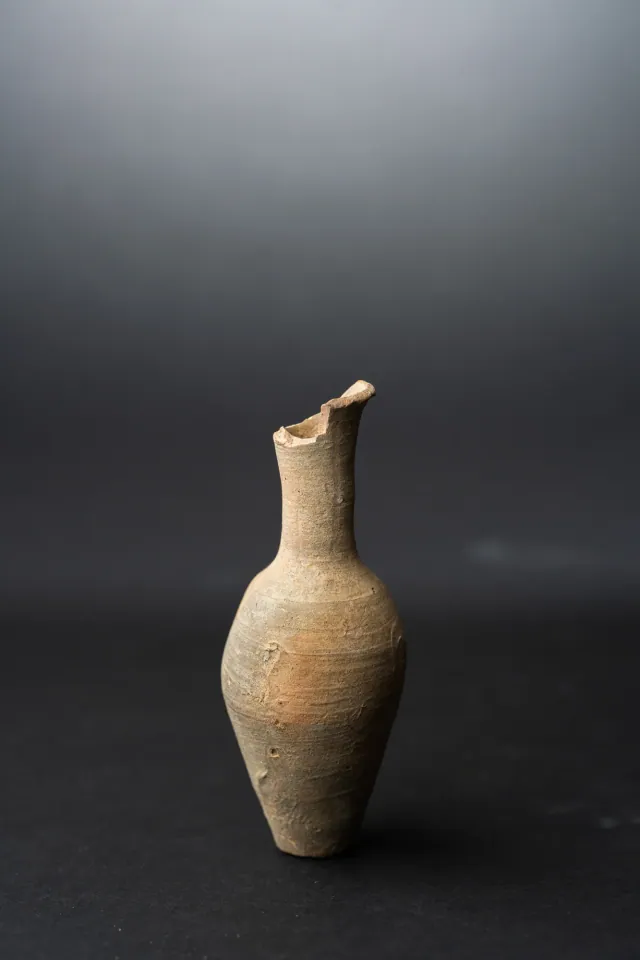
Fusiform Unguentarium
Hellenistic
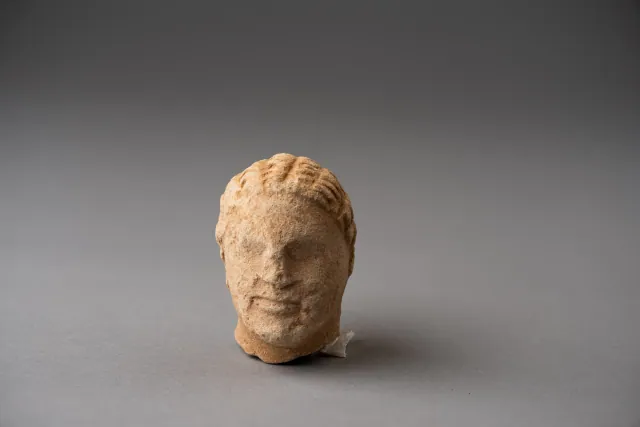
Limestone Head of a Boy, probably from a Temple Boy Statuette
Cypro-Classical
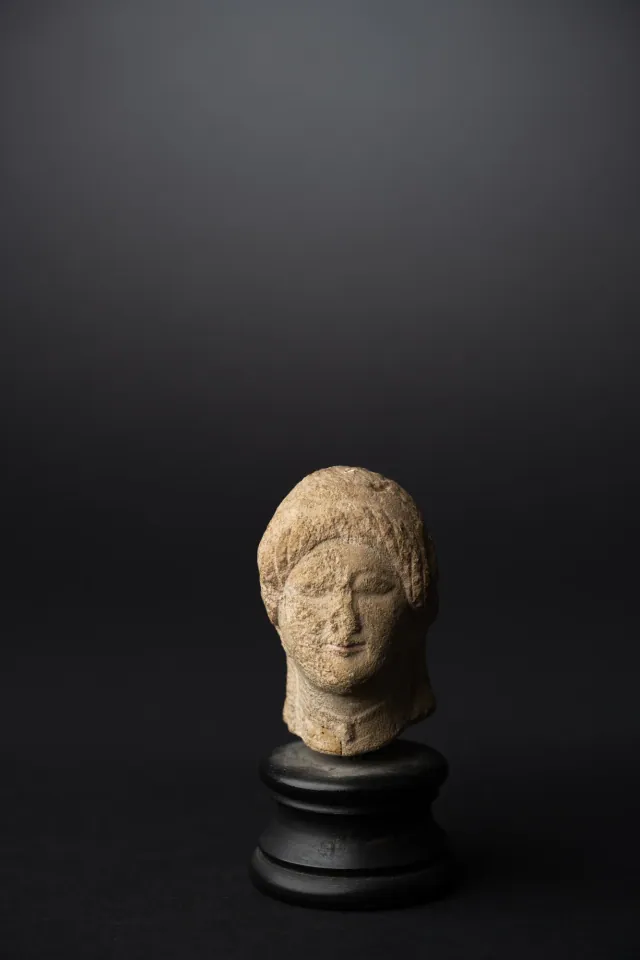
Limestone Head of a Votary with a Wreath
Cypro-Classical
Found at the places discussed
Objects in our catalogue, in museum collections, recorded as found at these sites.

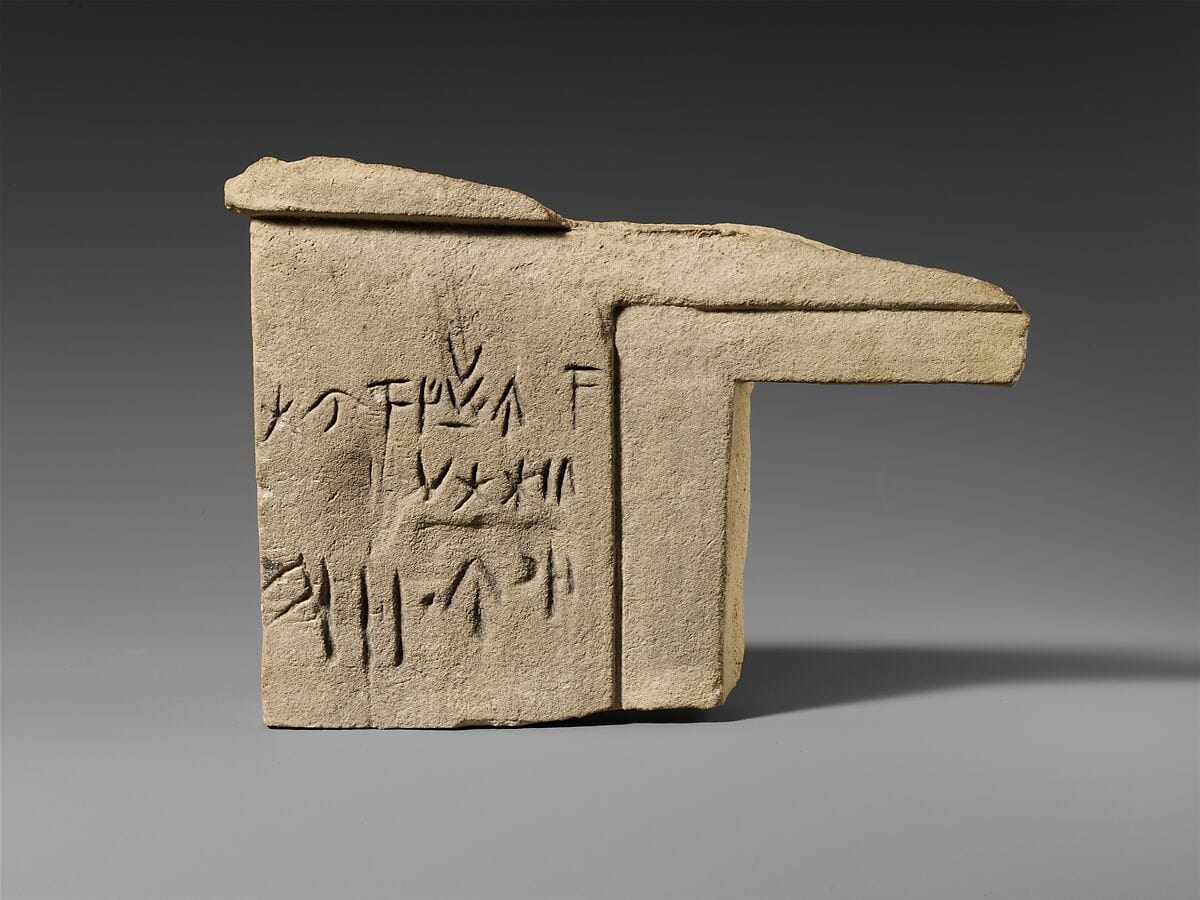

Background
Where to read more on this site before or after watching.
The site
Idalion
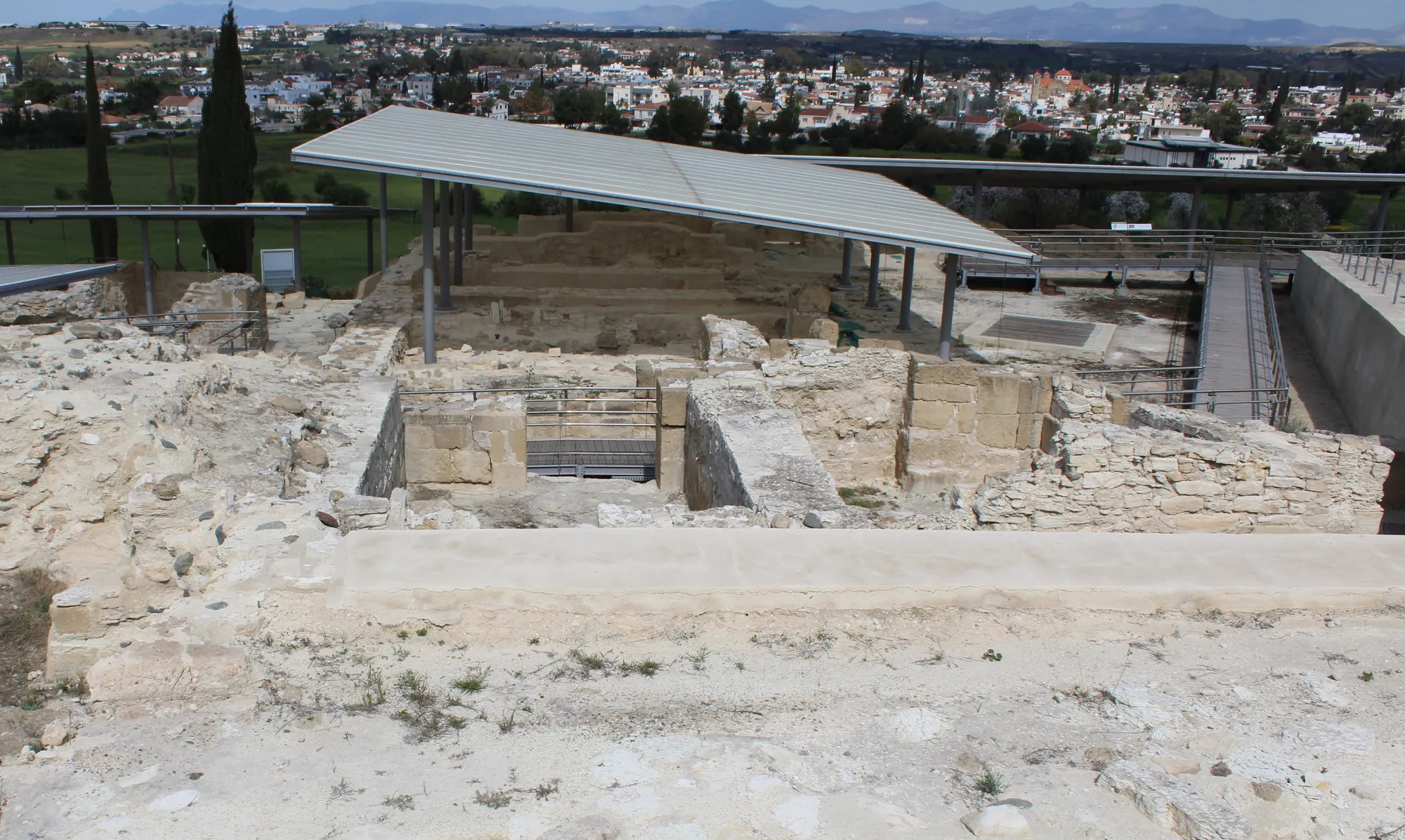
Idalion is an inland city-kingdom of Iron Age Cyprus at the modern village of Dali, built round two limestone acropoleis and a walled lower city on the Yialias river. Its bronze tablet, the longest known text in the Cypriot syllabary, records a siege of the city in the first half of the 5th century BC; soon afterwards Idalion passed to the Phoenician kings of Kition, whose administrative archive was found on the west terrace.
In the compendium
Writing and Literacy in Ancient Cyprus
The scripts of ancient Cyprus, from undeciphered Cypro-Minoan to the Cypriot Syllabary, Eteocypriot, Phoenician and the Greek alphabet, and who used them.
In the compendium
Egypt
Ancient Egypt, Cyprus's partner in copper, pottery and prestige goods from the Middle Kingdom to the Ptolemies, who annexed the island.
In the compendium
The Phoenicians
The Iron Age city-states of the Levantine coast, whose traders and settlers made Kition a Phoenician kingdom and shared a hybrid culture with Cyprus.
Map of Cyprus
Places discussed in the talk
- Has a page on this site
- Other places
- Ground above 200, 500, 1,000 m