
Lecture·Archaeological Research Unit - University of Cyprus·2023
The Political and Administrative Systems of the Classical Cypriot City-Kingdoms
Chapters
About the lecture
Drawing on her 2022 monograph Kypriōn Politeia, Beatrice Pestarino reconstructs the administrative and political structures of the Cypriot city-kingdoms during the Cypro-Classical period. Because literary works such as the Aristotelian Kypriōn Politeia and Theophrastus's treatise on Cypriot kingship survive only in lexicographical fragments mentioning the royal titles basileus, anaktēs and anassai, the lecture turns to inscriptions in Phoenician and the Cypriot Syllabary to ask what officials and deliberative bodies stood beside the kings.
The first half examines palatial archives and scribes. At Kition, Phoenician inscriptions repeatedly record a chief of scribes (rab sōpērīm). Pestarino re-evaluates the 5th-century BC gypsum accounting tablet from Bamboula Hill, long interpreted as a tariff of the temple of Astarte and as evidence for sacred prostitution because of its payments for klbm (dogs) and grm (lion cubs). Comparing it with the more than seven hundred Phoenician and syllabic ostraca found in the administrative building at Idalion, she argues that the Kition tablet is a royal palace account recording state expenditure, including maintenance of sanctuaries of Astarte and Mukol, and that the dogs and lion cubs were real animals kept at court for hunting, guard duty and royal display. Similar accounting practices appear across the island despite differences in script: syllabic ostraca from Palaepaphos and Idalion share the logogram te, an ostracon and a clay sealing from a papyrus roll at the palace of Amathus point to archival record-keeping, and a 6th-century BC epitaph from Marion names a diphtheraloiphos, a scribe writing on leather rolls akin to Achaemenid royal records.
The second half considers political magistracies and civic bodies. A 4th-century BC epitaph from Kition names a sufet, which Pestarino connects to annual eponymous magistrates and to the evolution of the Phoenician term 'am from "people" into a deliberative assembly, as seen at Byblos and on the trophy of King Milkyaton at Kition. She compares Milkyaton's formula pairing the king and the people of Kition with the Idalion Bronze Tablet, where King Stasikypros acts alongside "the city of the Idalians", and with coins bearing civic rather than royal legends. Pestarino links the spread of these more republican institutions in the 5th and 4th centuries BC to tax reforms under Achaemenid Persia and to non-hereditary rulers such as Evagoras of Salamis and Milkyaton seeking elite and popular backing. The lecture closes with a syllabic decree of King Kretes of Kourion (c. 450 BC) containing the genitive plural damoterōn, which she interprets as representatives of territorial administrative districts (damoi).
From our collection
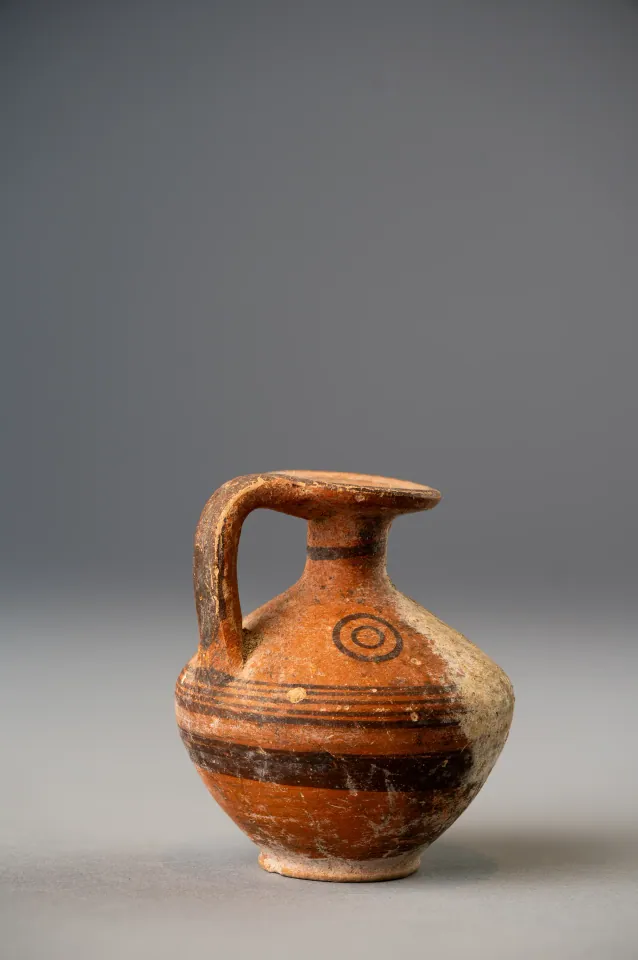
Pieces in the Drakopoulos collection of the kinds and periods this talk covers: Cypro-Archaic, Hellenistic.
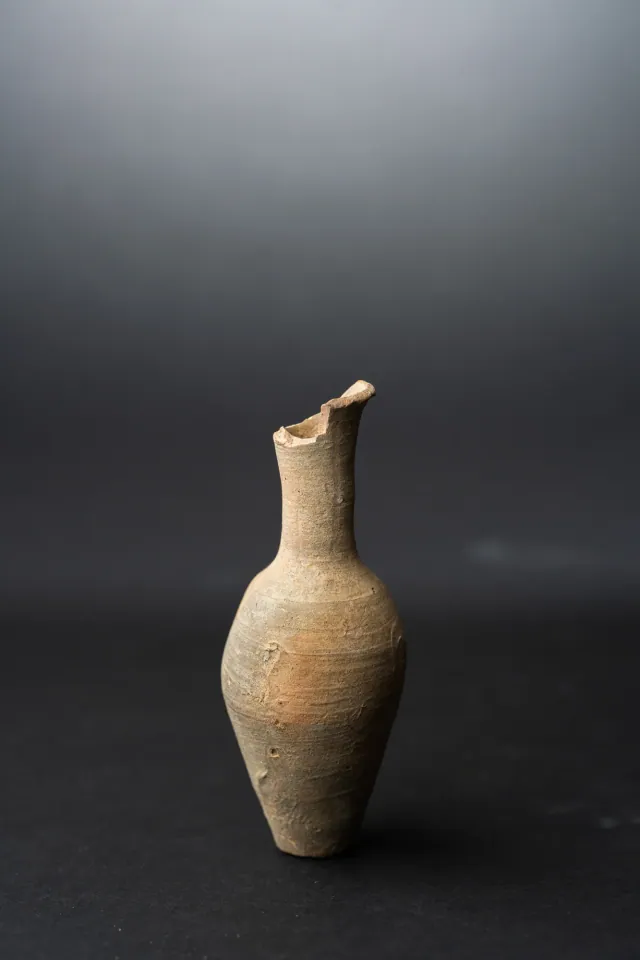
Fusiform Unguentarium
Hellenistic
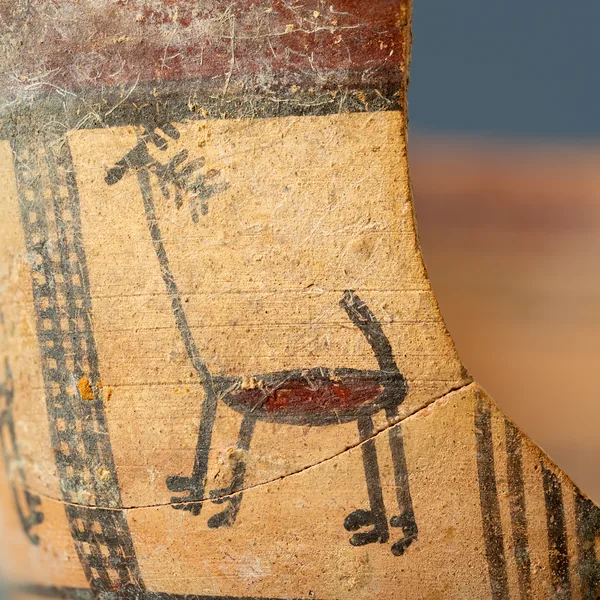
Bichrome Skyphos with Stags in Metopes
Cypro-Archaic
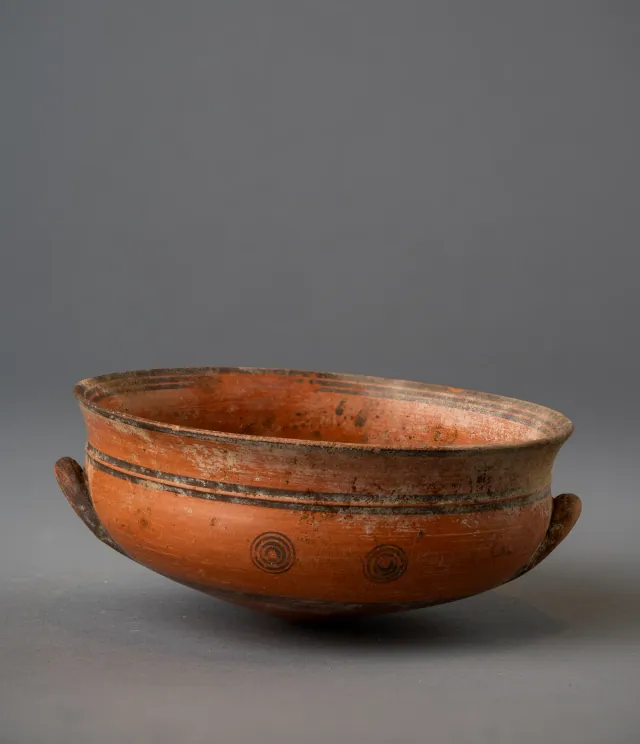
Black-on-Red Two-Handled Bowl with Raised Flaring Rim
Cypro-Archaic
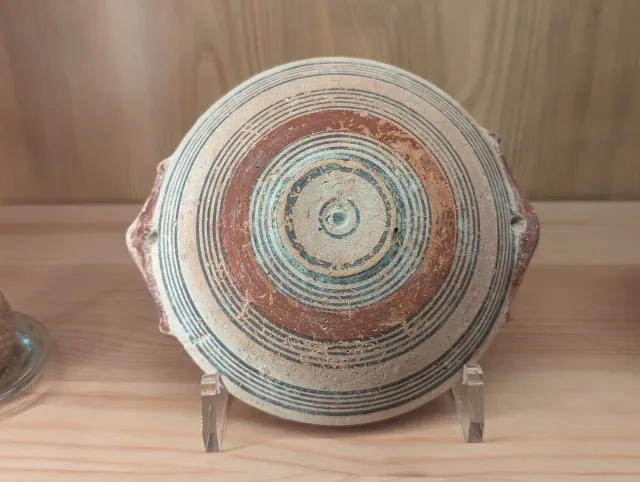
Bichrome IV Bowl with Red-Painted Pierced Lug Handles
Cypro-Archaic
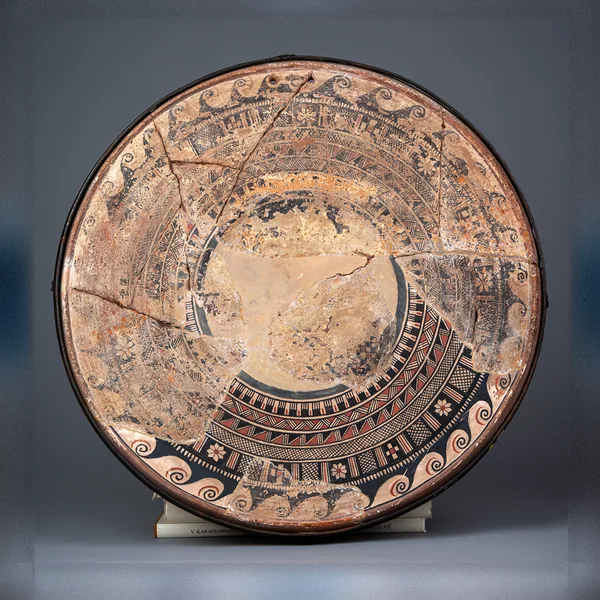
Large Bichrome Plate from Salamis with a Wave Band and Rosette Metopes
Cypro-Archaic
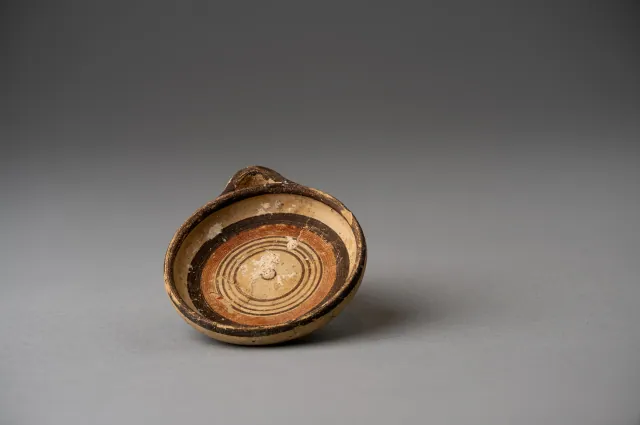
Miniature Bichrome Plate with Concentric Circles
Cypro-Archaic
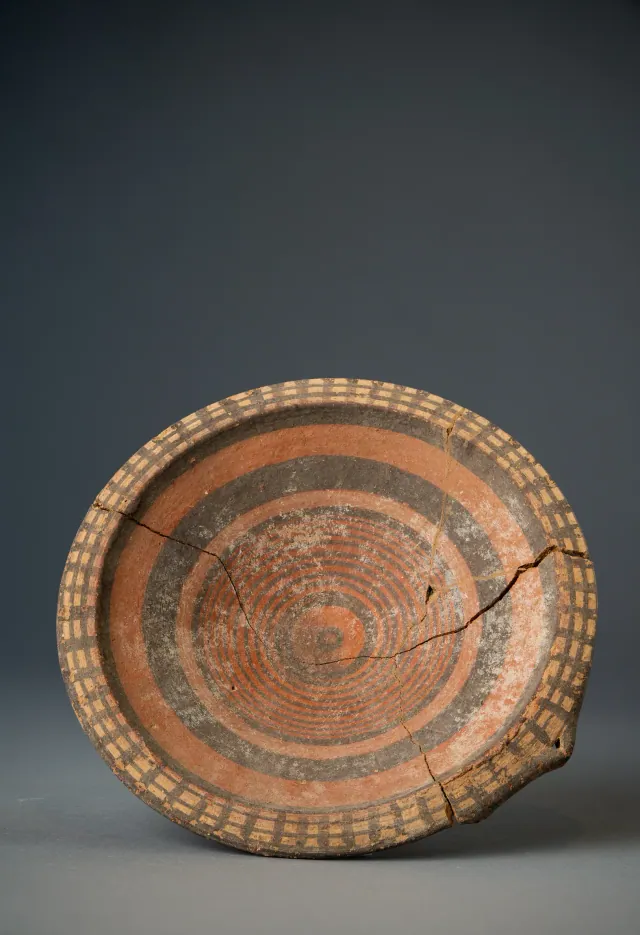
Black-on-Red Plate with Barred Rim and Concentric Circles
Cypro-Archaic
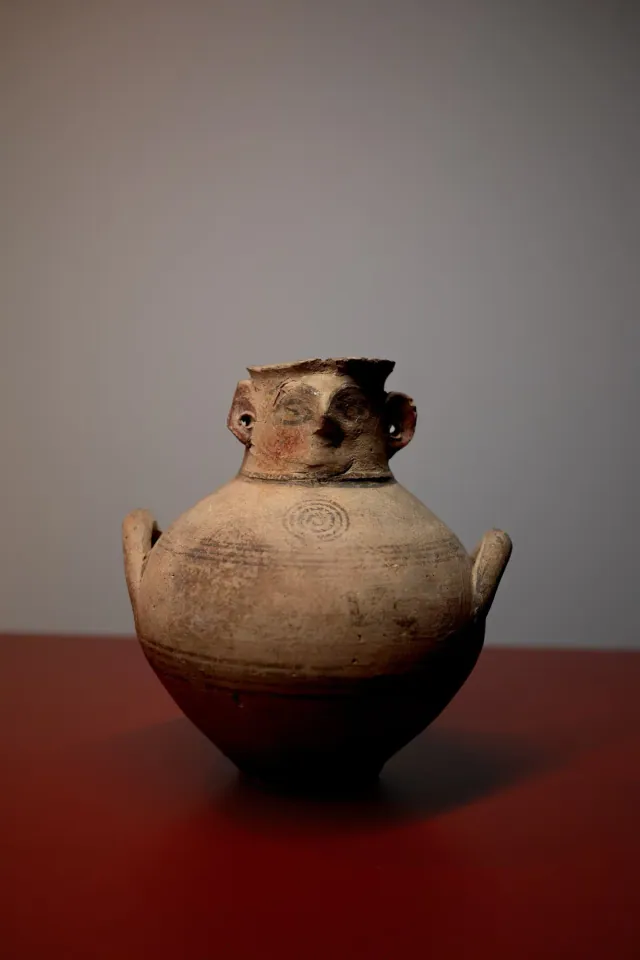
Bichrome IV Face-Neck Jar of the Kourion Type
Cypro-Archaic
Found at the places discussed
Objects in our catalogue, in museum collections, recorded as found at these sites.


Background
Where to read more on this site before or after watching.
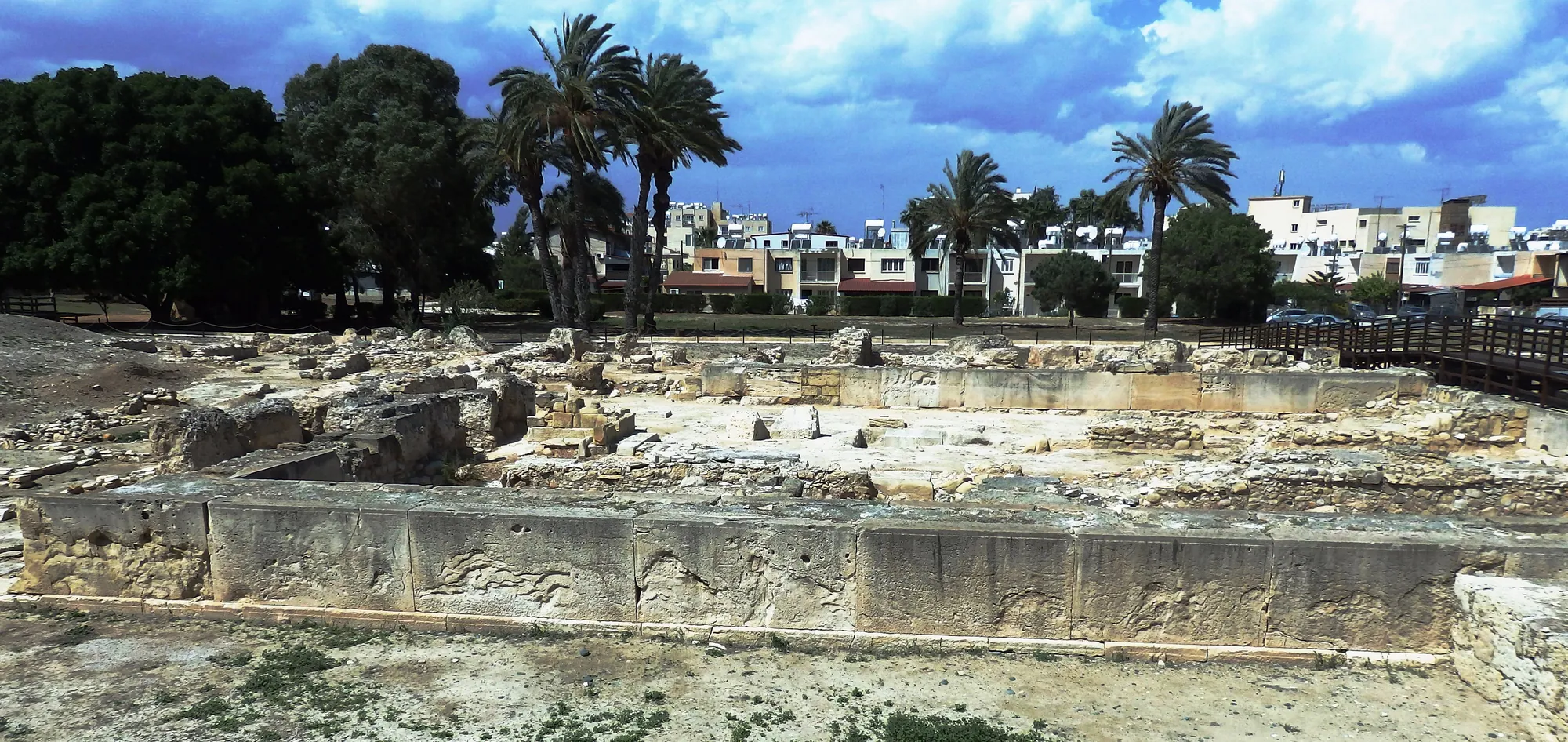
The site
Kition
Kition lies under modern Larnaca on the south-east coast. It was founded as a harbour town in the 13th century BC, with temples and copper workshops in its sacred quarter at Kathari. After a long gap the Phoenicians rebuilt the main temple for Astarte, and from the 5th century BC the city was the seat of a Phoenician dynasty with a war harbour of ship sheds at Bamboula. Its last king was put to death by Ptolemy I in 312 BC, but the city lived on into the Roman period and beyond.
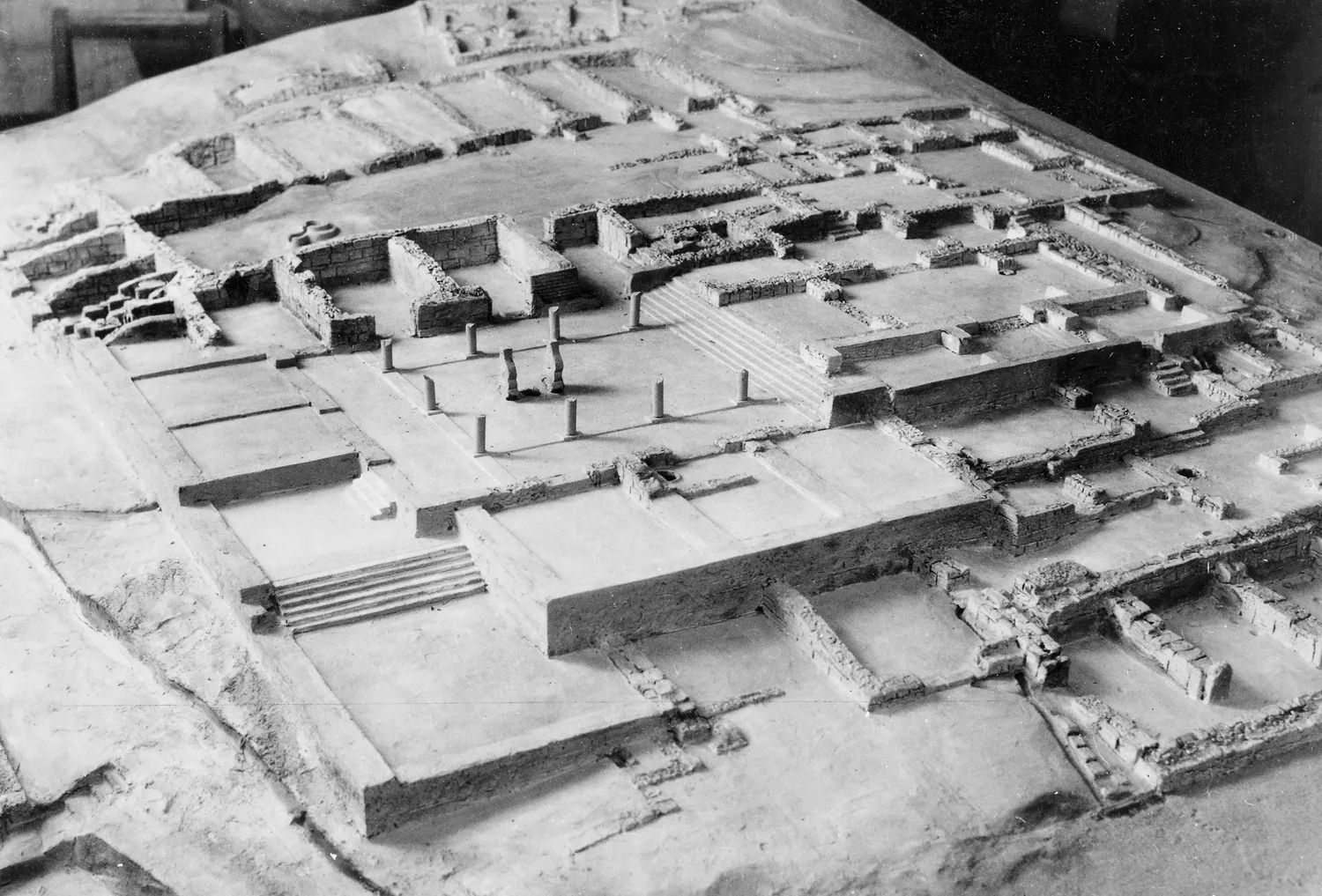
In the compendium
Iron Age Cities and Palaces
The capitals of the Iron Age kingdoms of Cyprus, their palaces at Vouni, Amathus, Idalion and Palaepaphos, their houses, and the volute and Hathor capitals of the period.
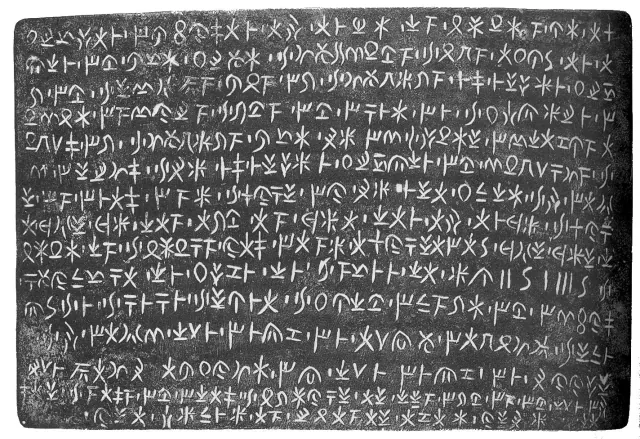
In the compendium
Achaemenid Persia
The Persian Empire, which held the Cypriot city-kingdoms as tribute-paying client states from c. 545 or 525 BCE until 332 BCE.
In the compendium
The Phoenicians
The Iron Age city-states of the Levantine coast, whose traders and settlers made Kition a Phoenician kingdom and shared a hybrid culture with Cyprus.
Map of Cyprus
Places discussed in the talk
- Has a page on this site
- Other places
- Ground above 200, 500, 1,000 m