
Archaic I
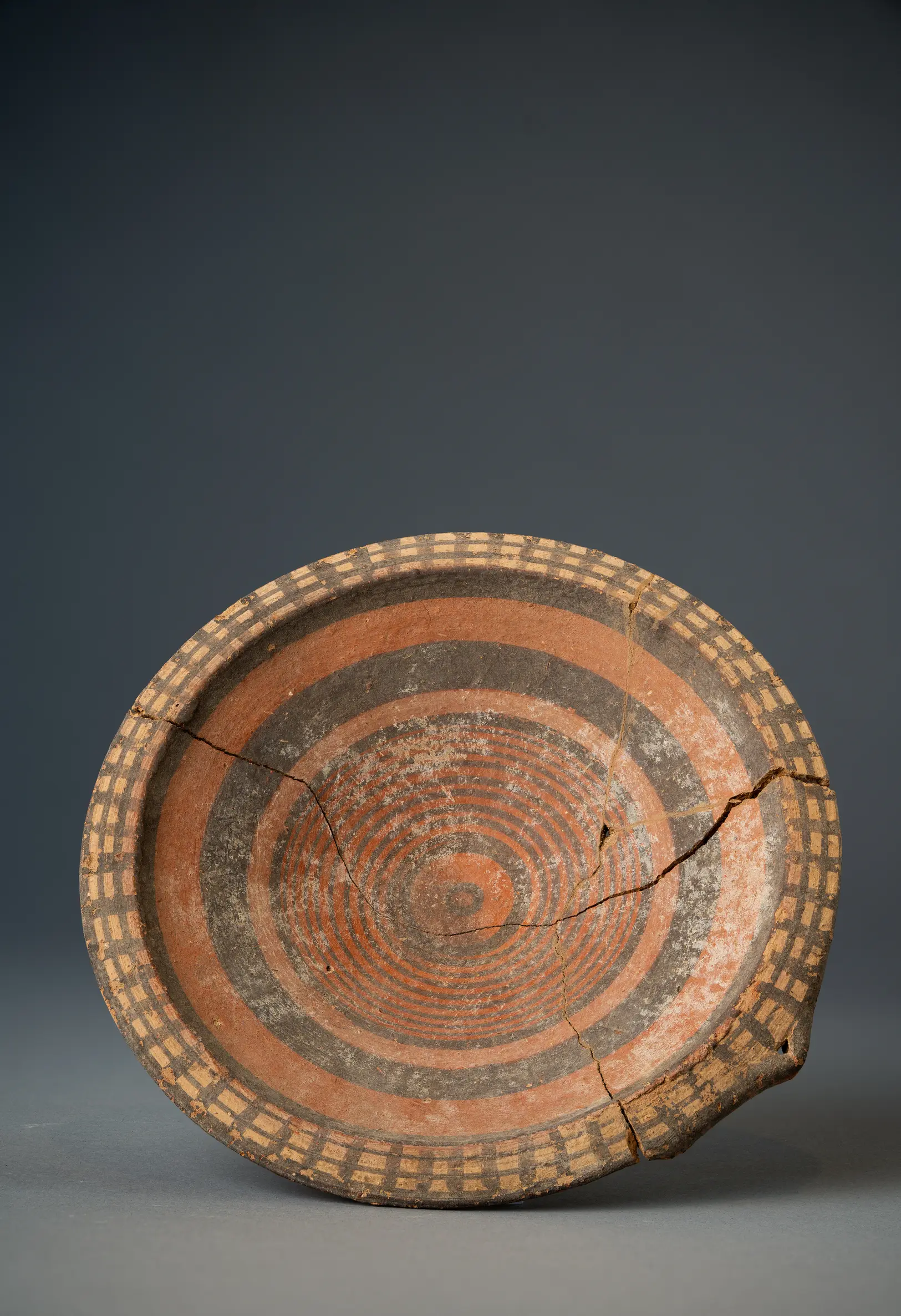
Black-on-Red Plate with Barred Rim and Concentric Circles
Cypriot Black-on-Red plate, c. 750–600 BCE, with a ladder-barred flat rim, broad black bands and fine wheel-drawn circles inside; mended from fragments.
Date
750 - 600 BC
Accession No.
DSH-GE-002
Collection
Alexis Drakopoulos
Provenance
- 1965–1969, The Goodman Collection
- 2025–present, Alexis Drakopoulos, London
Cypro-Archaic I, c. 750–600 BCE · Black-on-Red ware · Wheel-made
A shallow plate with a wide, flat rim, covered inside with an orange-red slip and painted in matt black. The rim carries a double row of short black bars between fine bands, so that the pale ground shows through as a ladder of light squares running all the way round. Inside, the painter laid down two broad black bands separated by red, then a zone of close-set, hair-fine circles struck on the wheel, a reserved red ring and a small bull's-eye at the centre. At one point on the rim a small projection survives, the stump of a single horizontal handle or lug. The plate has been mended from several large fragments; the joins are visible as dark lines, with small losses along them and at the handle stump, and patches of whitish deposit lie over the black bands.
Commentary
The fabric, lustrous red slip and matt black ornament identify the plate as Black-on-Red, the painted member of the Cypriot Iron Age red-slipped family. Its shape belongs to Gjerstad's Black-on-Red II (IV) shallow bowls with a flat rim and one horizontal handle, his type 7, which he derived from flat-rimmed Red Slip bowls of the preceding stage [1]. The same form appears at Kourion-Kaloriziki as a "plate" with a small ring base, flaring walls and a wide, flattened overhanging rim [2].
The Kaloriziki plates give the best published parallels for the rim. K 697 has eight groups of three bars on the rim, K 699 triple groups of triple bars, and K 702 a rim barred all round, all from Cypro-Archaic I tombs [2]. The double row of bars here is a denser version of that scheme. The interior, with its wide field of hair-fine circles around a small centre, matches the interior of Kaloriziki bowl K 683 [2]. A single-handled Black-on-Red dish from Morphou-Mnaphkia in the Ashmolean Museum, AN1953.888 (D. 22.8 cm), shows the same combination of a shallow flat-rimmed body and one small handle at the rim [3].
The date rests on those tomb groups. Every barred-rim plate from Kaloriziki is Cypro-Archaic I, so c. 750–600 BCE is the most likely placement. Gjerstad's division of the ware into an earlier I (III) and a later II (IV) stage is a typological sequence, and several shapes he assigned to the later stage occur in the earliest firmly dated Black-on-Red contexts on the Levantine coast [4]. Radiocarbon-anchored work at Megiddo places the start of Cypriot production c. 900 BCE [5], which sets the outer limit; a range of c. 800–600 BCE would be a cautious alternative.
Plates and shallow bowls of this kind were table vessels for serving food, and most complete examples come from tombs, where they were placed with jugs and drinking bowls as part of the funerary set. The flat, overhanging rim and the single handle have been read as borrowings from metal plate forms, a recurring feature of the ware's open shapes [4].
It remains uncertain whether the projection on the rim is a broken horizontal handle or a small lug made that way. Its irregular outline in the photograph suggests the former, but only examination of the fracture and the rim profile in hand can settle it.
References
- 1.Gjerstad, E. (1948) The Swedish Cyprus Expedition IV.2: The Cypro-Geometric, Cypro-Archaic and Cypro-Classical Periods. Stockholm: The Swedish Cyprus Expedition, Black-on-Red II (IV) ware, bowls type 7, Figs. XXXVII–XL.
- 2.Benson, J.L. (1973) The Necropolis of Kaloriziki (Studies in Mediterranean Archaeology 36). Göteborg: Paul Åströms Förlag, Black-on-Red II ware, plates K 697–702 and bowl K 683.
- 3.Ashmolean Museum, Oxford, AN1953.888. Black-on-Red shallow bowl or dish with a single horizontal handle, from Morphou-Mnaphkia; presented by H.W. Catling, 1953.
- 4.Schreiber, N. (2003) The Cypro-Phoenician Pottery of the Iron Age. Leiden and Boston: Brill, pp. 89, 280–284.
- 5.Kleiman, A., Fantalkin, A., Mommsen, H. and Finkelstein, I. (2019) 'The Date and Origin of Black-on-Red Ware: The View from Megiddo', American Journal of Archaeology 123.4, pp. 531–555.
More from the Catalogue
Browse related objects
Flanged-base Tray
Chalcolithic
Terracotta plate
Geometric I
Basalt mortar or plate
Late Bronze Age II
Plate
Geometric I
Fragment of a silver bowl
Archaic I
Terracotta stemmed dish with two handles
Geometric I
Circular limestone incense burner
Bronze Age
Phiale
Classical
Plate
Archaic I
Vesicular basalt mortar or plate
Late Bronze Age II
Plate
Archaic I
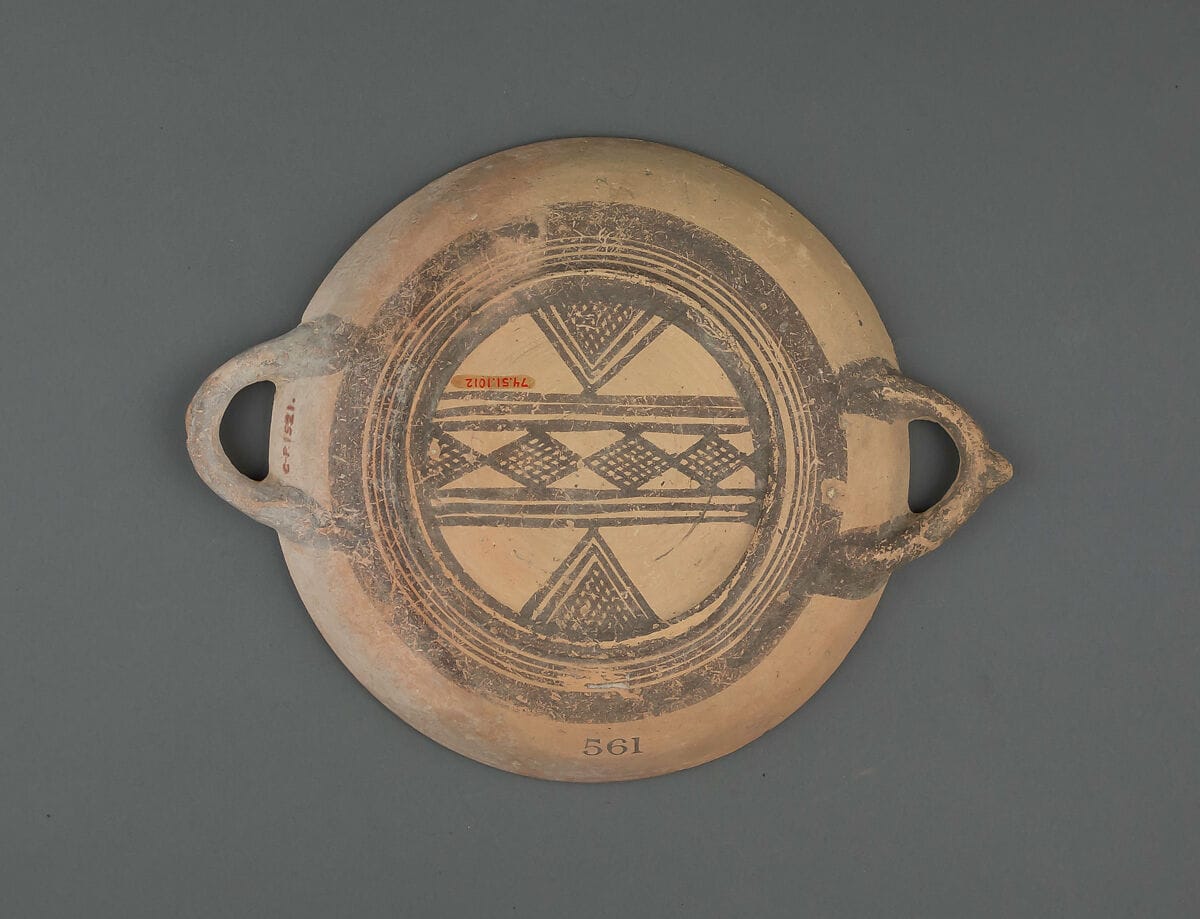
Plate
Geometric I
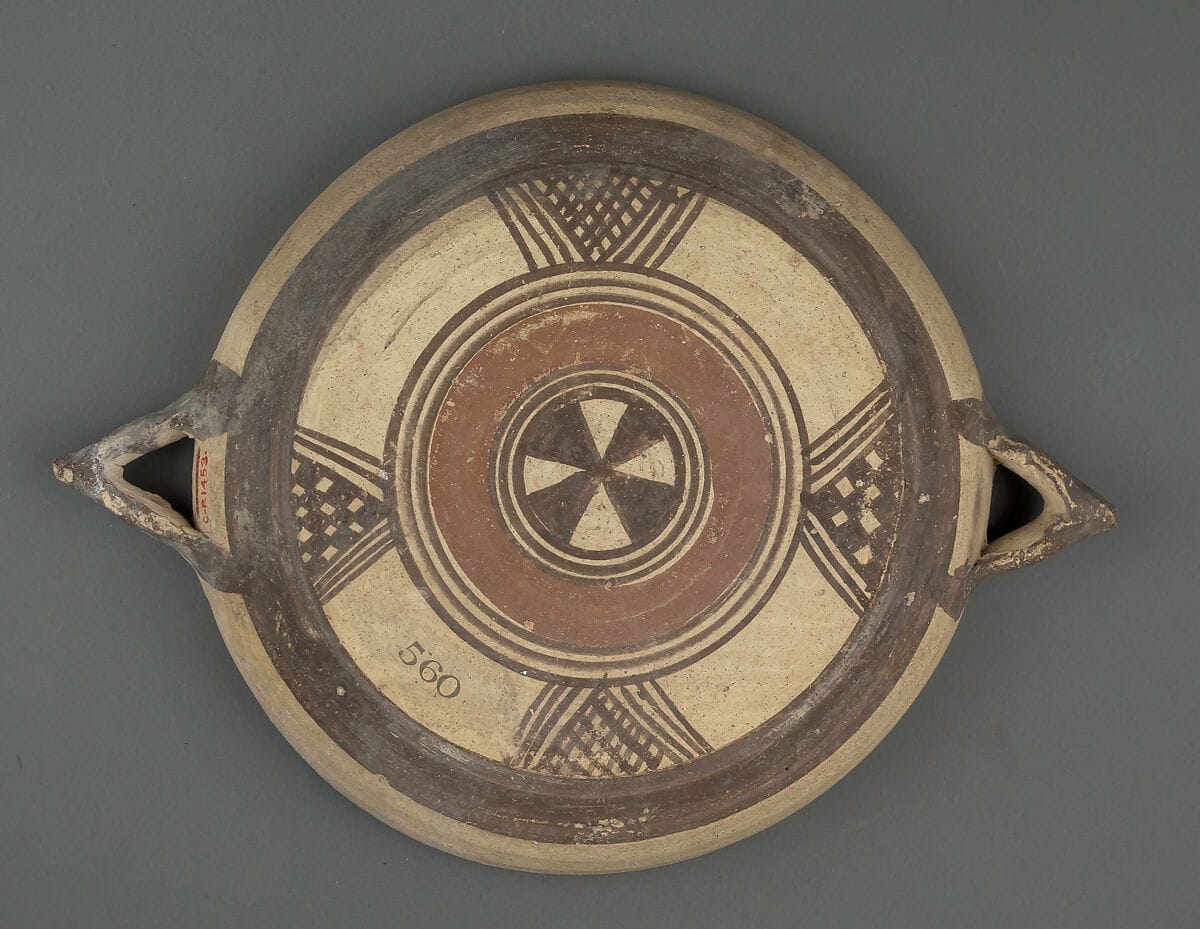
Terracotta plate with horned handles
Geometric II
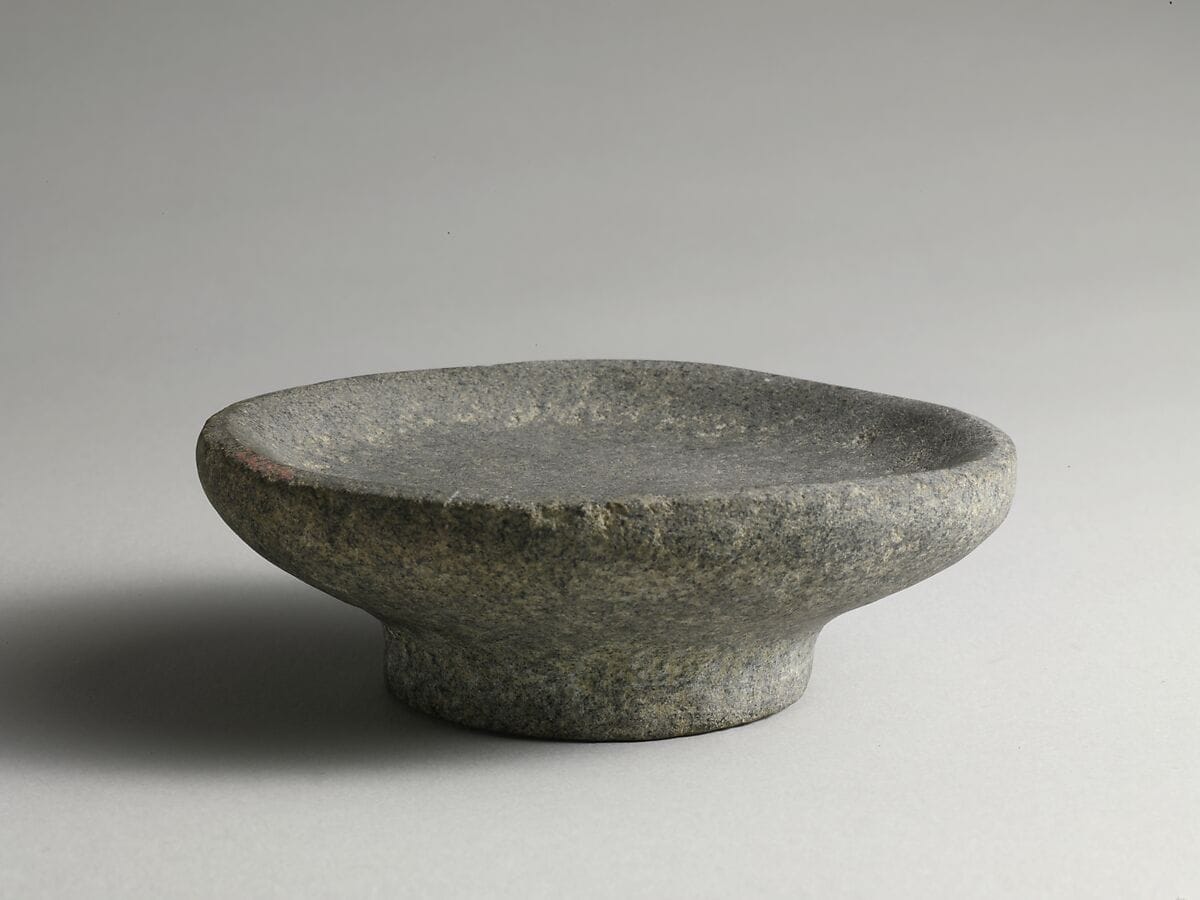
Gabbro mortar or plate
Late Bronze Age II
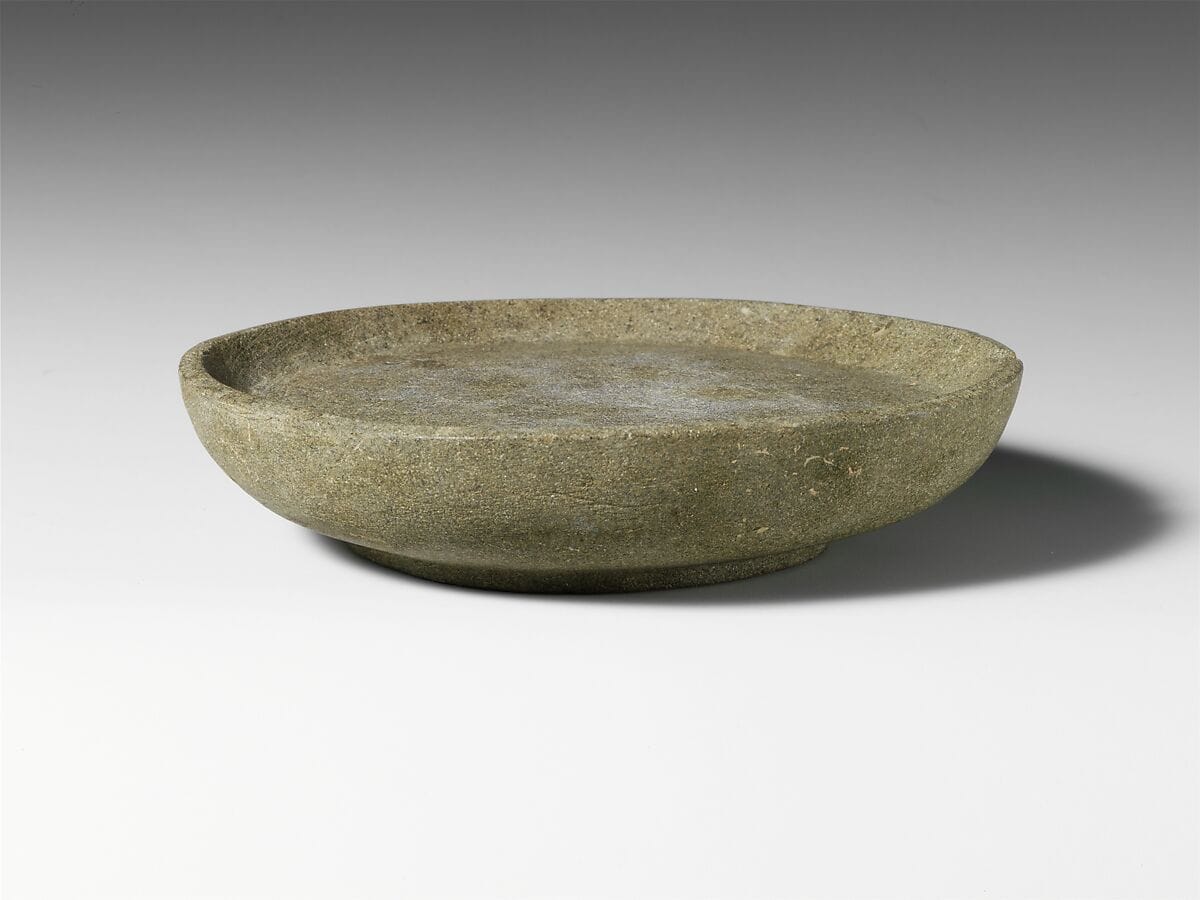
Andesite mortar or plate
Late Bronze Age II
Plate
Geometric I
Plate
Archaic I
Lid of a bowl with knob
Archaic