
Lecture·CAARI Cyprus·2023
Cretan and Cypriot Writing in the 2nd and 1st Millennia BC: On Seeing and Believing
Cretan and Cypriot writing in the 2nd & 1st millennia BC: on seeing and believing
Chapters
About the lecture
Artemis Karnava of the University of Crete examines the five related writing systems of the Cypro-Aegean script family across the second and first millennia BC: Cretan Hieroglyphic, Linear A, Linear B, Cypro-Minoan, and the first-millennium Cypriot syllabary. After an introduction by CAARI director Lindy Crewe, Karnava traces how 19th-century discoveries in Cyprus led to the 1874 decipherment of the Cypriot syllabary, which recorded both Greek and an unknown language dubbed Eteocypriot. She then reviews Arthur Evans's excavations at Knossos after 1900. While Evans's broad family grouping holds, Karnava rejects his linear evolutionary model in which pictographic writing necessarily preceded abstract linear scripts, as well as his theory of a Minoan colonization of Cyprus, noting Susan Sherratt's refutation.
In the Aegean, Cretan Hieroglyphic and Linear A coexisted during the first palatial period (c. 1900 to 1700 BC), preceded by the Archanes inscription on pre-palatial seals. Drawing on the statistics of Jean-Pierre Olivier and the seal studies of Maria Anastasiadou, Karnava considers how script signs interacted with decorative motifs on Minoan seal faces. She distinguishes between visual logograms, which depict an object, and syllabic logograms, where a phonetic sign acts as an abbreviation. Counting logograms across the three Aegean scripts, she shows that the latest script, Linear B, uses the highest number of pictorial logograms, demonstrating that Aegean scribes continued to copy tangible objects down to the 13th century BC rather than evolving steadily away from images.
Turning to Cyprus in the Late Bronze Age, Karnava notes the consensus that Cypro-Minoan derived from Linear A around the mid-second millennium BC, illustrated by the early clay tablet from Enkomi and a recently excavated Cretan loom weight from Kalochorafitis bearing a Cypro-Minoan sign. Unlike the Aegean scripts, the circa 215 known Cypro-Minoan documents almost entirely lack logograms and numerals, with the possible exception of isolated signs on clay balls and pottery marks discussed by Silvia Ferrara.
The first-millennium Cypriot syllabary, surviving into the Hellenistic period until the 3rd century BC and known from some 1,300 texts studied by Olivier Masson, confirms this Cypriot pattern. Examining the Idalion bronze tablet, an administrative ostracon from Palaepaphos published with Maria Iacovou, dedicatory inscriptions to Apollo from Rantidi, and 5th to 4th century BC pottery monograms from graves, Karnava shows that Cypriot scribes avoided pictorial logograms altogether. Instead, they used phonetic syllabograms as abbreviated word initials, such as the syllable ta for talanton on the Idalion tablet. Karnava concludes that while image-rich Minoan society retained pictorial aids in its scripts, Cyprus in the second millennium BC lacked this attraction to representational imagery and moved directly to a purely phonetic concept of writing.
From our collection
Pieces in the Drakopoulos collection of the kinds and periods this talk covers: Cypro-Geometric, Cypro-Archaic, Hellenistic.
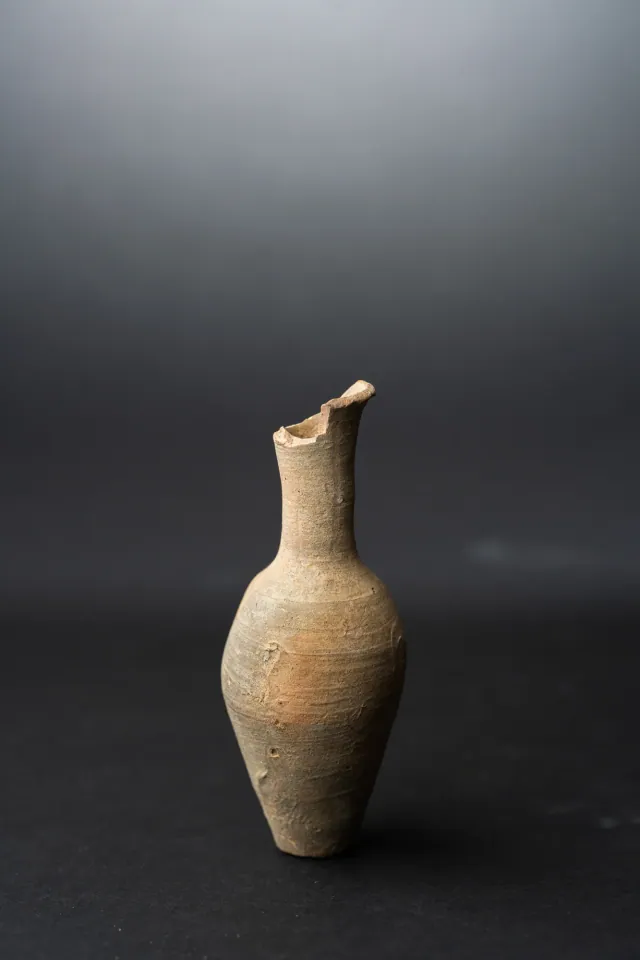
Fusiform Unguentarium
Hellenistic
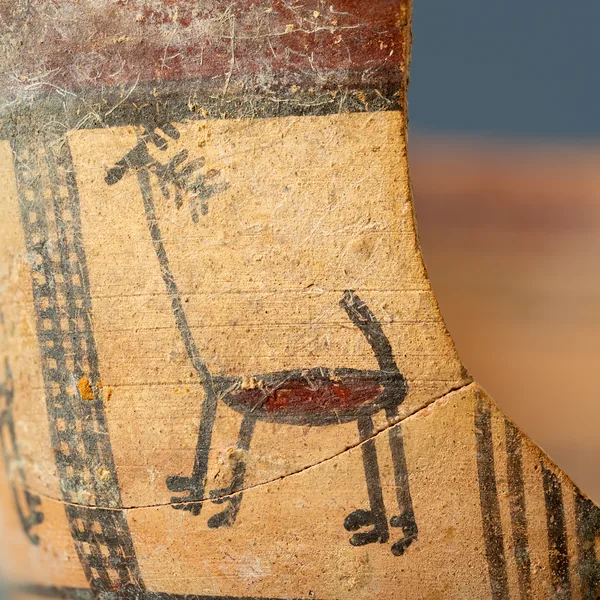
Bichrome Skyphos with Stags in Metopes
Cypro-Archaic
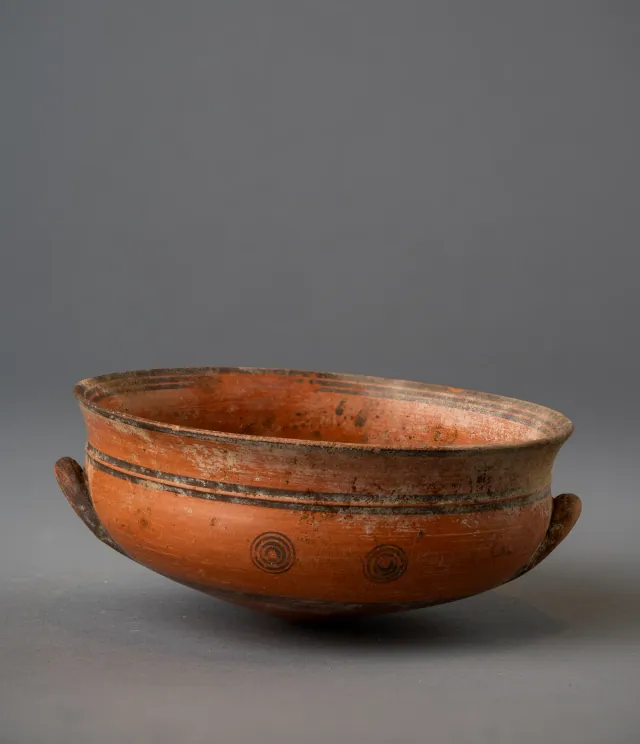
Black-on-Red Two-Handled Bowl with Raised Flaring Rim
Cypro-Archaic
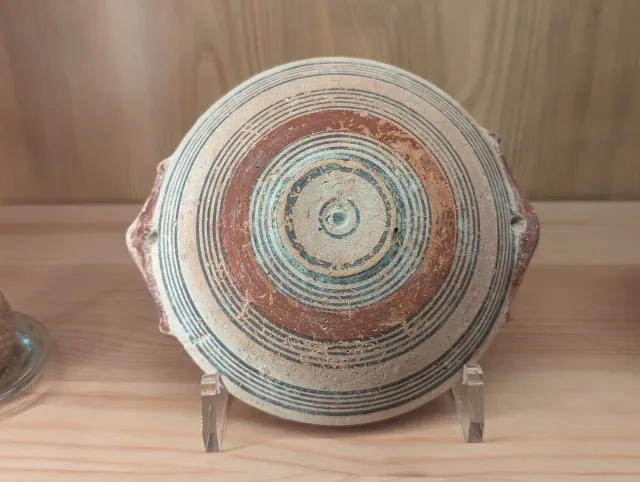
Bichrome IV Bowl with Red-Painted Pierced Lug Handles
Cypro-Archaic
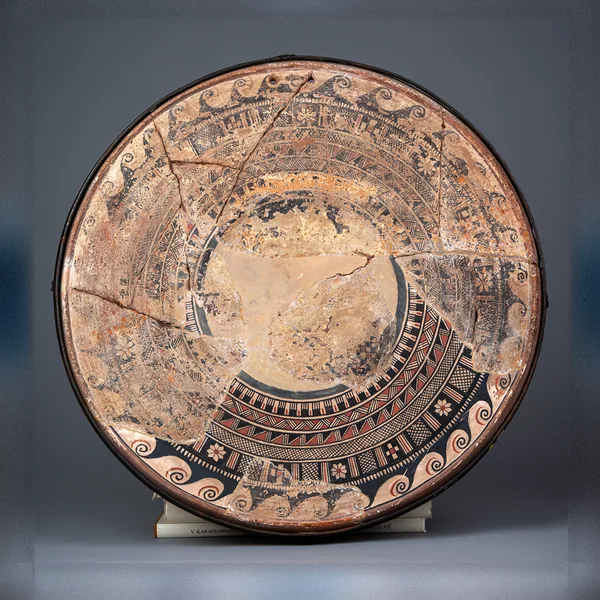
Large Bichrome Plate from Salamis with a Wave Band and Rosette Metopes
Cypro-Archaic
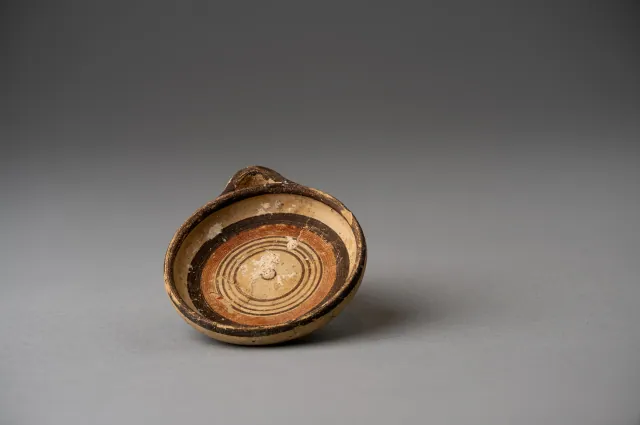
Miniature Bichrome Plate with Concentric Circles
Cypro-Archaic
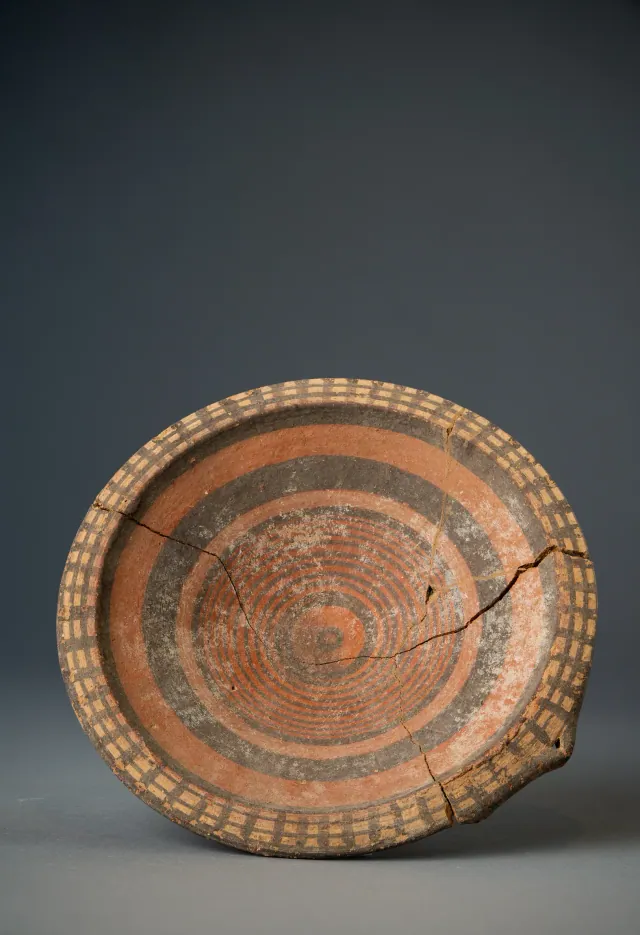
Black-on-Red Plate with Barred Rim and Concentric Circles
Cypro-Archaic
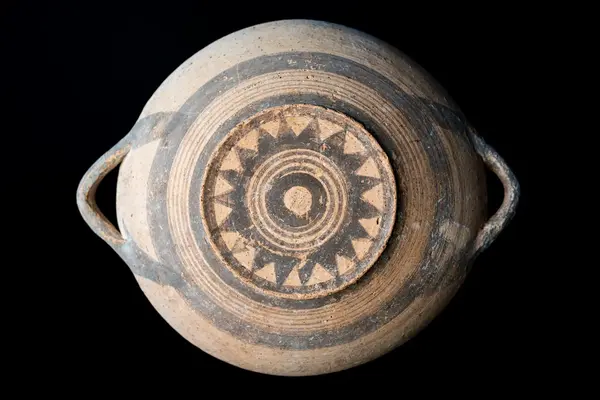
White Painted Plate with a Sawtooth Star on the Underside
Cypro-Geometric
Found at the places discussed
Objects in our catalogue, in museum collections, recorded as found at these sites.
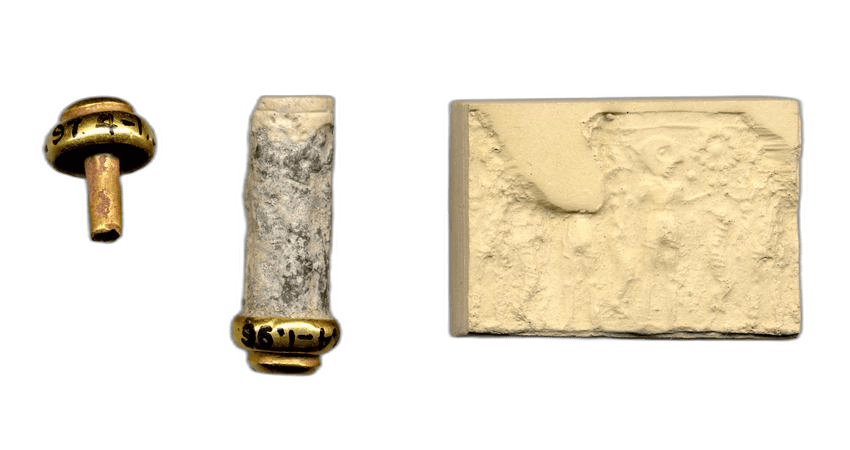


Background
Where to read more on this site before or after watching.
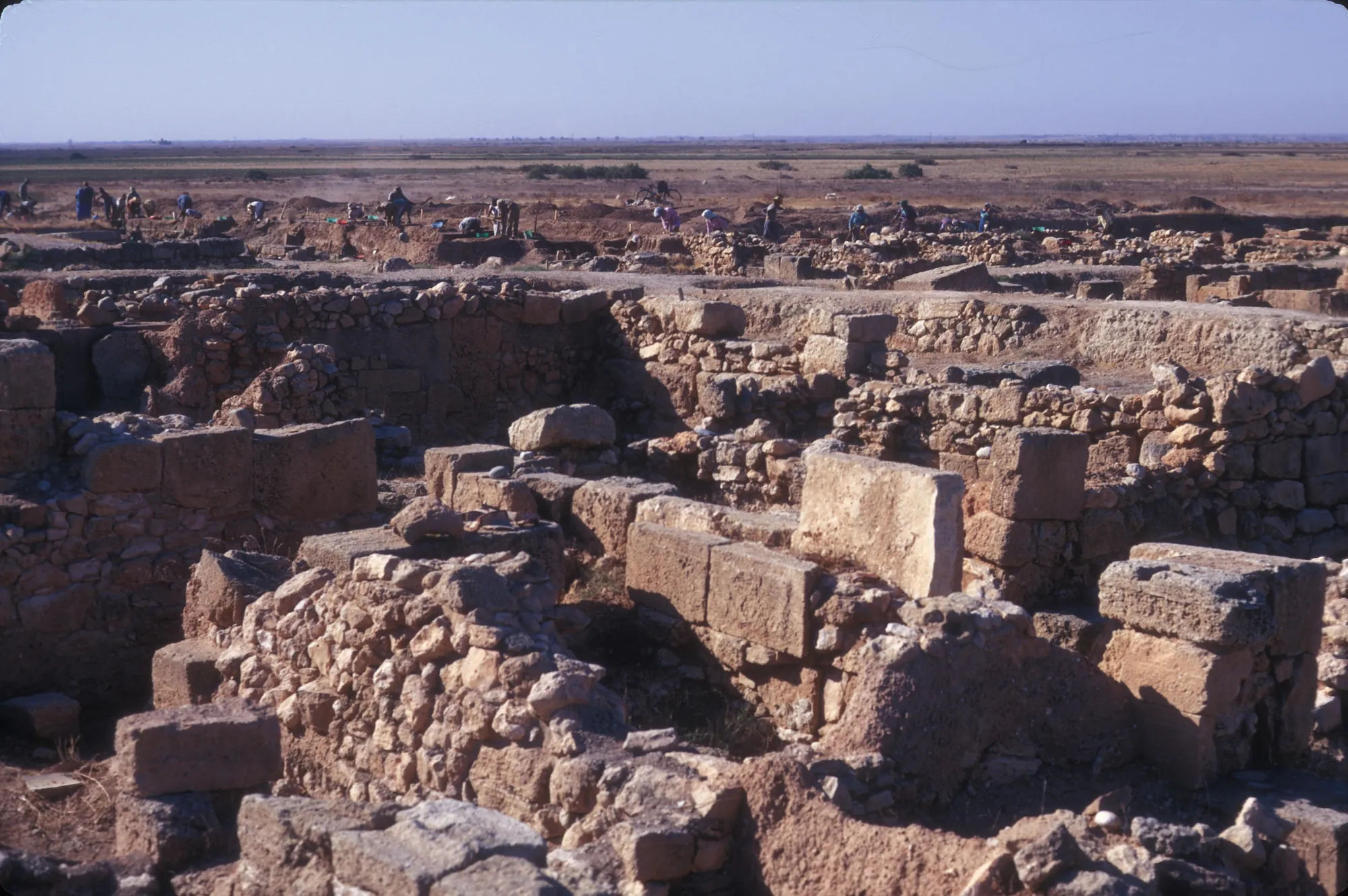
The site
Enkomi
Enkomi is a walled Late Bronze Age town near the mouth of the Pedieos river on the bay of Famagusta, lived in from about 1650 BC until it was gradually abandoned for nearby Salamis. It was a port for Cypriot copper, and its excavations produced metal workshops, sanctuaries with bronze cult statues, rich tombs and the largest group of Cypro-Minoan inscriptions on the island.
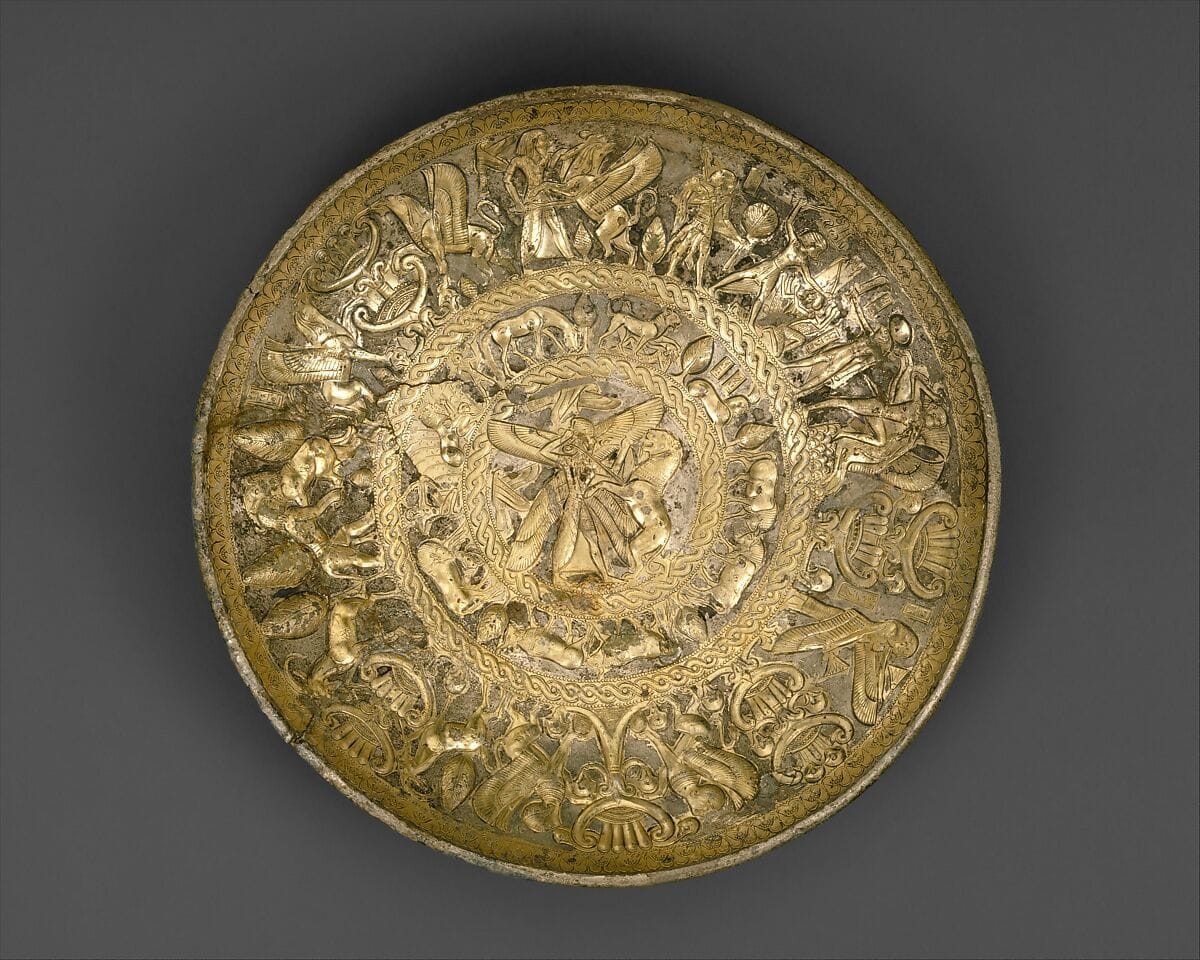
In the compendium
Writing and Literacy in Ancient Cyprus
The scripts of ancient Cyprus, from undeciphered Cypro-Minoan to the Cypriot Syllabary, Eteocypriot, Phoenician and the Greek alphabet, and who used them.
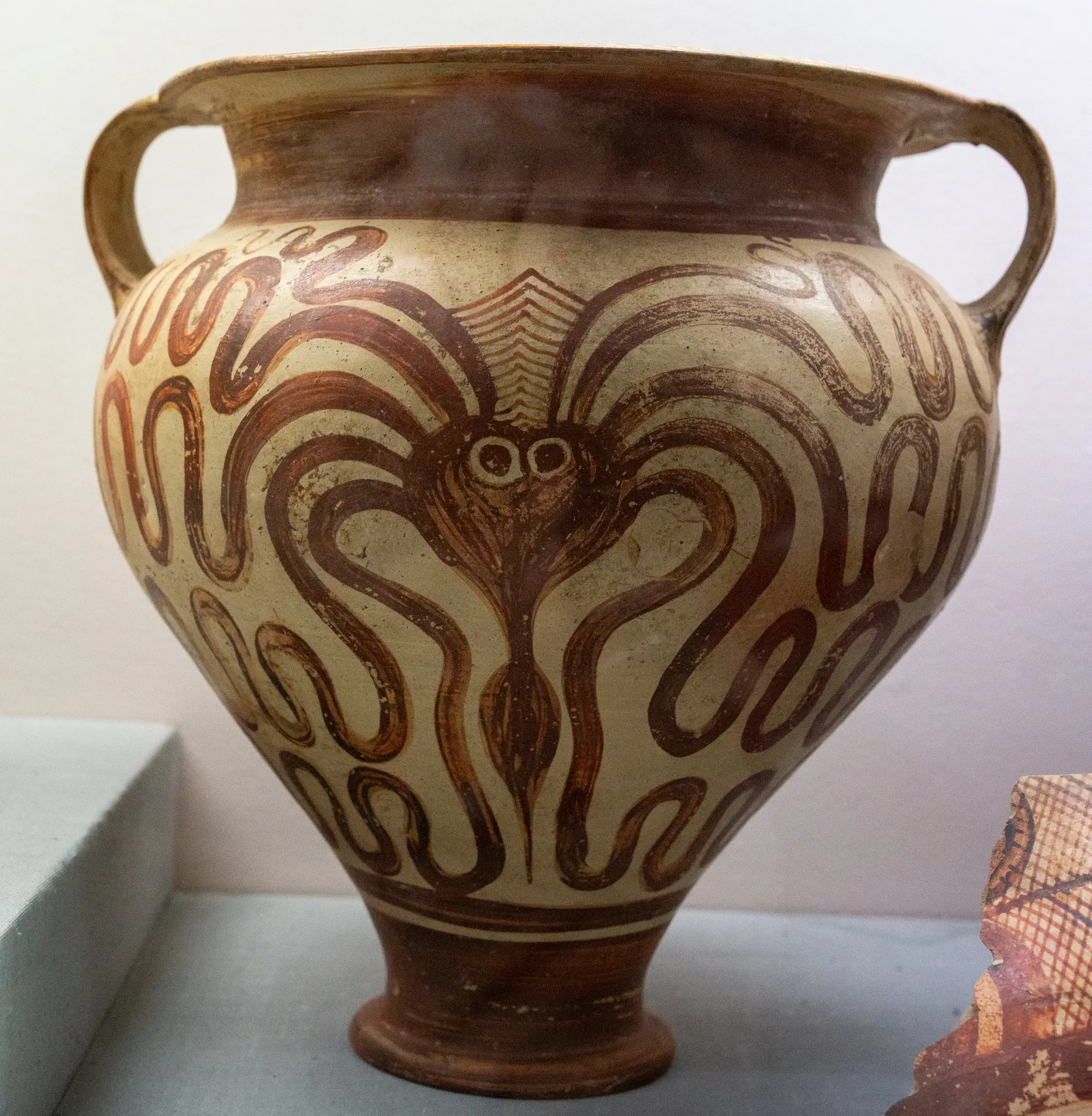
In the compendium
The Minoans
The palatial Bronze Age civilization of Crete, which took Cypriot copper and passed writing to Cyprus in the early Late Bronze Age.
In the compendium
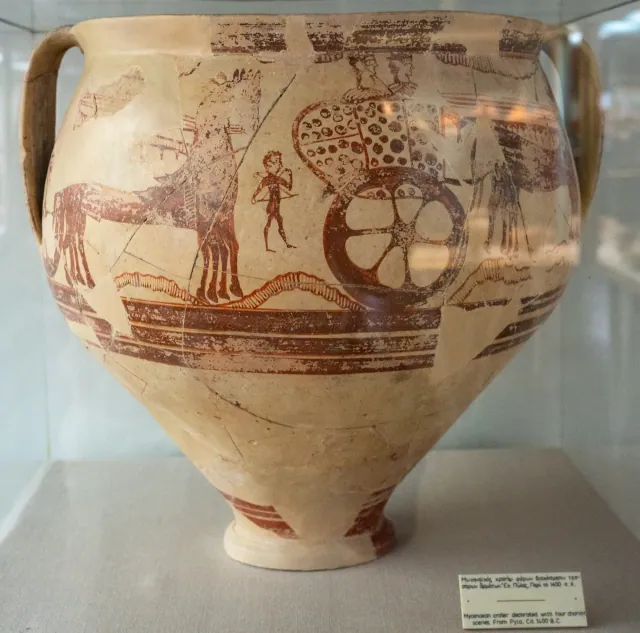
The Mycenaeans and Cyprus
The palatial Late Bronze Age societies of mainland Greece, whose pottery flooded Cypriot coastal towns in the 14th and 13th centuries BCE.
Map of Cyprus
Places discussed in the talk
- Has a page on this site
- Other places
- Ground above 200, 500, 1,000 m
Places
- 1Enkomi
- 2Idalion
- 3Palaepaphos
- 4Rantidi (approx.)