
Lecture·Archaeological Research Unit - University of Cyprus·2021
From Early Bronze to Early Iron Age Cyprus: A Diachronic Analytical Study of Copper-Based Artifacts
Chapters
About the lecture
Andreas Charalambous of the Archaeological Research Unit at the University of Cyprus presents an overview of ten years of chemical analyses conducted on more than a thousand copper-based artefacts from six Cypriot sites spanning the Early Bronze Age to the Cypro-Geometric period. After briefly introducing the Interreg Greece-Cyprus project Metal Places and its work on the mining heritage of Asgata, the lecture sets out the aims of the diachronic study: tracking the shift from arsenical copper to tin bronze, and assessing the use of lead, zinc and silver across the Bronze and Early Iron Ages.
Charalambous first outlines the six assemblages: Bellapais-Vounous for the Early and Middle Bronze Age; Lapithos for the Middle Bronze Age, drawing on 450 objects excavated in 1913 and 1917; Enkomi and Pyla-Kokkinokremos for the Late Bronze Age; and the Early Iron Age cemeteries of Skales and Plakes at Palaepaphos. He then summarizes the geology of the Troodos ophiolite. Because Cypriot copper sulphide ores contain no tin, very little lead, and significant arsenic only in the Limassol Forest, tin and most arsenic had to be imported or obtained through recycling. All analyses were carried out non-invasively using portable X-ray fluorescence (pXRF) on cleaned surfaces at the Cyprus Museum, taking one weight percent as the threshold for arsenic and tin.
At Vounous, arsenical copper predominates and unalloyed copper accounts for nearly a quarter of the objects, whereas tin appears in only ten percent, mostly in toggle pins. Single finds include a copper-arsenic-silver pin, compared with a Philia-phase spiral earring from Deneia, and a leaded copper-tin-zinc dagger. At Lapithos, arsenical copper remains the largest group, but tin exceeds one percent in nearly half the assemblage, doubling between the earlier and later phases. Long plain pins and toggle pins are often made of high-tin bronze, which Charalambous suggests was chosen for its golden colour.
In the Late Bronze Age assemblages from Enkomi and Pyla-Kokkinokremos, copper-tin bronze becomes standard. At Enkomi, three miniature ingots with Cypro-Minoan inscriptions excavated by Porphyrios Dikaios near the Ashlar Building and the Sanctuary of the Horned God show differing tin and sulphur contents, while at Pyla-Kokkinokremos a bronze tool with an anthropomorphic handle was cast from two different alloys. In the Early Iron Age tombs at Palaepaphos, hemispherical bowls are consistently made of high-tin bronze averaging around 19 percent tin, and complex castings such as rod tripod stands contain up to 12 percent lead to improve fluidity in lost-wax casting. The talk concludes with early copper-zinc alloys from Vounous, Lapithos and Enkomi, and a summary showing unalloyed copper falling from 23 percent in the Early Bronze Age to 4 percent in the Early Iron Age.
From our collection
Pieces in the Drakopoulos collection of the kinds and periods this talk covers: Early Cypriot (Early Bronze Age), Cypro-Geometric.
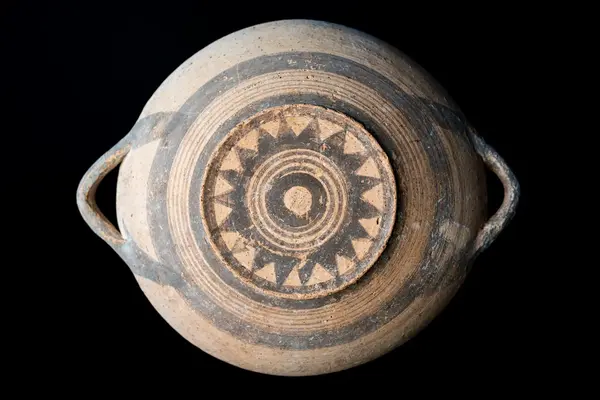
White Painted Plate with a Sawtooth Star on the Underside
Cypro-Geometric
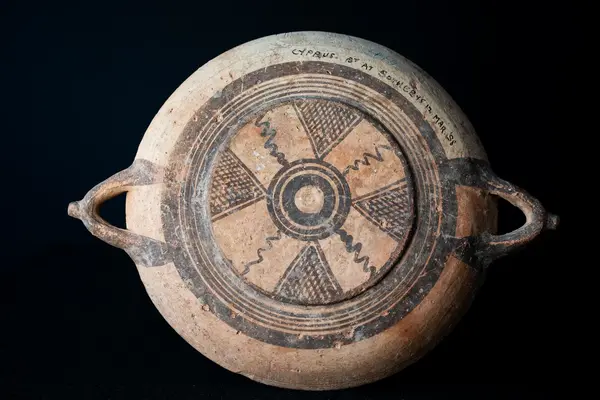
White Painted Plate with Latticed Triangles and Wavy Lines on the Underside
Cypro-Geometric
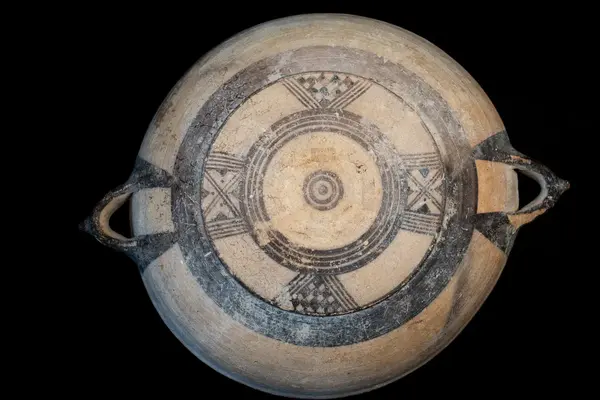
Large White Painted Plate with Knobbed Handles and a Four-Armed Cross on the Underside
Cypro-Geometric
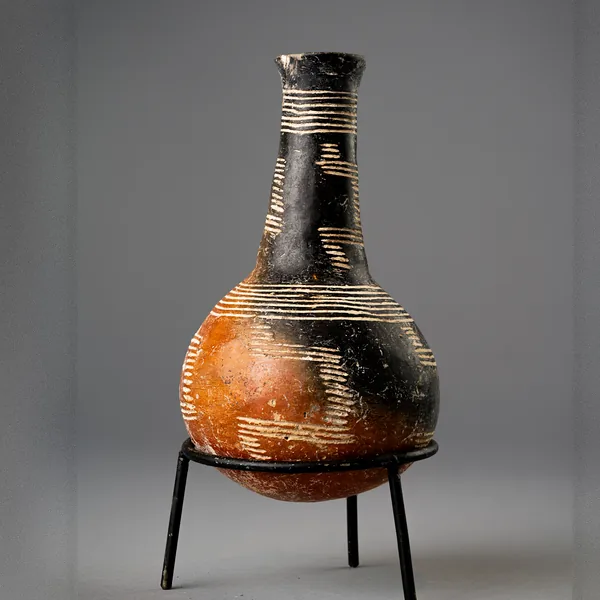
Red Polished Black-Topped Bottle with Stepped Incised Bands
Early Cypriot (Early Bronze Age)
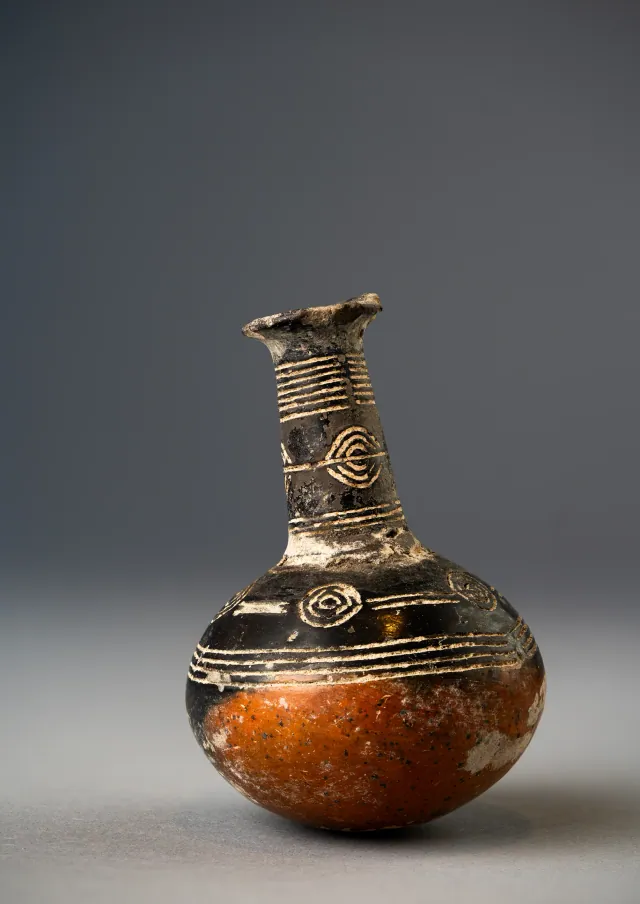
Red Polished Black-Topped Bottle with Incised Concentric Circles
Early Cypriot (Early Bronze Age)
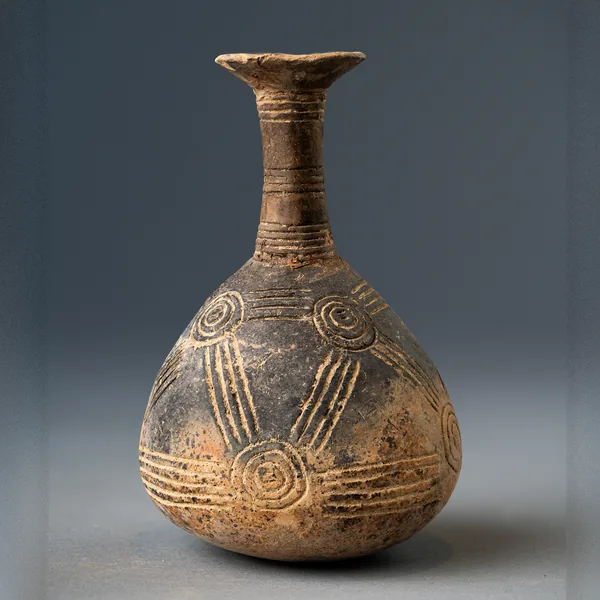
Red Polished Bottle with Linked Concentric Circles
Early Cypriot (Early Bronze Age)
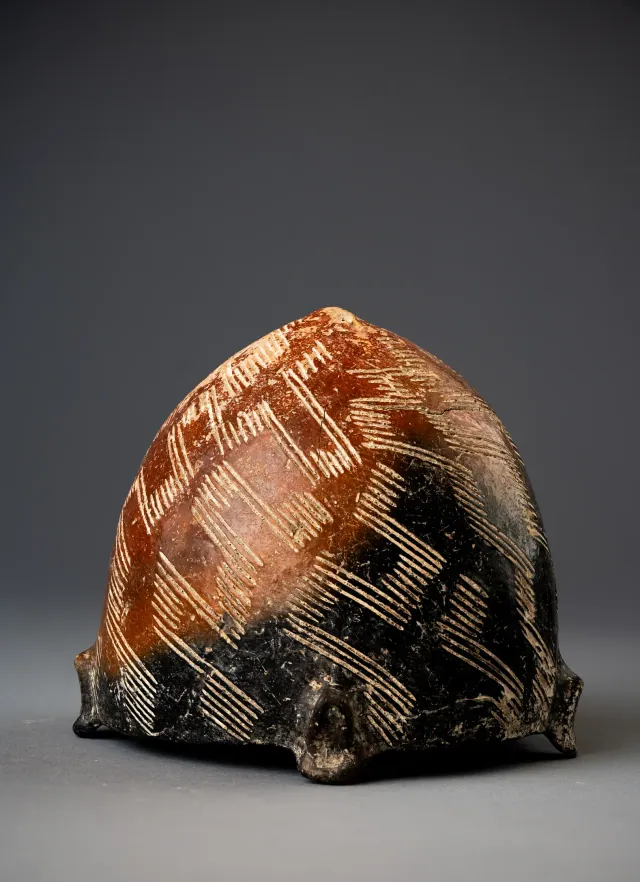
Black-topped Red Polished Tulip Bowl with Incised Hatched Lattice
Early Cypriot (Early Bronze Age)
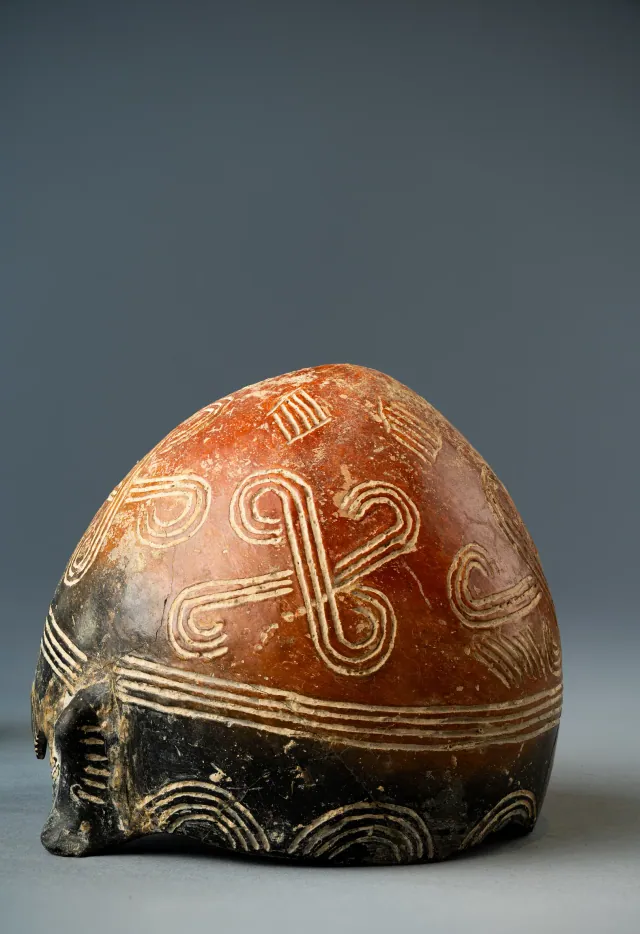
Black-topped Red Polished Tulip Bowl with Incised Spiral-armed Cross, Circles and Arcades
Early Cypriot (Early Bronze Age)
Found at the places discussed
Objects in our catalogue, in museum collections, recorded as found at these sites.


Background
Where to read more on this site before or after watching.
The site
Bellapais Vounous
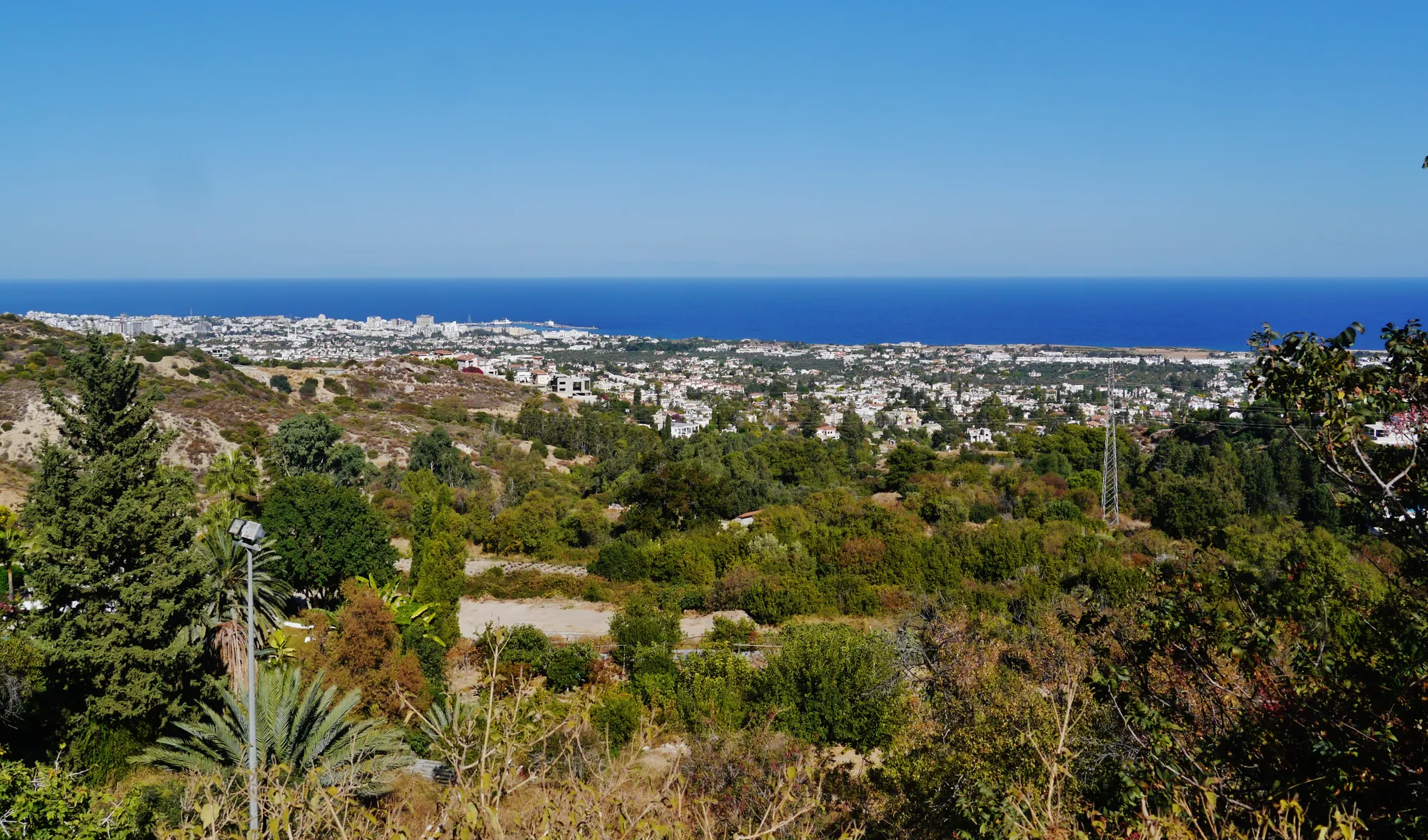
Vounous is a cemetery of rock-cut chamber tombs on a low hill between Bellapais and the north coast, used from about 2350 to 1700 BC. Its 164 excavated tombs, dug between 1931 and 1938, are the largest group of Early Bronze Age tombs known in Cyprus. The settlement that buried its dead here has never been found, so the community is known almost entirely from its burials, its figured Red Polished pottery and clay models such as the Vounous Bowl.
In the compendium
Copper Metallurgy in Ancient Cyprus
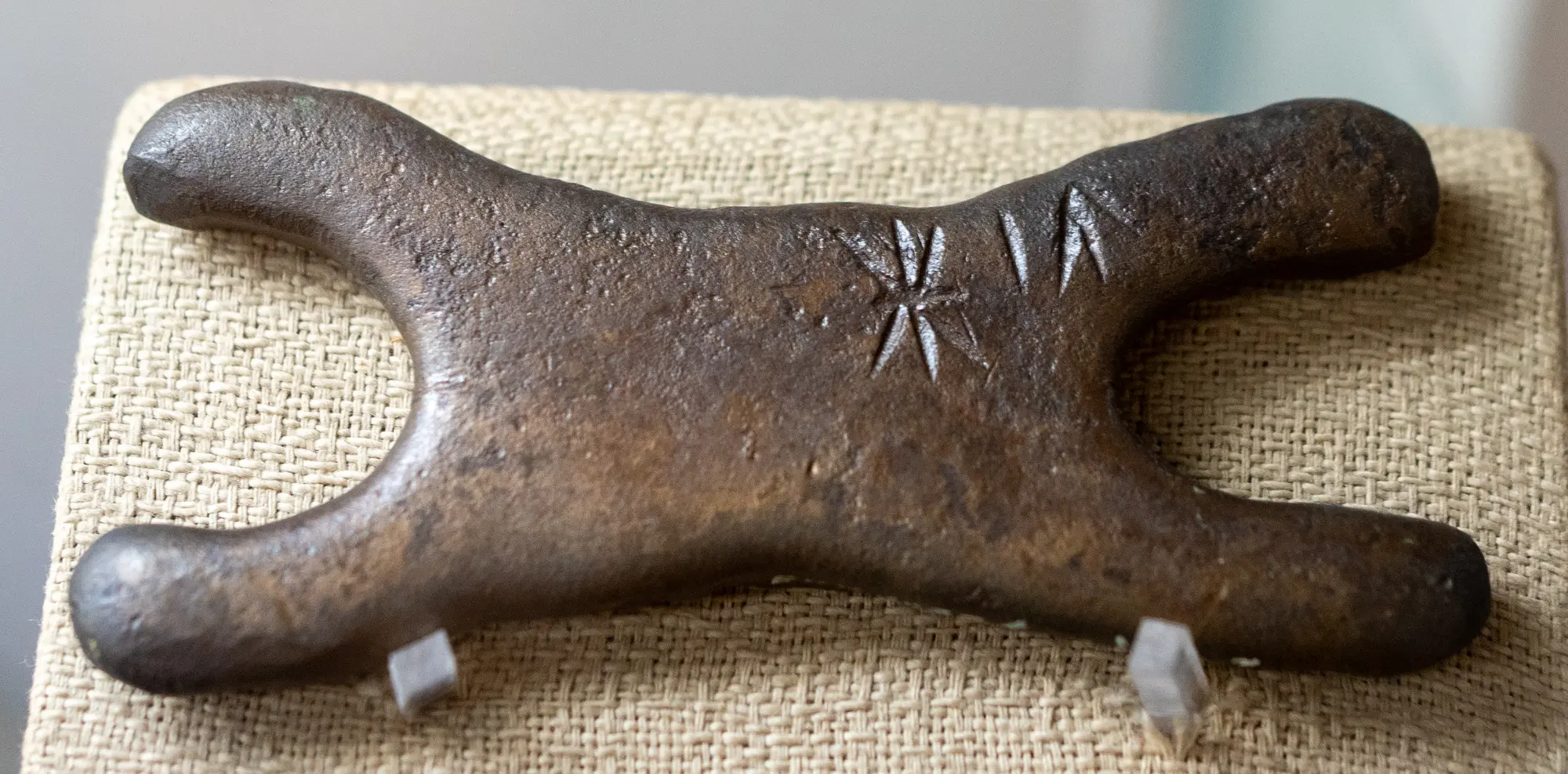
The mining, smelting and casting of the Troodos sulphide ores, from hammered Chalcolithic native copper to Late Bronze Age oxhide ingots and Archaic slag heaps.
In the compendium
Gold, Silver, Tin, Arsenic and Iron in Ancient Cyprus
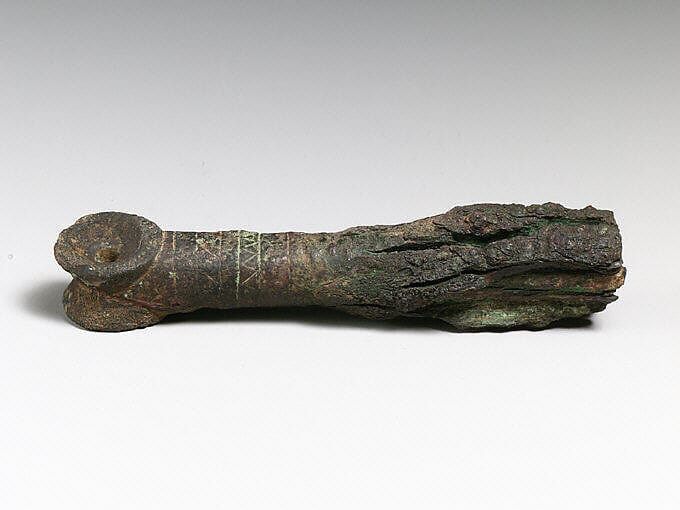
The metals other than copper used by Cypriot smiths from the Philia facies to the Hellenistic period, including arsenic, tin, gold, electrum, silver, lead and iron.
In the compendium
Metal Vessels
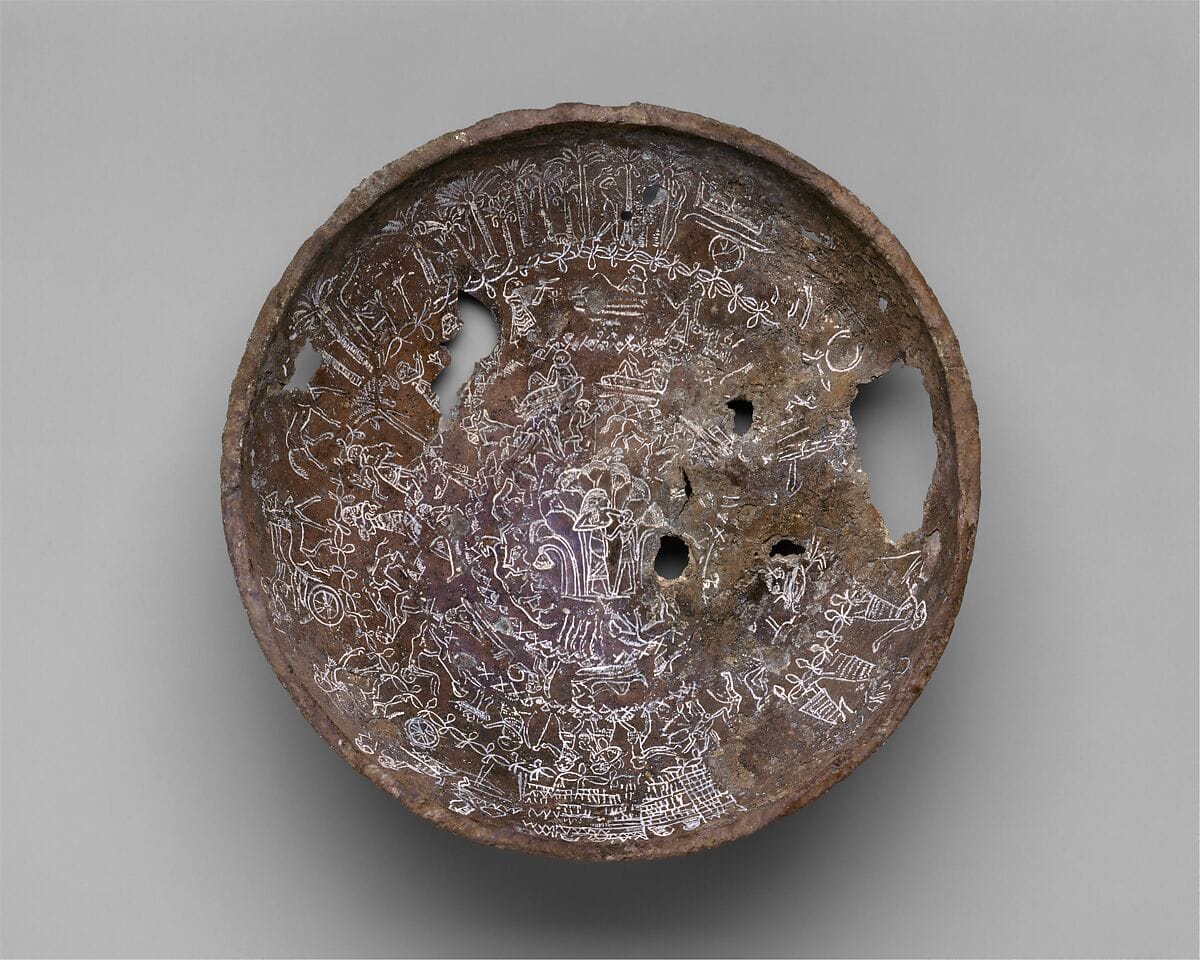
Bowls, cauldrons, jugs, cups, strainers and the bronze stands that carried them, made in Cyprus from the Late Bronze Age to the Cypro-Archaic period.
Map of Cyprus
Places discussed in the talk
- Has a page on this site
- Other places
- Ground above 200, 500, 1,000 m
Places
- 1Bellapais-Vounous (approx.)
- 2Lapithos
- 3Enkomi
- 4Pyla-Kokkinokremos
- 5Palaepaphos