
Lecture·Archaeological Research Unit - University of Cyprus·2022
Miniature oxhide ingots from Late Bronze Age Cyprus
Chapters
About the lecture
Francesca Meneghetti presents her doctoral research on miniature oxhide ingots from the Late Bronze Age in Cyprus, combining a reassessment of their archaeological contexts with anthropological theories of miniaturisation.
The corpus of miniature ingots known from Cyprus consists of fourteen examples dated between the 13th and 11th centuries BC, ranging from two to eleven centimetres in length and from four to 240 grams in weight. Nine come from documented excavations: six from Enkomi, found by the Swedish, French and Dikaios missions; one from Alassa; and two fragmentary pieces from Pyla-Kokkinokremos. The remaining five lack secure contexts, coming from the Mathiatis hoard, the antiquities market (including an example acquired by the Cyprus Museum in 1936), and the collection of Petros Kolokasides. Six are made of pure copper and five of bronze, while four bear Cypro-Minoan signs.
Meneghetti reviews and challenges the three main interpretations proposed in earlier scholarship. Against Buchholz's view that the miniatures were votives, she follows Webb in noting that only two examples, from Room P at Alassa and from Room 44 of the Ashlar Building at Enkomi, were associated with possible cultic spaces. By examining the pottery, domestic tools, architecture and stratigraphy of both rooms, she argues that neither findspot satisfies the criteria for a shrine, and that the Enkomi piece predates the installation of the Sanctuary of the Horned God on Floor III. She next addresses the hypothesis that the ingots served as weights, pointing out that the wide variation in mass and the small sample size prevent any metrological demonstration. Turning to Ferrara and Bell's proposal that the inscribed ingots were commercial copper samples bearing a trademark, Meneghetti notes that Cypro-Minoan remains undeciphered, that several miniatures are uninscribed or cast in bronze, and that ancient traders could assess copper quality visually or from broken full-size slabs.
Because the corpus is not uniform, Meneghetti interprets the pieces site by site. At Enkomi, where oxhide ingot iconography also appears on four-sided stands, cylinder seals and the Ingot God, she situates the miniatures in the 12th-century BC revaluation of copper and bronze as elite status symbols. Drawing on miniaturisation theories by Jack Davy, Sheila Kohring, Alfred Gell and Langin-Hooper, she argues that the Enkomi miniatures functioned as tactile prestige items that communicated their owners' control over the copper economy. At Pyla-Kokkinokremos and Mathiatis, by contrast, where ingot iconography is otherwise absent, the fragmentary pieces were deposited in metalworkers' hoards as scrap for recycling, while the Alassa example came from a working and storage complex in an agricultural settlement.
From our collection
Pieces in the Drakopoulos collection of the kinds and periods this talk covers: Late Cypriot (Late Bronze Age).
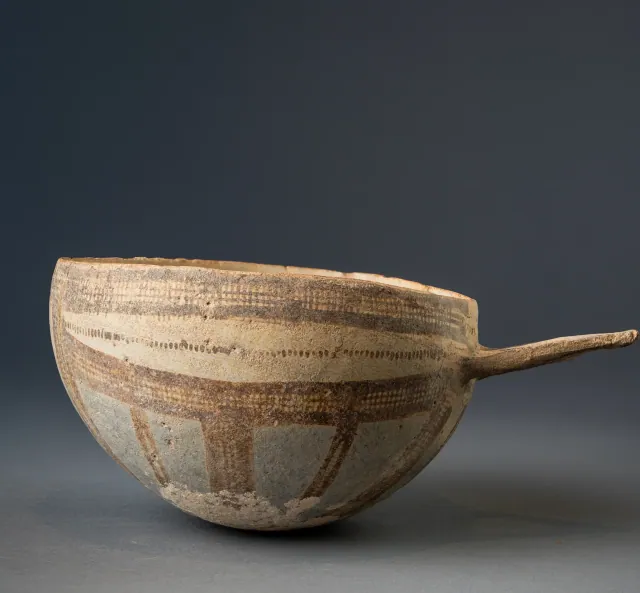
White Slip II Hemispherical Bowl with Wishbone Handle
Late Cypriot (Late Bronze Age)
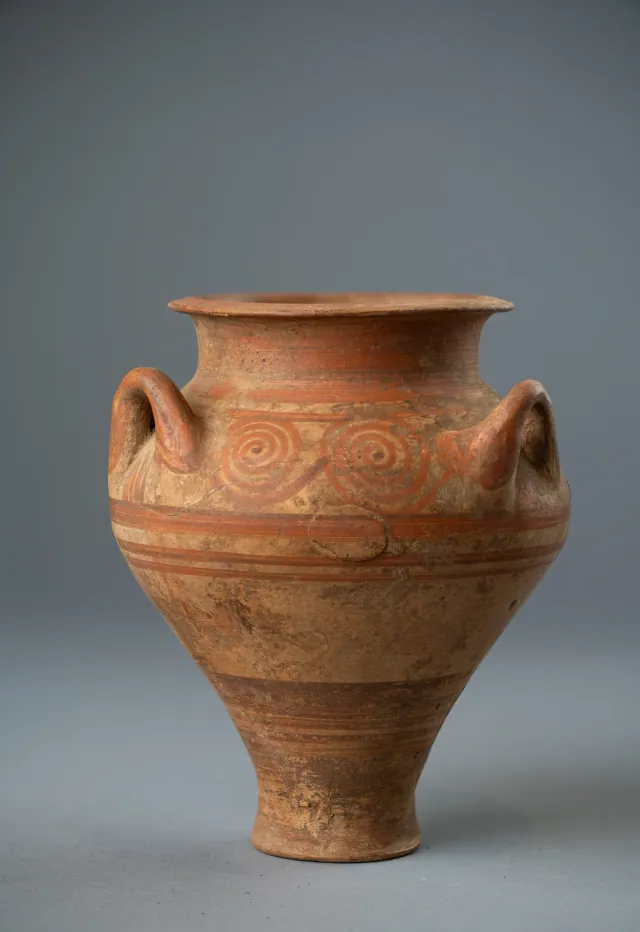
Cypriot Three-Handled Jar in the Mycenaean Style with Running Spirals
Late Cypriot (Late Bronze Age)
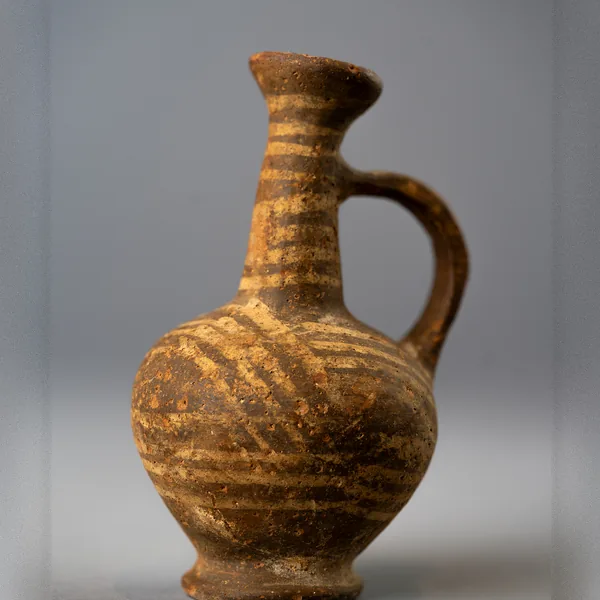
Base Ring II Bilbil Juglet with White-Painted Bands
Late Cypriot (Late Bronze Age)
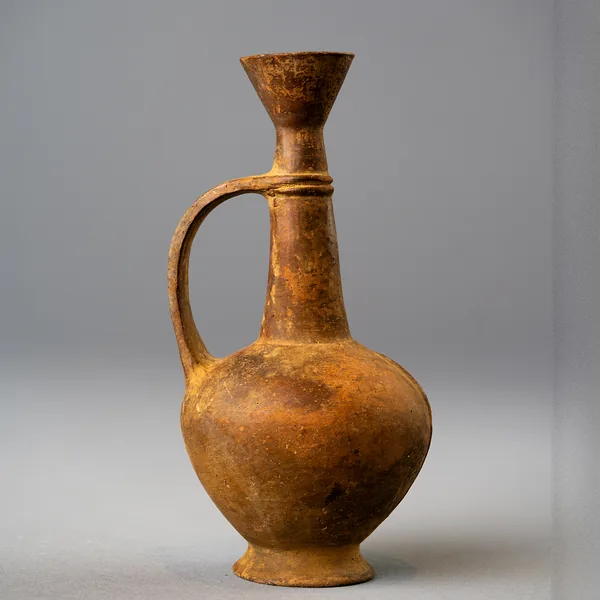
Base Ring Bilbil Juglet with Funnel Mouth and Neck Ridge
Late Cypriot (Late Bronze Age)
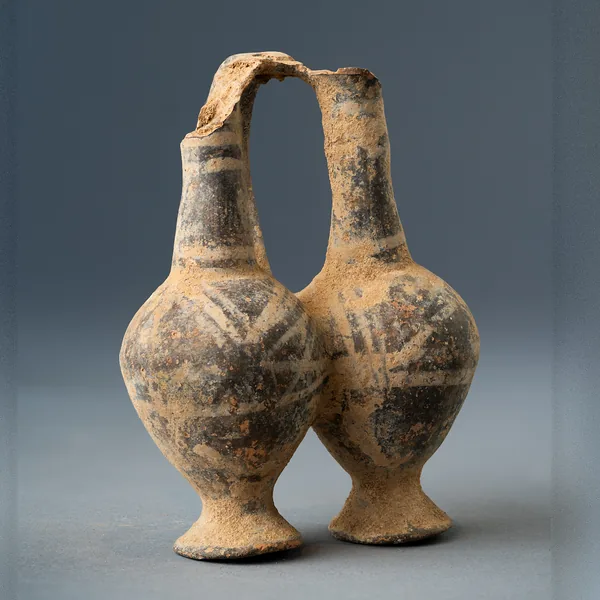
Base Ring II Double Juglet with White-Painted Decoration
Late Cypriot (Late Bronze Age)
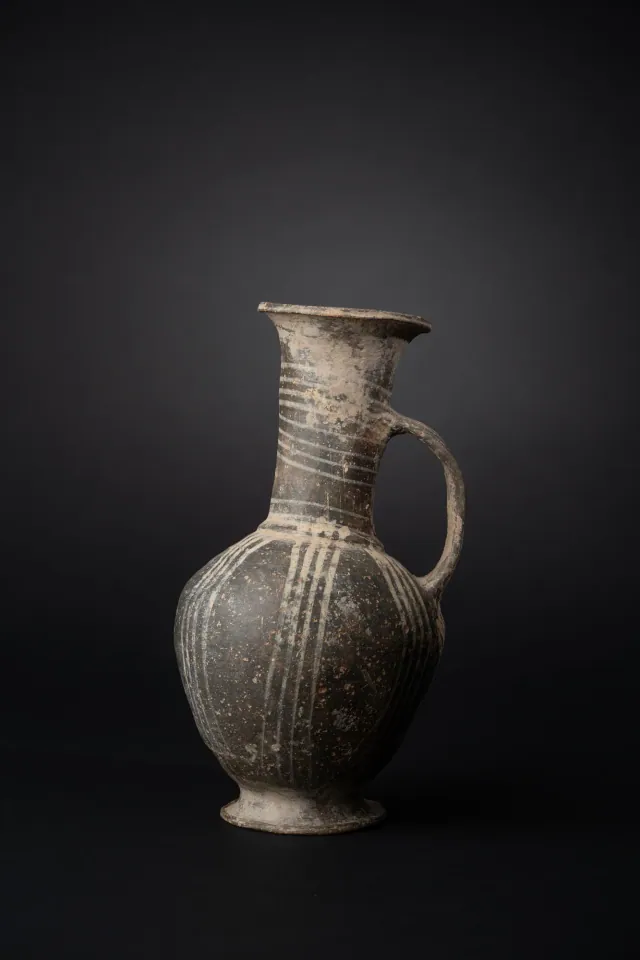
Base Ring II Jug with White-Painted Lattice Bands
Late Cypriot (Late Bronze Age)
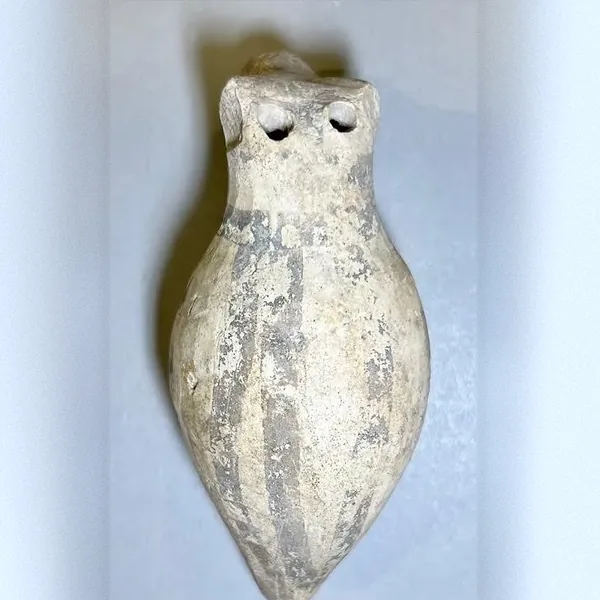
White Painted VI Owl-Headed Rattle
Late Cypriot (Late Bronze Age)
Found at the places discussed
Objects in our catalogue, in museum collections, recorded as found at these sites.


Background
Where to read more on this site before or after watching.
The site
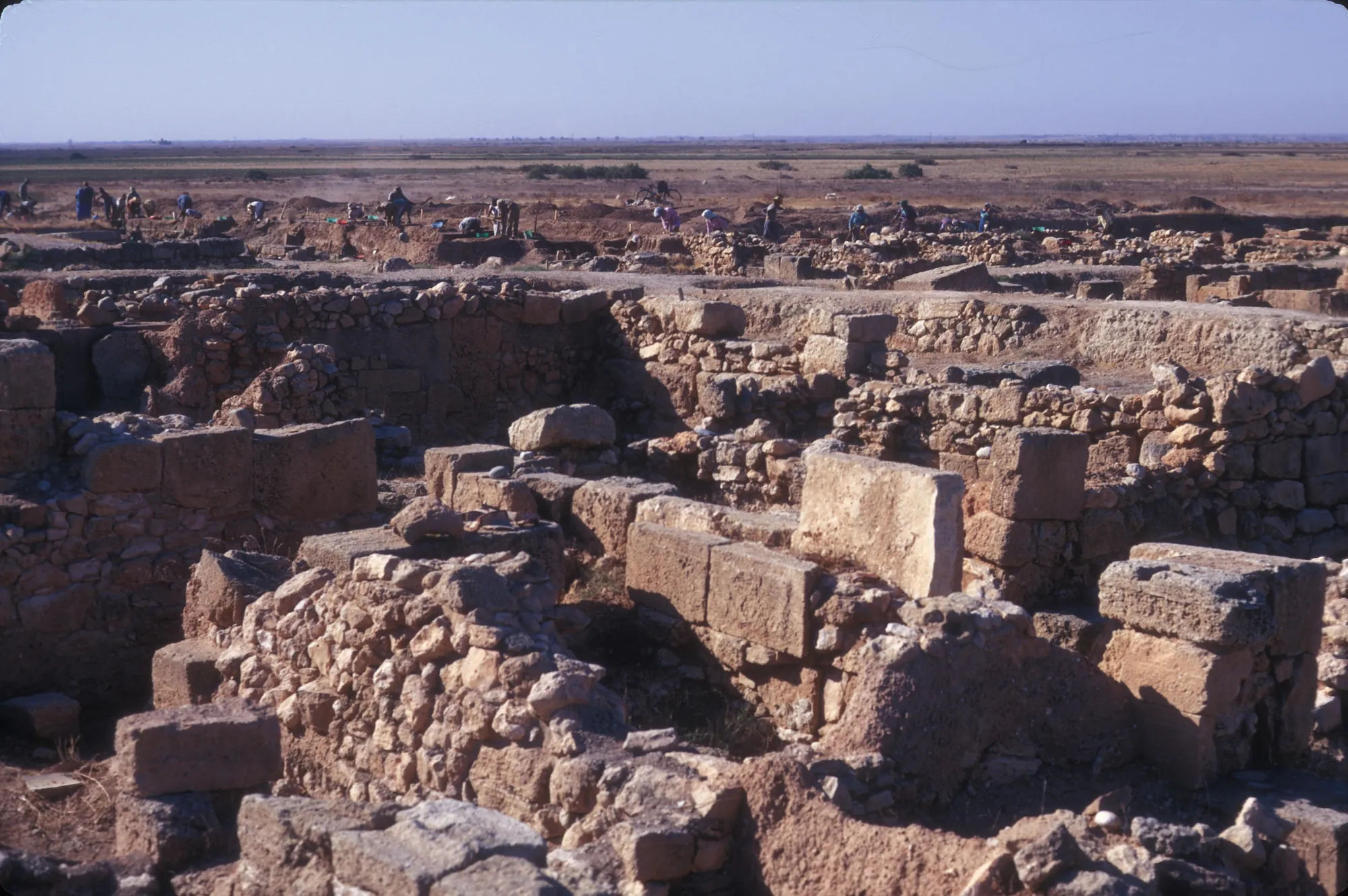
Enkomi
Enkomi is a walled Late Bronze Age town near the mouth of the Pedieos river on the bay of Famagusta, lived in from about 1650 BC until it was gradually abandoned for nearby Salamis. It was a port for Cypriot copper, and its excavations produced metal workshops, sanctuaries with bronze cult statues, rich tombs and the largest group of Cypro-Minoan inscriptions on the island.
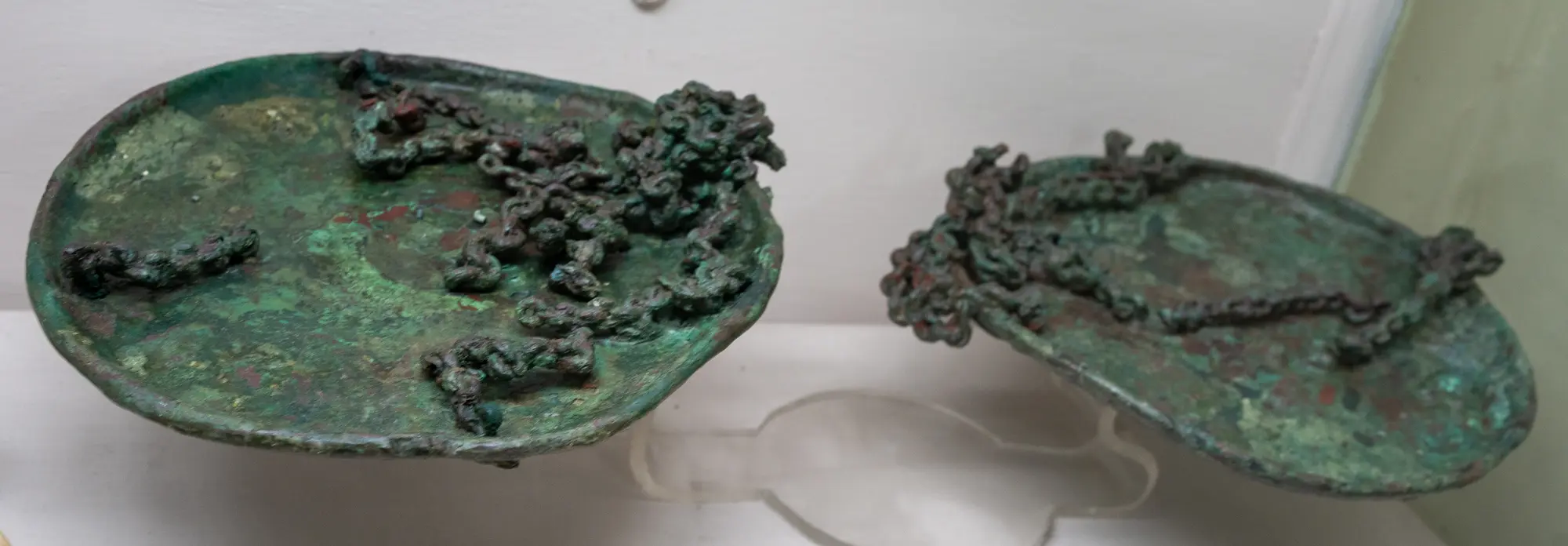
In the compendium
Weights and Ingots
Copper ingots, miniature votive ingots, balance weights and scale pans in Cyprus, from the Late Bronze Age into the Cypro-Geometric and Cypro-Archaic periods.
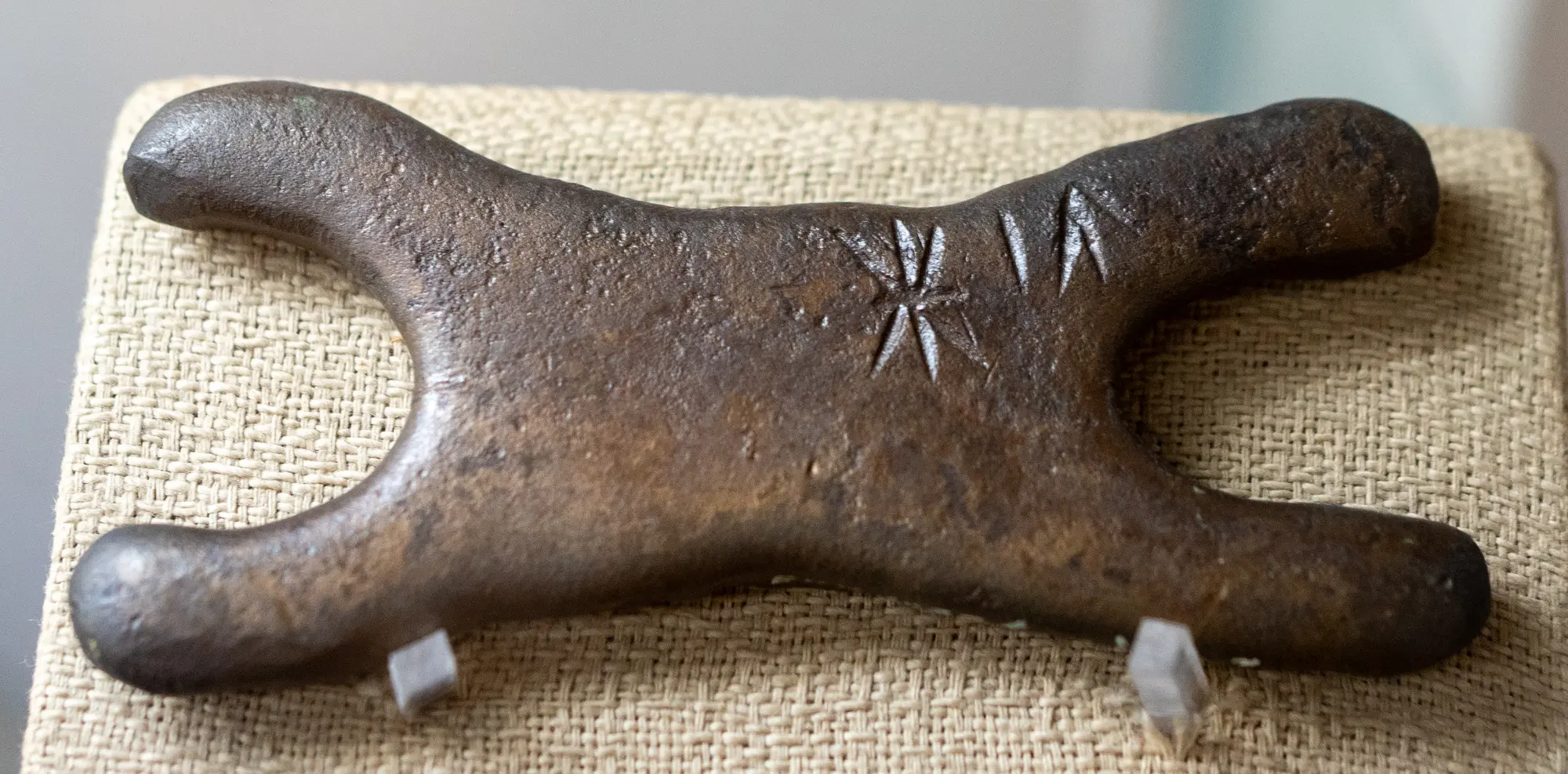
In the compendium
Copper Metallurgy in Ancient Cyprus
The mining, smelting and casting of the Troodos sulphide ores, from hammered Chalcolithic native copper to Late Bronze Age oxhide ingots and Archaic slag heaps.
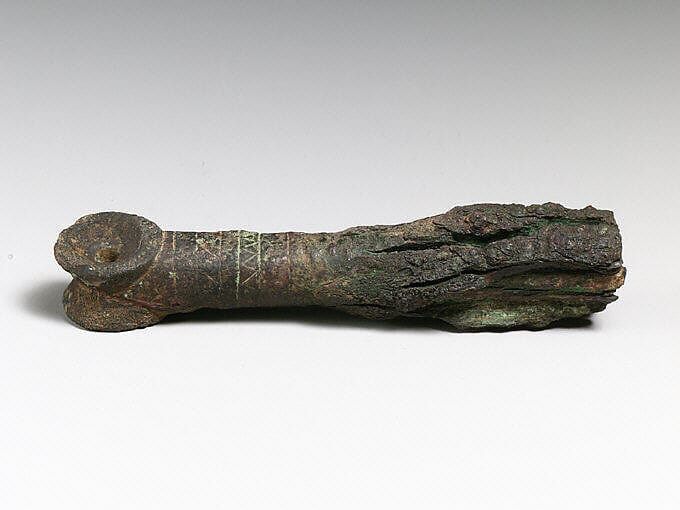
In the compendium
Gold, Silver, Tin, Arsenic and Iron in Ancient Cyprus
The metals other than copper used by Cypriot smiths from the Philia facies to the Hellenistic period, including arsenic, tin, gold, electrum, silver, lead and iron.
Map of Cyprus
Places discussed in the talk
- Has a page on this site
- Other places
- Ground above 200, 500, 1,000 m