
Conference paper·Archaeological Research Unit - University of Cyprus·2019·In Greek
Chemical Analysis of Early and Middle Bronze Age Copper-Alloy Objects from Lapithos Vrysi tou Barba
Χημική ανάλυση χάλκινων αντικειμένων της Πρώιμης και Μέσης Εποχής του Χαλκού από τη θέση Λάπηθος Βρύση του Πάρπα
Chapters
About the video
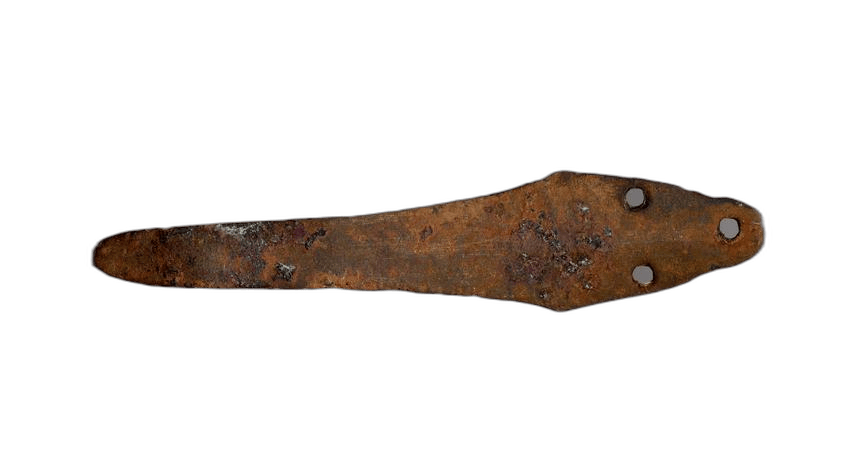
Given in Greek, this paper by Andreas Charalambous of the Archaeological Research Unit presents the chemical analysis of copper-alloy artefacts from the cemetery of Lapithos Vrysi tou Barba, dating to the Early Bronze Age and Middle Bronze Age. Vrysi tou Barba lies near the north coast northwest of modern Lapithos and was excavated in four campaigns: by John Myres and Leonard Buxton in 1913, Menelaos Markides in 1917, the Swedish Cyprus Expedition in 1927, and the University of Pennsylvania Museum in 1931.
The study examines 424 metal objects from fifty tombs excavated in 1913 and 1917, conserved and identified in the storerooms of the Cyprus Museum under a publication project coordinated by Jennifer Webb. After weighing, photography and cleaning of surface corrosion, the objects were analysed non-destructively using X-ray fluorescence (XRF). Charalambous focuses on the four largest typological groups: knives, spearheads, plain pins and eyelet (toggle) pins.
Across the assemblage, arsenical copper is the most common alloy (35 per cent), followed by copper-arsenic-tin (21 per cent), unalloyed copper (13 per cent) and tin bronze (12 per cent). Knives, spearheads and plain pins are made predominantly of arsenical copper, whereas eyelet pins are mostly tin bronze. Lead was kept low in spearheads to avoid structural weakness and cracking, while high-tin and high-arsenic alloys were favoured for long pins, which Charalambous suggests was an aesthetic choice to imitate the colours of gold and silver. Because Cypriot copper ores outside the Limassol Forest are poor in arsenic, he suggests that arsenic minerals may also have been imported from the Aegean or Anatolia.
Lead occurs in 88 per cent of the objects, sometimes above 1 per cent to improve casting, while iron and sulphur derive mainly from incomplete smelting and refining. Fourteen objects contain enough zinc to qualify as early brass, comparable to an Early Bronze Age group from Bellapais-Vounous published by Paul Craddock in 1978; Charalambous explains these as the unintended result of smelting zinc-bearing oxide or carbonate copper ores under strongly reducing conditions.
From our collection
Pieces in the Drakopoulos collection of the kinds and periods this talk covers: Early Cypriot (Early Bronze Age).
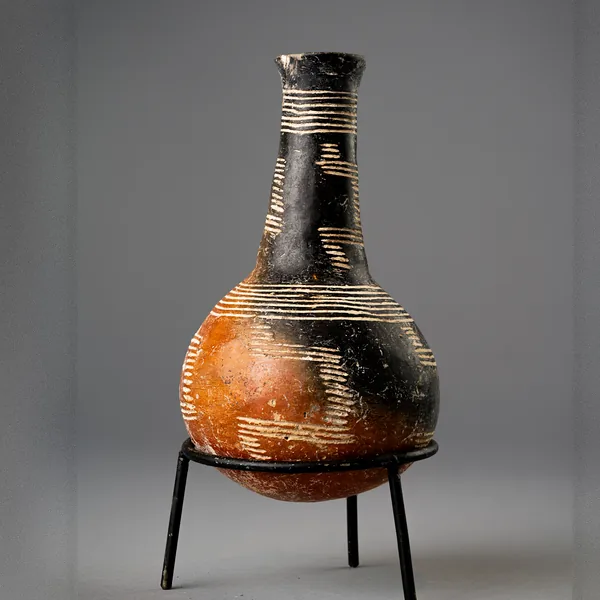
Red Polished Black-Topped Bottle with Stepped Incised Bands
Early Cypriot (Early Bronze Age)
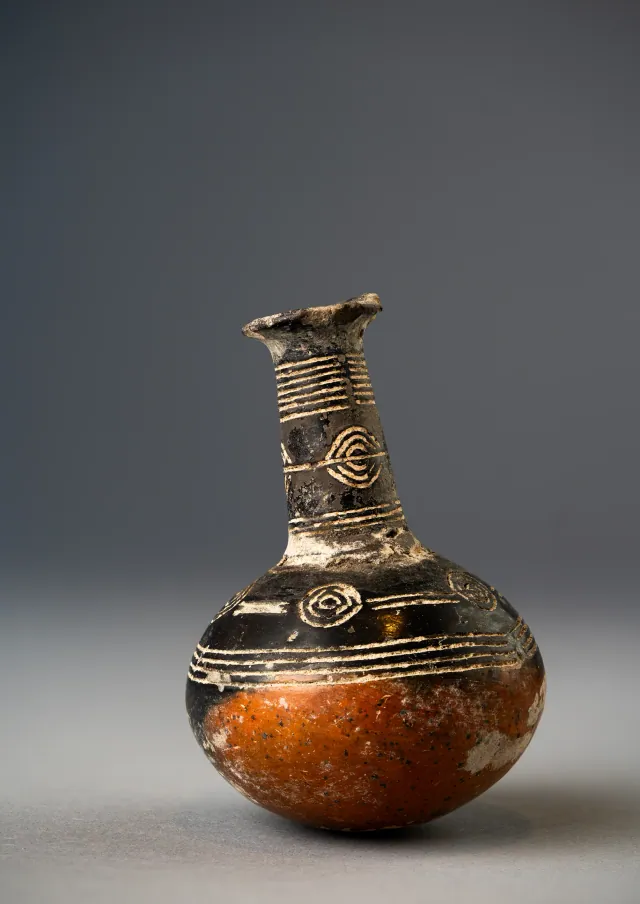
Red Polished Black-Topped Bottle with Incised Concentric Circles
Early Cypriot (Early Bronze Age)
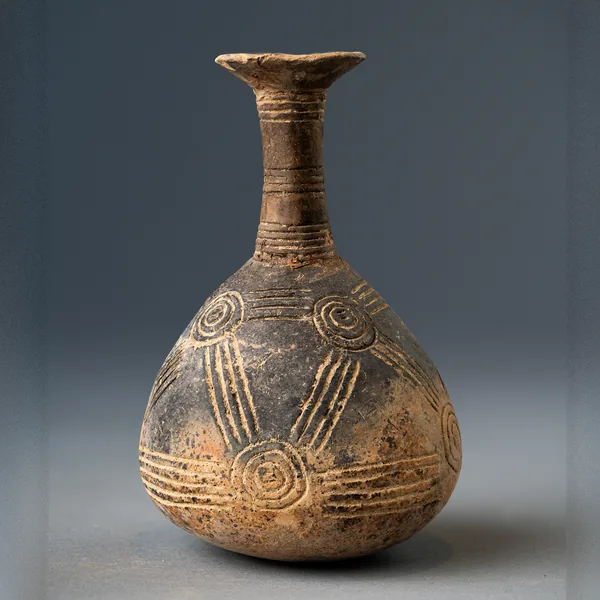
Red Polished Bottle with Linked Concentric Circles
Early Cypriot (Early Bronze Age)
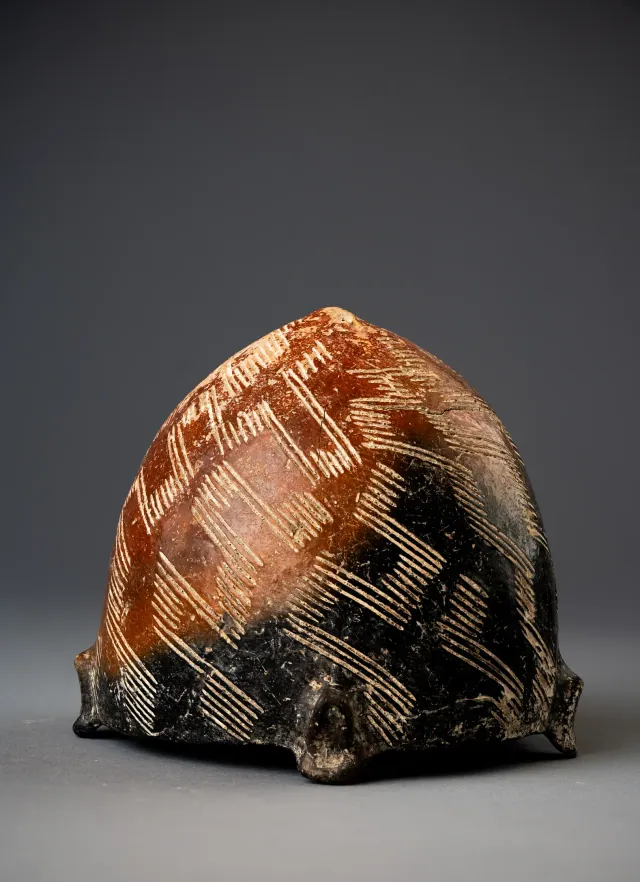
Black-topped Red Polished Tulip Bowl with Incised Hatched Lattice
Early Cypriot (Early Bronze Age)
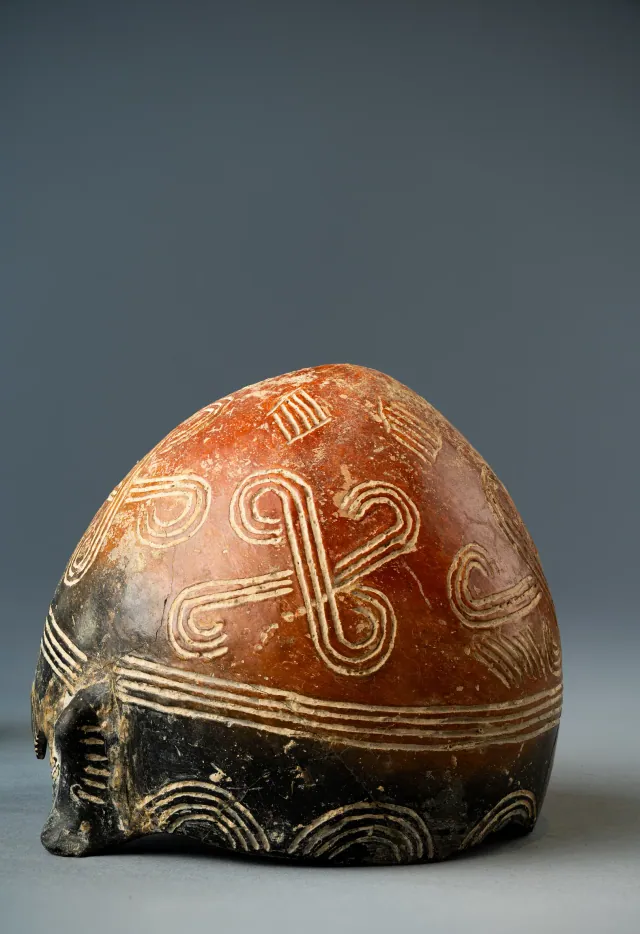
Black-topped Red Polished Tulip Bowl with Incised Spiral-armed Cross, Circles and Arcades
Early Cypriot (Early Bronze Age)
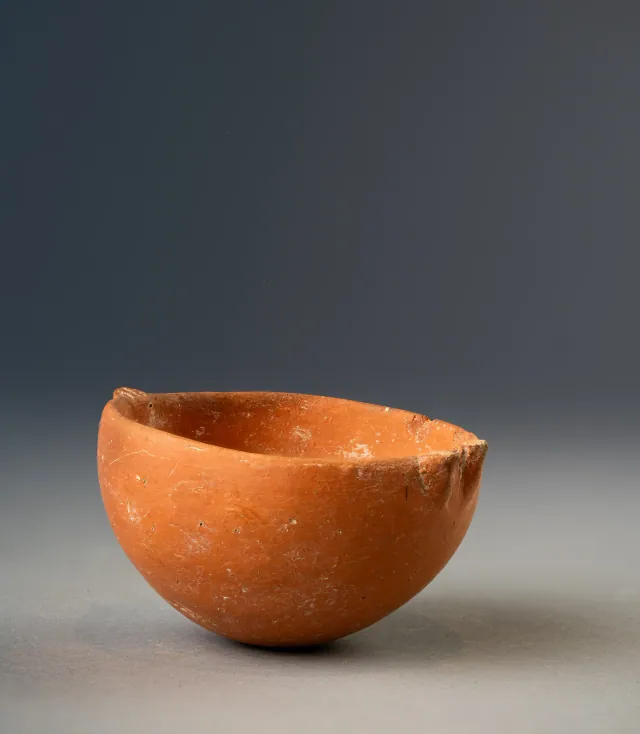
Red Polished Hemispherical Bowl with Two Rim Lugs
Early Cypriot (Early Bronze Age)
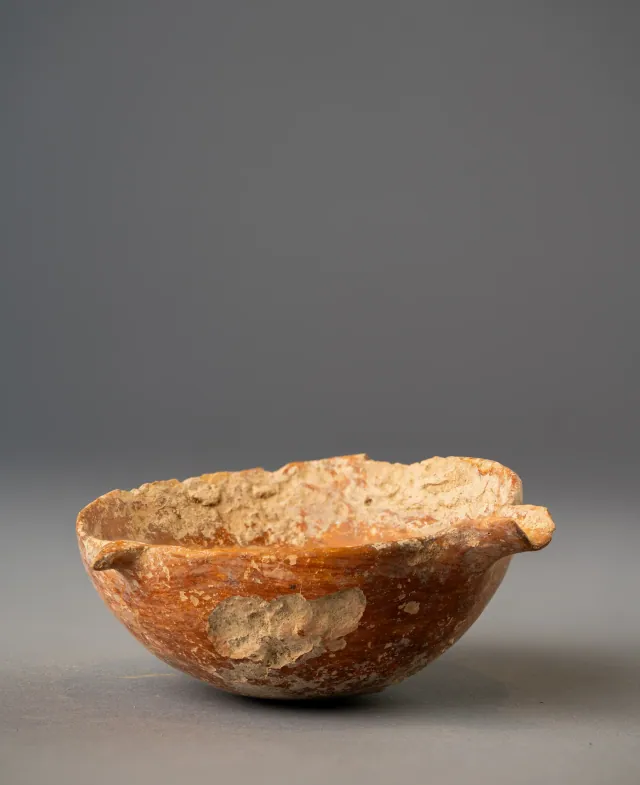
Red Polished Bowl with Two Opposed Tab Lugs
Early Cypriot (Early Bronze Age)
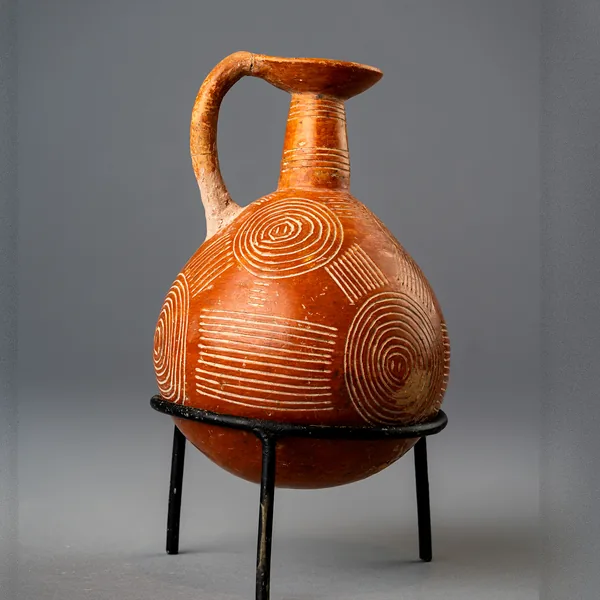
Red Polished Jug with Concentric Circles and Line Panels
Early Cypriot (Early Bronze Age)
Found at the places discussed
Objects in our catalogue, in museum collections, recorded as found at these sites.


Background
Where to read more on this site before or after watching.
The site
Lapithos
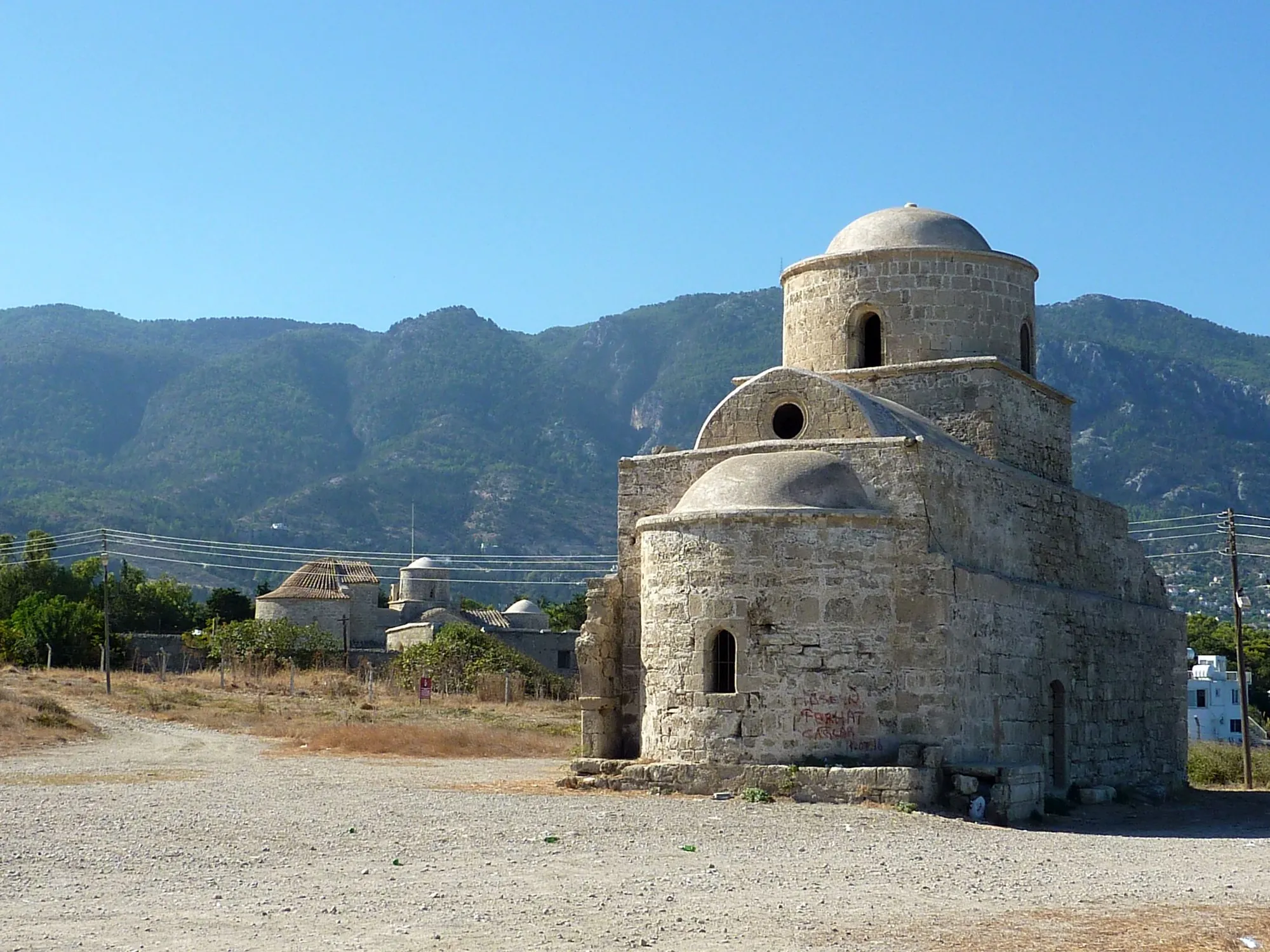
A group of cemeteries and settlement sites around the village of Lapithos on the north coast, below the Kyrenia range. Its Early and Middle Bronze Age cemetery at Vrysi tou Barba has produced about five times as much metal as Vounous, its Cypro-Geometric tombs gave the pottery sequence for that period, and ancient Lapethos was a city-kingdom until 312 BC.
In the compendium
Copper Metallurgy in Ancient Cyprus
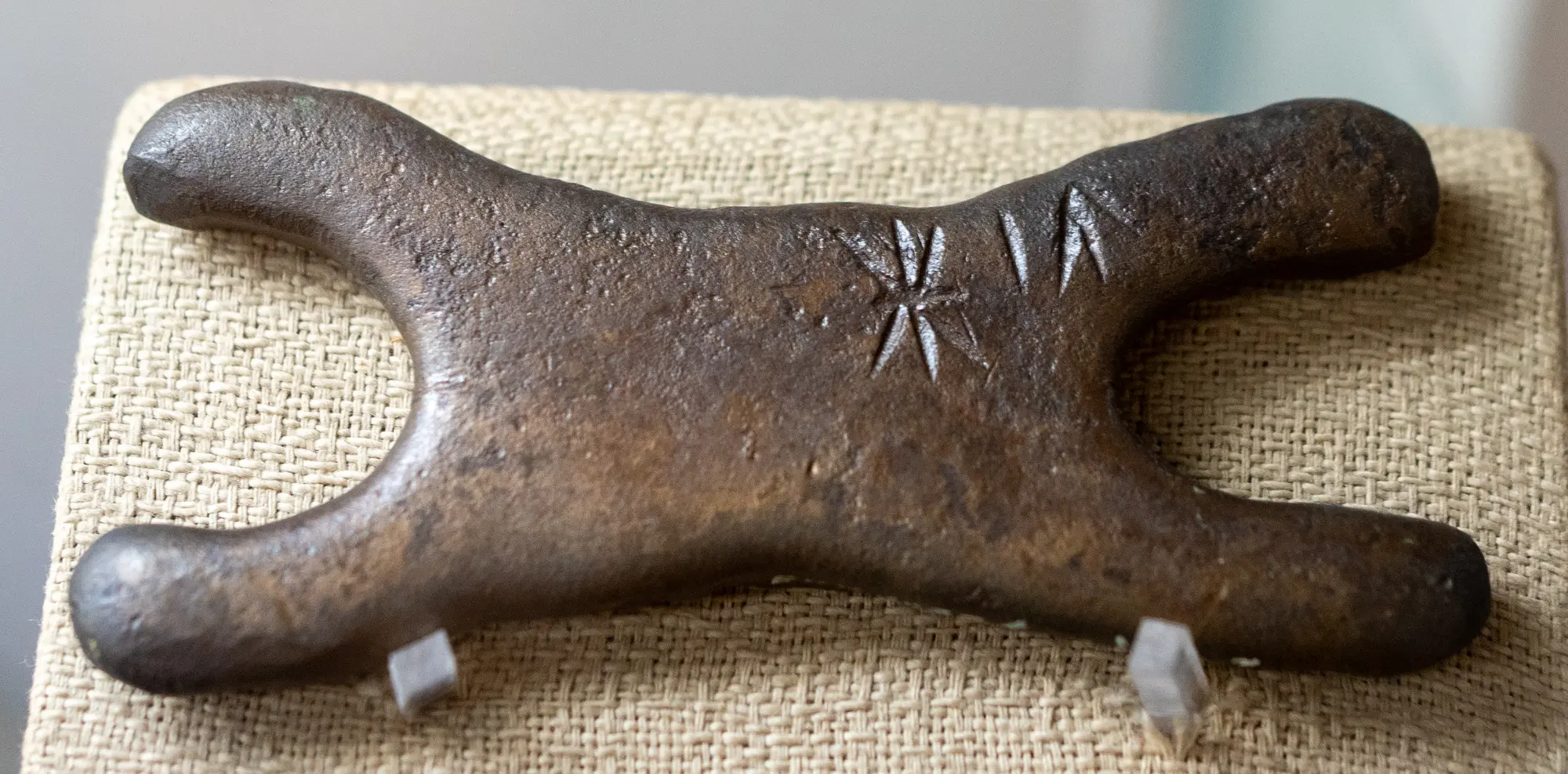
The mining, smelting and casting of the Troodos sulphide ores, from hammered Chalcolithic native copper to Late Bronze Age oxhide ingots and Archaic slag heaps.
In the compendium
Gold, Silver, Tin, Arsenic and Iron in Ancient Cyprus
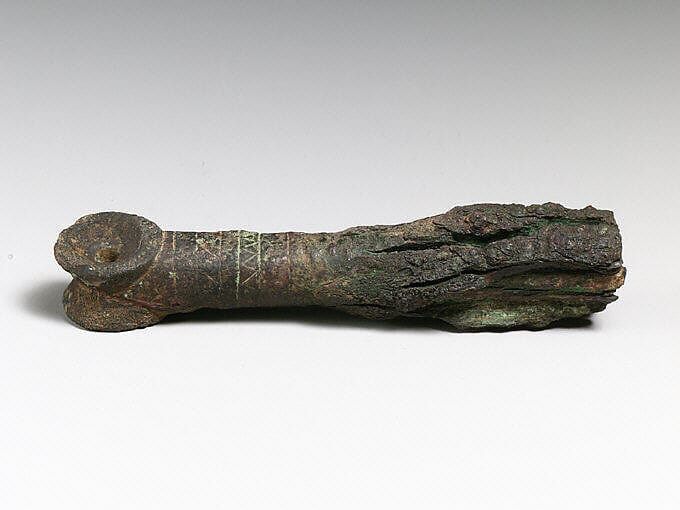
The metals other than copper used by Cypriot smiths from the Philia facies to the Hellenistic period, including arsenic, tin, gold, electrum, silver, lead and iron.
In the compendium
Weapons of Bronze Age Cyprus
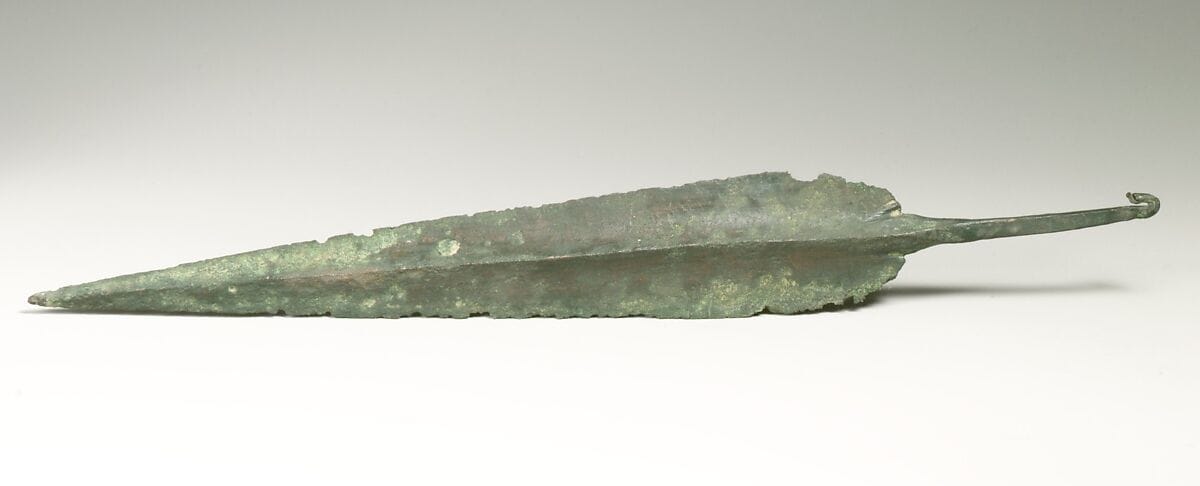
The copper and bronze weapons of Bronze Age Cyprus, from Philia hook-tang spearheads and riveted daggers to the Naue II swords and greaves of Enkomi.
Map of Cyprus
Places discussed in the talk
- Ground above 200, 500, 1,000 m
Places
- 1Lapithos
- 2Bellapais-Vounous (approx.)