
Conference paper·Archaeological Research Unit - University of Cyprus·2019
A Conference in Honour of A. Bernard Knapp: Climate History, the Journal of Mediterranean Archaeology, and Closing Reflections
Chapters
About the video
This final session of the conference in honour of A. Bernard Knapp at the Archaeological Research Unit of the University of Cyprus comprises papers by Sturt Manning and John F. Cherry, followed by Knapp's closing reflections on his career.
Sturt Manning critiques recent trends in climate history that treat climate as an independent agent driving societal collapse, such as the end of the Roman world or the Late Bronze Age crisis. Examining temperature reconstructions for the Late Antique Little Ice Age and the early modern Little Ice Age, he argues that unilinear models ignore regional variation and human adaptation. He points out that the freezing of the Thames depended on old London Bridge constricting water flow, and that the Nabataeans at Petra adapted to an arid environment. Turning to Mediterranean agriculture and grain storage, Manning reviews work by Paul Halstead, Peter Garnsey, and Tony Wilkinson on the 300-millimetre rainfall threshold for wheat and 200 millimetres for barley, noting that farmers typically stored enough food for one bad year, while two consecutive years of severe drought caused famine. Using rainfall figures from northern Syria and Cyprus alongside tree-ring records from Anatolia and the Aegean, he shows that back-to-back extreme droughts occurred only rarely, as during the Celali Rebellion of 1607 to 1608, and that an east-west climatic seesaw exists across the Mediterranean. Discussing the 4.2 kiloyear event at Tell Leilan and Marki, as well as Gordion tree-ring data and the Sea Peoples, he concludes that Cyprus is a good setting for high-resolution regional climate studies.
John F. Cherry recounts the thirty-one-year history of the Journal of Mediterranean Archaeology, which Knapp founded in 1988. Cherry traces the journal's publishing history from Sheffield Academic Press to Continuum and Equinox, its early competition with the Australian and New Zealand Journal for Mediterranean Archaeology, and its intellectual origins in Colin Renfrew's call to bridge traditional Mediterranean archaeology and anthropological theory. He explains the journal's editorial standards, which require papers to combine local data with theoretical frameworks and pan-Mediterranean comparison, and describes how the addition of Peter van Dommelen as co-editor in 2006 expanded coverage of the western Mediterranean.
A. Bernard Knapp concludes the conference by reflecting on four decades of collaboration in Mediterranean and Cypriot archaeology. He recalls studying with Michal Artzy at the University of California, Berkeley, where neutron activation analysis of Cypriot and Levantine pottery shaped his interest in science-based applications and provenance studies. He surveys his posts in Berkeley, Sydney, Cambridge, and Glasgow, and his co-direction of the Sydney Cyprus Survey Project around Mitsero and the Troodos Archaeological and Environmental Survey Project with Michael Given and Lina Kassianidou, alongside his work on archaeometallurgy and regional survey. Turning to his retirement years in Cyprus, he discusses his work with Jenny Webb on the Middle Bronze Age, his book with Stella Demesticha on Bronze Age maritime transport containers, and the integration of theory and material data in Cypriot prehistory, closing with thanks to colleagues at the Department of Antiquities and CAARI.
From our collection
Pieces in the Drakopoulos collection of the kinds and periods this talk covers: Jar, Early Cypriot (Early Bronze Age), Cypro-Geometric.
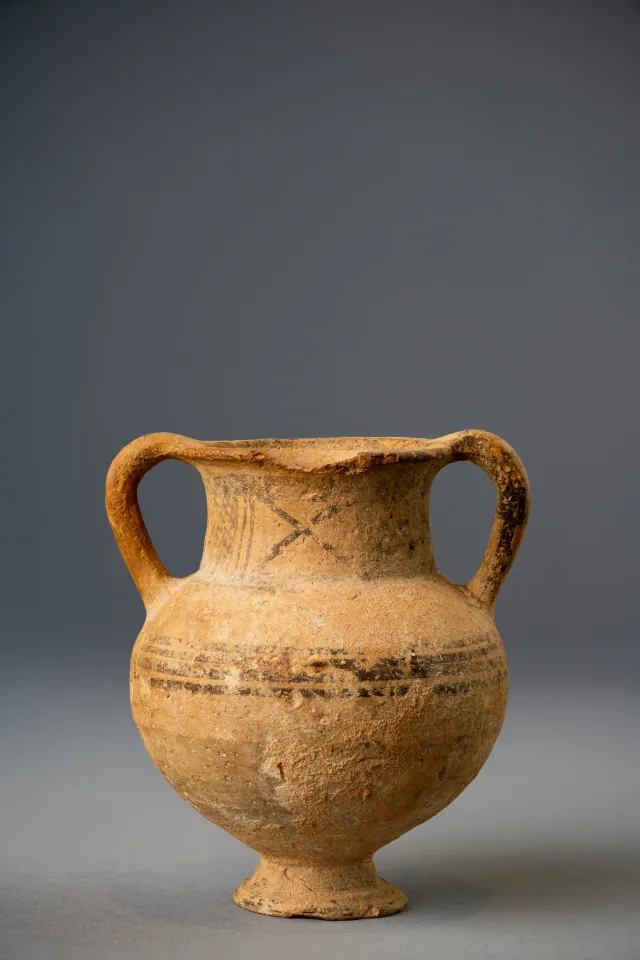
White Painted Amphoriskos on a Conical Foot
Jar
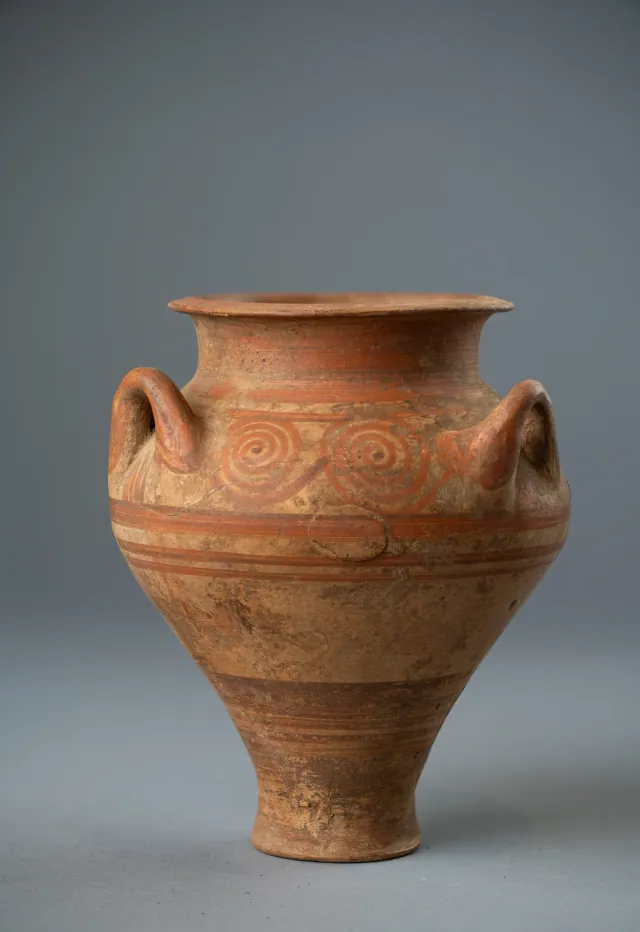
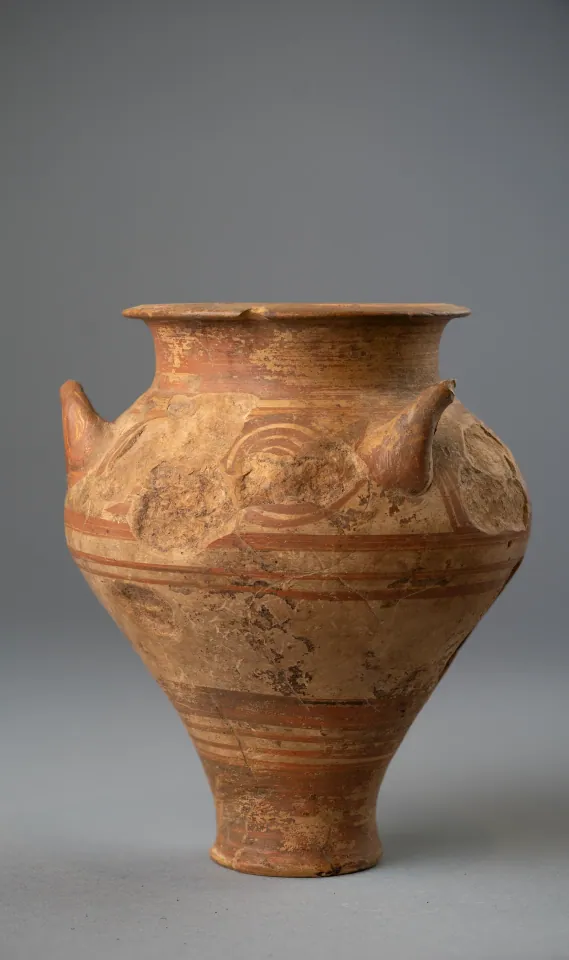
Cypriot Three-Handled Jar in the Mycenaean Style with Running Spirals
Jar
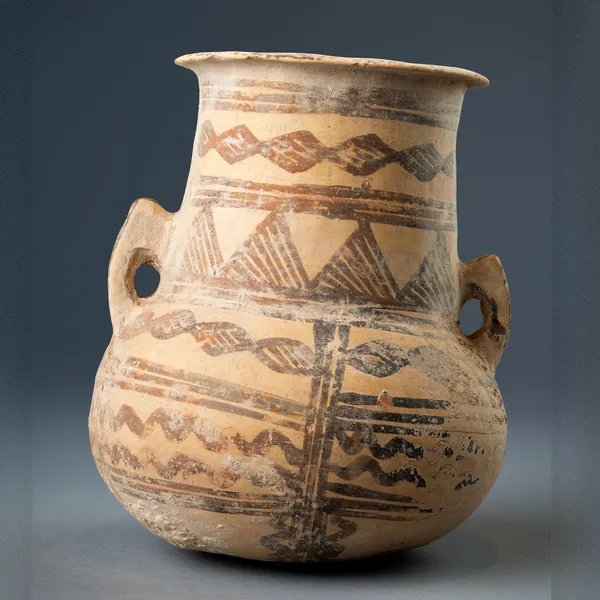
White Painted III-IV Amphora with Lozenge Chains and Hatched Triangles
Jar
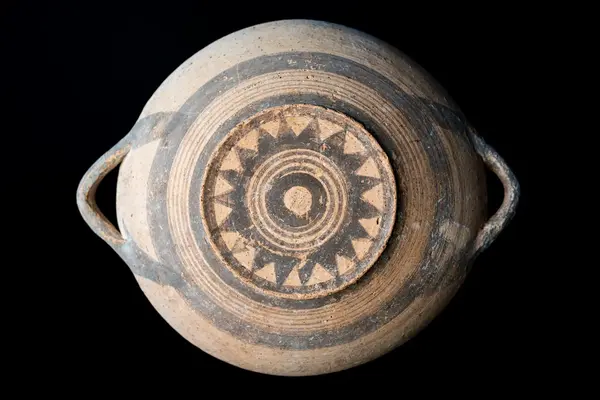
White Painted Plate with a Sawtooth Star on the Underside
Cypro-Geometric
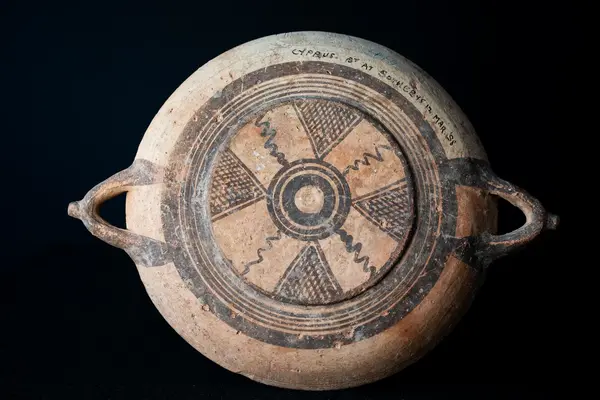
White Painted Plate with Latticed Triangles and Wavy Lines on the Underside
Cypro-Geometric
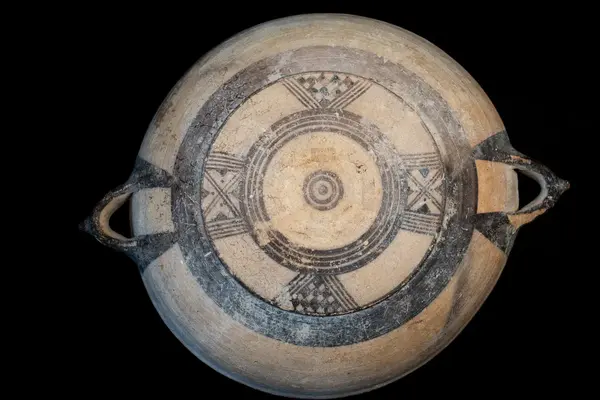
Large White Painted Plate with Knobbed Handles and a Four-Armed Cross on the Underside
Cypro-Geometric
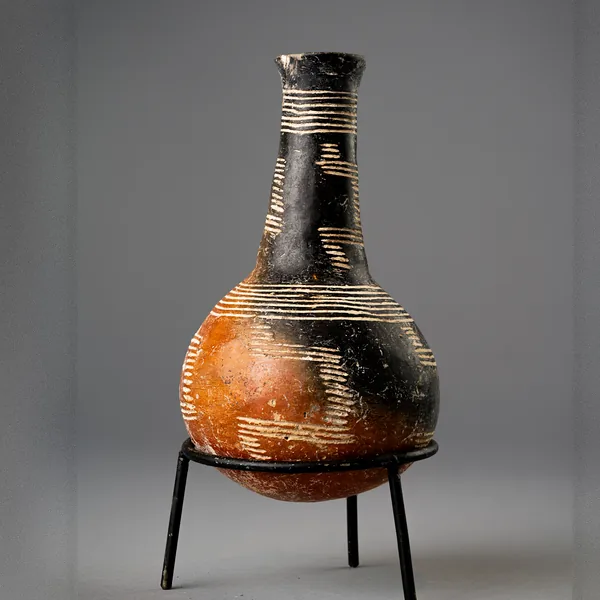
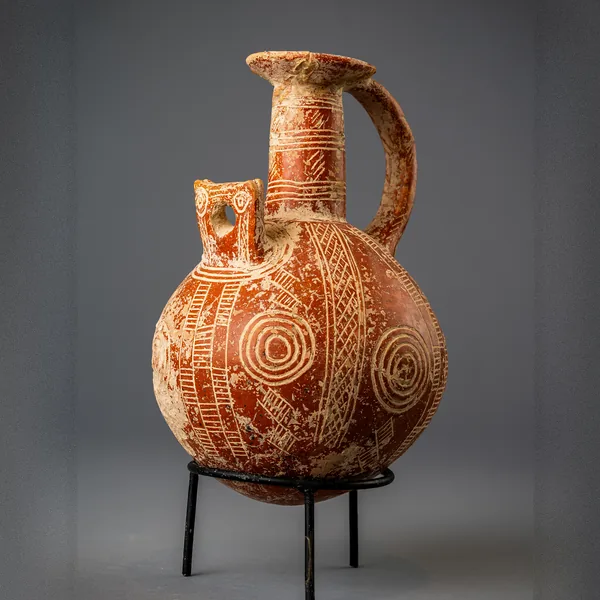
Red Polished Black-Topped Bottle with Stepped Incised Bands
Early Cypriot (Early Bronze Age)
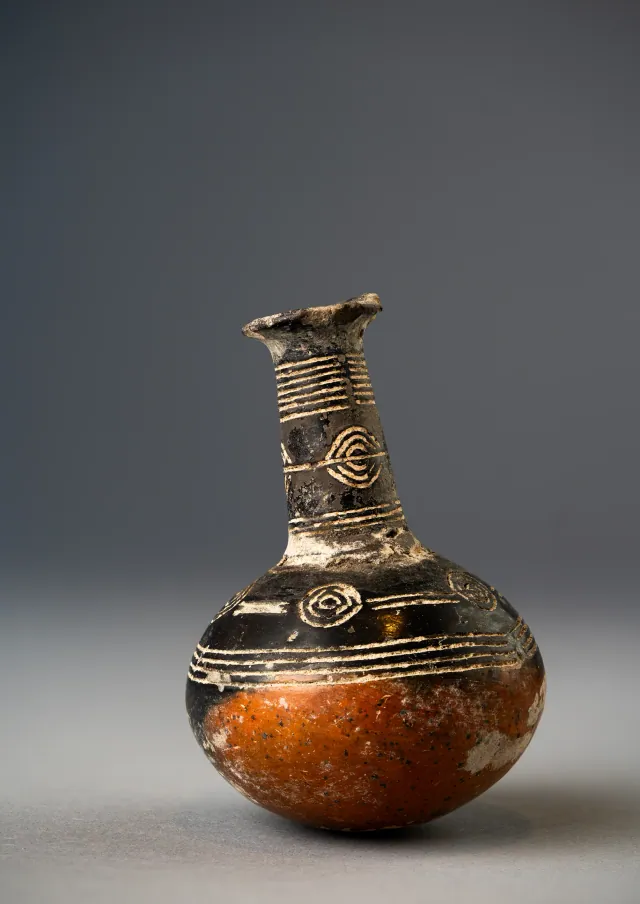
Red Polished Black-Topped Bottle with Incised Concentric Circles
Early Cypriot (Early Bronze Age)
Background
Where to read more on this site before or after watching.
In the compendium
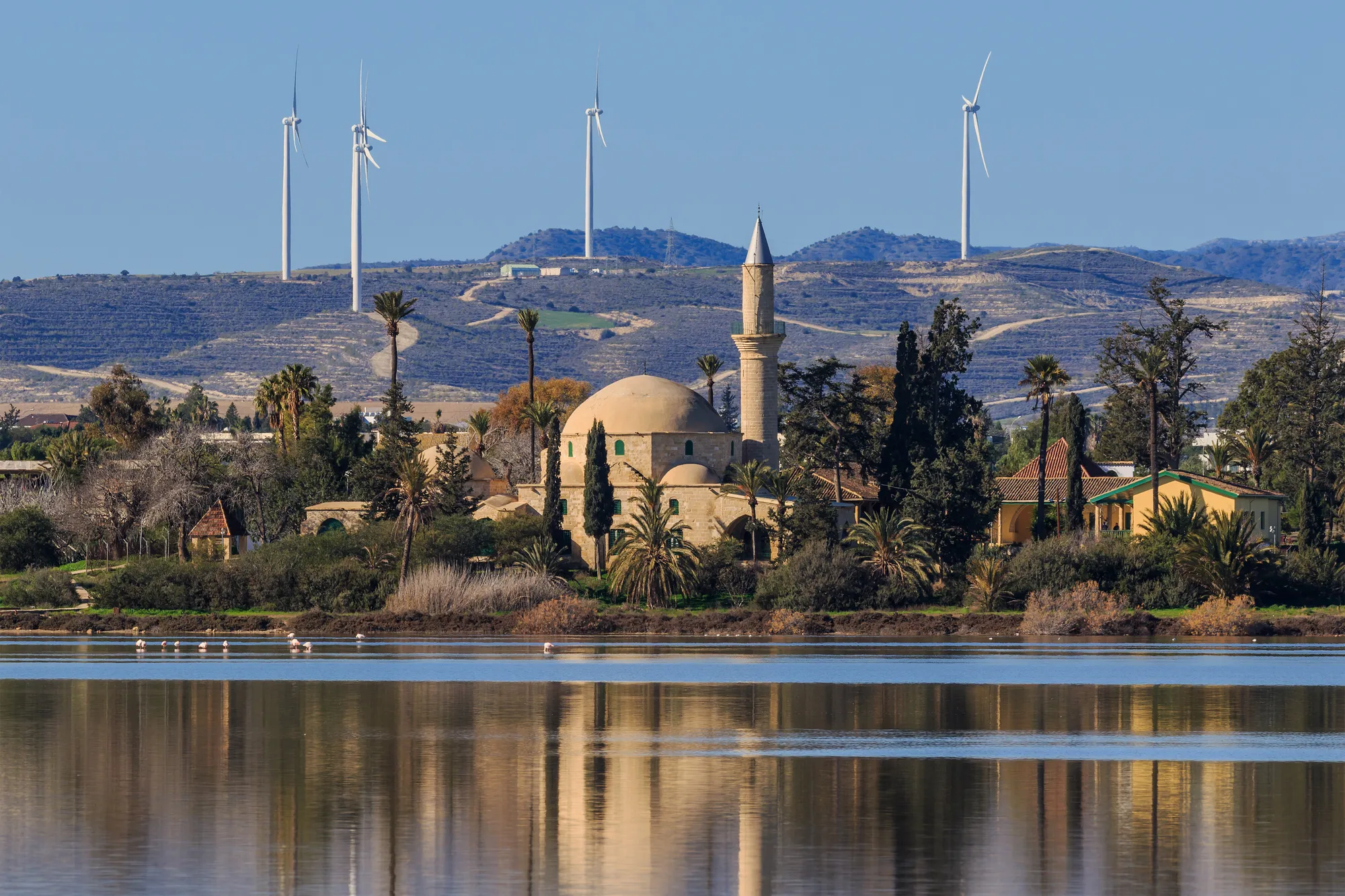
Climate and Landscape in Ancient Cyprus
What the island's own records show about sea level, coasts, rainfall and forests in Cyprus from the first farmers to the Hellenistic period.
In the compendium
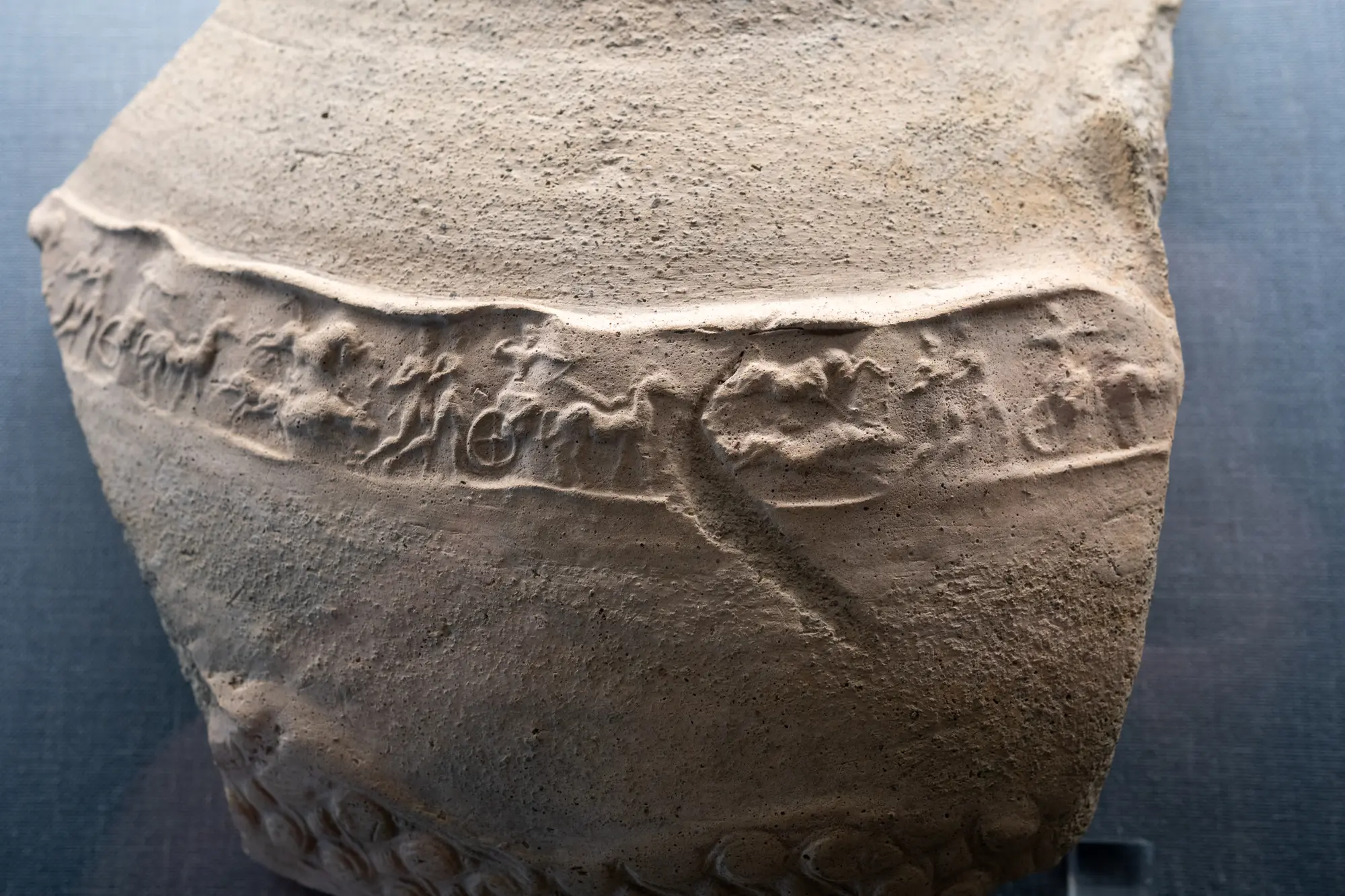
Food Storage in Ancient Cyprus: Pits, Pithoi and Storerooms
How Cypriots stored grain, oil and wine, from Chalcolithic pits and household jars to the great pithos halls of the Late Bronze Age towns.
In the compendium
The Philistines
The 12th-century BCE newcomers to the southern Levantine coast, whose Aegean-style pottery, hearths and houses derive most directly from Cyprus.
The period
Early Bronze Age
The period c. 2500–1950 BCE, from the Philia phase through Early Cypriot I–III, of rectilinear villages, Red Polished pottery and chamber-tomb cemeteries.
Map of Cyprus
Places discussed in the talk
- Ground above 200, 500, 1,000 m
Places
- 1Marki-Alonia
- 2Mitsero (approx.)