
Lecture·CAARI Cyprus·2025
Cyprus and Ugarit: Connecting Material and Mercantile Worlds
Chapters
About the lecture
After an introduction by CAARI director Lindy Crewe, Bernard Knapp presents his 2024 book Cyprus and Ugarit (Sidestone Press). The lecture examines the commercial and material relationship between the Late Bronze Age polities of Cyprus and Ugarit over nearly half a millennium, between about 1650 and 1200 BC.
Knapp outlines the four datasets compiled for the study: Cypriot pottery found at Ugarit and its ports Minet el-Beida and Ras Ibn Hani; Canaanite jars found on Cyprus; and the 23 Ugaritic and 23 Akkadian cuneiform documents mentioning or related to Alashiya. While the two polities shared material features such as ashlar masonry, urban mortuary practices, composite anchors and the undeciphered Cypro-Minoan script, Knapp argues that their economies were distinct. Ugarit was a long-established trading hub, whereas Cyprus entered the eastern Mediterranean commercial sphere more recently as a supplier of copper.
The talk reviews the main classes of material exchanged between Ugarit and Cypriot harbour towns such as Enkomi, Hala Sultan Tekke, Kition and Maroni. The published record at Ras Shamra, Minet el-Beida and Ras Ibn Hani yields 670 Cypriot vessels, led by 226 examples of Base Ring ware, 216 of White Slip ware and 54 of White Shaved ware. In the opposite direction, at least 352 Canaanite jars have been recorded across 22 Middle and Late Bronze Age sites on Cyprus, including recent finds at Erimi-Pitharka. For metallurgy, Knapp points to Cypriot copper used in Ugarit's bronze industry, the oxhide ingot mould from Ras Ibn Hani, and caches of metalworking tools at Ugarit and Minet el-Beida that match tools from Cypriot hoards and a foundry at Enkomi. He also surveys Cypriot-style seals and seal impressions from Ugarit, noting carving styles comparable to finds from Episkopi and Enkomi and recent research on linear-style seals from Pyla-Kokkinokremos.
Turning to the documentary record, Knapp discusses the archives from the houses of the Ugaritic merchants Rashap-abu, Yabninu, Urtenu and Rapanu, who operated both under palatial contract and in private trade. Urtenu's house held nearly 550 tablets alongside two Cypro-Minoan labels and Cypriot pottery. Knapp closes by arguing that contact with Levantine ports brought Cyprus tin, commercial practices and luxury goods, transforming its island-based economy.
From our collection
Pieces in the Drakopoulos collection of the kinds and periods this talk covers: Base Ring ware, White Slip ware, Jar, Middle Cypriot (Middle Bronze Age).
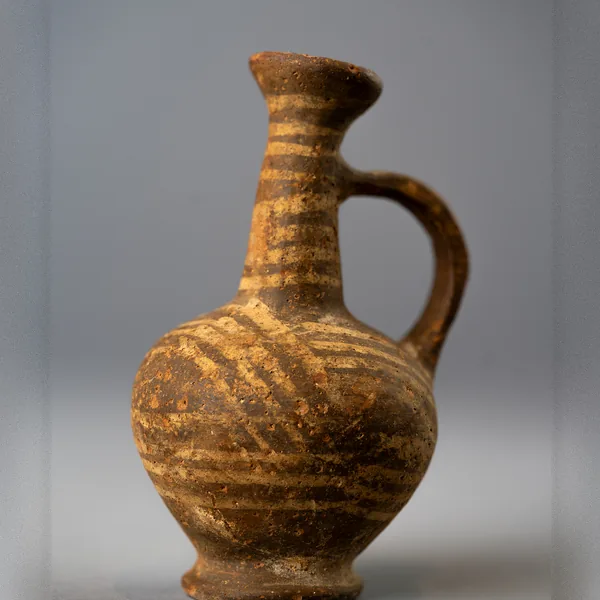
Base Ring II Bilbil Juglet with White-Painted Bands
Base Ring ware
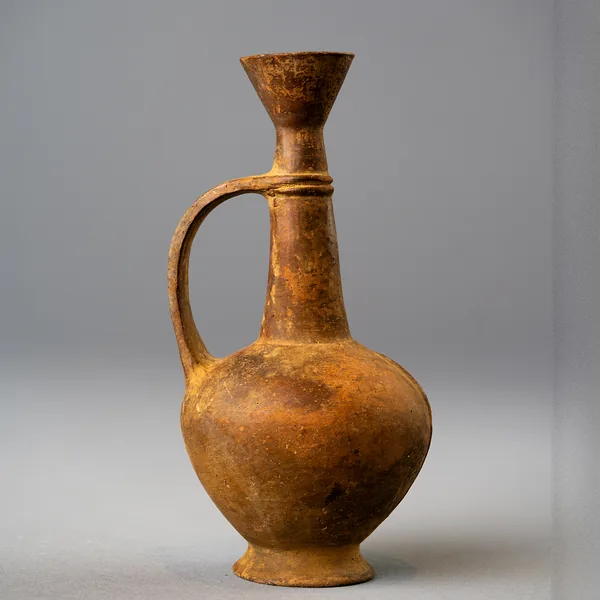
Base Ring Bilbil Juglet with Funnel Mouth and Neck Ridge
Base Ring ware
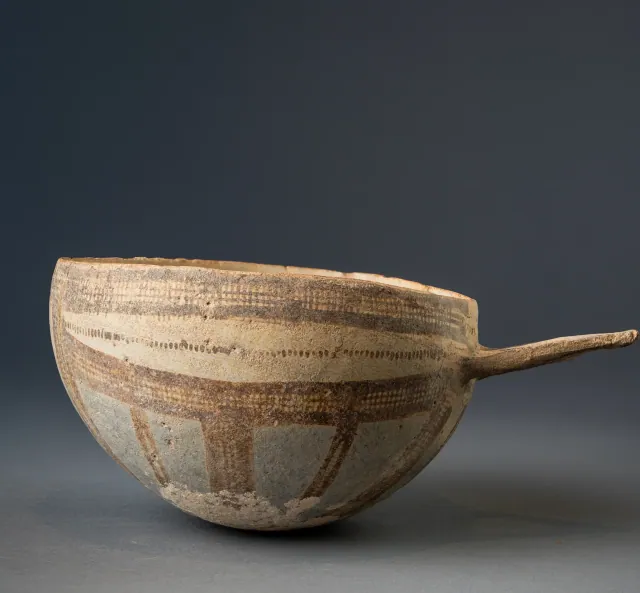
White Slip II Hemispherical Bowl with Wishbone Handle
White Slip ware
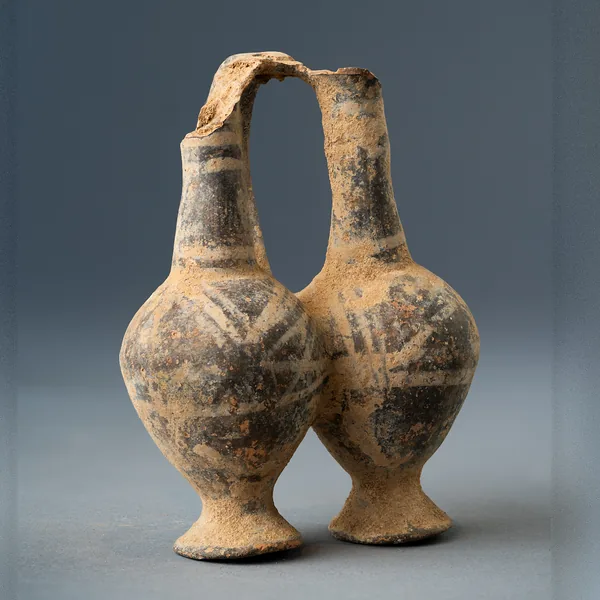
Base Ring II Double Juglet with White-Painted Decoration
Base Ring ware
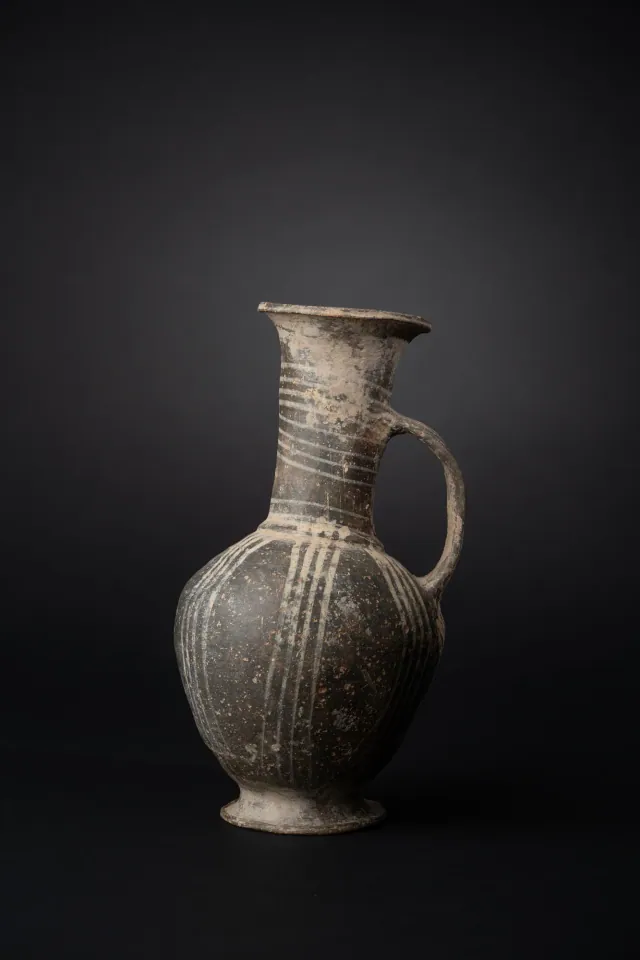
Base Ring II Jug with White-Painted Lattice Bands
Base Ring ware
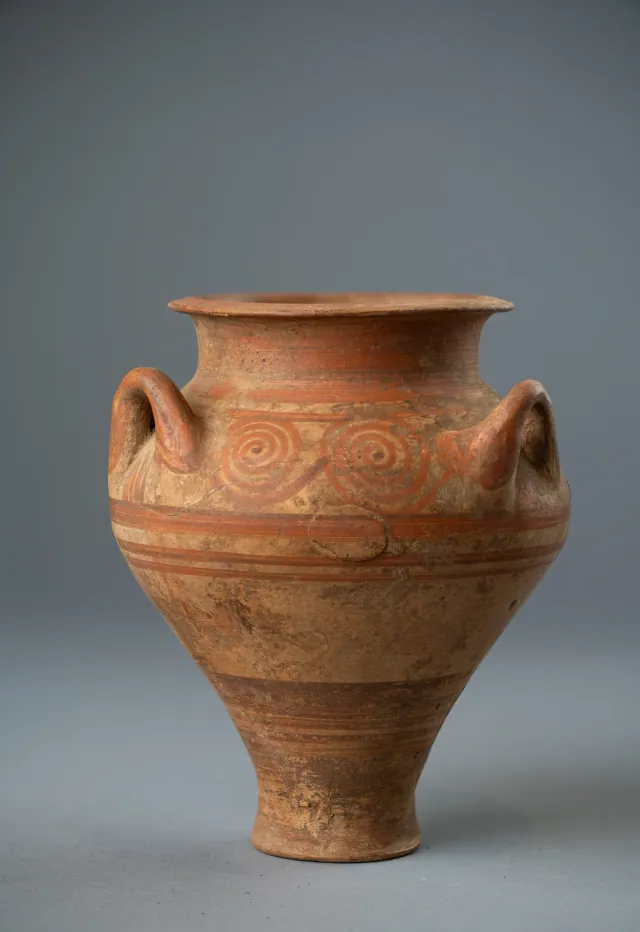
Cypriot Three-Handled Jar in the Mycenaean Style with Running Spirals
Jar
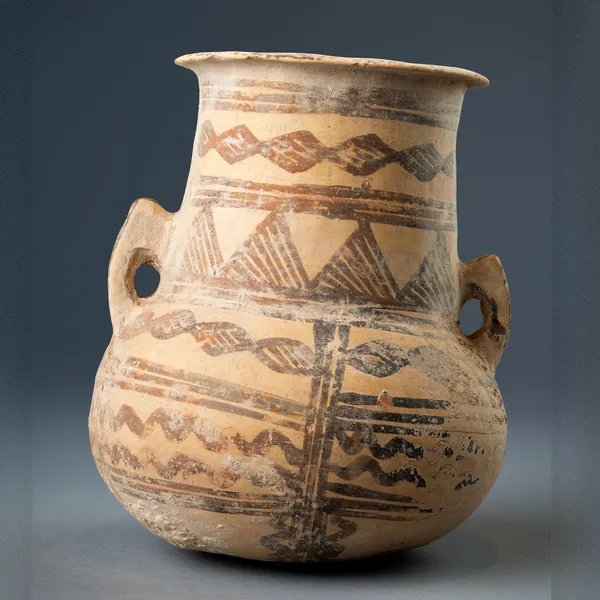
White Painted III-IV Amphora with Lozenge Chains and Hatched Triangles
Jar
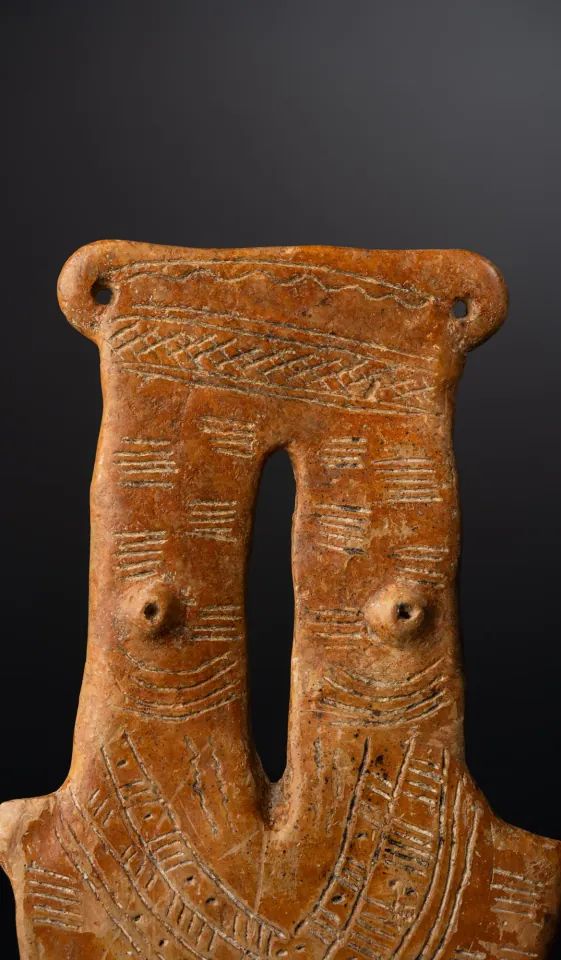
Red Polished Two-Necked Plank Figure
Middle Cypriot (Middle Bronze Age)
Found at the places discussed
Objects in our catalogue, in museum collections, recorded as found at these sites.


Background
Where to read more on this site before or after watching.
The site
Enkomi
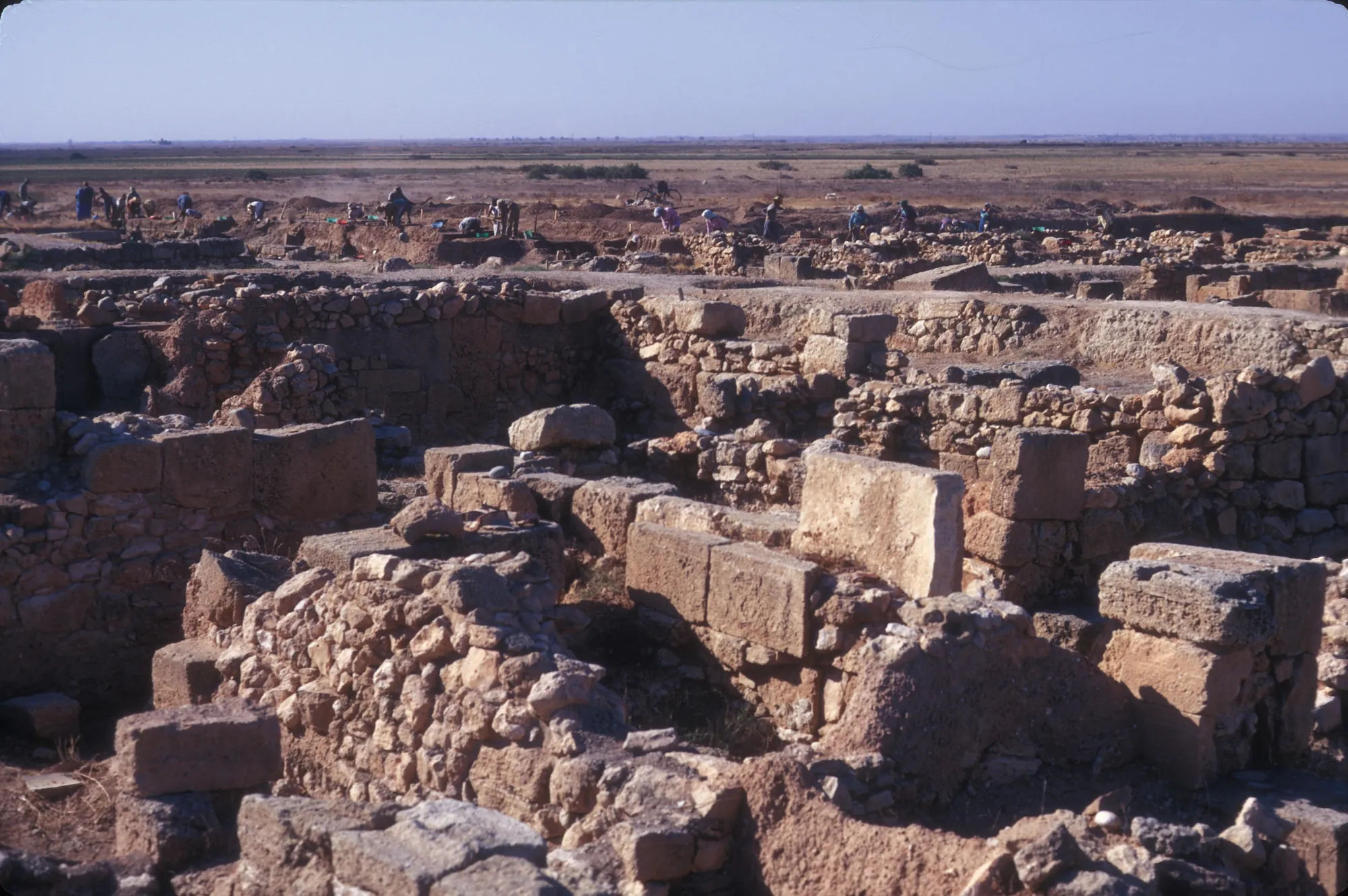
Enkomi is a walled Late Bronze Age town near the mouth of the Pedieos river on the bay of Famagusta, lived in from about 1650 BC until it was gradually abandoned for nearby Salamis. It was a port for Cypriot copper, and its excavations produced metal workshops, sanctuaries with bronze cult statues, rich tombs and the largest group of Cypro-Minoan inscriptions on the island.

In the compendium
Ugarit and the Levant
The Syrian port kingdom of Ugarit and the wider Levantine coast, Cyprus's closest Bronze Age trading partners across the water.
In the compendium
Ashlar Masonry
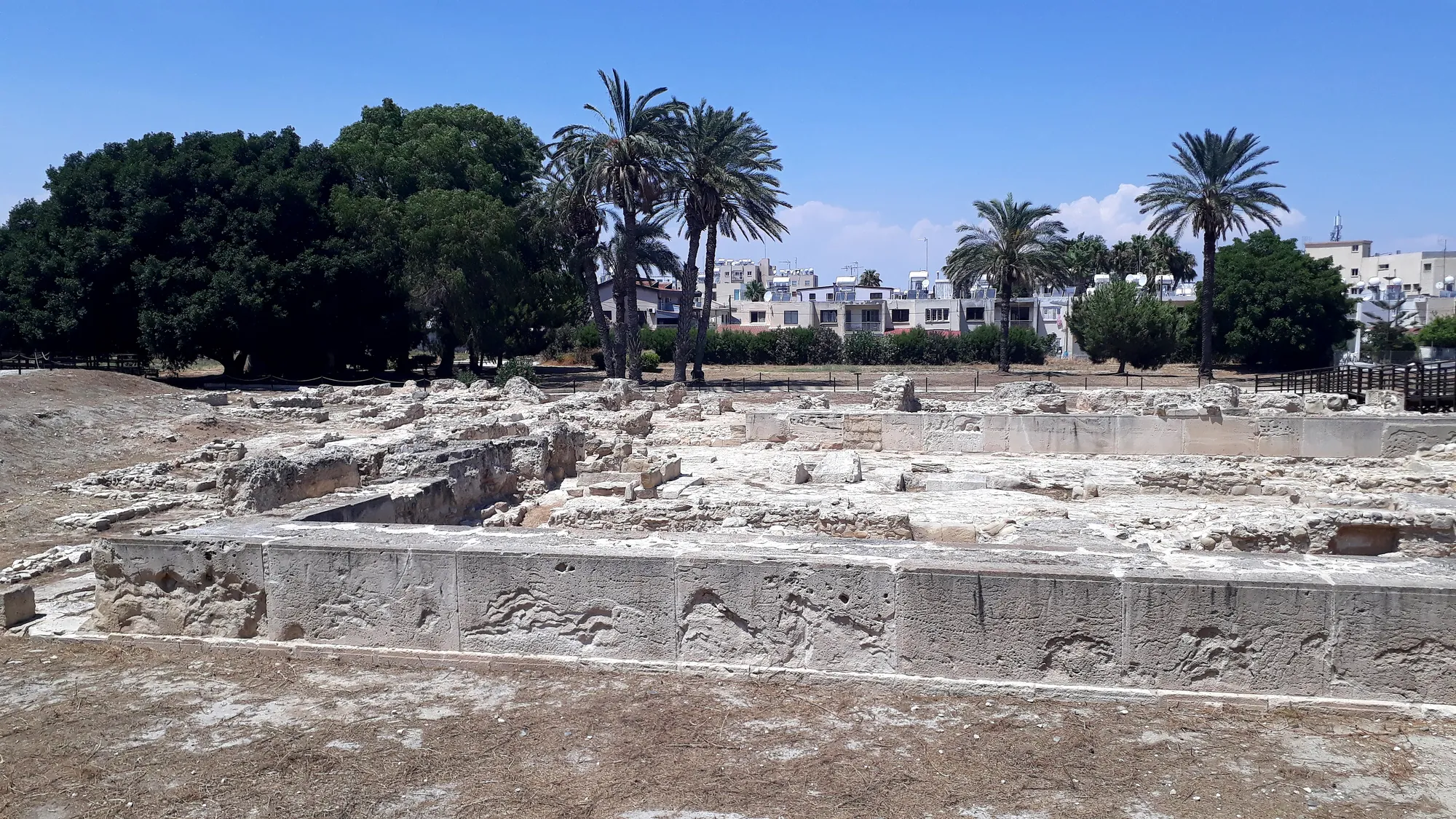
Squared, dressed stone used on Cyprus from about 1500 BC for gateways, tombs and the largest buildings of the Late Bronze Age towns, set below walls of mudbrick.
In the compendium
Writing and Literacy in Ancient Cyprus
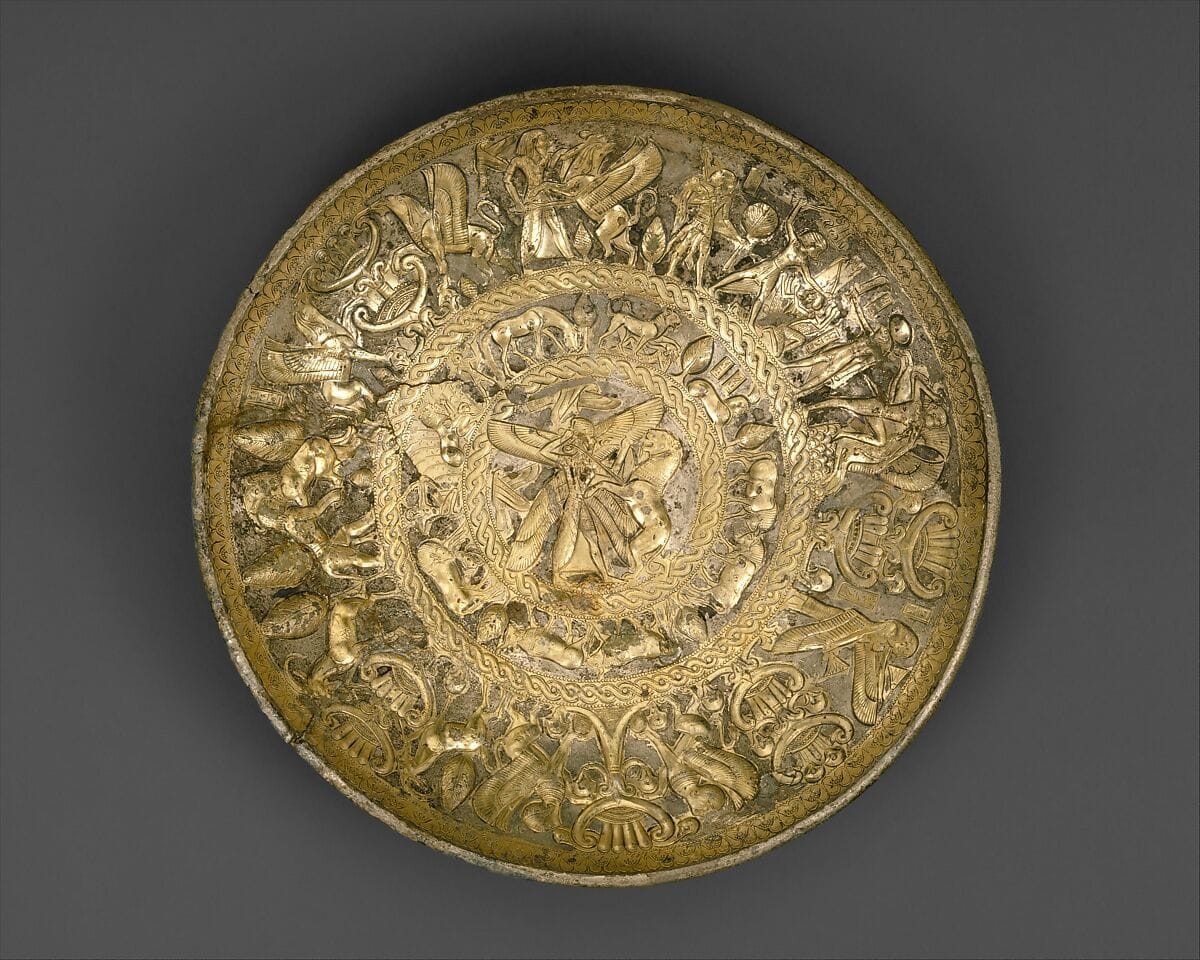
The scripts of ancient Cyprus, from undeciphered Cypro-Minoan to the Cypriot Syllabary, Eteocypriot, Phoenician and the Greek alphabet, and who used them.
Map of Cyprus
Places discussed in the talk
- Has a page on this site
- Other places
- Ground above 200, 500, 1,000 m
Places
- 1Enkomi
- 2Hala Sultan Tekke
- 3Kition
- 4Maroni
- 5Erimi-Pitharka
- 6Pyla-Kokkinokremos