
Neolithic
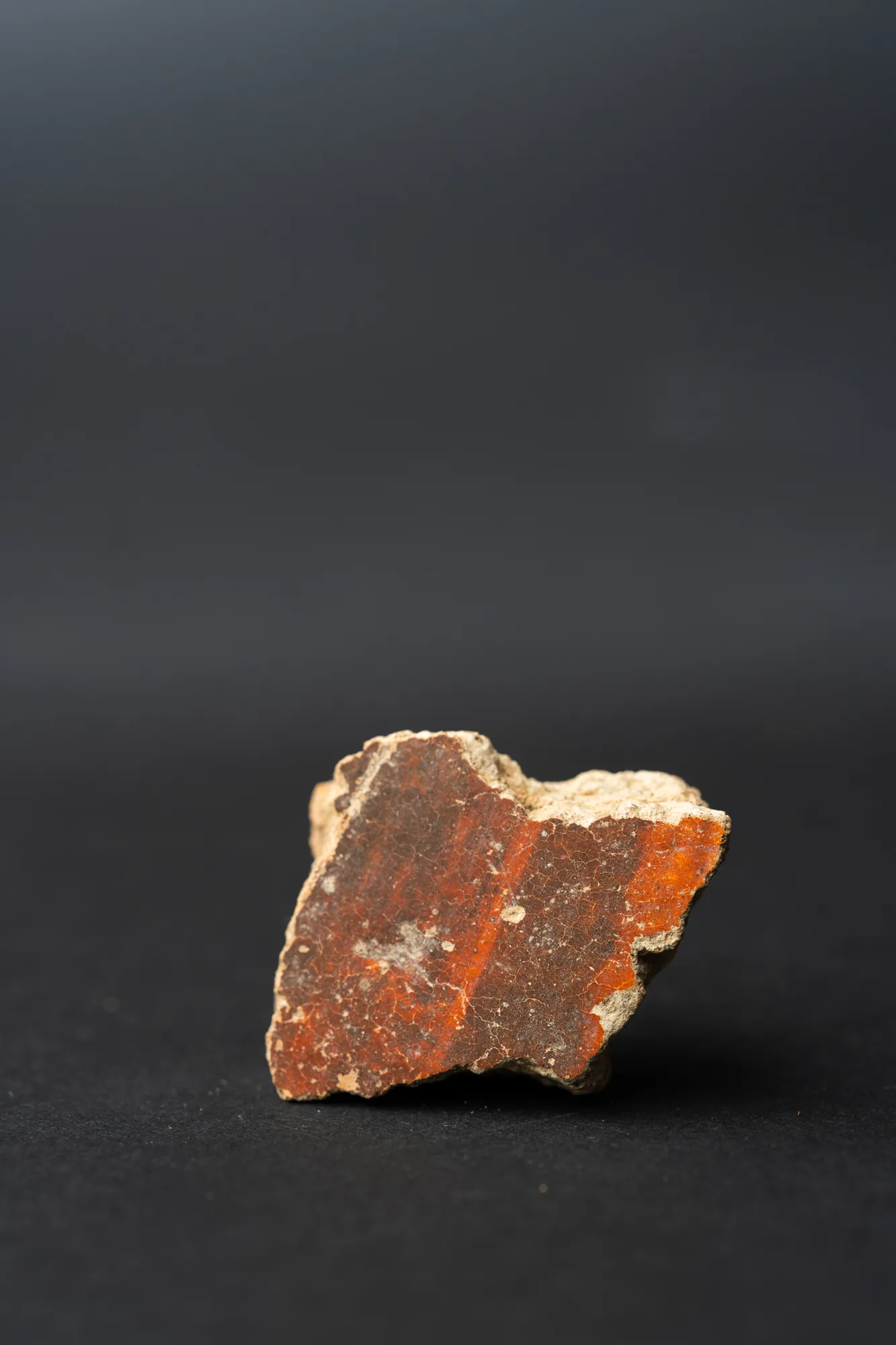
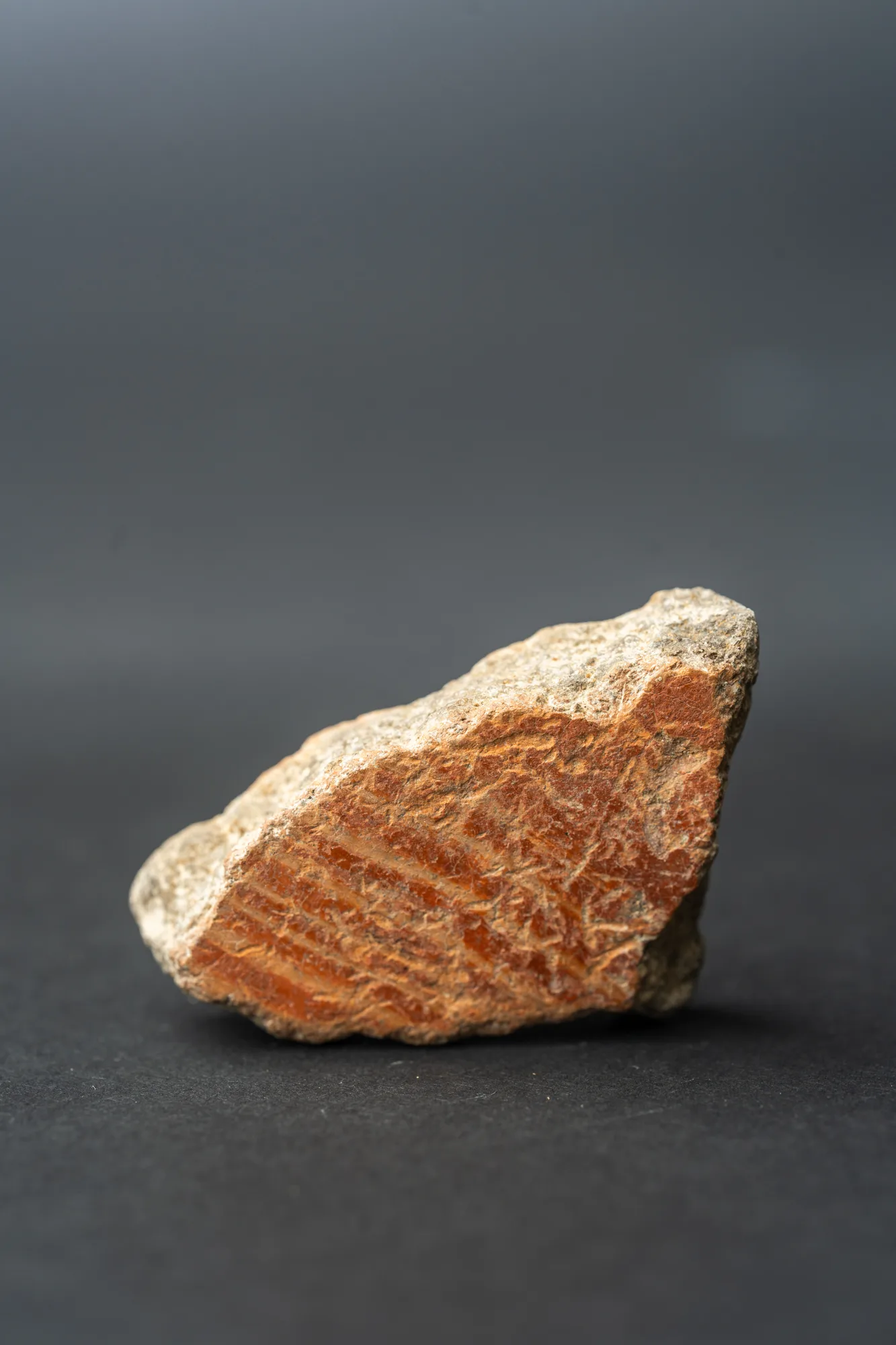
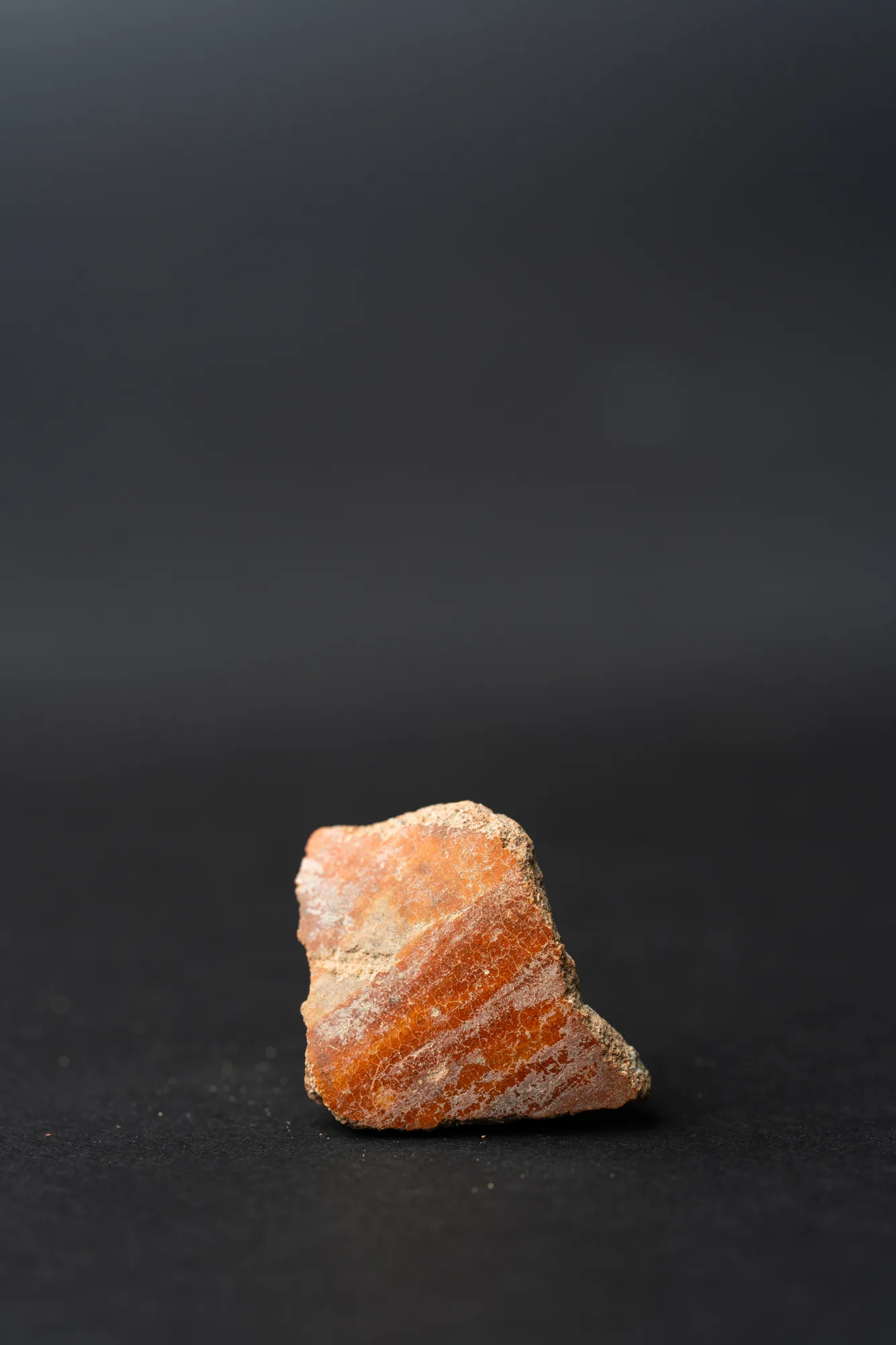
Red Lustrous Ware Body Sherd with Fire-Mottled Slip
Thick handmade body sherd with a fire-mottled red slip on one face, from the Late Neolithic red monochrome pottery of Cyprus. Ex Judge G. C. Griffith-Williams.
Date
4500 - 3900 BC
Accession No.
BWL-NE-004
Collection
Alexis Drakopoulos
Provenance
- c. 1938–1963, Judge G. C. Griffith-Williams (1893–1983), Nicosia; mounted with four other Neolithic sherds in a wooden Droste chocolate box, with a handwritten label reading "Neolithic. Painted and combed ware. c. 3500 BC." [6]
- Present, Alexis Drakopoulos, London
Late Neolithic (Sotira culture), probably; c. 4500–3900 BCE, possibly to c. 3500 BCE · Red Lustrous (Red Monochrome Painted) ware · Handmade
A thick, irregular body sherd from a handmade vessel. The outer face carries a dense red slip that shifts from bright orange-red to a deep maroon verging on black, the darker zones spreading in broad clouds across the surface. A broad band of brighter orange runs obliquely down the centre, and another patch of it lights the right-hand edge, where the slip lies thicker or fired cleaner. The slip is crazed into a fine network of hairline cracks and flecked with white lime; one small patch has flaked back to the body. The other face is unslipped, a pale, sandy buff, with a few dark red splashes and runs of slip along one edge. The broken edges show a pale, gritty, calcareous fabric under a light lime crust.
Commentary
The sherd belongs to the red monochrome pottery of the Cypriot Late Neolithic, the class Porphyrios Dikaios called Red Lustrous Ware at Sotira-Teppes and which Joanne Clarke groups with his Red Slip Ware as Red Monochrome Painted (RMP) [1, 2]. It carries no combing. At Sotira Red Lustrous was the commonest pottery of all, holding steady at roughly a third to a half of the pottery in every phase, and its shapes are the same hole-mouth bowls, hemispherical spouted bowls, platters and oval jugs as the combed pots [1].
The dark clouding is the most informative feature of the surface. Dikaios recorded Red Lustrous bowls "with the outside face blackened except for a band around the rim," and a jug fragment marked by a black band where a wicker rope had burnt during firing [1]. Pottery of this period was fired in open bonfires at low temperature, and uneven contact with fuel and smoke left exactly this kind of mottling. The brighter band reads as a variation in slip thickness or firing, since it has none of the pale reserved channels that a comb leaves.
Slip on one face only points to a closed vessel. Neolithic bowls were normally slipped inside and out, while jugs were slipped on the outside and left plain within [1]. A jug or hole-mouth jar is therefore the likelier source, though a small fragment cannot settle the shape. Clarke also warns that many plain red sherds found with combed pottery come from the uncombed zones of combed vessels [2], and this piece may be one of them.
The date rests on fabric, finish and association. The sherd matches the combed fragments it was mounted with in fabric and slip, and a Sotira-culture date of c. 4500–3900 BCE is most probable. Red monochrome pottery did continue into the Early Chalcolithic, however: Catling saw the Red Lustrous pottery of Erimi as having its origins in the Neolithic [3], so a date in the first centuries of the Chalcolithic cannot be excluded on a plain sherd. Two red burnished sherds from Erimi at Yale, catalogued as Neolithic and described as thick-walled [4], and a red sherd from Erimi in the Ashmolean [5] are close in character.
The collector's label on the box, "Neolithic. Painted and combed ware. c. 3500 BC", named the group as a whole; this sherd is neither painted nor combed. The label's date is Dikaios's uncalibrated estimate for Sotira, and radiocarbon calibration places the culture about a thousand years earlier [1, 6]. The find-spot was never recorded. The ware belongs to the southern, Sotira-culture tradition, which makes a south-coast settlement likely without identifying one.
References
- 1.Dikaios, P. (1961) Sotira. University Museum Monographs. Philadelphia: University of Pennsylvania, pp. 188 ff. (Combed Ware), 200–202 (Red Lustrous and Red Slip Wares), pls. 80–84, pp. 228–231 (chronology).
- 2.Clarke, J. (2007) On the Margins of Southwest Asia: Cyprus during the 6th to 4th Millennia BC. Oxford: Oxbow, pp. 42–46, 118–120.
- 3.Catling, H. W. (1966) Cyprus in the Neolithic and Bronze Age Periods. Cambridge Ancient History, rev. ed., fascicle. Cambridge: Cambridge University Press, p. 21.
- 4.Yale Peabody Museum of Natural History, New Haven, 38-29-40/4290A: two red lustrous ware potsherds, Erimi.
- 5.Ashmolean Museum, Oxford, AN1935.705.a: red sherd, Erimi.
- 6.Drakopoulos, A. (2026) The Judge, the Escape, and a Chocolate Box of Six-Thousand-Year-Old Sherds. ancientcyprus.com, /articles/the-judge-the-escape-and-the-chocolate-box.
More from the Catalogue
Browse related objects
Two Fragments of a White Painted Deep Bowl with Panel Decoration
Geometric III
Combed Ware Bowl Fragment with Parallel Bands
Neolithic
Combed Ware Bowl Fragment with Multiple Wavy Bands
Neolithic
Combed Ware Bowl Fragment with Oblique Bands
Neolithic
Red Slip Ware Body Sherd with Streaked Slip
Chalcolithic
Bichrome Oinochoe
Archaic I
Free-field bichrome jug with image of an Ibis bird and reeds
Archaic
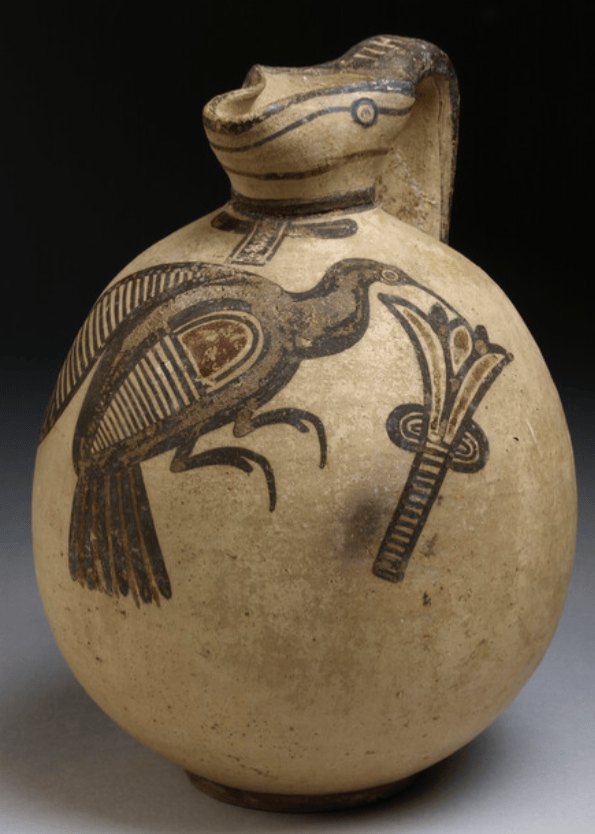
Squat bichrome jug in free-field style with image of bird picking a lotus flower
Archaic
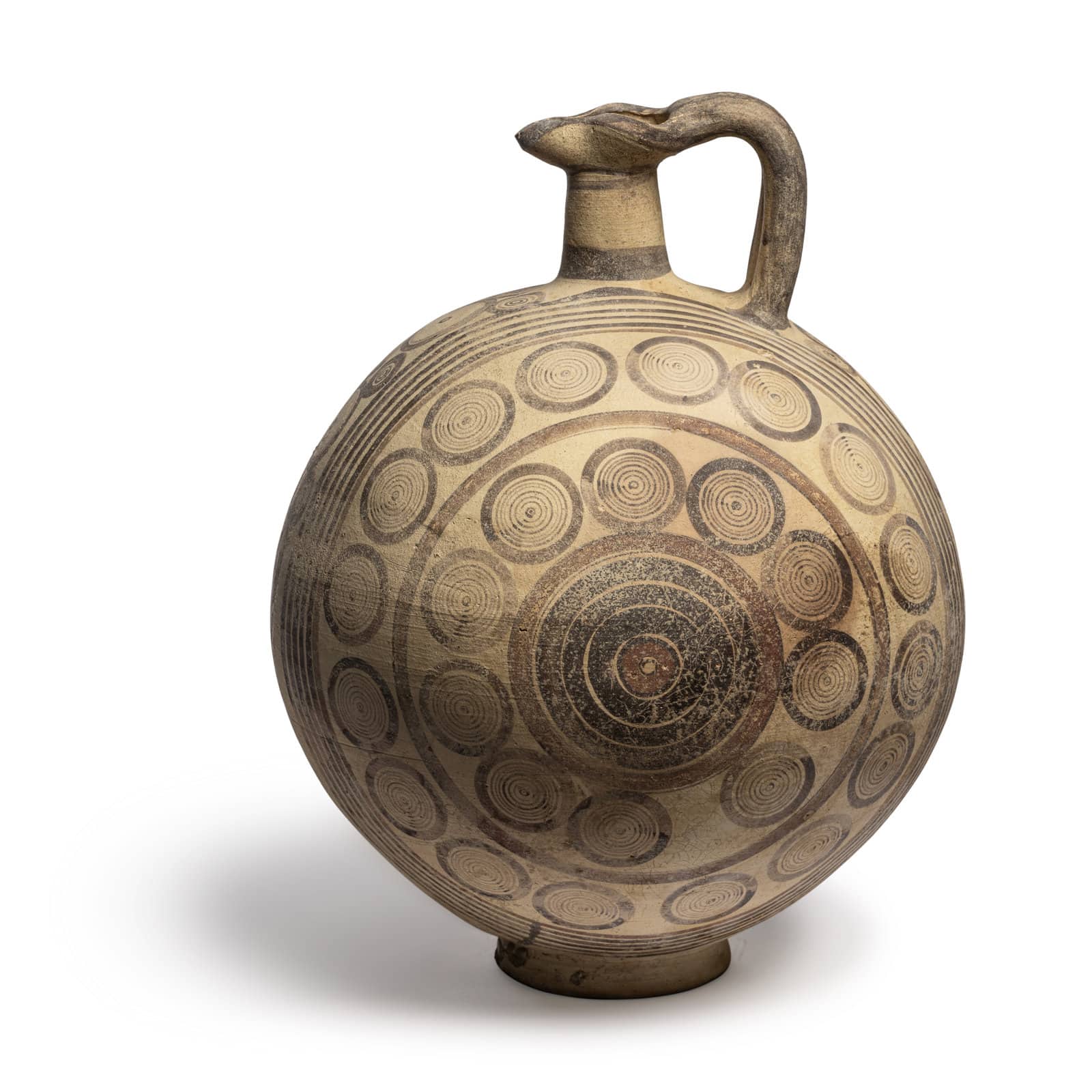
A Cypriot Bichrome-Ware Oinochoe Jug
Archaic I
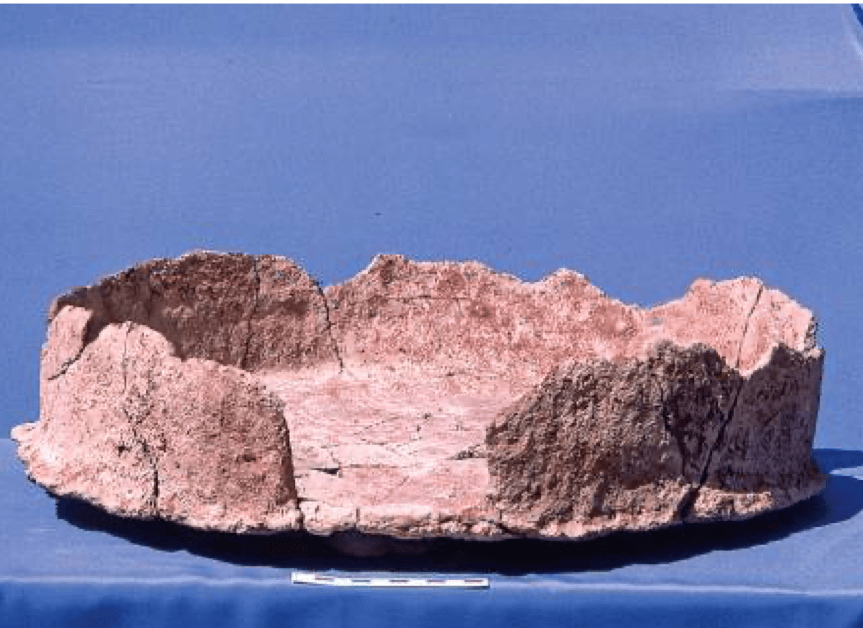
Flanged-base Tray
Chalcolithic
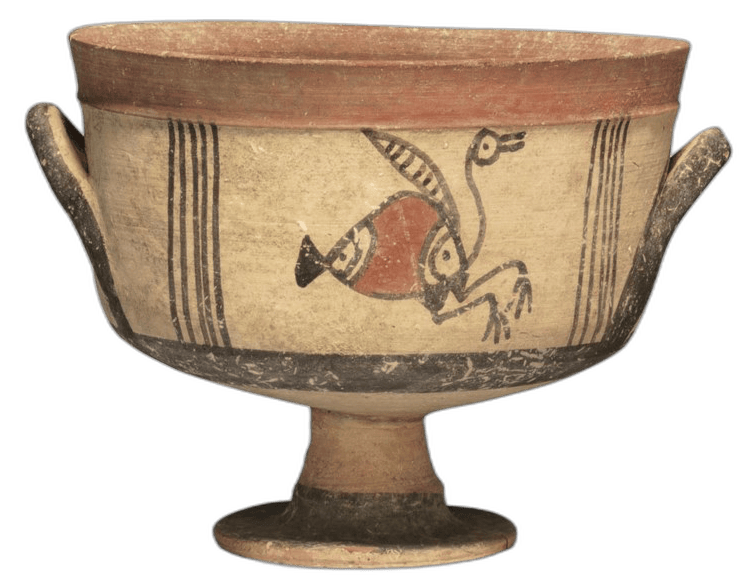
Bichrome Kylix with Bird Free Field Art
Geometric III
Oinochoe with Free Field Bird
Archaic I
Small Oinochoe with Free Field Bird
Archaic I
Red Polished Shrine
Middle Bronze Age I
Black-On-Red Geometric Jug Sherd
Geometric II
Bichrome Jug
Geometric
Bichrome Juglet
Geometric
Bichrome Oinochoe
Geometric