
Lecture·Archaeological Research Unit - University of Cyprus·2022
Social and ritual practices at Middle Bronze Age Erimi-Laonin tou Porakou
Chapters
About the lecture
Luca Bombardieri of the University of Siena presents evidence from nearly fifteen years of excavation at Erimi-Laonin tou Porakou in the Kouris River valley, focusing on how foundation and abandonment activities reflect communal ritual practices in the Middle Bronze Age. Beginning with recent work by Jenny Webb, Bernard Knapp, Lindy Crewe, Despo Pilides and Andrew Sneddon that has defined the period between Early Bronze Age villages and Late Bronze Age towns, he introduces Erimi as a hilltop settlement occupied from the transition to Middle Cypriot I until just before Late Cypriot I, with Red Polished ware, imported Drab Polished ware and late Plain White ware.
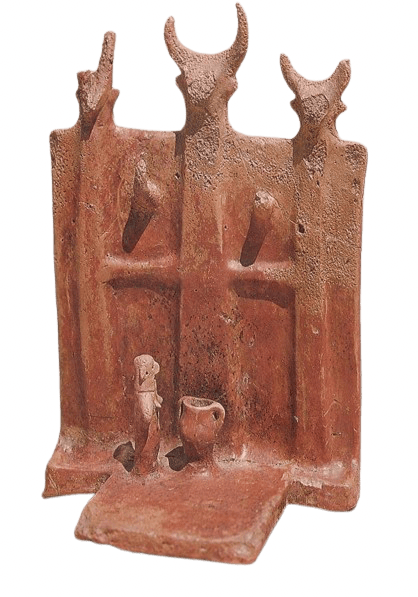
The settlement is arranged on limestone terraces with a 700-square-metre textile and dyeing workshop on the hilltop, residential quarters on the slopes, a 95-metre circuit wall separating the living and funerary zones, and extramural rock-cut cemeteries. Along the exterior of the circuit wall, four aligned shallow pits held three intact vessels that Bombardieri interprets as foundation deposits. Within the workshop, where botanical remains of Boraginaceae roots indicate red-violet dyeing, Unit SA5 contained a 2.3-metre dressed limestone monolith facing a hearth and amphora, alongside a wall basin holding an intact juglet, while a shallow basin in nearby Unit SA8 held a bird-shaped askos. A smaller plastered stone painted with imported hematite pigment stood in a niche in Tomb 467. Bombardieri compares these standing stones and hearth arrangements with carved dromos reliefs and buttressed chambers at Karmi, Vounous and Lapithos, and with clay sanctuary models such as the one from Marki-Alonia.
Turning to mortuary evidence and abandonment, the talk reports stable isotope analysis showing higher animal protein intake among males, especially in the wealthy Tomb 248. In residential Unit T31, the prone skeleton of a young woman aged fifteen to eighteen with a diamond-shaped cranial lesion was found with a second individual and two Red Polished bowls, a practice of intramural burial predominantly affecting young women that Bombardieri compares with finds at Marki-Alonia, Sotira-Kaminoudhia and Alambra-Mouttes. Finally, he argues that six of eleven workshop units, along with non-contiguous domestic units, were deliberately burned from the roof and closed down with placed objects, including a goat-shaped askos and used terracotta moulds for axe-shaped ingots. He concludes that as Erimi developed supra-household organization around its textile industry, ritual moved from individual houses into the shared communal space of the central workshop.
From our collection
Pieces in the Drakopoulos collection of the kinds and periods this talk covers: Red Polished ware.
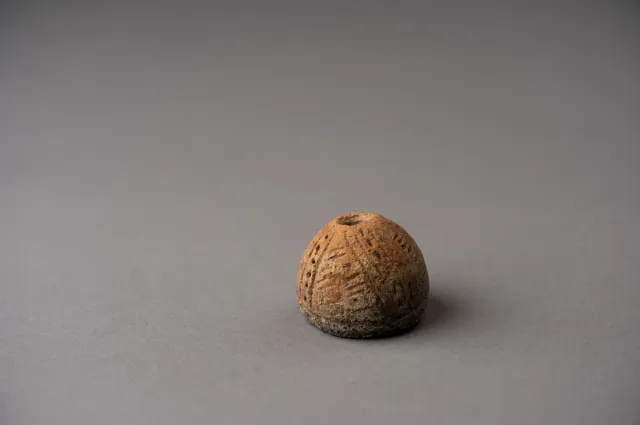
Red Polished Spindle Whorl with Incised Lattice and Dotted Bands
Red Polished ware
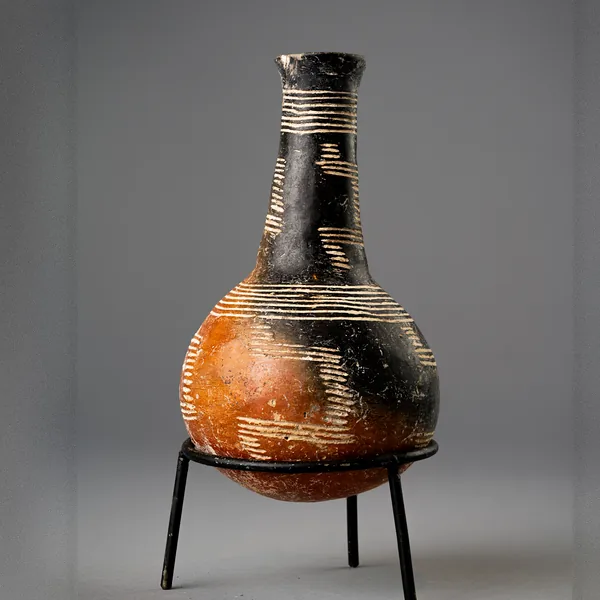
Red Polished Black-Topped Bottle with Stepped Incised Bands
Red Polished ware
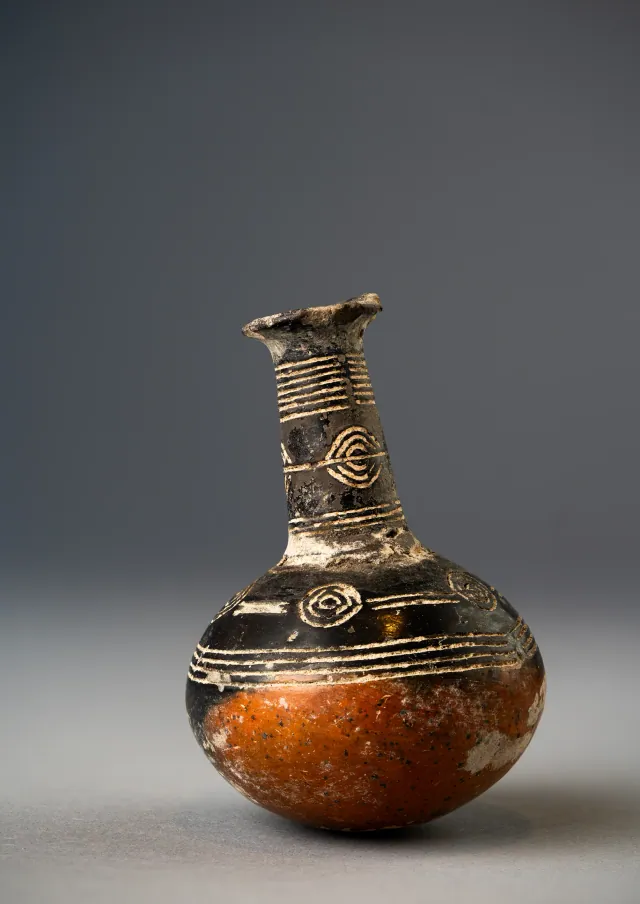
Red Polished Black-Topped Bottle with Incised Concentric Circles
Red Polished ware
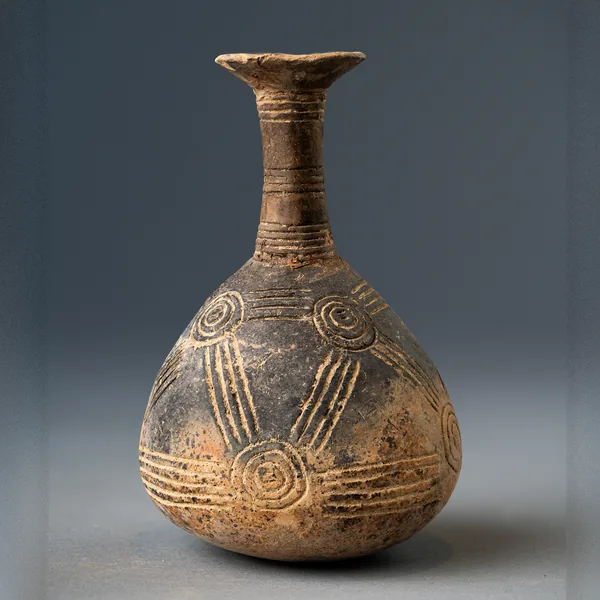
Red Polished Bottle with Linked Concentric Circles
Red Polished ware
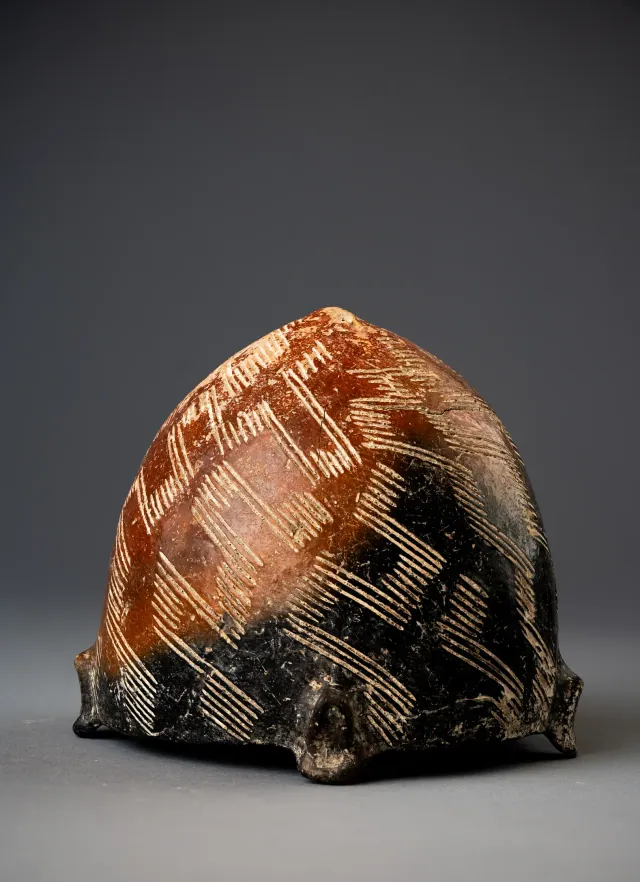
Black-topped Red Polished Tulip Bowl with Incised Hatched Lattice
Red Polished ware
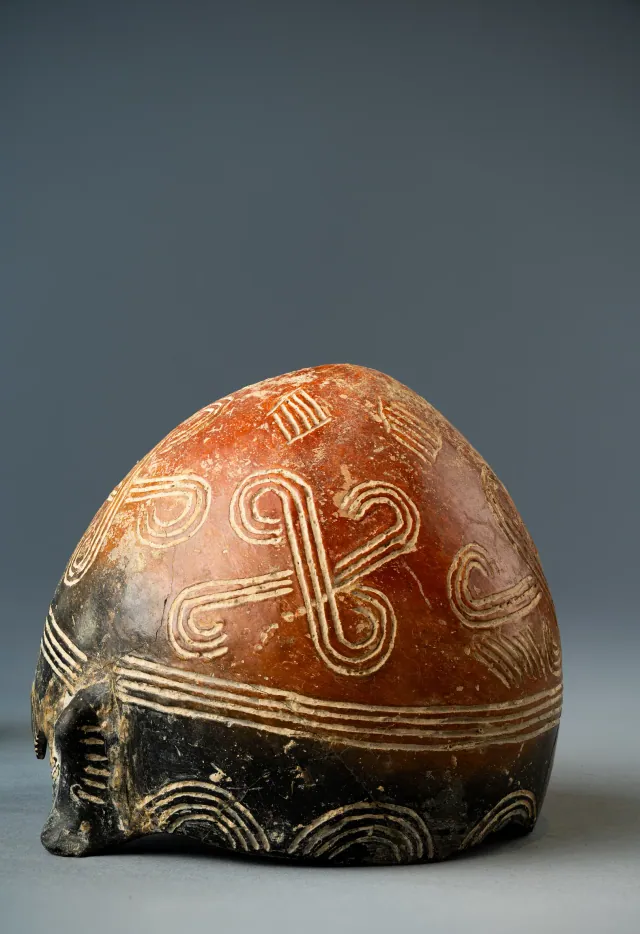
Black-topped Red Polished Tulip Bowl with Incised Spiral-armed Cross, Circles and Arcades
Red Polished ware
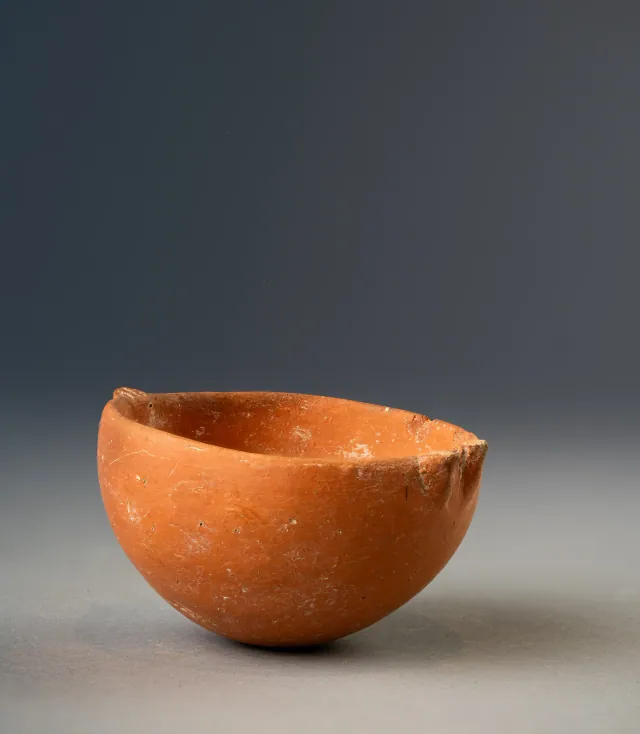
Red Polished Hemispherical Bowl with Two Rim Lugs
Red Polished ware
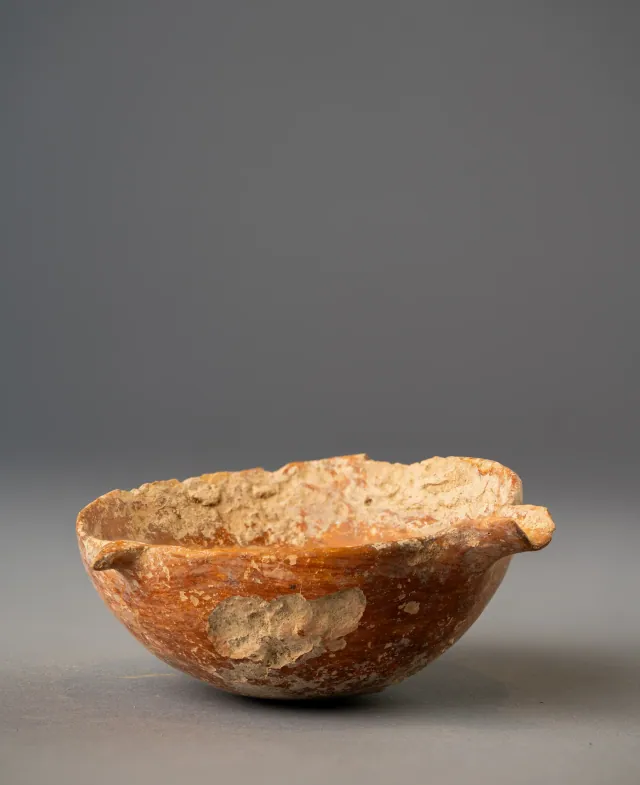
Red Polished Bowl with Two Opposed Tab Lugs
Red Polished ware
Found at the places discussed
Objects in our catalogue, in museum collections, recorded as found at these sites.


Background
Where to read more on this site before or after watching.
The site
Erimi
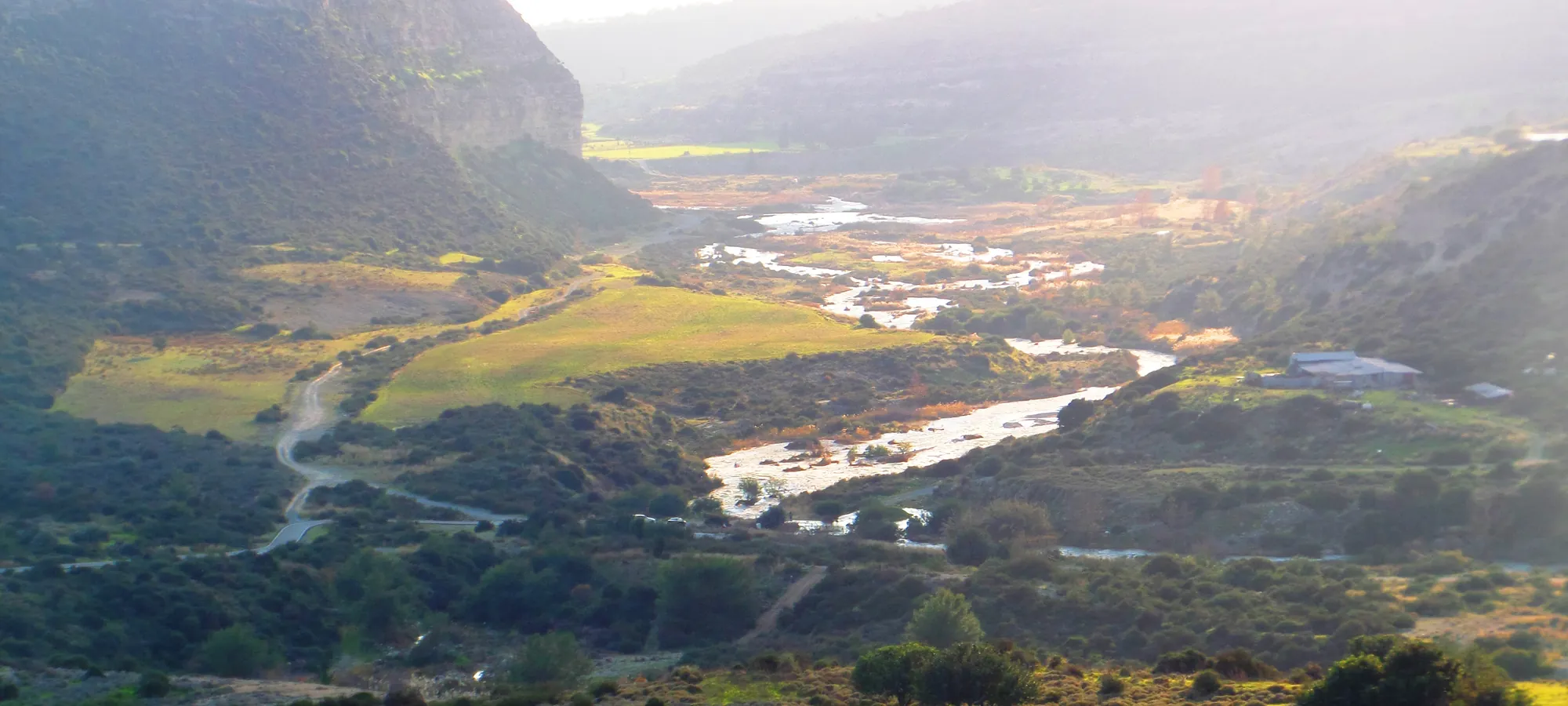
Two prehistoric sites in the lower Kouris valley near Erimi, many centuries apart: Erimi-Pamboula, the Chalcolithic village that gave its name to the Erimi culture, lived in from the mid-4th millennium BC to about 3000 BC, and Erimi-Laonin tou Porakou, a Middle Bronze Age community of about 1960 to 1650 BC with a hilltop workshop complex, houses, a circuit wall and rock-cut tombs.
In the compendium
Early and Middle Bronze Age Houses
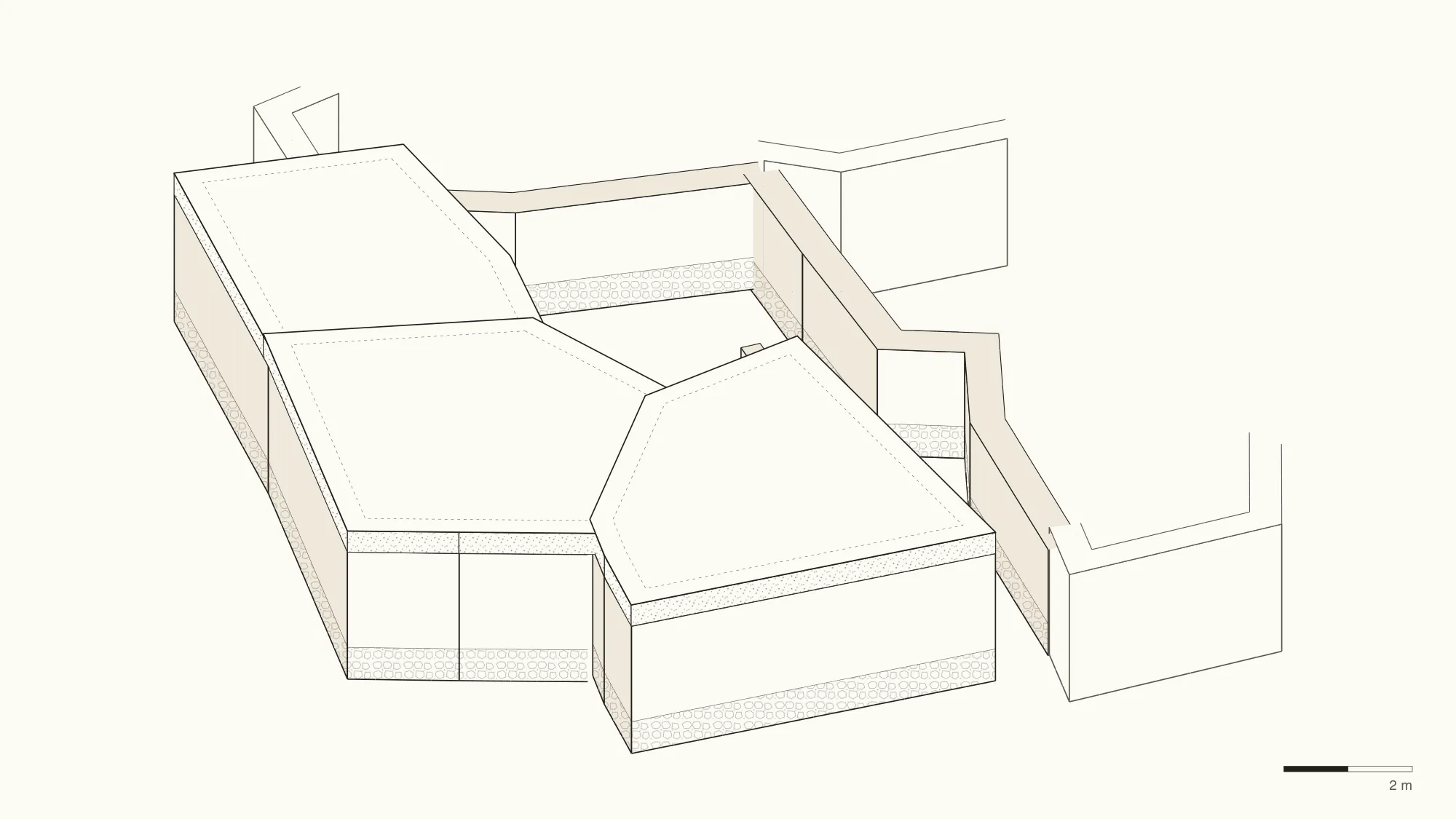
From about 2400 BC Cypriot villagers built rectangular, multi-roomed houses, usually a walled courtyard with two or three roofed rooms behind it.
In the compendium
Clay Models
Freestanding miniature models of buildings, cult places, work scenes, boats, vehicles and furniture made in Cyprus from the Chalcolithic to the Cypro-Archaic period.
In the compendium
Food and Diet in Ancient Cyprus
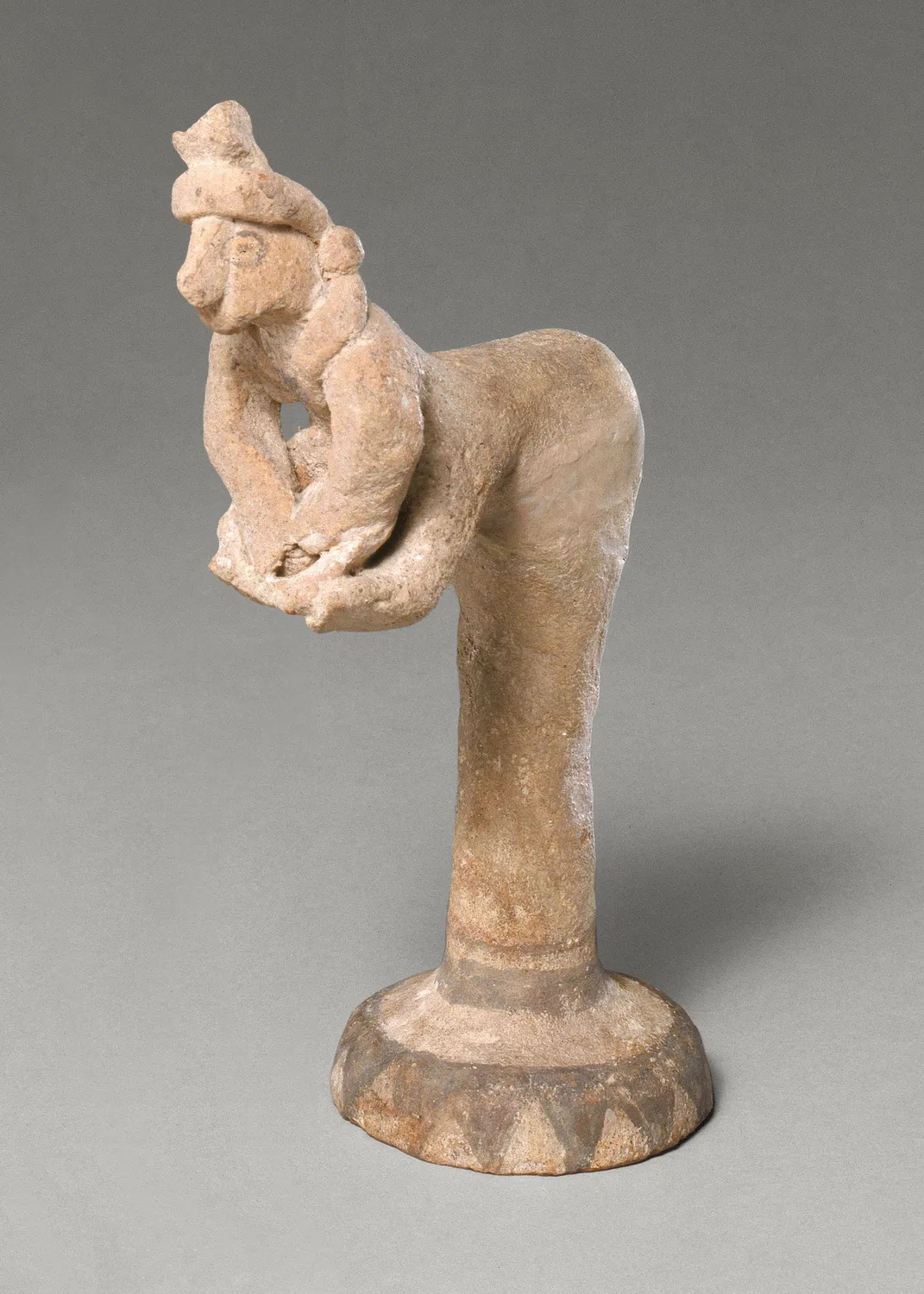
What Cypriots grew, herded, hunted, cooked and drank from the first Neolithic villages to the end of the Cypro-Archaic period.
Map of Cyprus
Places discussed in the talk
- Has a page on this site
- Other places
- Ground above 200, 500, 1,000 m
Places
- 1Erimi-Laonin tou Porakou
- 2Vounous (approx.)
- 3Lapithos
- 4Marki-Alonia
- 5Sotira-Kaminoudhia
- 6Alambra-Mouttes