
Lecture·CAARI Cyprus·2024
Bronze Age Life and Landscape at Politiko-Troullia, Cyprus
Chapters
About the lecture
Steve Falconer of the University of North Carolina at Charlotte presents the completed excavations that he and Pat Fall directed at the Prehistoric Bronze Age settlement of Politiko-Troullia in the copper-bearing pillow lavas of the Troodos foothills, just upslope from Iron Age Tamassos. Identified during the Sydney Cyprus Survey, the site covers about twenty hectares across the buried village and the adjacent terraced hillsides of Politiko-Koloiokremmos. Soil resistivity survey and excavation in three areas, West, North and East, exposed over three metres of stratified deposits across six generational phases. Bayesian modelling of twenty-three radiocarbon dates places the occupation between about 2050 and 1850 cal BCE, overlapping with Marki-Alonia and following Sotira-Kaminoudhia. The pottery is eighty-five to ninety percent Red Polished ware, with White Painted ware appearing in the later three phases.
In Politiko-Troullia West, two large unroofed courtyards (eight by twelve metres) and an alley leading toward Kamares Creek were accompanied by an intramural well entered through a pillared threshold. Around 1980 BCE, between Phases 3 and 2, the villagers capped the well with limestone and shifted their walls upslope by a metre to a metre and a half. Falconer attributes this shift to stream downcutting and erosion during a rebound of higher rainfall following the 4.2 ka drying event. The southern courtyard held complete butchered skeletons of Mesopotamian fallow deer from communal feasting, alongside gaming stones, a partridge-shaped zoomorphic vessel, ceramic plank figurines, a 38-centimetre gender-ambiguous stone plank figure, and incised spindle whorls. An adjacent burned complex from the final phase contained mudbrick bins, storage jars and small vats that may have served as a textile-dyeing workshop.
Politiko-Troullia North and East, initially expected to be ordinary farming households, instead produced evidence for the full chain of copper metallurgy: ore, tap slag, crucible fragments, a tuyere, a pit furnace, bronze tongs, a limestone mould for casting a dagger, chisel and axe, and a dagger haft.
Flotation recovered grape and olive remains from orchard terraces on the hillsides, while carbon and nitrogen stable isotope analysis of 140 animal bones distinguishes cattle and sheep grazed on manured fields near the village from free-browsing goats and hunted wild deer and feral pigs in the oak and pine forests. Falconer contrasts this specialised Bronze Age regime with homogeneous Neolithic values at Ais Giorkis and with the deforested anthropogenic surroundings of contemporaneous Tell el-Hayyat in Jordan.
From our collection
Pieces in the Drakopoulos collection of the kinds and periods this talk covers: Red Polished ware.
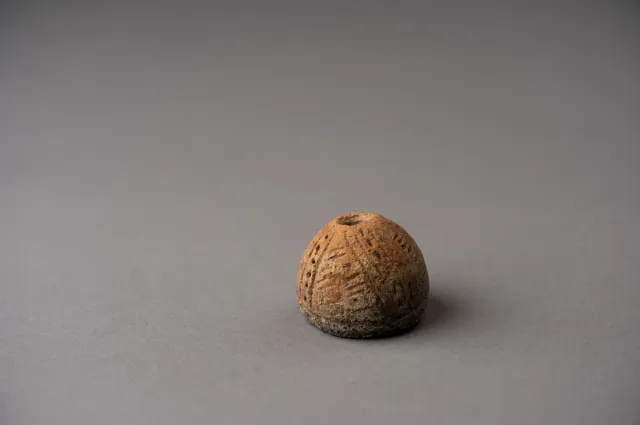
Red Polished Spindle Whorl with Incised Lattice and Dotted Bands
Red Polished ware
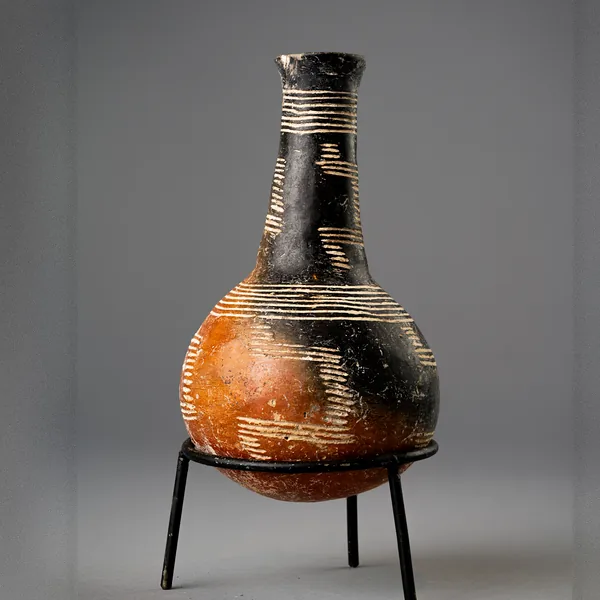
Red Polished Black-Topped Bottle with Stepped Incised Bands
Red Polished ware
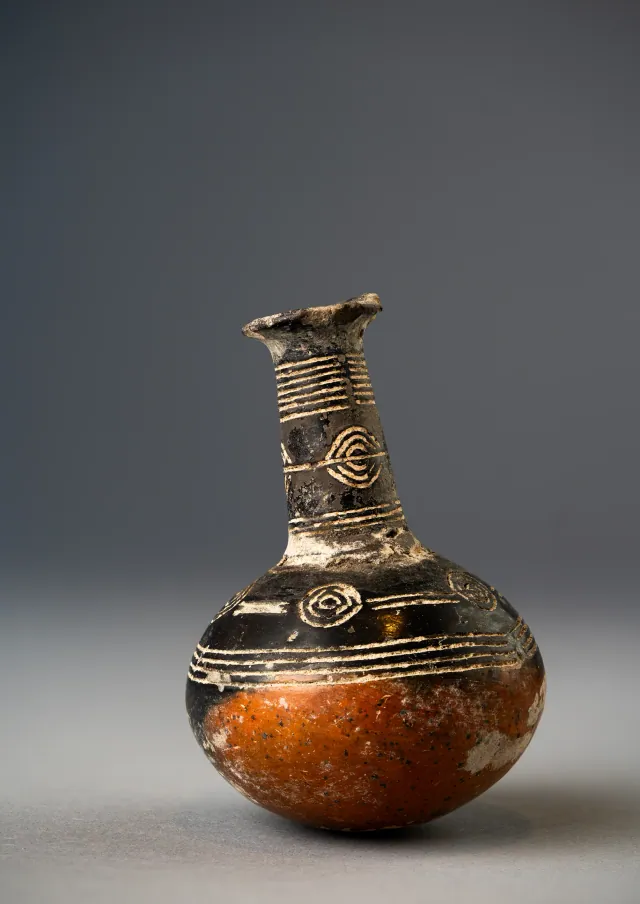
Red Polished Black-Topped Bottle with Incised Concentric Circles
Red Polished ware
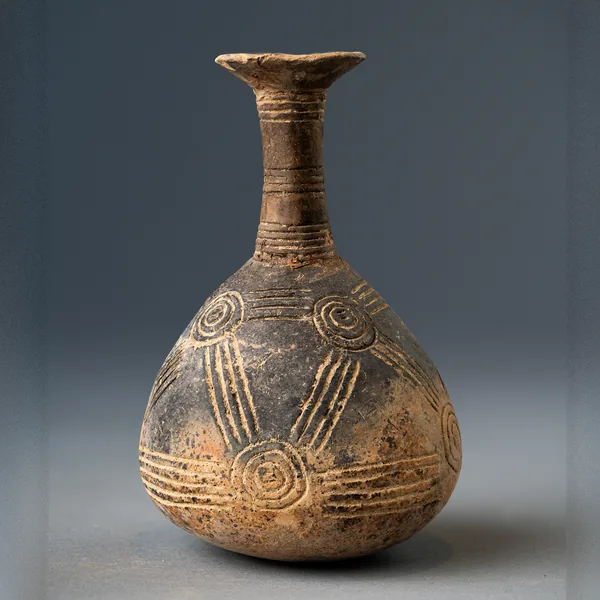
Red Polished Bottle with Linked Concentric Circles
Red Polished ware
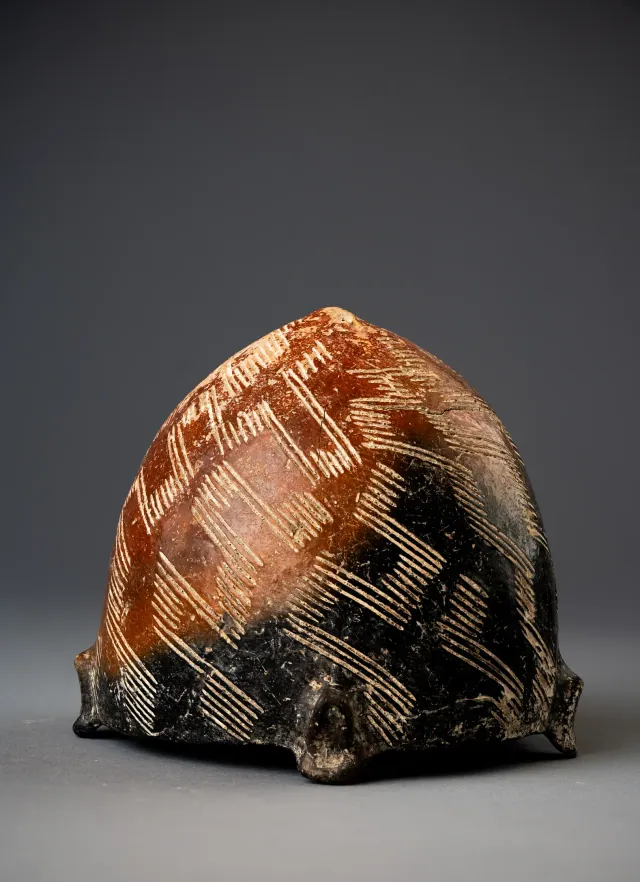
Black-topped Red Polished Tulip Bowl with Incised Hatched Lattice
Red Polished ware
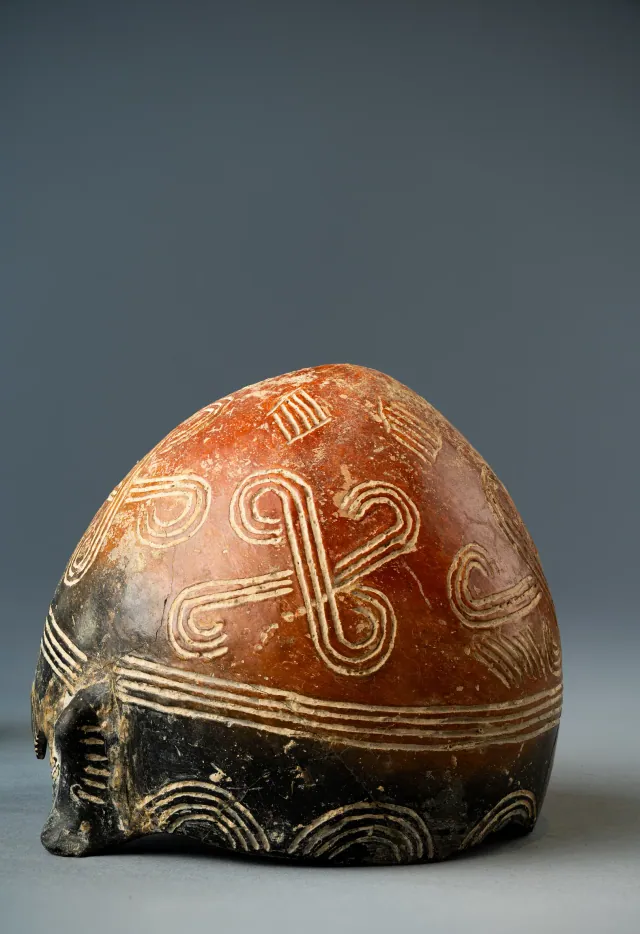
Black-topped Red Polished Tulip Bowl with Incised Spiral-armed Cross, Circles and Arcades
Red Polished ware
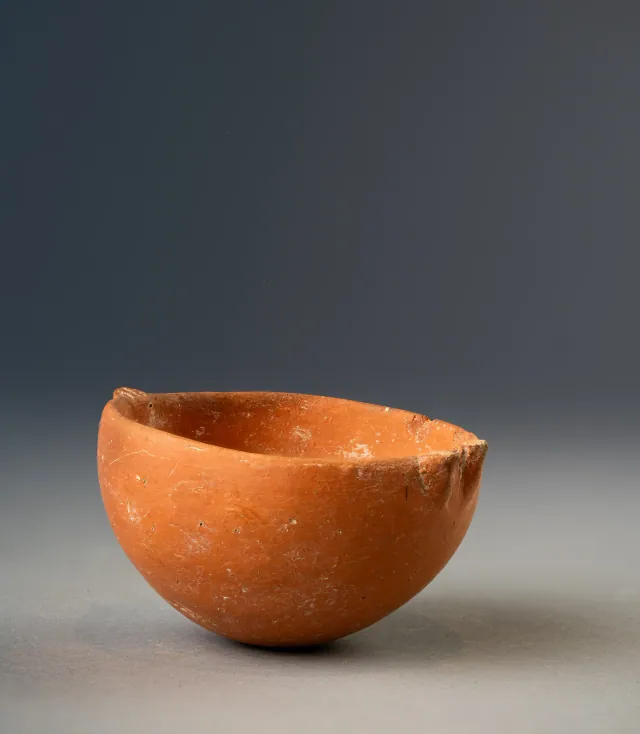
Red Polished Hemispherical Bowl with Two Rim Lugs
Red Polished ware
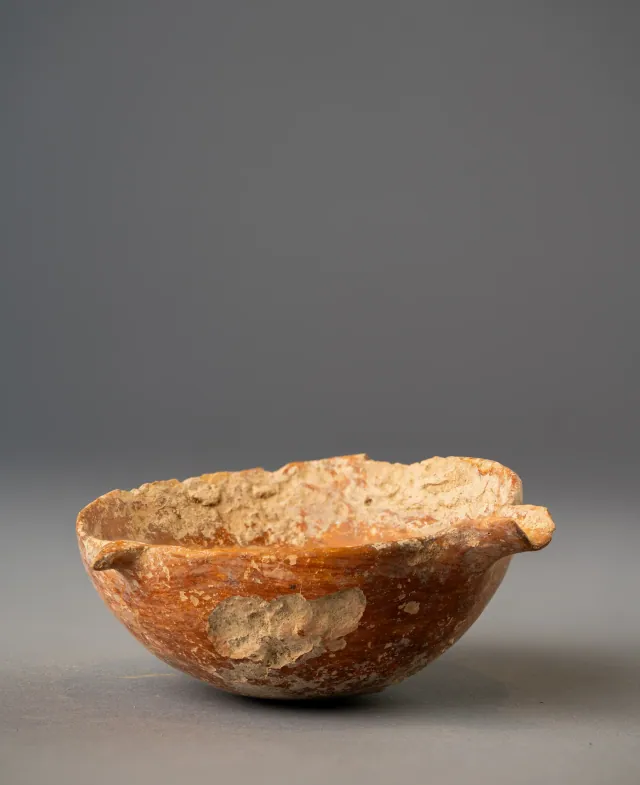
Red Polished Bowl with Two Opposed Tab Lugs
Red Polished ware
Background
Where to read more on this site before or after watching.
The site
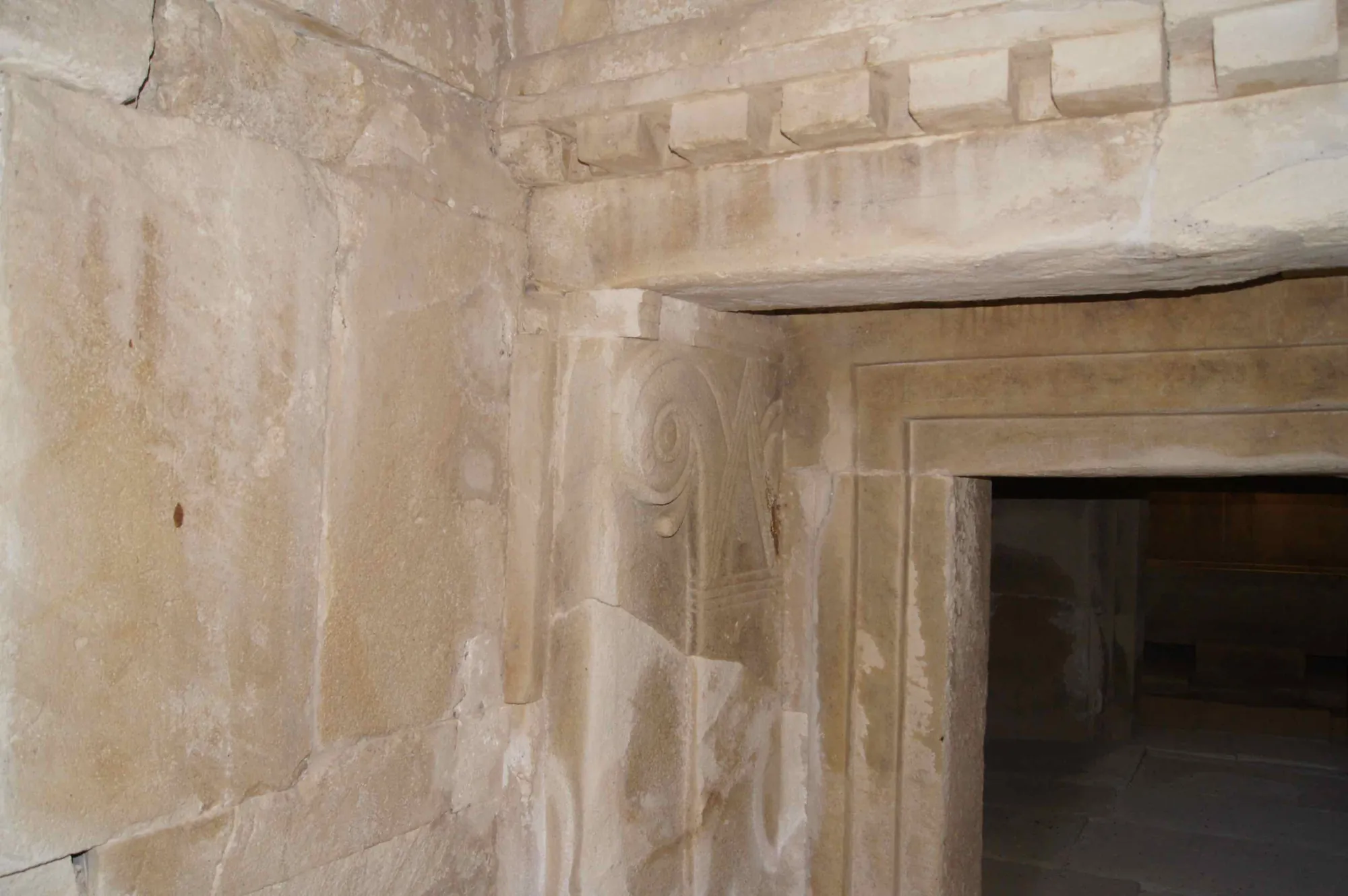
Tamassos
Tamassos was one of the Iron Age kingdoms of Cyprus, at the modern village of Politiko in the copper-bearing foothills of the Troodos. It is named among the ten Cypriot kingdoms on the prism of Esarhaddon (673/2 BC), was sold by its last king Pasikypros to Pumiathon of Kition in the 4th century BC, and is known for its built royal tombs, a sanctuary of Aphrodite-Astarte beside copper workshops, and the sanctuary of Apollo at Frangissa.
In the compendium
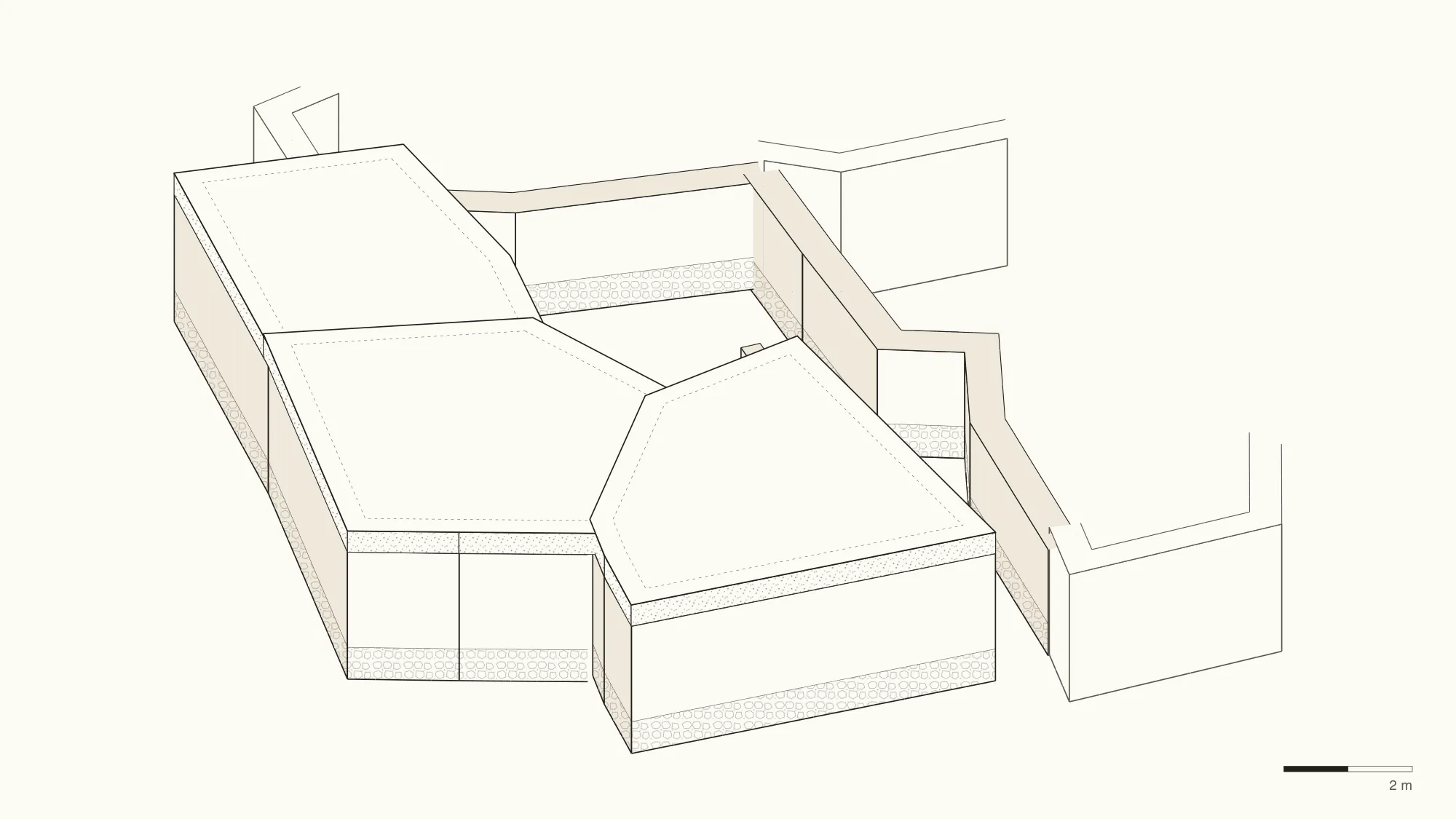
Early and Middle Bronze Age Houses
From about 2400 BC Cypriot villagers built rectangular, multi-roomed houses, usually a walled courtyard with two or three roofed rooms behind it.
In the compendium
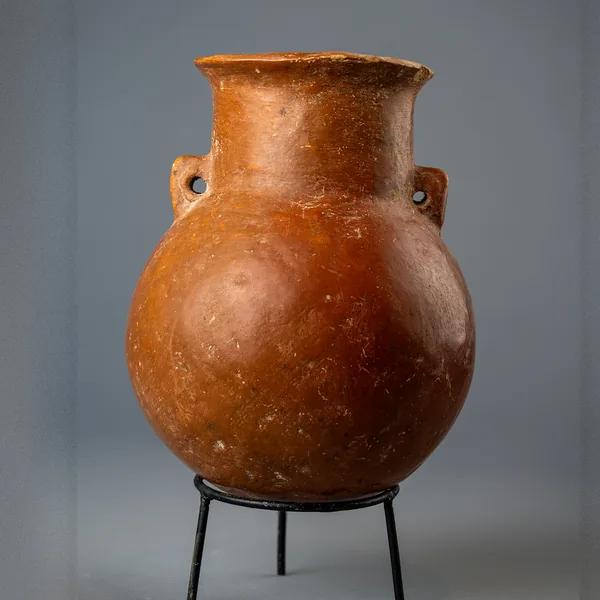
Village Life in Early Bronze Age Cyprus
Everyday life in the unwalled farming villages of Philia and Early Cypriot Cyprus, known best from the excavated settlements of Marki-Alonia and Sotira-Kaminoudhia.
In the compendium
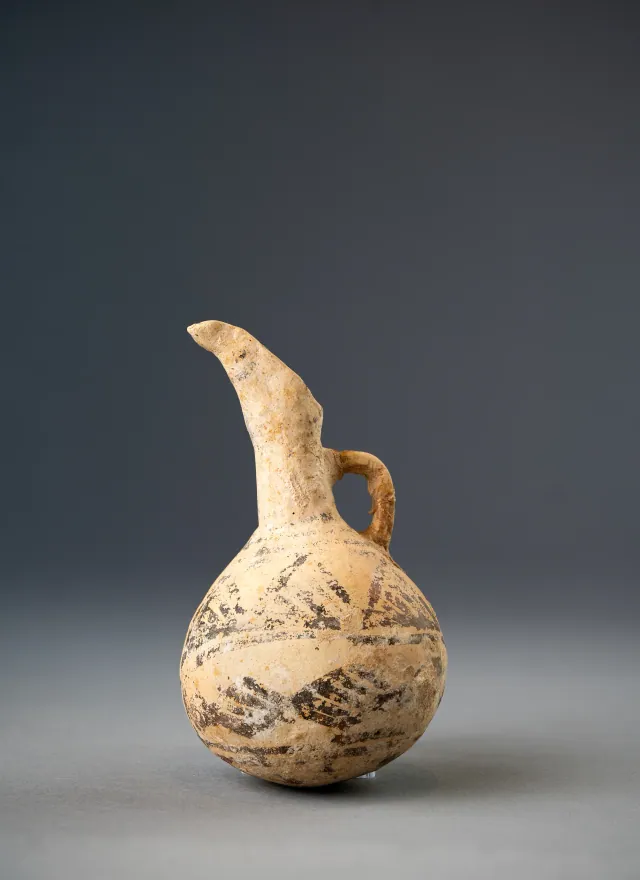
Village Life in Middle Bronze Age Cyprus
Everyday life in Middle Cypriot villages, where households farmed, herded and made their own pots, copper tools and thread in courtyard compounds.
Map of Cyprus
Places discussed in the talk
- Has a page on this site
- Other places
- Ground above 200, 500, 1,000 m
Places
- 1Politiko-Troullia (approx.)
- 2Tamassos
- 3Sotira-Kaminoudhia
- 4Marki-Alonia
- 5Ais Giorkis