
Lecture·CAARI Cyprus·2022
(Re)Connecting Cyprus: Exchange Networks and Society in the Third Millennium BCE
Chapters
About the lecture
Bleda Düring of Leiden University examines how Cyprus engaged with the wider eastern Mediterranean during the third millennium BCE, re-evaluating the transition from the Chalcolithic to the Philia phase at the beginning of the Early Bronze Age (c. 2500 to 2200 BCE). Drawing on his background in Anatolian prehistory and his excavations at Chlorakas-Palloures, Düring questions both the view of prehistoric Cyprus as an isolated island and the model of the Philia phase as a single, sudden package brought by Anatolian colonists.
He begins with how island biogeography and the idea of an "Easter Island syndrome" have shaped interpretations of the Neolithic and Chalcolithic periods as idiosyncratic and cut off from the mainland. Considering walking times across the island and population estimates of 100,000 to 200,000 people, he asks whether prehistoric inhabitants experienced Cyprus as a small, closed world. Following Diane Bolger, he argues that differences in material culture do not prove a lack of contact, pointing to mainland links across the Khirokitian, Ceramic Neolithic, and Chalcolithic periods: carnelian and faience beads, chipped stone traditions, Cypriot pottery at Tarsus, spurred annular pendants, objects made of Anatolian metal, and Anatolian-style figurines carved in local picrolite.
Turning to the Philia package (copper metallurgy, rectangular architecture, cattle, donkeys, the plough, spindle whorls and looms, cooking pots, and Anatolian-style pottery), Düring notes the logistical difficulty of shipping biologically viable herds of 200 to 500 animals in a single colonisation event, comparing Jean-Daniel Vigne's model of gradual Neolithic animal introductions. Several supposed Philia traits, including spiral metal ornaments, spurred annular beads, metallurgy, and possibly tubular drills attested at Palloures, already appear in the Late Chalcolithic, while plough and donkey models date centuries later. He suggests stretching the transition over several centuries.
Looking from Anatolia, Düring builds on Jennifer Webb's observation that spurred annular pendants were "lost in translation", pierced on the opposite side from Anatolian examples, and on Machteld Mellink's characterisation of Philia pottery as selectively Anatolianising rather than imported. Many Early Bronze II Cilician shapes are absent in Cyprus, while deep spouted bowls continue from the Chalcolithic. Courtyard compounds at Marki differ from Anatolian megaron-plan settlements, and Philia collective rock-cut chamber tombs with dromoi and drinking sets contrast with western Anatolian single pithos and cist burials. Düring concludes by framing the relationship as a maintained cultural boundary that acted like a selective membrane, with goods and ideas moving primarily from Cilicia into Cyprus.
From our collection
Pieces in the Drakopoulos collection of the kinds and periods this talk covers: Neolithic, Early Cypriot (Early Bronze Age).
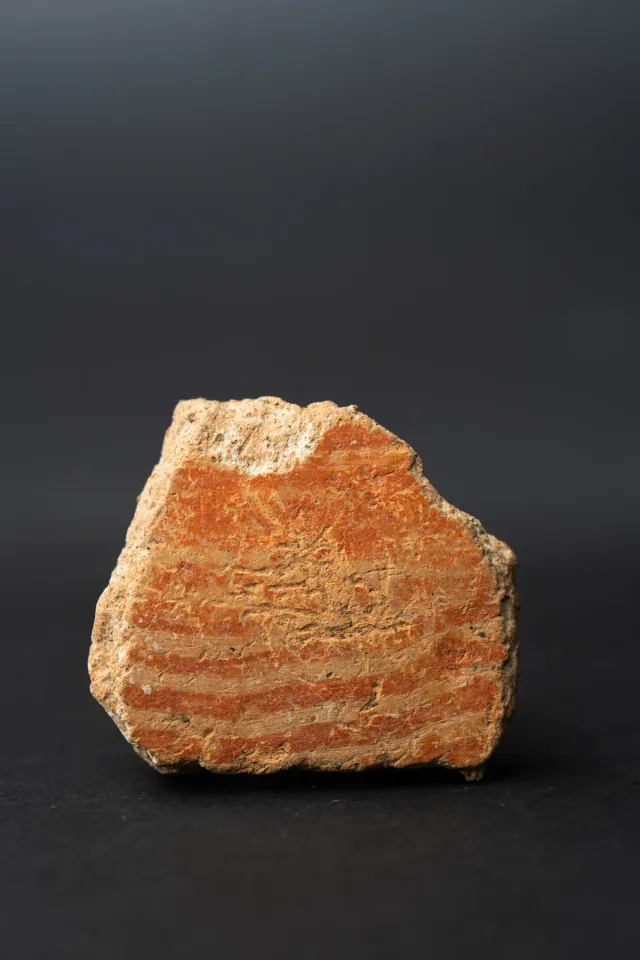
Combed Ware Bowl Fragment with Parallel Bands
Neolithic
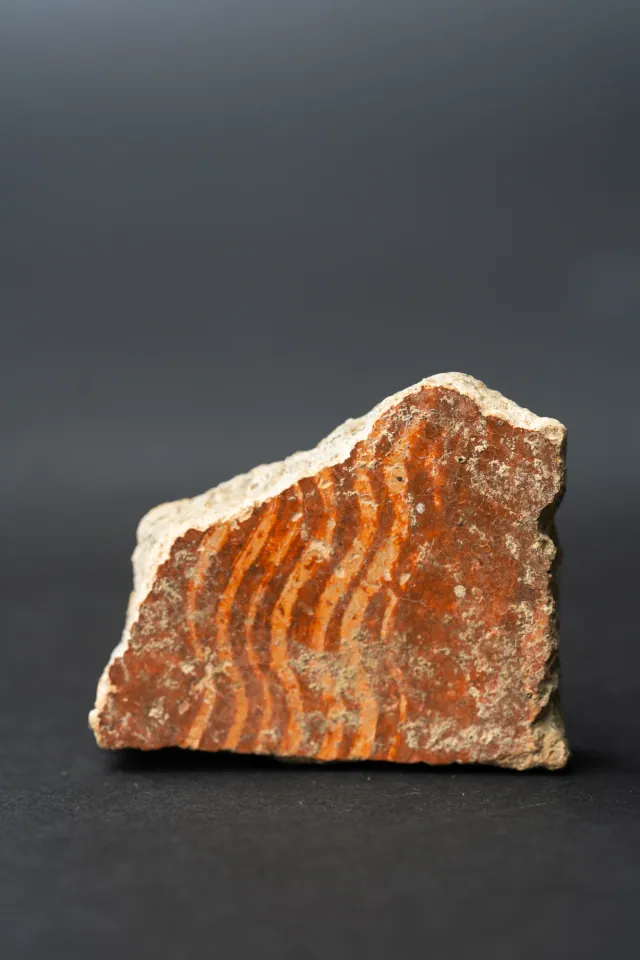
Combed Ware Bowl Fragment with Multiple Wavy Bands
Neolithic
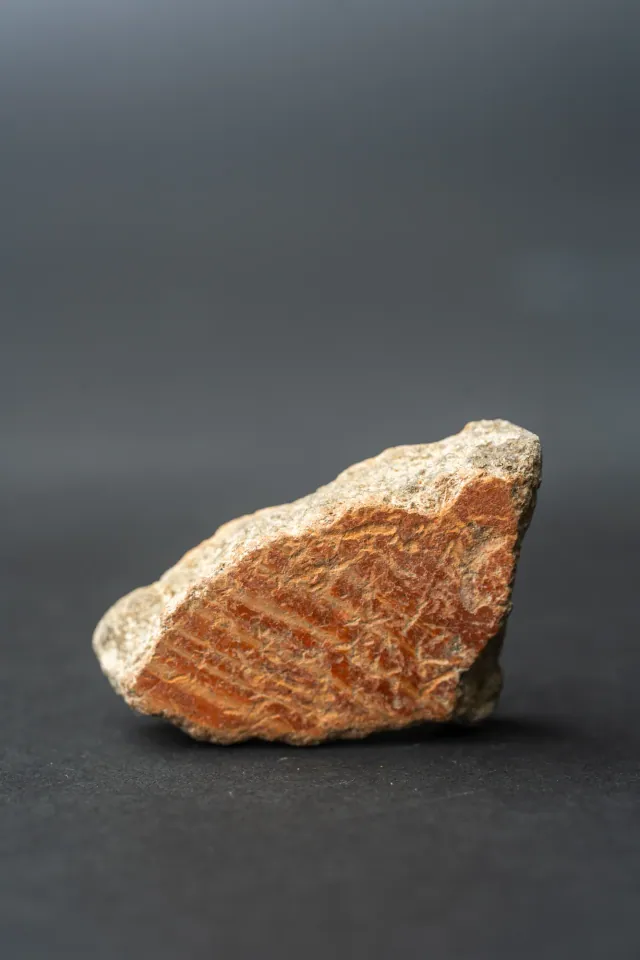
Combed Ware Bowl Fragment with Oblique Bands
Neolithic
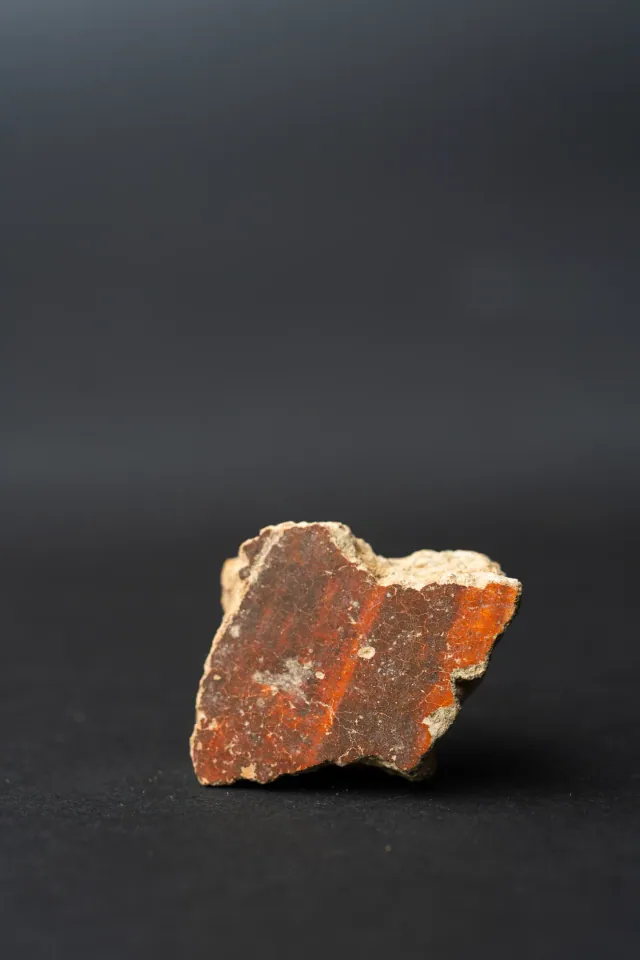
Red Lustrous Ware Body Sherd with Fire-Mottled Slip
Neolithic
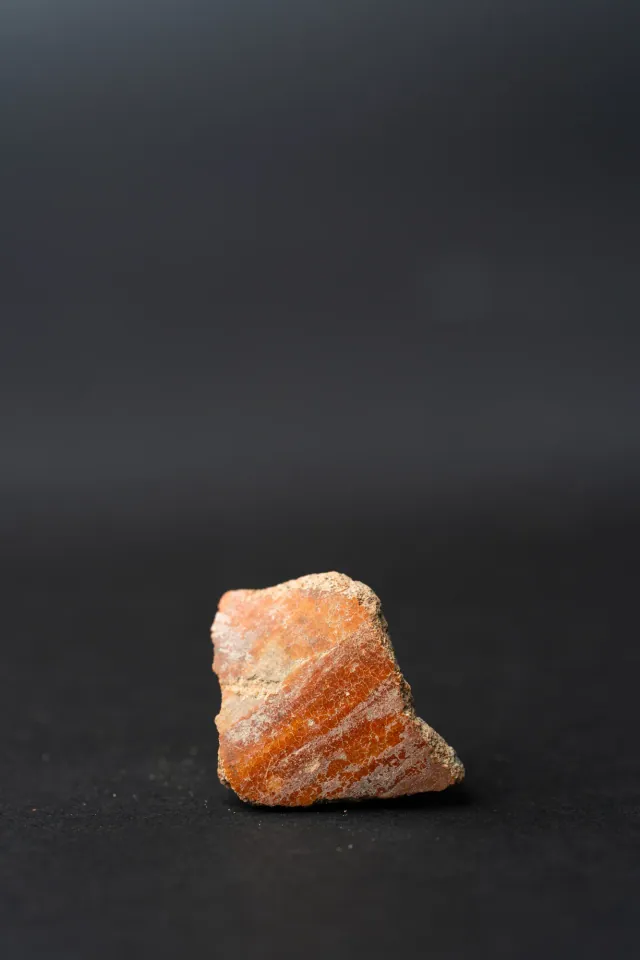
Red Slip Ware Body Sherd with Streaked Slip
Neolithic
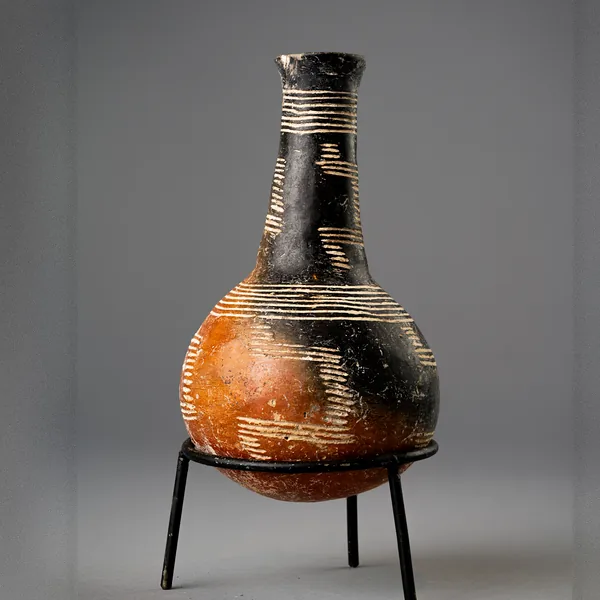
Red Polished Black-Topped Bottle with Stepped Incised Bands
Early Cypriot (Early Bronze Age)
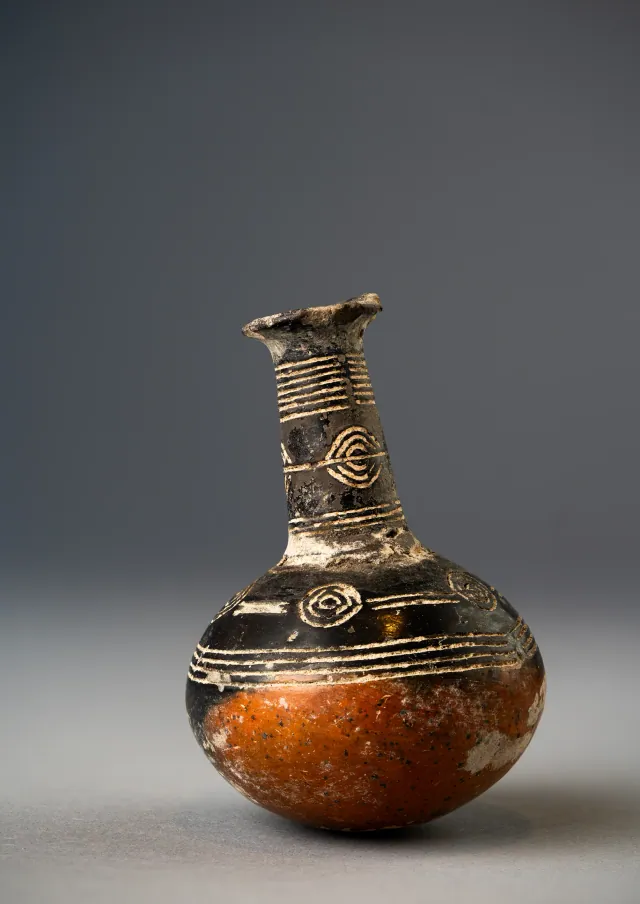
Red Polished Black-Topped Bottle with Incised Concentric Circles
Early Cypriot (Early Bronze Age)
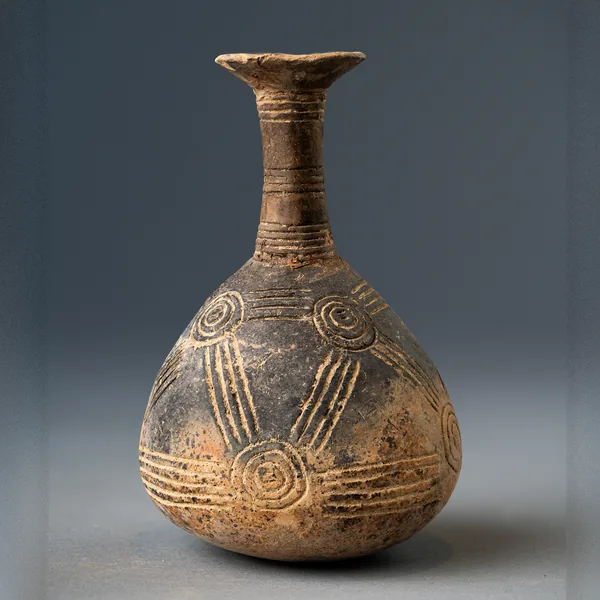
Red Polished Bottle with Linked Concentric Circles
Early Cypriot (Early Bronze Age)
Background
Where to read more on this site before or after watching.
The site
Chlorakas-Palloures
A Middle and Late Chalcolithic village on a terrace edge above the coastal plain at Chlorakas, north of Paphos, lived in from about 3400 to 2400 BC. Rescue excavation since 2015 has found the largest Late Chalcolithic round building yet known on Cyprus and the oldest securely dated copper axe from the island.
In the compendium
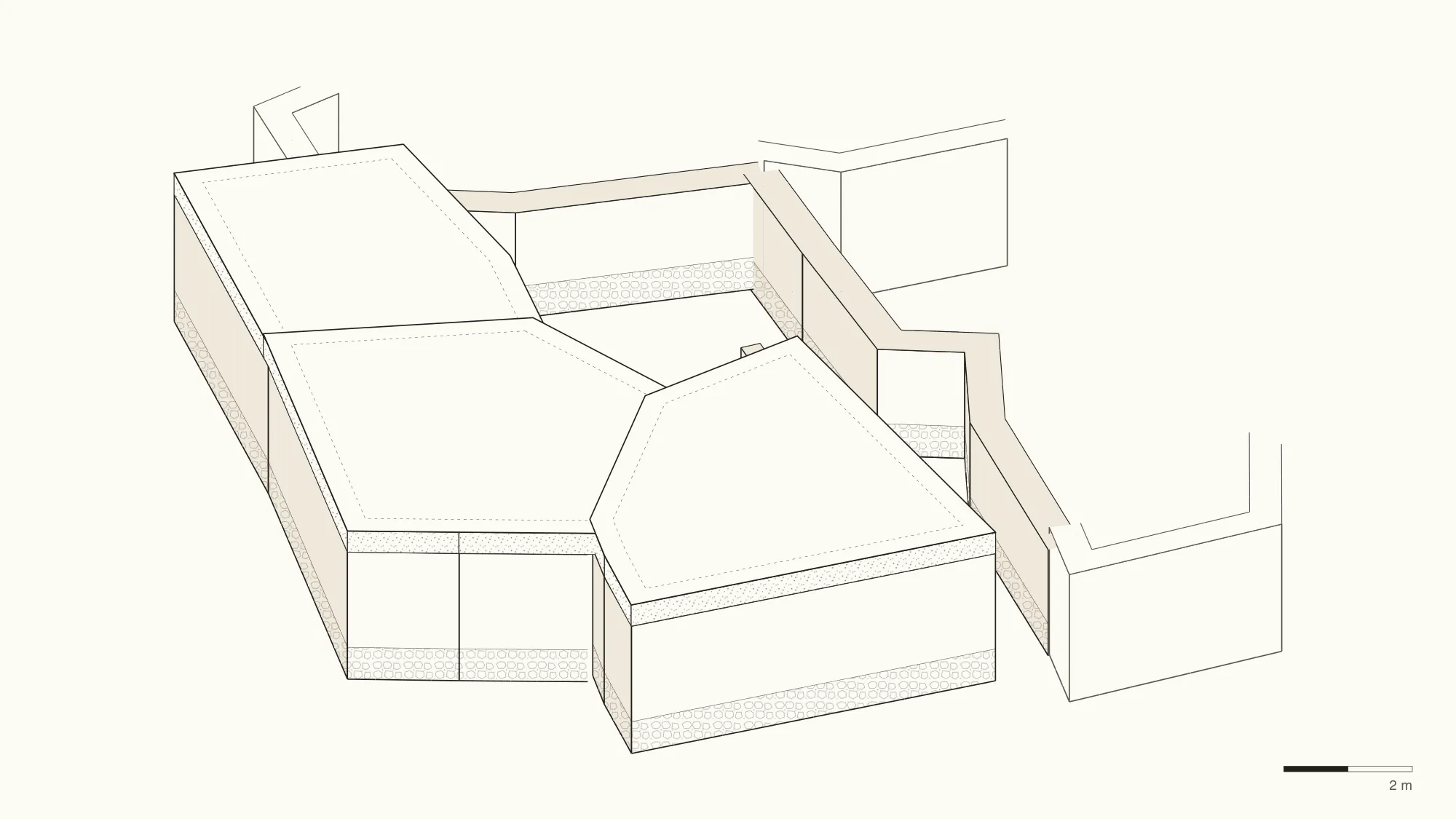
Early and Middle Bronze Age Houses
From about 2400 BC Cypriot villagers built rectangular, multi-roomed houses, usually a walled courtyard with two or three roofed rooms behind it.
In the compendium
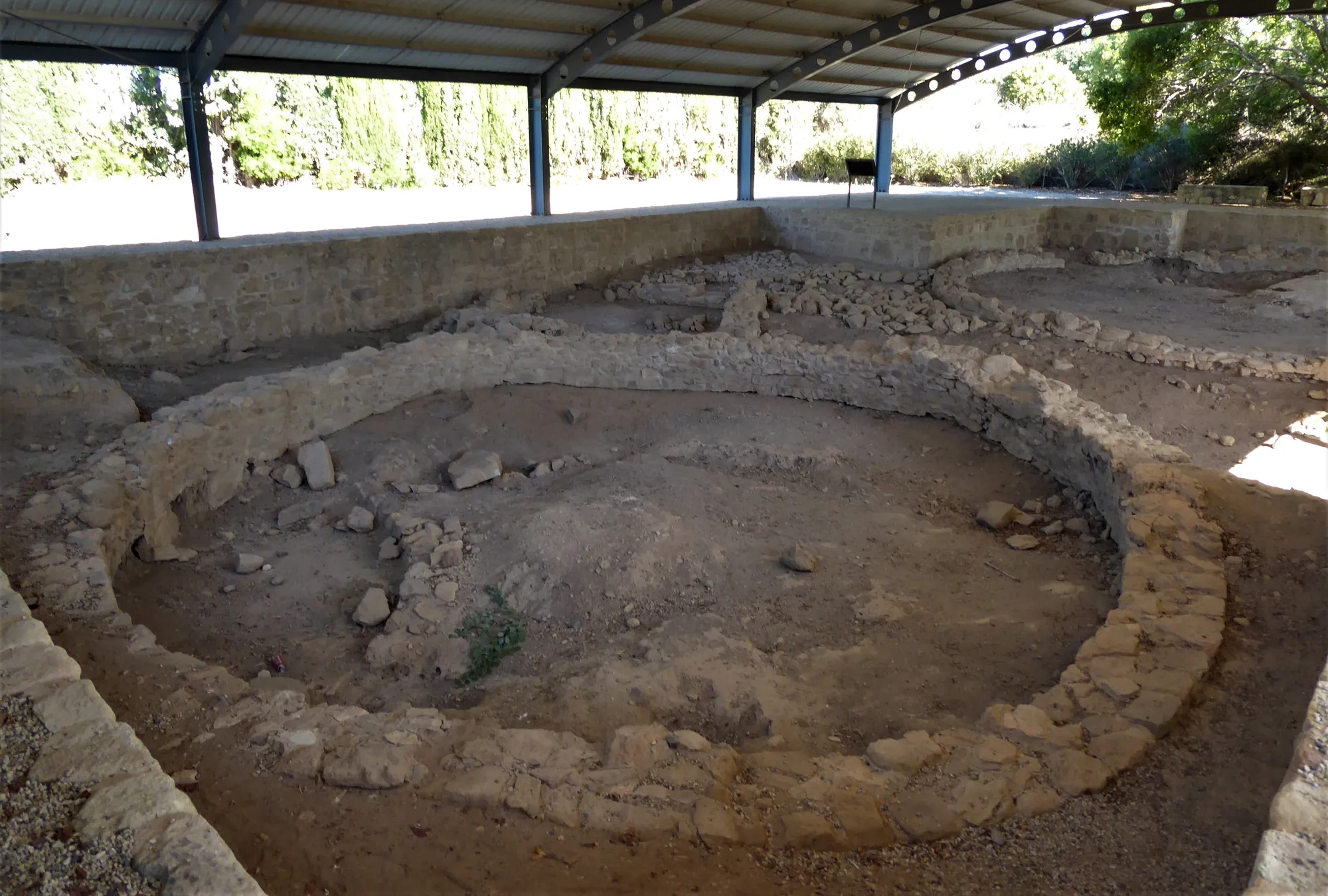
Chalcolithic Round Houses
The free-standing circular house of Chalcolithic Cyprus, from timber post rings to stone-footed great houses, and the Kissonerga building model.
In the compendium
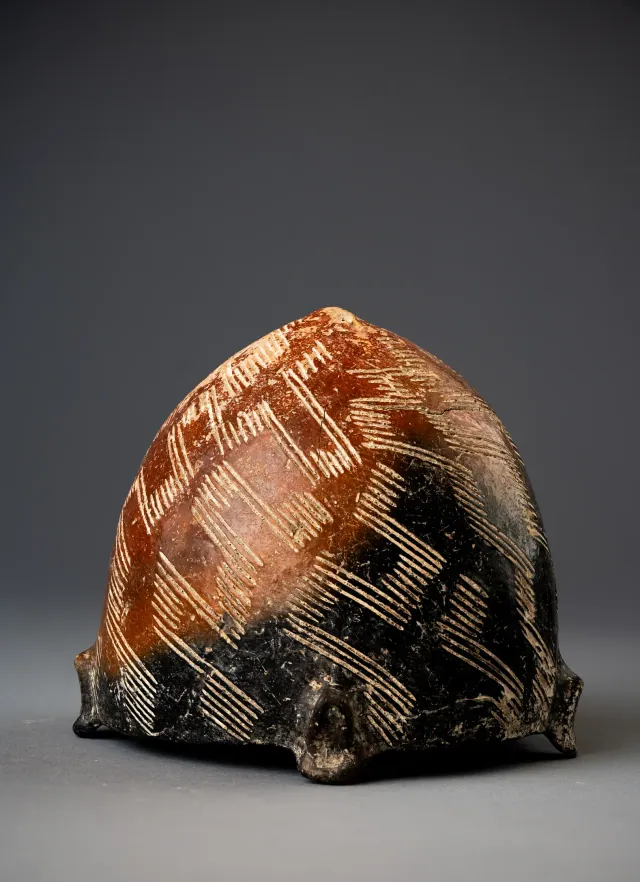
Bronze Age Chamber Tombs
Rock-cut chambers entered by a dromos and reopened for successive burials were the standard Cypriot grave from the Philia phase to the end of the Bronze Age.
Map of Cyprus
Places discussed in the talk
- Has a page on this site
- Other places
- Ground above 200, 500, 1,000 m
Places
- 1Chlorakas-Palloures
- 2Marki (approx.)