French archaeozoologist, born 1954, who studied the animals of Shillourokambos, published the 2004 Shillourokambos cat burial, and led the Klimonas excavation with François Briois and Jean Guilaine.
Biography
Jean-Denis Vigne is a French archaeozoologist, born in 1954, who worked in Jean Guilaine's team at Shillourokambos in Cyprus and later directed the excavation of Klimonas near Ayios Tychonas89.
Life and career
The French authority record IdRef gives his birth year as 1954, citing Le Monde of 14 January 20048. French Wikipedia alone gives the day and place, 9 July 1954 at Dreux, and a 1983 thesis in palaeontology at the Université P. et M. Curie on the post-glacial mammals of Corsica10. In 1987 he was chargé de recherche at the CNRS in the Laboratoire d'anatomie comparée of the Muséum national d'histoire naturelle8. His ORCID record lists him as Director of Research at the CNRS11. French Wikipedia also says, without other support here, that he led the Laboratoire d'Excellence "Diversités biologiques et culturelles" from 2011 to 2016 and was Directeur général délégué of the Muséum from 2017 to 202010. The 2023 Klimonas volume calls him directeur de recherche émérite at the CNRS, in the AASPE unit (UMR 7209)12.
Shillourokambos
Alexander Wasse says Shillourokambos was excavated by the French team between 1992 and 200413. By 2001 more than 6200 animal bones from the site had been studied, he reported14. He proposed calling its sheep and goat "predomestic", bred selectively but not yet changed in form from their wild ancestors14. He reported only 115 cattle bones in the three earlier phases, but because all parts of the skeleton were present he concluded that "cattle actually lived on the island"14. He argued that the site put the arrival of these introduced species as early as the end of the 9th millennium cal BCE, a contribution to the knowledge of early navigation14.
Stuart Swiny records that Vigne was invited to the 1998 meeting at Albany, and agrees with him that the Shillourokambos fauna "transcend Cyprus" in importance for the study of animal domestication in the Near East15. Alan H. Simmons calls the cattle "very significant", since cattle had not been documented in Cyprus before the Bronze Age16. Simmons reports Vigne's view that the criteria for domestication must be rethought, giving more weight to non-morphological evidence, and that Vigne and colleagues proposed dropping the ambiguous term "predomestic"16. Simmons later noted that Ais Giorkis has nearly as many cattle bones as Shillourokambos, despite the far larger excavation at the latter17.
In 2004 Vigne, Guilaine, K. Debue, L. Haye and P. Gérard reported in Science a cat buried in the same stratigraphic unit as a human burial and 40 cm from it6. The paper says a small pit had been dug for the cat, which was placed in it and quickly covered6. The authors concluded that the burial "likely represents early evidence for the taming of cats", and suggested cats may have been encouraged into villages to control mice6.
The sources differ on how strong the cat claim is: the 2004 paper says "likely"6. Cyprus Today wrote that the find "definitively refutes" the view that cats were first domesticated in Egypt in the second millennium BC18. The 2023 Klimonas chapter by Vigne and colleagues calls the cat "the domestic specimen" from the human burial19. Nancy Demand wrote that the joint burial "probably attests" a special social or cult status for both man and cat20.
With Guilaine and François Briois, Vigne edited the Shillourokambos monograph on the excavations of sector 1, published in 201121. M. Bailly found Vigne's chapter on the changing fauna "long and complex" and hard to summarise21. The three editors also published the sector 3 volume in 202113. In a 2011 paper Vigne and co-authors judged it "the most probable scenario" that wild boar were brought to Cyprus at the end of the Late Glacial and shrank through isolation22.
Klimonas
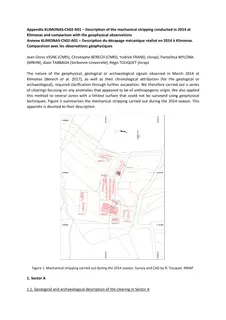
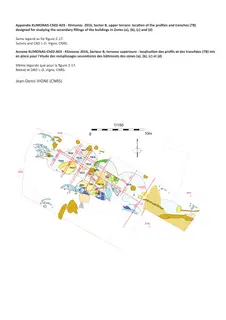
Wasse says Klimonas was excavated by a French team led by Vigne, Briois and Guilaine between 2009 and 201613. The 2012 PNAS paper cites a 2011 report to the Department of Antiquities that calls 28 April to 4 June 2011 the "first excavation season", while a 2017 paper by Vigne and colleagues describes a diagnostic in 2009 before the seasons that followed2324. The Department of Antiquities, under M. Hadjicosti, granted the permits, and the Limassol Museum under Y. Violaris supervised23.
The PNAS paper argued that established villagers lived on Cyprus between 11,100 and 10,600 years ago, growing cereals from the Levant and hunting a small Cypriot wild boar23. Vigne and colleagues also wrote that the voyagers were "in all likelihood" separate, specialised groups using boats that were "likely" sailing boats able to carry calves25. Carole McCartney, in the 2017 volume Vigne co-edited, criticised the view that assigns seafaring to foragers rather than to Neolithic communities, without naming him24.
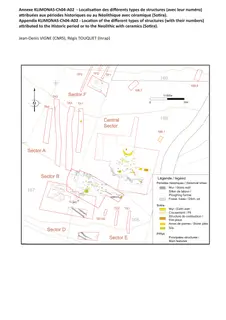
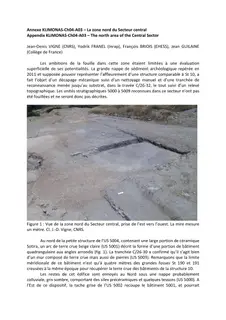
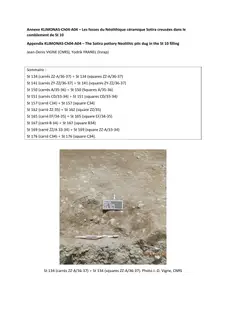
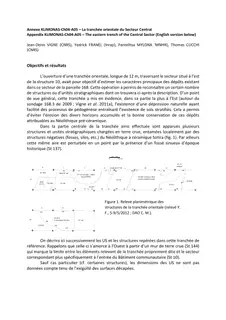
Vigne, Briois and Guilaine edited the Klimonas volume in 2023, which presents it as the oldest Mediterranean island village, occupied about 8800 cal BC1012. Vigne wrote its chapter on the extinct Cypriot wild boar and is first-named author, with others, of its closing synthesis and of its chapter on the cat and mice12.
Wasse called the volume "a benchmark in Cypriot and Near Eastern Neolithic studies", its last chapter "a magisterial summary", and its case for local pig domestication "a vital contribution"13. He also found that it set Klimonas against a mainland PPNA world that had partly vanished by then, "inexplicably" skirted Tenta, and at times stretched the data "almost to breaking point"13. Wasse called these "minor quibbles", less harmful than the lack of an index, and judged the book "a nicely produced, well-written and beautifully illustrated triumph"13.
Life and work
2000
With Carrère, Saliège, Person, Bocherens, Guilaine and Briois, preliminary results on pre-domestic cattle, sheep, goat and pig of the late 9th and 8th millennium cal. BC at Shillourokambos (Parekklisha, Limassol), pp. 83-106 in Archaeozoology of the Near East IV.
With Crubézy, Guilaine, Giraud, Gérard and Briois, 'Aux origines des sépultures collectives: la structure 23 de Shillourokambos (Chypre, 7500 B.C.)', in Le Néolithique de Chypre, BCH Suppl. 43, pp. 295-311.
Said in the recorded talk «Γεωαρχαιολογική προσέγγιση της χρήσης του εδάφους στην Προκεραμεική Νεολιθική Α περίοδο στην Κύπρο: η περίπτωση του Κλήμωνα στον Άγιο Τύχωνα» (Archaeological Research Unit - University of Cyprus, 2018-11-19): Co-directed the excavations at Klimonas from 2011 together with François Pruvost. Said in the recorded talk «Γεωαρχαιολογική προσέγγιση της χρήσης του εδάφους στην Προκεραμεική Νεολιθική Α περίοδο στην Κύπρο: η περίπτωση του Κλήμωνα στον Άγιο Τύχωνα» (Archaeological Research Unit - University of Cyprus, 2018-11-19): Directeur de recherche at CNRS, active in Cyprus for many years; led the team in which Mylona worked.
With Guilaine and Briois, case study 'Ayios Tychonas-Klimonas' in Pilides & Papadimitriou (eds), Ancient Cyprus: Cultures in Dialogue (Nicosia), pp. 42-43.
Said in the recorded talk «Honor Frost Foundation Conference: Neolithic to Late Bronze Age Maritime Networks and Piracy» (Archaeological Research Unit - University of Cyprus, 2017-10-22): Has done fantastic work on early sails in the Neolithic, linked to his idea about down a cow syndrome in large ruminants transported by sea.
Said in the recorded talk «Flesh on bones: latest developments and state of affairs in Cypriot Zooarchaeology» (Archaeological Research Unit - University of Cyprus, 2018-03-26): Collaborated with the speaker in Paris; French zooarchaeologist who came to Cyprus.
Said in the recorded talk «From South Asia to the Eastern Mediterranean: Zebu cattle in iconography and nature of Bronze Age Cyprus» (CAARI Cyprus, 2020-12-06): Sent Neolithic cattle bone samples to Dublin for DNA analysis, which yielded no results because collagen preservation was bad.
Directed excavations · 2009J.-D. Vigne directed archaeological sounding and assessment of two plots at Agios Tychnonas-Klimonas with J. Guilaine and F. Briois.
Worked with Isabelle CarrèreVigne and Carrère were in charge of the archaeozoological analyses of Shillourokambos Sector 1 and took part in its excavation. Vigne et al. 2011, p. S259
Recording and study
9 records
Studied2
2009Jean-Denis Vigne sampled 56 samples from Akrotiri-Aetokremnos for radiocarbon dating and physico-chemical analyses.
Shillourokambos (Limassol district; aceramic Neolithic, 9th millennium BCE), dug from 1992 under Jean Guilaine (College de France) after surveys by the…
Vigne 2017; Caubet et al. 2012; Article on Shillourokambos and Klimonas 2023
9.Archaeological Research Unit, University of Cyprus (2018). Dr Pantelitsa Mylona, «Γεωαρχαιολογική προσέγγιση της χρήσης του εδάφους στην Προκεραμεική Νεολιθική Α περίοδο στην Κύπρο: η περίπτωση του Κλήμωνα στον Άγιο Τύχωνα» (lecture, 19 November 2018). Online
11.ORCID (2026). “Jean-Denis Vigne: employments”. ORCID record 0000-0002-7367-7552. Online
12.Jean-Denis Vigne, François Briois, Jean Guilaine (dir.) (2023). “Klimonas. An Early Pre-Pottery Neolithic Village in Cyprus / Un village néolithique pré-céramique ancien à Chypre”. Gallia Préhistoire Supplément. CNRS Éditions. Online
13.Alexander M. R. Wasse. “Review of Jean-Denis Vigne, François Briois and Jean Guilaine (eds.), 2023. Klimonas. An early Pre-Pottery Neolithic village in Cyprus”.
14.Jean-Denis Vigne (2001). “Large mammals of early Aceramic Neolithic Cyprus: preliminary results from Parekklisha Shillourokambos”. S. Swiny (ed.), The Earliest Prehistory of Cyprus: From Colonization to Exploitation, 55-60.
15.Stuart Swiny (ed.) (2001). “The Earliest Prehistory of Cyprus: From Colonization to Exploitation”. CAARI Monograph Series 2. American Schools of Oriental Research.
16.Alan H. Simmons (2011). “The first Mediterranean islanders”. [offprint, Phoca-Cos 2011].
17.Alan H. Simmons (2012). “Ais Giorkis: An unusual early Neolithic settlement in Cyprus”. Journal of Field Archaeology.
18.[Cyprus Today]. “[Article on the Neolithic of Cyprus]”. Cyprus Today (item 430).
19.Jean-Denis Vigne, Angelos Hadjikoumis, Marie Balasse et al. (2023). “Cat and mice: commensalism and shifting of continental connectivity”. Klimonas. An Early Pre-Pottery Neolithic Village in Cyprus (Gallia Préhistoire Supplément). CNRS Éditions. Online
20.Nancy H. Demand (2011). The Mediterranean Context of Early Greek History.
21.M. Bailly (2011). “Jean Guilaine, François Briois, Jean-Denis Vigne (dir.), Shillourokambos. Un établissement néolithique pré-céramique à Chypre. Les fouilles du secteur 1, Athènes, 2011”. Cahiers du Centre d'Études Chypriotes 41, 341-344. Online
22.Jean-Denis Vigne, Isabelle Carrère, François Briois, Jean Guilaine (2011). “The Early Process of Mammal Domestication in the Near East: New Evidence from the Pre-Neolithic and Pre-Pottery Neolithic in Cyprus”. Current Anthropology 52 (S4), S255-S271. Online
23.Jean-Denis Vigne, François Briois, Antoine Zazzo et al. (2012). “First wave of cultivators spread to Cyprus at least 10,600 y ago”. Proceedings of the National Academy of Sciences 109 (22), 8445-8449. Online
24.Jean-Denis Vigne, François Briois, Margareta Tengberg (dir.) (2017). “Nouvelles données sur les débuts du Néolithique à Chypre / New data on the beginnings of the Neolithic in Cyprus. Actes de la séance de la Société préhistorique française, Paris, 18-19 mars 2015”. Séances de la Société préhistorique française 9. Société préhistorique française.
25.Jean-Denis Vigne, Antoine Zazzo, Thomas Cucchi, Isabelle Carrère, François Briois, Jean Guilaine. “The transportation of mammals to Cyprus sheds light on early voyaging and boats in the Mediterranean Sea”.
32.document:dept-antiquities-2018-excavations-list, loc no. 12 (Department of Antiquities, Cyprus, «Ανασκαφές που διενεργήθηκαν στην Κύπρο από το Τμήμα Αρχαιοτήτων και από ξένες αρχαιολογικές αποστολές» (Excavations carried out in Cyprus by the Department of Antiquities and by foreign archaeological missions), open dataset, first issued 8 February 2018, modified 16 January 2024, CC BY 4.0, row no. 12. Online
33.Anna Spyrou, «From South Asia to the Eastern Mediterranean: Zebu cattle in iconography and nature of Bronze Age Cyprus», recorded lecture, CAARI Cyprus, published on YouTube 2020-12-06, at 0:43:58. Online
34.Angelos Hadjikoumis, «Flesh on bones: latest developments and state of affairs in Cypriot Zooarchaeology», recorded lecture, Archaeological Research Unit - University of Cyprus, published on YouTube 2018-03-26, at 0:00:00. Online
35.Pantelitsa Mylona, «Γεωαρχαιολογική προσέγγιση της χρήσης του εδάφους στην Προκεραμεική Νεολιθική Α περίοδο στην Κύπρο: η περίπτωση του Κλήμωνα στον Άγιο Τύχωνα», recorded lecture, Archaeological Research Unit - University of Cyprus, published on YouTube 2018-11-19, at 0:01:59. Online
36.Crystal El Safadi, Duncan Howitt-Marshall, Ezra Marcus, Michele Massa and A. Bernard Knapp, «Honor Frost Foundation Conference: Neolithic to Late Bronze Age Maritime Networks and Piracy», recorded conference paper, The Honor Frost Foundation Conference on Mediterranean Maritime Archaeology, Archaeological Research Unit - University of Cyprus, published on YouTube 2017-10-22, at 1:27:54. Online
37.Kurt J. Gron; Lasse Sørensen; Peter Rowley-Conwy (2020). Farmers at the Frontier: A Pan-European Perspective on Neolithisation. Oxford, Oxbow Books. p. 180..
38.Guilaine et al., 2011, Shillourokambos. Un établissement néolithique pré-céramique à Chypre. Les fouilles du secteur 1.
39.Guilaine et al., Shillourokambos. Un établissement néolithique pré-céramique à Chypre. Les fouilles du secteur 1, 2011.
40.Francoise Le Mort, Infant burials in Pre-Pottery Neolithic Cyprus: evidence from Khirokitia.
41.Counts and others (eds.), 2011, Crossroads and Boundaries: the archaeology of past and present in the Malloura Valley (bibliography lines); A. Dissinger, 2017, PhD thesis (bibliography line).
42.M. K. Counts (ed.), 2011, Crossroads and Boundaries: the Archaeology of Past and Present in the Malloura Valley.
43.D. B. Counts et al. (eds), 2011, Crossroads and Boundaries: The Archaeology of Past and Present in the Malloura Valley; C. Winkelmann, 2020, The Neolithic and Chalcolithic Figurines of Cyprus; C. Winkelmann, 2020, The Neolithic and Chalcolithic Figurines of Cyprus.
44.D. B. Counts et al. (eds), 2011, Crossroads and Boundaries: The Archaeology of Past and Present in the Malloura Valley; C. Winkelmann, 2020, The Neolithic and Chalcolithic Figurines of Cyprus.
45.A. Dissinger, 2017.
46.C. Winkelmann, 2020, The Neolithic and Chalcolithic Figurines of Cyprus; A. Dissinger, 2017.
47.Antoine Hermary, L'apport des fouilles françaises d'Amathonte à l'archéologie chypriote (2014).
48.J.-D. Vigne et al., 2011, The early process of mammal domestication in the Near East: New evidence from the pre-Neolithic and pre-Pottery Neolithic in Cyprus.
49.Vigne et al., Early Taming of the Cat in Cyprus, 2004.
50.J.-D. Vigne, J. Guilaine, K. Debue, L. Haye and P. Gérard, 2004, Early taming of the cat in Cyprus.
Corrections and additions
Did you know this person?
We would like to hear from relatives, colleagues and anyone who knows more about this person's life and work.