
Pottery Shapes
Ware tells you how a pot was made and finished; shape tells you what kind of vessel it is. This section groups Cypriot pottery into ten shape families, from bowls and jugs to strainers and composite vessels, whatever their ware or date.
Every Cypriot pot can be described twice. Its ware records clay, surface and decoration: Red Polished, White Slip, Bichrome. Its shape records the kind of vessel: a bowl, a jug, a jar. The two are independent. A White Slip bowl and a Base Ring bowl can share a profile, and one ware can be made in dozens of shapes. Robert Merrillees noted that Cypriot ware names mostly describe the surface, and that classification becomes difficult where shape was the potter's main concern, as early in Late Cypriot I, when potters experimented with a range of containers of much the same form in different wares [1, p. 238]. The Swedish Cyprus Expedition put ware first, and Stager and Saltz later criticised its concern with surface "at the expense of form" [2, pp. xxix-xxx]. J. R. Stewart went the other way for Early Bronze Age Red Polished, arranging his corpus under shapes and dates because each numbered class contained several fabrics [1, p. 239]. The shape entries in this section follow the same logic and cut across wares and periods.
Where the names come from
Most shape names used for Cypriot pottery are either plain English (bowl, jug, jar, flask) or borrowed from the study of Greek vases (oinochoe, amphora, krater, kylix, skyphos, askos) and applied to Cypriot vessels by convention. They do not record what Cypriots called their pots. Even for Greek pottery, John Boardman warned that the conventional names are "often in fact wrong" but remain the terms every book uses [3, p. 12]. Merrillees made the same point about Cypriot pottery in general: since we do not know how the ancient potters referred to their products, by shape, fabric or finish, modern names are conveniences and matter for what they connote more than what they literally say [1, p. 238].
Catalogues mix the two vocabularies freely. Vassos Karageorghis's catalogue of the Cesnola Collection in the Metropolitan Museum calls the Cypro-Archaic trefoil-mouthed vessels "jugs" but uses "amphora", "kylix" and "askos" for other shapes [4, pp. 28, 91-93]. Some names describe a feature rather than a function. The White Slip "milk bowl" is a medium-sized hemispherical bowl with a round base and a wishbone handle, and "milk bowl" is simply what the shape is usually called [4, p. 36]. A Late Cypriot I bowl with wishbone handle in the Met (74.51.1162) and the White Slip milk bowl in the Drakopoulos collection show the type. For the ware-by-ware story of Cypriot vessel forms see the article on Cypriot bowls and the one on the Cypriot oinochoe.
Handmade and wheel-made shapes
Cypriot shapes changed most with the potter's wheel. Early and Middle Bronze Age pottery was handmade, since the wheel was only introduced at the start of the Late Bronze Age, and Early Cypriot potters built vessels in the form of animals and people and joined several vessels into one [4, p. 27]. A Red Polished vase in the Met of seven small bowls sharing one handle, and bird-shaped and zoomorphic askoi of the same ware, belong to this handmade repertoire [4, p. 28]. Red Polished jugs, mostly with a cutaway neck and a flat base, have affinities with Anatolian shapes [4, p. 27]. In the Iron Age most fine pottery was wheel-made, and Karageorghis argued that Cypro-Archaic potters showed their skill less in the variety of shapes, "for the wheel did not allow the freedom of handmade pottery", than in painted decoration [4, p. 78]. Shape still carries information across the Bronze to Iron Age transition: Proto-White Painted was recognised from the start by its Late Mycenaean shapes, and the White Painted ware of Cypro-Geometric I at first shared many of them [5, pp. 199, 204].
The shape families
The ten entries below cover the vessels found most often in Cypriot tombs and settlements.
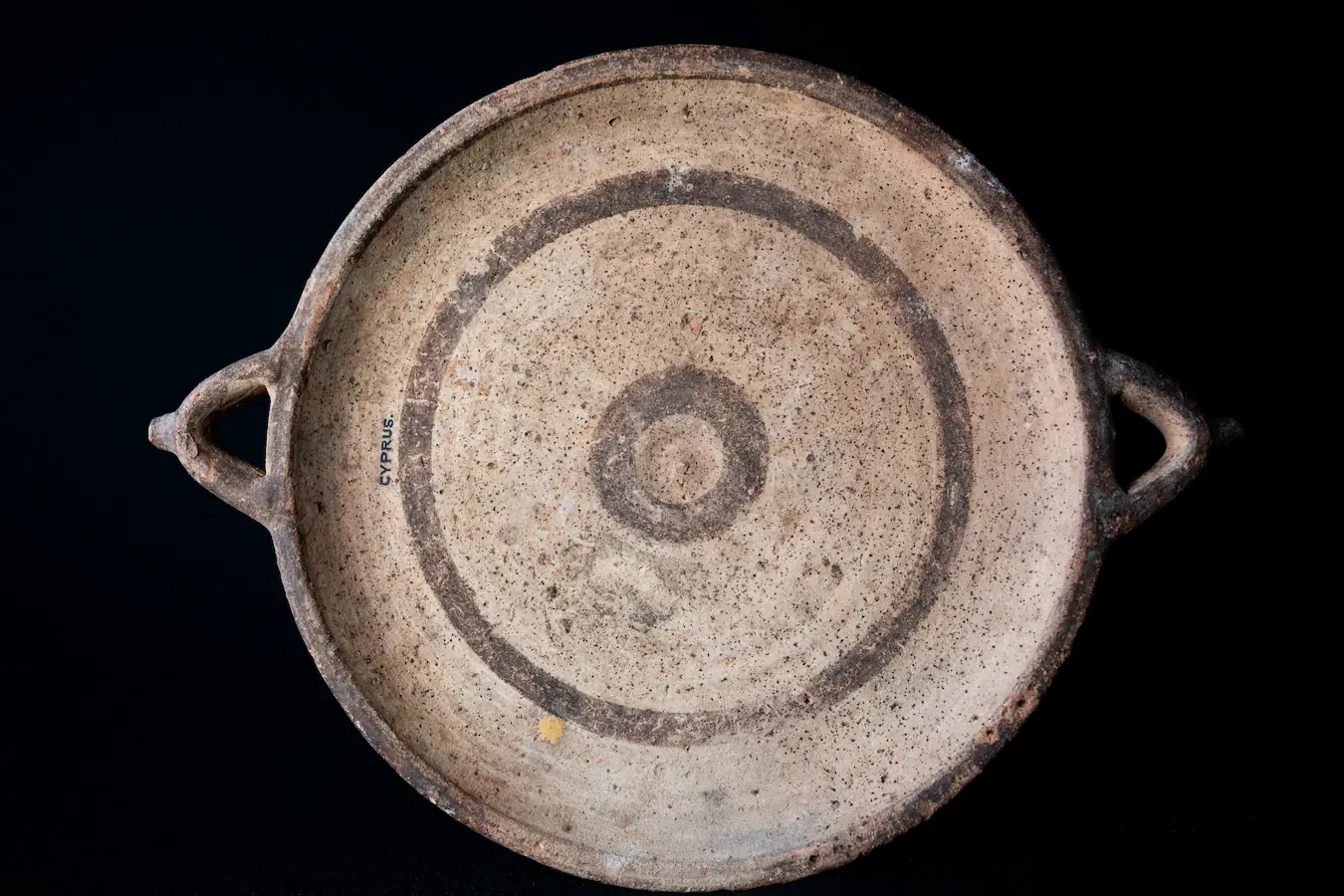
Bowls are the commonest open shape, from Red Polished and White Slip bowls to Iron Age drinking cups such as the Bichrome IV kylix, a footed bowl common in Cypro-Archaic I [4, p. 91]; the Drakopoulos Bichrome skyphos with stags in metopes is a deep two-handled drinking cup of the same period. Dishes and plates are flatter, and the outsides of Black-on-Red dishes normally carry concentric bands [4, p. 93]; compare the Drakopoulos two-handled White Painted plate, whose main decoration is on the underside.
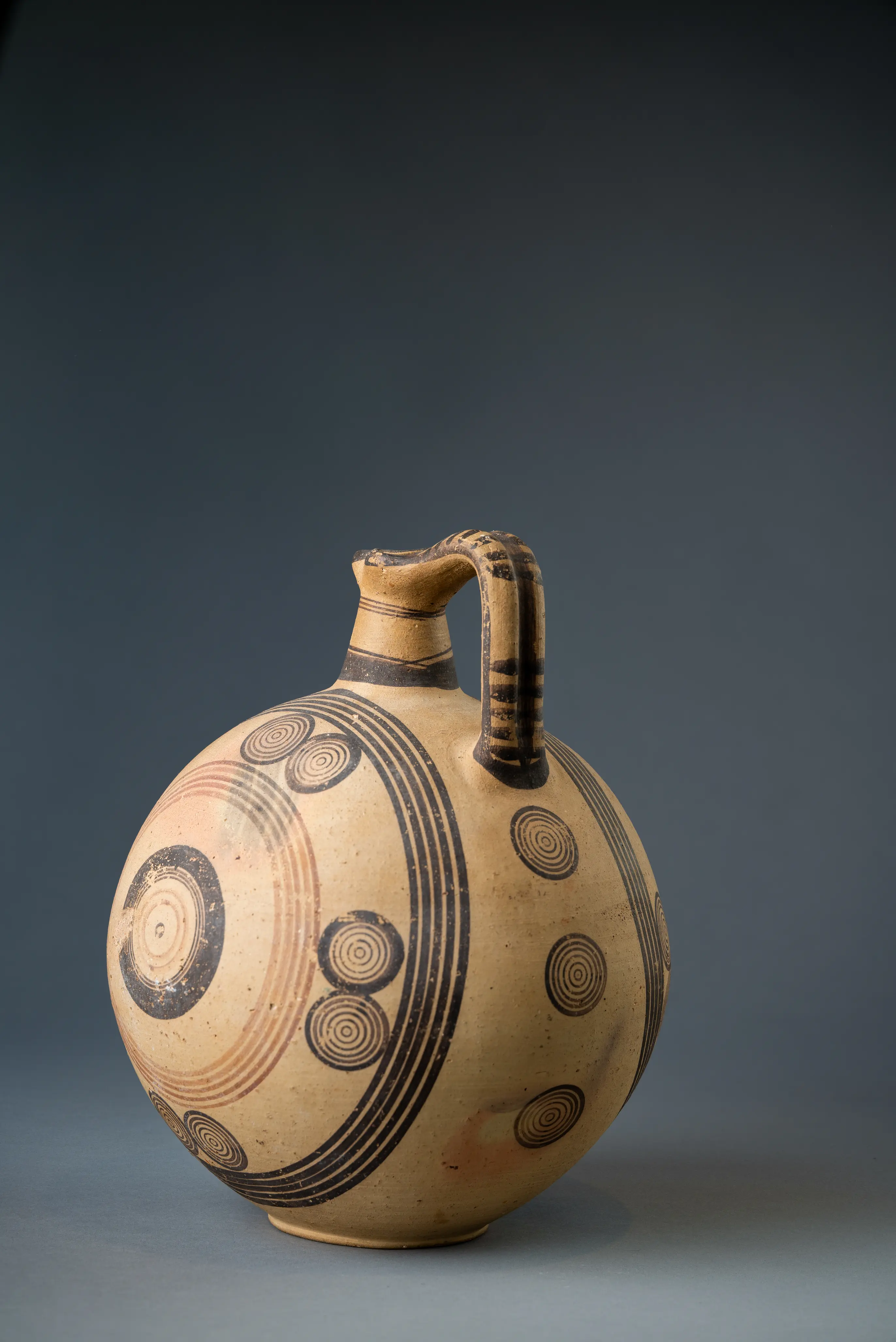
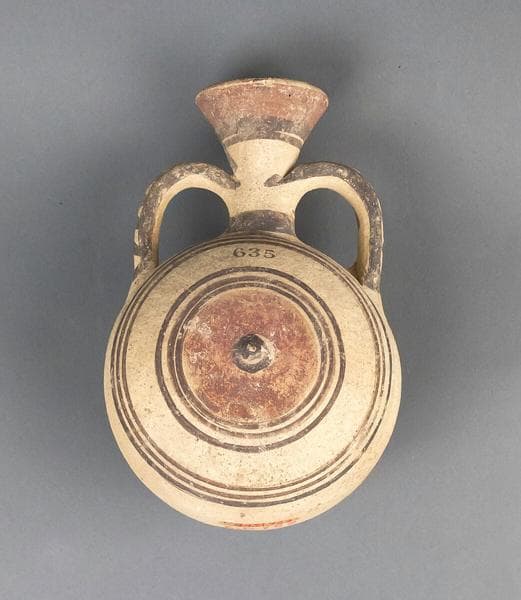
Jugs, the oinochoai of the catalogues, are the commonest closed shape. The jug with a trefoil rim was the favourite vessel for free-field painting in Cypro-Archaic I and II [4, p. 93]; compare the Met's Cypro-Archaic I jug with birds and fish, 74.51.527; the Large Bichrome Oinochoe at the top of this page is a Drakopoulos example. Jars and amphorae are the large two-handled storage and display vessels. Karageorghis notes that large amphorae decorated in Bichrome IV were common in eastern Cyprus [4, p. 91]; the Drakopoulos Large Bichrome Amphora stands 42 cm high.
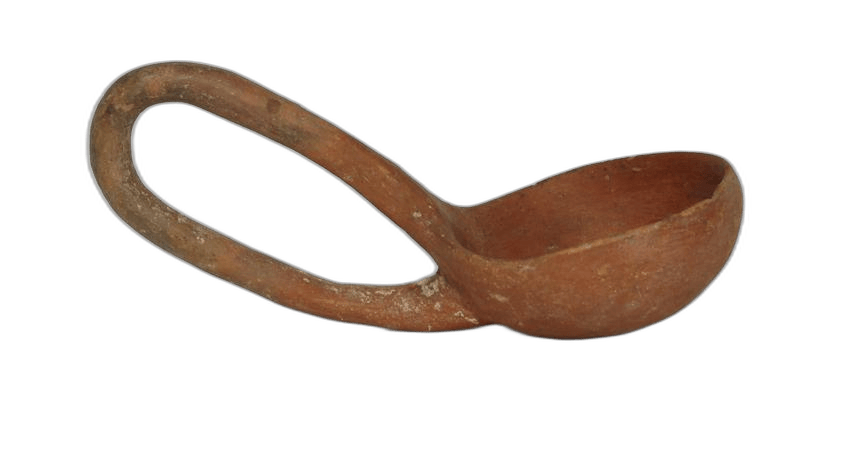
Bottles and flasks are narrow-necked containers. The Drakopoulos incised Red Polished bottle belongs to the Early Bronze Age; the lentoid flask, flattened on one side, belongs to the Iron Age, and one early example in the Met turned out to be a Levantine import [4, p. 78]. Dippers and ladles are small vessels for drawing liquid, such as the Middle Bronze Age dipper with a high loop handle in the Drakopoulos collection. Strainers include jugs with a perforated spout, which Karageorghis suggests may have been used for herb-flavoured liquids [4, p. 92]. Basket-shaped vessels have an entry of their own.
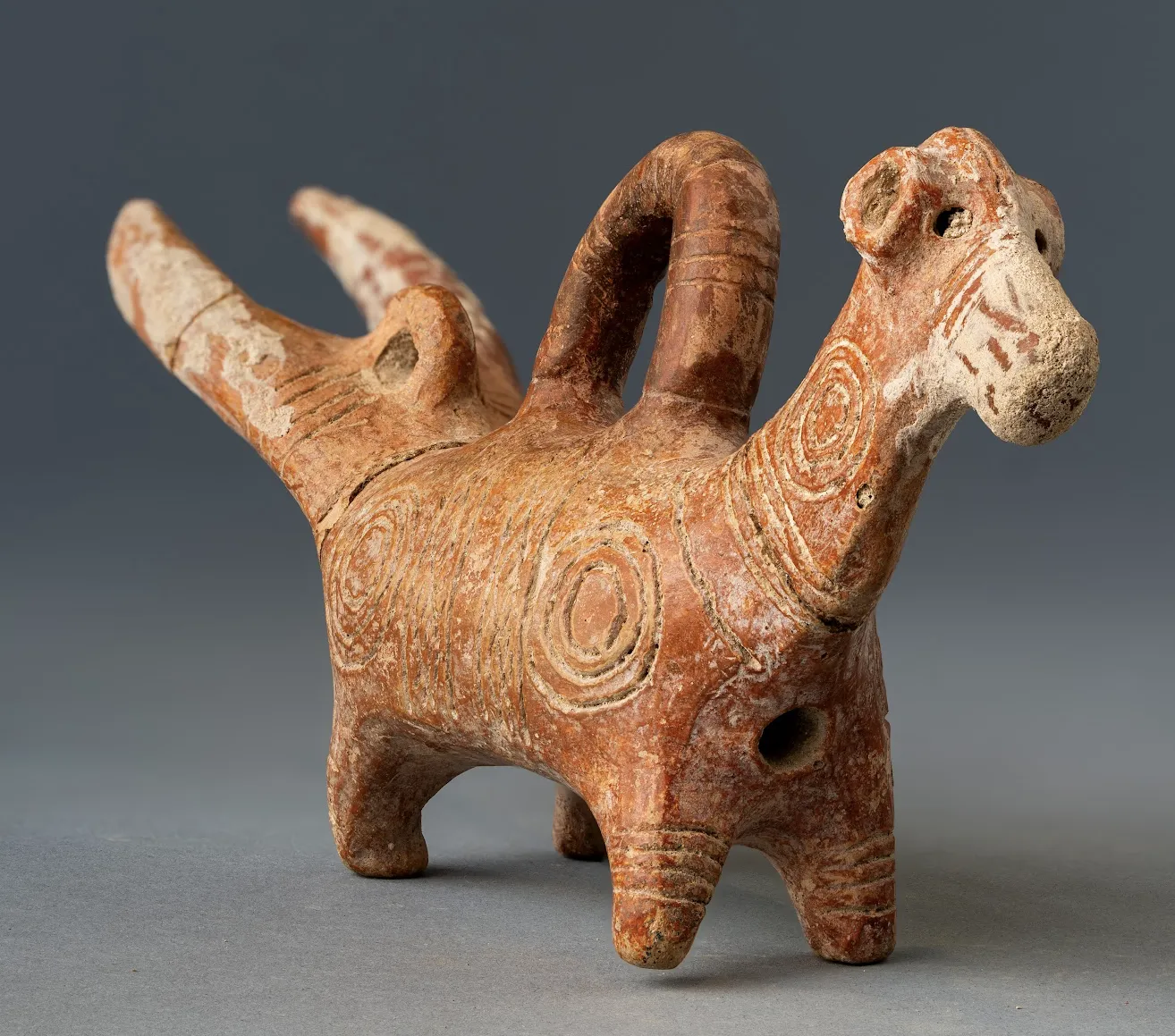
Complex vessels are the pots that fit no single family: ring vases, multiple bowls, askoi and joined vessels such as the Drakopoulos Base Ring double juglet. The Met's small Cypro-Archaic I askos in the form of a bird, 74.51.818 shows how long the animal-shaped vessel lasted in Cyprus. For the decoration painted and incised on all these shapes, see Motifs.
Shapes
Baskets and Basket-Handled Vessels
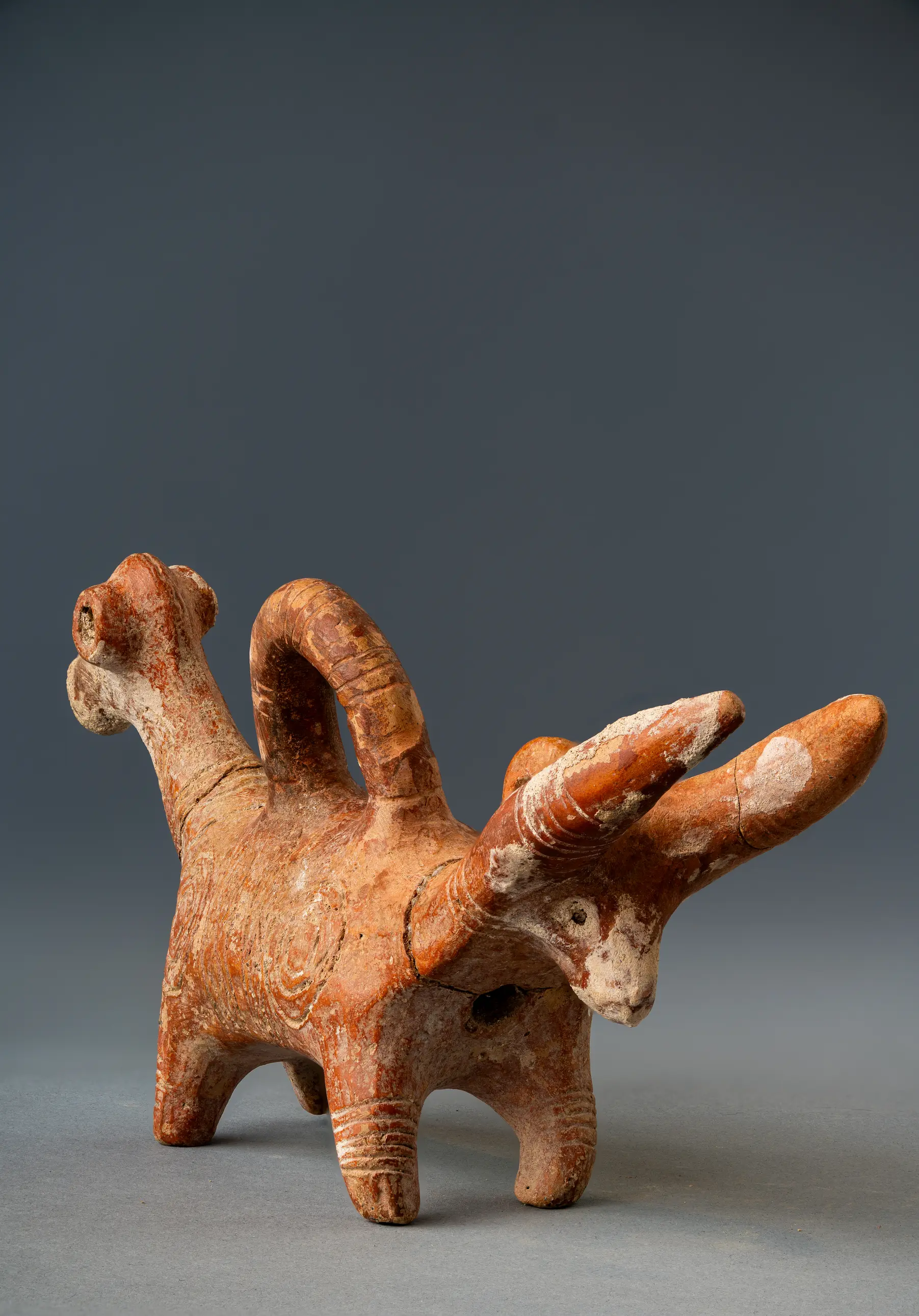
Basket is not a standard Cypriot vessel class. This entry explains the terms in use: basket...
Complex Vessels
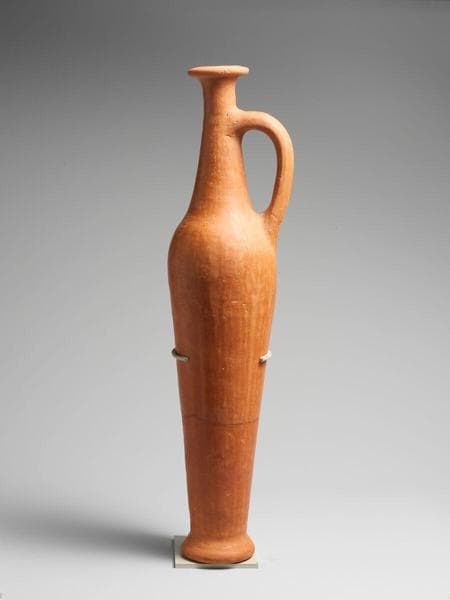
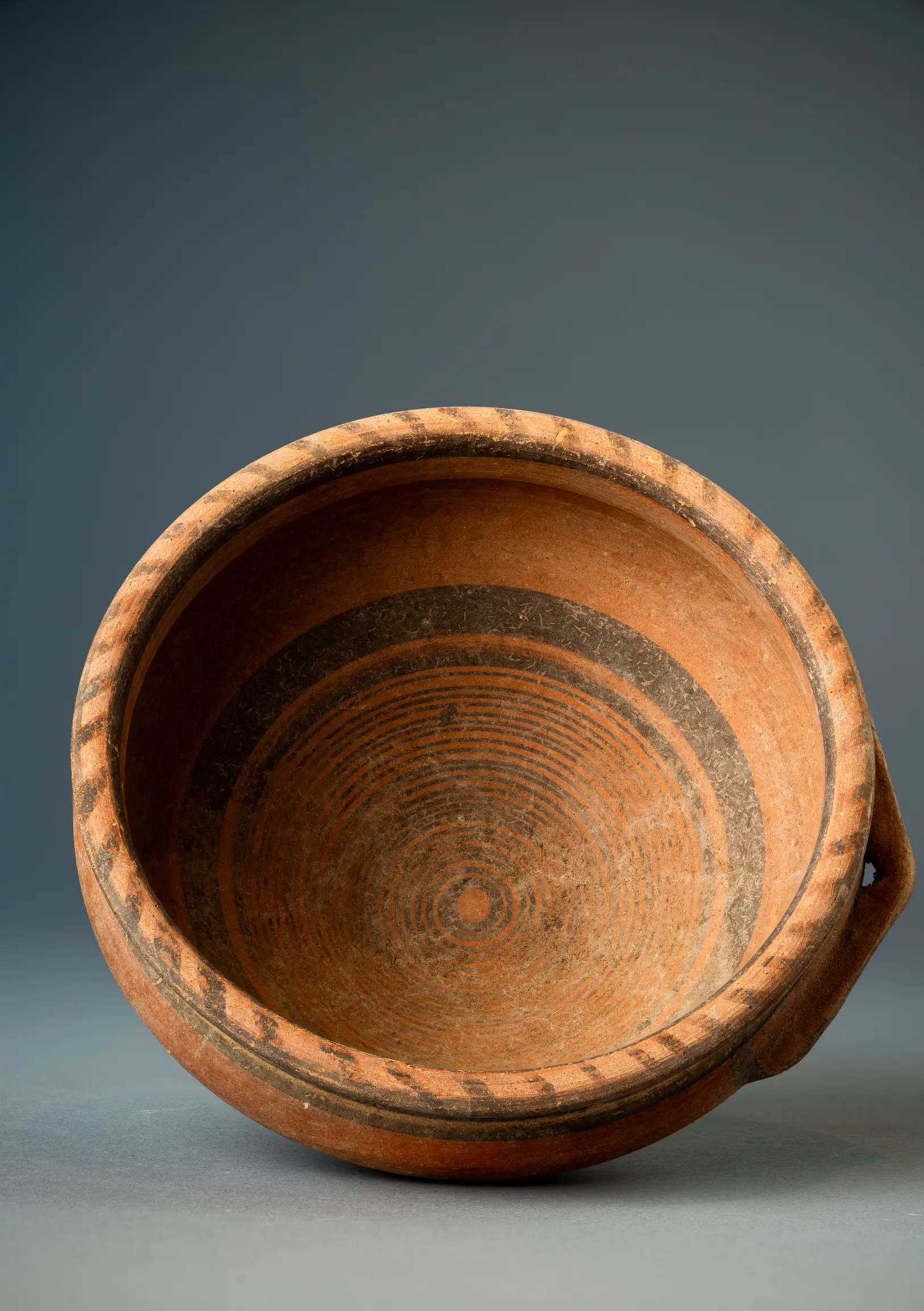
Composite, multiple and ring vessels of ancient Cyprus: Red Polished multi-bowl vases, twin-necked...
Dippers and Ladles
Cypriot dippers and ladles: Red Polished heavy-walled dippers with cutaway spouts, small high-han...
Dishes and Plates
The flat two-handled dish is a Cypro-Geometric invention with no Bronze Age ancestor. How Cypriot...
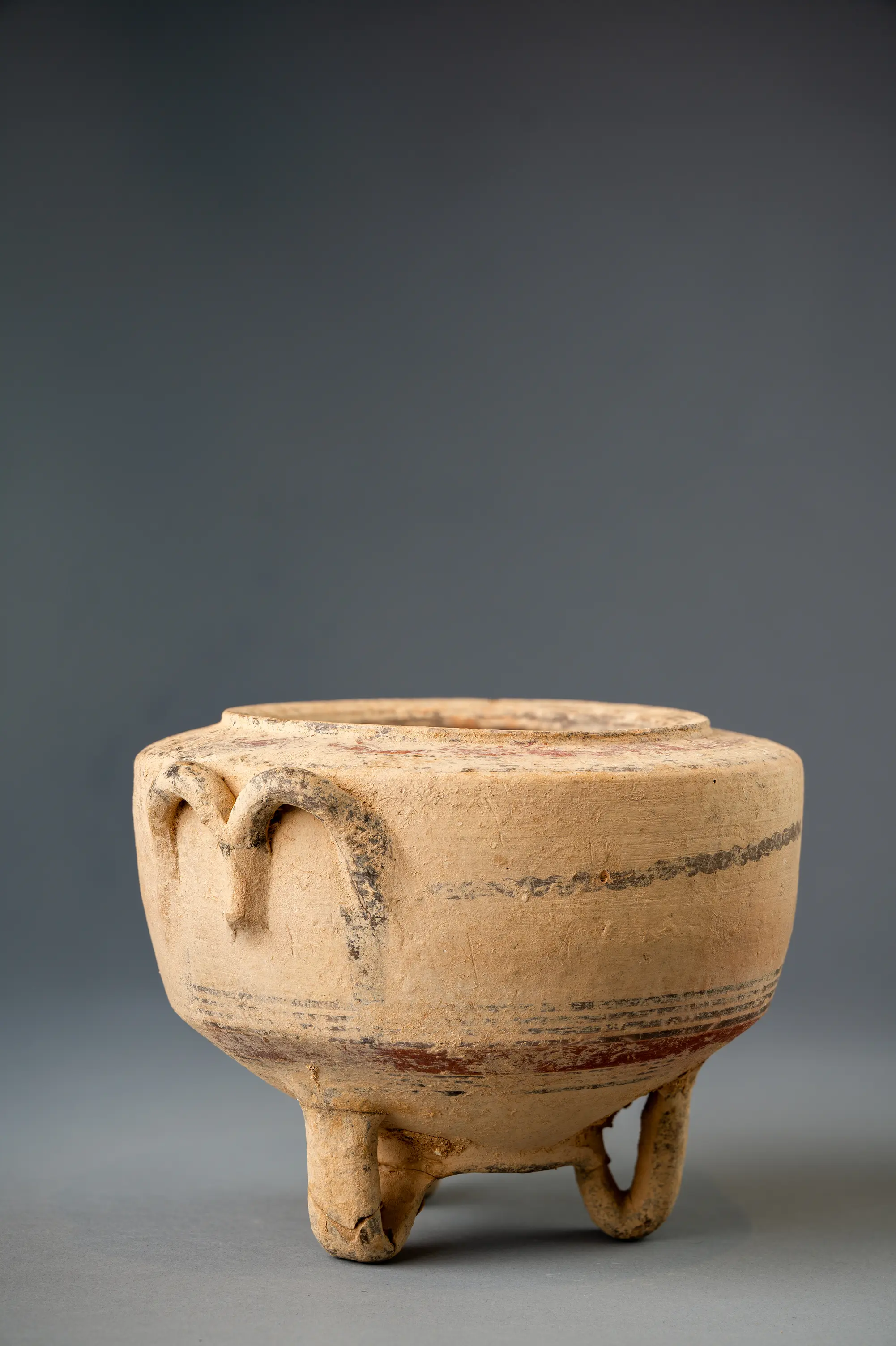
Jars (Amphora)
Cypriot storage and transport jars: Bronze Age pithoi, imported Canaanite jars, the Uluburun and...
Jugs (Oinochoe)
The Cypriot Iron Age jug, c. 1050–312 BCE: trefoil oinochoai, barrel jugs and neck-ridge juglets in...
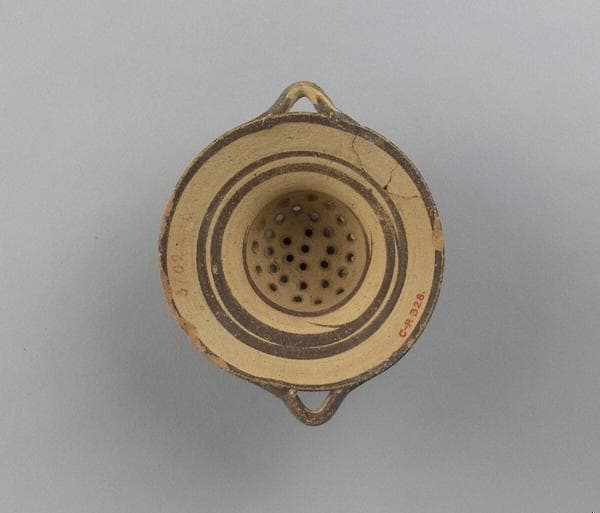
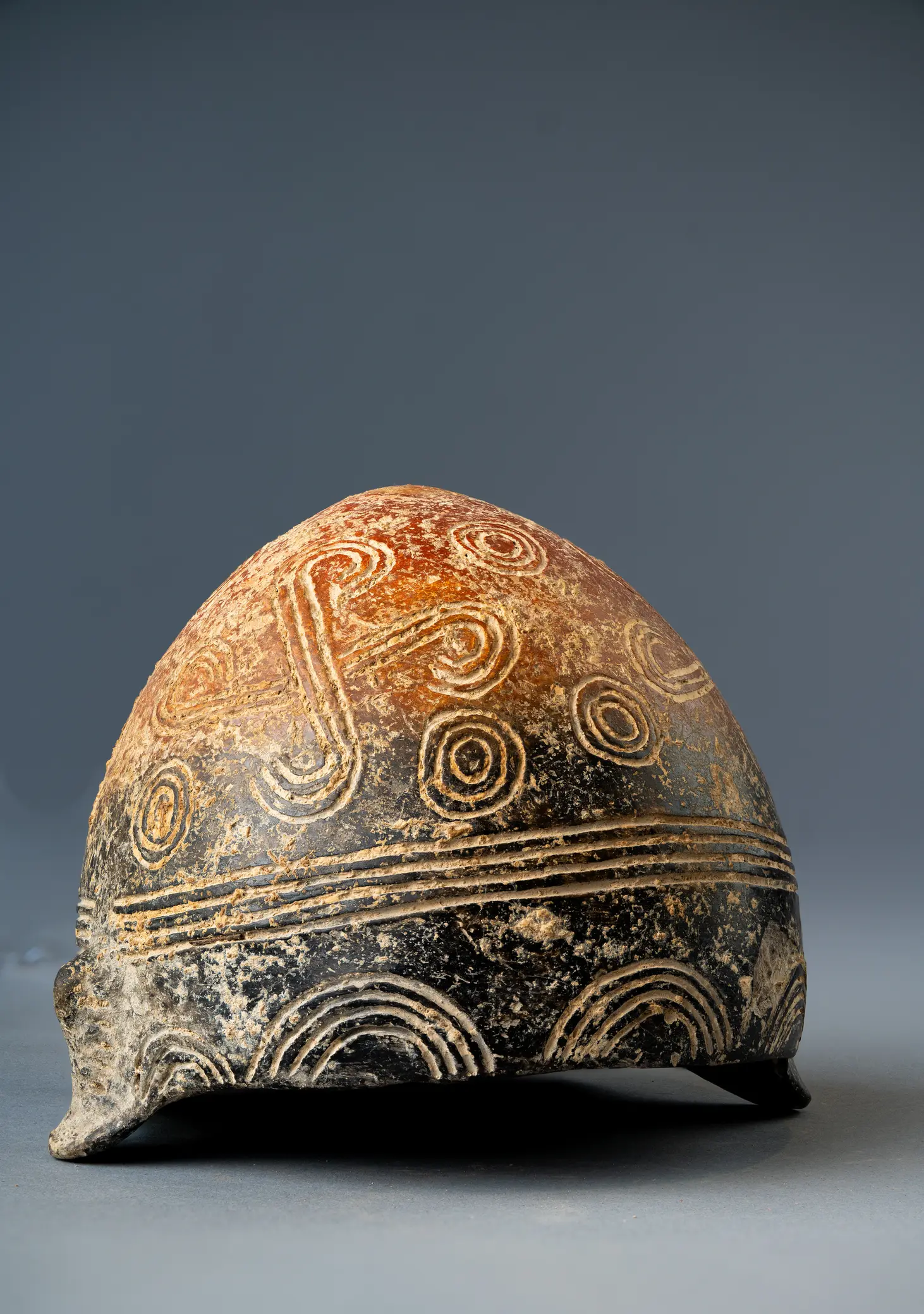
Tulip Bowls and Cult Vessels
Early Cypriot Red Polished tulip bowls and the elaborate Vounous 'cult vessels' with animal heads...
From the collection
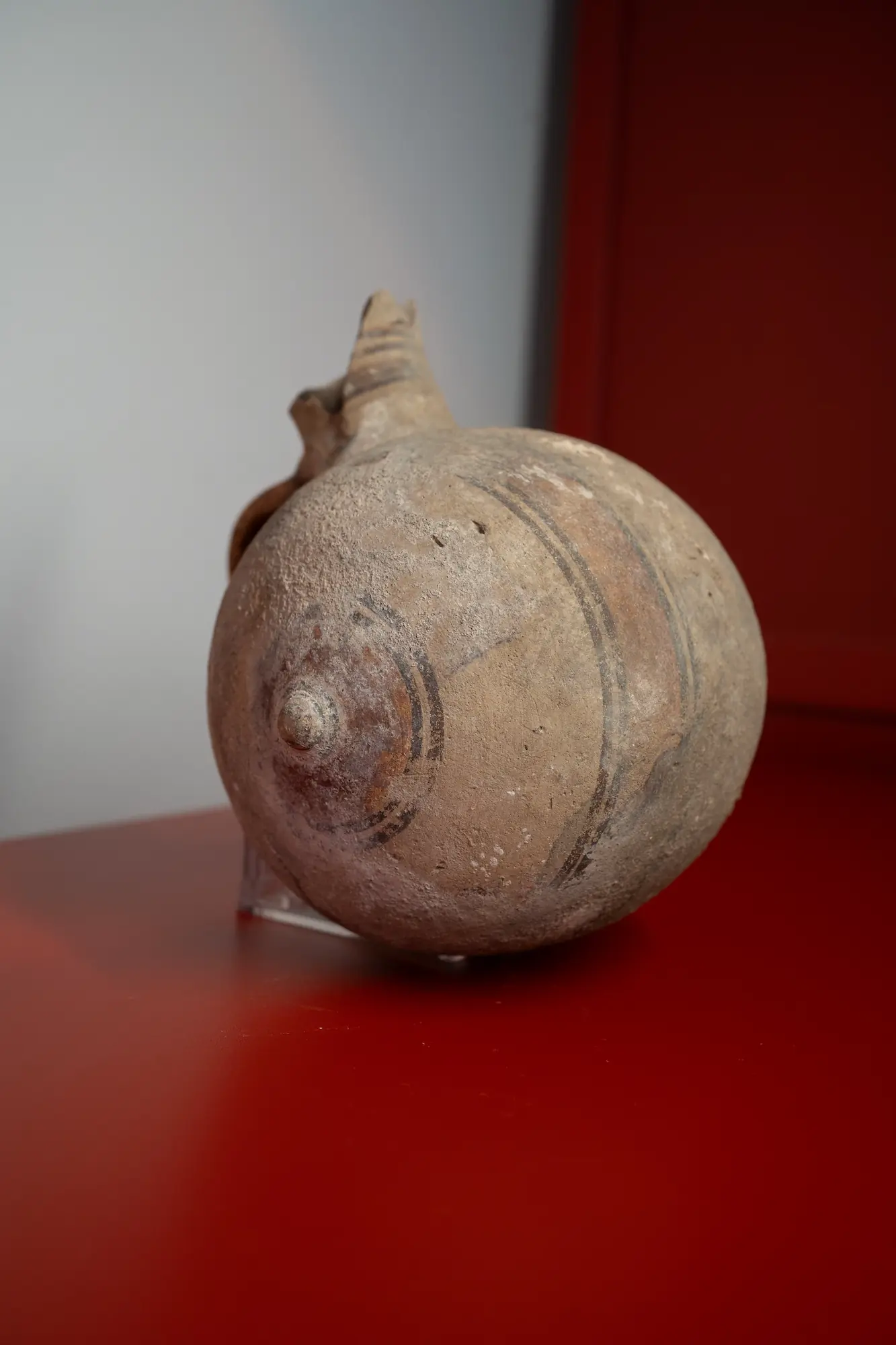 Bichrome Barrel Jug with Circled End-KnobsGeometric III · 850–750 BC
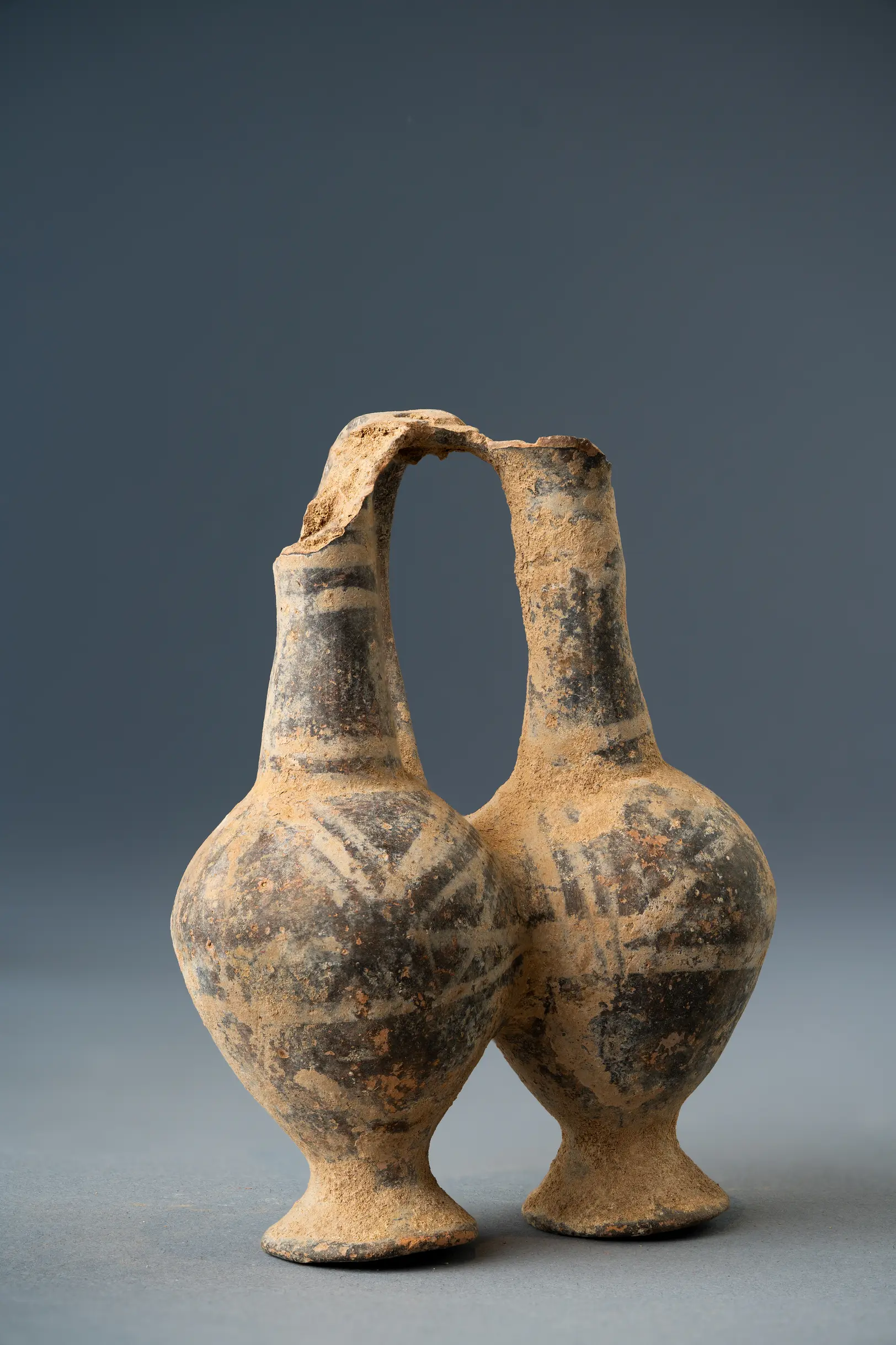 Base Ring II Double Juglet with White-Painted DecorationLate Bronze Age II · 1450–1200 BC
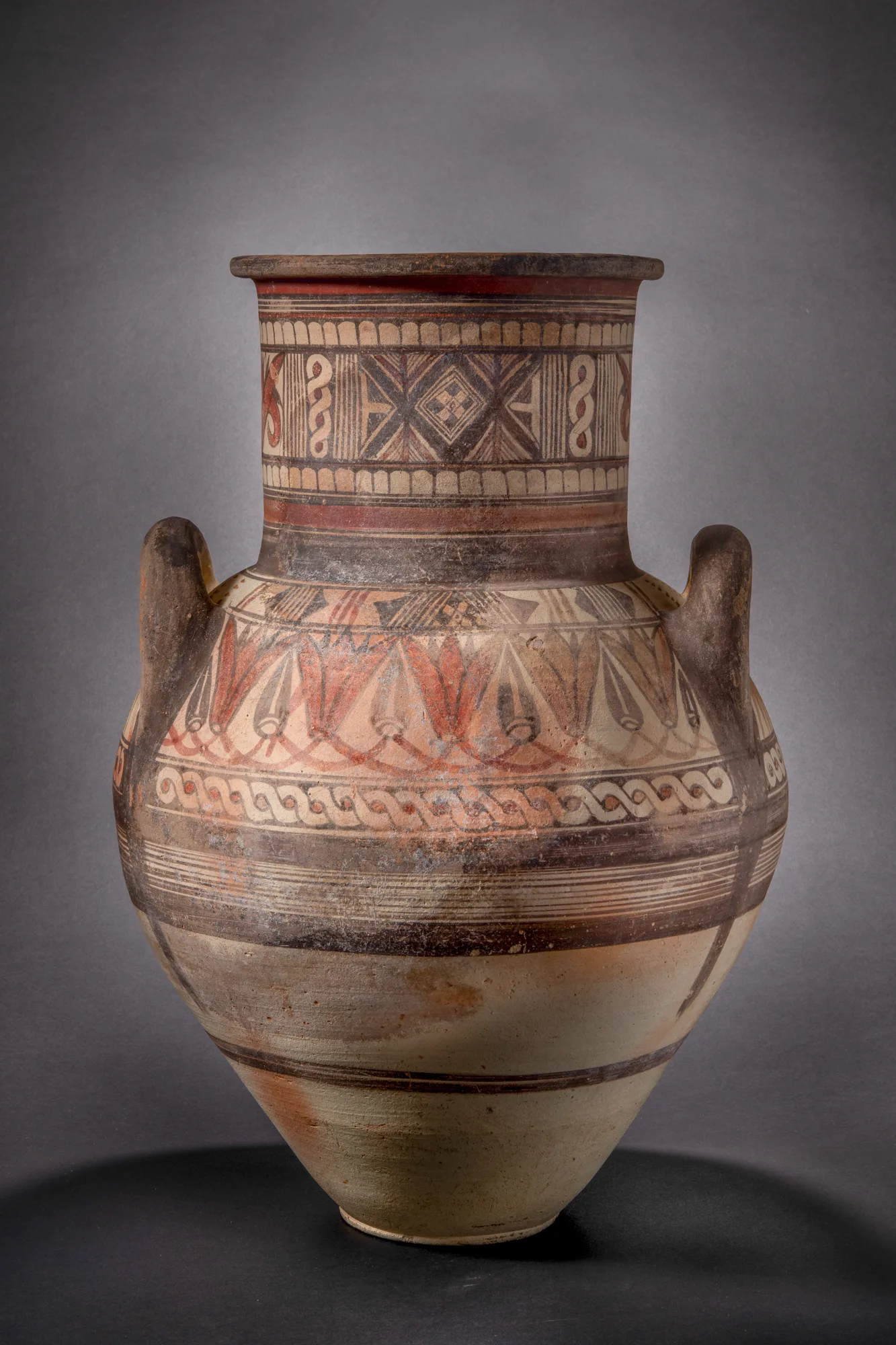 Bichrome IV Amphora with a Lotus-and-Bud Shoulder FriezeArchaic I · 750–600 BC
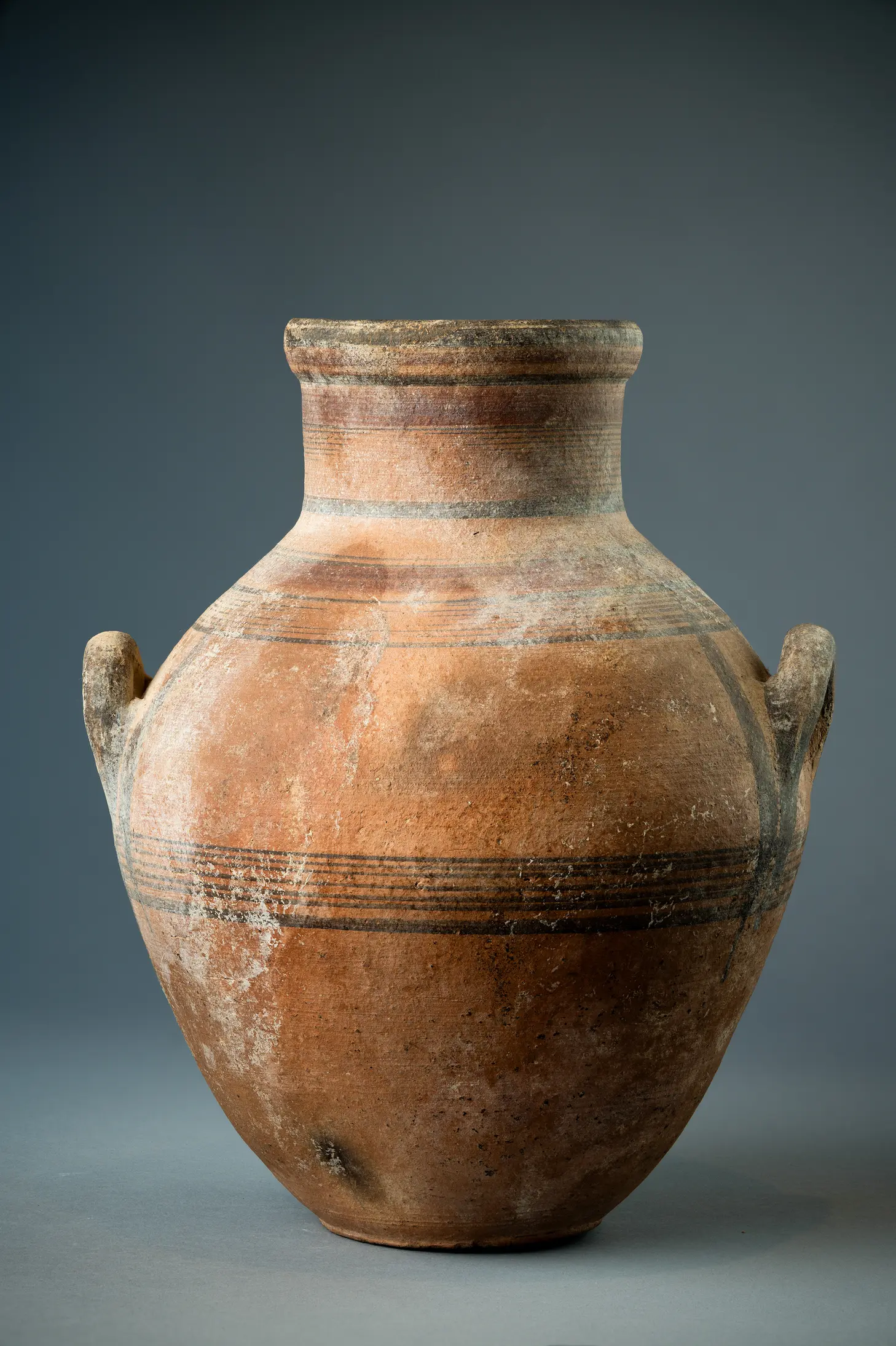 Bichrome IV Amphora with Shoulder Handles and Banded DecorationArchaic I · 750–600 BC
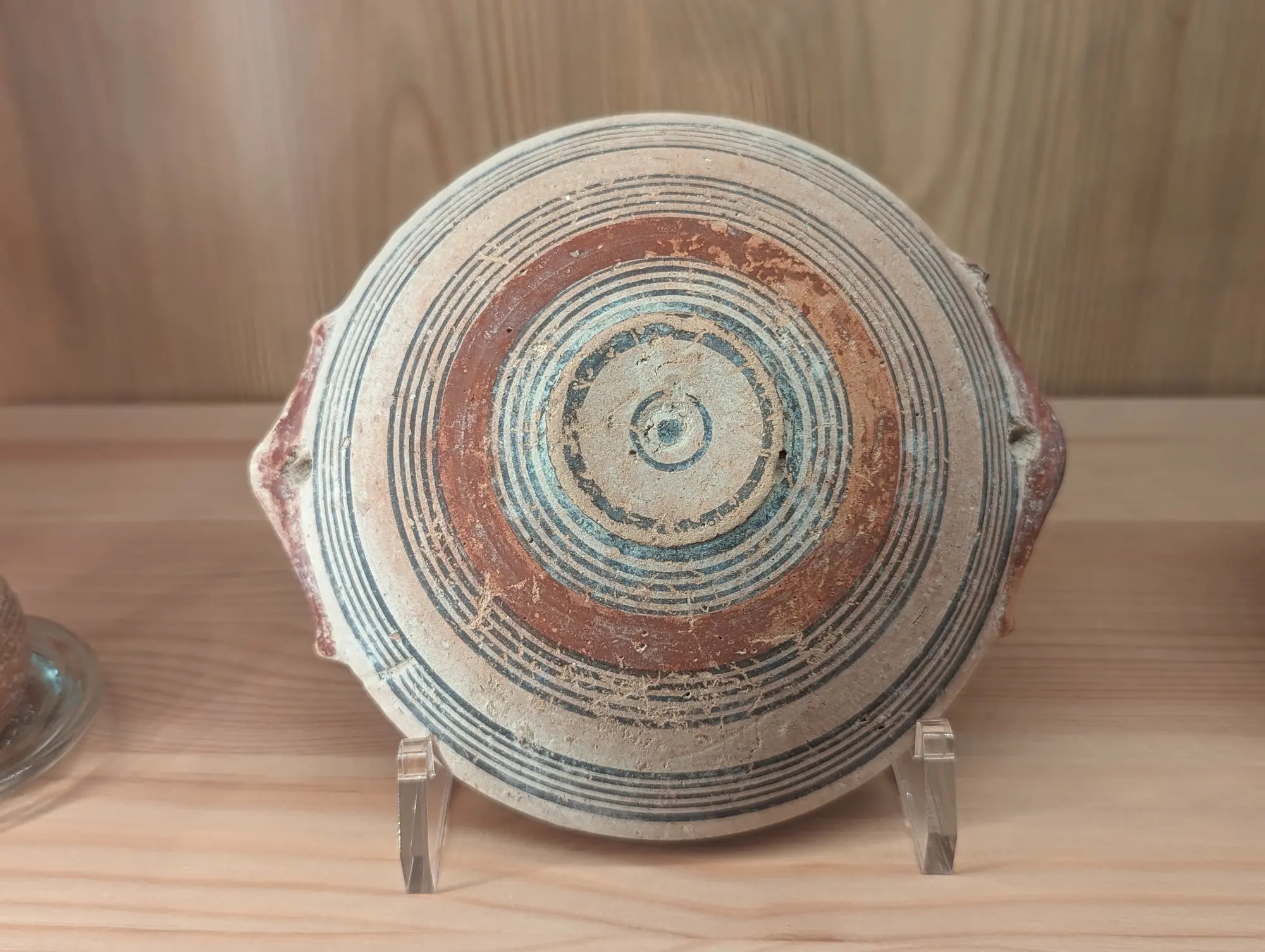 Bichrome IV Bowl with Red-Painted Pierced Lug HandlesArchaic I · 750–600 BC
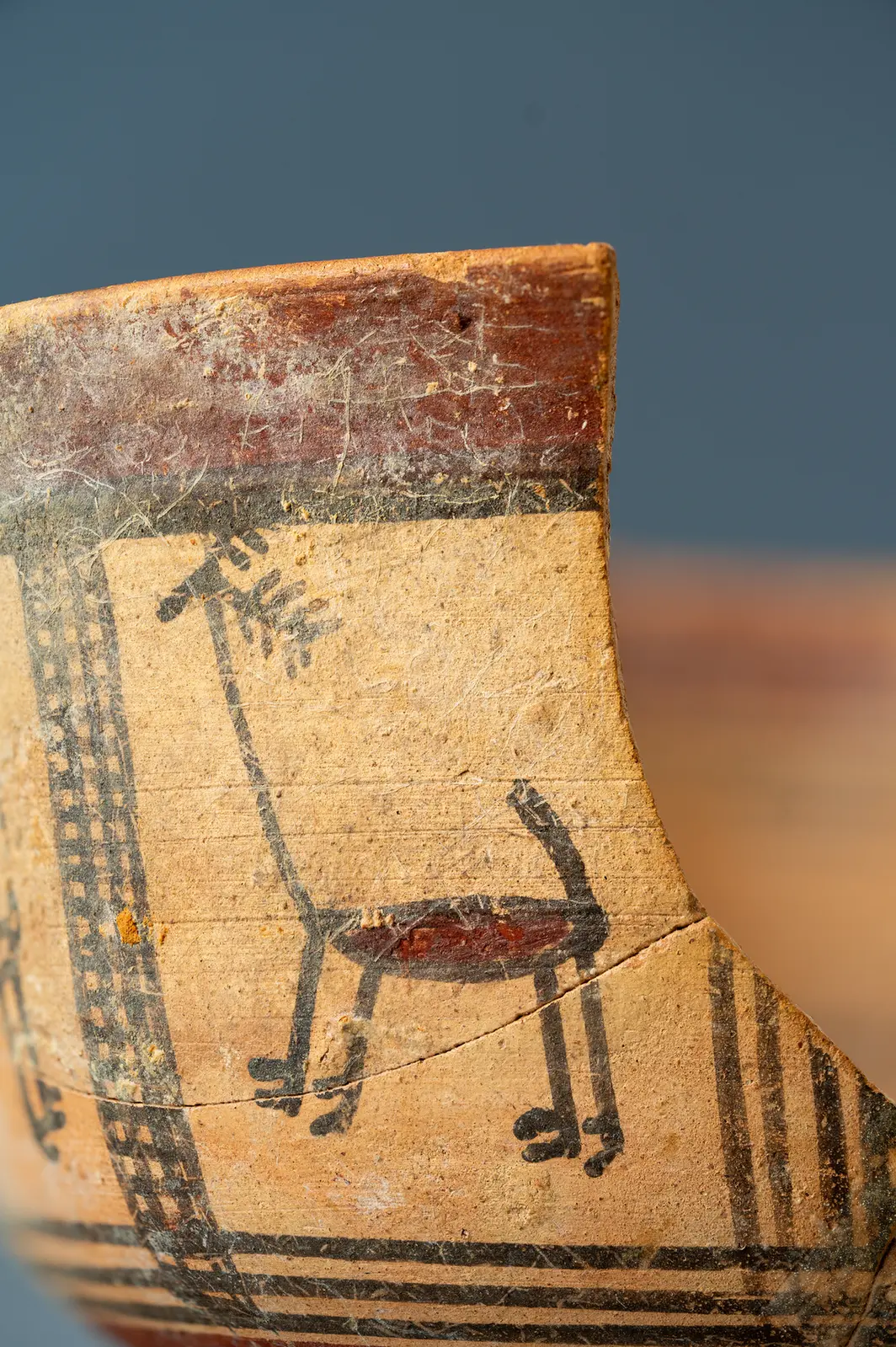 Bichrome Skyphos with Stags in MetopesArchaic I · 750–600 BC
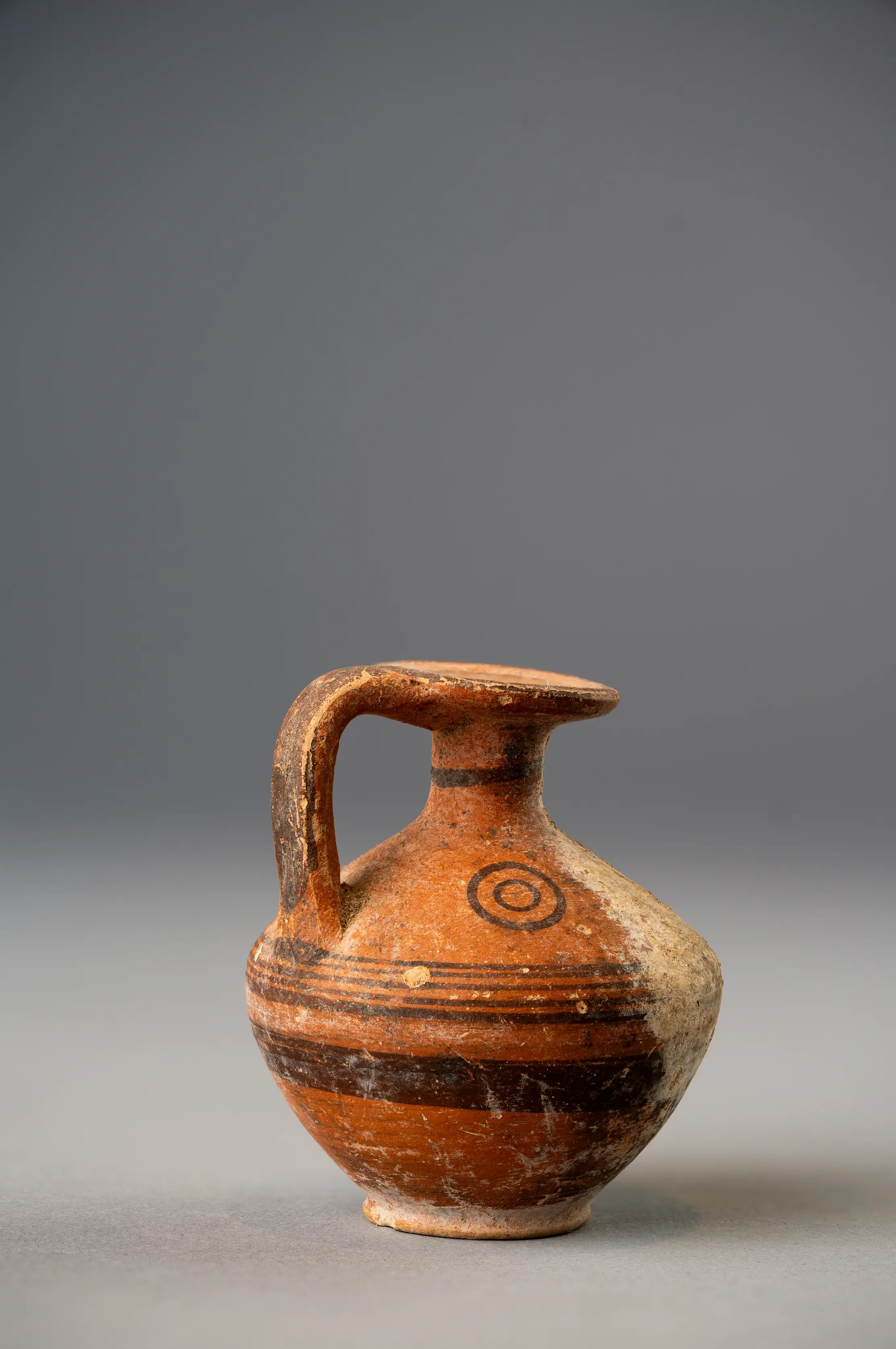 Black-on-Red Biconical Juglet with Disc MouthArchaic II · 700–475 BC
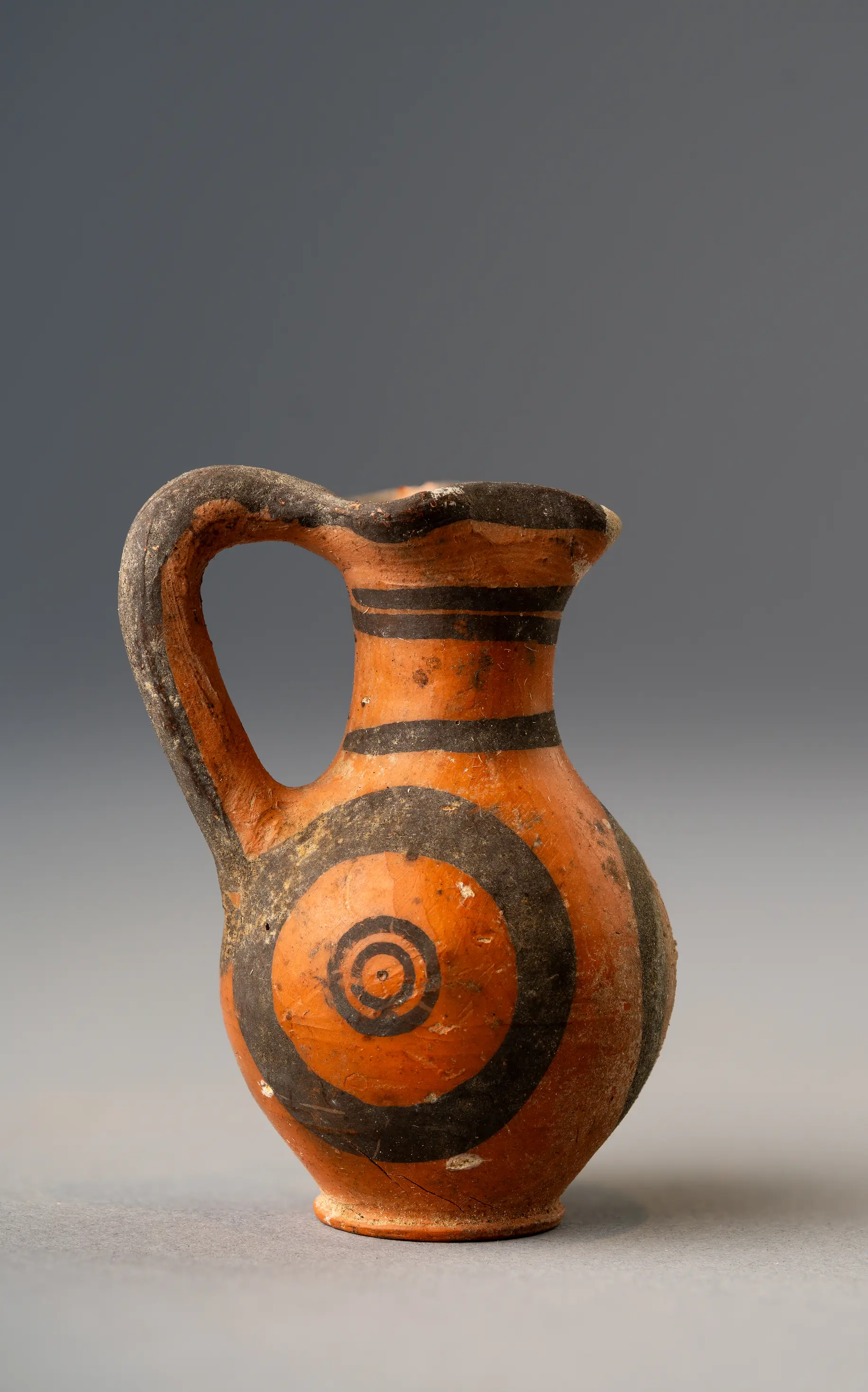 Black-on-Red Trefoil-Mouthed Juglet with Ringed CirclesGeometric III · 850–600 BC
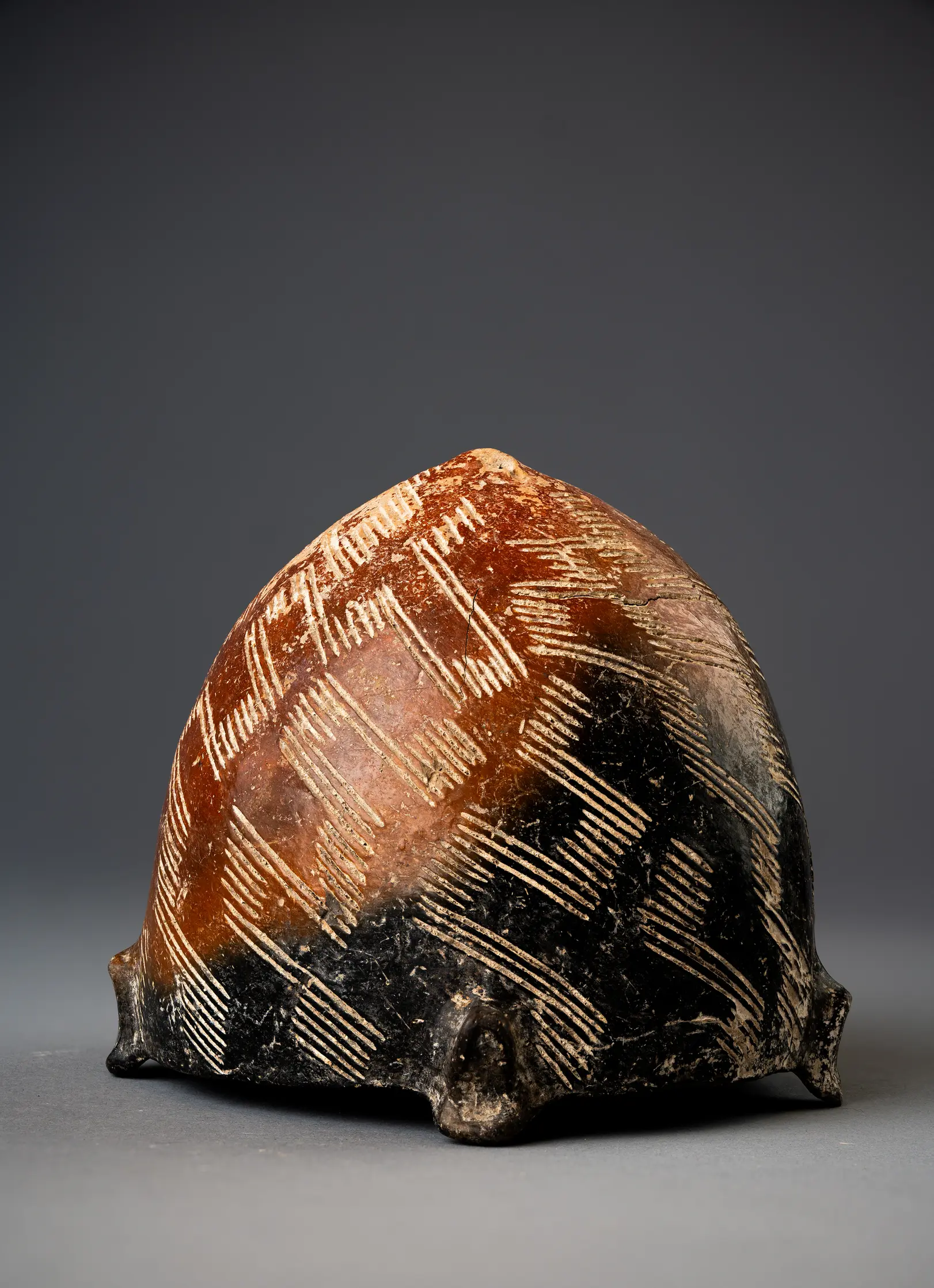 Black-topped Red Polished Tulip Bowl with Incised Hatched LatticeEarly Bronze Age II · 2300–2000 BC
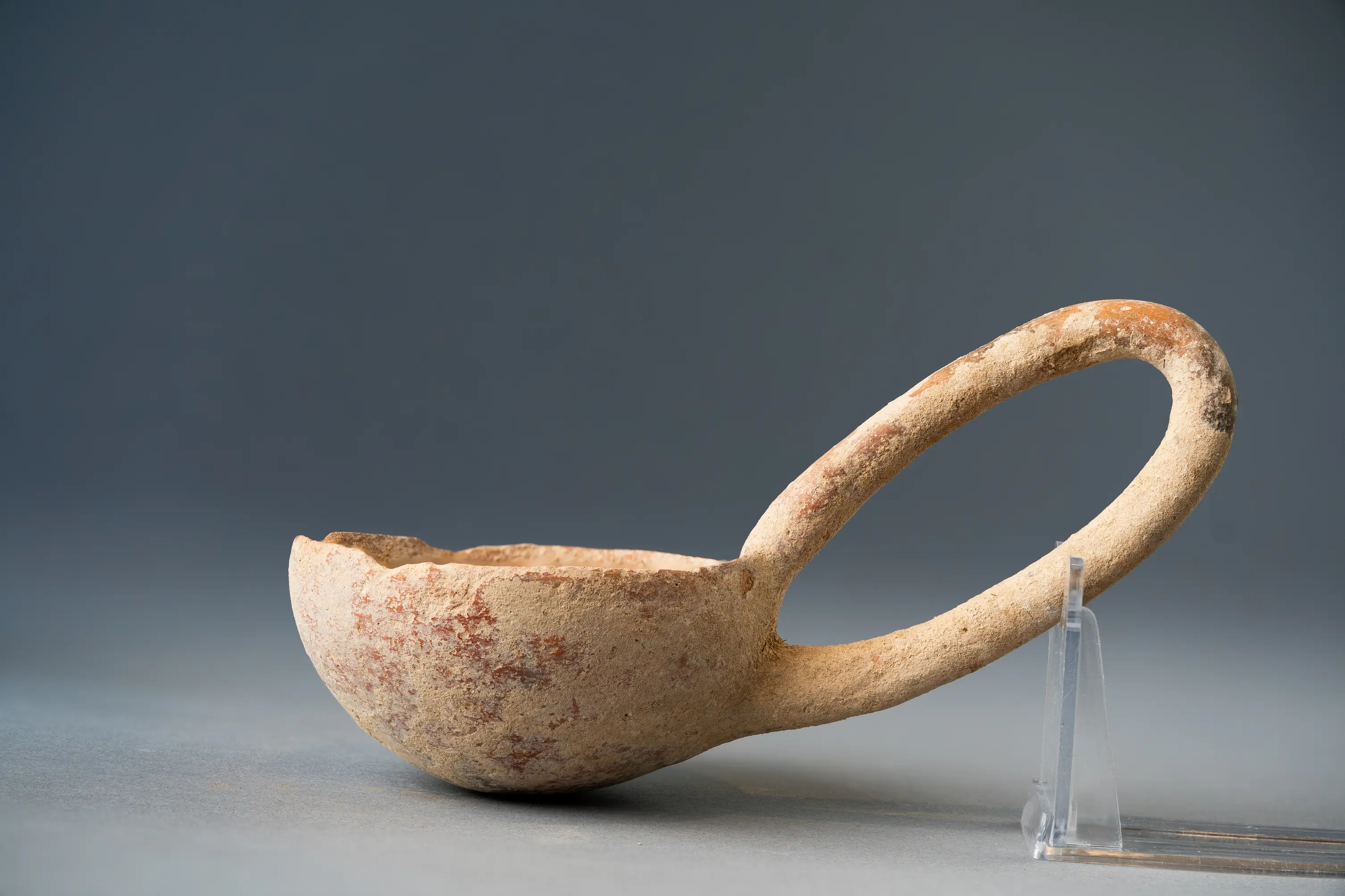 Dipper with High Loop HandleMiddle Bronze Age I · 2000–1650 BC
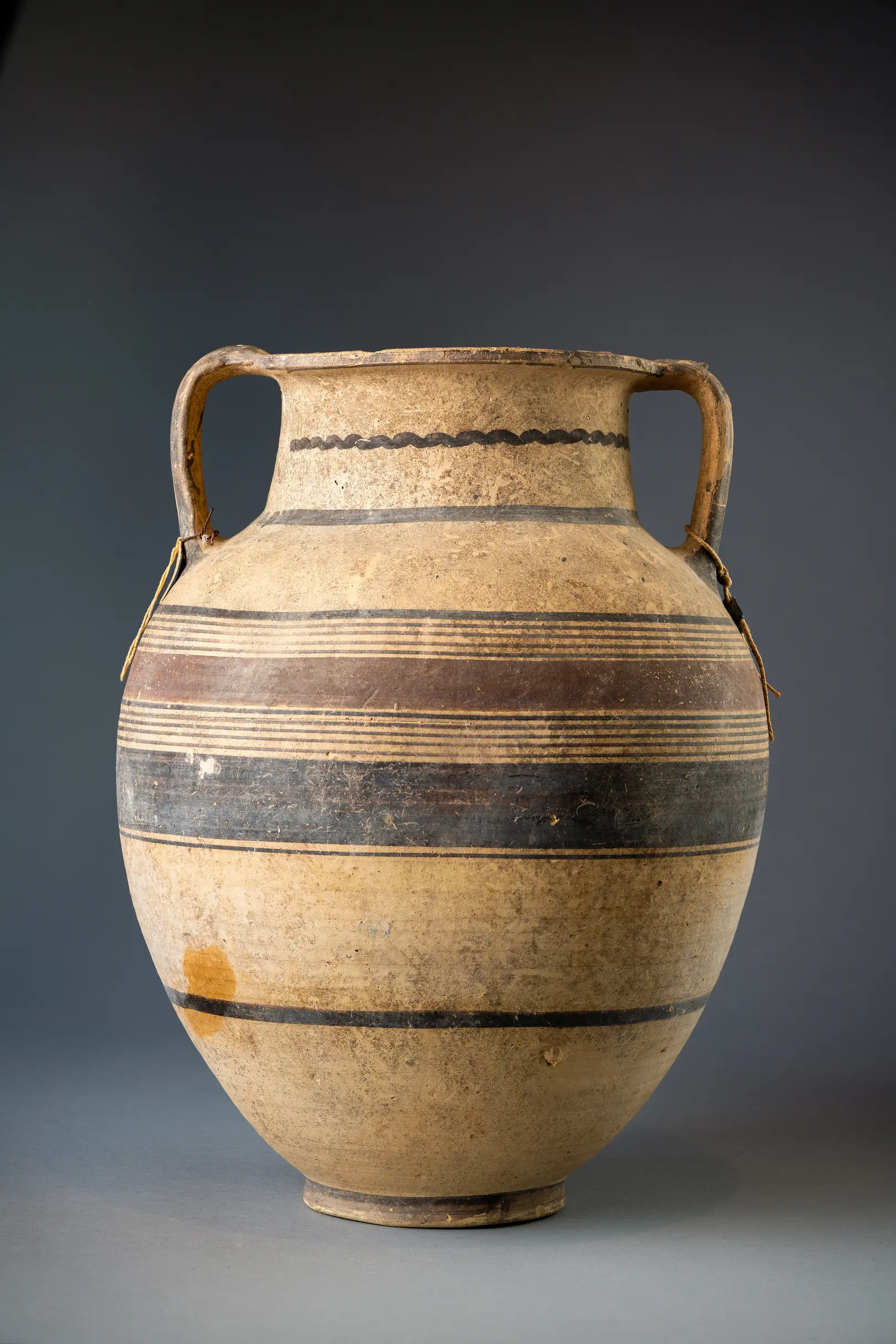 Large Bichrome Amphora with a Wavy Line on the NeckGeometric III · 850–600 BC
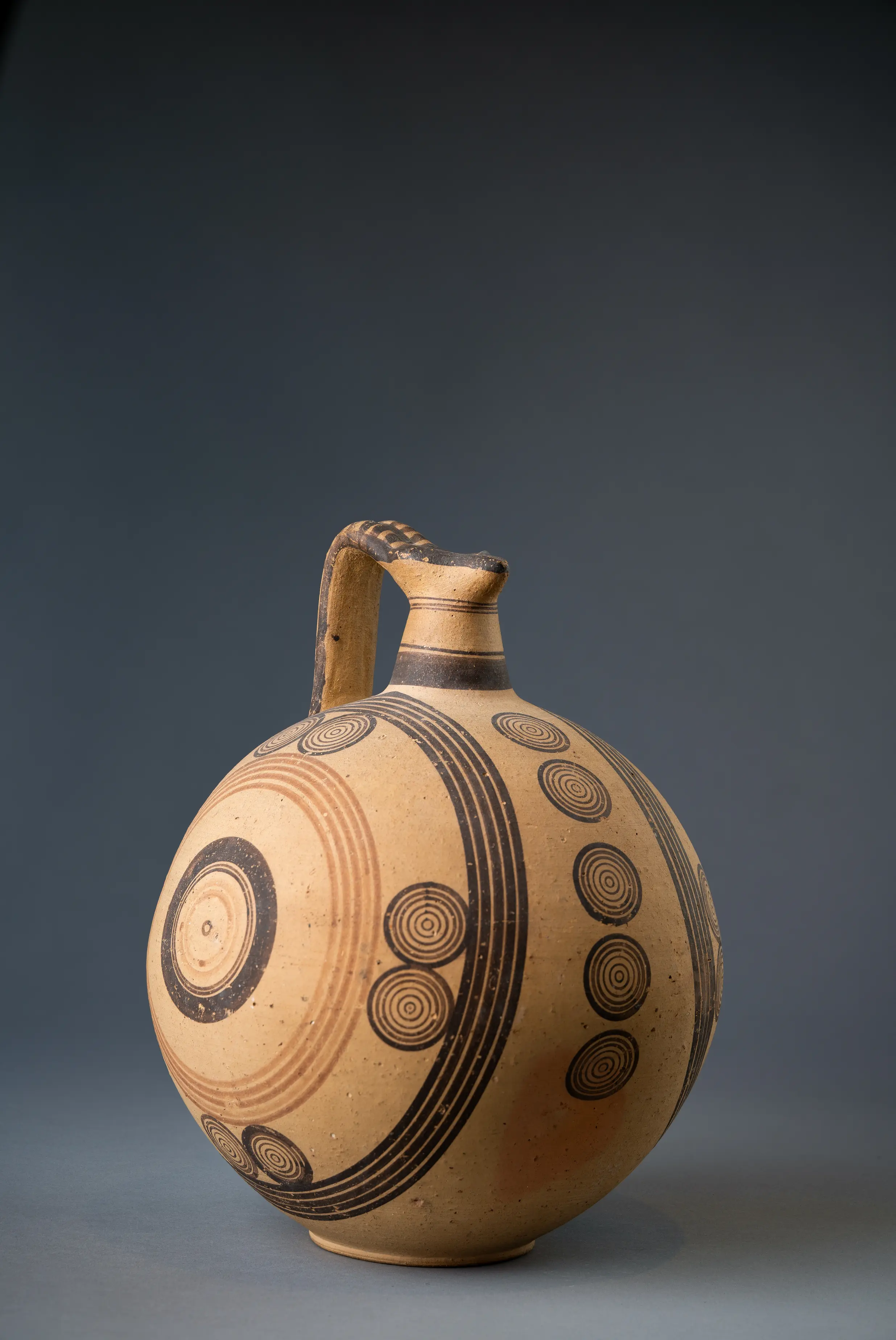 Large Bichrome IV Jug with Vertical Circle SystemsArchaic I · 750–600 BC
and 55 more objects linked from these pages
References
- 1.Merrillees, R. S. (1991). The principles of Cypriot Bronze Age pottery classification. In J. A. Barlow, D. L. Bolger, & B. Kling (Eds.), Cypriot ceramics: Reading the prehistoric record (University Museum Monograph 74, pp. 237-240). The University Museum, University of Pennsylvania.
- 2.Stager, L. E., & Saltz, D. L. (1974). The Swedish Cyprus Expedition, 1927-1931. In L. E. Stager, A. Walker, & G. E. Wright (Eds.), American Expedition to Idalion, Cyprus: First preliminary report, seasons of 1971 and 1972 (pp. xxix-xxx). American Schools of Oriental Research.
- 3.Boardman, J. (2001). The history of Greek vases: Potters, painters and pictures. Thames & Hudson.
- 4.Karageorghis, V. (2000). Ancient art from Cyprus: The Cesnola Collection in the Metropolitan Museum of Art. The Metropolitan Museum of Art.
- 5.Iacovou, M. (1991). Proto-White Painted pottery: A classification of the ware. In J. A. Barlow, D. L. Bolger, & B. Kling (Eds.), Cypriot ceramics: Reading the prehistoric record (University Museum Monograph 74, pp. 199-205). The University Museum, University of Pennsylvania.